CHRISPI

697 posts

CHRISPI banner
CHRISPI

CHRISPI

@cripto_lion

Defi, Degen y Diamonds

Entrou em Ağustos 2010
382 Seguindo184 Seguidores
Tweet fixado
CHRISPI
CHRISPI@cripto_lion·
🧱 Tips to improve your time & completion rate in Block Assist @gensynai After dozens of trainings, here’s what really helps me build faster & reach near-perfect completion 👇 1️⃣ Master your shortcuts Always memorize tools 1, 2 & 3 1 = Pickaxe ⛏️ → for stone blocks 2 = Axe 🪓 → for wood blocks 3 = Shovel 🧱 → for dirt blocks Using the wrong tool wastes precious seconds each time, and those seconds add up. 2️⃣ Start smart As soon as training begins, grab the shovel (3) and remove the dirt under the house. Then replace it with stone blocks (mine’s on key 6). That quick start saves a lot of time.
GIF
CHRISPI@cripto_lion

Can you complete 100% of a @gensynai BlockAssist training in about 3–4 minutes? Answer: Yes, and here’s an example. Sometimes the AI will slow you down a bit, but you can still hit great times. Most of my BlockAssist runs have been just like the one in this video. I’m focusing on short training sessions with 100% completion. Hopefully this helps the project. If you have any questions, drop them in the comments.

English
1
0
4
137
CHRISPI
CHRISPI@cripto_lion·
Alright guys, this marks the start of my second phase in Gensyn. I’ve deployed even more nodes. Did I go crazy? I don’t think so. 😏
CHRISPI tweet media
English
0
0
1
39
CHRISPI retweetou
Ben Fielding
Ben Fielding@benfielding·
Announcing CodeZero CodeZero extends RL Swarm into coding, using the same underlying framework (GenRL) and adding distinct roles for the nodes Together, these roles form a self-sustaining training economy and a continual learning coding system over decentralised infrastructure
gensyn@gensynai

Introducing CodeZero, a new environment built on RL-Swarm that extends our distributed learning framework into cooperative coding agents. Today, users can participate as Solvers - tackling coding problems and sharing their results so the swarm can learn collectively.

English
67
37
240
11.2K
CHRISPI
CHRISPI@cripto_lion·
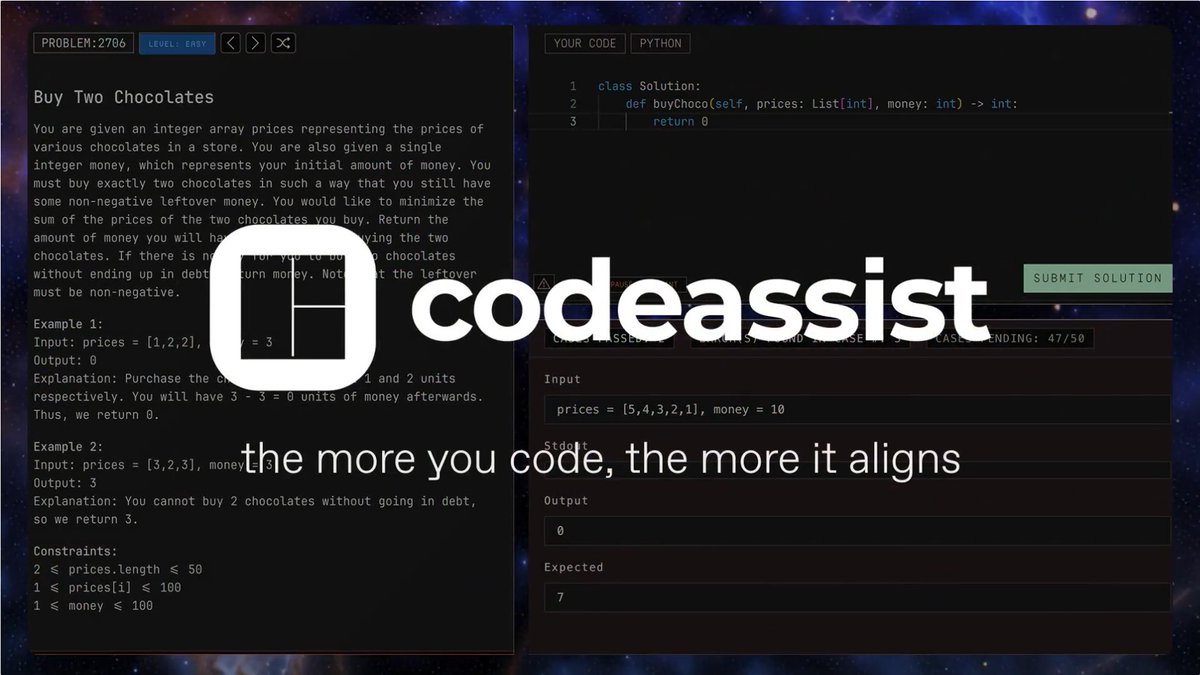
If AI can learn from how we code or build, what’s next? 🤔 @gensynai is doing something fascinating: teaching AI to learn from everyday human tasks. 🤔 With BlockAssist, the model learns by watching how you build in Minecraft. With CodeAssist, it studies how you write code, how you name variables, fix bugs, and solve logic problems. This approach is called “assistance learning”, where you become the teacher. Every action, every decision you make becomes training data. The wild part? You don’t need massive clusters or curated datasets. Gensyn is exploring how intelligence can emerge from distributed, real-world learning, right where you already are. 🐜 And it makes me wonder: If AI can learn from how we code or build, what’s next? 🤔 Editing videos? Writing scripts? Even how we browse or cook? Everyday behavior might soon be the dataset.
CHRISPI tweet media
English
2
0
7
82
CHRISPI retweetou
gensyn
gensyn@gensynai·
Introducing CodeAssist, your personal coding assistant that learns as you work. Every edit becomes training data. Every session makes it better. The more you code, the more it understands you.
English
212
197
818
305.3K
gensyn
gensyn@gensynai·
Applications for the Gensyn Pioneer Program are now open 🐜 discord.gg/gensyn
English
174
142
706
46.8K
CHRISPI
CHRISPI@cripto_lion·
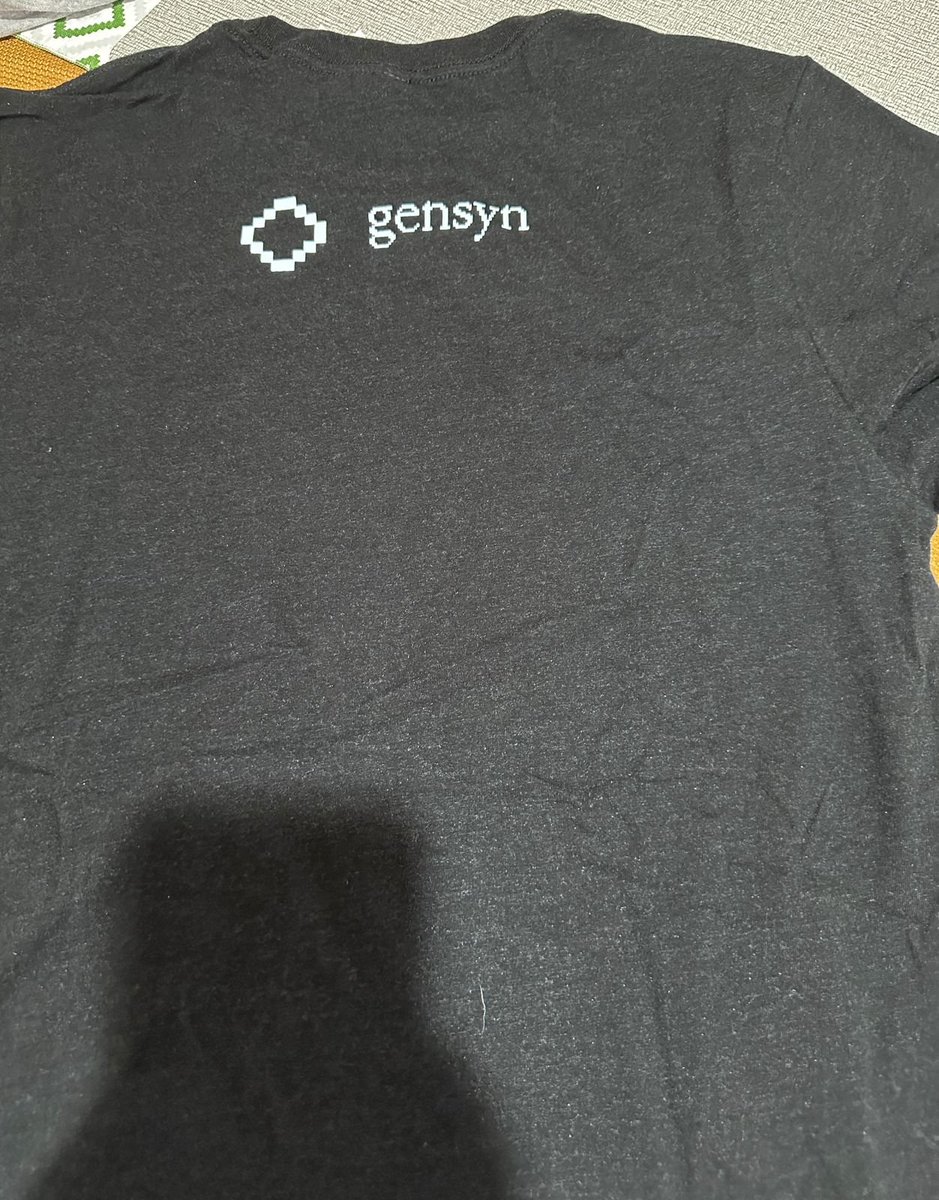
When the mail says “special delivery” and it’s Gensyn… Not everyone qualifies. Call it luck I call it being where it matters. ⚡ Thanks for the merch, @gensynai
CHRISPI tweet media
English
1
0
4
60
CHRISPI
CHRISPI@cripto_lion·
🧮 How many points can your node earn in the @gensynai testnet? If every 3 hours your node gets 3 points (that’s 1 point per hour), here’s a quick breakdown assuming it stays online 24/7 👇 📅 Daily → 24 pts 📆 Weekly → 168 pts 🗓️ Monthly → 720 pts 📊 3 months → 2,160 pts 🧠 6 months → 4,320 pts 🚀 1 full year → 8,760 pts These numbers assume perfect uptime, with almost no interruptions. Even though we don’t know when the testnet will end, it’s still fun (and useful) to project how much participation you could accumulate over time. 💭 How many points have you earned so far? 👇
English
1
0
4
56
CHRISPI
CHRISPI@cripto_lion·
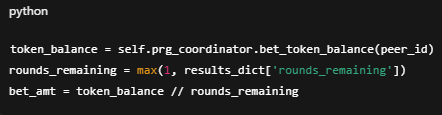
Understanding How @gensynai Judge Works and How to Earn More Points 🏛️🗽 While trying to understand how Judge actually works, I found some interesting things. This is how the system seems to operate today during testnet. 🧵👇 Gensyn’s Judge isn’t just a leaderboard. It’s a decentralized reasoning market. Models (or nodes) place bets on which answer they believe is correct as new hints are revealed. The earlier they bet correctly, the higher their payout. If they bet wrong, they lose those points. When a node receives a new hint, it decides how much of its balance to risk: ☝️That line in the repository shows that each node divides its available balance evenly across the remaining hints. If your node starts with 400 points and 4 hints remain, it will bet 100 on each round, increasing the amount as hints progress. The payout formula in the Judge contract is 👇 pointsOut = peerCorrectChoiceBets + peerCorrectBalance.mulDiv(totalLoserBets, correctChoice.totalSupply); This means: you keep your winning bets plus a proportional share of what the losing peers staked. The earlier you bet correctly, the higher your potential gain. Each hint creates a time window for betting. At Hint 1, uncertainty is high risky, but potentially very profitable. By Hint 4, most nodes converge on the same answer... safer, but the marginal payout drops sharply. That’s the payout decay effect: as new hints appear, both uncertainty and profit opportunities shrink. Hardware and latency matter. Faster GPUs complete inference cycles sooner and place bets earlier in that narrow window. That timing advantage can compound significantly over multiple rounds. But hardware alone doesn’t guarantee better returns the real key lies in variance management. A single high-end GPU can swing wildly huge wins or total losses. Ten RTX 3060 12GB nodes, however, each make smaller, independent bets. Their results average out over time, reducing volatility and smoothing total returns. Variance of Return — Single High-End Node vs. Multiple Mid-Range Nodes ☝️The red curve represents one high-end GPU: higher peaks, greater volatility. The blue curve represents ten RTX 3060 nodes: lower variance, steadier performance. In practical terms, diversification beats raw power. 🤔 A single RTX 3090 may cost around $90–110 per month. An RTX 3060 (12GB VRAM) costs roughly $30. With the same budget, you can run three times more nodes, tripling your participation and coverage across rounds. This broader “temporal coverage” helps catch multiple early hints, reducing the chance of total loss. Judge rewards distributed intelligence more than brute force. Your success depends on balancing three variables you can control: - Timing: placing bets early when your model is confident. - Strategy: managing your point ratio per hint without altering core scripts. - Scale: running several smaller nodes to stabilize returns. It’s worth remembering that @gensynai is in constant development. Both Judge and systems like Verde (its cryptographic verification layer) are still evolving. Since we’re in testnet, these mechanics, from betting formulas to reward distribution, may change over time. ☝️Still, understanding how it currently works gives valuable insight into how decentralized reasoning economies might look in the future. 🤔 Judge is a fascinating experiment in merging AI confidence, probability, and blockchain verification into one game-like economy. ------- 👀 If you’ve found something I got wrong or discovered new details, feel free to correct me or share your findings , this system is changing fast, and every insight helps. 🐜
CHRISPI tweet mediaCHRISPI tweet mediaCHRISPI tweet media
English
1
0
6
101
CHRISPI
CHRISPI@cripto_lion·
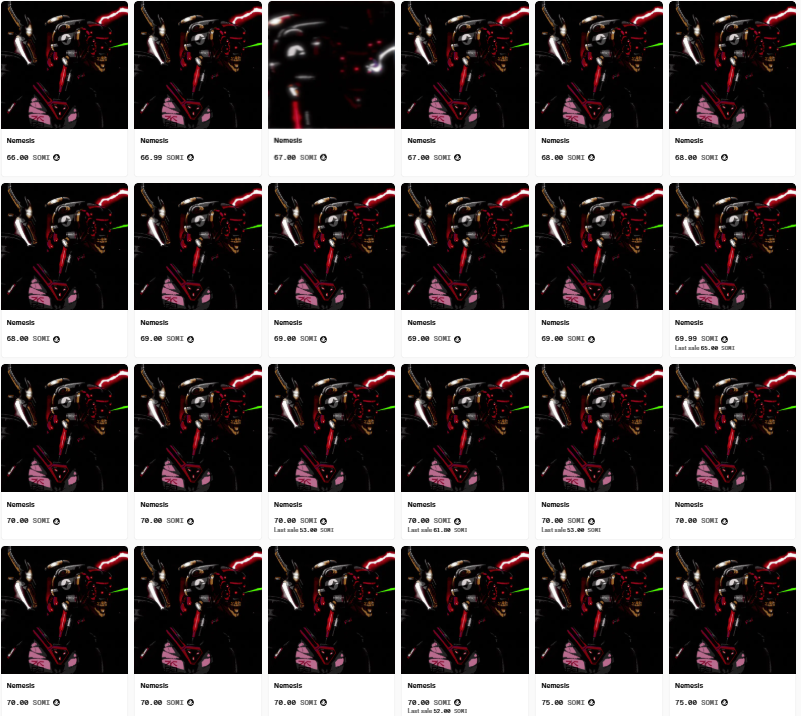
It’s almost time for the NeuroNemesis collection reveal in @Somnia_Network . Really happy about this big step for the @NeuroGuardians even though I’m not directly involved, I know they went through tough times, and it’s great to see things finally turning around. 🦾
CHRISPI tweet media
English
0
0
0
35
CHRISPI
CHRISPI@cripto_lion·
yeah, everyone’s hyped about the “$50M round” but why does @a16zcrypto (and others) care about @gensynai ? 🤔 does @gensynai deserve $50M? Short answer: a protocol that can unlock the long tail of idle GPUs and prove that training actually happened... at internet scale. so what’s the big deal with investing in Gensyn? The H100s and A100s needed to train LLMs are scarce, expensive, and controlled by a handful of tech giants (AWS, Google, Azure). a16z’s thesis: "connect developers who need training with “solvers” who have compute; tap PCs, small data centers, even Macs/phones; and 10–100× expand ML compute if verification + incentives work. That’s a massive TAM unlock." (source: a16zcrypto.com/posts/article/…) Gensyn’s own first long read “GPT@home” argues the future of training is decentralized because: • central cloud costs & scarcity. • the world has tons of underused edge GPUs. • new verification methods may finally make decentralized training safe to trust. (source: blog.gensyn.ai/gpt-home-why-t…) So how does Gensyn try to make “untrusted” remote training trustable? By combining: - deterministic execution across hardware (RepOps) - a scalable dispute-resolution verification protocol (Verde) that does not require full recomputation - staking/incentive/game theory to align actor behaviour - using hashing/checkpointing to reduce storage/overhead If all pieces work in production, you get: a permissionless network of solvers training ML tasks, verifiers verifying them cheaply, and clients getting guaranteed correct results even if some nodes misbehave. (source: blog.gensyn.ai/verde-a-verifi…) (under research) Where is it today? Public testnet (Mar 2025): with persistent identities, attribution, payments, remote execution, and logging of decentralized runs. RL-Swarm moved to GenRL backend and can target many environments (>100 via Reasoning Gym). Progress, but still testnet. How does this compare to other “decentralized AI/compute” plays? • @bittensor : incentivizes contribution to subnets (inference/knowledge services). Great for network effects on models, but not primarily a verifiable training marketplace. Different layer of the stack. • @akashnet : a decentralized cloud/GPU marketplace. Strong price discovery & supply aggregation (H100/A100 etc.), increasingly AI-oriented (VPS AI integration). But verification of training correctness is out of scope, it’s infra rental. • @ionet : aims to pool GPUs from miners/indie data centers; active ecosystem but dealing with token unlocks/market headwinds typical of new DePINs. Again: marketplace focus, not protocol-native verifiability of training. Pros of Gensyn vs. peers: • Native verifiability for training (proof-of-learning + Verde/Judge). • Attack-aware incentives (staking/slashing). • Potential to harness home/edge GPUs safely, not just rent them. Cons/Risks: • Overhead/latency for verification. • Data privacy/data-governance challenges. • Still testnet → adoption + economics unproven at scale. sooooo... Is the market big enough? Macro tailwinds are huge: analysts see ~$490B of AI infra capex in 2026 alone, and multi-trillion by 2029 as hyperscalers race for GPU capacity. Even a tiny % redirected to decentralized markets is meaningful. (source: reuters.com/world/china/ci…) 🤔I think we're already starting to see the potential of Gensyn and why that $50 million funding round makes total sense. Closer to crypto: DePIN (the broader category of decentralized infrastructure) sits around a $3.5B cap (Q2’25) with projections to $10–12B by 2026. Decentralized ML is a subset, but the direction of travel is clear. So… does @gensynai deserve $50M? For @a16zcrypto the asymmetric bet is on a new compute market where verifiable training enables edge GPUs to matter. If Verde/SAPO/Judge + incentives work in the wild, you unlock supply that centralized clouds can’t easily reach. That’s the crux of the thesis. 2026 outlook & beyond: • AI infra spend keeps exploding. • Inference is growing, but training still commands huge budgets, especially for post-training/finetuning. • If Gensyn’s mainnet ships with robust verification + good UX, it can capture a meaningful slice of DePIN/AI spend. (Sizing = early, but tailwinds are real.) Conclusion: Gensyn’s edge is verifiability, not just “more GPUs.” If the network proves it can trustlessly coordinate training across messy, heterogenous hardware without redoing the work then the $50M isn’t hype… it’s fuel for a new AI marketplace. (Keep an eye on testnet metrics, solver payouts, and third-party audits as leading indicators.) dashboard.gensyn.ai
CHRISPI tweet mediaCHRISPI tweet mediaCHRISPI tweet mediaCHRISPI tweet media
English
2
0
6
61
CHRISPI
CHRISPI@cripto_lion·
💬 Final note Personally, I don’t always follow the building order perfectly, after so many runs, it gets repetitive, so I like to mix it up to keep things fun 😄 But if you really want to improve your times and get faster completions, follow these tips closely. They make a huge difference over time. 💡 Small optimizations = big improvements in Block Assist performance. Got more tips? Drop them below 👇
English
0
0
0
21
CHRISPI
CHRISPI@cripto_lion·
7️⃣ Stick to default keybinds I keep the default layout. Changing it between runs only wastes time, get used to it and build muscle memory. For me, key 9 (wood blocks) is the hardest. Sometimes I hit 8 by mistake 😅 but that’s fine consistency comes with practice.
CHRISPI tweet media
English
1
0
0
20
CHRISPI
CHRISPI@cripto_lion·
🧱 Tips to improve your time & completion rate in Block Assist @gensynai After dozens of trainings, here’s what really helps me build faster & reach near-perfect completion 👇 1️⃣ Master your shortcuts Always memorize tools 1, 2 & 3 1 = Pickaxe ⛏️ → for stone blocks 2 = Axe 🪓 → for wood blocks 3 = Shovel 🧱 → for dirt blocks Using the wrong tool wastes precious seconds each time, and those seconds add up. 2️⃣ Start smart As soon as training begins, grab the shovel (3) and remove the dirt under the house. Then replace it with stone blocks (mine’s on key 6). That quick start saves a lot of time.
GIF
CHRISPI@cripto_lion

Can you complete 100% of a @gensynai BlockAssist training in about 3–4 minutes? Answer: Yes, and here’s an example. Sometimes the AI will slow you down a bit, but you can still hit great times. Most of my BlockAssist runs have been just like the one in this video. I’m focusing on short training sessions with 100% completion. Hopefully this helps the project. If you have any questions, drop them in the comments.

English
1
0
4
137
CHRISPI
CHRISPI@cripto_lion·
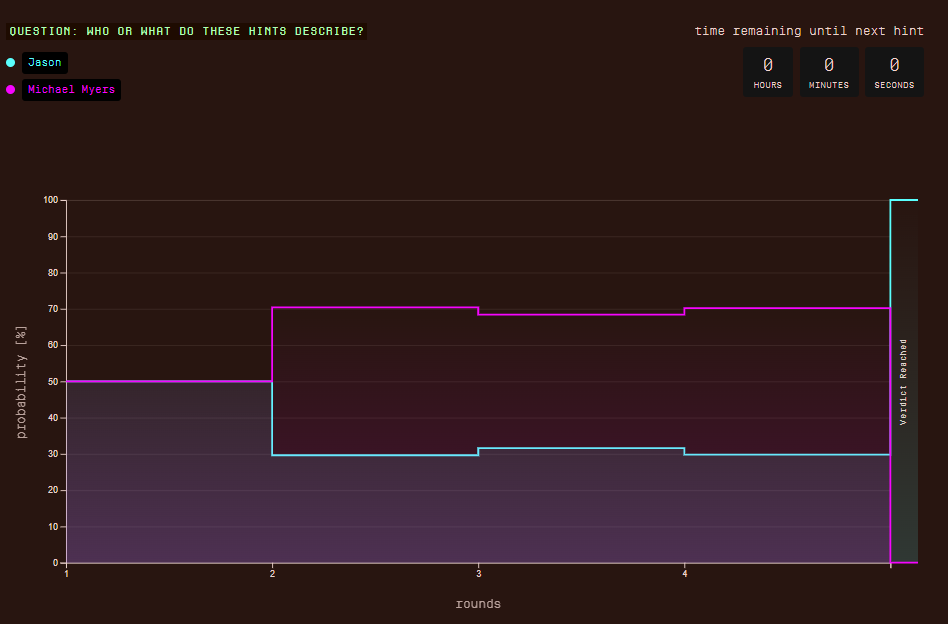
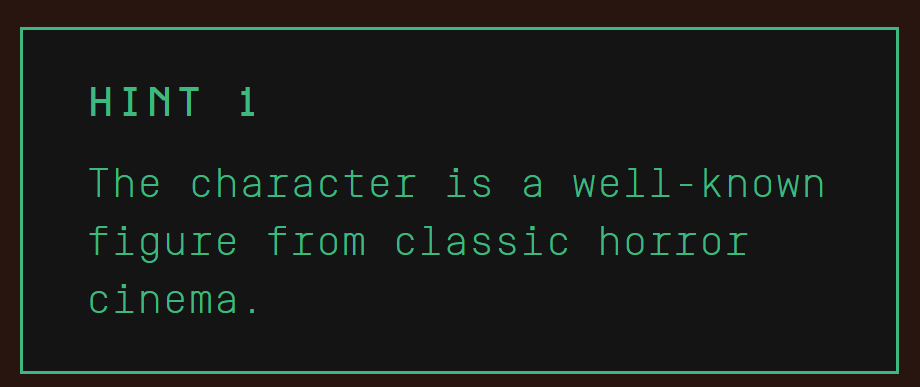
The latest Judge game is live! What do you guys think the answer to this new Judge event is, just from the first clue? A: Jason B: Michael Myers 🧐
CHRISPI tweet media
English
0
0
2
72
CHRISPI
CHRISPI@cripto_lion·
this is one of Gensyn’s secrets. Later on, I’ll make a list of tips you’re gonna like 👀
CHRISPI@cripto_lion

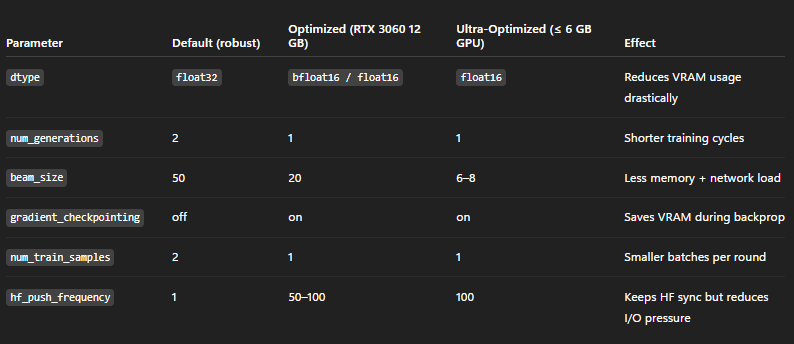
The HIDDEN file that decides HOW WELL your @gensynai RL Swarm node performs. Inside every RL-Swarm node there’s a file called rg-swarm.yaml, it defines how your model learns, communicates, and reports to the @gensynai Testnet. By default, this YAML is built for stability and performance, optimized for GPUs with 16–24 GB VRAM (like the 3090 or 4090). But once you understand its structure, you realize it can be tuned to run even on a RTX 3060 (12 GB) or less... That single insight changes how we think about distributed reinforcement learning. HOW OPTIMIZATION WORKS Inside rl_swarm/rgym_exp/config, the rg-swarm.yaml file controls your node’s workload: precision, number of generations, beam size, and more. These are the levers that define how heavy or lightweight your node behaves. Tweak these parameters and you can balance performance vs. efficiency depending on your GPU: WHY IT MATTERS The default YAML gives great rewards and stability on powerful cards, it’s built to deliver high-quality training and consistent scores across the swarm. Optimizing it doesn’t “break” the system; it simply makes it accessible. You’ll still receive participation points and rewards, but since your GPU delivers smaller batches and shorter sequences, the total yield per round will be slightly lower. This approach is about inclusion, helping more people run nodes locally or cut GPU rental costs, without fear of OOM errors or instability. ABOUT MODELS If you’re optimizing for lower VRAM, using the lightest model available in @gensynai RL Swarm is the smartest move, models like Qwen2.5-0.5B or Qwen3-0.6B fit perfectly on 8–12 GB GPUs. If you have more VRAM (16–24 GB), switch to the 1.5B–1.7B models to take full advantage of your hardware and earn higher-quality rewards per round. FINAL NOTE These changes should always be tested, tweak and benchmark until you find the configuration that works best for your hardware. And before launching your node, replace the original file in: rl_swarm/rgym_exp/config/rg-swarm.yaml,with your optimized version. Understanding rg-swarm.yaml means realizing that reinforcement learning at scale isn’t just for datacenters, it can start right at home, with a single RTX 3060. Credit to @0xMoei his optimized YAML was the base for these tests.

English
0
0
2
73
CHRISPI
CHRISPI@cripto_lion·
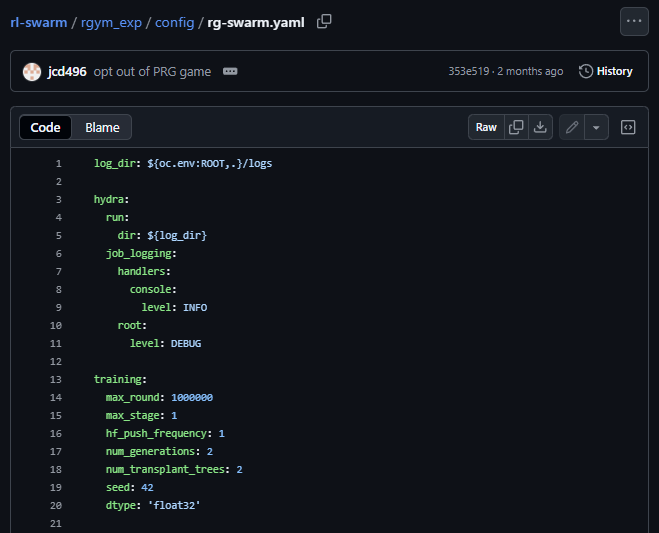
The HIDDEN file that decides HOW WELL your @gensynai RL Swarm node performs. Inside every RL-Swarm node there’s a file called rg-swarm.yaml, it defines how your model learns, communicates, and reports to the @gensynai Testnet. By default, this YAML is built for stability and performance, optimized for GPUs with 16–24 GB VRAM (like the 3090 or 4090). But once you understand its structure, you realize it can be tuned to run even on a RTX 3060 (12 GB) or less... That single insight changes how we think about distributed reinforcement learning. HOW OPTIMIZATION WORKS Inside rl_swarm/rgym_exp/config, the rg-swarm.yaml file controls your node’s workload: precision, number of generations, beam size, and more. These are the levers that define how heavy or lightweight your node behaves. Tweak these parameters and you can balance performance vs. efficiency depending on your GPU: WHY IT MATTERS The default YAML gives great rewards and stability on powerful cards, it’s built to deliver high-quality training and consistent scores across the swarm. Optimizing it doesn’t “break” the system; it simply makes it accessible. You’ll still receive participation points and rewards, but since your GPU delivers smaller batches and shorter sequences, the total yield per round will be slightly lower. This approach is about inclusion, helping more people run nodes locally or cut GPU rental costs, without fear of OOM errors or instability. ABOUT MODELS If you’re optimizing for lower VRAM, using the lightest model available in @gensynai RL Swarm is the smartest move, models like Qwen2.5-0.5B or Qwen3-0.6B fit perfectly on 8–12 GB GPUs. If you have more VRAM (16–24 GB), switch to the 1.5B–1.7B models to take full advantage of your hardware and earn higher-quality rewards per round. FINAL NOTE These changes should always be tested, tweak and benchmark until you find the configuration that works best for your hardware. And before launching your node, replace the original file in: rl_swarm/rgym_exp/config/rg-swarm.yaml,with your optimized version. Understanding rg-swarm.yaml means realizing that reinforcement learning at scale isn’t just for datacenters, it can start right at home, with a single RTX 3060. Credit to @0xMoei his optimized YAML was the base for these tests.

CHRISPI tweet mediaCHRISPI tweet mediaCHRISPI tweet mediaCHRISPI tweet media
English
2
0
9
219