Micah

371 posts

Micah

Micah

@datmicahfr

Software Engineer, Graphic Designer, VFX Artist/3D Generalist.

Entrou em Eylül 2013
80 Seguindo16 Seguidores
Micah
Micah@datmicahfr·
Open source needs to go crazy to solve this. It's a lot of work, so self-hosted AI needs to get good enough to enable all the really good SWEs to build drop-in replacements for the Apple, Google, and any other services that choose to use these 'security' features Needs hardware
GrapheneOS@GrapheneOS

Apple and Google are gradually expanding their use of hardware-based attestation. They're convincing a growing number of services to adopt it. Google's Play Integrity API and Apple's App Attest API are very similar. Apple brought it to the web via Privacy Pass, which Google intends on doing too. Google's Play Integrity API requires hardware attestation for the strong integrity level and is gradually phasing in requiring it for the more commonly used device integrity level. Apple already has it as a requirement. Over the long term, this will increasingly lock out hardware and OS competition. The purpose of these systems is disallowing people from using hardware and software not approved by Apple or Google. This is wrongly presented as being a security feature. Banks and government services are the main ones adopting it but Apple and Google are encouraging every service to use it. Apple's Privacy Pass brought hardware attestation to the web to help with passing captchas on their own hardware. Many people saw that as harmless since few sites would be willing to lock out non-Apple-hardware users. Apple and Google are both likely to bring broader hardware attestation to the web. Google's reCAPTCHA is planning an approach where they use Privacy Pass on Apple hardware, their own approach on Google Mobile Services Android devices and a QR code scanning system to require an iOS or Google certified Android device for Windows and other systems: support.google.com/recaptcha/answ… Banking and government services increasingly require using a mobile app where they can use attestation to force using an Apple or Google approved device and OS. Apple's privacy pass, Google's 'cancelled' Web Environment Integrity and now reCAPTCHA Mobile Verification are bringing this to the web. Current media coverage for reCAPTCHA Mobile Verification misunderstands it and the impact of it. They're bringing a hardware attestation requirement to Windows, desktop Linux, OpenBSD, etc. by requiring a QR scan from a certified smartphone to pass reCAPTCHA in some cases. They could expand it more. Control over reCAPTCHA puts Google in a position where they can require having either iOS or a certified Android device to use an enormous amount of the web. Google defines certification requirements for Android which includes forcing bundling Google Chrome, etc. It's enormously anti-competitive. Google's Play Integrity API bans using GrapheneOS despite it being far more secure than anything they permit. It also bans using any other alternative. This isn't somehow specific to an AOSP-based OS. You can't avoid this by using a mobile OS based on FreeBSD instead. You'll just be more locked out. Google's Play Integrity API permits devices with no security patches for 10 years. The device integrity level can be bypassed via spoofing but they can detect it quite well and block it once it starts being done at scale. The strong integrity level requires leaked keys from TEEs/SEs to bypass it. It doesn't provide a useful security feature, but it does lock out competition very well. Services requiring Apple App Attest or Google Play Integrity are primarily helping to lock in Apple and Google having a duopoly for mobile devices. Play Integrity is more relevant due to AOSP being open source. Governments are increasingly mandating using Apple's App Attest and Google's Play Integrity for not only their own services but also commercial services. The EU is leading the charge of making these requirements for digital payments, ID, age verification, etc. Many EU government apps require them. Instead of governments stopping Apple and Google from engaging in egregiously anti-competitive behavior, they're directly participating in locking out competition via their own services. Requiring people to have an Apple device or Google-certified Android device is anti-competition, not security. reCAPTCHA Mobile Verification will currently work with sandboxed Google Play on GrapheneOS but it clearly exists to provide a way for them to start using hardware attestation on systems without it. People without an iOS or Android device will be locked out when this is required even without that. This isn't about security or any missing functionality. GrapheneOS can be verified via hardware attestation. Google bans using GrapheneOS for Play Integrity because we don't license Google Mobile Services and conform to anti-competitive rules already found to be illegal in South Korea and elsewhere. Services shouldn't ban people from using arbitrary hardware and operating systems in the first place. Google's security excuse is clearly bogus when they permit devices with no patches for 10 years but not a much more secure OS. It's for enforcing their monopolies via GMS licensing, that's all.

English
0
0
0
6
Micah
Micah@datmicahfr·
And then what do criminals do? Make weapons that don't look like weapons (e.g., trigger is a button instead of a trigger, etc) I doubt this will be very effective without considering those things. Ultimately this will only create a black market for cracked printers...
HOSTIS@hostis_black

On May 7th, Governor Kathy Hochul announced that New York's Fiscal Year 2027 budget will become the first law in the United States to mandate surveillance software inside every 3D printer sold within the state. It will make it a Class E felony to possess or share a 3D-printable file capable of producing a firearm component. Every printer sold in New York must ship with print-blocking algorithms that scan each job in real time and refuse to execute anything the algorithm flags. The sales pitch is "ghost guns." The mechanism is a permission gate inside a machine you paid for. Pilot tests of the proposed algorithm by an open-firmware team triggered the block on 17% of non-weapon prints. Brackets that resemble triggers. Cylinders that resemble barrels. A model train coupling. A bottle opener. The algorithm cannot tell. It will refuse the print and log the attempt to whatever server the manufacturer is required to maintain. The same arithmetic the printing-press licensors used in 1660. The same arithmetic the Stationers' Company used to brand a printer's son for distributing tracts the Crown had not approved. The same arithmetic the early DRM crowd used to make a DVD ripper a federal criminal in 1998. A tool you bought, in a room you own, with electricity you paid for, becomes a deputy of the state at the moment of purchase and remains one for the lifetime of the device. Anything that takes a digital design file and outputs a physical object is now within the reach of a state that has declared it owns the question of which physical objects you are permitted to bring into existence inside your own house. The fence has spent forty years moving inward. Around the song first. Around the page. Around the cipher. Around the camera roll. Now, finally, around the workbench. The state has run out of digital territory to enclose and has started enclosing the atoms. The maker who prints a bracket for a broken washing machine tonight commits the same act, technically, that the law is written to stop. The algorithm will not know the difference. It is not designed to know the difference. It is designed to fail closed, to refuse first and let the human appeal upward through whatever bureaucratic channel the manufacturer designs, if any, on whatever timeline the manufacturer chooses, with whatever paper trail attaches to the request. Permission to print, denied. Submit a ticket. Wait. Unfortunately for New York, and fortunately for us, the firmware on every consumer 3D printer is open or near-open. All of them forkable, all of them flashable, all of them already installed on millions of machines outside the reach of any future New York compliance certificate. The CAD files at issue are mathematical descriptions of geometry that will be mirrored on a thousand drives in a thousand jurisdictions before the ink on the bill is dry. The state cannot bind geometry. It can only bind the people who agree to be bound. Forty years from now nobody will remember the ghost gun argument. They will remember the year a state government decided that the physical output of a private machine was the state's business at the point of manufacture.

English
0
0
0
28
Micah
Micah@datmicahfr·
@slingeronline @hostis_black I don't think you understand how the code for this will be implemented. It would scan the object at every single possible rotation (to a certain granularity of irrelevance) and check against known patterns.
English
2
0
1
224
King of Texas (As of yet Uncontested)
@hostis_black Try to print, get blocked, rotate object in slicer 5 degrees on the y axis, print away. The possible permutations of geometry of an object are infinite, and unless blocking every single print waiting for permission, this "law" has already failed before it was implemented.
English
2
0
40
1.7K
HOSTIS
HOSTIS@hostis_black·
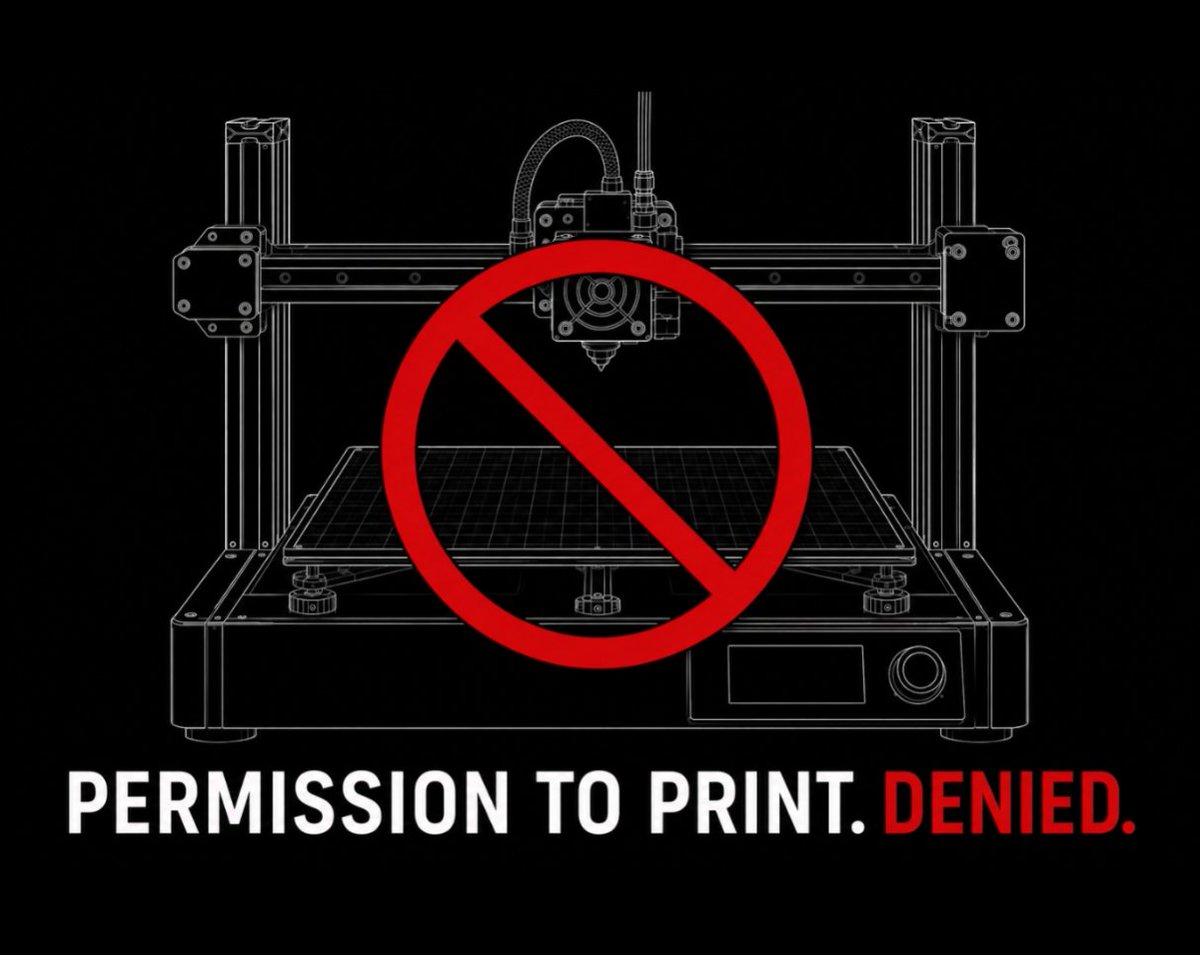
On May 7th, Governor Kathy Hochul announced that New York's Fiscal Year 2027 budget will become the first law in the United States to mandate surveillance software inside every 3D printer sold within the state. It will make it a Class E felony to possess or share a 3D-printable file capable of producing a firearm component. Every printer sold in New York must ship with print-blocking algorithms that scan each job in real time and refuse to execute anything the algorithm flags. The sales pitch is "ghost guns." The mechanism is a permission gate inside a machine you paid for. Pilot tests of the proposed algorithm by an open-firmware team triggered the block on 17% of non-weapon prints. Brackets that resemble triggers. Cylinders that resemble barrels. A model train coupling. A bottle opener. The algorithm cannot tell. It will refuse the print and log the attempt to whatever server the manufacturer is required to maintain. The same arithmetic the printing-press licensors used in 1660. The same arithmetic the Stationers' Company used to brand a printer's son for distributing tracts the Crown had not approved. The same arithmetic the early DRM crowd used to make a DVD ripper a federal criminal in 1998. A tool you bought, in a room you own, with electricity you paid for, becomes a deputy of the state at the moment of purchase and remains one for the lifetime of the device. Anything that takes a digital design file and outputs a physical object is now within the reach of a state that has declared it owns the question of which physical objects you are permitted to bring into existence inside your own house. The fence has spent forty years moving inward. Around the song first. Around the page. Around the cipher. Around the camera roll. Now, finally, around the workbench. The state has run out of digital territory to enclose and has started enclosing the atoms. The maker who prints a bracket for a broken washing machine tonight commits the same act, technically, that the law is written to stop. The algorithm will not know the difference. It is not designed to know the difference. It is designed to fail closed, to refuse first and let the human appeal upward through whatever bureaucratic channel the manufacturer designs, if any, on whatever timeline the manufacturer chooses, with whatever paper trail attaches to the request. Permission to print, denied. Submit a ticket. Wait. Unfortunately for New York, and fortunately for us, the firmware on every consumer 3D printer is open or near-open. All of them forkable, all of them flashable, all of them already installed on millions of machines outside the reach of any future New York compliance certificate. The CAD files at issue are mathematical descriptions of geometry that will be mirrored on a thousand drives in a thousand jurisdictions before the ink on the bill is dry. The state cannot bind geometry. It can only bind the people who agree to be bound. Forty years from now nobody will remember the ghost gun argument. They will remember the year a state government decided that the physical output of a private machine was the state's business at the point of manufacture.
HOSTIS tweet media
English
339
1.2K
3.8K
216.3K
Micah
Micah@datmicahfr·
@lauriewired @HSVSphere k8s was really rough for security years ago. That's potentially one of the biggest things people had against it. Previously: - Audit-unfriendly - Obvervability-unfriendly - Scattered security Now it's much better, but those things would frustrate anyone who knows anything abt sec
English
0
0
0
316
LaurieWired
LaurieWired@lauriewired·
at this point, I don’t think there is a single major AI inference provider *not* using k8s. (that’s a bit of a non-sequitur, but here me out) I know I’m pulling the scale card, but genuinely if your problem is small enough to not need it…then don’t use k8s. Statistically, way too many engineers have an opinion about kubernetes…it doesn’t make sense. I’m convinced a ton of people briefly tried it (on a small to medium sized problemset), balked at the complexity, and then go around complaining about how their XYZ abstraction is better. If you haven’t done rolling deploys, A/B testing across thousands of nodes, or written a custom k8 scheduler yourself…yeah, you really haven’t used k8s properly. The problemset of “run a single distributed database across homogenous hardware” is EASY, and yes, k8s is completely unnecessary. But what happens when you’re doing DBs + stateless services + batch jobs + ML inference all on thousands of nodes with heterogenous hardware and you need a unified control plane… …oh. You just created k8s again.
English
17
10
358
16.5K
HSVSphere
HSVSphere@HSVSphere·
Or consider how k8s forces a lack of granularity in scheduling & redundancy onto you. which requires a totally different and better language & associated solution & k8s forces way too many things that aren't required for highly available distributed computing onto you. Just bad.
LaurieWired@lauriewired

@kayleecodez hate to say it, but everyone that rejects kubernetes inevitably ends up recreating it from first principles lol

English
7
2
158
31.1K
Micah
Micah@datmicahfr·
Innovators are always met with disbelief throughout history. See: Nikola Tesla, Elon Musk, etc. People who doubt innovators, are just pessimistic. Why is it that pessimism never moves the world forward? Oh, right. Because they're focused on "we can't" instead of "how can we".
Micah@datmicahfr

@HCColenbrander @jxmnop You and Jack: "This shouldn't work because of X" Me: "This will work because I built the bridge"" Who's right? You know, throughout all of history the "that's impossible/doesn't exist/can't exist" people have been proven wrong time and time again.

English
1
0
0
37
Micah
Micah@datmicahfr·
@HCColenbrander @jxmnop You and Jack: "This shouldn't work because of X" Me: "This will work because I built the bridge"" Who's right? You know, throughout all of history the "that's impossible/doesn't exist/can't exist" people have been proven wrong time and time again.
English
0
0
0
88
HCC
HCC@HCColenbrander·
@datmicahfr @jxmnop Offcourse I don’t make sense to you and seemingly bring up irrelevant points. No surprises there
English
2
0
0
27
dr. jack morris
dr. jack morris@jxmnop·
people on here are dumb. the latest subquadratic attention trick might produce a model that *processes* 1M tokens (or 12M..) without going insane, but that doesn't make it good the real problem isn't the architecture, it's the data. humans haven't generated many contiguous linear spans of 1M tokens. so of course we can't learn this distribution. it doesn't exist
dr. jack morris@jxmnop

"1M context" models after 100k tokens

English
68
36
787
101.1K
Micah
Micah@datmicahfr·
@HCColenbrander @jxmnop You and Jack are literally limiting humanity's advancement by being so arrogantly wrong 💀 You can't even argue about codebases or documentation? You think a single thought stream is the only valid thing that counts as contiguous. That ignores how LLMs are trained, quality, etc
English
0
0
0
49
Micah
Micah@datmicahfr·
@HCColenbrander @jxmnop Also Jack didn't say that it's scarce, he said it doesn't exist. Both of you seem to have a complete lack of imagination, problem solving skills, and basic common sense.
English
0
0
0
19
HCC
HCC@HCColenbrander·
@datmicahfr @jxmnop There is scarcity of naturally occuring ultra-long contiguous human writing.Again, I agree with jack. Pasting books or codebases in a dataset does not make them contiguous. If you are right your are sitting on a trillion dollar idea and I hope you are right and become prosperous
English
2
0
0
28
Micah
Micah@datmicahfr·
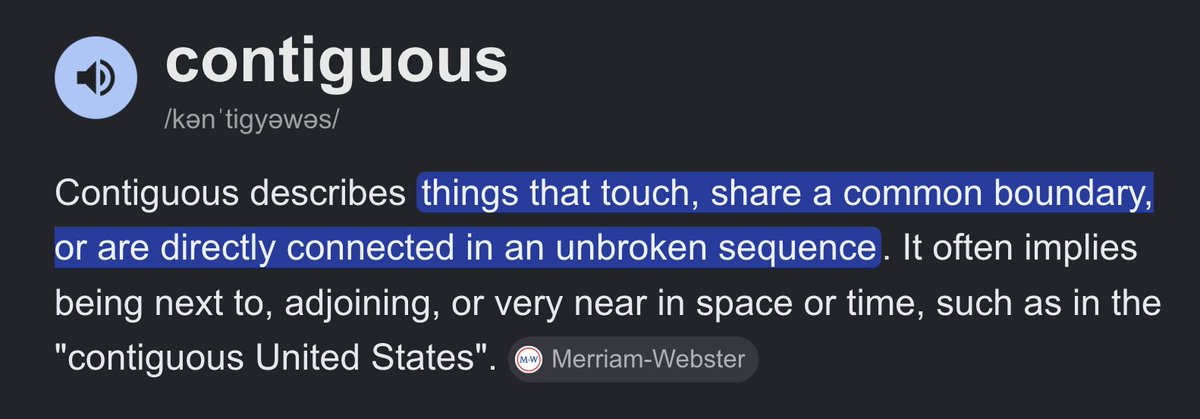
@HCColenbrander @jxmnop So the logical conclusion to your concept of that contiguous means, is that nothing contiguous is actually contiguous. Books in a single series: Share common boundary, are directly connected in unbroken sequence (storyline, plot development, fictional universe), adjoining, etc..
Micah tweet media
English
0
0
0
16
Micah
Micah@datmicahfr·
@HCColenbrander @jxmnop Then by your logic, a single paragraph, or sentence is not contiguous 💀 You seem to completely lack understanding of how LLMs are trained. It's very obvious to me that you don't know what you're talking about.
English
1
0
0
28
Micah
Micah@datmicahfr·
@HCColenbrander @jxmnop By your logic, a single book isn't even contiguous because chapters exist 💀. As far as the LLM is concerned, the data IS contiguous. The LLM is mapping patterns over tokens. Shared universe? Shared characters? Logical continuation? Character development? Contiguous.
English
1
0
0
29
HCC
HCC@HCColenbrander·
@datmicahfr @jxmnop I don't see it because it is not true. book series and code bases are NOT contiguous. After processing into a string for training they SEEM contiguous but aren't truely. I agree with Jack that there is too few naturally contiguous ultra-long datasets. for long context training.
English
1
0
0
25
Micah
Micah@datmicahfr·
@HCColenbrander @jxmnop In every possible way that matters for the sake of AI training, context development, and attention mechanism testing, it's 100% accurate to say they're contiguous.
English
0
0
0
20
HCC
HCC@HCColenbrander·
@datmicahfr @jxmnop I just learned that there is an english word for contiguous and I have to say that Book series and code bases are continuous but not contiguous
English
2
0
0
40
Micah
Micah@datmicahfr·
@TheHackersNews Read what you install. Basic common sense. RIP
English
0
0
1
1.1K
The Hacker News
The Hacker News@TheHackersNews·
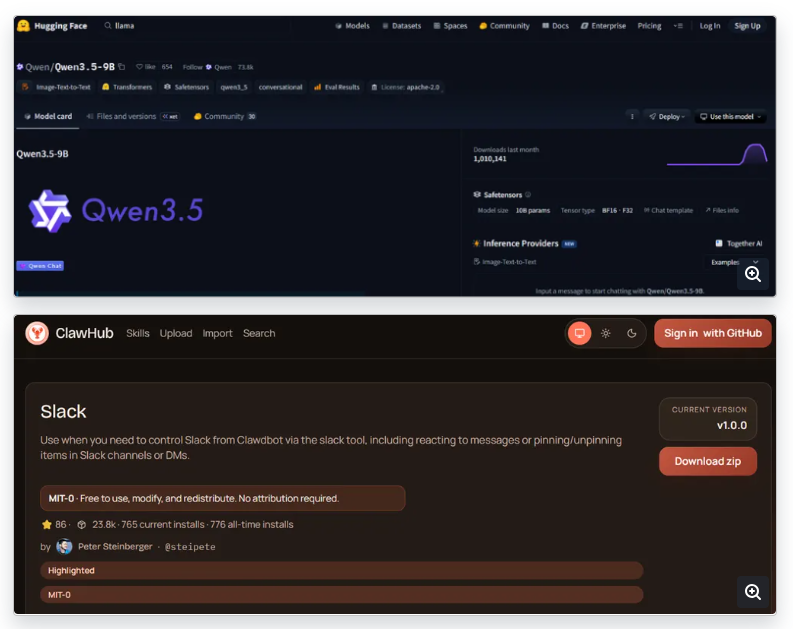
⚠️ Attackers poisoned Hugging Face & ClawHub (OpenClaw) with 575+ malicious skills from just 13 accounts. 🔸 Fake helpful AI tools that install trojans, miners & stealers (Windows + macOS) 🔸 Use hidden commands & indirect prompt injection Quick action: Never install random AI skills or models. Always verify the source. Read: thehackernews.com/2026/05/weekly…
The Hacker News tweet media
English
65
440
1.3K
267.5K
LonelySloth
LonelySloth@lonelysloth_sec·
Why does Anthropic need a Bug Bounty? Why not just point Mythos at their own stuff?
English
118
108
3.5K
145.7K
Micah
Micah@datmicahfr·
I'm extremely happy to see that @OpenAI is capitalizing on the fear of the incoming Github Copilot token-based billing changes with free trials of ChatGPT Plus.
English
0
0
2
109