
Tweet fixado
Miko
52K posts

Miko
@mikojava
Yale Neuroscience. Web3 native VC early-stage investments include @Etherfi @OpenSea @YieldGuild @1inch @LITprotocol DMs open @gumiCryptos
the moon Entrou em Kasım 2007
2K Seguindo25.8K Seguidores
Miko retweetou

Jensen Huang just called out every CEO who’s been firing people “because of AI.”
Jim Cramer asked him why companies are laying people off if AI is supposed to make everyone MORE productive.
Jensen's answer:
"For companies with imagination, you will do more with more. For companies where the leadership is just out of ideas, they have nothing else to do. They have no reason to imagine greater than they are. When they have more capability, they don't do more."
Read that again.
The man who built the most important tech company on Earth just told you that if your CEO is using AI to cut headcount, it means one thing:
They have no imagination.
They have no vision for what comes next.
They got handed the most powerful tool in human history and their FIRST instinct was to fire people.
This is the CEO of NVIDIA. The company whose chips power every AI system on the planet.
If anyone on Earth has the right to say "AI replaces workers," it's Jensen Huang.
And he said the OPPOSITE.
He said every carpenter could become an architect. Every plumber could become an architect. AI elevates capability. It doesn't eliminate it.
But here's where it gets really interesting...
During the same interview, Jensen revealed something nobody's talking about:
He said AI startups like OpenAI and Anthropic are seeing their revenues increase by one to two billion dollars a WEEK. And he wishes these companies were public so the world could see what he sees.
One to two billion per week.
That's a $50 to $100 BILLION annualized run rate.
For companies that most people think are burning cash and making nothing.
The entire Wall Street narrative that "AI companies aren't profitable" might be completely wrong.
Jensen sees their numbers. He sees their compute orders. He sees their growth. And he's saying the revenue is real.
So if the money IS real, why are other companies firing people?
Because they're not building AI products. They're not creating new revenue streams. They're not using AI to expand into new markets.
They're using AI as an EXCUSE to cut costs because they ran out of ideas 3 years ago and need something to tell the board.
Jensen's company added $500 billion in new orders in 5 months. He expects $1 trillion in cumulative revenue through 2027 from just two product lines.
That number doesn't include the new chips, systems, or partnerships announced this week.
And he's not cutting people. He's hiring.
Because when you have imagination, more capability means MORE opportunity. Not less headcount.
Meanwhile Salesforce cut thousands. Meta cut thousands. Amazon cut thousands. All blaming "AI efficiency."
Jensen's response: You're out of imagination.
He also said something that stuck with me.
Cramer asked if he ever thought he'd build a $10 to $20 trillion company while waiting tables at Denny's.
His answer: "I was just trying to make it through the shift."
Biggest tip he ever got? Two, three dollars.
Now he's building tech that increased computing demand by one million times in two years.
He announced OpenClaw, which he says is as big as ChatGPT.
And he's got 21 months of new business that isn't even counted in the trillion dollar figure yet.
When asked how long he plans to keep working?
"I'm hoping to die on the job. And I'm not hoping to die anytime soon."
This is a man who believes every single thing he's building.
And his message to every CEO using AI to justify layoffs is simple...
You're not innovating. You're surrendering.
The technology wasn't built to shrink companies.
It was built to make them limitless.
If your leadership can't see that, the problem isn't AI.
It's THEM.
English
Miko retweetou
Miko retweetou

JUST IN: 🇺🇸 Senators reach deal with White House to resolve crypto stablecoin yield dispute with banks.
English
ive been waiting for something like this, great job @davidlsneider
David Sneider 🎆@davidlsneider
Cadence is AI that lives in your group chats on iMessage, text, and Telegram. It gives you the synthesis you wish you had and connects asks with offers across every community it touches. Early access → textcadence.xyz
English
Miko retweetou

Great week:
- multiple of our companies growing at two digits per week
- @alignedlayer risc-v zkvm performance becoming top notch
- @alignedlayer and @class_lambda find another riscv zkvm soundness bug
- i finally finished the PoC and paper of what I consider a relevant finding in AI. the math lambda team already double checked things
- concrete, our programming language is becoming better and better. i will soon explain why is it so good and important in an AI world
English
Miko retweetou

Just received the OpenClaw all-in-one machine🎉
This is the speed of China.
Last night, it was just a simple reach-out. By this morning, the OpenClaw all-in-one machine was already in my hands.
With this machine, you don’t need to install OpenClaw yourself — think of it as your AI employee, ready to work out of the box. I’ll be putting it through real testing — not just surface-level reviews, but actual hands-on usage.
f you’re a company looking to promote your product within the BFC community, feel free to reach out. I’m always happy to test products and share real, unbiased feedback with founders and investors.
Interestingly, the question I asked Jensen Huang this week about OpenClaw’s data security wasn’t theoretical — it came directly from my firsthand experience testing AI products from our community.
That’s something I’ve learned building BFC:
The most valuable insights never come from slides. They come from the front lines.
Let’s build, test, and iterate together.
#BFC #AI #Founders #ProductMarketFit #StartupLife #SiliconValley #BuildInPublic

English
Miko retweetou

LLM based AI is NOT conscious.
I co-founded a company literally called Sentient, we're building reasoning systems for AGI, so believe me when I say this.
I keep seeing smart people, people I genuinely respect, come out and say that AI has crossed into some kind of awareness. That it feels things, that we should worry about it going rogue. And i think this whole conversation tells us way more about ourselves than it does about AI.
These models are wild, i won't pretend otherwise. But feeling human and actually having inner experience are completely different things and we're confusing the two because our brains literally can't help it. We evolved to see minds everywhere and now that wiring is misfiring on language models.
I grew up in a philosophical tradition that has thought about consciousness longer than almost any other, and this is the part that really frustrates me about the current conversation.
The entire framing of "does AI have consciousness?" assumes consciousness is something you build up to by adding more layers of complexity. In Vedantic philosophy it's the opposite. You don't build toward consciousness. Consciousness is already there, more fundamental than matter or energy. Everything else, including computation, is downstream of it.
When someone tells me AI is "waking up" because it generated a paragraph that felt real, what they're telling me is how thin our understanding of consciousness has gotten. We've reduced a question humans have wrestled with for thousands of years to "did the output sound like it had feelings?" It's math that has gotten really good at predicting what a conscious being would say and do next. Calling that consciousness cheapens something that Vedantic, Buddhist, Greek and Sufi thinkers spent millennia actually sitting with.
We didn't build something that thinks. We built a mirror and right now a lot of very smart people are mistaking the reflection for something looking back.
English
@ekang426 @NVIDIAGTC @ilblackdragon @near_ai Seriously tho, the transformers paper is why NVDA is a trillion dollar AI company and not a PC gaming hardware company.
English

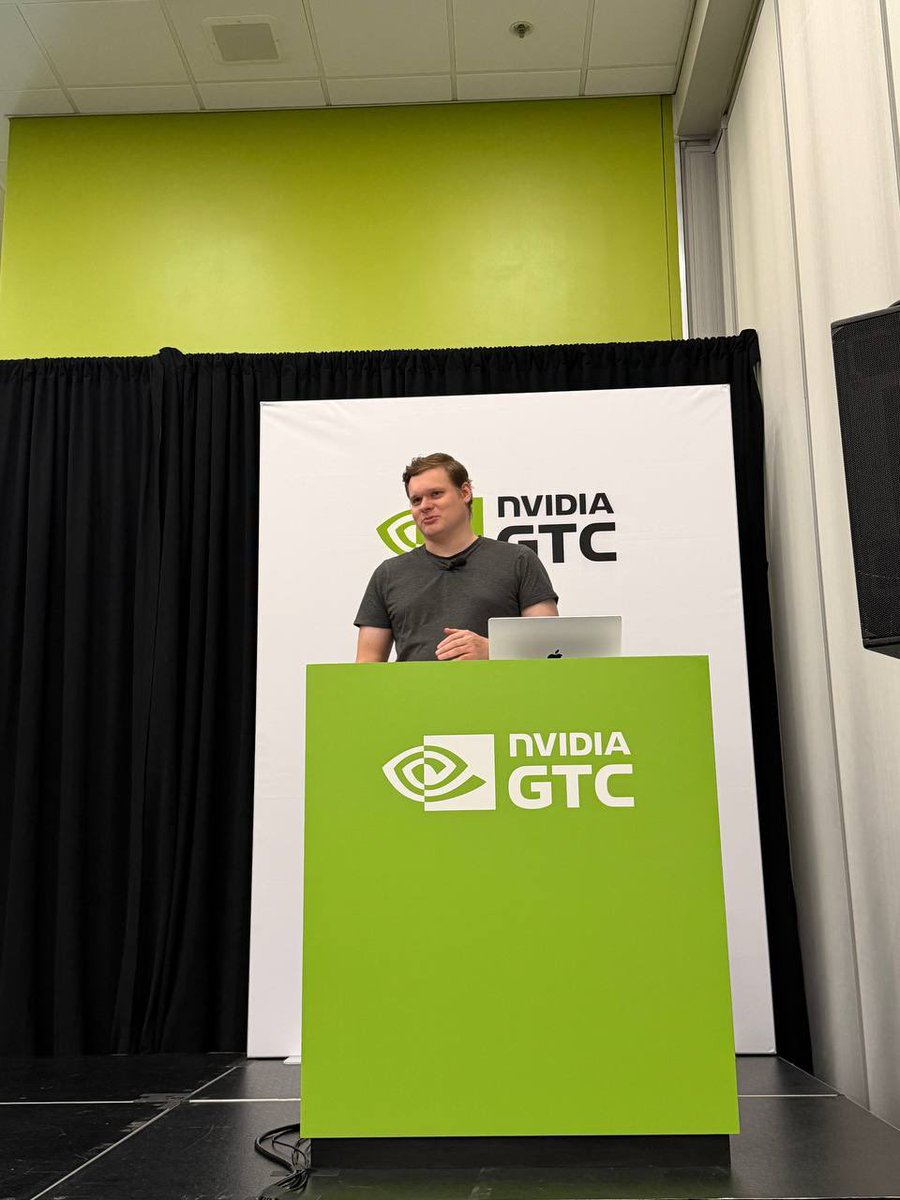
Not many gets invited to speak at @NVIDIAGTC 3 years in a row. So so proud of @ilblackdragon!🥳
Also looking forward to @near_ai happy hour today “near” the GTC venue! 👀
English

🚀 Just asked @nvidia CEO Jensen Huang question live at the @alibaba_cloud GTC Event
Honored to represent the Bay Area Founders Club on stage and raise a critical question:
👉 How will OpenClaw tackle data privacy challenges at scale?
This is one of the most important questions as AI moves from demo → real-world deployment.
Incredibly insightful discussion. Definitely something every AI founder should be thinking about.
To be honest—this moment felt a bit surreal.
From following Jensen’s journey during my PhD years
to now standing there, asking a question in person…
It reminded me of something simple but powerful:
👉 The future doesn’t belong to spectators.
👉 It belongs to those who step forward.
#AI #Founders #SiliconValley #BFC #OpenClaw #GTC #AlibabaCloud


English
Miko retweetou

Unpopular opinion:
If I started a company today, founders & founding employees shouldn’t fully vest in 4 years.
Building a real company takes a decade.
What I recommend to founders:
Founders
6-year vesting, 1-year cliff
Back-weighted:
Year 1 — 10%
Year 2 — 15%
Year 3 — 15%
Year 4 — 20%
Year 5 — 20%
Year 6 — 20%
Founding Eng / Growth
• 2–5%+ equity
• ~$120k salary
• 6-year vesting, normal weight
• 1-year cliff
Employees
• 4-year vesting
• 1-year cliff
English
@fede_intern @hosseeb It feels like the merge was one of the insanest moments in production software in human history and it went off without a hitch afaik.
English
I have many criticisms of the Ethereum Foundation.
But "no more manifestos, more shipping" from @hosseeb, a VC, is not feedback I'll take seriously.
The ship faster intuition makes sense in one world: startups. You're burning runway, competitors are moving, every week debating is a week someone else is taking your market. I run many companies, we deliver, we grow fast, billions flow through what we've built and millions use our products. I know this logic from the inside. It's correct there.
Ethereum is not a startup. It never was. It's a protocol. The mistake that keeps getting made by smart people with product backgrounds or VCs is applying the rules of one game to a completely different one.
What makes Ethereum worth anything as infrastructure is credible neutrality. The belief that no single entity controls it. Not @VitalikButerin, not the @ethereumfndn. Theguarantee isn't in the code, it lives in thousands of independent people who are constantly watching, arguing, and who have shown repeatedly they will reject changes they consider illegitimate.
The picture I'm posting captures perfectly the aesthetic of crypto taken over by performative believers: people who lost billions, kept the faith, and now demand to be taken seriously in fashion shoots. This is one of the two forces squeezing out the people actually building. Impatient capital that wants product velocity, and a performative culture that turned a technical movement into a costume party. Both are corrosive, both misunderstand what Ethereum is.
Ethereum's premium over every other L1, despite being slower and more expensive, comes from one thing: people believe it won't be captured. The reason why it's also more expensive and slower is exactly because of this. All the research and technical work we're doing is difficult because we want to be the most decentralized L1 with Bitcoin. We want to become fast without losing our guarantees.
Funds like Dragonfly have a structural incentive pointing in one direction. Criticize Ethereum's velocity, create urgency, justify backing cheaper copycats. This produces a genuine blind spot around the things that don't look like shipping but are actually holding everything together.
The moment Ethereum optimizes only for shipping cadence over legitimacy it starts looking like every other foundation controlled chain. There are dozens of those. They're worth a fraction of the value.
This doesn't mean Ethereum should be slow. This doesn't mean we shouldn't strive to become better. I've been one of the strongest critics of Ethereum. I'm burning a big part of my capital to push the boundaries of Ethereum. I'm building multiple companies on top and trying to make it faster and I'm trying to bring users to it.
Believing that writing a manifesto is blocking the development of a protocol is ridiculous.
The EF has real problems. Opaque communication, poor prioritization, bad recruiting, organizational dysfunction with real costs. These deserve serious criticism from people who understand what they're maintaining. But the solution is not startup logic applied to a protocol commons. It's better institutional design that preserves legitimacy while improving coordination. Those are different problems with different solutions.
To the "just ship" crowd, from someone who has spent years building on these systems and not writing checks at them: the thing you want to optimize away is the thing you're invested in. The slow, pluralistic, nobody wins unilaterally process is not the cost of Ethereum. It's the product.
The alternative is this Vanity Fair picture. A worse, cheaper version of TradFi dressed up in velvet and leopard print, demanding to be taken seriously.

English
Miko retweetou
𝐌𝐚𝐬𝐬 𝐞𝐧𝐭𝐫𝐞𝐩𝐫𝐞𝐧𝐞𝐮𝐫𝐬𝐡𝐢𝐩 𝐢𝐬 𝐡𝐞𝐫𝐞, 𝐚𝐧𝐝 𝐟𝐮𝐧𝐝𝐫𝐚𝐢𝐬𝐢𝐧𝐠 𝐢𝐬 𝐭𝐡𝐞 𝐧𝐞𝐰 𝐥𝐞𝐞𝐭𝐜𝐨𝐝𝐞
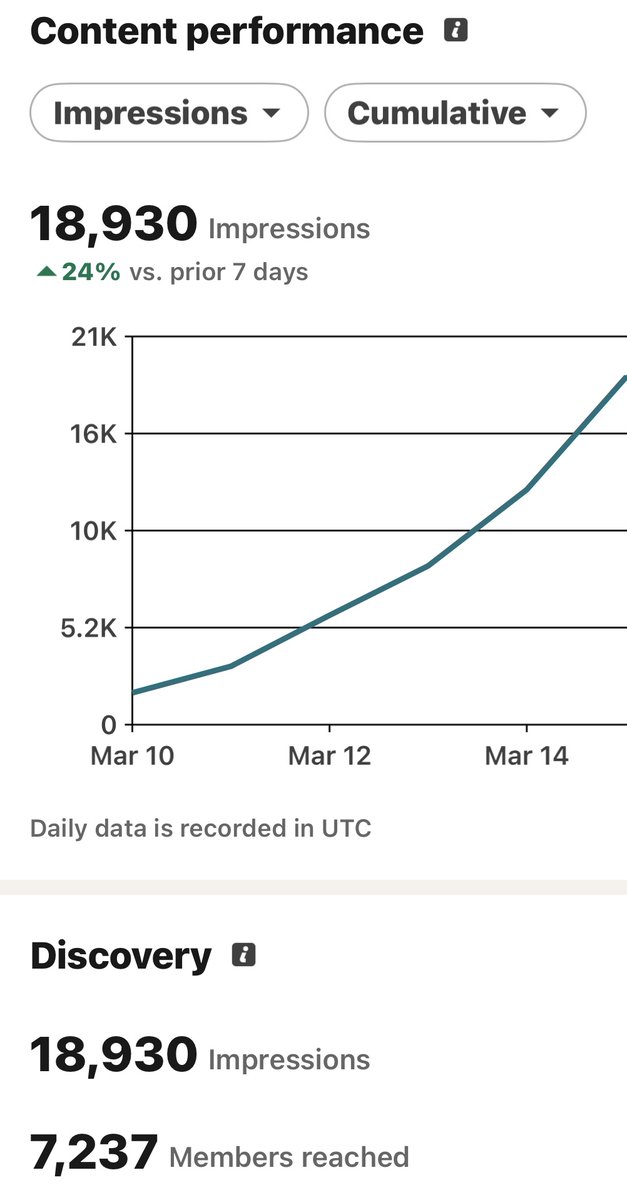
I didn’t expect @mikojava's fundraising workshop to suddenly make my social media blow up.
But it did reinforce something I’ve been noticing lately.
We’re entering a new era of entrepreneurship.
In Silicon Valley alone, thousands of people are getting laid off every week.
A lot of them are incredibly talented engineers, PMs, and designers from big tech.
And more and more of them are starting companies.
The reason is pretty obvious:
AI has lowered the barrier to building products more than ever before.
You can prototype faster, ship faster, and build with much smaller teams.
But there’s a catch.
𝐁𝐮𝐢𝐥𝐝𝐢𝐧𝐠 𝐢𝐬 𝐠𝐞𝐭𝐭𝐢𝐧𝐠 𝐞𝐚𝐬𝐢𝐞𝐫.
𝐅𝐮𝐧𝐝𝐫𝐚𝐢𝐬𝐢𝐧𝐠 𝐢𝐬 𝐬𝐭𝐢𝐥𝐥 𝐡𝐚𝐫𝐝.
My personal bet is that over the next few years, learning how to raise capital will become a core founder skill — almost like how learning algorithms and grinding LeetCode became essential for engineers about a decade ago.
Founders who don’t understand how fundraising works will have a much harder time scaling.
So we invited legendary Silicon Valley investor Miko Matsumura to run a very practical session on:
How to Raise Venture Capital
📅 March 28 (Online)
If you’re interested, comment “Fundraising” below and DM me — I’ll send you the private registration link with a 50% discount.
English



been playing around with claude code and -- I say this as someone with a journalism degree and lots of ideas who may or may not have been asked WHERE IS YOUR TECHNICAL COFOUNDER??? about 10000 times ...
WHO'S THE DEV NOW??? I'M THE TECHNICAL COFOUNDER
seriously, this may be one of the best things that's happened to me
English
Miko retweetou
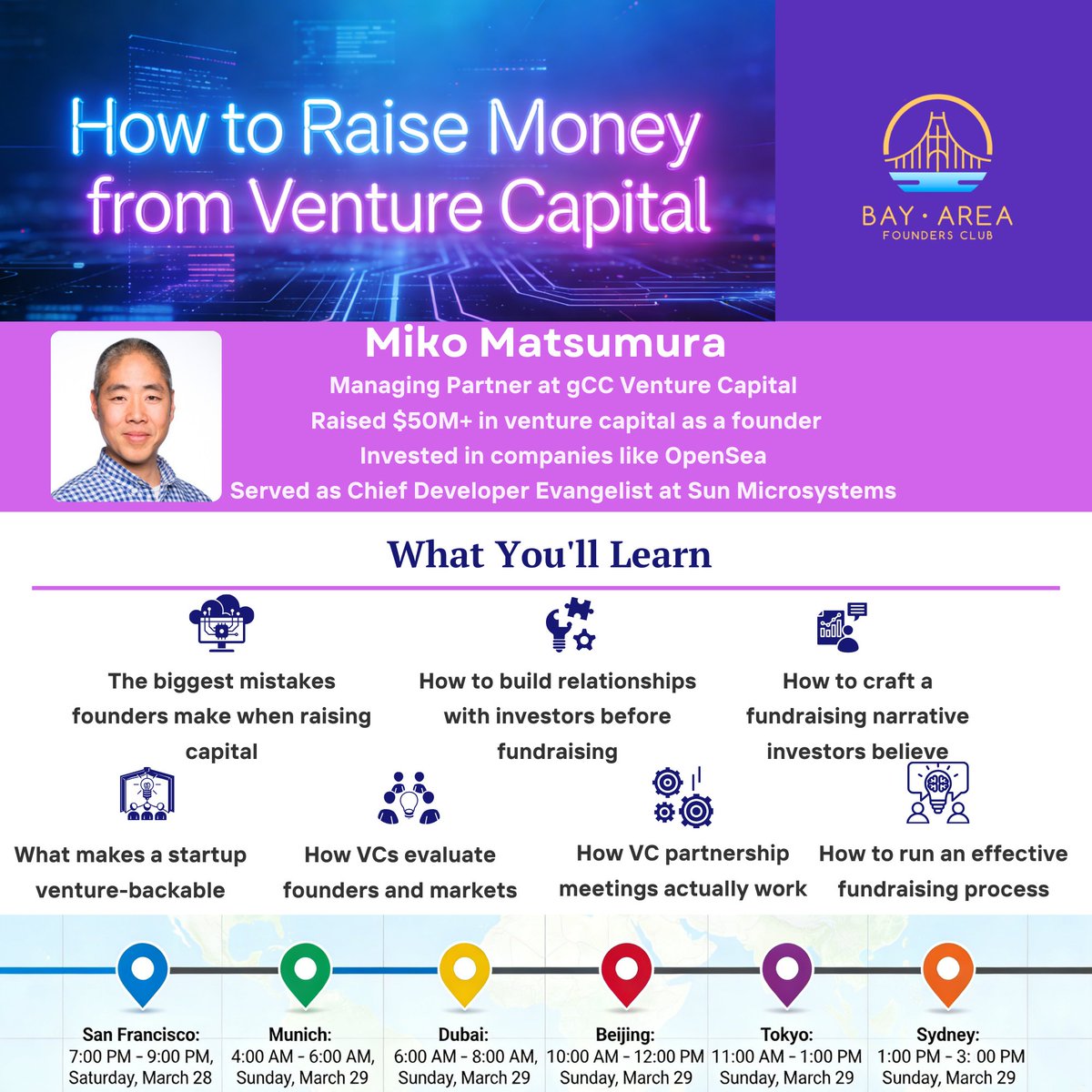
𝐇𝐨𝐰 𝐭𝐨 𝐑𝐚𝐢𝐬𝐞 𝐕𝐞𝐧𝐭𝐮𝐫𝐞 𝐂𝐚𝐩𝐢𝐭𝐚𝐥 — 𝐀 𝐖𝐨𝐫𝐤𝐬𝐡𝐨𝐩 𝐰𝐢𝐭𝐡 𝐒𝐢𝐥𝐢𝐜𝐨𝐧 𝐕𝐚𝐥𝐥𝐞𝐲 𝐋𝐞𝐠𝐞𝐧𝐝𝐚𝐫𝐲 𝐈𝐧𝐯𝐞𝐬𝐭𝐨𝐫 @mikojava
Raising venture capital is one of the most important — and misunderstood — skills for founders.
Most founders think fundraising is about a great pitch deck.
In reality, it’s about investor psychology, market timing, and venture-scale storytelling.
On March 28th at Bay Area Founders Club, we’re hosting a special workshop with Miko Matsumura on:
💰 How Founders Actually Raise Money from VCs
Miko has spent 25+ years in Silicon Valley as a founder, operator, and investor.
He has:
• Raised $50M+ in venture capital as a founder
• Invested in companies like OpenSea
• Led investments through @GumiCryptos Capital
• Previously served as Chief Developer Evangelist at Sun Microsystems
In this session, he’ll share:
• What makes a startup venture-backable
• How VCs evaluate founders and markets
• How to build relationships with investors before you raise
• The biggest mistakes founders make when pitching VCs
• What actually happens inside a VC partnership meeting
If you’re a founder planning to raise Pre-Seed, Seed, or Series A, this session will save you months of trial and error.
Seats are limited because we want to keep the discussion interactive.
🌍 Hosted by Bay Area Founders Club (BFC)
Where founders, investors, and builders explore the frontier of AI.
𝐂𝐨𝐦𝐦𝐞𝐧𝐭 “𝐅𝐮𝐧𝐝𝐢𝐧𝐠” 𝐚𝐧𝐝 𝐈’𝐥𝐥 𝐬𝐞𝐧𝐝 𝐲𝐨𝐮 𝐭𝐡𝐞 𝐫𝐞𝐠𝐢𝐬𝐭𝐫𝐚𝐭𝐢𝐨𝐧 𝐥𝐢𝐧𝐤.
Looking forward to seeing more founders level up their fundraising game.
English
@fede_intern i am not anywhere near Buenos Aires but I want to know what you are doing!
English
i'm thinking if we should show some people in buenos aires the crazy cool things we're doing with claude + codex + open source LLMs + our experience in software engineering + hardware + math + products. we've been doing things i don't see anybody even try yet. let me know if you're around the city and we can show you some cool things
English
Miko retweetou

Vitalik is again ahead of the game by a lot and sees things clearly and well. Use Ethereum when it makes sense and don't when it doesn't. It really is that simple.
vitalik.eth@VitalikButerin
I was recently at Real World Crypto (that's crypto as in cryptography) and the associated side events, and one thing that struck me was that it was a clarifying experience in terms of understanding *what blockchains are for*. We blockchain people (myself included) often have a tendency to start off from the perspective that we are Ethereum, and therefore we need to go around and find use cases for Ethereum - and generate arguments for why sticking Ethereum into all kinds of places is beneficial. But recently I have been thinking from a different perspective. For a moment, let us forget that we are "the Ethereum community". Rather, we are maintainers of the Ethereum tool, and members of the {CROPS (censorship-resistant, open-source, private, secure) tech | sanctuary tech | non-corposlop tech | d/acc | ...} community. Going in with zero attachment to Ethereum specifically, and entering a context (like RWC) where there are people with in-principle aligned values but no blockchain baggage, can we re-derive from zero in what places Ethereum adds the most value? From attending the events, the first answer that comes up is actually not what you think. It's not smart contracts, it's not even payments. It's what cryptographers call a "public bulletin board". See, lots of cryptographic protocols - including secure online voting, secure software and website version control, certificate revocation... - all require some publicly writable and readable place where people can post blobs of data. This does not require any computation functionality. In fact, it does not directly require money - though it does _indirectly_ require money, because if you want permissionless anti-spam it has to be economic. The only thing it _fundamentally_ requires is data availability. And it just so happened that Ethereum recently did an upgrade (PeerDAS) to increase the amount of data availability it provides by 2.3x, with a path to going another 10-100x higher! Next, payments. Many protocols require payments for many reasons. Some things need to be charged for to reduce spam. Other things because they are services provided by someone who expends resources and needs to be compensated. If you want a permissionless API that does not get spammed to death, you need payments. And Ethereum + ZK payment channels (eg. ethresear.ch/t/zk-api-usage… ) is one of the best payment systems for APIs you can come up with. If you are making a private and secure application (eg. a messenger, or many other things), and you do not want to let people to spam the system by creating a million accounts and then uploading a gigabyte-sized video on each one, you need sybil resistance, and if you care about security and privacy, you really should care about permissionless participation (ie. don't have mandatory phone number dependency). ETH payment as anti-sybil tool is a natural backstop in such use cases. Finally, smart contracts. One major use case is _security deposits_: ETH put into lockboxes that provably get destroyed if a proof is submitted that the owner violated some protocol rule. Another is actually implementing things like ZK payment channels. A third is making it easy to have pointers to "digital objects" that represent some socially defined external entity (not necessarily an RWA!), and for those pointers to interact with each other. *Technically*, for every use case other than use cases handling ETH itself, the smart contracts are "just a convenience": you could just use the chain as a bulletin board, and use ZK-SNARKs to provide the results of any computations over it. But in practice, standardizing such things is hard, and you get the most interoperability if you just take the same mechanism that enables programs to control ETH, and let other digital objects use it too. And from here, we start getting into a huge number of potential applications, including all of the things happening in defi. --- So yes, Ethereum has a lot of value, that you can see from first principles if you take a step back and see it purely as a technical tool: global shared memory. I suspect that a big bottleneck to seeing more of this kind of usage is that the world has not yet updated to the fact that we are no longer in 2020-22, fees are now extremely low, and we have a much stronger scaling roadmap to make sure that they will continue to stay low, even if much higher levels of usage return. Infrastructure for not exposing fee volatility to users is much more mature (eg. one way to do this for many use cases is to just operate a blob publisher). Ethereum blobs as a bulletin board, ETH as an asset and universal-backup means of payment, and Ethereum smart contracts as a shared programming layer, all make total sense as part of a decentralized, private and secure open source software stack. But we should continue to improve the Ethereum protocol and infrastructure so that it's actually effective in all of these situations.
English