Matt O'Reilly

7.8K posts

Matt O'Reilly banner
Matt O'Reilly

Matt O'Reilly

@mporeilly

Author of Free to Be Holy: A Biblical Theology of Sanctification // Lead Pastor @CC_Bham // Director of Research @WesleyBiblical // Fellow @CenPasTheo

Birmingham, AL Entrou em Mart 2010
1.1K Seguindo3.7K Seguidores
Tweet fixado
Matt O'Reilly
Matt O'Reilly@mporeilly·
What is holiness? I get that question frequently since the publication of Free to Be Holy. Here's how it's answered in the book: "God always does what’s right. He always does what he ought to do. For us, then, to be holy is to be formed in such a way that we consistently do what we ought to do—like God does" (3). To be holy is to embody the character of God. And that's the biblical vision for human life, start to finish. More here: amzn.to/40KPDol @OfficialSeedbed
Matt O'Reilly tweet media
English
0
8
32
1.7K
Matt O'Reilly
Matt O'Reilly@mporeilly·
@AmyAughtman I will say that, while I’ve heard of Pope, I had not read him before. The guy is my new favorite theologian. His discourse on the person of Christ is one of the most satisfying theological texts I’ve read.
English
0
0
1
7
Matt O'Reilly
Matt O'Reilly@mporeilly·
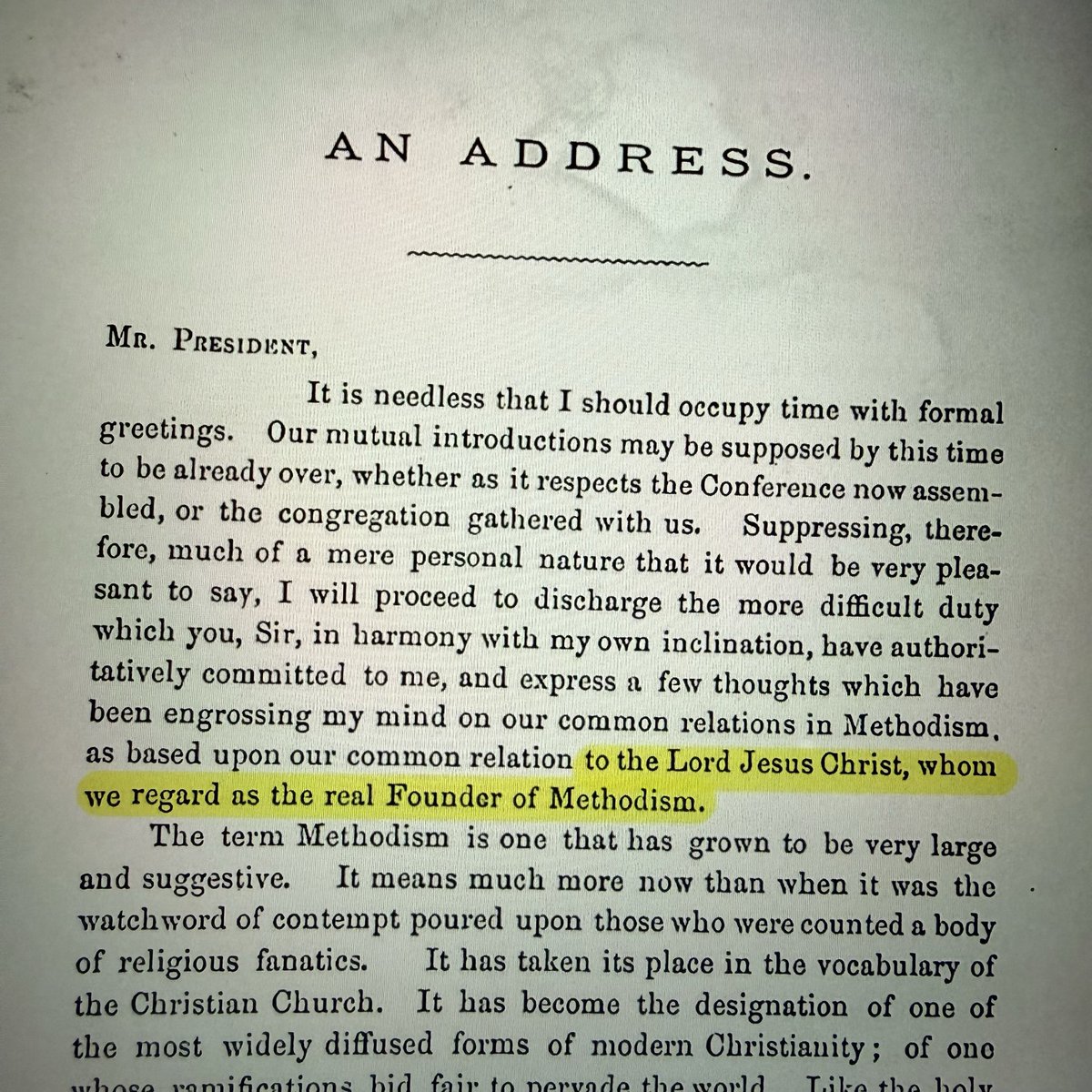
That’s the beginning of the essay. So that’s the context. I just thought it was a little humorous that he said Jesus was the real founder of Methodism, which of course is true, though J Wesley usually gets that title. I assumed he was being humorous, but on reflection perhaps he was entirely serious. 🤔
English
2
0
0
21
Matt O'Reilly
Matt O'Reilly@mporeilly·
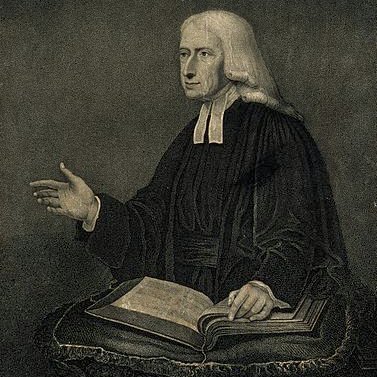
Lest you be mistaken, William Burt Pope wants to educate you on the identity of “the real Founder of Methodism.”
Matt O'Reilly tweet media
English
1
3
13
429
Matt O'Reilly
Matt O'Reilly@mporeilly·
Here’s something I’ve learned this week. The fellow regarded as the best Methodist systematic theologian of the 19th century was not shy with regard to the language of “imputation.”
English
3
1
10
481
Matt O'Reilly
Matt O'Reilly@mporeilly·
@OmniaMethodist No kidding. He wrote a ton. Very much needs to be recovered. Talk about an intellectual tradition largely unknown.
English
1
0
0
25
Matt O'Reilly
Matt O'Reilly@mporeilly·
@BillyBoy97970 “Rebellion” would be an antonym to holiness, not an expression of it. Satan’s rebellion would be the rejection of being “set apart” in any way.
English
0
0
0
4
Billy Boy
Billy Boy@BillyBoy97970·
@mporeilly I get the point but what would you call his rebellion? I think the def of "holy" is something like "set apart for religious purposes, sacred, or worthy of devotion."
English
1
0
0
10
Matt O'Reilly
Matt O'Reilly@mporeilly·
William Burt Pope: “no desire of holiness can be vain.”
Matt O'Reilly tweet media
English
1
2
5
278
Billy Boy
Billy Boy@BillyBoy97970·
@mporeilly Didn't Satan desire to be holy (set apart)? Just asking, Matt.
English
2
0
0
16
Matt O'Reilly
Matt O'Reilly@mporeilly·
@OmniaMethodist That’s the guy. Apparently, he’s the most important Methodist theologian people have never heard of.
English
1
0
0
36
Omnia Methodist
Omnia Methodist@OmniaMethodist·
@mporeilly ""William Burt Pope (1822–1903) was an English Wesleyan Methodist minister and theologian, known for his influential work, Compendium of Christian Theology, which defended Methodist doctrine and contributed significantly to systematic theology.""
English
1
0
0
46
Matt O'Reilly
Matt O'Reilly@mporeilly·
@gpclaw For. And extensively so. In fact, and I’m still sorting this out a bit, his understanding of entire sanctification seems founded on his view of imputation.
English
0
0
0
42
Matt O'Reilly
Matt O'Reilly@mporeilly·
Classical Christology is just so elegant. Here’s William Burt Pope, the Methodist theologian, once again.
Matt O'Reilly tweet media
English
2
2
15
890
Matt O'Reilly retweetou
Luke Stamps
Luke Stamps@lukestamps·
When someone you love has died--someone you lived with and knew intimately, someone whose face and hands are as familiar to you as your own--this word of resurrection can never be heard as a mere theory or idea. It is everything or it is nothing.
English
2
16
167
5.3K
Matt O'Reilly
Matt O'Reilly@mporeilly·
I'm in agreement that the basics of the faith are clear and accessible. Interestingly, it doesn't seem to me like I hear the appeal to "plain meaning" all that often when the basics are under consideration. It seems that "plain meaning" is asserted more commonly when the meaning is far from plain and the one asserting the plain reading is more interested in assertions than arguments.
English
1
0
0
50
Lawson Stone
Lawson Stone@lgstone·
This! Yes! There are, of course, texts much more easily interpreted than others, and so we usually do affirm that the essence of the biblical message is accessible to a competent, sympathetic reader without a massive apparatus of explication getting in the way. But that's for the basics. Once you dig into complex problems, controversial questions, and passages where the context is much thicker, the task of the exegete becomes more urgent.
Matt O'Reilly@mporeilly

In the past, I would sometimes appeal to the “plain meaning” of various scriptural texts. I’ve stopped doing that. Not because I don’t think the Bible speaks plainly at times. Nor because I’ve given up on the perspicuity of scripture with regard to its teaching on salvation. I haven’t. No, I’ve stopped appealing to the “plain meaning” because that phrase is often used to discourage serious engagement in biblical interpretation. The “plain meaning” claim is frequently deployed to avoid dealing with legitimate challenges to whatever reading is supposed to be so certainly clear. It’s sometimes used rhetorically to suggest that one interpretation of the Bible is so obvious that we don’t need to do the hard work of exegesis and hermeneutics to understand it. If someone insists their view represents the “plain meaning” of some scriptural text, that’s your clue to scrutinize their interpretation all the more rigorously. Maybe it is the plain meaning, but you can’t know until you do the work.

English
2
0
1
215
Matt O'Reilly
Matt O'Reilly@mporeilly·
In the past, I would sometimes appeal to the “plain meaning” of various scriptural texts. I’ve stopped doing that. Not because I don’t think the Bible speaks plainly at times. Nor because I’ve given up on the perspicuity of scripture with regard to its teaching on salvation. I haven’t. No, I’ve stopped appealing to the “plain meaning” because that phrase is often used to discourage serious engagement in biblical interpretation. The “plain meaning” claim is frequently deployed to avoid dealing with legitimate challenges to whatever reading is supposed to be so certainly clear. It’s sometimes used rhetorically to suggest that one interpretation of the Bible is so obvious that we don’t need to do the hard work of exegesis and hermeneutics to understand it. If someone insists their view represents the “plain meaning” of some scriptural text, that’s your clue to scrutinize their interpretation all the more rigorously. Maybe it is the plain meaning, but you can’t know until you do the work.
English
2
2
20
2.2K
Matt O'Reilly
Matt O'Reilly@mporeilly·
Prefer an audio-only format? 🎧Listen to the same conversation on the Theology Project podcast. 👉Get it here: podbean.com/ew/pb-pxnnh-19… 🔔And while you're there, go ahead and subscribe so you don't miss anything.
English
1
0
1
208
Matt O'Reilly
Matt O'Reilly@mporeilly·
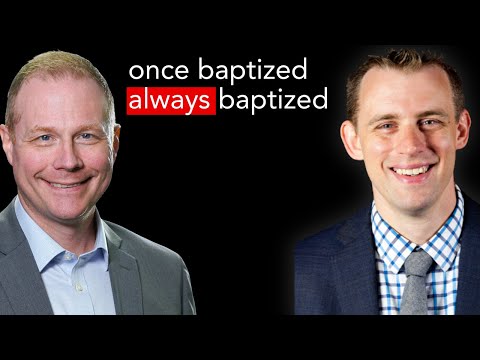
Why don't Methodists rebaptize people? In short, it's about God. In this clip, Dr. Jonathan Powers and I discuss the issues including: 1. WHY our theology of baptism doesn't allow it 2. HOW to shepherd people through the questions 👉Watch here: youtu.be/wdhmaIoJQL8
YouTube video
YouTube
Matt O'Reilly tweet media
English
1
0
2
166