Phi

3.3K posts

Phi banner
Phi

Phi

@phi_sci

Ciencia y verdad. Amad la vida.

En tu cabeza. Entrou em Mart 2015
683 Seguindo172 Seguidores
Phi retweetou
𝗖𝗮𝗿𝗹𝗼𝘀 𝗔𝗱𝗮𝗺𝘀
> Ganaste mucho dinero en el extranjero > Quieres volver a tu país para contribuir > Decides que puedes invertirlo en modernizar cultivos en tu Salamanca natal > Ves una gran oportunidad aunque tienes dudas > Alguien te avisa de que la burocracia destruirá el negocio Te vas e inviertes todo en una isla del caribe. No merece la pena intentarlo hasta el día en que los españoles decidan hacer juicios populares contra la casta burocrática.
elEconomista.es@elEconomistaes

La Guardia Civil detiene a un agricultor por plantar nectarinas y le impone una multa de hasta 300.000 euros dozz.es/40vgq2

Español

8
226
1.7K
160.6K
Phi retweetou
Gaston Giribet
Gaston Giribet@GastonGiribet·
Einstein y Oppenheimer ... y Riemann y Christoffel.
Gaston Giribet tweet media
CY
0
12
152
3.6K
Phi retweetou
The Math Flow
The Math Flow@TheMathFlow·
It's like a Ferrari, and a tricycle are the same because they both have wheels.
The Math Flow tweet media
English
3
9
138
4.1K
Phi retweetou
okdiario.com
okdiario.com@okdiario·
🗯️ 🇪🇸 La afición del Atlético entona el «viva España» y la del Barcelona responde con gritos de «independencia».
Español
42
68
302
45.2K
Phi
Phi@phi_sci·
@JNavaloo @ArchivoVAR No, imbécil, lee bien y te darás cuenta de la intención de la frase, oligofrénico.
Español
0
0
0
25
JNavalo
JNavalo@JNavaloo·
@phi_sci @ArchivoVAR Será imparcial retrasado, si no sabes ni escribir bien cállate la puto boca
Español
1
0
0
53
Archivo VAR
Archivo VAR@ArchivoVAR·
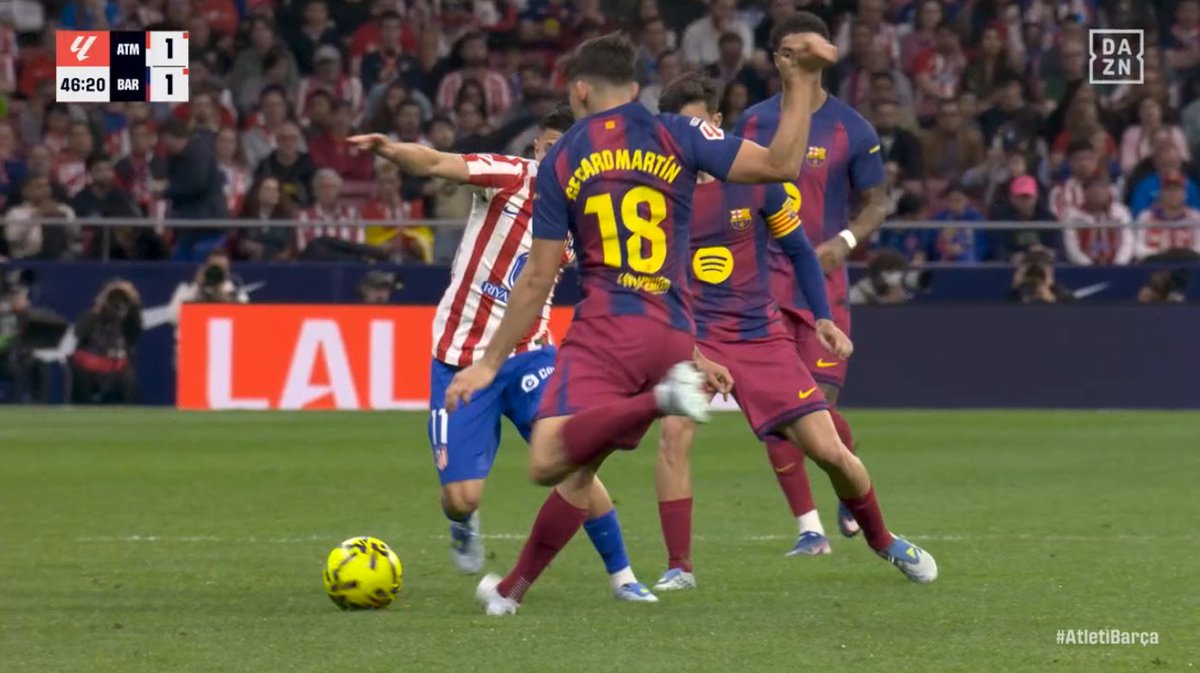
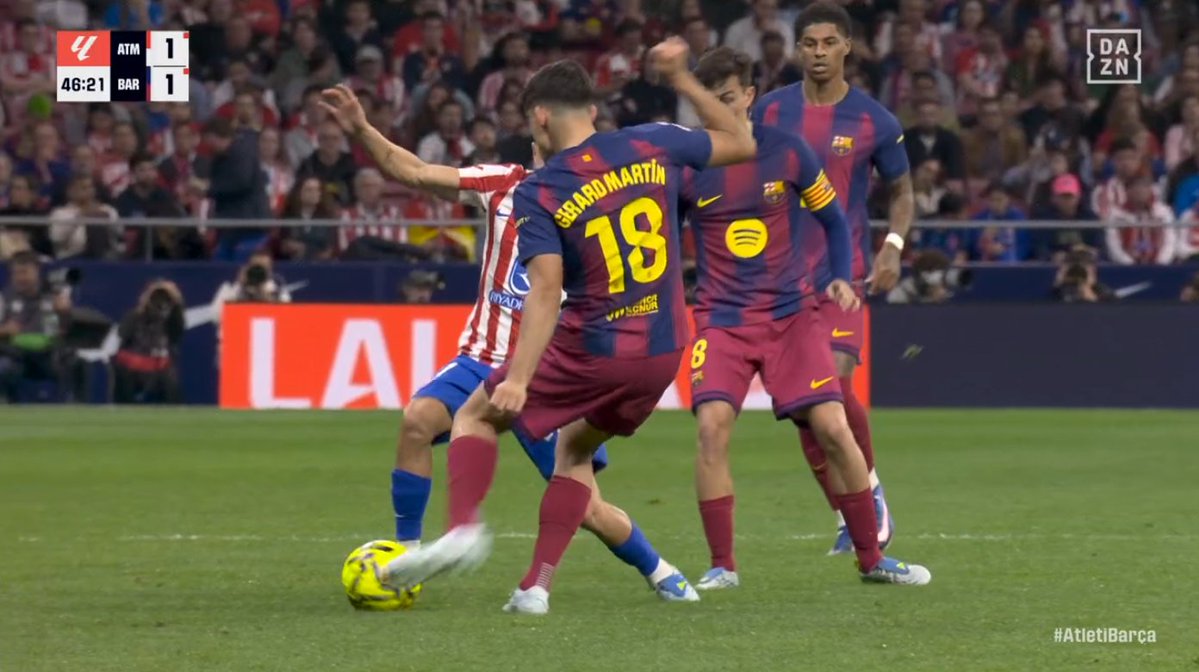
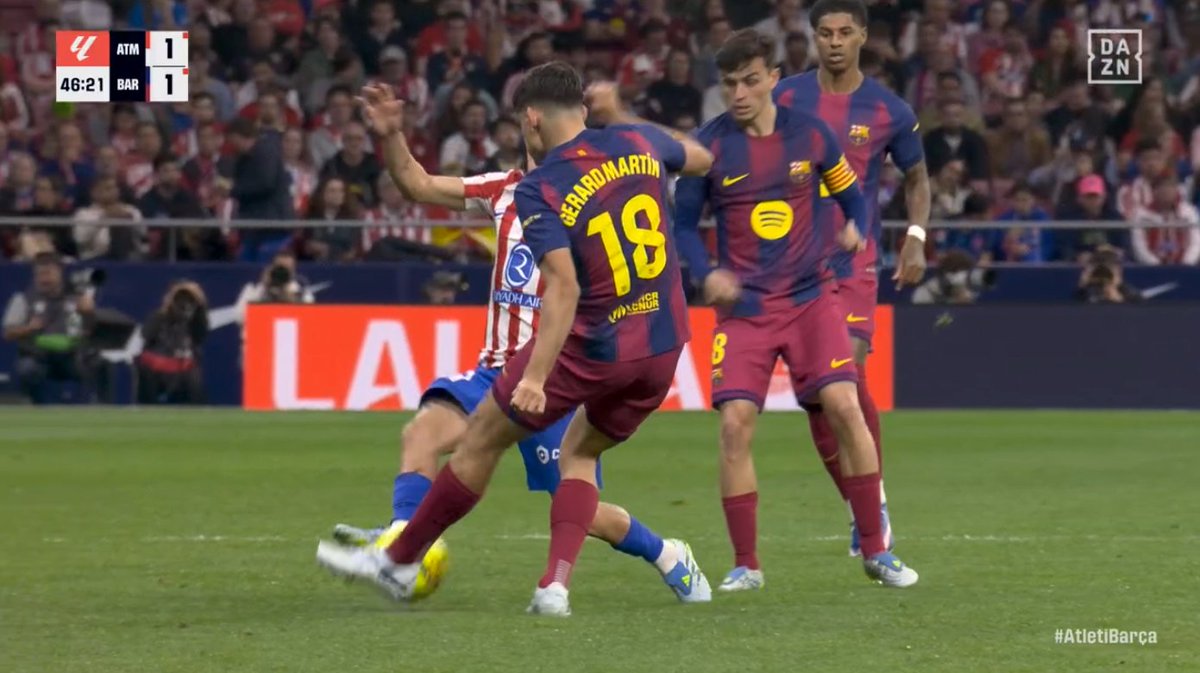
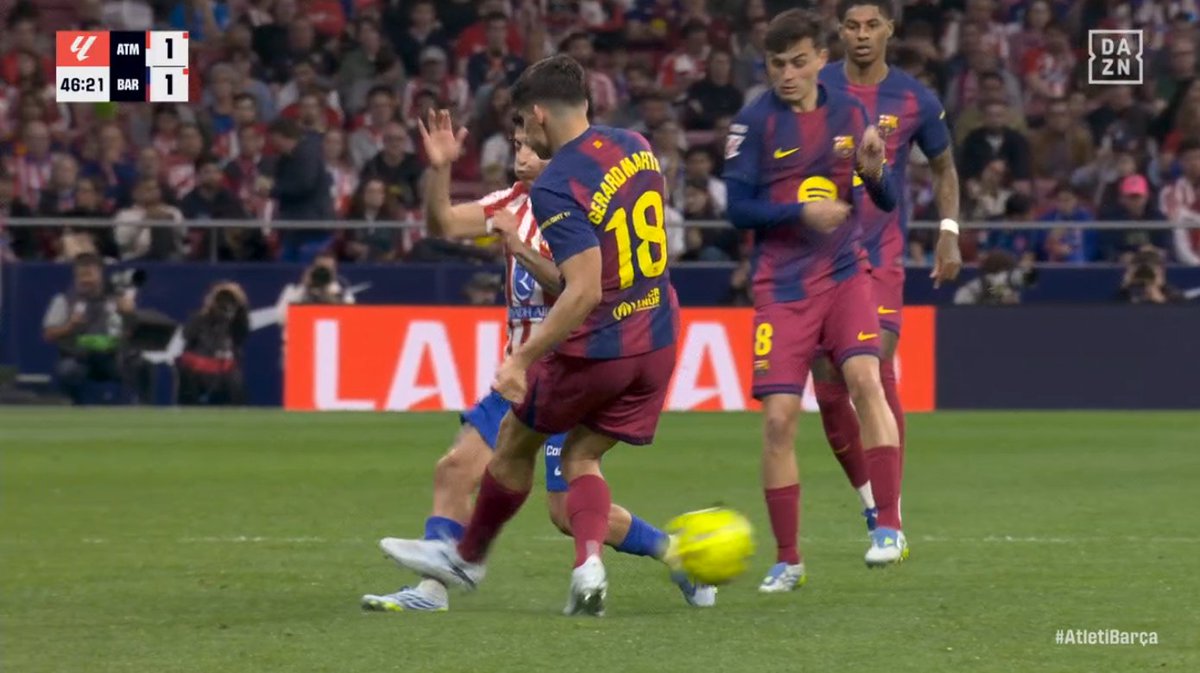
🖥️💥 Valiente intervención del VAR en el Metropolitano. 👉🏻 Gerard Martín realiza un despeje controlado y, en el acción, pisa el tobillo de Almada, el cual invade su zona de influencia. ✅ 𝗡𝗢 𝗘𝗦 𝗥𝗢𝗝𝗔 𝗗𝗜𝗥𝗘𝗖𝗧𝗔. ▪️ Para el CTA estas acciones son solo de amarilla.
Archivo VAR tweet mediaArchivo VAR tweet mediaArchivo VAR tweet mediaArchivo VAR tweet media
Español
2K
3.1K
31.5K
1.8M
Phi retweetou
Albert Ortega
Albert Ortega@AlbertOrtegaES1·
Juan Musso habla claro en DAZN. "Era roja a Gerard Martín. El árbitro lo vio claramente en el campo. Eso hubiese hecho que el partido fuese más real. Once contra once fuimos mejores que el Barça".
Albert Ortega@AlbertOrtegaES1

Juan Musso, en DAZN: "Era roja clara a Gerard Martín. El árbitro lo vio claramente en el campo. Eso hubiese hecho que el partido fuese más real. Once contra once fuimos mejores que el Barça".

Español
58
151
1.4K
95.4K
Phi retweetou
Math Files
Math Files@Math_files·
Politics is for the present, but an equation is for eternity. -Albert Einstein ✍️ x.com/H0H0v/status/2…
English
9
45
275
13.6K
Phi retweetou
The Scientific Lens
The Scientific Lens@LensScientific·
Harmonic oscillation in a levitated water drop Ultrasonic standing waves levitate a water droplet and flatten it into a disk. Modulating the sound at its resonance frequency excites harmonic shape modes creating rotating "star drops"
English
45
646
3.3K
316.2K
Phi retweetou
Mathematica
Mathematica@mathemetica·
Watch hydrogen atom wavefunctions smoothly transition between quantum states (n,l,m) This is the actual probability density of finding the electron; not just static orbitals, but the real quantum dance as it morphs between energy levels.
English
20
261
1.6K
66K
Phi retweetou
Mathematica
Mathematica@mathemetica·
This is the legendary Lorenz attractor; the butterfly of chaos theory in glorious 3D! Equations that birthed the butterfly effect: dx/dt = 10(y−x) dy/dt = x(28−z)−y dz/dt = xy−(8/3)z Tell me your craziest real-life “butterfly effect” moment?
English
13
112
520
28.4K
Phi retweetou
Abakcus
Abakcus@abakcus·
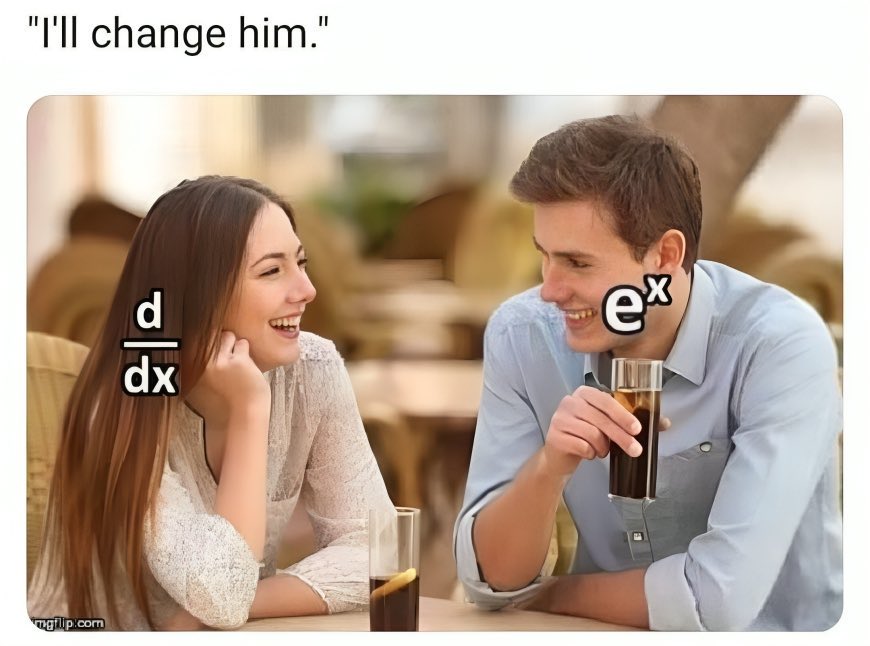
This calculus joke.
Abakcus tweet media
English
30
316
2.5K
89.7K
Phi retweetou
Γ(z)
Γ(z)@gammaofzeta·
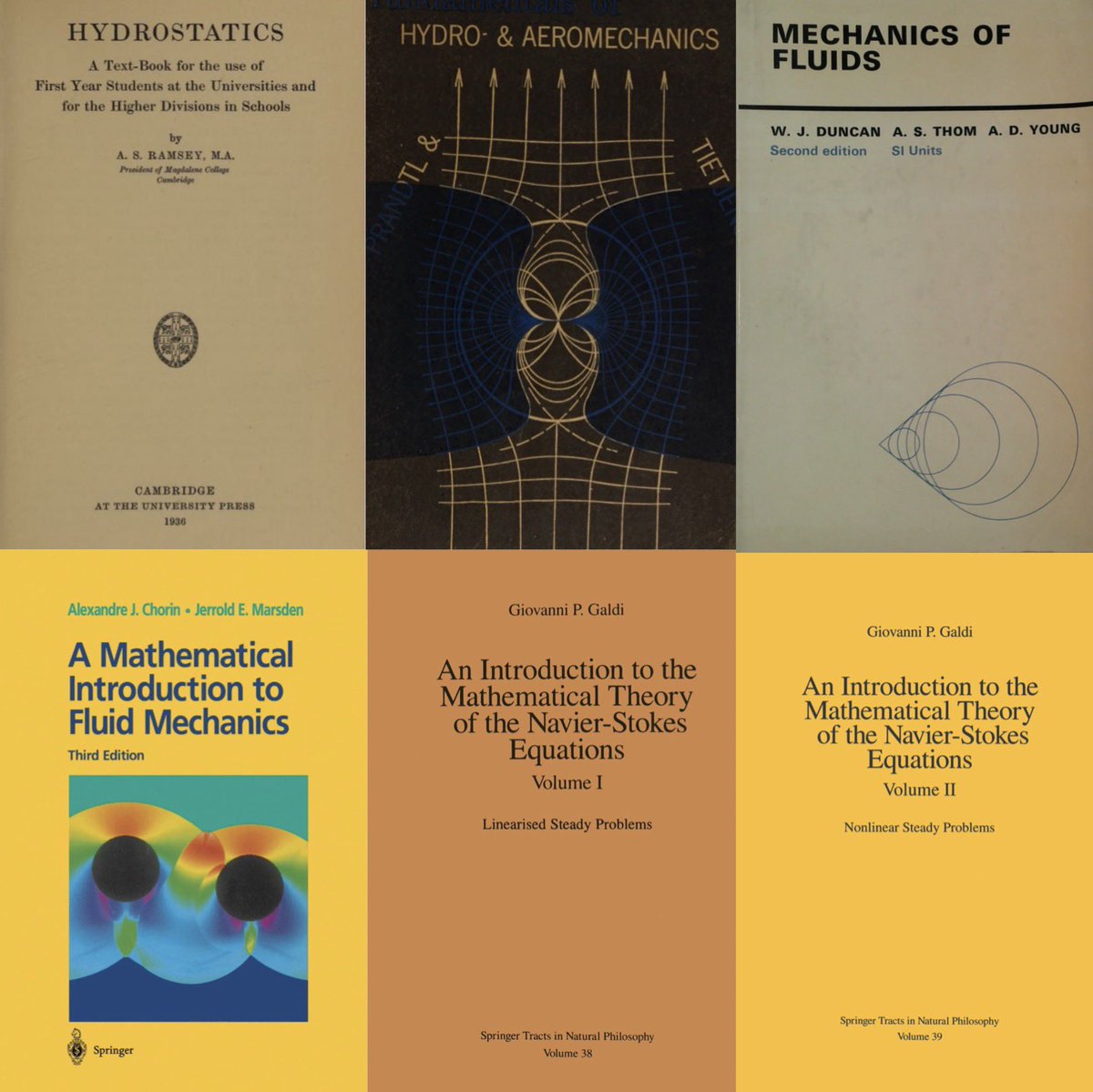
Today, besides realizing I am practically כשר לפסח permanently (due to IBS) —really, my diet is חמץ-free, lol— , as finals approach, I’ve been putting together my list of the best fluid mechanics books (at least to me) by topic. Here’s my פסח selection for you guys: For hydrostatics, A.S. Ramsey’s Hydrostatics is an absolute gem — clear and timeless. Prandtl & Tietjens’ Fundamentals of Hydro- and Aeromechanics is a beautiful classic that focuses on deep physical intuition rather than heavy math. Duncan, Thom & Young’s Mechanics of Fluids is pure gold for boundary layer theory — strong on experimental fluid dynamics instead of just CFD, and very rigorous. Chorin & Marsden’s A Mathematical Introduction to Fluid Mechanics (same Marsden as the vector calculus gem) is pure elegance: concise, coordinate-free, and beautifully motivates the techniques used in modern CFD while giving a wonderful understanding of vorticity. For the Navier-Stokes equations from a pure math perspective, Galdi’s An Introduction to the Mathematical Theory of the Navier-Stokes Equations is excellent. It’s comprehensive, diving deep into functional analysis with Sobolev spaces, the Stokes operator, existence, uniqueness, and solution behavior. (I’ve only read parts so far, but it’s outstanding.) חג שמח
Γ(z) tweet media
English
3
34
316
10K
Phi retweetou
Erika 
Erika @ExploreCosmos_·
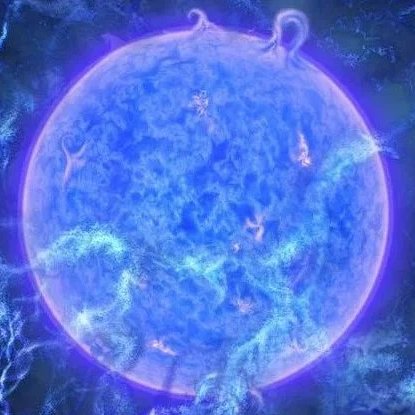
There is a long-standing assumption in astrophysics that when massive stars reach the end of their lives, they collapse and leave behind compact remnants, either neutron stars or black holes. That picture works well for a broad range of stellar masses, but theory has always suggested that the very most massive stars follow a different, more extreme path. Instead of collapsing, they may be completely disrupted in an event known as a pair-instability supernova, leaving no remnant at all. The underlying physics is subtle but robust. In extremely massive stellar cores, temperatures become so high that gamma-ray photons can spontaneously convert into electron–positron pairs. This process reduces the radiation pressure that normally supports the star against gravity. With that pressure suddenly weakened, the core begins to collapse. But instead of continuing into a black hole, the collapse triggers an explosive thermonuclear runaway, primarily oxygen burning, that reverses the collapse and unbinds the entire star. The result is not a remnant, but total destruction: all of the stellar material is ejected into space. However, this outcome is not a single, clean threshold. For a range of slightly lower core masses, stars can enter a regime known as pulsational pair-instability. In these cases, the same pair-production mechanism destabilizes the core, but not enough to completely unbind the star in one event. Instead, the star undergoes a series of violent pulses, ejecting substantial amounts of mass over time. After shedding enough material, the core eventually stabilizes and collapses, forming a black hole. This process is important because it naturally produces black holes that sit just below the expected mass gap, effectively sculpting its lower boundary. For decades, the full pair-instability mechanism remained largely theoretical. While some candidate explosions have been proposed observationally, direct and unambiguous evidence has been difficult to establish. What has changed in recent years is not just our ability to observe light from distant explosions, but our ability to “listen” to the universe through gravitational waves. Since the first detections by @LIGO and @ego_virgo , we now have a growing catalog of merging black holes, each event providing precise measurements of their masses. When researchers began to treat this catalog statistically, as a kind of mass distribution or “map” of black holes, they noticed something striking. There appears to be a deficit, or even a gap, in the population of black holes above roughly 45–50 solar masses and extending up to around 120 solar masses. This is not a trivial observational bias; the detectors are actually more sensitive to higher-mass mergers, so if anything, such objects should be easier to find. This absence aligns remarkably well with the theoretical predictions of pair-instability supernovae. Stars that would have produced black holes in that mass range instead undergo total disruption, preventing the formation of remnants in precisely that interval. On the other side of the gap, theory predicts that if the helium core exceeds roughly 135 solar masses, the collapse proceeds so rapidly that explosive burning cannot reverse it, and the star collapses directly into a black hole. This creates a second population of more massive black holes beyond the gap, completing the overall structure expected from stellar evolution models. What makes this result particularly compelling is that it is indirect. We are not observing the pair-instability explosions themselves in these data; instead, we are inferring their existence from what is missing. The lack of black holes in a specific mass range becomes a measurable signature of a physical process that leaves no object behind. In that sense, the evidence is statistical but physically grounded, emerging from the cumulative behavior of many independent events. There are still open questions. Some black holes detected in mergers appear to fall within or near this expected gap, suggesting more complex formation channels, such as hierarchical mergers where smaller black holes merge repeatedly inside dense stellar environments. These processes can populate the gap and complicate the interpretation, but they do not erase the overall structure seen in the mass distribution. Instead, they add another layer of astrophysical nuance. What this line of research demonstrates is that stellar evolution does not end with the disappearance of a star, it leaves imprints that can be read long after the event itself. Gravitational waves, in particular, provide a fundamentally different observational window, one that is sensitive not to light but to mass and dynamics. By assembling these observations into a coherent statistical framework, we are effectively reconstructing the life cycles of the most massive stars in the universe. In practical terms, this is one of the clearest examples of how absence can function as evidence in astrophysics. The missing black holes are not a gap in our data; they are the data. And within that gap lies confirmation of a prediction made decades ago, now supported by an entirely new kind of observation. Even when a star leaves nothing behind, it still leaves a measurable imprint on the universe. Here's a new study 👉 nature.com/articles/s4158…
Erika  tweet media
English
17
61
334
9.5K
Phi retweetou
Un manchego encabronao
Un manchego encabronao@UEncabronao·
Ojo a las charos lo que le preguntan, y como mienten descaradamente con las cifras. El analfabeto de @patxilopez debe tomar nota de como se responde a preguntas incómodas y malintencionadas, no como las que le hace @vitoquiles.
Español
66
1.1K
2.2K
21.5K
Phi retweetou
Pato Bonato
Pato Bonato@patobonato·
Parece mentira pero es REAL España vive en un mundo de payasos 🤡 De no creer !!!
Español
1.2K
4.2K
10.4K
268.3K