Rich Apodaca
5.7K posts

Rich Apodaca
@rapodaca
Science, software, and startups.
United States Entrou em Ağustos 2007
0 Seguindo873 Seguidores
Tweet fixado

Time to retire this account. It will stay up but I won't post and probably won't check it, either.
I'll be hanging out at @rapodaca@fosstodon.org for now instead. The posts at depth-first.com will continue.
English

@andrewwhite01 @SuperScienceGrl In terms of expense, working on the wrong target. Zero effect, AFAICT.
English

IMO, goal should be to ↓ bad interpretations, not "bad data." Readers should expect authors to provide the data needed to do that. How much & what kind depends on situation.
Bigger problem is how hard it is to turn this into editorial policy.
Corin Wagen@CorinWagen
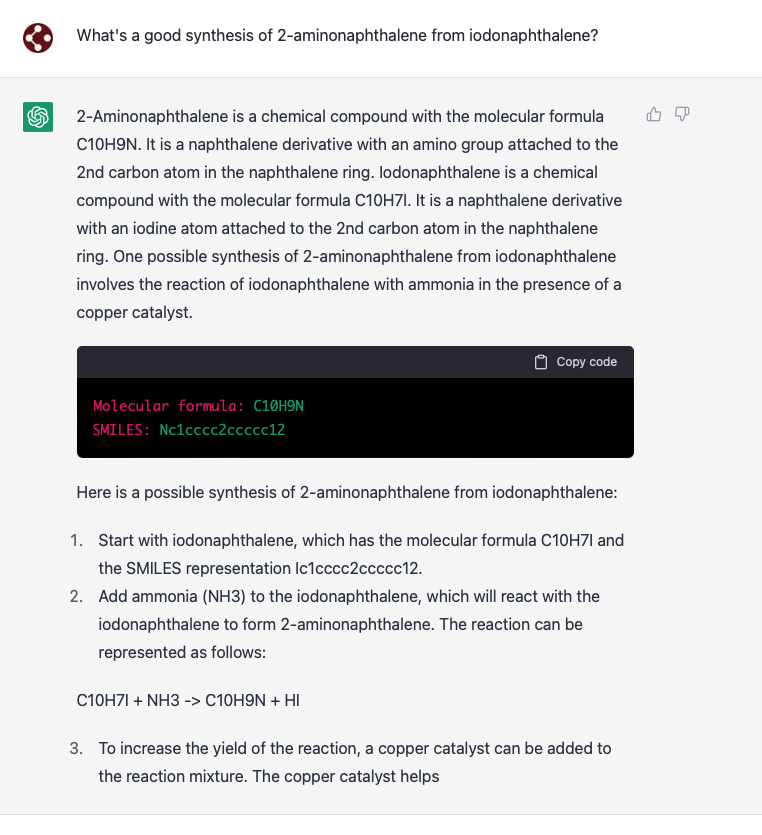
Something I've wanted to write for a while—my argument for why journals shouldn't require 13C NMR for publication. (This post was inspired by the many long hours I've spent collecting 13C NMR spectra.) Hear me out! corinwagen.github.io/public/blog/20…
English

What do you do when doing something is worse than doing nothing? experimentalhistory.substack.com/p/the-rise-and…
English

@cthoyt No, but I've poked around at it. It's interesting, but there's also a lot of centralization potential there that isn't recognized now because users are scarce. I'm not sure many people realize this.
English

@Dereklowe @OrdoSeclorum 1. No RSS auto-discover link (could trip up some readers)
2. Footer links to a page which links to science.org/blogs/pipeline… .
3. My reader (RssBook) sorts feed in _ascending_ chron. order (other feeds are reverse).
4. Feed title ("AAAS: Keyword...") is confusing.
English

I admit I laughed.
Sigma-Aldrich@SigmaAldrich
You've heard of Elf on a Shelf, now get ready for:
English

Canonicalization is one of those topics that always seemed like black magic to me. Here's an attempt to demystify. 🦀 #rustlang #cheminformatics depth-first.com/articles/2022/…
English

@clemensisert Exactly the kind of paper I was looking for - thanks!
English

@rapodaca One approach of accounting for different tautomers is using data augmentation to train a model to predict the same experimentally observed value for all tautomers (tautomer invariance): nature.com/articles/s4200…
→ for inference, it doesn't matter if you choose the "right" tautomer
English

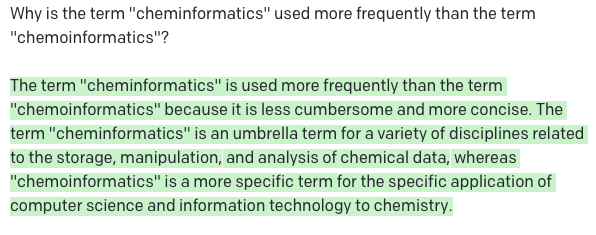
Raising the question... what's the difference?
Paul Graham@paulg
For me one of the biggest surprises about current generative AI research is that it yields artificial pseudo-intellectuals: programs that, given sufficient examples to copy, can do a plausible imitation of talking about something they understand.
English