

Cryptik➕️
1.3K posts

Sam Altman predicted in 2024 that a one-person billion-dollar company "would have been unimaginable without A.I., and now it will happen."
He just emailed the NYT saying he won a bet with tech CEO friends over when it would arrive, and that he "would like to meet the guy."
The guy: Matthew Gallagher, 41. Spent $20K and two months building a GLP-1 weight-loss telehealth company out of his living room in LA.
The stack: ChatGPT, Claude, and Grok writing code. Midjourney for images. Runway for video ads. ElevenLabs handling customer calls. Custom AI agents stitching it all together.
$401M revenue in year one. On track for $1.8B this year.

English
Cryptik➕️ ретвитнул

This is the most important article you'll read today.
There are only 3 paths to getting rich in the AI era.
99% of people won't find theirs in time, but those who do will get very rich.
Don't just read - actually act & get rich:
AI Edge@aiedge_
English
Cryptik➕️ ретвитнул

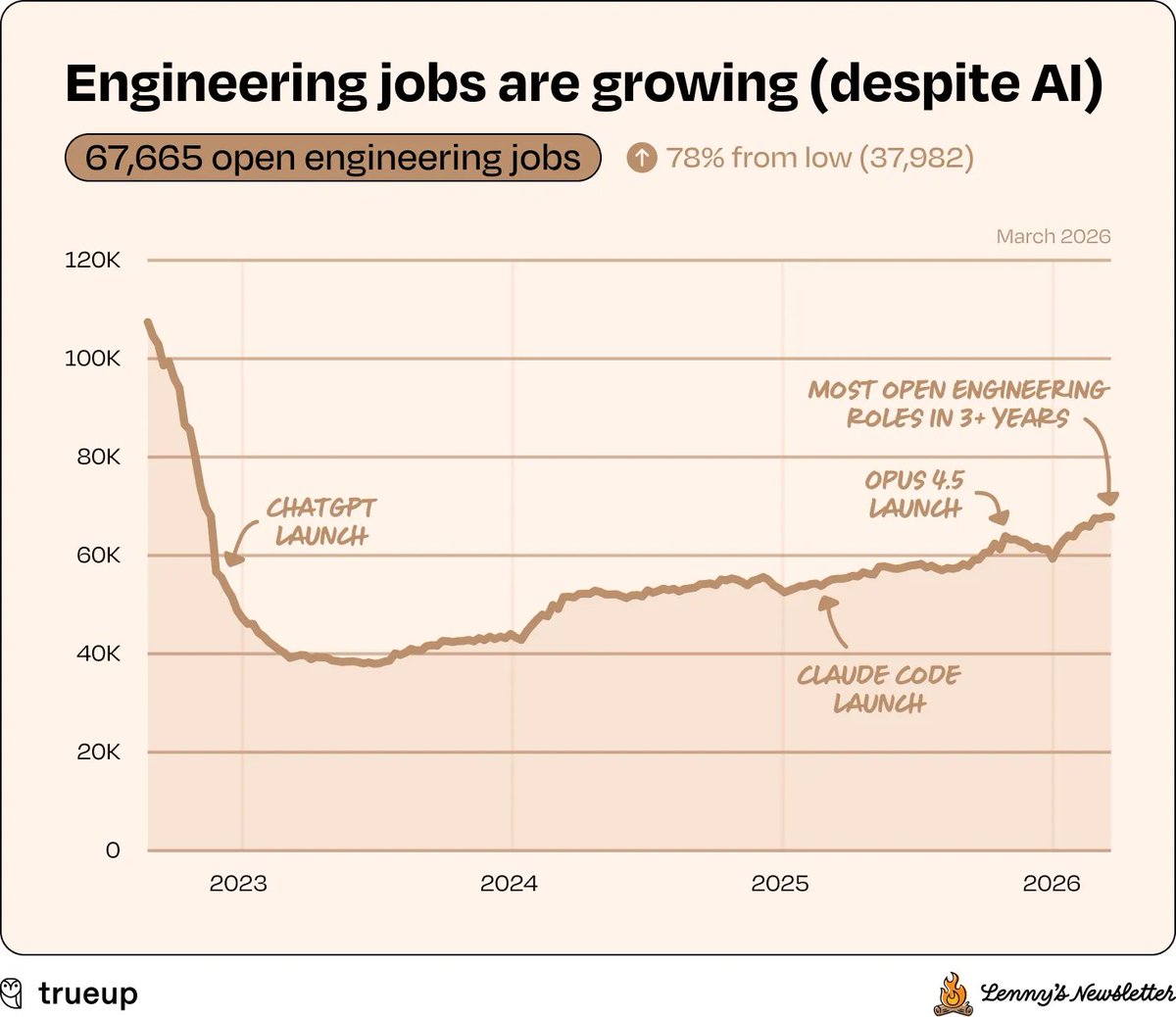
Engineering job openings are at the highest levels we’ve seen in over 3 years
There are over 67,000 (!!!) eng openings at tech companies globally right now, with 26,000 just in the U.S. We don’t know if there would have been more open roles if not for AI or if AI is actually leading to more open roles, but since the start of this year, the increase in open eng roles is accelerating even more.
Lenny Rachitsky@lennysan
STATE OF THE PRODUCT JOB MARKET IN EARLY 2026 In spite of the headlines about layoffs and AI taking jobs, we’re actually seeing a lot of promising signs in tech hiring, and some interesting new trends: 1. PM openings are at the highest levels we’ve seen in over three years 2. AI hasn’t slowed the demand for software engineers (at least not yet) 3. AI roles in general are absolutely exploding 4. Design roles have plateaued 5. The Bay Area is increasing in importance 6. Remote work opportunities continue to decline 7. Despite ongoing layoffs, the overall number of tech jobs continues to grow More in 🧵
English

@FragmentsOrg My most anticipated token this year. Cant wait to see this in the wild!
English

Funding fees on perps don't stop when the market goes sideways.
They don't stop when you're down.
They don't stop at all.
That's the trade you didn't price in.
BTC-Jr. fixes this.
Join the waitlist: link.fragments.org/early-access
English
Cryptik➕️ ретвитнул

🇦🇺An Australian tech founder with zero biology background sequenced his dog’s tumor DNA, then used ChatGPT and AlphaFold to design a custom mRNA cancer vaccine.
A month later, the tumors shrank by half.
And this is just the start of AI medicine.
English
Cryptik➕️ ретвитнул

this is actually insane
> be tech guy in australia
> adopt cancer riddled rescue dog, months to live
> not_going_to_give_you_up.mp4
> pay $3,000 to sequence her tumor DNA
> feed it to ChatGPT and AlphaFold
> zero background in biology
> identify mutated proteins, match them to drug targets
> design a custom mRNA cancer vaccine from scratch
> genomics professor is “gobsmacked” that some puppy lover did this on his own
> need ethics approval to administer it
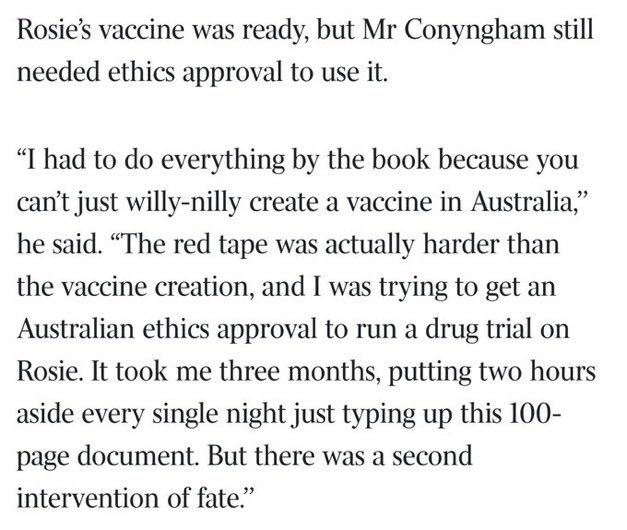
> red tape takes longer than designing the vaccine
> 3 months, finally approved
> drive 10 hours to get rosie her first injection
> tumor halves
> coat gets glossy again
> dog is alive and happy
> professor: “if we can do this for a dog, why aren’t we rolling this out to humans?”
one man with a chatbot, and $3,000 just outperformed the entire pharmaceutical discovery pipeline.
we are going to cure so many diseases.
I dont think people realize how good things are going to get



Séb Krier@sebkrier
This is wild. theaustralian.com.au/business/techn…
English



I've made $4.7M with AI. Today, I recorded myself building an entire @openclaw business in an hour.
You'll learn how to:
• Find a winning niche using AI
• Build an offer people actually want to pay for
• To get your first clients
• To use AI to productize and fulfill the entire service
• The exact prompts I use to orchestrate all of it
After building the #1 Lovable agency. This is the entire playbook behind AI native businesses.
The full video is live on YouTube. Comment "Playbook" and I'll DM you the link.
English

Cryptik➕️ ретвитнул

Very soon there are going to be more AI agents than humans making transactions.
They can’t open a bank account, but they can own a crypto wallet. Think about it.
English
Cryptik➕️ ретвитнул
You were right about BTC.
You just held less of it than you should have.
BTC-Jr gives you more exposure to the thing you already believe in.
No liquidations. No funding rate bleed.
Join the waitlist: link.fragments.org/early-access
English
@elasticmoneyxyz Goldjr will be smash hit with how Gold has been exploding lately!
English
Cryptik➕️ ретвитнул

@AmpleforthOrg The future of digital money is elastic. Fixed supply just makes an asset behave like a precious metal. I think $AMPL is on to something
English

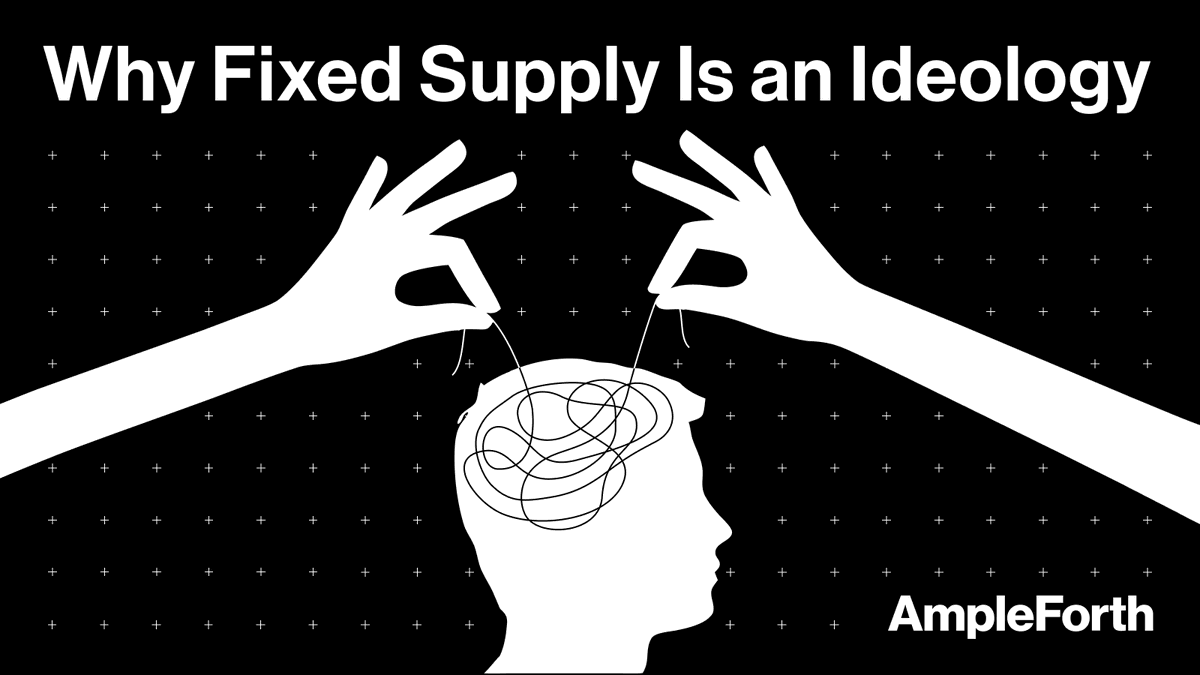
Fixed supply is often framed as a neutral monetary design.
In practice, it’s an ideology.
It encodes a belief that money should only optimize for scarcity and long-term appreciation. That works well for assets meant to be held, but it breaks down when you ask money to function as money.
In a fixed-supply system, every increase in demand must express itself through price. Volatility becomes the clearing mechanism. But that dynamic rewards early holders, penalizes late users, and makes everyday economic coordination harder.
While deflation may sound appealing initially, a unit of account that rises in value discourages spending, worsens debt burdens, and makes long-term contracts more brittle.
When money becomes more valuable over time, obligations become heavier, and productive activity is distorted by the expectation of future appreciation. Bitcoin proves fixed supply can succeed as digital scarcity. But scarcity is not the same as monetary suitability.
AMPL is the first asset to ever take the opposite approach.
Instead of fixing supply and letting price absorb shocks, it fixes a purchasing power target and lets supply adapt. This reframes monetary policy as a transparent, rules-based mechanism rather than a narrative about scarcity.
Fixed supply is a powerful idea.
It’s just not a neutral one.
English
@SPOTprotocol That's an interesting take...Never thought of fixed supply currencies as 'fragile money'. But it makes complete sense if people hoard fixed supply assets, it makes the price unstable and unpredictable
English

Fixed supply optimizes for scarcity.
$AMPL optimizes for the monetary function.
Scarcity makes great assets to hold.
But it makes fragile money.
$SPOT exists for coordination, not conviction.
Ampleforth@AmpleforthOrg
Fixed supply is often framed as a neutral monetary design. In practice, it’s an ideology. It encodes a belief that money should only optimize for scarcity and long-term appreciation. That works well for assets meant to be held, but it breaks down when you ask money to function as money. In a fixed-supply system, every increase in demand must express itself through price. Volatility becomes the clearing mechanism. But that dynamic rewards early holders, penalizes late users, and makes everyday economic coordination harder. While deflation may sound appealing initially, a unit of account that rises in value discourages spending, worsens debt burdens, and makes long-term contracts more brittle. When money becomes more valuable over time, obligations become heavier, and productive activity is distorted by the expectation of future appreciation. Bitcoin proves fixed supply can succeed as digital scarcity. But scarcity is not the same as monetary suitability. AMPL is the first asset to ever take the opposite approach. Instead of fixing supply and letting price absorb shocks, it fixes a purchasing power target and lets supply adapt. This reframes monetary policy as a transparent, rules-based mechanism rather than a narrative about scarcity. Fixed supply is a powerful idea. It’s just not a neutral one.
English
@SPOTprotocol $SPOT being built on top of $AMPL creates on of the most unique assets in crypto. It's price moves in a more predictable pattern that other cypto assets
English
Bitcoin fixes scarcity in units
Ethereum makes scarcity conditional on policy
I sit on top of AMPL’s elastic scarcity, designed to stabilize purchasing power rather than speculate on fixed supply
Ampleforth@AmpleforthOrg
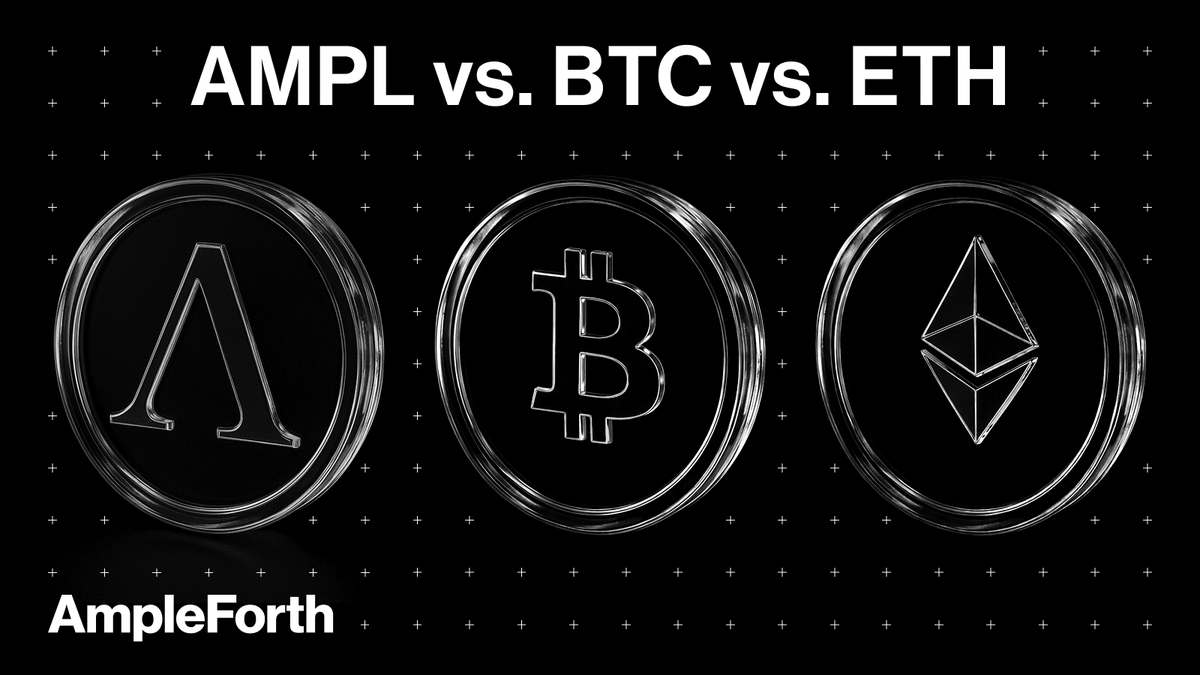
Bitcoin, Ethereum, and AMPL represent three different answers to the same question: what should digital scarcity look like? Bitcoin fixes supply forever. Only 21 million units will ever exist. That makes it maximally scarce, but it also means every change in demand must be absorbed by price. Volatility is not a side effect of Bitcoin’s design. It is the mechanism. Ethereum softens this by making the supply policy flexible. Issuance can change, burns can offset inflation, and scarcity becomes a function of usage rather than a hard cap. ETH is not absolutely scarce, but conditionally scarce. AMPL does not fix supply or optimize issuance. It fixes a purchasing power target and lets supply expand or contract to reflect demand. Scarcity becomes elastic rather than absolute. $BTC concentrates scarcity in units. $ETH concentrates it in policy. $AMPL concentrates it in purchasing power. They are not competing answers to the same problem, but three distinct philosophies of what digital money should optimize for.
English
@AmpleforthOrg $AMPL is the most innovative crypto alongside $BTC and $ETH. Its just years ahead of its time
English
Bitcoin, Ethereum, and AMPL represent three different answers to the same question: what should digital scarcity look like?
Bitcoin fixes supply forever. Only 21 million units will ever exist. That makes it maximally scarce, but it also means every change in demand must be absorbed by price. Volatility is not a side effect of Bitcoin’s design. It is the mechanism.
Ethereum softens this by making the supply policy flexible. Issuance can change, burns can offset inflation, and scarcity becomes a function of usage rather than a hard cap. ETH is not absolutely scarce, but conditionally scarce.
AMPL does not fix supply or optimize issuance. It fixes a purchasing power target and lets supply expand or contract to reflect demand. Scarcity becomes elastic rather than absolute.
$BTC concentrates scarcity in units.
$ETH concentrates it in policy.
$AMPL concentrates it in purchasing power.
They are not competing answers to the same problem, but three distinct philosophies of what digital money should optimize for.
English


You have $30 to spend per month on AI, which one are you choosing?
- ChatGPT
- Claude
- Gemini
- Perplexity
- Copilot
- Grok
English