Digital Finance Daily

254 posts

Digital Finance Daily banner
Digital Finance Daily

Digital Finance Daily

@DigitalFinanceD

The Great Upgrade is here. Join our community to see how Crypto is changing the world for good.

Присоединился Mart 2026
116 Подписки85 Подписчики
Закреплённый твит
Digital Finance Daily
Digital Finance Daily@DigitalFinanceD·
I started this page for one reason: I am tired of seeing good people lose money on garbage. The crypto market is flooded with paid influencers and "moonshot" narratives designed to make you poor. I don’t sell dreams. I perform Autopsies. What We Stand For: Faith & Integrity Our work is rooted in transparency and protecting the community from the scams that plague this industry. We operate with a simple rule: If the data doesn’t exist, we don’t touch it. We dissect blockchains using verifiable evidence. We don't listen to rumors; we look at: • Court Filings & Regulatory shifts. • Bank Audits & Institutional custody. • Real-World Transaction Volume (The only metric that matters). What You Will Find Here: • Deep Dive "Autopsies": The Good, The Bad, and The Verifiable Truth behind every project. • Zero Hype: Just the raw reality of where global institutions are moving their money. • Beginner Tools: Forensic charts and guides to help you navigate the institutional landscape safely. We look at the Data and track the Volume. We break down the plumbing so you don’t get wrecked.
English
0
0
3
504
Yessah Blessah
Yessah Blessah@LeilaniFarms·
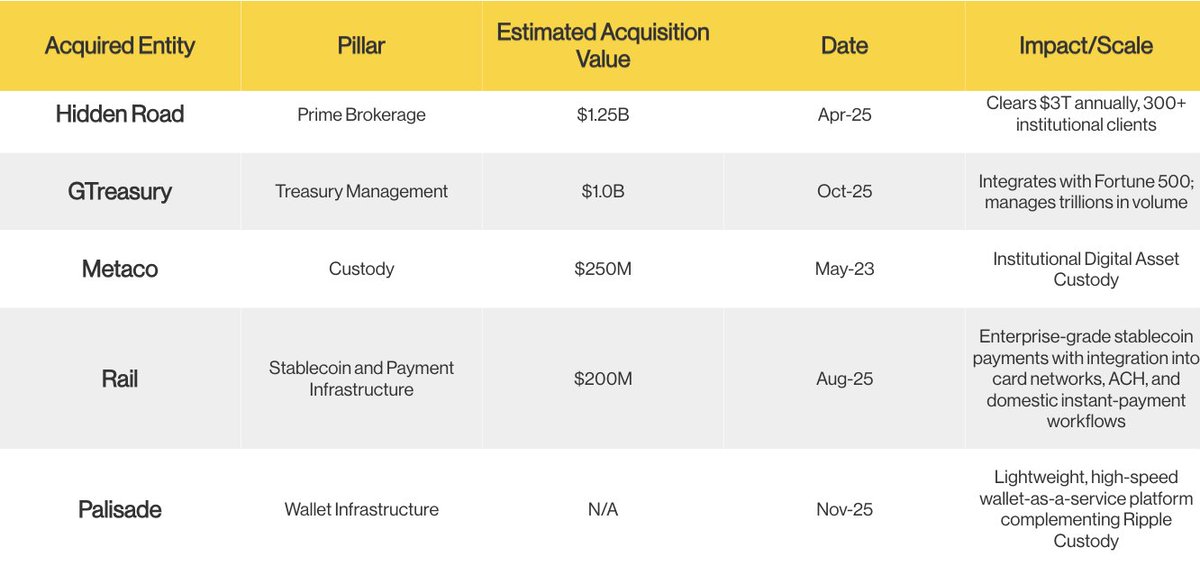
Ripple's "Hidden Road" is throwing up some solid numbers...$3 Trillion Annually But I get the Feeling that the "Big Numbers" they are pulling is probably from whatever transactions might be happening on the @CantonNetwork Ripple's "Hidden Road" has used Canton’s privacy-focused blockchain infrastructure for collateral movement, tokenized asset transfers, and institutional repo/financing. **Not for its entire prime brokerage or clearing operations, but for targeted on-chain use cases in traditional finance (TradFi) tokenization. Hidden Road (now rebranded as Ripple Prime after Ripple's $1.25B acquisition in 2025) has utilized the @CantonNetwork for specific institutional activities. Key Details on the Ripple / Canton Connection: In August 2025 (several months after Ripple announced the acquisition), "Hidden Road" participated as a prime broker in a groundbreaking live on-chain U.S. Treasury financing transaction on the @CantonNetwork This involved tokenizing U.S. Treasuries held at @The_DTCC , using them as collateral for financing against USDC or other stablecoins, and enabling real-time, 24/7 atomic settlement outside traditional market hours! "Hidden Road" was listed among the core members of the working group / consortium behind this pilot, alongside major players like: @BankofAmerica @circle @Citadel @The_DTCC @SocGen_US @Tradeweb @VirtuFinancial @digitalasset (the company behind Canton Network) Everywhere we look $CC is involved when it comes to connecting Institutional Money to ANY of these other Crypto Projects. Canton is the Rail of Choice **I don't own $XRP never have never will. Oddly enough, I bet $CC is the biggest beneficiary of whatever "Hidden Road" is doing 🤣😂 Chart Credit: @CoinDesk
Yessah Blessah tweet media
English
3
0
3
107
Digital Finance Daily
Digital Finance Daily@DigitalFinanceD·
@akyra_0 I had to go check my notes, but Erik said and I quote “DTCC is targeting July 2026 for the launch of its full tokenization services”.
English
0
0
0
5
Digital Finance Daily
Digital Finance Daily@DigitalFinanceD·
@akyra_0 Today they confirmed the DTCC numbers are still pilot stage/small…. I think this is the breakthrough $CC needs. 🤞🏽🤞🏽🤞🏽
English
1
0
2
20
Digital Finance Daily
Digital Finance Daily@DigitalFinanceD·
Today, Canton Strategic Holdings hosted a critical webinar featuring Digital Asset co founder Eric Saraniecki and Cumberland partner Chris Zuehlke. The discussion provided deep insights into the tokenomics, governance, and institutional adoption driving the Canton Network forward. Here is a summary of the core concepts discussed and the biggest takeaways for the ecosystem. The Core Philosophy: Rewarding Utility Eric Saraniecki highlighted that Canton was built step by step alongside major financial institutions to meet their strict operational requirements. The launch of the public network was catalyzed by these institutions needing to connect their isolated use cases together. The tokenomics model was specifically engineered to avoid the fundraising models seen in other crypto projects. Instead, it creates an early adopter advantage that disproportionately rewards participants who actually perform work on the network. Whether they are building applications, running infrastructure, or introducing users, the system compensates active utility. The Burn Mint Equilibrium Explained A major focus of the call was understanding how the network balances inflation and deflation. Chris Zuehlke explained that network fees are always fixed in US dollars. To pay for a transaction, users must burn Canton Coin to generate dollar denominated bandwidth credits. This creates an automatic price floor mechanism. If the token price is low, a significantly larger amount of Canton Coin must be burned to execute the exact same transaction. Saraniecki compared this dynamic to an automated corporate stock buyback program. When sustained network activity occurs, it constantly removes supply from the market, dynamically adjusting the token scarcity based on usage. The Power Shift to Application Builders The most significant structural update discussed was the reallocation of network rewards. The network has formally shifted its incentive structure away from infrastructure operators and toward the builders creating actual value. Prior to the recent halving, super validators received 48 percent of the network rewards. Under the new regime, applications now receive 62 percent of the rewards, while super validator emissions have dropped to 20 percent. Over the next decade, the terminal state of the network will allocate 75 percent of all rewards strictly to applications. The Biggest Takeaways 1. Predictability for Wall Street By fixing transaction fees in US dollars, Canton completely removes token volatility from the equation for institutions. Banks and asset managers can accurately predict their operational margins regardless of what the token price is doing on the open market. This is the exact stability required to scale trillions in daily volume. 2. The Automated Buyback The network is not designed to suppress the price; it is designed to react to activity. Because of the dollar denominated bandwidth system, any drop in token price accelerates the burn rate. This means durable real world activity, such as daily repo financing or payroll execution, creates massive deflationary pressure whenever the token is undervalued. 3. Long Term Institutional Alignment Despite having fully liquid tokens since inception, early participants and major infrastructure operators have voluntarily opted into long term locking contracts. Saraniecki emphasized that this voluntary locking is a massive signal of conviction, proving that the largest players are committed to the network for the long haul. 4. The Transition to Deflation The network is currently in a phase where total issuance is scaling down while application activity is scaling up. As more isolated institutional use cases begin interacting with one another on the public layer, the required bandwidth will increase. Once application burn overtakes the newly lowered issuance schedule, the network will cross the threshold into a mathematically deflationary state. @CantonFdn @CantonNetwork @CantonStrategic
Digital Finance Daily tweet media
English
2
1
5
457
Yessah Blessah
Yessah Blessah@LeilaniFarms·
This right here is what I am also seeing because right now they’re basically utilizing the Kaenan network through subsidy areas. Eventually they’ll just do it directly. It’s really easy to become a validator and operate their own node and if this is where all the actual volume ($$ not total of Transactions) then they will need to tap directly into the Canton network for that aspect of their tokenization. Trading fees from their prime brokerage firm is not going to move trillions a year. This is only gonna happen from the type of settlements that Canton is doing. Glad you saw the light! 😂 When I first was in crypto back in late 2018 I remember the $XRP army 😂 But I hated XRP due to what Brad did by basically issuing a huge amount of their supply early on Once I re-entered the crypto space a few months ago I realized what they’ve been doing with all that money. They’ve built up outside institutions / equity that don’t provide value for the $XRP token…
English
1
0
1
19
House of XRP
House of XRP@genelambo·
Iran will not use XRP for payments. Nobody is using XRP for anything. Get that out of your brainwashed heads. If Iran decided to use any kind of cryptocurrency, it would probably be a stablecoin, not XRP or RLUSD.
English
0
0
3
92
Digital Finance Daily
Digital Finance Daily@DigitalFinanceD·
@wesarn_real actually addressed this perfectly on the call. Canton doesn’t need a CEO to wake up and decide to execute a buyback because the network has an automated buyback engine hardcoded into the protocol. Because transaction fees are fixed in US Dollars, every single time a bank executes a trade on the network, $CC is permanently burned. If the price of $CC is low, the network burns a massive amount of tokens to satisfy that fixed dollar fee. It is a constant, relentless buyback mechanism driven by actual utility, not corporate hype.
English
0
0
0
24
SurferBoy500
SurferBoy500@Surferboy500·
@DigitalFinanceD Ok can you please explain if they are making so much money why aren’t they buying back cc like hype?
English
1
0
1
28
Digital Finance Daily
Digital Finance Daily@DigitalFinanceD·
I don't think the Sub-room is a magic bullet either, but we can't just tweak internal tokenomics and hope for organic volume. We need to attach a new revenue engine to the public layer. I’ve spent almost the entire day brainstorming a specific architectural solution to this. I’ve reached a point where I’m expanding these concepts into a formal blueprint that I believe is worthy of a @CantonNetwork grant submittal. 🤞🏽🤞🏽 I push on this because I genuinely believe in the project and I’m actively looking for ways to bridge the gap between the institutional vault and the retail market. I’m a hardware engineer by trade, so I look at this through the lens of pure systems and mechanics. If any Daml developers out there want to collaborate on the software side of a serious proposal, my DMs are open. 😇
English
1
0
1
16
Akyra_0
Akyra_0@akyra_0·
I agree with you on one point: simply saying "we need more volume" isn't enough. But I also don't buy that the Sub-room model is a magic bullet. What's happening here is simpler: The network was designed to launch and distribute rewards first, not to protect the token's price from day one. That's not the same as "manipulation," but the effect on the holder is quite similar. And regarding institutions accepting retail flows solely for cheap liquidity... that's not so clear either. Institutions want liquidity, yes, but they also want control, compliance, and to avoid mixing certain flows too much. For me, the solution lies more along these lines: * Offer more rewards to the activity that truly burns CC * Lock down some rewards for a longer period to prevent them from selling so quickly * Provide some real incentives to those who maintain CC * And genuinely promote the use of the public layer In other words, there's no need to reinvent the wheel. The incentives of the existing system need to be better aligned. That's where the real solution lies. "More real-world use of the public network means more value for $CC"
English
1
0
0
15
Akyra_0
Akyra_0@akyra_0·
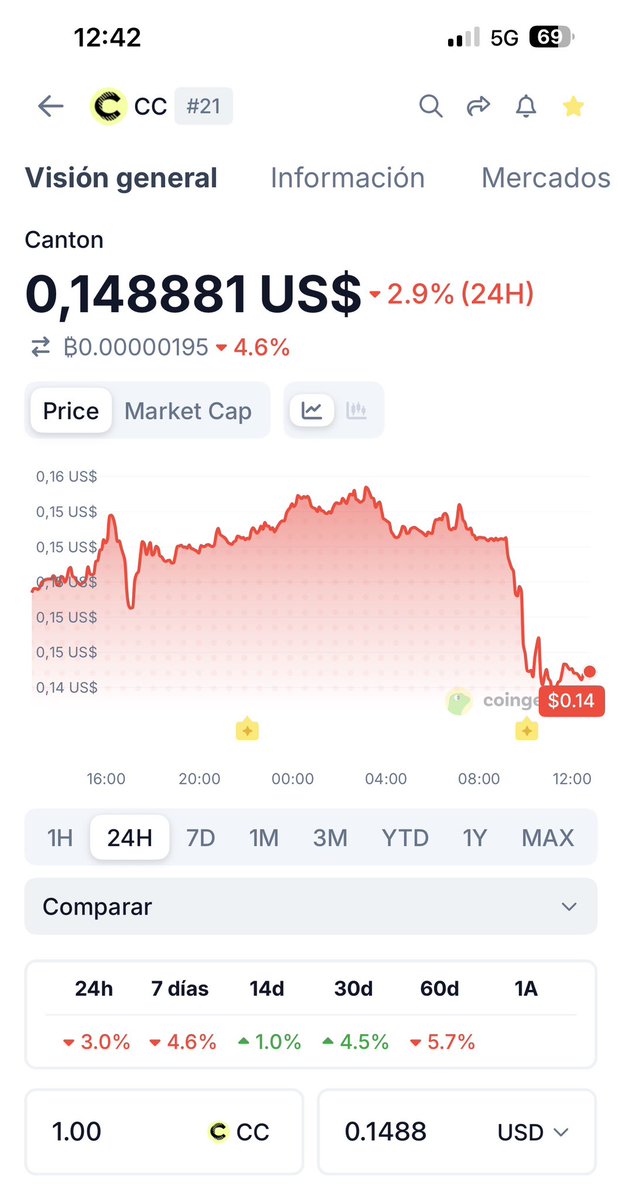
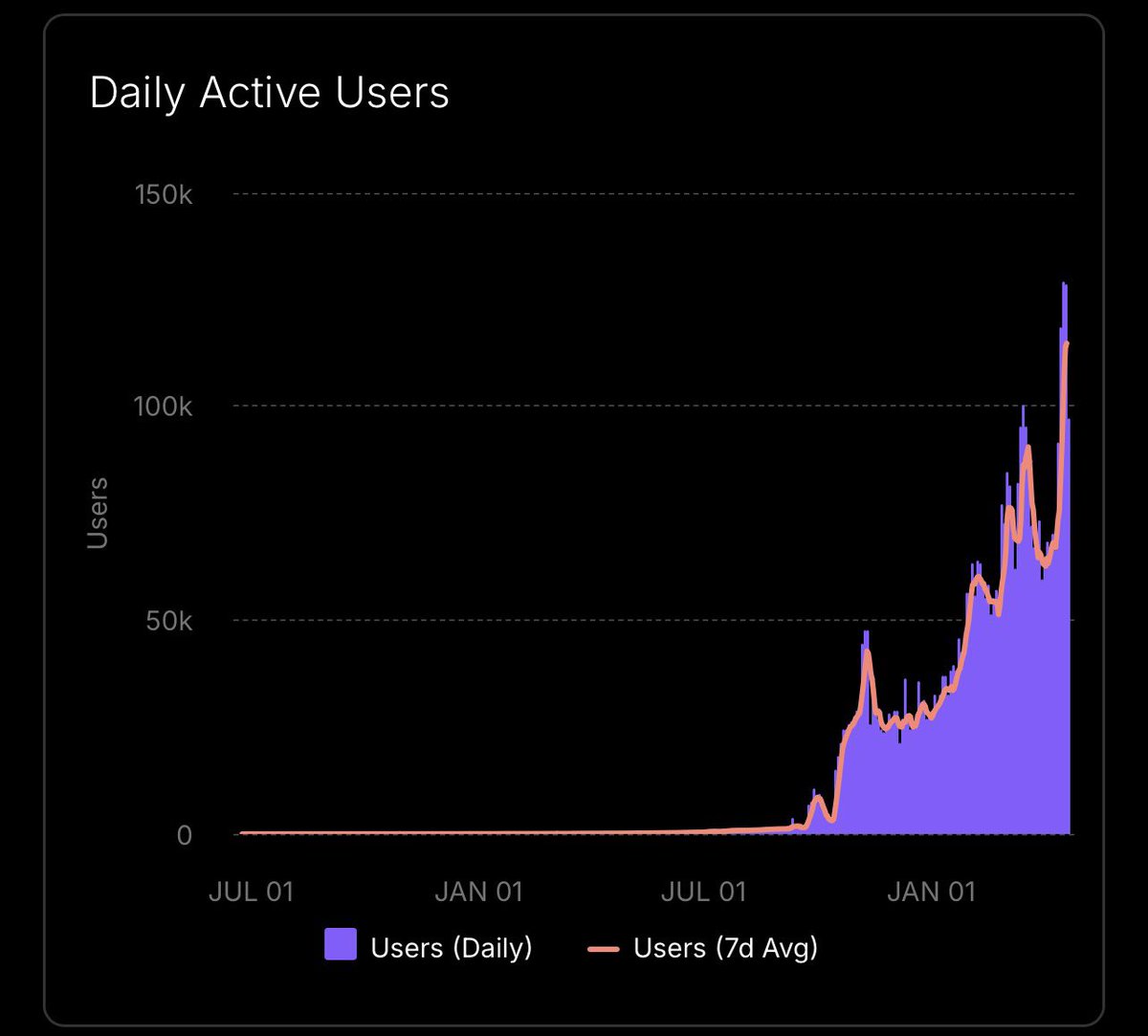
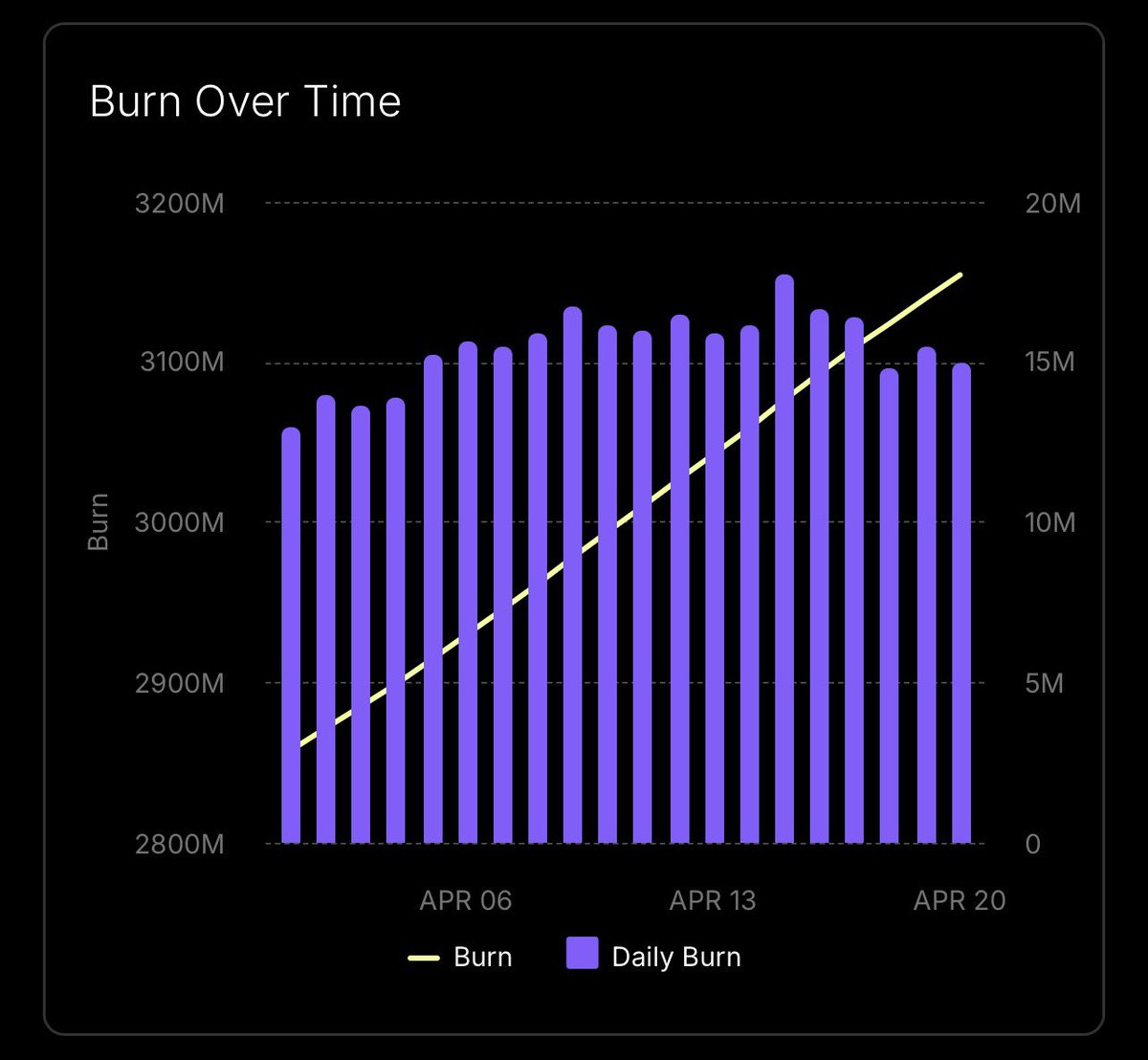
Interesting what's happening with $CC 👇 Price flat/falling Activity rising Users growing But the mint/burn ratio remains at ~65–68% Exactly the same as 30 days ago What does this mean? → More is being issued than burned → Selling pressure is constant → The system is not yet in equilibrium And here comes the uncomfortable part: The Canton model is designed to reward real activity… but today, that activity is generating tokens that someone is selling. Meanwhile: • The holder absorbs that liquidity • The price doesn't reflect the growth • Burning is stable, not accelerating Theory says: “more usage → more burn → more value” The reality today: “more usage → more issuance → more selling pressure” And no, you don't need to know “who's selling” because the design itself explains it: → validators → super-validators → distributed rewards That flow exists and reaches the market. Reasoning (Based on Reality) * Canton burns fees but also issues tokens for participation * Fees are denominated in USD → the burn doesn't scale linearly with the price * The system only balances if usage grows faster than issuance Risks / Exceptions (It's important to be fair) * If public usage truly increases → the burn can close the gap * If more activity passes through the public layer → net pressure improves * If institutions start consuming CC directly → the dynamics change But today, that's not happening at the necessary level Final Message This isn't FUD. This isn't hate. It's simply reading the metrics: The network may be growing… but the value for the holder isn't yet aligned. When the mint/burn balance changes → everything will change. Until then, the price reflects exactly that. “More real usage on the public network, more value for $CC”
Akyra_0 tweet mediaAkyra_0 tweet mediaAkyra_0 tweet mediaAkyra_0 tweet media
English
8
4
25
1.9K
Vivek Ramaswamy
Vivek Ramaswamy@VivekGRamaswamy·
You can travel to Italy, but you’ll never be an Italian. You can travel to France but you’ll never be a Frenchman. You can live in Germany but you’ll never be a German. You can pack your bags and live the rest of your life in China or Japan, but you’ll never be Chinese or Japanese. Yet you can come from any one of those countries to the United States of America, and you can still be an American – so long as you work hard, you play by the rules, you make your contributions, wait your turn, pledge allegiance to the flag, and obtain your citizenship.
English
6.6K
2.9K
29.1K
3.9M
Digital Finance Daily
Digital Finance Daily@DigitalFinanceD·
Are you just playing devil’s advocate for the sake of engagement, or are you actually looking for a fix? Saying "we just need more real volume" isn't a strategy; it’s a wish. Everyone knows we need more volume. The question is HOW do we get it before the issuance drowns the retail holders. If you are an engineer, your job isn't just to point at a broken gauge and say "that's broken." Your job is to design the architecture to fix it. That is exactly what the "Sub-room" model is. And I fear you’ve been blocked, I was hoping my idea at least inspired something with the Canton team. I don’t think they’re seeing any of your post. To address your points: • "Consequence of design vs. Active suppression" When you hardcode an emission curve that front-loads tokens to Super Validators before public volume can possibly offset it, that is suppression by design. Arguing the semantics doesn't change the math. • "Institutions don't want retail flow" Institutions want cheap liquidity and lower operating costs. They don't care where it comes from as long as the compliance firewall holds which is exactly what Daml Projections are built to do. We can sit here and state the obvious ("we need more volume"), or we can actually pitch the mechanics to generate it. If you don't like the Sub-room model, what is your engineering solution to fix the mint/burn ratio today?
English
1
0
0
16
Akyra_0
Akyra_0@akyra_0·
I partly agree, but I think you're mixing facts with assumptions. The starting point is correct: mint > burn → structural pressure, and institutional timing is key. But several things are unproven: • There's no evidence of "active price suppression"; it's more of a consequence of the current design. • The April change might help, but it doesn't guarantee a real impact on the market. • And projecting equilibrium until 2029 is more narrative than something that can be modeled today. Regarding the 'sub-room model,' it's interesting, but we're assuming that institutions want to open that flow to retail, and that's neither clear nor entirely consistent with how Canton is currently designed. For me, the point remains simpler: it's not a matter of waiting or theorizing new models, it's a matter of more real volume passing through the public network and improving the mint/burn ratio. Without that, everything else remains hypothetical. “More real-world use on the public network, more value for $CC”
English
1
0
0
33
Eric Daugherty
Eric Daugherty@EricLDaugh·
🚨 NOW: FBI Director Kash Patel just MIC DROPPED the fake news Q: Can you say definitively that you have not been intoxicated or absent during your tenure PATEL: “I've NEVER been intoxicated on the job, and that is why we filed a $250 million defamation lawsuit. And any one of YOU that wants to participate, bring it on. I'll see you in court!” 🔥 “I can say unequivocally that I never listen to the fake news mafia.” “And as when they get louder, it just means I'm doing my job. This FBI director has been on the job twice as many days as every director before me. What that means is I've taken half as many days off as those before me.” “I'm the first one in. I'm the last one out. I'm like an everyday American who loves his country, loves his sport of hockey, and champions my friends when they raise a gold medal and invite me in to celebrate.” @FBIDirectorKash
English
1.4K
10.5K
65.1K
1.8M
Kris
Kris@KKingB33·
@0xSweep Already all in fella Ima ride it out and see for myself where this rode goes.
English
2
0
3
142
Sweep
Sweep@0xSweep·
Ripple pays its bills by dumping 300 MILLION XRP on its own holders When XRP launched in 2012, 100 BILLION tokens were created at once, all at genesis The founders kept 20 billion for themselves and gave the other 80 billion to the company In December 2017, Ripple locked 55 billion XRP into smart contracts so they couldn't just dump the supply whenever they wanted That escrow releases 1 billion XRP every single month on the 1st, automatically, with zero human intervention required Ripple typically relocks 70 to 80% back into new escrow contracts and they keep the rest, which is roughly 200 to 300 million XRP, to fund the entire company At XRP's current price, 300 million tokens is $400 million, every single month Ripple's CEO Brad Garlinghouse told the Financial Times directly that the company "would not be profitable or cash flow positive without selling XRP." The CEO himself admitted the entire company runs on dumping its own token Ripple paid MoneyGram over 61 million dollars in "market development fees" to use XRP MoneyGram then told reporters: "We sell XRP as soon as we receive it because we don't hold any XRP" Ripple pays partners in XRP, the partners dump it on the market immediately, and Ripple announces it as adoption The SEC called this out in their own complaint They wrote that MoneyGram "became yet another conduit for Ripple's unregistered XRP sales into the market, with Ripple receiving the added benefit that it could tout its inorganic XRP use and trading volume" The co founder who left, Jed McCaleb, kept 9 billion XRP on his way out, spent 8 years dumping from a wallet the community named 'Tacostand,' and walked away with 3.2 billion dollars. Ripple had to sue him just to slow the sales down The bull case for the last decade has been "banks are coming" Bank of America, Santander, PNC, American Express, and JPMorgan all partnered with Ripple. None of them actually use XRP They use Ripple's messaging software without ever touching the token Ripple still holds around 39 billion XRP in escrow, roughly 39% of total supply Every holder of XRP is being slowly diluted by the company itself, by design, on a monthly schedule that's written into the blockchain XRP is now down 6 consecutive months A big reason is that every month, a new batch of supply hits the market from the same wallet, and everyone knows it's coming The company that fought the SEC for 5 years and won is funded almost entirely by printing its own token and selling it to the people who believe in it
Sweep tweet mediaSweep tweet media
English
391
156
730
223.2K
Mallard Luther King
Mallard Luther King@Kelly18106·
@0xSweep “Printed its own token” They can’t do that. It’s all premined. “Ripple locked 55 billion into smart contracts.” No they didn’t. There were no smart contracts on the XRPL in 2017. You thought you cooked. 😂
English
1
0
6
608
Anthony XRP Wanner
Anthony XRP Wanner@AnthonyWanner6·
@0xSweep I wish they would dump more so they can build more value rail connections for XRP utility!!! Dump it @Ripple dump it harder!!
English
1
0
4
322
Brooke
Brooke@BleeLRn·
@0xSweep You post this like its bad, its not, its business. Your rant however, is borderline creepy, you got issues dude spending this much time trying to fud a coin.
English
1
0
1
590
GreatP
GreatP@Pius_Okoto·
@0xSweep You failed to mention Ripple using some of the dumped xrp to invest in the cutting-edge flare.network, did you?
English
2
0
1
228
theWEFpatsy
theWEFpatsy@theWEFpatsy·
@0xSweep $XRP INFLUENCER TOOL-KIT If it hasn’t happened yet → it’s being suppressed If it is happening → we were right If people doubt it → they don’t understand If experts disagree → they’re compromised
English
2
1
5
745