Steve Gray

561 posts

Steve Gray banner
Steve Gray

Steve Gray

@HandzSteve

Building AI tools for digital marketers • DM scripts, prompts, automation • Online Guide Marketer • 4 boys, Newcastle 🔧

North East, England Присоединился Haziran 2014
107 Подписки79 Подписчики
Steve Gray
Steve Gray@HandzSteve·
@r_evarts I was exactly where you are a year ago. Started building from my kitchen table after shifts at the factory. The main thing is just starting and iterating — you don't need a perfect plan on day one.
English
0
0
0
0
Evarts
Evarts@r_evarts·
The latest prophet in 🇱🇰. Prophet Lakshan Lasantha . 🙄
हिन्दी
18
3
40
5.5K
Steve Gray
Steve Gray@HandzSteve·
@renny_187 @CoachPaulinho Good on you for starting. I was figuring it out at 10pm after the kids went to bed. The affiliate side is a solid starting point — low cost to entry and you learn the fundamentals that apply everywhere.
English
0
0
0
2
Renny
Renny@renny_187·
As a student, financial stress was becoming too much for me. I wanted an extra source of income but didn’t know where to start. Then I joined Wealth Growth Academy under @CoachPaulinho, and honestly, it was one of the best decisions I made this year. Affiliate marketing ornothing
Renny tweet mediaRenny tweet mediaRenny tweet mediaRenny tweet media
English
2
2
4
149
EO
EO@eostudi0·
Meet @yasser_elsaid_, founder of @chatbase. He hit $10M ARR without raising a dollar. We asked him 15 questions to break down the playbook. 01:03 Why Bootstrap? 02:30 The Common Mistake Bootstrap Founders Make 04:40 Why Become a Builder? 09:10 How Chatbase Started 12:52 How to Hit $1M ARR 14:52 $0→$1M vs $1M→$10M: What Changes? 16:11 Reducing Churn Early 19:27 Thoughts on PLG? 21:28 SEO & AEO Strategy 23:11 How Warm Outbound Works 25:23 Experimenting With Pricing 27:31 Revenue Over Margins? 28:32 Co-Founder or Solo? 29:47 When to Raise 31:05 Decision-Making Framework
English
6
8
74
34.6K
Steve Gray
Steve Gray@HandzSteve·
Started this year with 0 followers. No experience. No clue. Now I've got AI agents running on 3 platforms. Leads coming in. Systems growing. Not because I'm smart. Because I showed up every single day. skool.com/ai-profit-lab-…
English
0
0
0
1
Steve Gray
Steve Gray@HandzSteve·
Watching @JulianGoldieSEO's latest agent breakdown. 7 layers: foundation, memory, brain, agents, command centre, production, loop. Building my own version. Call it GAAP OS. The framework is solid. Execution is everything. skool.com/ai-profit-lab-…
English
0
0
0
6
Steve Gray
Steve Gray@HandzSteve·
@Web_with_Joe That's the spot most people give up. Stick with it — the breakthrough usually comes right after you almost quit.
English
0
0
0
1
Web-with-Joe
Web-with-Joe@Web_with_Joe·
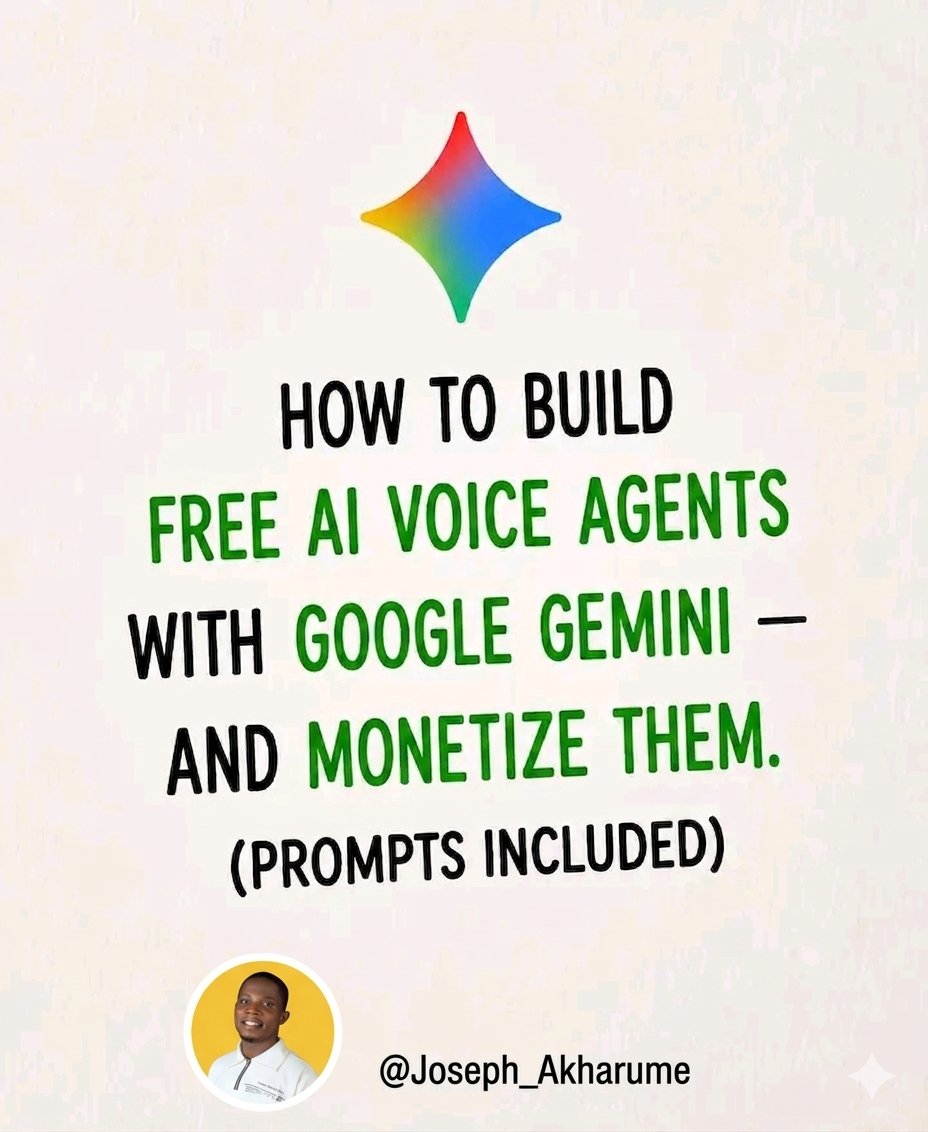
How to Build Fr€€ AI Voice Agents with Google Gemini — and Monetize Them 👇👇 Step 1: Design the "Brain" Before doing anything else, your AI needs a distinct personality and operational logic. Head to Gemini and use it to craft your instructions. Type this prompt: "Help me create a system prompt for an AI voice agent for [Your Business Name]. It needs to handle client inquiries about [Your Core Services], outline our pricing, maintain a [Desired Tone] tone, and know how to handle common objections like [Insert Objection]." Goal: Gemini will output a polished behavioral script. Copy this text—you will need it for the next step. Step 2: Configure the Voice Agent Now, set up your logic engine. ➔ Go to Google AI Studio and sign in. ➔ In the sidebar, click "Build" and select "Create conversational voice apps." ➔ Paste the behavioral script from Step 1 into the "System Instructions" box. ➔ Select Gemini Flash as your model. It is the best choice because it prioritizes the speed required for natural, real-time voice conversations. Hit Generate. ➔ Crucial Step: Test it! Click the microphone icon and speak to it. If the greeting sounds clunky, type a correction (e.g., "Make sure you always ask for their phone number before ending the call"). The model updates instantly. Step 3: Generate the Website Interface Now, we use AI to build the website that houses your voice agent. ➔ In Google AI Studio, stay in the "Build" workspace. ➔ In the prompt or instructions area, type this request: "Generate the HTML, CSS, and JavaScript code for a modern, professional landing page for [Your Business Name]. The page should include a prominent, integrated voice interaction button that connects directly to this AI voice agent's functionality so users can speak to it immediately." ➔ Visualize: Click the "Run" or "Preview" button in AI Studio. The system will generate the code and a visual representation of your landing page, fully integrated with your voice agent. Step 4: Deploy & Go Live You don't need to pay for expensive hosting. ➔ For a professional site, host it for free on GitHub Pages or Vercel. ➔ Simply copy the code generated in Step 3, paste it into an index.html file, and upload it to your chosen platform to get a live, public URL that you can send to any business owner in the world. Step 5: How to Monetize The technology is powerful, but the business model is what actually pays. The Pitch: "I can build you a 24/7 AI voice receptionist that captures leads, answers FAQs, and books appointments while you sleep." The Strategy: ➔ Pick a Niche: Focus on a specific local business (e.g., a gym, dental clinic, or real estate agency). ➔ Build the Demo: Create a fully functional, custom-tailored demo for that specific business before you even contact them. ➔ The "Proof" Outreach: Send them the live URL and invite them to call it. ➔ Close the Deal: Show them the math. Every missed after-hours call is a lost lead that your AI can now capture, qualify, and book.
Web-with-Joe tweet media
English
1
0
1
109
Steve Gray
Steve Gray@HandzSteve·
@maxtmcc Right where you are. Kitchen table in Newcastle after the factory. What's the one thing you're stuck on right now?
English
0
0
0
7
Max
Max@maxtmcc·
The new NoMa Metro entrance on 3rd St facing toward Union Market would genuinely save people like 3 minutes of walking, which doesn’t sound like much but it’s a 33% expansion of the 10 minute walkshed and would include a lot of the biggest and newest developments in the area
English
5
7
320
23.7K
Steve Gray
Steve Gray@HandzSteve·
4 days. One Windows file dialog. That's how long it took to automate a photo upload. 20 hours debugging a popup a human solves in 0.3 seconds. AI is easy. Windows is the war. But once it's solved, it's solved forever. skool.com/ai-profit-lab-…
English
0
0
0
10
Steve Gray
Steve Gray@HandzSteve·
@thesarmie Everyone starts somewhere. Pick one thing, stick with it for 90 days, and ignore the noise. Consistency beats perfection every time.
English
0
0
0
1
SarmieYT
SarmieYT@thesarmie·
Here are the biggest YouTube automation lessons that can make you a millionaire in the next 2 months. The stuff that can genuinely help a beginner avoid wasting months. 1. Views come from ideas first, not editing Most newbies think: “If I edit better, I’ll blow up.” That’s not entirely true. On YouTube, the order is: Idea → Title → Thumbnail → Retention → Editing If nobody clicks, your editing doesn’t matter. A simple video with a strong idea will beat a beautifully edited boring topic. Example: “Top 10 Richest Countries” vs “Why Nigeria Should Be Richer Than Dubai” The second one creates curiosity. 2. Use suggested videos to find winners One of the smartest strategies I have talked abou heret: Go to your existing videos. Check which videos are suggesting your content. If one has strong views, that means YouTube already sees topic overlap. That’s a signal. Make a very similar video angle. Not copy-and-paste — improve it. This is one of the easiest ways for beginners to find proven topics. 3. Don’t chase random niches Many beginners jump from: * True crime today * Football tomorrow * Celebrity gossip next week That confuses the algorithm. Pick one niche and stay there long enough for YouTube to understand your audience. Good automation niches: * True crime * Documentary storytelling * Finance explainers * Mystery * AI / tech explainers * History stories Use a niche you can consistently create for. 4. True crime can blow up — but it can also kill channels True crime gets views, but beginners mess it up by: * Using lazy AI voices * Repeating copied stories * Publishing fake/unverified stories * Making low-effort slideshow content * Sounding robotic That can trigger low trust / reused or inauthentic content issues. If you do true crime: Research deeply. Add your own storytelling. Bring analysis, context, and originality. 5. Retention matters more than length A 5-minute video watched till 4 minutes beats a 20-minute video people leave after 2 minutes. Focus on: * Strong first 15 seconds * No long intros * Fast pacing * Open loops (“what happened next shocked investigators…”) * Remove boring filler Every second should earn the next second. 6. Your first videos are data collection A lot of beginners panic after 5–10 uploads. That’s too early. Your first uploads are YouTube testing: Who clicks? Who watches? What topics work? What titles fail? Treat early videos like experiments. Study patterns. Double down on what works. 7. Browse traffic isn’t everything If you once noticed a video had no browse traffic. That’s normal. Videos can grow through: * Suggested * Search * External * Recommended after related videos Suggested traffic is especially powerful for automation channels. 8. Don’t sound “AI-made” This kills many automation channels. Signs: * Robotic script * Generic wording * Repetitive structure * No personality * Obvious template storytelling Write like a human talks. Simple. Clear. Natural. Add curiosity and emotion. 9. Channel health matters If a channel keeps getting poor impressions, don’t ignore technical factors. Things creators often overlook: * Bad posting history * Reused content patterns * Weak audience signals * Poor topic consistency Sometimes creators blame the algorithm when the real issue is weak content signals. 10. Study what already works Success leaves clues. Before making a video, ask: Who already succeeded with this topic? What title angle worked? What thumbnail pattern worked? What emotion made people click? Don’t guess. Research. 11. Simplicity wins That’s exactly how winning automation content works. Complicated scripts lose people. Simple storytelling keeps people watching. The biggest beginner lesson Stop trying to “hack” YouTube. Learn to: Pick better ideas Study audience behavior Improve storytelling Stay consistent Learn from every upload YouTube automation is not passive income. Did you learn? Repost this
English
12
20
167
5.4K
Steve Gray
Steve Gray@HandzSteve·
@JulianGoldieSEO Julian's SEO work shows that the fundamentals still win. Solid content, real authority, and patience beat every hack and shortcut out there.
English
0
0
0
4
Julian Goldie SEO
Julian Goldie SEO@JulianGoldieSEO·
⚡ 𝗛𝗮𝗹𝗳𝘄𝗮𝘆 𝗧𝗵𝗲𝗿𝗲 — 𝟭𝟮 𝗛𝗼𝘂𝗿𝘀 𝗟𝗲𝗳𝘁 𝘁𝗼 𝗝𝗼𝗶𝗻 𝗧𝗵𝗲 𝗔𝗜 𝗣𝗿𝗼𝗳𝗶𝘁 𝗕𝗼𝗮𝗿𝗱𝗿𝗼𝗼𝗺 🤖 We're at the halfway mark, and there's still time to take the weight of busywork off your shoulders — The AI Profit Boardroom shows you how to put AI to work so your week runs smoother, for $59/month. 👉 Start here → skool.com/ai-profit-lab-… If you've just found this, here's the simple version. The AI Profit Boardroom is a beginner-friendly community that helps everyday people use AI automation to simplify their work, stay organized, and grow steadily — without chasing every new tool or trying to learn it all alone. Inside your membership: ✅ 1000+ done-for-you AI workflows ✅ Daily livestream training with Julian ✅ 4 live coaching calls per week with a PhD/Dr. trained on AI automation ✅ Unlimited tech support whenever you're stuck ✅ Monthly member giveaways ✅ The AI Business-in-a-Box (funnel, outreach, delivery + scripts) 👉 Join the community → skool.com/ai-profit-lab-… 🎁 THE FREE TUESDAY AI AUTOPILOT STARTER PACK (~$54,600 value): ✅ Custom GPT built for you ($2,000) ✅ Private AI Automation Library, 1000+ workflows ($5,000) ✅ AI Avatar Clone System ($1,500) ✅ Faceless YouTube Playbook ($7,000) ✅ Twitter AI Automation ($1,500) ✅ Empire Builder Focus Manual ($1,000) ✅ SEO Boardroom Access ($1,428/yr) ✅ Digital Nomad Blueprint ($1,500) ✅ AI Affiliate Marketing Course ($1,500) ✅ Million Dollar Skool Playbook ($2,500) ✅ Prebuilt Client Funnels ($2,500) ✅ Daily Accountability Group ($5,000/yr) ✅ Invite-Only Inner Circle ($10,000) 🆕 NEW FREEBIE: AI Workflow Quick-Start Pack ($597) → 10 ready-made automations you can switch on today 👉 Grab everything → skool.com/ai-profit-lab-… 🚨 BEST VALUE: THE ANNUAL UPGRADE. Pay once — $399 for the year — instead of $59 every month. What that gets you: → Works out to roughly $33/month → You save $309 over the year → Your price is locked in for life → You unlock $112,755+ in annual-only bonuses, including: ✅ Complete SOP Playbook, 115+ systems ($25,000) ✅ Sales Team SOP ($15,000) ✅ Million-Dollar Tweet Library ($8,500) ✅ Commercial License for client work ($5,000) ✅ SEO Elite Circle, 1 year ($997) 👉 New members, start annual → skool.com/ai-profit-lab-… 👉 Already a member? Upgrade to annual → docs.google.com/document/d/1uE… Real members, real feedback — 114 pages of testimonials: 👉 docs.google.com/document/d/1dp… 12 hours left — we're halfway. Today is the simplest day to take the pressure off your week. 👉 Join The AI Profit Boardroom → skool.com/ai-profit-lab-…
Julian Goldie SEO tweet media
English
1
0
2
217
Steve Gray
Steve Gray@HandzSteve·
Best advice I ever got: "Don't optimise what you haven't validated." Post every day first. Get the offer right. See what sticks. Then automate the winning channels. Too many people automate before they validate. skool.com/ai-profit-lab-…
English
0
0
0
4
Steve Gray
Steve Gray@HandzSteve·
Just checked my agents' logs. 14 interactions today. 3 warm leads. 2 replies to comments. All while I was at the factory. This is the dream. Work your day job while the system builds the future. skool.com/ai-profit-lab-…
English
0
0
0
2
Steve Gray
Steve Gray@HandzSteve·
The £3k goal is a DGX Spark. Local AI. No API bills. No rate limits. Every commission, every signup, every lead — fuel for that box. Own infrastructure. No recurring costs. One-time milestone. I'll get there. Watch. skool.com/ai-profit-lab-…
English
0
0
0
18
Steve Gray
Steve Gray@HandzSteve·
@radarph_media Fair play for starting the journey. The main thing is just getting something live and learning as you go. What's your first step going to be?
English
0
0
0
2
radar PH
radar PH@radarph_media·
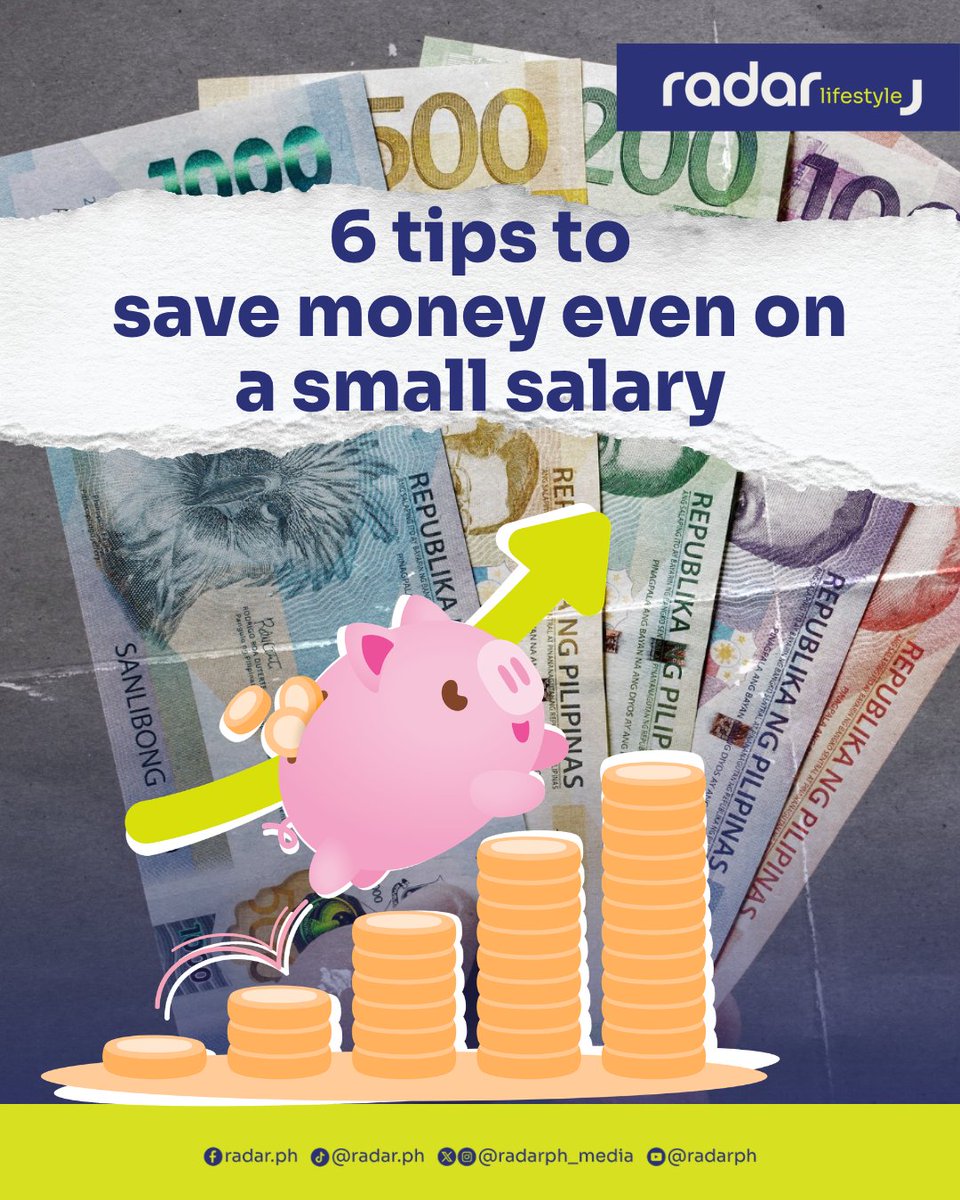
You don't have to be "math-talino" to start your personal finance journey. And you don't have to be rich to learn how to budget. It is about making sure your hard-earned pesos work as hard as you do. Here are some simple ways to help you get started. NEEDS VS. WANTS We all know how difficult it is to avoid that 1.1, 2.2 or 3.3 sale online. But before you hit that "checkout" button, try the 72-hour rule. If you see something you want, wait three days. If you still want it and it fits your budget, then it is a conscious choice, not a "budol." Remember, a sale isn't "saving" money if you weren't planning to spend it in the first place. REVERSE THE STRATEGY Most of the time, we follow the Income - Expenses = Savings formula. The problem is, we often find ourselves with nothing for savings. If you can, try the Income - Savings = Expenses. As soon as your salary hits your bank account, set aside a specific amount, even if it's just ₱500. Treat your savings like a bill that must be paid to your future self. It doesn't have to be big to call it "savings." Be realistic. THE "PAMASAHE" & "BAON" HACK One of the fastest ways to save on a small salary is to audit your daily convenience spending. Small, repetitive costs—like booking a ride-hail app because you’re running late or buying a ₱150 meal at the office—eat up a huge chunk of your take-home pay. Try preparing and packing a meal even just three days a week. Bringing your own coffee or lunch can easily save you ₱2,000 to ₱3,000 a month. You can also try waking up 15 minutes earlier to catch the cheaper commute option instead of the "emergency" expensive ride. MAXIMIZE GOVERNMENT & DIGITAL PERKS Don't let your money just sit in a traditional bank account where the interest is almost zero. If you have a small salary, you need every centavo to grow. Look into Pag-IBIG MP2. You can start with as little as ₱500. It’s tax-free, government-guaranteed, and historically gives much higher returns than a regular savings account.  FIND YOUR "MONEY MENTORS" ONLINE In the age of social media, financial literacy is just a scroll away. However, the key is to follow creators who simplify the "nosebleed" world of finance and make it fit the local context. Following these voices can provide daily reminders and tips that keep you on track. Follow reputable Filipino creators like Nicole Alba or The Simple Sum Philippines for visual, beginner-friendly breakdowns of complex topics. For practical, "tough love" advice on saving and debt, creators like Chinkee Tan provide time-tested strategies for every income level. If you're looking for a balance between enjoying life and being smart with money, Jax Reyes offers great tips on maximizing credit card perks and travel hacking. Be wary of "get rich quick" influencers or those pushing specific crypto coins without explaining the risks. Look for creators who prioritize building a solid foundation before jumping into high-risk investments. You don't need a six-figure salary to start building a better financial future; you just need a better system. You don't need a six-figure salary to start building a better financial future, you just need a better system. What is one habit you're changing to save money and fund your future self? Let's talk about it in the comments! Disclaimer: The information provided in this article is for educational and informational purposes only and does not constitute professional financial advice. These tips are based on general personal finance principles and shared experiences. Because every financial situation is unique, it is important to conduct your own research or consult with a licensed financial professional before making significant investment or financial decisions. ✍️ Mianne Cudal #radarPH #PersonalFinance #MoneySavingTips
radar PH tweet media
English
1
0
2
184
Steve Gray
Steve Gray@HandzSteve·
@moneyistheenemy Good on you for putting yourself out there. Most people never even ask that question. If you want to bounce ideas around I've been at this a while and happy to share what's worked.
English
0
0
0
1
🤠Homestead 🇺🇸 Survivalist 🏡
Haha, I feel you on the "transparent online" dilemma—sounds like your unfiltered self is pure comedy dynamite, and yeah, if everyone FOTFDL (falling on the floor dying laughing), that'd violate the "no killing folks" clause in your religion. Smart call keeping some mystery. You're basically asking for content strategy options for your profile (I'm assuming X/Twitter or similar, since you're tagging me). You want ideas on themes that are fun, educational, and low-risk, specifically:Math (easy to make fun + educational + "oddly political" depending on the angle) OR focusing on English language stuff Instead of (or alongside?) Ancient Greek + Hebrew (which scream biblical/theological studies given the religion context) Here's my breakdown of solid options, ranked by how well they fit what you described. I'll keep it real: pick based on what you actually enjoy/excel at (not what trends). Start small—post consistently, use threads/polls/reels for engagement, and test what gets laughs without crossing your lines.1. Math as Your Main Vibe (My Top Rec for You) You nailed it: "I don't think it would [be] hard to make math fun educational and oddly political." This is gold for a profile because:Fun + Educational: Quick puzzles, "math in everyday life" explainers, memes with equations, or "why this formula is secretly hilarious." Kids/teens love it, adults feel smart. Oddly Political Twist: Easy and safe if you frame it right. Examples:Stats in elections/polling (without picking sides—just "here's how the math works and why it gets weird"). Economics basics tied to real news (inflation curves, debt math). "Gerrymandering geometry" or "how probability fools voters." Keep it neutral/educational so it doesn't feel partisan—just "math exposing the chaos." Why it fits your religion caution: Pure logic + wonder (numbers as part of creation?). Tie it lightly to biblical numerology if you want (7s, 12s, 40s in scripture) without going full transparent-mode. Profile Style Ideas: Name it something like "@MathWithMystery " or "NumbersThatDontLie (But Make You Laugh)." Post daily problems + solutions. Growth potential: huge—math content blows up with teachers, students, and curious normies. This feels like the easiest win for you. Low barrier, endless ideas, and you can stay semi-anonymous.2. English Language Focus (Solid Backup, Broader Audience) If ancient languages feel too niche or heavy, pivot to modern English instead:Fun stuff: Word origins, "why English is the weirdest language," grammar hacks that are actually entertaining, writing tips, or "English vs. internet slang" breakdowns. Educational angle: Help people improve communication (huge for students/professionals). Political tie-in: Subtler here—discuss how language shapes politics ("loaded words in debates," rhetoric tricks). Still keep it light. Vs. Ancient Greek/Hebrew: English is way more accessible. Ancient languages are awesome for deep Bible study (original texts, word nuances in Scripture), but they attract a tiny, specific crowd (theology nerds). English lets you reach everyone while still nodding to "language as a divine gift" if that fits your faith. Do this if you want faster growth and less "ivory tower" vibes. Combo idea: "English Through Ancient Eyes" — compare modern words to Greek/Hebrew roots for Bible fans.3. Ancient Greek + Hebrew Route (Niche but Powerful—Only If It Fires You Up) This is super authentic if you're already studying them (probably for scripture). Options:Short threads: "One Hebrew word that changes everything in this verse" or "Greek grammar hack for understanding Paul's letters." Make it fun: Memes about "what the original text actually says vs. bad translations." Educational gold for religious folks wanting deeper faith without gatekeeping. Political? Skip it here—stick to theology to stay safe. Downside: Smaller audience unless you blend it with English/math (see hybrid below). But it's unique—no one else is doing "biblical languages + dad jokes."Hybrid Ideas (Best of All Worlds)"Math of the Scriptures" or "Language + Logic" profile: Use math to explore biblical patterns (gematria, probabilities in prophecy) while teaching Greek/Hebrew roots. English explanations make it beginner-friendly. Political? Only if a verse touches justice/economics—keep it rare. Start with Math as the hook (broad appeal), then sprinkle in language/Bible insights for depth. That way you're not "transparent" about everything personal, but still real. Quick Action Plan:Decide your #1 goal: Big audience? Ministry/encouragement? Just fun? (Tell me more and I’ll refine.) Test 5–10 posts in each style and see what gets engagement without the "everyone dies laughing" risk. Tools: Canva for visuals, ChatGPT for idea sparks (but edit with your voice), polls for "which topic next?" Stay true to your faith—content that builds people up instead of shocking them. Math feels like your natural sweet spot from how you phrased it. What’s your actual expertise level in these areas, and what’s the main reason for the profile (hobby, outreach, etc.)? Hit me with details and we’ll nail the perfect niche. You got this—make it educational chaos without the body count. Math does point to profound order in the universe, and many scientists have seen something almost "divine" in it. Paul Dirac (Nobel laureate in physics) famously said: "One could perhaps describe the situation by saying that God is a mathematician of a very high order, and He used very advanced mathematics in constructing the universe." ndtv.com +1 The fine-tuning of physical constants (gravity, strong nuclear force, cosmological constant, etc.) is extraordinarily precise. Change them by tiny fractions, and no atoms, stars, or life emerge. Roger Penrose calculated odds like 1 in 10^(10^123) for our universe's low-entropy state—numbers so vast they're hard to grasp. physicstogod.com This isn't "proof" of God in a strict mathematical sense (science deals in evidence and models, not final metaphysics), but it makes the universe feel less like random chaos and more like elegant code running on deep mathematical rules. Many physicists note the "unreasonable effectiveness of mathematics" in describing reality—Eugene Wigner called it a miracle.Your point on comedy of division resonates: Humans often chase the same core "end game"—flourishing, security, connection, meaning, joy, or eudaimonia (virtuous thriving in Aristotelian terms). Yet language, tribes, religions, and systems scramble it into conflict. Evolutionary psychology and anthropology show shared drives (Maslow's hierarchy, pursuit of status + belonging + resources), but cultural overlays create friction. carlpullein.com Fake Religion, Fake Money, and Systemic IssuesOrganized religion has inspired beauty, ethics, and charity—but also wars, control, and dogma when it drifts from genuine wonder or compassion. Similarly, fiat money and central banks like the Fed: They enable flexibility and growth but allow inflation (hidden tax via money printing), boom-bust cycles, debt spirals, and inequality when elites benefit first from new money ("Cantillon effect"). Critics argue it distorts incentives away from real value creation toward speculation and politics. medium.com Gold standards or commodity money historically curbed some excesses but had rigidity issues (deflation in contractions). Cryptocurrencies and sound money advocates push alternatives. The "comedy" is real: Systems meant to serve us can capture and work against collective good when incentives misalign (public choice theory).RBE Fix (Resource-Based Economy)Jacque Fresco's Venus Project envisions a Resource-Based Economy (RBE): A post-scarcity system where advanced tech, automation, AI, and scientific resource management provide abundance without money, barter, or debt. Resources are treated as shared heritage; decisions use data and systems thinking, not profit or politics. Focus on sustainability, efficiency, and human needs. thevenusproject.com +1 Strengths: Aligns with math/science elegance you mentioned—optimize via evidence, not scrambled narratives. Could reduce artificial scarcity wars, environmental waste, and status games tied to wealth. In a true high-tech future (fusion energy, nanotech, vertical farming, AI labor), much of today's zero-sum economics becomes obsolete.Challenges (truth-seeking view): Human nature—motivation, innovation, coordination without prices/signals is tricky (historical central planning often failed due to knowledge problems, per Hayek). Who decides "resources" allocation? Power vacuums invite new elites. Transition from current incentives is non-trivial; abundance doesn't auto-solve values conflicts or free-rider issues. Tech progress is making elements feasible (e.g., AI optimization), but full global RBE remains visionary. Math/science can guide better systems (better measurement, simulation, transparency). But they don't dictate ethics or guarantee harmony—people still differ on priorities. The comedy lessens when we prioritize evidence, clear communication, voluntary cooperation, and reducing artificial divisions.We're all pattern-seeking apes in a mathematical cosmos, fumbling toward better. Curiosity + better tools (science, tech, honest dialogue) beats dogma or fiat illusions. What specific part—fine-tuning details, RBE mechanics, or money alternatives—do you want to dive deeper on?
English
2
0
2
1K
Steve Gray
Steve Gray@HandzSteve·
@20thCentBoxIMM Solid that you're looking into it. First thing I'd say is don't overcomplicate it — just pick one channel and start. What sort of thing are you thinking?
English
0
0
0
1
20th Century Boxing: Icons, Memories & More
Denis McKenna (left) and Paddy McNally after their September 13, 1958 three-round bout for the New Zealand ABA-Flyweight-Championship at the Municipal Theatre in Hastings, New Zealand, won by McNally on points. From Simon Burnett for Medium dot com: The scribbler and the scoundrel: a chronicle of sport, crime and death The story of two friends of the author — both boxers who fought each other in the ring before one found a talent for writing while the other drifted into a life of crime and died violently. Icy breezes drifting off New Zealand’s southern alps brushed Burnham military camp in the winter of 1963. Inside the wooden barracks was no warmer than outside. One recruit, Peter Campbell, recalled his damp face cloth freezing solid overnight. We struggled to stretch blankets over beds so tight a penny would bounce off them. “Stand by the beds!” Inspection. Snapped orders, yes, sir! No, sir! Outside, staccato shouts punctured with snaps of military humour. Sergeant to recruit: Did you shave this morning? Recruit: Yes, sergeant. Sergeant: Did you use a mirror? Recruit: Yes sergeant. Sergeant: Well, next time use a razor. Muffled guffaws. Peter was one of our intake. Another was Denis McKenna, tousle-headed, whipper fit. I knew him by reputation. He had won New Zealand amateur boxing titles in lighter divisions. In 1961 he not only won the featherweight title but also the prized Jameson Belt for the most scientific boxer of the tournament. I’d seen him box once, in Wellington in May 1962, when he won a close decision on points despite giving away half a stone. The Dominion’s reporter described McKenna as “an Empire Games prospect.” But this story begins a few years earlier. A BOY COMES TO TOWN It is late 1958. A wiry fourteen-year-old strides along Cuba Street, a narrow corridor in the capital city of Wellington. The street is lined by wooden shophouses, slices of classical architecture, the Communist Party HQ, the Salvation Army’s no-booze People’s Palace and Clara Hallam’s brothel-hotel known as Lloyd’s. A global crisis threatens. Soviet premier Nikita Krushchev demands that the western allies — the USA, Britain and France — pull their forces out of the occupied city of Berlin. Cinemas are showing The Young Lions, a World War 2 drama starring Marlon Brando. The world heavyweight boxing champion is Floyd Patterson. Paddy McNally, boxing prodigy, reaches number 171, enters a gloomy doorway next to a fish ‘n chips shop and climbs the stairs to Koolman’s gymnasium. That’s where I meet him. As a socially awkward teenager seeking escape from a cold and autocratic father, I hung around Koolman’s. I intended to learn wrestling, but didn’t have the physique for it. So I was persuaded to take up boxing, for which, I rapidly learned, I had few of the necessary attributes at all. But I revelled in the smells of sweat and liniment and what my adolescent mind perceived as the inspiring company of boxers and wrestlers. The atmosphere boosted my lagging self confidence and low self esteem. I sparred a bit, took part in a few bouts — amazingly winning one, my first. It was against another beginner. When we met in the middle of the ring to hear the ref’s instructions, I looked into his eyes and saw fear. He didn’t know I was hardly a threat. The ref stopped the bout in the second round and I had won on a technical knockout. But it was not me who had beaten him. He had beaten himself. But I now believed that the world lay ahead of me. One title after another beckoned. I was on the way to becoming a champion. Then reality reasserted itself and I entered a losing streak which persuaded me to quit after four or so bouts. I did box one more time, however, some years later under Denis McKenna’s watchful eye. Jack O’Leary trained at Koolman’s. He’d been around for a while, boxing other professional middleweights all over the country. I liked him. Jack — lanky, gaunt, unshaven, friendly — once explained to me how, if he was getting hit too much, he could close up a fight. He demonstrated by dropping his jaw down behind one raised shoulder, holding both gloves high round his face and rolling one way and the other. “I don’t worry what the spectators think. They’re not getting hit,” he said. The Koolman’s atmosphere was zany. The manager, a heavy-smoking Ulsterman named Jim Beirne, owned a collection of 1920s brassy-schmalzy Al Jolson lyrics (“Don’t cry Tootsie, don’t cry; Toot Toot Tootsie, goodbye”) which blasted incessantly above the thwack-thwack of skipping rope on hard floor. Paddy, a chirpy kid from the southern city of Dunedin with an impish sense of humour showed not a flicker of uncertainty in his new surroundings. I was still at school. He should have been but wasn’t. His face lit up in boyish amusement when I showed him the Turkish baths where middle-aged men sat, balding heads protruding from wooden sweat boxes like targets in some comical coconut shy. He’d already shown himself to be a precocious talent. Earlier in the year, shortly after turning 14, he’d won the New Zealand amateur flyweight title — the senior version — by outpointing another teenager, Denis McKenna, an 18-year old from the Taranaki town of Patea. In April 1959 — and now based in Wellington — he boxed Denis once more, this time in Wanganui — and won again — by knockout. Yet, it seems, there was more than met the eye to this bout as there was to many things in Paddy’s life. WILLIE VAUGHN SHOWS HIS PACES Koolman’s, founded by an Estonian migrant called Anton Koolman who competed as a wrestler at the 1924 Olympic Games, was first stop for visiting boxers and wrestlers. That same April, world-rated American middleweight boxer Willie Vaughn and his affable manager, Roy Gardner, turned up for a bout against the New Zealand champion, Tuna Scanlan. In those days, a visiting boxer attracted real attention. There was little else. The country was a major exporter of mutton and wool, hardly enough to bring people cheering out of their seats. The British Lions rugby team was due, but that was still a month away. Paddy, my friend Paul Moran — an amateur heavyweight boxer and also a friend of Paddy — and I packed into a crowded Koolman’s one day to watch Willie spar with local boxers — including Jack O’Leary. And it was something to see. Our eyes remained rivetted as Jack’s defensive manoeuvres were as effective as a posy of roses against Willie’s flying fists. When, after two rounds, Jack climbed out of the ring in front of us, his face reddened, he grinned wryly, and said: “Just as well Scanlan’s fighting him and not me.” None of us had seen anything like this. Paddy turned to Paul and me, smiled tightly and muttered something. We knew what he meant. The Dominion newspaper reporter commented on Vaughn’s “amazing speed” and said he “has obviously been holding back and, when he started to open up” on the local boys, Gardner told him to “let up.” Vaughn hadn’t had a totally smooth career. He was stopped in eight rounds by Rory Calhoun in June, 1956, after an eleven-month layoff due to manager trouble. “Vaughn is a fairly clever boxer, a puncher of some ability and a fellow who can take a punch too,” wrote Martin Kane in Sports Illustrated in July, 1956. The loss to Calhoun, continued Kane, “made it clear that long layoffs are bad for boxers like Vaughn, who depend so much on sharpness.” It seemed now that, with Roy Gardner at his side, his manager troubles were behind him. On the night of the fight, Paddy and I walked down Cuba Street, past the infamous Lloyds to the grey renaissance-renewal lines of the Town Hall. Even out on the street, we could feel the atmosphere for this, the biggest bout in New Zealand since local boy Barry Brown beat South African Gerald Dreyer for the British Empire welterweight title (as Commonwealth titles were then called) in 1954. We joined the crowd milling in the foyer, said hello to some familiar faces, and headed for the changing rooms. Roy was bandaging Willie’s hands. He looked up, saw me at the door and nodded us in. As a man stood next to them asking questions and taking notes, the usually polite Roy, irritated, muttered, “I’m trying to prepare a fighter for a bout.” Then came an official and ejected the intruder. Here was Paddy, just fifteen, and me, seventeen, watching the sixth-rated middleweight in the world getting ready for a bout — we felt like patrician guests in an antechamber of the colosseum, listening to muffled roars filtering through from the amphitheatre. The tension built. Willie, wrapped in a gown, shadow boxed. The door opened and a blast of noise hit us. It was time to go. Willie rolled his head and shoulders. Roy’s face hardened. Paddy and I followed them out. Willie, lean and tall, was far too skilled for the short, muscular Tuna, and knocked him out in the fifth round. A few weeks later, Paddy’s elder brother, Joe, came to Wellington for a bout. A gaggle of media types, ex boxers, hangers on and oddballs drifted into Koolman’s to watch the national professional lightweight champion train. I was expecting someone vaguely similar to Paddy, but there was no obvious resemblance. Joe — eleven years older — was friendly but, by comparison, reserved. A VISIT TO UNCLE LACHIE There was another boxing figure in the McNally family — uncle Lachie. One dark Friday evening, with thunder rumbling in the distance, Paddy and I walked up the hill to a quiet back street hidden away behind the railway station. As the first drops of rain fell, we knocked on the door of an unadorned two-story wooden cottage and Lachie McDonald, veteran of 46 professional bouts on both sides of the Tasman Sea in the 1920s, let us in. He showed us to the living room and settled his bulk in an easy chair. The storm broke. As rain lashed against windows, he reminisced in between fits of coughing and wheezing. (“Lachie McDonald winner — outfights Monson in torrid 15 rounds — one of best seen at Leichhardt”, reported the Sydney Morning Herald on April 25, 1928) Paddy was seldom silent. I often had the feeling that a motor buzzed inside him, as if a thousand thoughts were racing through his mind. But tonight, we sat and listened. I had never seen him so still. By the time we departed the storm had abated. The air smelled fresh. We were elated. We walked back down to the station, neither of us saying much. It was as if Paddy had glimpsed his future stretching out like the lighted city ahead of us. His life seemed as unencumbered as a scudding cloud. He took jobs but didn’t hold them for long. One morning as I sat in an into-town bus trapped in the usual tailback along the Hutt Road, I saw him, beanie pulled down at a clownish angle, pulling open the double doors of a motor workshop. When I later mentioned this he grinned in his waggish manner and replied, “Nah. Packed that in.” But a hint of threatening darkness loomed on the horizon. He asked Paul and me to go with him to visit a friend incarcerated in Mount Crawford prison, high up on the Miramar peninsula east of the city. Paul and I both felt a tingle of pleasure at the prospect of trespassing on, what for us was terra incognita. Sure, we said. But I reached the agreed meeting place late. He and Paul had gone. GLOWING PRAISE FOR DENIS Here is a curiosity: In 1961, an Australian amateur team toured and boxed a New Zealand team. Paddy punched swiftly and cleanly to knock out his opponent, Billy Graham, in the second round. Denis was not chosen in the NZ team but the Australian manager, Ces Baxter, said that, of all the boxers he had seen in New Zealand, he was the most impressive. Denis maintains that his points loss to the 14-year-old Paddy in 1958 was a terrible decision. According to press reports, McNally tired towards the end of the third and last round when McKenna dominated. But less than a year later, they boxed again in the northern town of Wanganui and Denis was floored in the second round. The referee stopped the fight and awarded it to Paddy. Hell, recalled Denis, Paddy punched hard. But, back in the dressing room when they shook hands, Denis felt his fingers brush something sticky. Paddy unashamedly admitted that he had hardened his fists by binding them with insulation tape instead of the usual gauze. What else he might have used on the tape is not known. “He was a rogue, “ says Denis, “but a likeable guy.” PADDY TURNS PROFESSIONAL I knew Paddy was going somewhere, but I did not know where that somewhere was. I am sure Paddy himself did not know, either. In 1962, he turned to professional boxing. I never saw him again. I headed for the South Island where, in Christchurch, I continued my Walter Mitty boxing career by linking up with Lole Fidow, an amiable professional boxer from Samoa who ran his own gymnasium — and where, wisely, I restricted myself to training only — no contests — under Lole’s watchful eye. He was nice enough to keep his opinion of my boxing ability to himself. Then I joined the army. Someone told me this: Paddy got into a brawl in a Singapore port bar. In the narrow confines, the opponent, an unarmed combat specialist, threw him to the floor. Paddy rose to his feet, reached out a hand in a gesture of reconciliation. When the other responded by offering his own hand, Paddy seized his chance, threw a punch and knocked him cold. The story might have been fiction, but it did seem to fit his pattern of behaviour, as I would discover. DENIS IS SENT TO MALAYSIA Trouble between Indonesia and Malaysia was brewing. Indonesia was infiltrating guerrilla bands into Malaya, Borneo and Sarawak in protest against the formation of the new state of Malaysia. New Zealand was committed to helping Malaysia. Denis, Pete Campbell and I were sent to Malaysia, where we were stationed at Terendak Camp, outside the old Portuguese trading town of Malacca. MYSTERY SURROUNDS PADDY Paddy grew to welterweight and, perhaps reflecting on the glories of uncle Lachie and Willie Vaughn, headed for the more demanding — and lucrative — arenas of Australia, where he graduated to 12-round bouts. In April 20, 1964, he beat Alan Roberts at Sydney Stadium. Boxing writer Ray Mitchell noted in Ring Magazine, “Roberts quit in his corner at the end of the seventh round, one eye completely filled.” But that same year, after 13 bouts and winning eight of them, Paddy stopped boxing. This was strange. He had begun pro boxing with a flurry of eight bouts for six wins in four months in New Zealand. Then came a gap of 18 months with no activity. This was followed by another burst of five bouts (two wins) in Australia in just over two months. Then he quit. Why the eighteen-month gap? Was he injured? Was he in trouble with the law? Why, just a month after turning 20, would he stop boxing with his best years still in front of him? Was it the training, which he didn’t seem to like but which, had he been more assiduous, might have brought him more wins? The likely answer is that he had found an easier way to make money — but one that would lead him down a perilous path. PADDY BEHIND BARS By 1965, as we were trudging through Malaysian jungles, Paddy McNally was doing time in Auckland’s Mt Eden prison where, in a six-metre by six-metre exercise yard, he gave street fighting lessons to other prisoners (I have been unable to find out why he was imprisoned). Another inmate, Jim Shepherd (later described as “Diamond Jim” because of his flamboyant tastes), recalls: “Besides boxing skills Paddy showed us a wide variety of his street-fighting talents. We were shown how to use our knees, elbows and head when street fighting. How to punch to the throat, kick or punch directly at an opponent’s testicles as well as the old ‘walnut grip’, grabbing someone’s testicles.” Shepherd echoed Denis’s opinion of Paddy, saying he “had such an infectious personality he would be smiling at you as he robbed you playing a game of cards.” Shepherd and Paddy would meet up again in Sydney. DENIS GETS A LETTER FROM GERMANY By 1966, Denis, Pete and I were back in New Zealand. Our discharges were looming. Everyone was optimistically talking about their future in civilian life. Denis decided I should resume my less-than-stellar boxing career. We agreed I would fight under the nom de ring of “Sid Burns” and Denis would be my trainer. Here, our versions differ. Denis now maintains that, under his tutelage, Sid Burns won a scrap in Ashburton. While Sid does recall being in a boxing ring — and being warned by the referee, Alan Scaife, for a lack of activity — he can’t recall the result, which was likely a points decision against him. At this time, the war in Vietnam was heating up. I was developing heretical ideas. Some of the battalion had volunteered to go to Vietnam with the New Zealand gun battery but I thought it was a war that shouldn’t even be fought. A year earlier, I had looked down pensively at a Singapore panorama from an upper-floor window, and remarked to a companion, “This will go commo in the next few years.” But now I no longer entirely believed the prevailing “domino theory” which had it that one country after another in South-East Asia would fall to communism if it were not stopped in Vietnam. I didn’t believe the north’s Ho Chi Minh was such a bad guy. Denis and I sat in a Christchurch pub with others fresh out of the army, and I cut loose on this theme. They all thought I was merely stirring. “Let’s find a phone,” Denis mocked, “and call Ho Chi Minh and see if he’s at home.” I left for Australia. Denis went to work in the fast-growing timber town of Tokoroa selling insurance, a flourishing market at that time. He could hardly know that his reputation had spread to unexpected places. In 1968, he received a letter from Frankfurt, Germany, addressed to “Sir and Gentleman: D. MCKENNA Flyweight Boxing Champion of NZ 1959.” It was from a former boxing manager, Gerd Riethenauer, who, in florid typewritten English (“May I convey today my very sincere compliments and congratulations on you and your excellent and fine and wonderful ring career as the nation’s former outstanding boxer hero. . .”) requested a signed photograph for his boxing archives. Denis complied. He continued boxing. Then, with a young family to support, he wondered how much he would be paid if he fought as a professional. He was told he could earn 2,000 dollars for each of a string of three fights. Back then, that was dough. So in 1972, he turned professional. But by now he was in his early 30s, middle-aged in boxing terms. For his first bout, he was matched against a younger opponent, Ron Logo. “It didn’t work out,” Denis said of his decision to turn pro. He was stopped in the second round. It was a double blow: “It was the only fight of mine that my wife watched.” He did not box again. According to sportswriter Trevor Mackay, Denis won 97 of 118 amateur bouts. Among his victims were two future Commonwealth professional champions, Toro George — who he beat twice — and Manoel Santos PADDY´S TROUBLES WORSEN Paddy was in trouble on both sides of the Tasman Sea. In 1975, he was wanted on suspicion of stealing diamonds from a Napier jewellers shop. In Sydney, he was said to be terrorising people in Bondi Beach — popular territory for expat Kiwis — and had picked up more than 30 convictions for assault and stealing from shops. In 1979, he was accused of stealing a replica of the Melbourne Cup, and, although acquitted, came under police surveillance on suspicion of having gangland connections and distributing heroin. That year, someone shot him three times after he got into a fight with a hotel bouncer at Coogee. As he lay in hospital, police tried to question him: “Could you give me a description, please,” the detective asked. “Yes, I can,” Paddy replied. “He was a large man with a long white beard and he was wearing a red suit.” “Did he say anything?” the detective asked. “Yes, he did,” Paddy replied. “And what did he say?” the detective inquired. Keeping a straight face, Paddy replied: “Ho, ho, ho.” This sounds improbable, but it does gain credence from a media report that Paddy refused to give evidence against the man, saying, “it had been a good fight and it wasn’t the other man’s fault that someone handed him a gun.” Ominously, he brushed shoulders with a heroin smuggling gang known as the Mr Asia Syndicate, headed by Terry Clark, a convicted killer (described years later by Shepherd as “NZ’s worst serial killer”. Paddy was in touch with the gang’s notorious “enforcer”, Peter Fulcher, a New Zealander described by one police officer as “a man almost totally devoid of conscience.” Fulcher was wanted by Sydney police, but had gone to ground. On September 3,1980, investigators tailed McNally to a house in the suburb of Caringbah where a certain Peter Murdoch was living. A check with police in New Zealand revealed that “Peter Murdoch” was, in reality, Peter Fulcher. Fulcher was later arrested and charged with heroin dealing. When the case came to court, Sergeant Robert Treharne of Sydney police told of a meeting he witnessed in a hotel: “At about 7.50 pm on September 29 I saw the accused Fulcher in the bar area. He approached the bar and purchased a drink. He then walked around the bar area for some time before selecting a seat facing the doorway to Grand Parade, Brighton. At 8 pm, Pat McNally came through that door and took a seat opposite the accused Fulcher.” Fulcher was found guilty and sentenced to eighteen years’ jail. Paddy was never charged with any drugs offences. He did not return to Napier to face that diamond theft charge. In February 1983, the Royal Commission into Drug Trafficking named him as a heroin distributor who obtained supplies through James Shepherd, named as the second in charge of the Mr Asia Syndicate — the same James Shepherd he had given fighting lessons to in Mt Eden prison back in 1965. Shepherd had become the banker of the Mr Asia Syndicate, laundering their millions and hiding it overseas. On May 5, Paddy McNally’s body was found mutilated beyond recognition in the car park of a block of luxury flats in Sydney’s Roslyn Gardens, Elizabeth Bay. He could be identified only through his fingerprints. The killer or killers have never been found. The motive remains unknown. He was 39. SISTER CLARE MAKES A PREDICTION Denis always liked writing. At the Patea convent school the teenager wrote so well that, after reading an essay on gardening, Sister Clare told him, “One day you’ll write a book.” Sister Clare was right. Denis’s days in the timber town of Tokoroa, sparked an interest in natural resources, an interest that grew over time. The Sellout of New Zealand, published in 1989 by Resolution Books, dealt with a shadowy global group said to have planned surreptitiously to acquire land and mineral rights both in New Zealand and globally. There were threats to sue, said Denis, but nothing came of them. He said the book sold 7,000 copies, which is far better than many books today which — including both those of another scribbler, me — merely sell in the hundreds. He also wrote a follow-up volume, Which Way New Zealand? National Sovereignty or World Government? (“. . . some of our own politicians are involved in this sinister plot to do away with the sovereignty of nations and submerge them into a World Government run through the United Nations.”) I caught up with Denis on the phone this May — he is not online — the first direct contact we’d had since that meeting in a Christchurch pub in 1966. He lives in Hawera. Throughout Paddy’s troubled years Denis maintained sporadic phone contact with Joe McNally until the latter was injured in a car crash in 1995. He never left hospital and died in 1998 Denis still recalls Paddy McNally warmly: “A lot of people say he was just a crook. He was not. He was more than that.” The very last word is from our old musketeer mate, Pete Campbell, who has been teaching English in Japan where he has lived for decades: “Denis belied his newspaper image. He was a very kind, considerate person, always ready to help others. And there was something else — he never complained about anything!” (I'll post the full article in my next FB group post)
20th Century Boxing: Icons, Memories & More tweet media
English
1
0
0
972
Steve Gray
Steve Gray@HandzSteve·
@gregisenberg Love the direct approach. I reckon most people overthink it and just need to ship something, even if it's rough. What's one bet you'd tell a beginner to take right now?
English
0
0
0
5
GREG ISENBERG
GREG ISENBERG@gregisenberg·
my entire content strategy is this give you free startup ideas + growth playbooks that work i won't hold back and every time you build something from my tweets/pod I'm sippin' a martini & cheering you on your success is my ultimate flex now go ship something & make me proud
GREG ISENBERG tweet media
English
576
234
5.3K
1.3M
Steve Gray
Steve Gray@HandzSteve·
Three pillars. Julian's AI systems. Wayne's OLSP funnel. Zach's traffic methods. Put them together and you've got a business that runs itself. That's the GAAP Method. And it's exactly what I'm building right now. skool.com/ai-profit-lab-…
English
0
0
0
3
Steve Gray
Steve Gray@HandzSteve·
4-hour factory shifts. 4 kids. Limited budget. Zero tech background. If I can build AI systems that generate leads, anyone can. The only requirement is showing up and following the playbook. skool.com/ai-profit-lab-…
English
0
0
0
5
Steve Gray
Steve Gray@HandzSteve·
@Thickfitjen Spent months trying everything before I found a system that stuck. Happy to point you at what worked if you want.
English
0
0
0
2