Parikram Borah

149 posts

Parikram Borah banner
Parikram Borah

Parikram Borah

@Parikram6

Bsc in Economics & Finance | Equity markets | Investor

Bangalore, India Присоединился Eylül 2020
460 Подписки39 Подписчики
Parikram Borah ретвитнул
Bull Theory
Bull Theory@BullTheoryio·
The last 3 major market crashes all coincided with CPI crossing above 3.8%. Dot-com: −49%. Financial crisis: −57%. 2022 rate hike selloff: −25%. CPI is approaching that level again and S&P is sitting near all time highs.
Bull Theory tweet media
English
97
252
1.1K
113K
Parikram Borah ретвитнул
Boring_Business
Boring_Business@BoringBiz_·
The one universal trait amongst every single highly successful person I have come across is curiosity They tend to have an insatiable thirst for knowledge and keep asking why until they boil down every concept down to the most fundamental principles Every fact or information is like peeling back an onion where they continue to go one layer deeper until they can find the best answer to their questions If there is any trait I would want my future children to replicate, that would be it. Deep curiosity about the world
English
27
34
523
16K
Parikram Borah ретвитнул
Boring_Business
Boring_Business@BoringBiz_·
SpaceX IPO bankers coming up with a $28 trillion TAM to convince you to buy the stock
Boring_Business tweet media
English
51
302
3.8K
164.2K
Parikram Borah ретвитнул
donn
donn@tzedonn·
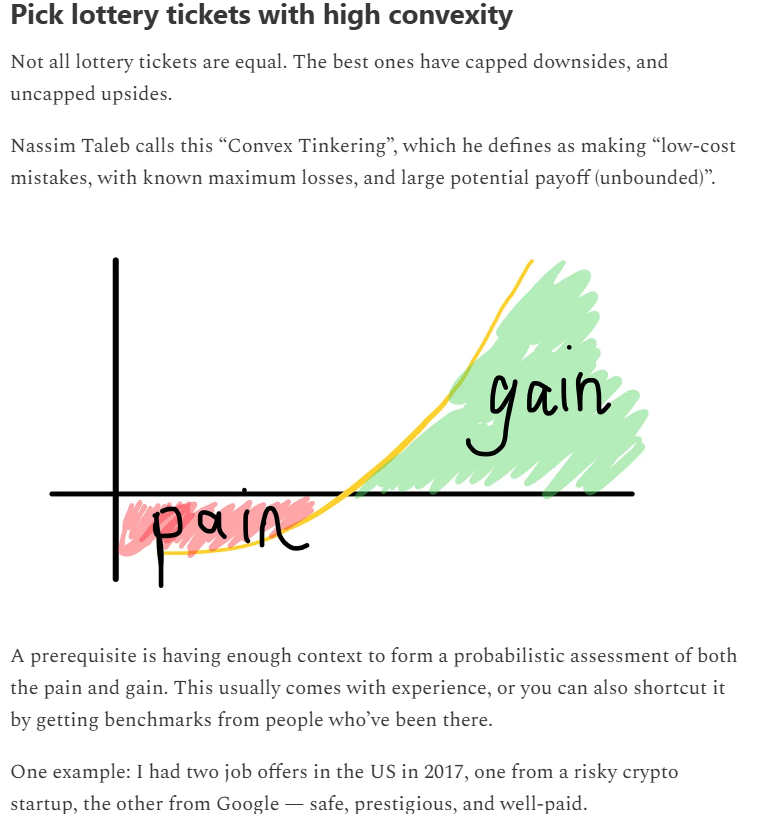
i like to revisit this 2022 article once in awhile "Collect as many lottery tickets as you can: How to make important life decisions".
donn tweet media
English
20
266
4.3K
216.6K
Mohammed Maaz
Mohammed Maaz@iammohammedmaaz·
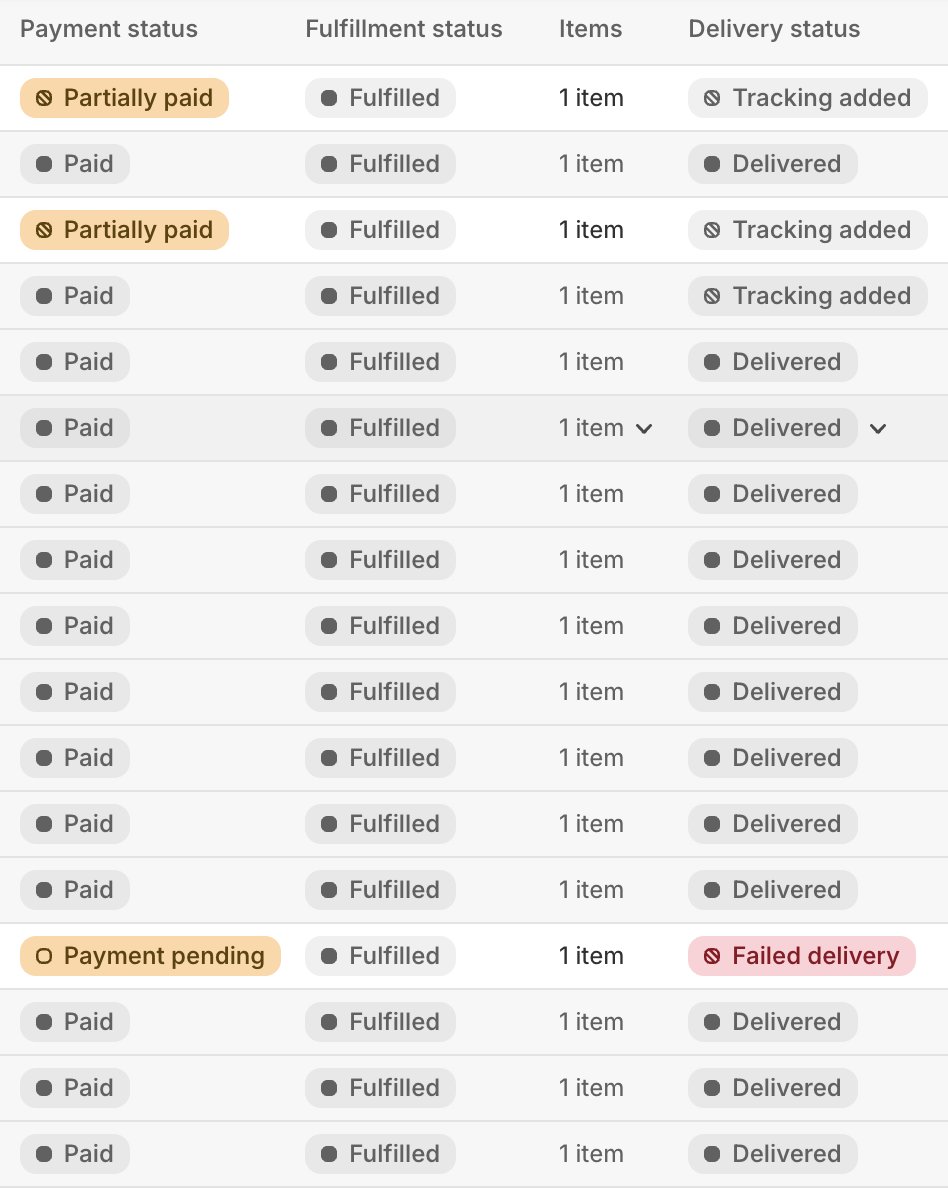
The main reason for us to get rid of COD, all the paid and prepaid orders 100% delivery rate. One COD order: Failed delivery
Mohammed Maaz tweet media
English
1
0
0
44
Parikram Borah ретвитнул
Dara
Dara@dara_venture·
You raise your seed round.....now what? The first thing you do when $1-2M hits the bank account is open the app, look at the number, take the screenshot, smile, send it to your family group chat to make your dickhead brother jealous....then close it. You just got 18-24 months if you're disciplined, 8-10 if you're stupid. Firstly, Don't change your fucking life. Pay yourself enough to not stress about rent. $80-120k depending on city, even lower if you can stomach it. If you pay yourself $350k after a $2M raise.....chances are, you will not last. You're not running a company just yet.....it's an experiment...one that will end quickly if you prioritize short term gains > long term greatness. Same with office. You don't need one. The "we need a real space for the culture" is bullshit. Work from home. Your only job for the first 6 months is to talk to users and ship quickly. If you raised $2M and you're not doing (minimum) 5 customer calls a week as a founder........your priorities are messed up. You need to understand as quickly as possible if the people who use your product, come back without you begging them to do so! Almost everything else is a vanity exercise. Series A timeline in 2026 is 600+ days from seed. Less than 15% of seed-funded startups ever raise an A. So track burn weekly. Know your runway to the day. Every dollar should ship product or facilitates customer feedback . If a tool, hire, or expense doesn't do that, stop it. Conference tickets? No. PR firm? Absolutely fucking not. "Brand consultant" don't be stupid. Logo redesign? GTFOH. 72% of seed stage burn is "people". 74% of startup failures involve premature scaling. You raise, you feel pressure to "build the team," you hire 4 people in 90 days, burn goes from $40k/mo to $180k/mo, the new hires don't have product to work on because there isn't one yet, you spend your time managing them instead of talking to users, runway evaporates, you're back fundraising at month 9 with worse metrics than when you started. Stay 2-3 founders + AI for as long as humanly possible. The teams crushing right now have 4 people doing what 15 used to do just 24 months ago. When/If you do hire.......focus on builders, forget managers. Focus on operators, not "credentials". If you're not using AI for code (Cursor, Claude Code), customer support, sales prospecting, content, ops, brand, recruitment vetting......your competition is winning. Tech is commodity now. GTM and data are the moats. Use AI to compress everything that isn't either of those things. Try to avoid giving advisors equity. An "advisor" (who you mistakenly thought would enhance "credibility optics") who takes 1%, for doing absolutely nothing, is the same prick that costs you seven figures in a future round. Model dilution before signing every SAFE. Don't talk to VCs for 6 months. (forget the "always raising" mindset for now) Keep relationships warm with periodic updates but take the foot of the gas slightly. I know. I'm a VC saying this. But I mean it. The gravitational, distractional pull of the next round, will fuck up your focus harder than anything else. Send your existing investors a 5 line monthly email. Don't go to investor dinners. Don't "build relationships for the A." If you're talking to VCs more than building, again, your priorities are misjudged and it will show up against your development goals. The money will fuck with your head. People will ultimately treat you differently. Nobody really prepares you for that. You'll get DMs from people you haven't talked to since school. You'll feel the urge to announce, to LinkedIn post, to look like a "real founder." You'll also be lonelier than ever. You raised, your "friends" think you've made it, you can't tell them you're scared shitless and don't know if it'll work. I would recommend finding 1-2 founders.....who are 6 months ahead of you, and text them weekly. That's effective therapy (at least from my personal experience). Last thing. The party ended when the money hit. Now you have a shot and a clock.....the only thing that matters is whether you ship something people genuinely want before that timer runs out. Most people who give you advice in the next 6 months are probably going to try selling you something. Filter everything ruthlessly. Trust your user feedback and trust the burn rate. Now go build and say "no"...... consistently. Godspeed.
English
87
68
927
85.2K
Parikram Borah ретвитнул
Shashank Dogra
Shashank Dogra@Shashank1171·
It's foolish to spend time looking at portfolio CAGR or % return per stock till the time you are financially independent. None of those numbers are 'enough' because you are not there yet. On the contrary these inflated numbers will only make you complacent.
English
2
3
32
1.6K
Parikram Borah
Parikram Borah@Parikram6·
One player I would genuinely love to see in Madrid colours would be Bruno. What. A. Player. Absolute word class. The little details in his game coupled with his quality 🤌🏽
English
0
0
0
13
Parikram Borah ретвитнул
Ali Azar
Ali Azar@MrTalkStock·
Indian market will not participate in this phase of the rally because unlike America, Taiwan, Korea - we don’t have the capability to build AI infrastructure like semiconductors, GPUs, Cloud Infra Once the buildout is done, and services phase begins, Indian stocks will rally
Jon Erlichman@JonErlichman

Stock returns in past month: Intel: +107% Credo: +92% Astera Labs: +91% AMD: +72% ON Semi: +66% Marvell: +55% NXP: +51% Micron: +47% TXN: +43% Qualcomm: +39% Arista: +38% Arm: +36% Broadcom: +34% Analog Devices: +24% Synopsys: +23% Cadence Design: +22% Lam: +16% Nvidia: +13%

English
0
1
10
1.6K
Parikram Borah ретвитнул
The Kobeissi Letter
The Kobeissi Letter@KobeissiLetter·
We are seeing a historic earnings boom. The current year-over-year blended earnings growth rate for the S&P 500 is a whopping +27.1%, more than DOUBLE the +13.1% expected. With ~63% of S&P 500 companies reporting Q1 earnings thus far, we are on track for the highest earnings growth rate since Q4 2021. Meanwhile, Magnificent 7 companies alone are now guiding over $700 BILLION in CapEx spend for 2026 alone. There has never been a more historic time to own assets than now. Asset owners are winning.
English
201
427
4.5K
443.3K
Parikram Borah ретвитнул
Vikas Vij
Vikas Vij@TheClubJunto·
Bernstein: India’s Ambitions are Hollow Without R&D Investments 1. No nation in history became a developed economy with R&D @ 0.65% of GDP 2. Labor Arbitrage Economy: Demand broken as wages stagnate for 10 yrs. You raise wages, you can’t compete. AI dents it further. INSIGHTS: R&D Intensity (% of GDP) 2000s Korea: 3.12% Taiwan: 2.7% China: 1.32% India: 0.82% 2010s Korea: 4.29% Taiwan: 3.3% China: 2.11% India: 0.75% 2020-25 Korea: 5.21% Taiwan: 4.0% China: 2.8% India: 0.65% Widening Innovation Gap: China’s GDP is 5X of India. Its R&D budget is 4X in % of GDP. So, in dollar terms, China is 5x4 = 20X of India’s R&D every year. Labourers vs. Innovators a. India’s Top 10 Companies: Combined R&D Expense 2025 (Thinking in Quarters): Below $1B b. China Companies R&D Expense 2025 (Thinking in Decades): BYD $8B; Huawei $14B; Xiaomi $5B c. Korea: In 1970s, private to government R&D share was 20:80. In 1990s, the ratio became 80:20. Korean government forced private sector to invest in R&D, reject short-termism, and massively incentivized firms with export credits and R&D tax credits. d. Taiwan: In 1980s, the government funded research labs for semiconductors. The “seed” was sown by the government; the “scale” was led by private sector. Today a single company TSMC controls 70% world market share in semiconductor pure-play, driven by AI demand. e. China: In 1980s, India and China had similar R&D investments. China realized that technology was their only guarantee of national survival. The government and private sector formed a combined “war machine” to become the “IP owner” and not just the “world’s factory” for tech goods. India’s Scarcity Mindset a. While Korean and Chinese companies operate in a culture that rewards global innovation, Indian companies operate in a culture that rewards bowing down before bureaucrats and ministers. b. To grow in India, you don’t need to build world-beating products. You just need to operate in those areas of the domestic economy where government policy favours Indians over foreign businesses. c. Think of a student whose father owns the school, and no other students are allowed to sit in the exam. What will be his capability? While other countries demand global dominance as a point of national pride, Tata, Reliance, and Adani cannot even make a candy that sells in the world market. d. Curse of Cheap Labor: Indian IT companies realized that when you can make 20% margin by selling cheap labor, why build a semiconductor factory that requires $20 billion CapEx? They kept distributing lakhs of crores in dividends (mainly to promoters) while the world invested in AI and chips. e. The GCC Paradox: India now has over 50% of the world's Global Capability Centers (GCCs). From Google to Walmart to Mercedes, the world’s best tech innovation and research is happening in India, but the Intellectual Property (IP) belongs to other countries. So, we remain only “cheap labour” for others. Low Wages; Broken Consumption a. Labour arbitrage economies enjoy GDP growth till wages keep rising. But wage growth stalls when other poor economies like Bangladesh or Philippines catch up with lower wages. That’s when their dream of becoming a “developed economy” gets a reality check. b. From 2015 to 2025, real wages in India have stagnated. Rural wages have seen a negligible CAGR of 0.1%, and entry-level IT salaries have famously remained stuck at ₹3.5 LPA. China’s real wages (inflation-adjusted wages) have grown at 8 to 9% CAGR during the same period. c. Indian companies continue to operate in low-complexity, me-too product/service segments where low wages are a competitive advantage. But now AI is the new emerging threat to IT sector and GCCs. Endpiece In absence of an urgency to shift from Labour Arbitrage to Innovation Premium, India risks falling into the Middle Income Trap. India’s demographic dividend is ending by 2040. Without investing patient capital in R&D, India will squander its opportunity to achieve a developed nation status by 2047. @arabicatrader
English
105
604
1.6K
104.2K
Parikram Borah ретвитнул
Apoorv Agrawal
Apoorv Agrawal@apoorv03·
One of the most substantive classes with @ChaseLochmiller at Stanford. We went deep on economics of the datacenter: - Where is the ~$650B of AI infra capex actually going this year? - Who's capturing the margin, who's getting squeezed? - How the bottleneck has moved from GPUs to power, and where it goes next - The economics of neoclouds
English
30
138
1.3K
238.9K
Parikram Borah
Parikram Borah@Parikram6·
@sandeepjethwani Thank you for putting this out there @sandeepjethwani. Immense value. Your learnings serve as a valuable lesson for younger generations trying to ply their trade. Excited to see Dezerv grow!! 🚀
English
0
1
1
1.2K
Parikram Borah
Parikram Borah@Parikram6·
@Nikshep_09 Result of PE firms taking over this sector. Good healthcare going to start looking like a luxury in years to come
English
0
0
2
21
Nikshep Grampurohit
Nikshep Grampurohit@Nikshep_09·
Hospitals are the perfect example of misaligned incentives. They make money by keeping patients sick for longer.
English
1
0
2
54
Parikram Borah ретвитнул
VaR
VaR@Vedansh_Ag·
If your liquid net worth is <100cr, don’t waste time making unlisted or private equity investments. There are more than enough opportunities in the listed space. Sharpen your research process, improve your analysis, build strong mental models, and get fucking good at pattern recognition. That’s all.
English
5
6
133
9.9K
Parikram Borah ретвитнул
Sapna Sarda
Sapna Sarda@sapnasarda_·
A Bangalore founder walked into a Series A meeting last month. Killer product. VC loved it. "Send us your monthly P&L, revenue breakdown, and cap table. We'll get back to you next week." He didn't have any of it. Not "it was messy." He didn't have a monthly P&L. Revenue was tracked in a Google Sheet with missing months. The cap table was a WhatsApp group and an old email thread from 2022. The VC didn't say no. They said "let's revisit in a few months." He thought they lost interest in the product. They didn't. They never even got to evaluate the product properly. They couldn't get past the numbers. I've seen this happen to at least a dozen founders now. And every single one made the same mistake. Not a compliance mistake. A mental model mistake. They thought fundraising is one event. Walk in, pitch, get money. It's not. It's three stages. And most Indian founders die at the wrong one while preparing for the other two. Stage 1 — Getting the term sheet. This is the part nobody talks about because it's unsexy. The VC has heard your pitch. They're interested. Now they want to see if the business is real. What they ask for is shockingly simple: Monthly P&L. Not audited. Just organized. Revenue, costs, margins, month by month. Unit economics. What does it cost you to acquire a customer? What do they pay you over time? What's your payback period? Burn rate and runway. How fast are you spending? How long can you survive? Cap table. Who owns what. Option pool. Any convertible notes or SAFEs. Previous round terms. Your top 5-10 customer contracts. That's it. No auditor's report. No ROC filing. No FEMA paperwork. Just proof that you understand your own business well enough to have tracked it. And this is where 80% of first-time Indian founders silently lose the deal. Because when the VC asks for monthly P&L, the founder goes quiet. Calls his CA. The CA says "give me 3-4 weeks." Three weeks later the VC has moved on to the next deal. Stage 2 — Closing the round (after term sheet, before money hits your account). This is what founders actually panic about. The investor's lawyers send you a 47-item due diligence checklist and you feel like you're being audited by the government. They'll want: Full legal due diligence — contracts, IP assignments, employee agreements. ROC filings verified — PAS-3, MGT-14, AOC-4, annual returns. GST and TDS compliance check. Bank statements cross-checked against your claimed revenue. If foreign investor: FEMA compliance, RBI valuation, FC-GPR readiness. Board resolutions, shareholder approvals, AoA amendments. This stage is brutal. But here's what nobody tells you — it's fixable. You can hire a good law firm and a specialist CA, spend 3-5 lakhs, and clean most of this up in 4-6 weeks. It's stressful but it's not a deal killer. VCs expect some mess here. Their lawyers will tell you what to fix and give you time to fix it. Stage 3 — Post-closing (after money is in your account). These are things that literally can only be done after the round closes, or that both sides agree can wait: Filing PAS-3 with ROC within 30 days of share allotment. Filing FC-GPR with RBI within 30 days of receiving foreign investment. ESOP pool formalization — board approval, scheme documentation, grant letters. Updating share registers, issuing share certificates. D&O insurance. Setting up proper board governance. Nobody's deal dies at Stage 3. This is just paperwork with deadlines. So here's the pattern I keep seeing. A founder spends 6 lakhs hiring a CA firm and a CS to "get compliance ready" before fundraising. They clean up ROC filings, GST returns, annual filings. Takes 3-4 months. Then they walk into the VC meeting. VC says "show me your monthly revenue trend for the last 18 months and your unit economics." Blank stare. Because that was never on the CA's checklist. The CA fixed compliance. Nobody built the financial MIS. The founder prepared for Stage 2 and 3. But the deal died at Stage 1. And here's the brutal part. Stage 2 and 3 can be fixed in weeks with the right team after you have a term sheet. The investor expects you to fix things during due diligence. That's literally what due diligence is for. But Stage 1? You can't manufacture 18 months of monthly P&L and unit economics in 3 weeks. You either tracked your revenue and costs month by month, or you didn't. There's no shortcut. No CA can reconstruct what you never recorded. The founders who raise fast don't have better products. They don't have better CAs. They don't have cleaner ROC filings. They just started keeping a monthly P&L from day one. When nobody was asking for it. When it felt like a waste of time. When the business was too small for it to "matter." It always matters. You just don't know it until the VC asks. If you're a founder reading this and you don't have a monthly P&L going back to when you started — stop whatever you're doing and build one today. Not for compliance. Not for your CA. For the meeting you don't know is coming.
English
34
85
608
118K
Parikram Borah
Parikram Borah@Parikram6·
April has been bonkers. Personally feel that this uptick is still not structural with crude prices still at highly elevated levels relatively.. Will look to deploy capital in select pockets in a staggered manner, factoring in 2nd order effects of the war that may spill intoQ1FY27
Health & Wealth@_HealthZwealth

What an explosive month for small & microcaps. Didn’t give even a whisper to those waiting on the sidelines… and just 🚀 took off. By the time you looked again, prices weren’t just up… they were already gone.

English
0
0
1
70