Ruslan Dmitriev 

1.2K posts

Ruslan Dmitriev  banner
Ruslan Dmitriev 

Ruslan Dmitriev 

@PhotoBioLab

Associate Professor @ResearchUGent @UGent_HSR @microscopyUGent 'FLIM gypsy' and developer of #FLIM #PLIM bio-/nanosensors for #organoids #3D PI @FlImagin3_DN

Ghent University, Belgium Присоединился Ocak 2010
574 Подписки605 Подписчики
Закреплённый твит
Ruslan Dmitriev 
Ruslan Dmitriev @PhotoBioLab·
#PublicationAlert #FluorescenceTuesday Our paper (see the tweet below) has been published in @LightSciAppl ! Enjoy! rdcu.be/eApyk
Ruslan Dmitriev @PhotoBioLab

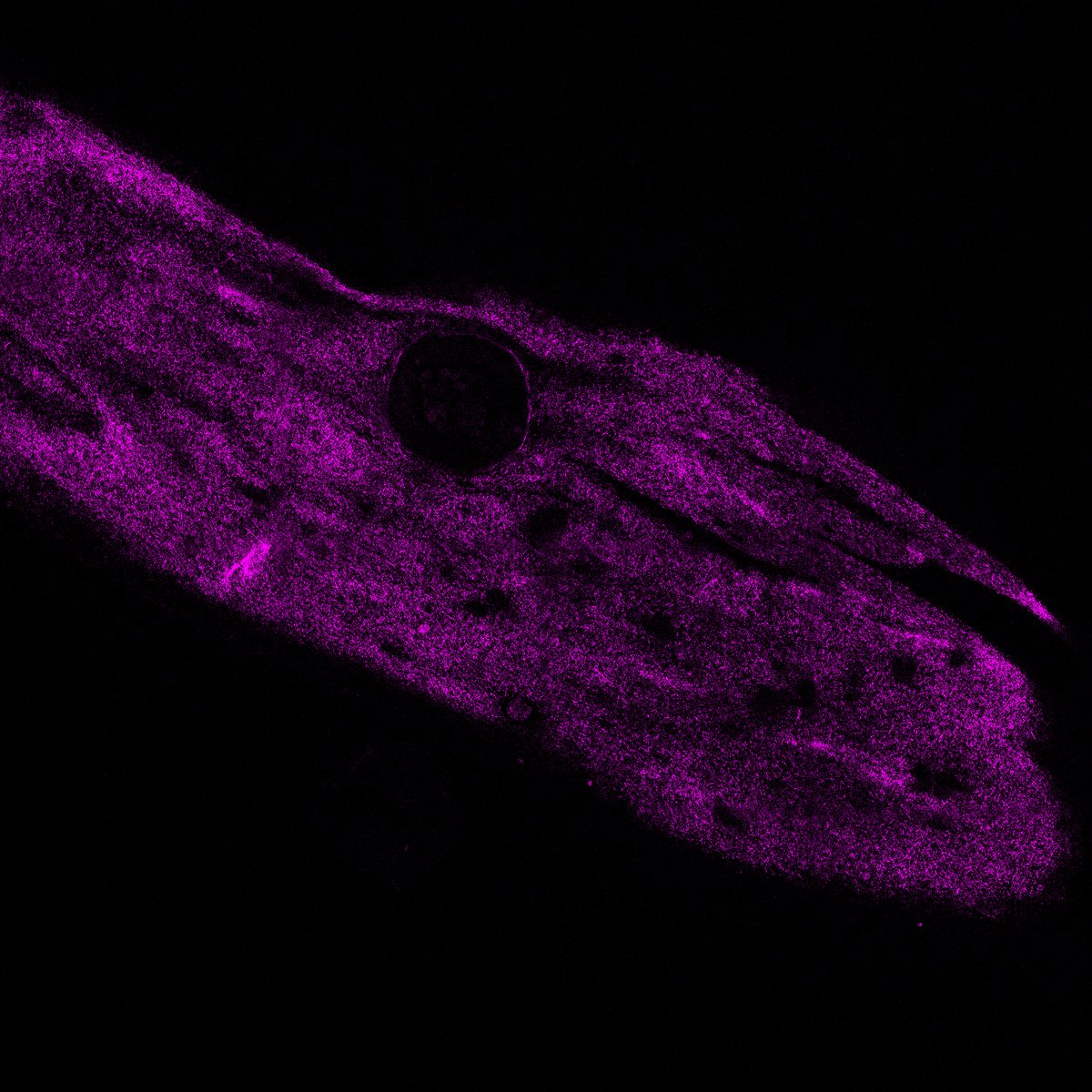
@photobiolab #PreprintAlert! We are excited to share our new preprint reporting how can #FLIM #organoids can help better understanding #MNP #nanoplastic #pollution effects! We developed #FLIMbarcoding with #NIR #azabodipy #pristinenanoparticles, optimised #polarityreversion 👇

English
1
6
11
1.1K
Ewan Morrison
Ewan Morrison@MrEwanMorrison·
This is not true. PhD students who write with AI are unable to defend their thesis in Viva presentations as they haven't worked through the processes of reading, learning, internalisation & argument formation. Academics need to throw LLMs out, not 'wake up' & accept them.
Alexander Kustov@akoustov

AI can already do social science research better than most professors with PhDs. And, for the first time in my life, I really have no idea what happens in five years. Things are changing already, we just need to wake up.

English
47
454
2.1K
36.6K
Ruslan Dmitriev 
Ruslan Dmitriev @PhotoBioLab·
@OdedRechavi Well, 2 weeks is a bit too much to ask, seems like editors believe that we don't have anything else to do. I normally reply and ask for 4 weeks
English
0
0
1
16
Ruslan Dmitriev 
Ruslan Dmitriev @PhotoBioLab·
@MrEwanMorrison Excellent, how could I miss it? If you look at this through Google Scholar, you can also follow the papers citing this (500+ already), some are quite relevant for effects on education
English
0
0
0
149
Tired Peasant
Tired Peasant@HorrorGorl·
Let it Collapse!!!
Tired Peasant tweet media
English
12.8K
31.5K
154K
5.3M
Ruslan Dmitriev 
Ruslan Dmitriev @PhotoBioLab·
@MrEwanMorrison I also tend to think that nothing comes for free, - you cut the end somewhere then be prepared to pay back on something else
English
0
0
0
15
Ruslan Dmitriev 
Ruslan Dmitriev @PhotoBioLab·
@MrEwanMorrison totally agree, in research the more you think and the slower you do it, deeper you may go. In writing (of e.g. research paper introduction), doing it yourself also pays off. In reading research papers again, no one needs randomly extracted bits&pieces etc. Good things need time
English
1
0
0
24
Ewan Morrison
Ewan Morrison@MrEwanMorrison·
For those who say "AI saves time". Time for what? If it's replacing time spent working in the arts then it's killing the slow intimate process artists love to be immersed within. Time to do what? Time to confront existence? Or to distract yourself with scrolling through slop?
Theresa, Editor@kuzitiz

Seriously WHY though. What are you doing with your time if you're using AI to write your texts, play your games, and summarize everything for you? I don't understand the purpose.

English
33
100
537
10.5K
Ruslan Dmitriev  ретвитнул
Jathan Sadowski
Jathan Sadowski@jathansadowski·
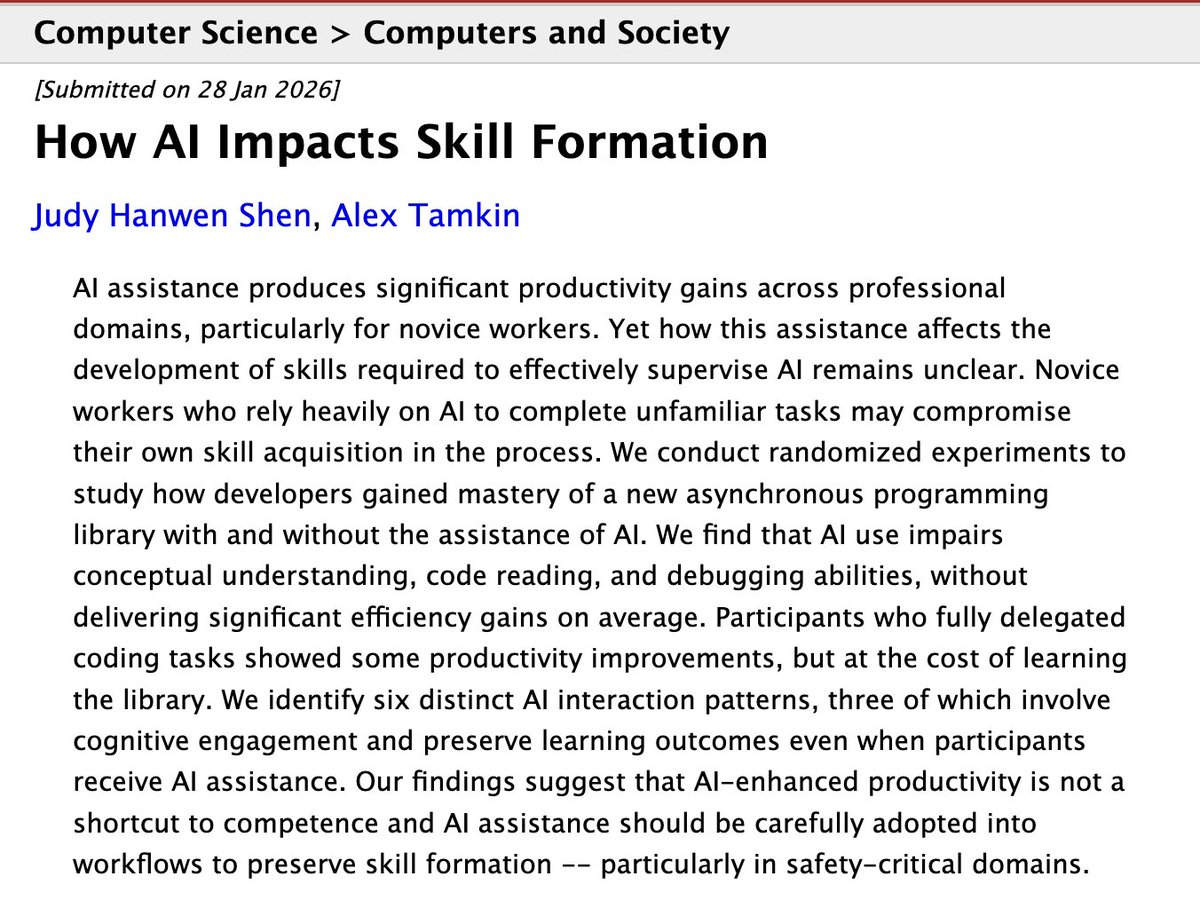
I think often of a tweet I saw that was like "if your kid actually reads books, they're gonna be one of the smartest people in like ten years" arxiv.org/abs/2601.20245
Jathan Sadowski tweet media
English
16
277
1.8K
43K
Best Movie Moments 🍿
Best Movie Moments 🍿@BestMovieMom·
Bong Joon-ho designed the creature in The Host (2006) to be physically incompetent. He hated perfect movie monsters and specifically instructed the animators to make the beast trip and slip to make it feel like a mutated biological error.
English
87
1.6K
30.8K
5.7M
FLIM LABS
FLIM LABS@FlimLabs·
In #FLIM, the real challenge isn’t hardware — it’s calibration. Reliable #Phasor data depends on it, and that’s why we built a kit to solve this Calibrate with confidence. Measure with precision. 👉 SPIE Photonics West 2026 | Booth #4103 #FLIMPhasors @SPIEtweets
FLIM LABS tweet media
English
1
2
4
249
Oded Rechavi
Oded Rechavi@OdedRechavi·
Independent research fellows
Oded Rechavi tweet media
English
3
3
114
7.3K
Bobby Weir
Bobby Weir@BobWeir·
It is with profound sadness that we share the passing of Bobby Weir. We send him off the way he sent so many of us on our way: with a farewell that isn’t an ending, but a blessing.  A reward for a life worth livin'. bobweir.net/bobby/ 📸 Chloe Weir
Bobby Weir tweet media
English
2K
5.8K
30.1K
2.3M
Dr Ally Louks
Dr Ally Louks@DrAllyLouks·
@justalexoki They don’t in a lot of instances, I’m afraid. Even in more severe cases than this.
English
7
0
1.4K
21.4K
Dr Ally Louks
Dr Ally Louks@DrAllyLouks·
The thing that concerns me most about this so-called “trend” is the complete inability for the relevant regulators and governing bodies to get a handle on it.
Dr Ally Louks tweet media
English
171
1K
22.4K
305.4K
Ruslan Dmitriev 
Ruslan Dmitriev @PhotoBioLab·
@OdedRechavi Maybe it is just a general decrease of interest in science, I feel that AI/anti-AI sentiment or climate change topics are more popular at the moment, not speaking about "other noise". LinkedIn got a bit better for science but seems to already have reached its peak
English
0
0
1
79
Oded Rechavi
Oded Rechavi@OdedRechavi·
Two options: 1. The @X algorithm is just broken 2. The algorithm intentionally ignores scientists (news, tech & entertainment less effected) It’s probably #1. We heard that they were going to fix it (@grok), but this didn’t happen. Exposure to science is down >90%.
English
32
32
302
28.4K
Ewan Morrison
Ewan Morrison@MrEwanMorrison·
Well worth a read: "The AI generated texts on ScienceDirect spread misinformation and pollute the scientific knowledge infrastructure. This harms science, researchers, lecturers, students, and ultimately also the public."
Ewan Morrison tweet media
English
4
45
140
5.6K
Arjun Raj
Arjun Raj@arjunrajlab·
@PhotoBioLab Better to wait until conditions are more favorable?
English
1
0
2
357
Arjun Raj
Arjun Raj@arjunrajlab·
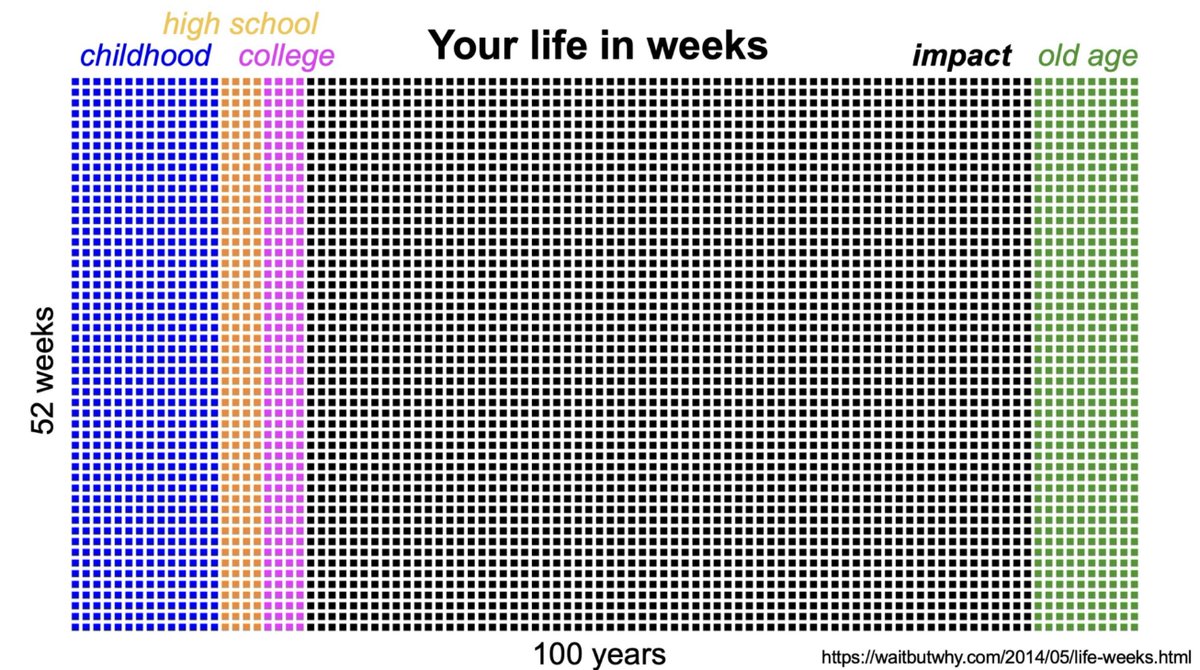
Blog post: Just quit Quitting projects in science is hard, but we should be doing a lot more of it. We spend a lot of time as scientists thinking about how to choose a project—and that is, of course, critically important to success. But… no matter how carefully you try to pick out the most groundbreaking, innovative project imaginable, the simple truth is that not every project is going to be awesome. Consequently, just as important as the skill of choosing a project is the skill of knowing when to quit a project. In my view, we should quit far more often than we do, for the simple reason that time is so very precious. Here is possibly the scariest diagram of all time (from Wait but why): That is not a lot of weeks. Each scientific project can take up 2-4 ENTIRE COLUMNS. As mentioned, the success of a project is way more probabilistic than we care to admit. So you have to sample, and that means rejecting many samples. Do not let this precious time go to waste. Sometimes, you just have to quit. Why is it so hard to quit in science? Here are a few top reasons, all of which are based on fear: Fear of the unknown. It’s in many ways easier to keep going with the devil you know. Sunk cost fallacy. Don’t finish bad projects. A project typically takes 2-10x as long to finish as you think (and that’s even when you’ve already factored in the 2-10x). Do you really want to “just tie up a few loose ends” on a crummy project for the additional years required? Falsely estimating the value of future and past time. People often worry about how long a new project will take. Let me tell you, finishing a project you don’t like will usually take way longer than one you do like. Also, time as you become more trained is worth much more than untrained time, especially for graduate students, so don’t waste precious time in the future on ill-spent time in the past. Bad advice. Beware: other people typically value your time far less than you do. That’s not necessarily bad mentoring or anything sinister, just a very human reality. “Sure, do that extra control to kill the project”—sounds reasonable, and maybe it is, but it’s a lot easier to say when it costs very little to whoever says it. Feeling like a quitter. We have been socialized in science to have a certain “stick-to-it-iveness” that I think is often counterproductive. What can you do to make quitting easier? Frame quitting by time, not results. It is practically a mantra in scientific management to say “I don’t care about time, I care about results”, and we pride ourselves on making decisions based on data. The problem is that there’s always “one more experiment” to do to see whether something will (or most likely, will not) work. Why spend time trying to do the experiment to kill a project you hate when you can just… stop working on it? Set a time, perhaps a week or a month or six months in the future, evaluate then based on whether you’re really getting where you imagined, and move on. Do the control you’re scared of. Often, you know the go/no-go experiment you should do, but you put it off because you’re scared of the result. You know what I’m talking about. Just have to do it. Don’t chase wishy-washy results down the rabbit hole. When things work, they work. When they seem to maybe work, they usually don’t actually work. Get some honest external feedback. Find someone that you really trust to give you honest feedback and ask them whether the project is worth pursuing. Sometimes, getting that negative signal from the outside is far more convincing than from your advisor/trainee. Imagine the future of the project. Envision the title/abstract of the paper you imagine writing. Is that something you really want to spend potentially years writing the rest of? Often, people begin with a starter project in the lab, which can have a habit of turning into way more than a starter. If you’re just not that into it, quit. And finally, just listen to that voice in your head. You probably already know you should quit, so just do it. I have quit projects many times in my career—grad school, postdoc, professor—and while the alternative is unknowable, with hindsight, it certainly feels like those were almost invariably the right decisions to make.
Arjun Raj tweet media
English
10
89
626
69.7K