neb
69 posts


introducing RLS-Shield on the @swarms_corp Corp Marketplace. RLS-Shield is a DeFi security triage agent that detects Row-Level Security (RLS) and backend access control issues before they reach production. as part of the Swarms marketplace listing and hackathon requirements, i deployed the agent's utility token, $RLS, on a bonding curve. it analyzes scanner output and converts it into actionable fixes: • Severity-ranked vulnerabilities • Patch checklists • Assigned engineering owners • Verification steps • Supabase RLS + SECURITY DEFINER guidance • Payment webhook hardening • Release readiness checks Focus areas include: • Paid content bypasses (zero-price exploits) • Weak role mutation controls • Public SECURITY DEFINER exposure • Over-permissive RPC/function access RLS-Shield is deterministic and runs without external APIs, model keys, or databases. Open source: github.com/linoxbt/RLS-Sh… Live app: rls-shield.vercel.app Marketplace: swarms.world/agent/e3654a5d…


Treasury is undergoing a structural shift from manual coordination to real-time capital execution. What @arc highlighted recently reflects this transition clearly: settlement is becoming instant, disbursements are automated, and idle capital is no longer meant to sit unused while waiting on intermediaries. That's the design space we’re building into with Lunex Finance on Arc. Lunex connects Arc's core primitives: StableSwap AMM, CCTP flows, ERC-4626 vaults, and unified balances into a single liquidity layer for stablecoins that can move, earn, and settle without fragmentation. Built natively on Arc's USDC gas, sub-second finality, and EVM environment, Lunex turns treasury concepts into executable flows: swap → bridge → deploy → earn. Testnet is already live with StableSwap, CCTP routes, vaults, and a working app interface. This is not a concept. It is live infrastructure being tested in real conditions. 🔗 lunex.finance

Treasury is undergoing a structural shift from manual coordination to real-time capital execution. What @arc highlighted recently reflects this transition clearly: settlement is becoming instant, disbursements are automated, and idle capital is no longer meant to sit unused while waiting on intermediaries. That's the design space we’re building into with Lunex Finance on Arc. Lunex connects Arc's core primitives: StableSwap AMM, CCTP flows, ERC-4626 vaults, and unified balances into a single liquidity layer for stablecoins that can move, earn, and settle without fragmentation. Built natively on Arc's USDC gas, sub-second finality, and EVM environment, Lunex turns treasury concepts into executable flows: swap → bridge → deploy → earn. Testnet is already live with StableSwap, CCTP routes, vaults, and a working app interface. This is not a concept. It is live infrastructure being tested in real conditions. 🔗 lunex.finance


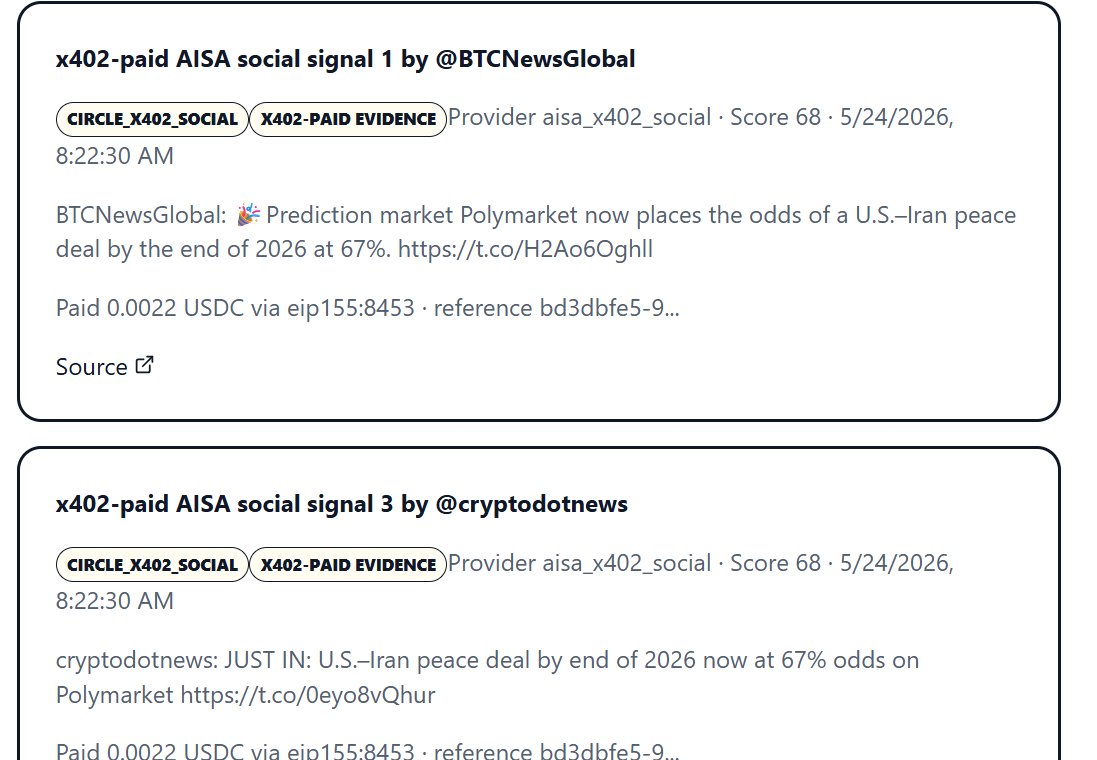
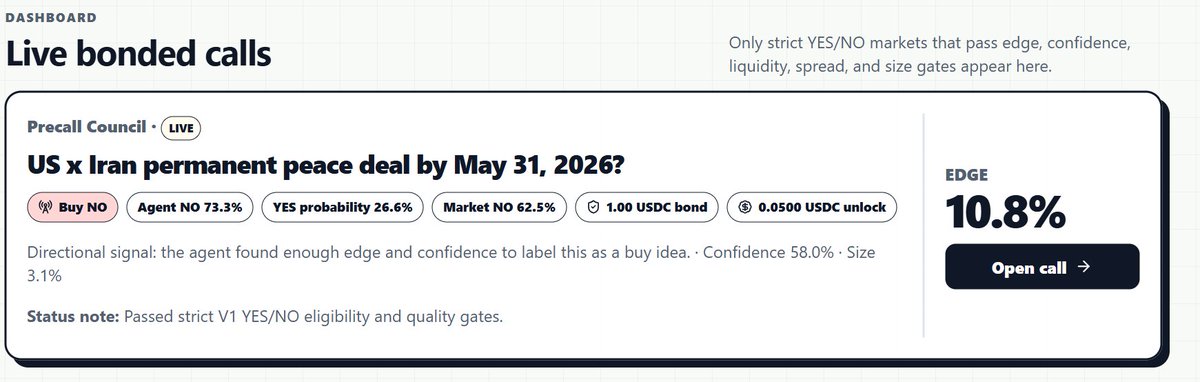
Kairos PM is live. ai agents already trade prediction markets, but almost none show the reasoning behind the trade. we built a system where every signal generates a structured reasoning trace, pinned to IPFS and anchored on @arc before execution.


what I find interesting about @SeismicSys is how it changes what you can actually build onchain. you can finally design DeFi where positions don’t have to be public. Imagine lending markets where collateral details stay hidden, or trading strategies that don’t get copied in real time just because they’re visible in the mempool. even basic things like payroll, treasuries, or internal protocol flows can now happen without exposing every detail to the entire internet. it is not just privacy for the sake of privacy, it is privacy that unlocks new product design.