
Закреплённый твит
Fang
657 posts

Fang
@fleavis
Investor and builder. Tweets are personal, not investment advice.
Присоединился Ağustos 2008
286 Подписки1.8K Подписчики
@SixSigmaCapital @IBKR Do you need a contact? I can send you to the head of institutional sales there.
English

IBKR is not going well for me.
I tried to send a few test deposits all of which got lost somehow in transit and I am still unable to get cash onto the platform.
@IBKR get in touch
English
@bryan_johnson Given your resting body temp is lower, could that mean it takes longer for you to hit 102? So for most people, less time might be effective
English

@atelicinvest In my experience that is usually a warning, a sign that the CEO has lost touch with his customers
English

Every time I hear "my goal is to know this business better than the CEO does"
Clark Tang@_clarktang
I am always baffled by how investors always confidently think that they know better than management Lord give me the confidence of a 24 year old broccoli hair pod boy telling a memory CEO that his business is cyclical, because he read it in a BofA primer last tuesday
English
Fang ретвитнул

Stuyvesant is the pinnacle of public education in the US. The number of smart poor kids who went from the bottom straight to the top is unbelievable.
And ironically … it’s one of the few things that some equity focused activists want to change.
Charles Fain Lehman@CharlesFLehman
Surely NYC is among the top-performing school systems academically, right? Right?
English
@asmartbear Great point. I remember he would say things like, “we don’t see any slowdown in rail or construction” (fact) but he wouldn’t take the next step (predicting that it meant XYZ re future growth). But, he has been wrong a few times about people. I guess we humans are all imperfect.
English
@fleavis I wonder if a person who truly thinks in probabilities is ever 100% certain?s
English
Typically, people usually are probably not likely to agree on the typical definition of words like “usually,” “probably,” “likely,” and “typically.”
So… when you’re being precise, don’t use “probability words.”
longform.asmartbear.com/probability-wo…
English
Fang ретвитнул

The idea that it's hard to beat the market is mostly trotted out by money managers. What they really mean is that it's hard to do when you manage other people's money, because it's difficult to get paid for doing the obvious thing. I think it's substantially easier than most people think for the person solely running their own cash.
English

Has anyone come across a situation where the c-suite is not good at capital allocation (or mid at best) but there are stars at the second level?
Might see it more in conglomerates or larger companies where folks have autonomy in running a division
English
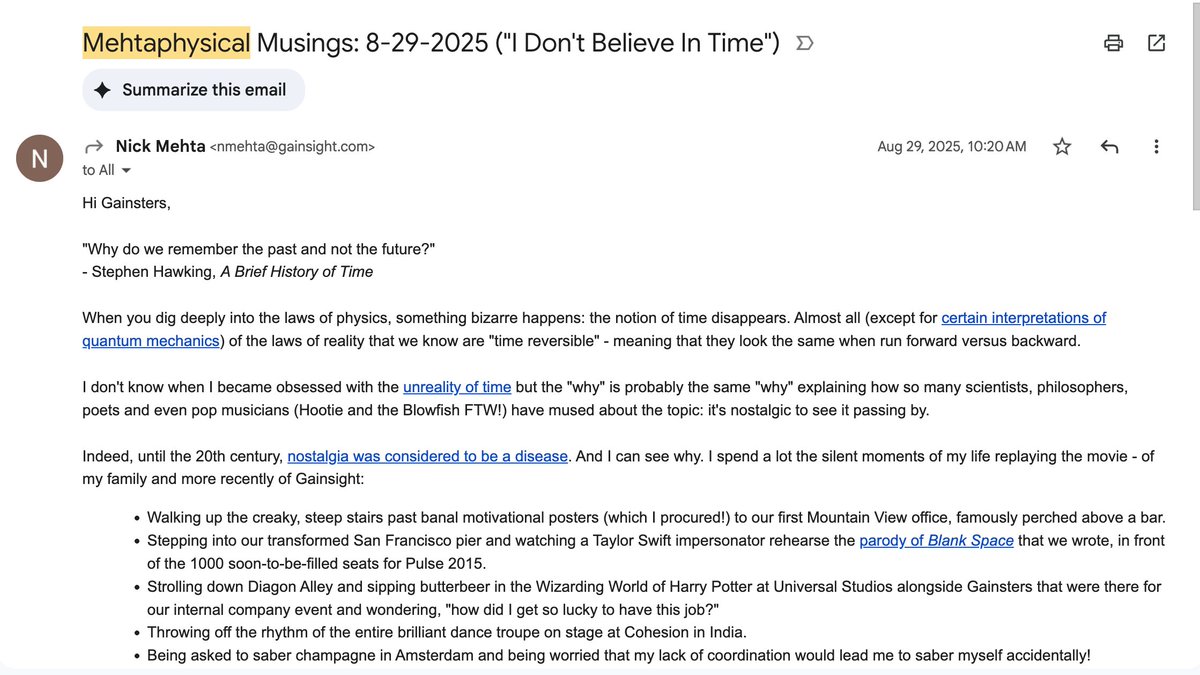
Investor @gokulr recently had a great post about the value of weekly founder/CEO emails to the company. I've sent a Sunday night email to the various teams/companies I've run every week since 2006. Here are some things I learned:
English
Fang ретвитнул

Today I turn 55.
I’m the fittest, sharpest, and happiest I’ve ever been.
If I’m an outlier, it’s not because I’m built different or discovered a secret formula. The truth is far less glamorous:
It’s a million tiny choices, compounded over decades.
Here are 55 of them:
1. Walk 15+ miles a week, even if you do other exercise. Humans are uniquely made to move slowly over long distances—it’s critical to longevity.
2. Develop a writing practice. It’s the single best way to sharpen your mind. And remember, you don’t have to be a good writer to write. Start with 10 minutes a day.
3. Swap out your toothpaste, deodorant, lotions, soap, shampoo, and other personal care products for natural versions. Here’s a rule of thumb: Don’t put anything on your skin that you couldn’t safely eat.
4. If you have a positive thought about someone, don’t keep it to yourself—share it immediately. Encouragement defies the laws of physics: When you give energy, you also receive it.
5. Wear shoes with a wide forefoot (I like Topo Athletic) and wear toe spreaders around the house (search “yoga toes” on Amazon). Spine health begins with the feet.
6. Get sunlight regularly. Moderate sun exposure (without sunscreen) is hugely important for overall health.
7. Do a 3-minute deep (“ass to grass”) squat every morning. Deep squats are often called the anti-aging exercise. It’s been said that, “It’s not that you can’t do deep squats because you’re old, it’s that you’re old because you can’t do deep squats.”
8. Explore minimalism (it’s not what you think it is).
9. Set boundaries on toxic relationships. We tend to cling to relationships past their expiration date, and it takes a bigger toll on our health than we recognize.
10. Eat real food. Not too much. Don’t eat garbage. Binge occasionally. Fast occasionally. That’s the diet.
11. Learn about FIRE. It’s a great framework for financial success.
12. Don’t take antibiotics except in emergency situations. They’re massively over-prescribed and aren’t needed in most cases. Antibiotics have done untold damage to our guts, which is where health begins. Great natural alternatives are out there.
13. Get 8 hours of quality sleep each night. To optimize sleep:
—Don’t eat after 6pm
—Get blackout shades and cover LEDs with black tape
—No screens 2 hours before bed
—Try ashwagandha (an herb) to calm the nervous system
14. Stop drinking, even in moderation. People find all sorts of ways to justify drinking, but there’s no escaping the simple fact that alcohol is a toxin and it limits your potential.
15. Travel as much as possible. Nothing expands the mind like seeing the world. And travel doesn’t have to be expensive—the best experiences happen outside of fancy resorts, when you live like a local.
16. Let go of resentment. When you forgive someone, you release the prisoner, and the prisoner isn’t them… it’s you.
17. Show up on time, every time. Poor time management limits success more than most people realize. If you struggle with punctuality, stop everything else and fix that first.
18. Spend lots of time in nature and touch the earth. Humans evolved over 300k years to live in harmony with nature, and only recently have we retreated indoors. If you don’t spend time outside, you’re fighting biology (hint: You won’t win.)
19. Stop doing dumb things. As Leo Tolstoy said, “People try to do all sorts of clever and difficult things to improve life instead of doing the simplest, easiest thing—refusing to participate in activities that make life bad.”
20. Find your happy place and (eventually) move there. Most people live where they live because... that's where they live. We are products of our environment—choose yours carefully.
21. Find a hobby and pursue mastery. You can’t have a happy life without a passionate pursuit that isn’t your vocation. Your work—even if you enjoy it—isn’t enough.
22. Avoid mainstream medicine except as a last resort. The results are in—our healthcare (or more appropriately, sick care) system is badly broken and only makes people sicker.
23. Have a mindset of abundance. There is no advantage to being a pessimist—even if you’re right, it’s a miserable way to live. In a very real way… whatever you believe, you’re right!
24. Do hard things. Choose courage over comfort. Everything you want is on the other side of fear and hard work. As Jerzy Gregorik said, “Hard choices, easy life. Easy choices, hard life.”
25. Ignore haters. Hurt people hurt people. Negative/toxic people live in a prison of their own design. Don’t join them!
26. Say no. Protect your time and energy like it’s your most precious asset… because it is.
27. Become a water snob. As an alien said on Star Trek, humans are “ugly bags of mostly water.” You are what you drink—literally! We have Mountain Valley Spring water delivered in glass 5-gallon jugs and also have whole-house water filter (Aquasana Rhino).
28. Stop drinking sodas and sugary energy drinks. After a few weeks you won’t miss them, and a few months later they’ll seem disgusting. Refined sugar causes inflammation, which is the root of most disease.
29. If you’re over 35, find a good functional/longevity medicine doctor and start tracking your hormones. Modern life is hell on the endocrine system and restoring healthy hormone levels can change your life. As we get older, we either accept a slow decline in performance or we do something about it—choose the latter!
30. Develop a morning routine and follow it faithfully. Win the morning, win the day!
31. Invest in experiences, not things. People frequently regret buying things, but rarely regret investing in great experiences (especially when shared with loved ones). Remember, there’s nothing you can buy in a mall that you’ll remember in ten years.
32. Explore spirituality. It’s arrogant and small-minded to believe there’s nothing going on in our universe that is beyond our comprehension. We know less about our universe than an ant meandering on a sidewalk understands about this planet.
33. Have a strong bias toward action—doing rather than talking. If you ask a bunch of old people about their regrets, they’ll talk about the things they *didn't* do—the shots they didn’t take—more than the things they did do (even if it went wrong). As Wayne Gretzky famously said, “You miss 100% of the shots you don’t take.” Most people don’t take enough shots.
34. Stay lean. Men in particular are obsessed with muscle mass these days, but bulk doesn’t age well. The goal is to be strong but lean. The fittest guys in their 50s and beyond aren’t meatheads, they’re lean guys who are serious about a sport.
35. Curate your inner circle carefully. Surround yourself with people you admire and who challenge you to grow. Remember, we’re the average of our 5 closest relationships.
36. Be the fittest version of yourself. Your body is your only vessel for experiencing life—so treat it as such. Fitness isn’t working out a few times a week, it’s a lifestyle. The older you get, the more time you need to devote to your health.
37. Take the time to appreciate art and beauty in all its forms.
38. Think globally, but act locally. Too many people put their energy into far-away problems they don’t understand and can’t impact, while ignoring problems right under their nose. Want to change the world? Start at home.
39. Try psychedelics. It’s one of those things everyone should do at least once, and it might be the breakthrough you’ve been looking for.
40. Limit bad habits, including unhealthy thought patterns. We all have them—practice avoidance and find substitutes. Get professional help if needed.
41. Be a lifelong learner. Your brain is just like a muscle—if you don’t feed and flex it regularly, it will atrophy.
42. Find your purpose. People with a strong sense of purpose are happier and live longer. Lack of purpose sucks energy and magnifies depression.
43. Only take advice from people who embody the traits you want to have. Talk is cheap—emulate those who have DONE it.
44. The goal is not to retire and do nothing, it’s to build a great day-to-day life that you don’t need to escape. A life of leisure is a slow death. Happiness isn’t possible without a little struggle, uncertainty, and skin in the game.
45. Have fun! Do frivolous and silly things that make you smile. As George Bernard Shaw famously said, “We don't stop playing because we grow old; we grow old because we stop playing.”
46. Whatever you want to do or achieve in life, start NOW. Don’t fall victim to “someday thinking” because someday never comes.
47. Accumulate assets—things that grow in value over time. It’s the #1 habit of rich people, and it can be done in tiny chunks. Instead of spending $100 on an impulse purchase that has no lasting value, put that money into an index fund or Bitcoin. It becomes addictive (in a good way).
48. Don’t ignore the big 3 canaries in the coal mine for health:
—Low libido (and ED)
—Frequent sinus & respiratory issues
—Depression
These usually aren’t medical conditions in themselves, they’re symptoms of an underlying problem. Find a good doc (outside of the mainstream) and figure out the root cause.
49. Have a clear vision for your future. How can you decide which direction to go if you haven’t clearly defined the destination? It sounds obvious, but 95% of people haven’t defined their “Ideal End State” in detail and in writing. (Check out my thread on this topic.)
50. Make your own decisions. We live in an era where most of what society tells us is wrong. Don’t be afraid to break from societal norms—if people say you’re crazy, it’s a sign that you’re doing something right.
51. Get hardcore about mobility exercise. As you age, it’s usually the knees, hips, and lower back that limit physical performance. 30 min a couple times a week can spare you a lifetime of pain. YouTube is a great resource.
52. Go all in on family. Get married, stay married, have kids. Burn the boats. In the end, family is all that matters.
53. Be ruthless with your time. Money comes and goes. Time only goes. Audit your calendar ruthlessly—cut the trivial, double down on the meaningful, and spend your hours like your life depends on it. (Because it does.)
54. Have a strong bias toward action. Be curious, try things, meet people—it’s how you increase your surface area for serendipity, the most powerful unseen force in our lives.
55. Reinvent yourself every decade. Over time, we slowly drift off course from our priorities, values, and true identity. Take stock and don’t be afraid to hit the reset button. Bold, calculated moves made for the right reasons almost always pay off—usually even more than you can imagine.
🎁 P.S. If you enjoyed this post, would you give me a birthday gift? Repost or comment with the item number(s) you liked best?

English
Fang ретвитнул
The strongest indicators that you're about to make a terrible decision:
1. Endless overthinking of pros and cons
2. Chasing certainty
3. Chasing even more data instead of feeling your emotions
4. Trying to manage outcomes vs being who you are
Let me explain:
1. Endless overthinking
A choice happens automatically. A decision is where you think about it. If you're overthinking, it means there’s an emotion you're trying to avoid by managing the outcome.
For example
- Endlessly debating whether to quit your job might mean avoiding fear and uncertainty
- Wrestling with whether to end a relationship usually means avoiding you or your partner's pain
No matter how intelligent you are, you can't make a good decision if your unconscious motive is to avoid an emotion. This is when you get trapped in an endless cycle of looping thoughts.
2. Chasing certainty
Every time you chase certainty, you create paralysis.
Because certainty can't be found in the future.
If you are chasing certainty, ask: Will I regret not taking this risk? Will I regret not being true to myself? Usually, the answer becomes obvious.
Then, imagine making the "wrong" decision. Feel all the feelings you think would come with that failure. Welcome them. This clarifies the decision making process quickly.
3. Chasing more data
When you keep researching, polling others, or analyzing one more angle, it’s rarely about needing clarity. It’s about avoiding the fear, guilt, or uncertainty that would arise if you acted.
The most dangerous decisions aren't the risky ones. They're the ones we make to avoid feeling something: fear of failure, rejection, or guilt.
Society tells us better decisions come from more data or sharper reasoning, but research shows decisions are fundamentally emotional.
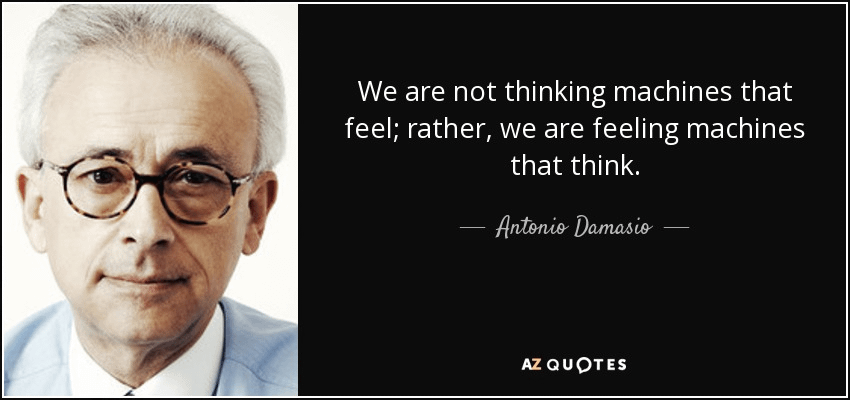
Emotions are the underlying "context-setters" upon which your rational brain acts and reasons. (Look up the somatic marker hypothesis by Antoni Damasio)
4. Trying to manage outcomes
A great decision isn’t one where you get what you want. It’s one where you stay who you want to be, no matter the result.
I find it best to make the decision by asking myself if I'll be happy in ten years, no matter the outcome. Because that is a strong indicator of whether I'm being true to myself.
A litmus test I use: Am I deciding to be myself and follow what I want, or am I deciding to try to manage the future?
If it’s the latter, I don’t take the action.
English
Fang ретвитнул

How Ed Stack turned Dick's Sporting Goods into a $20B empire:
1. Never rely on the kindness of strangers.
2. Your name is your biggest asset.
3. The person who talks the least is usually the decision maker.
4. Sometimes the most profitable decision on a spreadsheet is the worst decision for a business.
5. Good businesses don't need debt and bad ones can't handle it.
6. When the data and the anecdotes differ, you're measuring the wrong thing.
7. Trust isn't earned in the easy times; it's earned in the fire.
8. People are rarely buying just your product.
9. Give the underdog a chance. They want it more.
10. Not knowing what you're doing can be an asset.
11. All money comes with strings.
12. Your competition always has something to teach you.
13. Always bet on yourself.
14. Learn from mistakes, but don't over-learn them.
15. "The moment a business stops evolving, the moment its leaders sit back and think, 'Everything's good,' that's when it starts to fail."
16. Problems are opportunities to add value.
17. Play the game to win.
18. Become someone people want to help.
19. Investment bankers are not your friends.
20. Manically focus on the numbers.
21. The recipe is boldness mixed with caution.
22. What you get out of anything is directly proportional to what you put in.
23. The spreadsheet is not the customer.
24. Arguing teaches you how to think.
25. If you go into a deal with a win-win mindset, it almost always works out.
26. Clever excuses don't make anything better.
27. Every business is someone's irrational dedication.
28. The most important element of success is perseverance.
29. Always let people keep their dignity.
30. The cost of making others happy is losing yourself.
31. Do right for the company. Do right for society. You can't prosper unless the community around you prospers.
32. Believing in someone before they believe in themselves changes everything.
English
Fang ретвитнул

Fang ретвитнул


Fang ретвитнул
I've been on my journey of self-discovery for 30+ years.
This is a list of 21 highly psychoactive questions I've collected.
Read this if you're into obliterating yourself:
English
Fang ретвитнул

I have a few thoughts on this (having made the leap from a hedge fund PM seat to entrepreneurship four years ago). I started in my first hedge fund seat at 23 and I am 40 now. In my experience, only a select few individuals make it in a hedge fund seat for more than 20 years (I wasn't one). These people are obviously insanely talented and find some sort of soothing comfort in the repetitive grunt work, and also have a masochistic pre-disposition or autistic-numbness to the stresses of the job (i.e. no conception of burn out). But the industry weeds people out naturally as many top performers make enough cash to do something else, and mediocre/weak performers are exited involuntarily. Only the top performers who truly love it stay for 20+ years.
And let's be honest, there are some really awesome aspects of the hedge fund job. This industry attracts "intellectual Navy Seals". The intellectual rigor, ability to see through bullshit, building a collective view of where the world is going as a team. It was all so thrilling, for a time. The access you get to Fortune 500 CEOs. I was 23 meeting with Indra Nooyi at Pepsi and Paul Polman at Nestle just sort of pinching myself saying "how is this my life?". Brokers taking me to Nobu in Mayfair and Knicks game (and Uncle Mike ordering one of everything on the menu at dinner before, iykyk). Private jets to team retreats (I felt like Tom Cruise in The Firm, but with only the good parts). For the first 5 years, I absolutely loved the game. I slept and worked (with the weekly bottle service in meatpacking or Hamptons, of course), and nothing else mattered. I was in the room with healthcare policy makers and senators while Obamacare was being implemented, getting a masterclass on HC Policy from Berto at Aetna. For a kid from a small town in Idaho, being "in the mix" felt so cool. So intoxicating. And, oh yeah, you can make a lot of money. My dad was a steelworker who had to find a new career after a prolonged strike. This felt like a fun video game compared to the graveyard shift in the coater at Kaiser Aluminum. I cried in my CIO's office the first time I made a $1m bonus, then composed myself and walked out to central park and started celebrating like I had just won the lottery (to more than a few strange looks..."why is this guy in Ferragamo loafers having a mental breakdown?").
But, over time, my life situation changed. I got married at 27, had my first son at 29, and some well-timed real estate investments with aforementioned bonus cash provided some financial wiggle room. I had fun, for sure, but I always tried to keep my fixed costs low. I was the "I will work all weekend, run through brick walls for my PM" analyst, which is why I did well, overcoming some of my intellectual disadvantages to my smarter peers. This job isn't rocket science, but a chip on your shoulder, dog after a bone mentality is super helpful - and I had that in spades. My mantra was "no one will outwork me'.
As my first son became sentient, however, it really messed me up spiritually. I had to start thinking of someone other than myself for a moment. All of a sudden, it is a beautiful Sunday afternoon in Greenwich Village, and I'm torn between heading up to the GM building to grind all afternoon or spend the day with my wife taking Ben through the West Village to brunch in his stroller. More and more, my family won out. And I personally really struggled to balance both. Not just the hours (though 7:30am-9:30pm and Sundays was my standard), but the roller-coaster of emotions that I would bring home, and the necessity to just collapse and rest (usually with a few too many glasses of Macallan 18) when I did get home. That became a lot harder with the realities of a child, then two, then three. My father was far from an ideal parent, and I started to look at myself when I was stressed out, three scotches deep on a Friday evening after a 60 hour work week, putting all the work on my wife (who was super supportive, but I started to see her drowning) - and I realized something needed to change.
I wasn't aware at the time what was happening, so I placed this anxieties on my firm, and thought a change of scenery was the antidote. Welp, that just sort of accelerated the dark knight of the soul. For seven years, I had been a top performer, no down years, a rising star in the industry, hundreds of millions of positive P&L generated. I had built a reputation for myself that I was proud of. I got my shot as a PM to really who what I could do. I dreamt about $10m+ paydays. That didn't happen, and I went chin first into the Fall '15 healthcare unwind post Hillary-tweet. All the stocks that made me a star from '12-'15 now made me a bum. Add "public failure" to the list of anxieties.
Gratefully, that moment cracked me open. Was the starting gun for who I am today, 10 years later. I was brought to my knees. I didn't know what to do next. I met my wife for coffee in Bryant Park and I cried in her arms.
Then I got my shit together. That moment of surrendering to the feeling of career rock bottom invited what was next. I was really never the same after that Bryant Park moment. And it was the last time I've ever put my career shit on my wife.
I reoriented my life from 1) career 2) everything else, to 1) health (physical, mental & spiritual) - as I realized I cannot pour from an empty cup, 2) family, 3) career. I cut back on alcohol by 90%, lost 25 pounds, and with the dog after a bone intensity I applied to finance from 18-30, I dug into spirituality. I embraced meditation, read probably over 100 spiritual books (building a new framework for life primarily influenced by the writings of David Hawkins), went to India, bought a cabin in Sedona, and tried pretty much every spiritual modality that exists. My own masculine, hedge-fund style "eat pray love" adventure lol.
I realized that NYC has this insane, efficient, creative energy, that there is no place on earth like it. I love NYC. But it is a utilitarian place designed for achievement and creation, not for fulfillment of my personal soul journey, and I moved my family to Arizona in 2018. It was the best decision I've ever made. My sons are now 11, 9 and 7. I coach all of their sports, just got off a sabbatical in July with them, and have a truly special relationship with my sons & wife. It's awesome.
That's a long ass story, so I will now get to my attempt to answer @blueprintsmb22 's question.
NUMBER ONE: I believe, based on 10 years of intensely rigorous spiritual study, that we all have a personal mission. Depression and anxiety are a signal from the universe that we are off track from that personal mission. Thus, very specifically to this question, step one is to figure out what is your mission. This is why one size fits all career advice doesn't work. At all. We all have a spiritual imprint, and I learned mine is aligned with "way-shower". I light up the most when I can shine a light on a young man or woman's path. My north star is to be as helpful as I can be to the 23 year old version of myself. Your mission may be to grind it out on the buyside for 25 years, but find meaning & connection in other elements of your life.
Here's the trick, you have to get quiet to learn your mission. It's hard to hear the signals from God, Universe, Source when your nervous system is hopped up on adrenaline. Find your best modality for getting quiet (nature, meditation, journaling). Let your ego know it's ok to rest for a bit. And apply some surrender, and ask for help. We can all do this (it's deploying the insight in the shower sort of intuition in a more structured way), then listen and trust that intuition.
So I'll finish up with a 3-part framework for career switchers.
1) WHAT DO YOU WANT TO DO
2) WHAT ARE YOUR DEGREES OF FREEDOM
3) WHAT NEEDS TO CHANGE IN YOUR MINDSET
WHAT DO YOU WANT TO DO
I personally don't think this is a question of your ego. This is a demand of your soul. My belief is your soul signed a contract for an experience in this life before you were born. Your job is not to chase a career that gratifies your ego, but to get quiet, listen and say yes to the flow of life that will start to make life feel like a fun, pre-determined screenplay. It becomes the experience of Indiana Jones taking the first step into the abyss, but the bridge magically appears. Life like this is REALLY FUN when you stop worrying and just sort of knowing that the right things will show up at the right time (and if they don't, they aren't for you anyways).
I think a lot of Wall Streeters know what they don't want to do, but they have no idea what they want to do. Sorry to say, but until you figure this out, you likely won't go anywhere.
A key question I like to ask: "do you want to stay in markets"
Most former pod people are so fried in their nervous systems that they can't imagine staying in markets. I'd say maybe 8/10 never want to pick a stock again. However, when you check in with them in 6-12m, many get that itch (I certainly did). This is where I agree with @blueprintsmb22 . Most former pod people likely *should* stay in institutional investing in some capacity. But here's the thing - you have to make your own path. At pods, we are used to headhunter linkedin DM's always serving up the path for us. There is a BIG world of institutional investing beyond what the headhunters will serve up. Go to adviserinfo . sec . gov and dig through ADV filings in whatever geography you want to work in. Find family offices, pensions, small long only funds, even larger RIAs. These can all be great, steady, stable jobs, and lots of my friends who have left intense, high velocity hedge funds have been very happy here. My belief is if you are at a pod and feeling burned out, the default path ought to be finding a more chill investing seat somewhere else.
UNDERSTAND YOUR DEGREES OF FREEDOM
All the woo-woo stuff is great. But if your burn is $85k a month, your degrees of freedom are limited. We, as heads of household, need to also be pragmatic. We have mortgages, private school tuition, nanny's. The hedonic treadmill in major metro areas is REAL. I am really happy with my move out of a major metro in '18. Sure, I miss NYC. I certainly fall prey to mimetic desire, and that's an endless pit in NYC! I've maybe been asked a dozen times in 7 years what I do for work in AZ in social situations. Identity is less tied up with career outside of NYC/SF, and for me, that's great (as my identity became less tied up in my career).
A couple practical tips here.
1) The right spouse is CRITICAL. My wife is awesome, wanted to be closer to her family in AZ, and never vibed with the Tribeca/Greenwich set. She wanted our three boys to have a more normal upbringing, as we agreed on (very good) public schools, baby-sitters for date night but no full-time nanny, economy comfort when we fly as a family, and she is fine staying at the Hyatt (not the Four Seasons). All those things add up. Our life might not seem like a dream life to many, but it's a dream life to us. And that's what matters.
2) Think carefully about your burn. The idea of "golden handcuffs" is real. A pivot from a hedge fund seat making $750k-$1.5m+ is really tricky. You can get back to that level in lots of industries, but not right away. The FIRE movement talks about 25x multiple to reach escape velocity (i.e. if you burn is $1m, you need $25m invested). The is a very hard threshold to reach for most in a HCOL city, but in a lower cost of living city, many can cover at least a portion of the burn.
3) Plan ahead. Degree of freedom plans can't happen in 3 months, they take usually years of planning. Build up 3 years of liquidity, slowly build up passive income streams. I had been working pretty hard for about six years on my exit plan before I finally pushed the button. My wife and I knew NYC wasn't in the cards long term so, for example, we always rented and never purchased.
WHAT NEEDS TO CHANGE IN YOUR MINDSET
I can't find the meme, but one of my favorite memes on Twitter is something along the lines of "everything you want in life is on the other side of cringe". That has certainly been true for me. I started tweeting my way into a now a pretty valuable distribution channel for my business. Was it cringe at times? Oh yeah. I certainly have heard from many cynical anon reply guys. It doesn't really bother me, since I know who I am, and I am clear on my personal mission. But there have certainly been times where I have thought to myself "oh I know my first boss reads these tweets" and felt a little pang of self-consciousness.
As hedge fund professionals, we build this sort of snobby-ish, "I don't chase you, you chase me" ego over the years. I was guilty of it, for sure. For those looking to make the leap, that has to be released. Whether you are going to reach out to 100 family offices, shooting your shot to get a job, shamelessly network to ask people for leads, or, like me, put yourself out there quite publicly to build a business, a degree of shamelessness and not caring what other people think is a super power on this journey.
I didn't figure this out alone, years of therapy, a 10+ year relationship with an intuitive coach, a 3+ year relationship with an executive coach, and reading lot of great stuff on social media (@khemaridh and @p_millerd in particular influenced me). I think The Pathless Path by Paul Millerd is required reading for those looking to take the leap. Hopefully this post is my small way of "paying it forward" to those folks.
And please DM me if you ever need some advice. My calendar gets episodically jammed up, but I am always happy to be a sounding board where I can, and we certainly try to use our network at Fundamental Edge to make placements for people making an in-industry career switch (the long tail of the industry generally works without headhunters, so we try to tap into that slice for career placement).
If you made it to this point, thanks for reading this far!
Hope it was helpful.
Brett
Blueprintsmb@blueprintsmb22
Curious what others recommend when these individuals ask for career advice. I tell 9/10 to find another W2. ETA requires a level of grit that is incongruent with eating room temperature chicken at the Four Seasons at an IPO lunch.
English
Fang ретвитнул
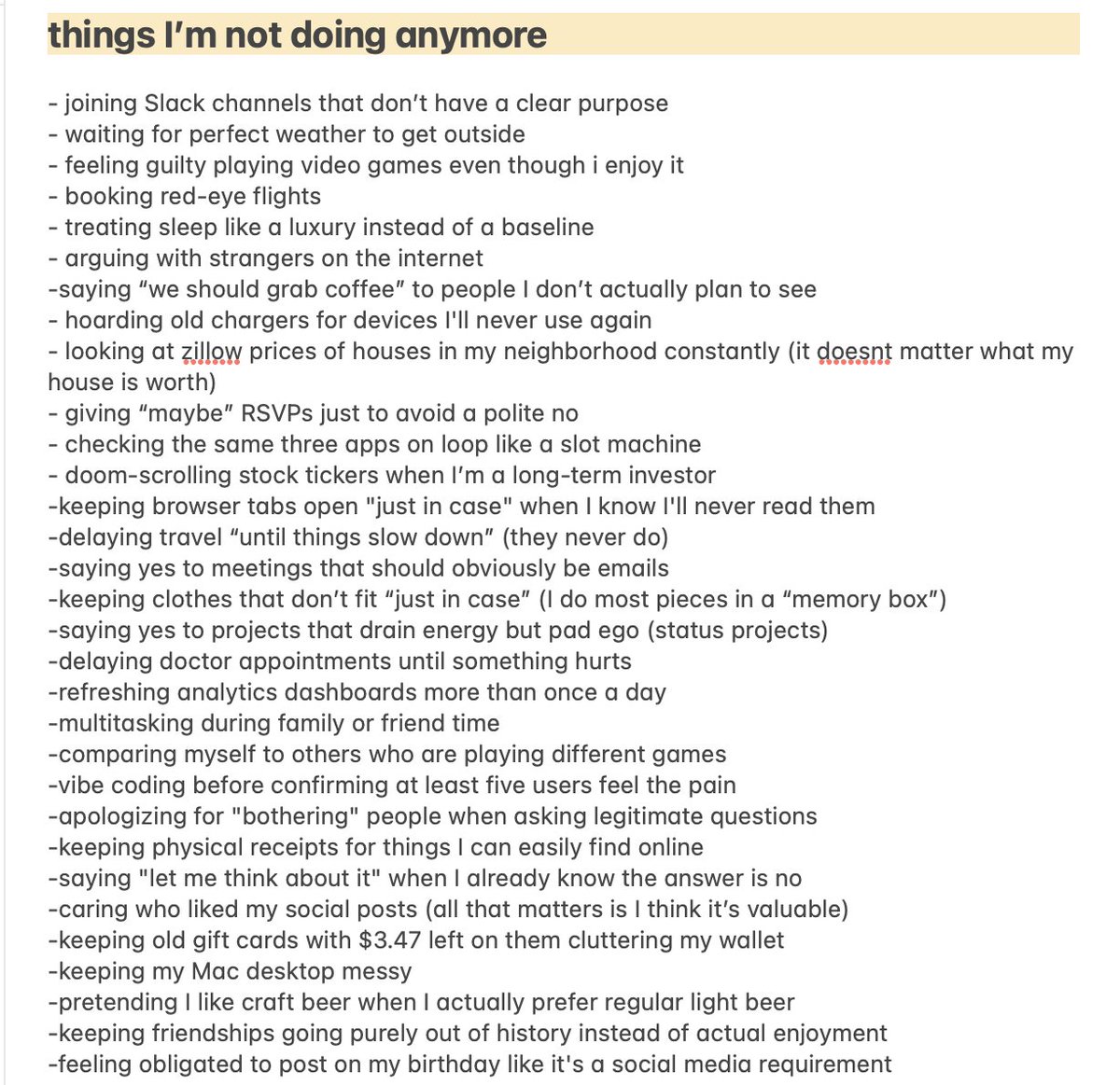
i keep a running doc called “things i’m not doing anymore” and look at it monthly
really simple way to live a happier & more productive life
English
Fang ретвитнул

I’ve worked for a few companies now from start-up through IPO and beyond. Here’s five lessons I’ve carried with me as an investor. None of them show up in a spreadsheet.
1. Culture is a company’s second product: Companies have two products - The one they sell to their customers and the one they sell to their employees. I have worked at companies who are deliberate about culture, and companies that aren’t - Companies that are as intentional about their culture as they are about their products are very appealing to be as an investor. This doesn’t mean they build playgrounds for their employees. Amazon, for example, is very deliberate about their culture. It’s not for everyone, but it works. Danaher is another famous example
2. No company has the “right” to a second act: Building a successful single-product business is difficult. Becoming a multi-product business is staggeringly complex. You need to keep the core business scaling in order to fund the second act. Your customers don’t owe you success in your new area. Cultural tension runs high between employees in the new, hot venture and the “old” company. Also, it’s so damn hard the second act needs to be bigger than the first act to really be worth it.
3. Execution beats strategy: Anyone can craft an elegant strategy. A track record of successful execution is what matters. Everyone who becomes CEO of a company can talk a big game. They can all tell a compelling story on why they will win. Give me dogged execution over beautifully-designed strategy every time.
4. I like the “odds” on Founders-led businesses: At some point your company is going to hit a crisis. You will have to “bet the business” to come out on the other side. This takes conviction, both from management and from employees. I’ve seen founders do it and I’ve seen professional managers do it. Again, give me the founder every time.
5. Avoid companies suffering from indigestion: David Packard once famously said “More businesses die from indigestion than starvation.” A company can only do 2-3 things really well at one time. Avoid companies trying to do too many things. They will fail
Andy 🍕🏔️@bizalmanac
Do you have any experience(s) with public companies that have shaped how you view them as an investor? I'll start:
English