Anthony Leverrier

6.2K posts

Anthony Leverrier

Anthony Leverrier

@letonyo

researcher on quantum error correction https://t.co/RvavYrCGWD

Paris Присоединился Mayıs 2009
1.3K Подписки7.4K Подписчики
Anthony Leverrier
Anthony Leverrier@letonyo·
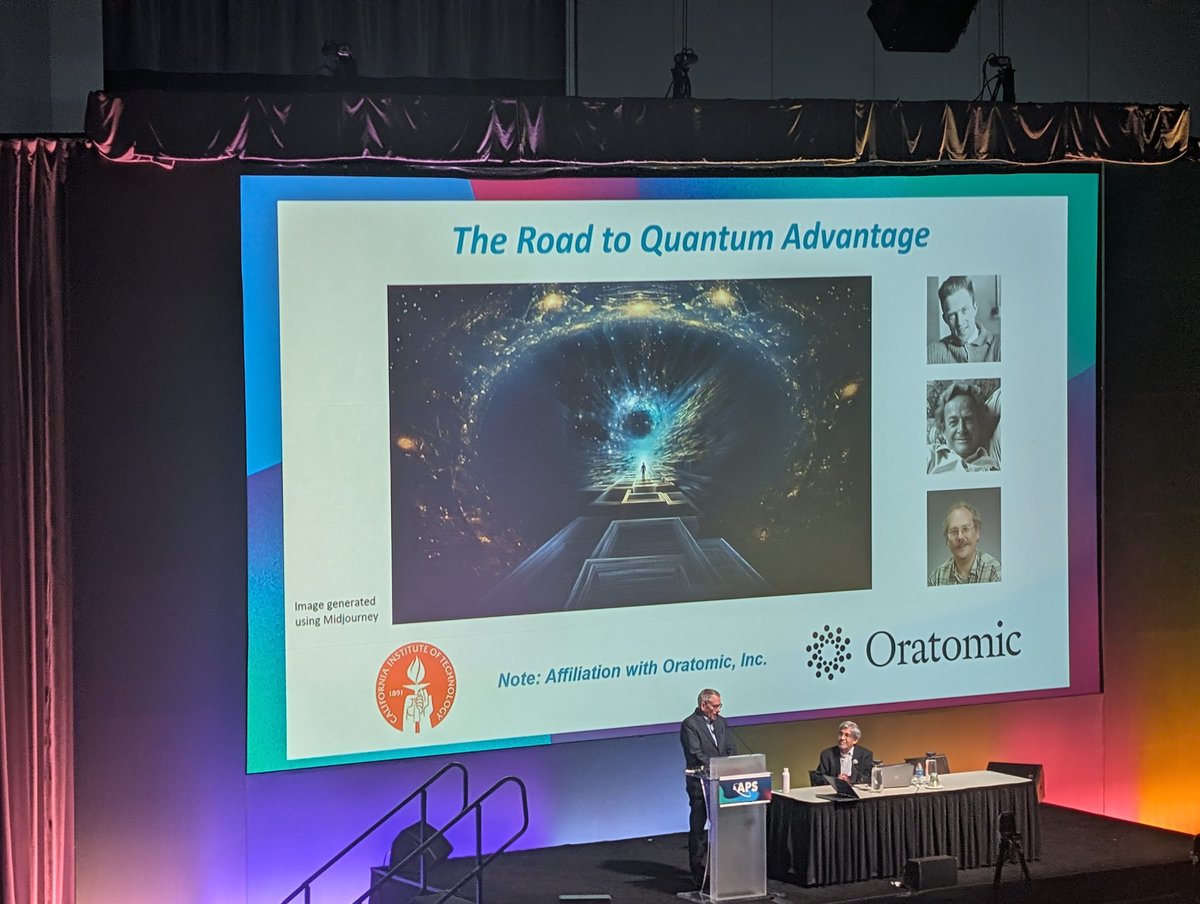
well-deserved Turing award for Bennett and Brassard!
English
1
1
26
1.2K
Anthony Leverrier ретвитнул
Jonathan Gorard
Jonathan Gorard@getjonwithit·
So I think it's becoming increasingly clear that efficiency and losslessness, across both compression and decompression, together represent four potential axes along which we can begin to parameterize the space of possible (intelligent) minds. But what are the others? (12/12)
English
71
20
508
34.8K
Anthony Leverrier ретвитнул
Jonathan Gorard
Jonathan Gorard@getjonwithit·
I think one of the conclusions we should draw from the tremendous success of LLMs is how much of human knowledge and society exists at very low levels of Kolmogorov complexity. We are entering an era where the minimal representation of a human cultural artifact... (1/12)
English
189
494
4.5K
746K
Anthony Leverrier ретвитнул
Peter Wildeford🇺🇸🚀
Peter Wildeford🇺🇸🚀@peterwildeford·
Based on the data I see, I think: - Anthropic🇺🇸/Google🇺🇸/OpenAI🇺🇸 all ~tied - Meta🇺🇸 / xAI🇺🇸 each ~7mo behind - Moonshot🇨🇳/- Deepseek🇨🇳 / zAI 🇨🇳 / Alibaba🇨🇳each ~9mo behind - Mistral🇫🇷 ~1.5 years behind - No other companies competitive
Ethan Mollick@emollick

Both xAI and Meta seem to be falling behind, based on the Grok 4.2 benchmarks and this reporting. Frontier AI models are really a three way race at this point.

English
268
193
3.2K
1.1M
Anthony Leverrier ретвитнул
François Chollet
François Chollet@fchollet·
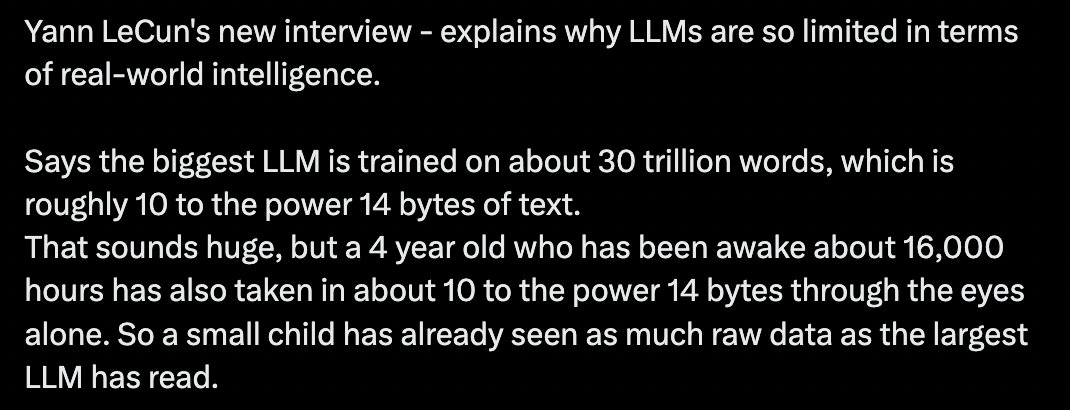
I keep reading this take (below) every few months, presented as if extremely profound, and it is just offensively dumb. It confuses data and information, it ignores the fact that not all information is equally valuable, and it ignores the importance of retention rate. As a thought experiment: if this were true, if your retina cell count were 10x greater, you'd be "trained on 10x more tokens" and therefore you'd be way smarter. Same if their firing frequency were 10x greater. With 10x more retina cells firing 10x faster you'd be "trained on 100x more tokens"! Obviously this makes no sense -- the signal coming from these cells is extremely correlated over space and time, so their raw information content (what remains post-compression) is extremely low compared to the "raw bit" encoding. The human visual system actually processes 40 to 50 bits per second after spatial compression. Much, much less if you add temporal compression over a long time horizon. Latest LLMs get access to approximately 3 to 4 orders of magnitude of information more than a human by age 20 (post compression in both cases). About O(10T) bits vs O(10-100B) bits. And that's just *raw information* but of course not all information is equal, otherwise we wouldn't be spending tens of billions of dollars on training data annotation and generation. Plus, that's only *information intake* but of course humans have far lower retention than LLMs (by 3-4 OOM). You could write a short essay about how incredibly off the mark this take is.
François Chollet tweet media
English
109
142
1.7K
171.1K
Anthony Leverrier ретвитнул
Garry Tan
Garry Tan@garrytan·
We just went from horse-and-carriage to car. The old manuals still have truth in them, but the whole map of effort, speed, and leverage changed overnight. Building used to mean holding an entire system in your head. A fragile memory palace. A house of cards in biological primate RAM. If you stop, the palace collapses. Dinner, a meeting, a context switch. You come back and it’s glass dust on the floor. That’s why builders can look “antisocial.” It’s not vibes. It’s survival. You’re trying to get the palace out of your head and into code before it evaporates. Then the weird miracle: I type a few paragraphs that barely make sense on reread, and the machine builds the palace anyway. It mirrors the structure. It fills the gaps. It hands it back. The feeling is not “wow productivity.” The feeling is: I am seen. Like the part of you that has been translating yourself for 20 years finally gets understood on first contact. This is why the new skill is not “code faster.” It’s taste, direction, and leadership. Managing a swarm of agents. Running tight loops. Knowing what to ask for. And it brings back something old-school: apprenticeship. We forgot how to teach. Now teaching matters again, because the tools are insane but the mind behind them still has to be trained.
English
100
127
1.1K
93.5K
Anthony Leverrier ретвитнул
D. Yanagizawa-Drott
D. Yanagizawa-Drott@YanagizawaD·
Some people seem to think generating 1000 papers in a couple of months is a lot. The question, imo, is whether an ecosystem that generates and evaluates one million papers every second is desirable (has positive ROI for society) Machine-speed is different
English
6
4
31
8.6K
Anthony Leverrier ретвитнул
METR
METR@METR_Evals·
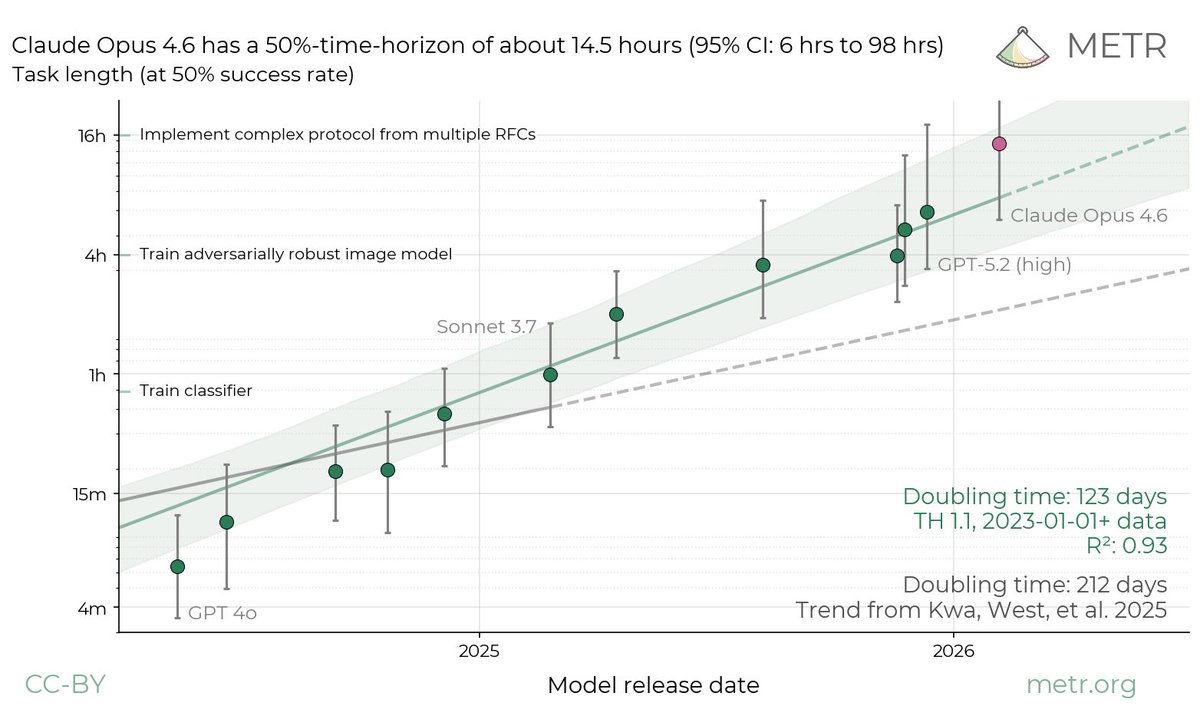
We estimate that Claude Opus 4.6 has a 50%-time-horizon of around 14.5 hours (95% CI of 6 hrs to 98 hrs) on software tasks. While this is the highest point estimate we’ve reported, this measurement is extremely noisy because our current task suite is nearly saturated.
METR tweet media
English
229
461
4K
3.5M
Anthony Leverrier ретвитнул
Anna Gát 🧭
Anna Gát 🧭@TheAnnaGat·
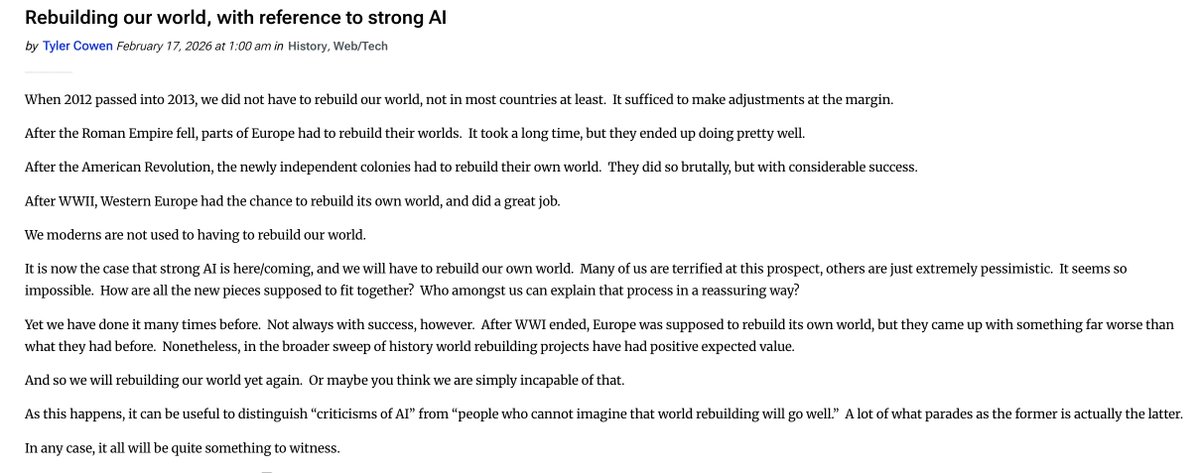
Every word of this, yes. By @tylercowen
Anna Gát 🧭 tweet media
English
7
34
190
41.7K
Alex
Alex@alex_avoigt·
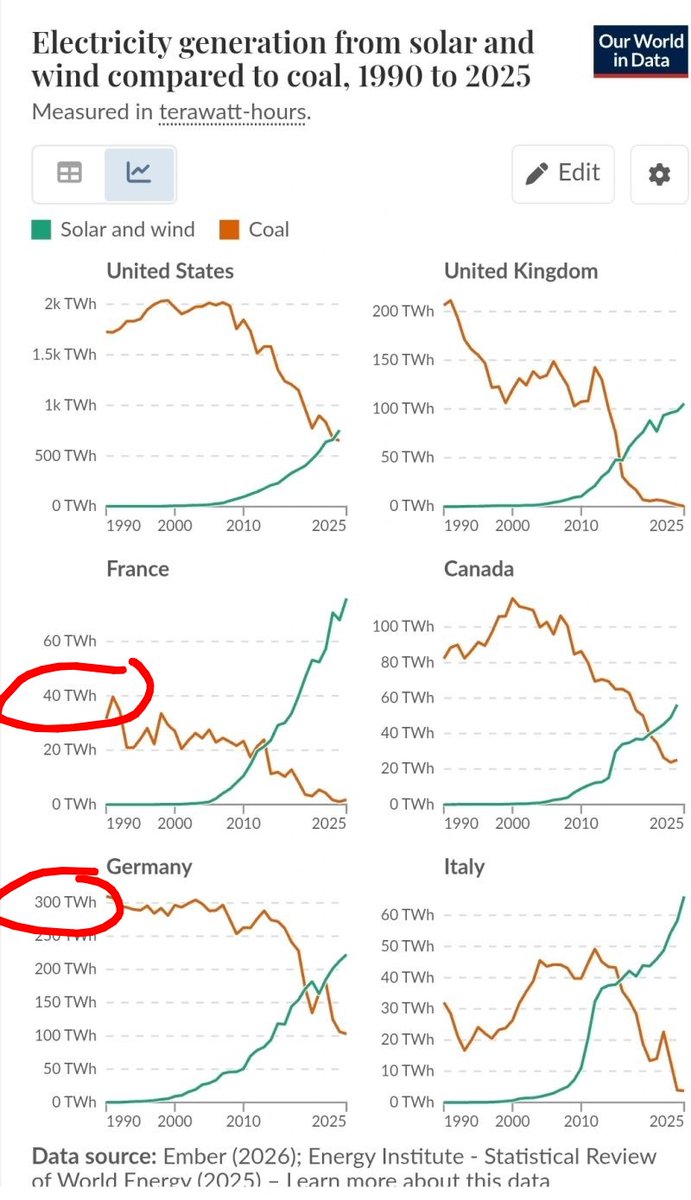
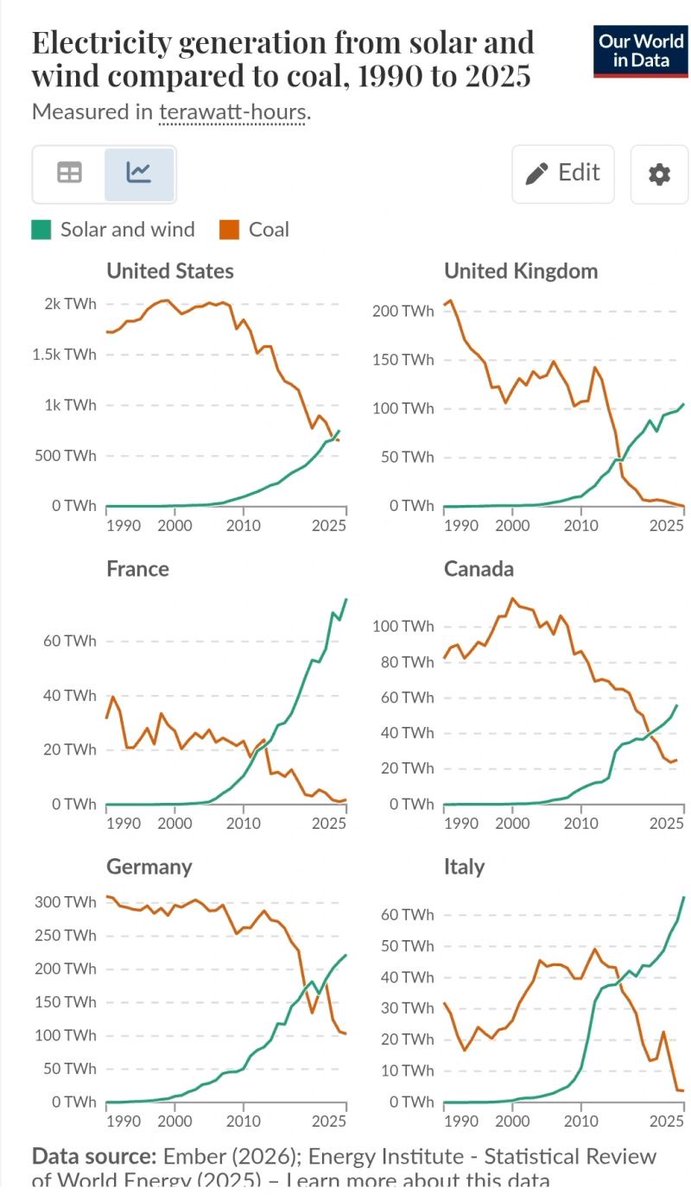
Solar and Wind win against Coal.
Alex tweet media
English
97
350
1.3K
51.5K
Anthony Leverrier ретвитнул
Boaz Barak
Boaz Barak@boazbaraktcs·
Very excited not just about this challenge, but what it signifies in terms of models ability to generate new science. This is only the beginning!
Jakub Pachocki@merettm

Very excited about the "First Proof" challenge. I believe novel frontier research is perhaps the most important way to evaluate capabilities of the next generation of AI models. We have run our internal model with limited human supervision on the ten proposed problems. The problems require expertise in their respective domains and are not easy to verify; based on feedback from experts, we believe at least six solutions (2, 4, 5, 6, 9, 10) have a high chance of being correct, and some further ones look promising. We will only publish the solution attempts after midnight (PT), per the authors' guidance - the sha256 hash of the PDF is d74f090af16fc8a19debf4c1fec11c0975be7d612bd5ae43c24ca939cd272b1a . This was a side-sprint executed in a week mostly by querying one of the models we're currently training; as such, the methodology we employed leaves a lot to be desired. We didn't provide proof ideas or mathematical suggestions to the model during this evaluation; for some solutions, we asked the model to expand upon some proofs, per expert feedback. We also manually facilitated a back-and-forth between this model and ChatGPT for verification, formatting and style. For some problems, we present the best of a few attempts according to human judgement. We are looking forward to more controlled evaluations in the next round! 1stproof.org #1stProof


English
0
2
74
6.8K
👨‍💻 James Augeri, PhD
👨‍💻 James Augeri, PhD@DotDotJames·
@letonyo very curious. are you discovering & testing these codes, i.e., first find, lit search / complement to ECC zoo, etc? partial context; hypertokens exploit Tanner codes and esp. those which are CRT-based and so of general interest, been considering quantum sims using same, etc.
English
1
0
0
21
Anthony Leverrier
Anthony Leverrier@letonyo·
@olivez that's the second strong assumption of the paper (besides the existence of fast decoders)
English
1
0
3
235
Olivier Ezratty
Olivier Ezratty@olivez·
@letonyo and to build 100K qubits with 99.9% fidelities :) !
English
3
0
3
441