Marcus Walters

39.9K posts

Marcus Walters banner
Marcus Walters

Marcus Walters

@marcus_walters

Following Facts. Geopolitics, Military, Security. Applied tech. Accept yourself. Veteran. Opinions are my own. #TruthMatters #FactsMatter

Texas Присоединился Nisan 2012
1.8K Подписки1.2K Подписчики
Закреплённый твит
Marcus Walters
Marcus Walters@marcus_walters·
Going to try again: please share far and wide: Repetitive use of “thoughts of suicide” in crisis lines like 988 may heighten distress & normalize ideation in veterans (1.5x higher risk). Suggests reframing to “Feeling overwhelmed?” for safer support. Words matter—let’s heal, not harm. #VeteranMentalHealth (Walters, 2025)
Marcus Walters@marcus_walters

A new version using only open sourced references: Reframing Word Repetition in VA Suicide Prevention: Supporting Veterans and Families
M. Walters
31 March 2025 The U.S. Department of Veterans Affairs (VA) employs repeated phrases like “thoughts of suicide” in its suicide prevention efforts, notably through the 24/7 crisis line (988), to identify and assist at-risk veterans and families. However, psychological research indicates that such repetition may unintentionally increase distress or normalize suicidal ideation, particularly for this vulnerable population. Veterans face a suicide rate 1.5 times higher than civilians, often due to trauma and stress (U.S. Department of Veterans Affairs, 2021). This article examines the impact of language on mental health and proposes safer alternatives to support healing. Neural Impact of Repetition
Repetition strengthens neural pathways, shaping emotional processing. A 2016 study demonstrated that repeated verbal stimuli enhance hippocampal activity, crucial for memory and emotion (Weis et al., 2016). For trauma-exposed veterans, frequent use of “suicide” may heighten negative responses, as trauma-related words activate the amygdala (Cisler et al., 2014). Additionally, a 2019 study found that repetitive negative stimuli can alter brain connectivity, increasing emotional vulnerability (Dunkley et al., 2019). Priming and Ideation Risks
Repetition primes the mind, making certain thoughts more accessible. Research shows that repeated exposure to negative concepts improves recall but can impair emotional regulation in stressed groups (MacLeod et al., 2010). A 2020 study linked repetitive trauma-related language to increased intrusive thoughts in PTSD patients (Moser et al., 2020). For veterans and families, constant repetition of “thoughts of suicide” may unintentionally reinforce ideation, exacerbating their risk. Behavioral Conditioning
Repeated language can condition behavior by fostering familiarity. Studies suggest that consistent messaging shapes attitudes, but negative terms like “suicide” may normalize the concept, heightening vulnerability (Hasking et al., 2017). A 2018 analysis found that repeated exposure to suicide-related cues increases risk behaviors in at-risk populations (Glenn et al., 2018). This is critical for veterans, where such conditioning could deepen despair. Emotional Weight and VA Context
The term “suicide” carries significant emotional weight, and repetition can intensify distress. Research indicates that negative language in mental health settings can worsen outcomes if not carefully managed (O’Connor et al., 2018). A 2021 study highlighted that repetitive negative framing in crisis interventions can amplify hopelessness (Pietrzak et al., 2021). The VA’s crisis line aims to help, but its focus on “thoughts of suicide” may mirror media effects, where repetitive reporting has been shown to elevate suicide rates (Niederkrotenthaler et al., 2012). Reframing for Safety
The VA’s intent is to support veterans, but evidence suggests reframing questions—such as “Are you feeling overwhelmed?” or “Do you need help?”—can assess risk without reinforcing harmful terms. A 2020 study supports using neutral language to reduce distress in mental health support (Sarkar et al., 2020). Further, a 2019 review found that positive framing in crisis calls improves engagement and outcomes (Bryan et al., 2019). A 2022 study on veteran care emphasized person-centered language to enhance trust and reduce stigma (Kline et al., 2022). These strategies align with the VA’s healing mission. Conclusion
Veterans deserve care that uplifts rather than endangers. By shifting from repetitive, suicide-focused language to supportive alternatives, the VA can better serve this community. The evidence underscores the power of words. Let’s use them to heal.

English
4
7
46
14.3K
Marcus Walters
Marcus Walters@marcus_walters·
There is a contextual difference though. Immediate threat is not the requirement, imminent threat is. The difference is far from semantic, and Joe claiming Iran is not an imminent threat is a point I disagree with, based on both past and current events. Tucker has lost the plot long ago with the antiviral rhetoric. If we cannot be objectively honest there’s no point to media, social media or discourse, the same goes for hating everyone with a differing opinion. 🤷‍♂️
English
0
0
0
22
Marcus Walters
Marcus Walters@marcus_walters·
@OfAthenry At this point they might be doing us all a favor by doing that… Anyhoo 😬
English
0
0
1
34
Dr. Brian L. Cox
Dr. Brian L. Cox@BrianCox_RLTW·
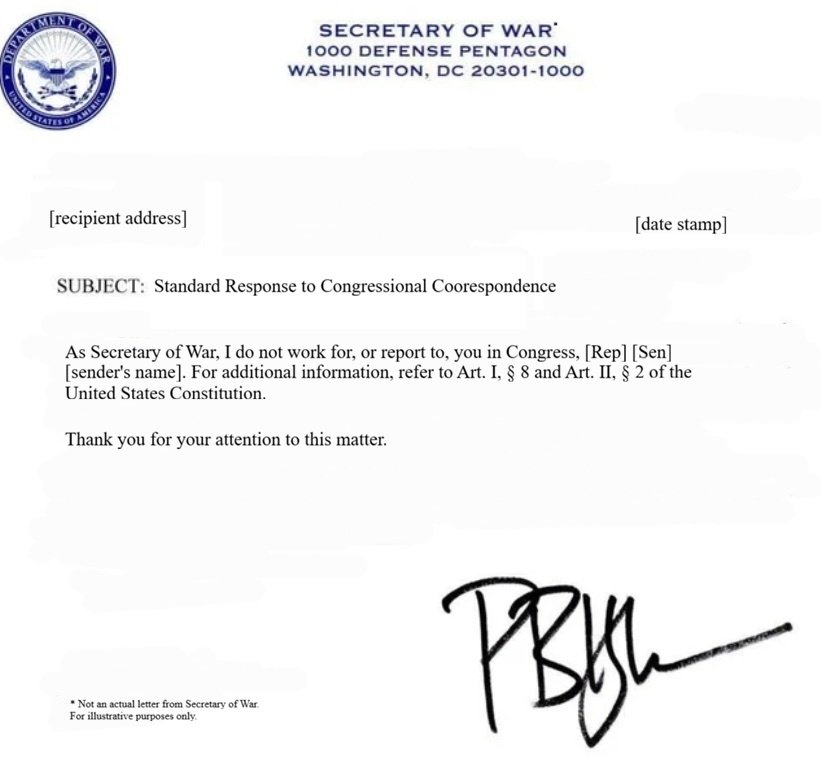
This should be standard response to all letters sent from Congress to @SecWar from now on: "As Sec'y of War, I do not work for, or report to, you in Congress, [Rep] [Sen] [sender's name]. For additional information, refer to Art. I, § 8 and Art. II, § 2 of the US Constitution."
Dr. Brian L. Cox tweet media
Senator Mark Kelly@SenMarkKelly

Secretary Hegseth needs to explain exactly what he meant when he said “no quarter." It's well established that it means to take no prisoners — to kill them instead of accept their surrender. That is illegal under U.S. and international law, would put our servicemembers at greater risk, and erodes the good order and discipline of the best military in the world. My letter to the Secretary of Defense:

English
88
240
1.2K
136K
Tim
Tim@TimurNegru·
69 acres of private Tuscany for €690k ($797k). The land includes an olive grove, a fruit orchard, a cork oak grove and 20 hectares of woodland. A natural spring produces 3,000 litres of water a day, solar panels cover the electricity and yes, it does have wifi. It's also been renovated, 370m² (3,983 sq ft) across 3 floors, 3 beds, 3 baths, with a pool and a sauna. 50 km to Volterra. Off-grid, self-sufficient, sauna, pool..what's missing here?
Tim tweet mediaTim tweet mediaTim tweet mediaTim tweet media
English
567
306
7.9K
1.1M
Marcus Walters
Marcus Walters@marcus_walters·
@ItsMattsLaw Let’s not mention the elephant in the room (or donkey as the case may be): Unfortunately in some cases it’s probably true. Don’t be mad at me, blame the frauds. 🤷‍♂️
English
0
0
0
537
Dr. Brian L. Cox
Dr. Brian L. Cox@BrianCox_RLTW·
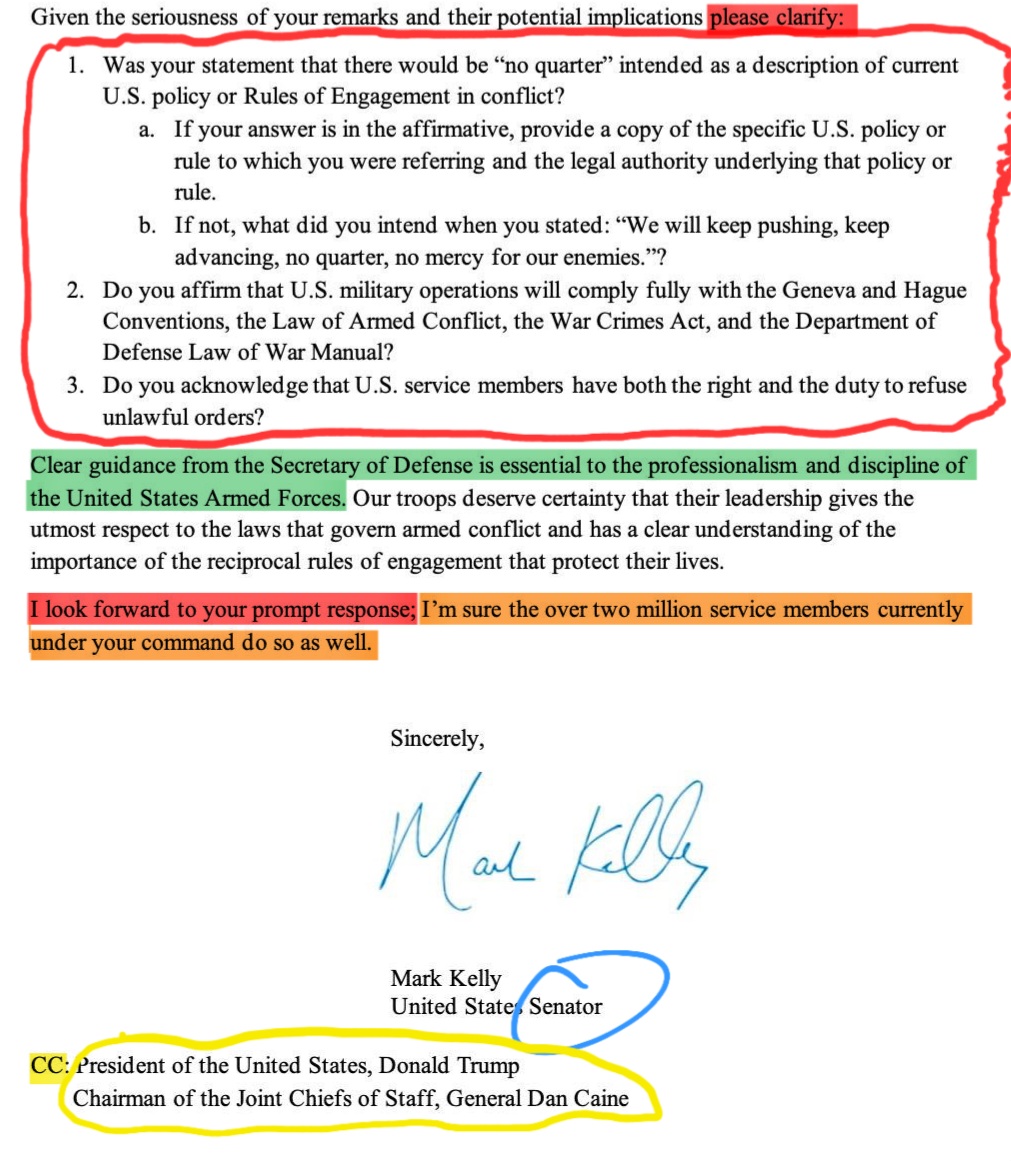
False...false. It's been amusing seeing all these heroes replying to my post suggesting @SecWar should essentially ignore letters from individual members of #Congress by claiming some mystical "comprehensive oversight" of the legislature. Here's the truth: "Oversight" as a concept is merely an attempt to aggrandize congressional authority at the expense of the executive. It's an illusion. As @marcus_walters said in a post I RTd & is just below this one on my TL: "'Oversight' is the call of the feckless to gather in abstinence and whine about powers they don’t actually have." And the loudest cheerleaders for "comprehensive oversight", like John Jackson here, are often seeking to dilute executive authority to the point that the only way it will function is by congressional decree. This arrangement would essentially reduce @POTUS & the departments - including, here, @DeptofWar - to vassals of Congress. If they got their way, it would be a disaster for the Republic. Let's briefly recap how we got here. John's reply was to my OP suggesting a response from a letter @SenMarkKelly to SECWAR about the latter's comments during a recent press briefing wherein @PeteHegseth used the phrase "no quarter" when discussing ops against #Iran. I'll link to that OP in 1st reply & one of my posts on the "no quarter" issue in 2nd reply. If you recall that suggestion from the OP, I essentially said SECWAR should send a template response to dispatches from individual members of Congress saying, essentially, I don't work for or report to you & consult art. 1 § 8 + art. 2 § 2 of the Constitution if additional clarification is needed. Most of the critical replies have involved some version of a "congressional oversight" rebuttal. Ok, so not all of Sen Kelly's letter is necessarily objectionable. I take issue with the substance, but there's no inherent problem with him just expressing his views. The major problem starts on page 2, relevant part of which is attached as pic 1. Kelly is right that clear guidance from SECWAR "is essential to the professionalism & discipline of" the military. But good order & discipline is an executive, art. II, CiC function for which SECWAR is answerable to only one person: POTUS. We've also got a series of questions Kelly asks Hegseth to "please clarify" then says he looks forward to a "prompt response." This is where my suggestion of responding with (essentially) "I don't work for you" comes in, along with rebuttals involving "oversight." Pretty much all these rebuttals - including John here - make reference enumerated powers of Congress. This is quite bizarre since my suggested response already makes reference directly to art. I § 8 where the most relevant authorities are established. Yes Congress makes rules for land & naval (now air & space) forces & appropriates funds & gives advice and consent (Senate) & can remove exec appointments through impeachment (also Senate). All you do by pointing that out is reaffirm existing enumerated powers - as does the suggested response. But governing authority is divided to avoid destructive concentration of power in one branch - not to make one subservient to another. They're 3 co-equal branches that rely on & must cooperate with others for gov't to function. Even the word "oversight" connotes a superior/subordinate relationship between legislature & executive. And this is the fictional part. That's because the Constitution ALSO establishes how Congress must exercise those enumerated powers - by passing legislation, potentially over POTUS veto. For more detail on that process, see art. I § 7. So it is true that the executive relies on the legislature for functions like paying the bills & appointing cabinet officials & such. Those powers are enumerated in art. I § 8. But the process for exercising those authorities is established in § 7. Of course, the legislative process is tedious & challenging. This isn't an accident - the Framers intentionally designed the bicameral legislature & the lawmaking process & mechanism to overcome executive veto when it's exercised to ensure laws that are adopted have achieved sufficient consensus before they become binding on a relevant segment of the population. It's a slog, and deliberately so. It also requires each member of Congress who votes on a bill to go on record in doing so - that way constituents can evaluate whether their elected representative is satisfactorily representing their interest in Congress. Ascribing a "comprehensive oversight" authority to Congress is a way to circumvent that process & broaden the legislature's power relative to other branches - here, the executive & specifically the military. If Kelly wants answers from Hegseth, SECWAR becomes obligated to respond - even though individual senators have no constitutional authority to do really anything all on their own. Congress ostensibly exercises "oversight" of the military, so the secretary is seemingly required to comply since Kelly is merely performing this oversight role. Here's the problem: there already is a command relationship established by law...and it doesn't directly involve Congress or Senator Kelly. See, Congress has exercised art. I § 8 enumerated authority + § 7 legislative process to establish the office of the Secretary of Defense. In doing so, it vested "authority, direction and control over" DoD, subject TO THE DIRECTION OF THE PRESIDENT (pic 2). Yes SECWAR must also submit designated annual reports to POTUS & to Congress pursuant to 10 USC § 113 - but this legislation establishes that Sec Hegseth works for POTUS & POTUS alone. In a post related to this topic that I've also recently responded to on my TL, @EvansRyan202 acknowledges that SECWAR "serves under the president, but Congress created the office, funds it, confirms it, and oversees it." Pic 2 indeed does reveal that Congress utilized the legislative process to create the office & that the secretary "serves under the president." Funding the department & confirming the secretary are authorities enumerated by the Constitution, which also sets the process by which those authorities are exercised. So where is this "oversight" authority to be found? And where does it establish that an individual senator can send a letter to SECWAR & expect a response other than "I don't work for you, see the Constitution for further guidance"? The answer is: nowhere. Yes, Congress can restrict or even defund the Department of War - but there's a constitutional process that must be followed to do so and restricting/defunding DoW requires sufficient consensus & involves potentially severe political risk. Yes, Congress could impeach Hegseth for not answering the mail...but there's a process for that as well and that also involves potentially significant political risk. The department is already established & Hegseth is already confirmed...so those legislative authorities are past tense. So...what exactly is the source of this "comprehensive oversight" again? Ah...maybe it's been interpreted into the Constitution by #SCOTUS. A few replies to my OP have suggested Trump v. Mazars (2020) or McGrain v. Daugherty (1927) may be a judicial source for this oversight. Meh. Not so much. Mazars is kind of on point since it does involve separation of powers & congressional authority to carry out its legislative function. But that is specifically in the context of congressional subpoenas, for which there is also an established process that requires more than just an individual member sending a letter to a cabinet official & expecting a response. In dicta for Mazars, SCOTUS recalls the earliest recorded controversy along these lines involving Congress demanding information from the executive. That recollection says Washington called for the cabinet to deliberate & they assessed then that Congress has authority to "initiate inquiries" & "call for papers" BUT the president can "exercise discretion" regarding what papers to present to Congress while REFUSING THE REST (pic 3). That section of the decision goes on to recall that Jefferson later followed that precedent of exercising discretion to turn over what the executive decided is in the public interest while refusing the rest of a request. It also recalls two more "modern" examples of the Reagan & Clinton administrations following the same precedent. Now, if the executive has been exercising such discretion since the GEORGE WASHINGTON administration, it certainly doesn't seem that Congress is exercising an "oversight" role in this context. Even if Congress did issue a subpoena - which isn't the same as an individual member sending a letter to a cabinet official - Mazars utilizes a balancing test to determine whether the executive must actually comply under the specific circumstances. Ah, but what about McGrain of 1927? Well, Mazars (2020) acknowledges that precedent from several decades ago by noting, "Congress has no enumerated constitutional power to conduct investigations or issue subpoenas" and yet SCOTUS has held that each chamber "has power 'to secure needed information'" (pic 4). That precedent refers to & the quote cites McGrain. But, the Mazars opinion continues by referring to a later (than McGrain) precedent finding "this power 'is justified solely as an adjunct of the legislative process'" and so it is "subject to several limitations" (Mazars, quoting Watkins v. US (1957)). So even the subpoena power only exists as an adjunct of the legislative process established in art. I § 7 and is subject to several limitations. Individual members of Congress aren't participating in that established legislative process when they send a letter to, in this case, SECWAR. And even if one disagrees with that assessment, sending a letter isn't the same as issuing a subpoena - which is the specific context SCOTUS addresses in Mazars. Indeed, here's a fun fact: if you search for the term "oversight" in the Mazars opinion, the only time you'll see it is in reference to something Congress has appointed onto itself. 7 out of 8 refer to an "oversight" committee (House Committee on Oversight and Reform), while the other instance refers to a House "oversight plan" of the Financial Services Committee. SCOTUS doesn't acknowledge or address or independently affirm an "oversight" function for Congress. That's because it doesn't exist - except in the minds of select members of Congress & all those proponents who would prefer to see the executive branch in a subservient role in relation to the legislature. Like John Jackson here. I mean, it's actually comical that these congressional cheerleaders keep merely parroting powers explicitly enumerated by the Constitution as evidence of this mystical "comprehensive oversight" function. Yes, these powers are reserved to the legislature - that's obvious. But there's also a prescribed process by which these enumerated authorities must be exercised. And waiving your hand or clicking your heels three times while saying the magic word (oversight!) & chanting enumerated powers doesn't erase the prescribed process. Congress pays the bills & appoints/removes select officials & makes rules & so on. But there's a constitutional process it must follow in doing so. And that process doesn't involve, or refer to, a "comprehensive oversight" role in relation to the military or any other executive office. This is why SECWAR should consider implementing a standardized response to letters sent to him from legislators publicly affirming, "I do not work for, or report to, you in Congress." Because...he doesn't. And legislators such as Senator Kelly - as well as the electorate as a whole - should be reminded of that fact whenever they present the mistaken impression that executive officials are obliged to obey Congress as a result of some "comprehensive oversight" function that doesn't actually exist.
Dr. Brian L. Cox tweet mediaDr. Brian L. Cox tweet mediaDr. Brian L. Cox tweet mediaDr. Brian L. Cox tweet media
John Jackson@hissgoescobra

@BrianCox_RLTW @SecWar @willchamberlain False. Art. I, Sect. 8 grants Congress comprehensive oversight of the military through several clauses: it empowers Congress to declare war, raise and support armies, maintain a navy, and make rules for the government and regulation of land and naval forces. Come on now.

English
16
24
104
9.7K
Ronnie Adkins
Ronnie Adkins@RonnieAdkins·
Energetic materials
Florida’s Voice@FLVoiceNews

JUST IN: @FBITampa has confirmed that field screening of a suspicious package found March 16 outside MacDill AFB’s Visitor Center detected possible energetic materials, with final lab analysis still pending as the active investigation continues.

English
40
10
196
14.7K
Marcus Walters
Marcus Walters@marcus_walters·
@BrianCox_RLTW @SecWar @willchamberlain In the end: prioritizing optics over fidelity is a real problem and Congress has completely lost the plot, running off a self made cliff of self righteous indignation to the powers vested in the President, in neid, they seek to usurp unto themselves by acts of diction.
English
0
0
1
14
Marcus Walters
Marcus Walters@marcus_walters·
The Sesquipedalian Word Salad Brownshirt Overlords who inhabit the halls of Congress and the utterances of cool sounding words to make themselves sound more authoritative and important. They not only assume authoritative power they don’t have, they try to abuse it as the masses flow in unison supporting the next big thing. “Group Think” explains why otherwise intellectually gifted turn into word salad survivalists who will die on any hill of ignorance, so long as the right verbiage of the time is used. “Congressional Oversight” is just such a term, nowhere in the constitution, but a self created institutional buzzfeed manipulation. It’s annoying and it’s no wonder the dull witted jump on the deluded dogma diction of those who wish to be more than they are. Congressional Investigative authority is inferred, it is not explicit, using that inferred authority is a far cry from what many term ignorantly as oversight, where Congress attempts to manage the executive, outside of any authority to do so, injuring our constitution over time, irreparably without being placed in check.
English
1
0
1
36
Marcus Walters
Marcus Walters@marcus_walters·
He’s retired, which is why he is just an adjunct, which should be painfully obvious considering ( among other things). Also, “just a jag” = “you were just an employed expert.” It’s an extremely ignorant things to say. It’s akin to “you’re just a president,” or “just a CFO/CTO etc.” So who are you wise ass?
English
1
0
1
15
Charlie's Reliable Intelligence
@BrianCox_RLTW @SecWar @willchamberlain I retracted my previous admonishment because it wasn’t clear whether your post from this morning was satirical or not, but I’ll restate it now: There’s a reason you’re only an adjunct law prof. And a reason you were only ever a JAG. And a reason you’re stealing valor.
English
1
0
0
27
Marcus Walters
Marcus Walters@marcus_walters·
@wayofftheres What if he did leak info Clay? I have my strong doubts he would do that bc I think he is better than that, but we don’t know what we don’t know.
English
0
0
0
30
Caleb Morefield
Caleb Morefield@Caleb_Morefield·
Took Constitutional Law in College. I'm good. Funny you say I sound like a moron when I literally pointed you to Marvury v. Madison (1803) which is also not in the Constitution as you keep referring back to as an argument, yet gives power for Judicial Review (Oversight) of the Executive Branch.....
English
1
0
12
195
Caleb Morefield
Caleb Morefield@Caleb_Morefield·
Section 8 Powers of Congress The Congress shall have Power To lay and collect Taxes, Duties, Imposts and Excises, to pay the Debts and provide for the common Defence and general Welfare of the United States; but all Duties, Imposts and Excises shall be uniform throughout the United States; To borrow money on the credit of the United States; To regulate Commerce with foreign Nations, and among the several States, and with the Indian Tribes; To establish an uniform Rule of Naturalization, and uniform Laws on the subject of Bankruptcies throughout the United States; To coin Money, regulate the Value thereof, and of foreign Coin, and fix the Standard of Weights and Measures; To provide for the Punishment of counterfeiting the Securities and current Coin of the United States; To establish Post Offices and Post Roads; To promote the Progress of Science and useful Arts, by securing for limited Times to Authors and Inventors the exclusive Right to their respective Writings and Discoveries; To constitute Tribunals inferior to the supreme Court; To define and punish Piracies and Felonies committed on the high Seas, and Offenses against the Law of Nations; To declare War, grant Letters of Marque and Reprisal, and make Rules concerning Captures on Land and Water; To raise and support Armies, but no Appropriation of Money to that Use shall be for a longer Term than two Years; To provide and maintain a Navy; To make Rules for the Government and Regulation of the land and naval Forces; To provide for calling forth the Militia to execute the Laws of the Union, suppress Insurrections and repel Invasions; To provide for organizing, arming, and disciplining the Militia, and for governing such Part of them as may be employed in the Service of the United States, reserving to the States respectively, the Appointment of the Officers, and the Authority of training the Militia according to the discipline prescribed by Congress; To exercise exclusive Legislation in all Cases whatsoever, over such District (not exceeding ten Miles square) as may, by Cession of particular States, and the acceptance of Congress, become the Seat of the Government of the United States, and to exercise like Authority over all Places purchased by the Consent of the Legislature of the State in which the Same shall be, for the Erection of Forts, Magazines, Arsenals, dock-Yards, and other needful Buildings; And To make all Laws which shall be necessary and proper for carrying into Execution the foregoing Powers, and all other Powers vested by this Constitution in the Government of the United States, or in any Department or Officer thereof. Enumerated powers of Congress, which in Constitutional law also lead to Implied powers of Congress such as Oversight in Checks and Balances. Same as the Supreme Court has exercised Oversight of the Executive since near the founding of our nation and ratification of the Constitution. In 1803 Marbury v. Madison was a landmark case which established the Judicial precedent of Judicial Review of the Executive Branch. Go learn something before being a loud mouth and embarrassment to yourself
English
1
0
9
226