Tom Nassis

327 posts

Tom Nassis

Tom Nassis

@tomdnassis

Присоединился Ekim 2015
1K Подписки100 Подписчики
Tom Nassis ретвитнул
Conjecture Institute
Conjecture Institute@ConjectureInst·
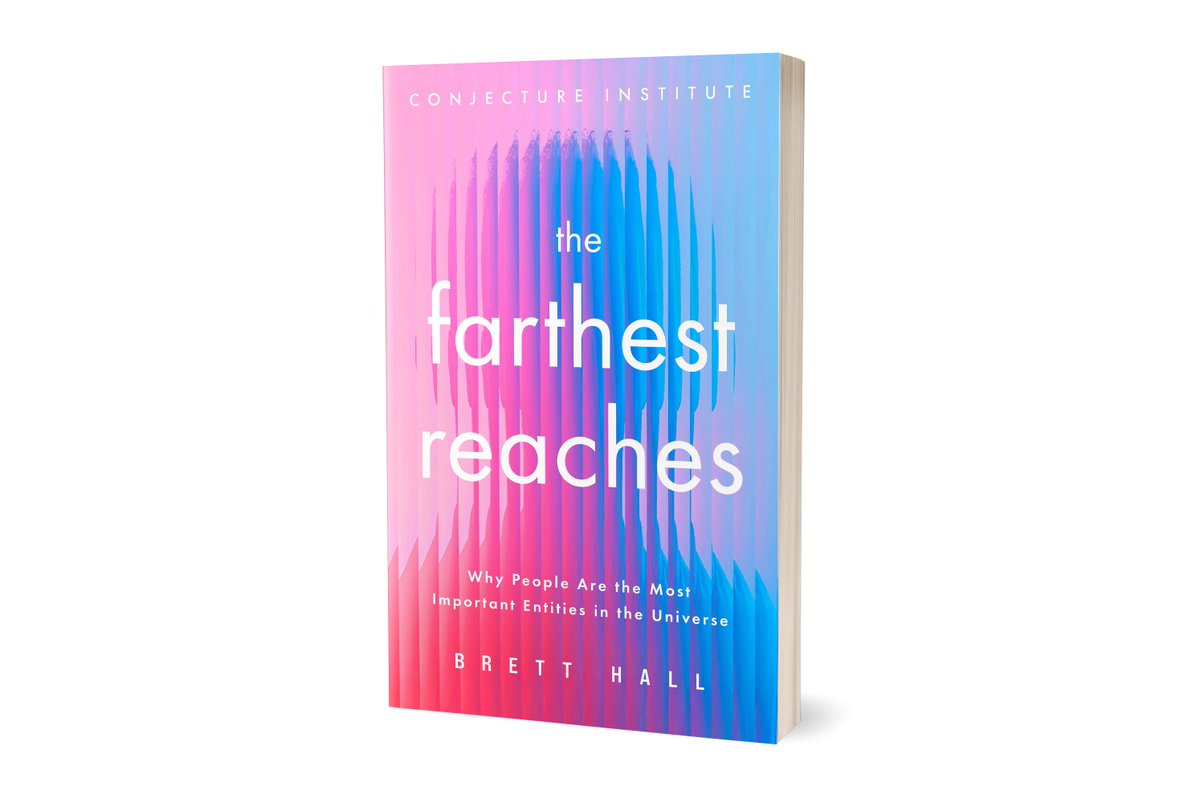
The Farthest Reaches: Why People Are the Most Important Entities in the Universe, by Ambassador @ToKTeacher, is now available in paperback! link below👇 (Kindle version coming soon)
Conjecture Institute tweet media
English
2
9
71
26.3K
Tom Nassis ретвитнул
sim
sim@simscircuit·
Did not expect a question that starts out 'Do you think before you speak?' to go so well. A+ question from Charlotte Harpur A++ response from Eileen Gu.
English
1.4K
22.3K
154.5K
12.6M
Tom Nassis ретвитнул
Arth Jaiswal
Arth Jaiswal@httpsXrth·
@DavidDeutschOxf This is why rationalism is not just a method of thinking but a moral stance. Preferring fallible argument over coercive success is what makes progress possible at all. Without that ethic, even “winning” becomes anti-knowledge.
English
2
6
70
2.4K
Tom Nassis ретвитнул
Bill Ackman
Bill Ackman@BillAckman·
We have reached a stage in our country where there are only two sides to every issue and every incident. Each side lives in protected echo chambers which are provided with a curated set of ‘facts’ and/or video footage from certain camera angles that are consistent with the preexisting views and conclusions of that side. Individuals are ‘convicted’ of serious crimes in the headlines, by politicians appealing to their base, and ultimately in the minds of the public, or they are exonerated, before all of the facts are in and a detailed investigation has been completed. This is not good for America. We need to go back to a world where we suspend judgment and await the conclusions of a detailed investigation before we convict or exonerate. Let’s not forget that a man is presumed innocent until proven guilty. Rushing to judgment helps no one and harms us all. It also greatly elevates the temperature, which keeps potential targets of law enforcement and those who enforce our laws on edge, massively increasing the risk to all. We need to take a deep breath and reserve judgment before this gets even more out of control.
English
5K
1.6K
16.2K
3.6M
Tom Nassis ретвитнул
Anders K.
Anders K.@Falliblemusings·
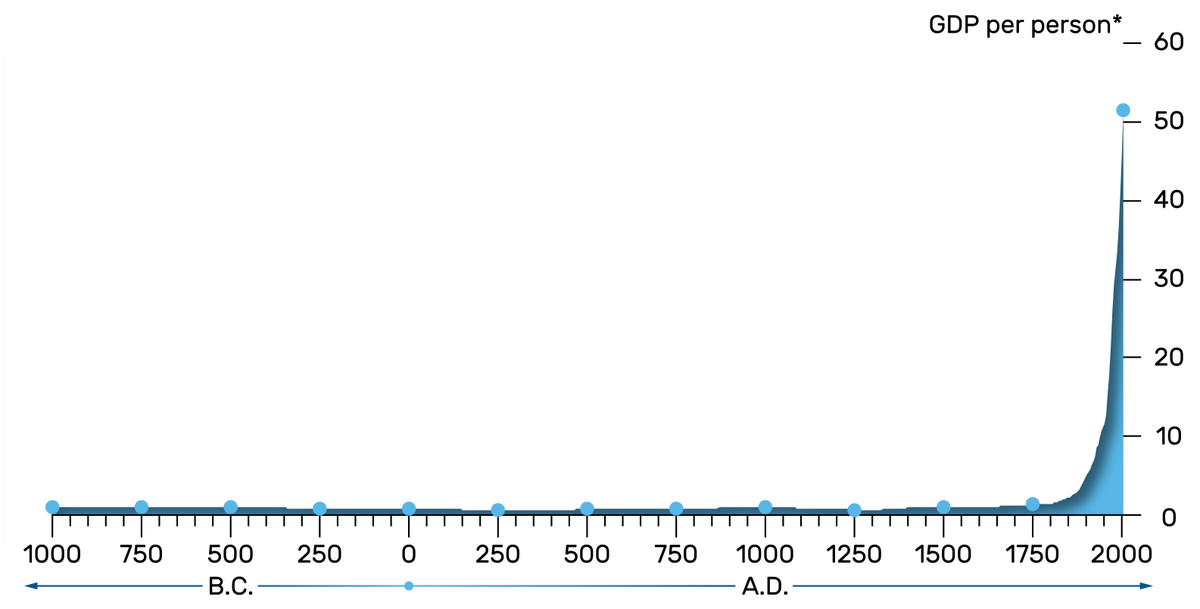
In The Beginning of Infinity, @daviddeutschoxf notes that humans, despite our infinite potential, made very little progress until the Enlightenment, where progress exploded in an ever-accelerating wave that we're still riding. So what exactly was The Enlightenment? Deutsch, with his typical ability to synthesize the complex, suggests it can be captured in one simple idea: That progress is possible and desirable. How does that idea sound to you? A bit flat ? No big deal ? Or maybe, Sure, that's obvious!  But think about it: If the Enlightenment explains the most crucial event in the history of life, and the key is that simple idea, are you taking it seriously enough? You may not have noticed, but the Enlightenment is under heavy, long-standing attack. On the left, degrowth movements argue we should shrink economies and retreat from technological ambition. On the right, Make America Great Again implies the best days are behind us. In Hollywood, nearly every vision of the future is a dystopia. And among the young, polls consistently show declining optimism, a generation increasingly convinced the future will be worse than the past. Left or right, this is the dominant mood. And all of it amounts to the same thing: giving up on the idea that progress is possible, or worth pursuing. So let's examine both claims. First: Is progress possible? Look at the advances in health, wealth, and ethics since the Enlightenment. It has been possible, that's not up for debate. And can it continue? Peter Thiel's challenge that we wanted flying cars but got 140 characters? He wasn't entirely wrong. We were in a drought from the 1980s to the 2010s. But we're coming back. In bits, with AI and quantum computing. In atoms, with space travel, biotech, energy. So yes, it's possible. That leaves the question of whether it is desirable? The objections are familiar: climate change, social media, inequality. Progress, they say, is a poison dressed as a cure. Pushed far enough, it becomes something darker: anti-natalism, the idea that humanity itself is the disease. But does anyone actually want to roll back progress and return to Rousseau's l'état de nature, or even just a few hundred years ago, when almost everyone was poor, 50% of children died before puberty, women were seen as property, and most thought slavery was just dandy? Anyone dreaming of this nightmare would do well to read novels from the past. Knut Hamsun's Hunger is a good place to start. Or consider how it is to live in places that haven't yet embraced the Enlightenment, such as North Korea or under the Taliban. For some, this is beside the point. It's not about human welfare, it's about the planet. We're just one species among millions. There's only one Earth, no planet B, and we're destroying it. But consider the cosmic view: as far as we know, there's nothing preventing humans from reaching other planets. We'll be on Mars within a generation. There is, however, only one, single species that can do that. So which is more precious: the planet, or the species that can seed life across the universe? If your answer is the planet, then consider: more than 99 percent of all species went extinct before humans even arrived. Nature without humans is no garden of Eden. Most lifeforms we care about will be wiped out by the next major asteroid or supervolcano, and certainly destroyed when the sun boils the oceans in a billion years. Asteroids, volcanoes, the dying sun: these are problems only we can solve. Until we encounter aliens, we're all the universe has got. Whether you care most about humanity, the planet, or life itself, the greatest threat is the same: that we abandon the idea that progress is possible and desirable. Or worse: that we, seated in cushioned chairs in perfectly heated rooms, full-bellied, with the world's knowledge at our fingertips, facing the best problems humanity has ever had, decide to give up. The universe is indifferent. But we don't have to be.
Anders K. tweet media
English
17
30
143
7.2K
Tom Nassis ретвитнул
Anders K.
Anders K.@Falliblemusings·
"The historicist doctrine of the inexorable laws of historical destiny is the most destructive idea ever conceived by the human mind" —Karl Popper
Ray Dalio@RayDalio

It's now happening. The existing fiat monetary order, the domestic political order, and the international geopolitical order are all breaking down, so we are at the brink of wars. It all is happening because of the Big Cycle that is driven by the five big forces I've described repeatedly and laid out in detail in my book and the linked video (tr.ee/cZvSuv) titled Principles for Dealing with The Changing World Order. Do you understand the Big Cycle and do you know how to deal with it? I'd like to help you. I will continue to share with you my understanding of how the mechanics work and how I see things transpiring. If you want me to send you my postings, you can sign up below.

English
3
6
51
3.8K
Tom Nassis ретвитнул
Anders K.
Anders K.@Falliblemusings·
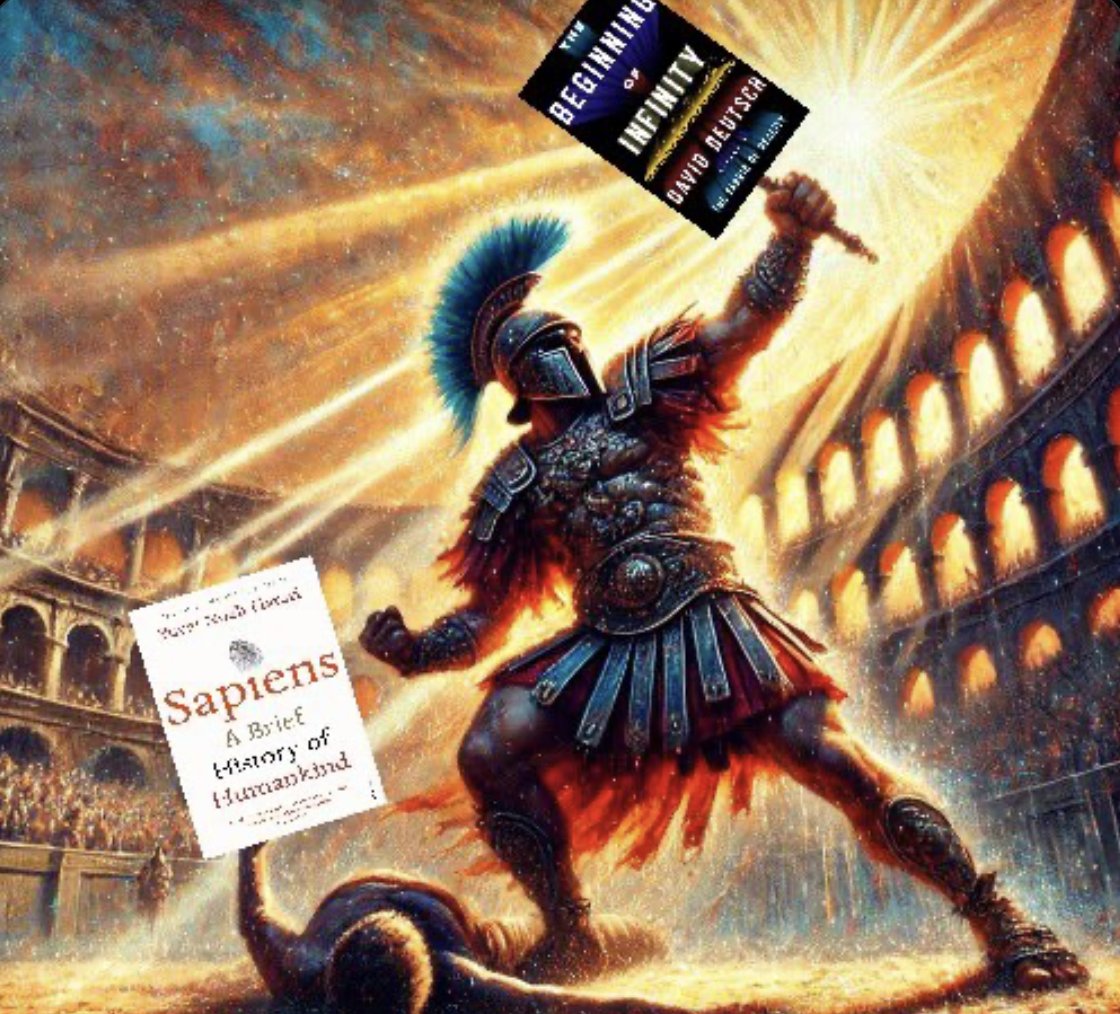
I used to think Sapiens was a great book. Sweeping, provocative, the kind of book that makes you feel like you finally understand the big picture of human history. It's on every CEO's bookshelf, assigned in universities, praised as a masterwork of synthesis. Yuval Noah Harari is treated as one of the serious thinkers of our time. But something nagged at me. Some passages felt off. Claims that human rights are just figments of our collective imagination, not real things, just stories we tell ourselves. That nations, laws, money, justice, doesn't exist outside our heads. That meaning itself is a delusion we've invented to cope. That we're far more powerful than ever before but not happier. That hunter-gatherers had it better because they had no dishes to wash, no carpets to vacuum, no nappies to change, no bills to pay. That sounded depressing to me, but was perhaps just the realistic scientific worldview? What it meant to see the world clearly, without comforting illusions. Then I read The Beginning of Infinity by @DavidDeutschOxf. Deutsch has a concept he calls 'bad philosophy.' Not philosophy that's merely false, but philosophy that actively prevents the growth of knowledge. Ideas that close doors rather than open them. That makes problems seem unsolvable by design. After soaking in Deutsch's framework (it's dense, a bit like digesting a delicious whale), it becomes clear: Harari's books are riddled with bad philosophy. They're smuggling nihilism in under the guise of scientific objectivity. Some examples: On meaning: "Human life has absolutely no meaning. Humans are the outcome of blind evolutionary processes that operate without goal or purpose... any meaning that people inscribe to their lives is just a delusion." On human rights: "There are no gods in the universe, no nations, no money, no human rights, no laws, and no justice outside the common imagination of human beings." On free will: "Humans are now hackable animals. The idea that humans have this soul or spirit and they have free will, that's over." On progress: "We thought we were saving time; instead we revved up the treadmill of life to ten times its former speed." The Agricultural Revolution? "History's biggest fraud." We didn't domesticate wheat, "it domesticated us." On our cosmic significance: "If planet Earth were to blow up tomorrow morning, the universe would probably keep going about its business as usual. Human subjectivity would not be missed." On the future: "Those who fail in the struggle against irrelevance would constitute a new 'useless class.'" Homo sapiens will likely "disappear in a century or two." This is bad philosophy. It tells us our problems are cosmically insignificant, our solutions are illusions, and that progress is neither desirable nor within our control. It's also perfect nonsense. No one would ever go back to being hunter-gatherers. Would you rather worry about your kid spending too much time on Roblox, or face the 50% chance she won't reach puberty? And our so-called "fictions"? They ended slavery. They gave women equal rights. They solved hunger. They eradicated smallpox. They turned sand into computer chips. They got us to the moon, and hopefully soon, to Mars and beyond. These "fictions" are already reshaping the universe, and over time they may become the most potent force in it. Now compare Deutsch: "Humans, people and knowledge are not only objectively significant: they are by far the most significant phenomena in nature." "Feeling insignificant because the universe is large has exactly the same logic as feeling inadequate for not being a cow." "Problems are soluble, and each particular evil is a problem that can be solved." "We are only just scratching the surface, and shall never be doing anything else. If unlimited progress really is going to happen, not only are we now at almost the very beginning of it, we always shall be." Where Harari sees a species of deluded apes stumbling toward obsolescence, Deutsch sees universal explainers, the only entities we know of capable of creating explanatory knowledge, solving problems, and potentially seeding the universe with intelligence. The difference isn't academic. Ideas shape action. If you believe life is meaningless, progress is a trap, and humans are hackable animals with no free will, how does that affect what you build? What you fight for? What you teach your children? Harari's books sell because they flatter a fashionable pessimism. They let readers feel sophisticated for seeing through the "delusions" everyone else lives by. That smug cynicism is corrosive. And it's everywhere: in schools, in media, in bestselling books. More than half of young adults now say they feel little to no purpose or meaning in life. This is what happens when you teach an entire generation bad philosophy. Less progress, less health, less wealth. Less flourishing. And ultimately, a higher chance that civilization and consciousness go extinct. Fortunately, there's another equally well-written, but much truer, account of homo sapiens, appropriately titled 'The Beginning of Infinity'. And this one smuggles no despair in by the backdoor. But let's give Harari credit where it's due. He is right about one thing: if planet Earth blew up tomorrow, we wouldn't be missed. Because there'd be no one left to miss us, just a careless universe, blindly obeying physical laws. We are the only ones who can miss, but we're not going to. We're going to aim, hit, and keep going. Full credit for the amazing meme to @Ben__Jeff
Anders K. tweet media
English
867
1.5K
9.2K
896.9K
Tom Nassis
Tom Nassis@tomdnassis·
@atse_zola @dchackethal @l1berty This might also be the quote Dennis mentioned. Notice, Popper writes, 'we can be SURE that there will be lots of true propositions' ... haha.
English
0
0
1
56
Tom Nassis
Tom Nassis@tomdnassis·
@atse_zola @dchackethal @l1berty From The Myth of the Framework, "This shows that of all propositions one half will be true and the other half false. So we can be sure that there will be lots of true propositions, even though we may have great trouble in finding out which they are."
English
2
0
1
236
Tom Nassis
Tom Nassis@tomdnassis·
@atse_zola @dchackethal @l1berty haha....I tried to smuggle the word 'certainty' in there also. Is it possible to avoid the scale of certainty? In terms of 'How certain are you?' Can we bypass that sense of low or high (un)certainty entirely? Brett Hall seems to think so. I'm not so sure.
English
1
0
0
79
Tom Nassis ретвитнул
Zakery Mizell
Zakery Mizell@ZakeryMizell·
Life is about the physical embodiment of knowledge.
English
2
1
11
419
Tom Nassis ретвитнул
Anders K.
Anders K.@Falliblemusings·
.⁦@DavidDeutschOxf⁩ nails what elevates us above animals (and AI, for that matter): our thirst for explanations and capacity to create them.
English
4
14
130
6.7K
Tom Nassis ретвитнул
Diego Rey
Diego Rey@diegoarey·
I just donated to the @ConjectureInst. Their work matters because it’s grounded in the principles I believe best drive human progress: open inquiry, fallibilism, and decentralized problem-solving. Progress comes from conjectures and refutations, not authority or dogma. Conjecture Institute’s approach embraces this Popperian mindset: make bold claims, expose them to criticism, iterate. It’s the way science actually moves. I believe knowledge grows through error-correction, pluralism, and honest debate, and that institutions must protect and nurture this process. Conjecture Institute is one of the few organizations explicitly built around these principles.
Conjecture Institute@ConjectureInst

Conjecture Institute is proud to announce Diego Rey @diegoarey as our first Gold Donor!

English
4
7
40
3.8K