Diego Rey

1.5K posts

Diego Rey banner
Diego Rey

Diego Rey

@diegoarey

CEO @GeminiThera. Previously: founder/CSO @GeneWEAVE (acquired @Roche) and @EndpointHealth, visiting partner @YCombinator. ¬σαφές δόκος ἔλεγχος διόρθωσις

San Francisco, CA Katılım Kasım 2007
1.4K Takip Edilen1.5K Takipçiler
Niko McCarty.
Niko McCarty.@NikoMcCarty·
There is a tiny device (first invented almost two decades ago) that lets you watch a single cell divide hundreds of times, under tightly-controlled conditions, and yet I almost never meet people who actually use it. This is a shame because there’s many interesting ideas that I think could be uniquely tested in such a device. Most experiments in biology are instead done in “bulk,” which is not a good way to deeply understand an organism. RNA-seq experiments, for example, are often done by growing lots of cells in a flask, exposing them to some chemical, and then killing all the cells, extracting their RNAs, and sequencing all of them together. The end result of this is just an average, and it completely obscures the messier (and more truthful) stochastic nature of life. But a Mother Machine, and other microfluidics tools like it, helps to solve this problem. It’s just a tiny device with a long trench through which nutrients flow. Cells travel down this trench and fall into little wells, etched perpendicularly to the main trench. Each of these wells is barely wide enough for a bacterium to fall inside. When a cell falls into a well, it keeps dividing and also has access to fresh nutrients, which are constantly pumped through. Waste molecules are continuously flushed out. As one cell divides into two, then four, then eight, and so on, some cells eventually extend out of the well entirely and get swept away with the current. The cell at the bottom, though, stays put and will keep dividing. Like many other “great” inventions, the Mother Machine was designed to answer a specific question. In a 2005 paper, some scientists claimed that, when a cell divides, whichever offspring inherits the “old pole” from the mother divides about 2 percent slower with each passing generation. (Said another way: When an E. coli cell divides, it builds a wall down the middle and cuts itself in two at that point. Each “daughter” cell has two ends; one end is made from the wall, and the other end is “old.” This old end gets passed down through the generations, again and again. The authors of the 2005 paper claimed that this constitutes a form of cellular aging, and that cells which inherit the old end are basically less fit than the other daughter cell. Provocative claim!) The Mother Machine was invented by a small team at Harvard to disprove this hypothesis. In the 2010 paper describing the device, they basically just strapped a camera to the microfluidics chip and recorded the growth rate for tens of thousands of cells, under constant nutrient conditions, for “hundreds of generations.” After tallying all the data, they concluded that “E. coli, unlike all other aging model systems studied to date, has a robust mechanism of growth that is decoupled from cell death.” In other words, growth does not slow down with age, and the 2005 claims were wrong. Other groups have since made modifications to the original device, using it to revisit classic experiments in molecular biology. In 2018, for example, a Swiss team modified the microfluidic chip to have two input channels, rather than just the one. With two ports, they could expose cells to different growth media at the same time. Or they could switch back-and-forth between the two conditions, or even expose cells to gradients of those conditions. Now, it has been known since the 1960s that E. coli cells prefer to eat glucose over lactose. When glucose runs out and only lactose is around, the cells activate their lac operon and begin making enzymes to digest it. Jacques Monod and François Jacob shared a Nobel Prize, in 1965, for figuring this out. But nobody had ever actually watched this “switch” at the level of single cells, under tightly-controlled conditions. But then the Swiss team made their modified Mother Machine. They flooded E. coli cells into the device, trapped them in wells, and switched the inputs between glucose and lactose every four hours. And what they found is that, when lactose comes in to replace glucose, every cell stops growing within three minutes. This outcome is extremely uniform! But the reverse — or the time it takes each cell to switch on its lac operon — is extremely variable. About one-fourth of cells start growing within 25-45 minutes, two-thirds start growing in one-to-three hours, and five percent of cells never grow again at all. By accounting for cells individually, in other words, the Mother Machine enabled these researchers to make observations which could never be made at the population-scale. And yet, Mother Machines still seem relatively rare! The blueprints are freely available online, but making these devices still requires an understanding of photolithography. The wells are only a micron wide, so they can’t be 3D-printed; one has to make a master mold using photomasks, cast PDMS in that mold, and then cure the polymer into that shape. The original specs only work for E. coli, too. If you wanted to study Bacillus or Caulobacter or yeast, you’d have to redesign the channels with different dimensions. A few companies sell Mother Machines, but they seem to be quite small. If Mother Machines did become widespread, though (maybe even cheap enough to ship in, say, a $100 kit for students) they could be used to run all kinds of interesting experiments. One idea is to combine a Mother Machine with a hypermutation tool, such that we can watch cells evolve in real-time. In a recent study, British scientists reported a way to do “highly mutagenic continuous evolution” in E. coli. The beauty of their tool is that it only requires two components: an error-prone DNA polymerase, and a replicon carrying a gene of interest. The error-prone polymerase, which introduces about one mutation per 1,000 bases every ten generations, only copies the DNA on the replicon; it doesn’t touch the host genome. One could take a gene encoding antibiotic resistance (against molecule X) and clone it onto the replicon, transform the whole thing into E. coli, and trap the cells inside a Mother Machine. Then, by exposing the cells to increasing levels of antibiotic Y, one could watch in real time as cells mutate their resistance gene and, perhaps, hit upon a solution that confers resistance against both molecules. This would be a way to study how cells evolve resistance autonomously, at the single-cell level. Another idea is to use Mother Machines to study how perturbations change a cells’ transcriptome in real-time. Felix Horns (previously in Michael Elowitz’s group at Caltech, now at Arc Institute) created an RNA Exporter tool. The gist is that genes encoding virus-like particles are placed into cells and, when these particles get made, they latch onto RNA molecules and physically carry them out of the cell. Cells are effectively engineered to export their own RNA. My understanding is that RNA Exporters are relatively unbiased, meaning they have a roughly equal chance of grabbing onto any RNA molecule. The molecules that get carried from the cell, then, are representative of the transcriptome as a whole. If cells carrying RNA Exporters were studied in a Mother Machine, it might be possible to perturb them and measure their transcriptional responses in real time — rather than the classical approach of perturbing millions of cells at once in a flask and doing RNA-seq on the entire population to collect average results. A third idea is to collect single-cell observations to train a predictive model for molecular burden. Any time we engineer an organism to carry new genes, we are forcing it to execute a function it wouldn’t normally do, thus draining resources that would otherwise go toward growth, DNA repair, and so on. Perhaps we could take 100+ plasmids, each carrying a fluorescent protein, and clone all of them into the same strain of E. coli. Then we could study each strain inside a Mother Machine, carefully quantifying growth rates and fluorescence levels, to map out the full distribution of outcomes for a given plasmid. If we did this enough times (hopefully with some kind of automated data pipeline) we could collect a huge dataset. The resulting model could also help bioengineers design constructs that impose less of a burden on living cells. I’m not entirely sure why we’re not seeing more of these ideas implemented, or why bioengineers still haven’t fully embraced single-cell experiments. Every university should have a microfluidics facility making custom devices, but I’ve only visited a few of them. Most experiments are still done in bulk, using orders-of-magnitude more cells and reagents than microfluidics would require; and usually the results are less representative of ground truth, too! It’s a shame, because one of the beautiful things about biology is that each cell is unique and lots of molecular phenomena are highly stochastic, following a distribution of outcomes. Biology is fun because it is not deterministic; and that makes it both richer as a field of study but also more complicated as an engineering medium. A Mother Machine, and other tools like it, help us to actually see these distributions.
GIF
English
17
32
272
16.2K
Senator Rand Paul
Senator Rand Paul@SenRandPaul·
We’re borrowing billions from China to pay for absurd studies on cocaine-addicted Japanese quail sex habits and whether rural and city frogs croak differently in Panama. This is Golden Fleece Award-level nonsense. Time to end the waste and fund real research.
English
230
652
5K
89.2K
Diego Rey retweetledi
Jason Kelly
Jason Kelly@jrkelly·
Agree, this is an important point from @baym. A Waymo is an autonomous car even if a human is in the back seat telling it where to go. Same for an Autonomous Lab, scientists can tell it what protocols to do -- quick autonomous lab explainer in this video. It's really about solving for variable lab work, not about taking the scientist out of the loop.
Michael Baym@baym

To put it a different way, while I see the vision of a fully self-driving lab, even a human-driven lab with a meaningful autopilot (or even lane-following cruise control) mode would be enormously empowering to a wide range of scientists

English
4
13
97
20.4K
Diego Rey retweetledi
vittorio
vittorio@IterIntellectus·
ok so the rosie story was even more insane than it looked > be the australian tech guy who made a cancer vaccine for his dog > first try: genetic algorithms to design a new drug from scratch > works in simulation but would take years to test > second try: screen 1 million existing compounds against the mutation > two weeks of computation. find a perfect match > it's patented > patent holder says no to compassionate use > what_did_you_expect.jpg > spend two weeks just being with the dog > 2am idea: what if i just make a vaccine > chatgpt for pipeline, gemini for construct, grok for validation > 300 gigabytes of raw sequencing data to half a page of vaccine construct > university ethics approval would take until mid-2026 > dog doesn't have that long > panik > canine cancer expert connects him to a lab in queensland with existing approval > drive 14 hours to get there > inject > three weeks later the tumors swell. immune system swarming > six weeks later shrinking > two months later legs returning to normal > one mass doesn't respond > sequence it again > different cancer. the vaccine worked. the body grew a new tumor he's now building a company so every dog owner can do this he had the technology the whole time. he spent 18 months fighting for permission to use it
vittorio tweet media
Paul S. Conyngham@paul_conyngham

x.com/i/article/2036…

English
231
2K
19.4K
1.4M
Diego Rey
Diego Rey@diegoarey·
Another bad argument: Max keeps coming back to “the most impactful drug ever is a peptide”. Agree that GLP1 receptor agonists are impactful but on a strictly quantified basis they have not yet matched the total population-level impact of drugs like penicillin (antimicrobial small molecule), vaccines, or antiretrovirals (HIV).
English
1
0
2
52
Andre Watson 🧬
Andre Watson 🧬@nanogenomic·
Some interesting arguments, though arguing that “pharma just likes small molecules and antibodies.” Isn’t convincing. Lipid conjugated peptides, and other modified peptides, can have a ~week of distribution in the blood. Antibody therapeutics also had to be heavily modified to be freestanding therapeutics and struggle to hit pockets and signaling cascades that small molecules and peptides can engage. Peptides are smaller and can have a higher density of binding relative to the size of a biologic, and we are coming out of 40+ years of R&D on antibodies being the focus of R&D. Many of these programs have failed when antibodies are found not to penetrate as deeply into tissue as peptides and small molecules can - just look at field of antibody-drug conjugates? We will see a shift from biologically derived peptides to de novo in the next 3-5 years, without a doubt. Retratutide is a great example - engineering cross-receptor specificity that is difficult to attain with a small molecule and signaling that can’t be achieved with an antibody. The field is just getting started.
English
3
0
9
664
TBPN
TBPN@tbpn·
The Great Peptide Debate, Musk Driving on the Moon, AI Coming for Zuck's Job, Unitree S1, Tesla Indulges in Lidar x.com/i/broadcasts/1…
English
8
3
84
67K
Diego Rey
Diego Rey@diegoarey·
@nanogenomic @tbpn Also at the same time wouldn’t dismiss n-of-1 (personalized) or precision approach
English
1
0
1
35
Diego Rey
Diego Rey@diegoarey·
@garrytan Claude, make me a Garry, don't mess up.
English
0
0
0
280
Diego Rey
Diego Rey@diegoarey·
Oxygen is dangerous, it produces reactive oxygen species. But antioxidants solves this and eukaryotes emerged. If there had been anaerobic microbe climate activists during the oxygenation of Earth trying to stop big O2, we might still be microbes. The point is that problems are inevitable and soluble. Solve problems. This is the way.
English
1
0
0
127
Michael A. Arouet
Michael A. Arouet@MichaelAArouet·
Germany’s closure of its nuclear power plants is legendary. Now “climate activists” seem to be succeeding in pushing for the closure of Germany’s largest oil drilling island, amid the Middle East energy crisis. Can you name anything more absurd than Germany’s energy approach?
Michael A. Arouet tweet media
English
82
183
834
22.6K
Gurwinder
Gurwinder@G_S_Bhogal·
A nice reminder that everything you're worried about is ultimately insignificant.
English
1.2K
383
2.7K
4.2M
Paul Graham
Paul Graham@paulg·
@davidsenra @pmarca What? That's not true. Do you not feel that Charles Darwin, for example, was among the great men of history?
English
136
47
3.1K
107.8K
David Senra
David Senra@davidsenra·
Great men of history had little to no introspection. The personality that builds empires is not the same personality that sits around quietly questioning itself. @pmarca and I discuss what we both noticed but no one talks about: David: You don't have any levels of introspection? Marc: Yes, zero. As little as possible. David: Why? Marc: Move forward. Go! I found people who dwell in the past get stuck in the past. It's a real problem and it's a problem at work and it's a problem at home. David: So I've read 400 biographies of history’s greatest entrepreneurs and someone asked me what the most surprising thing I’ve learned from this was [and I answered] they have little or zero introspection. Sam Walton didn't wake up thinking about his internal self. He just woke up and was like: I like building Walmart. I'm going to keep building Walmart. I'm going to make more Walmarts. And he just kept doing it over and over again. Marc: If you go back 400 years ago it never would've occurred to anybody to be introspective. All of the modern conceptions around introspection and therapy, and all the things that kind of result from that are, a kind of a manufacture of the 1910s, 1920s. Great men of history didn't sit around doing this stuff. The individual runs and does all these things and builds things and builds empires and builds companies and builds technology. And then this kind of this kind of guilt based whammy kind of showed up from Europe. A lot of it from Vienna in 1910, 1920s, Freud and all that entire movement. And kind of turned all that inward and basically said, okay, now we need to basically second guess the individual. We need to criticize the individual. The individual needs to self criticize. The individual needs to feel guilt, needs to look backwards, needs to dwell in the past. It never resonated with me.
David Senra@davidsenra

My conversation with Marc Andreessen (@pmarca), co-founder of @a16z and Netscape. 0:00 Caffeine Heart Scare 0:56 Zero Introspection Mindset 3:24 Psychedelics and Founders 4:54 Motivation Beyond Happiness 7:18 Tech as Progress Engine 10:27 Founders Versus Managers 20:01 HP Intel Founder Legacy 21:32 Why Start the Firm 24:14 Venture Barbell Theory 28:57 JP Morgan Boutique Banking 30:02 Religion Split Wall Street 30:41 Barbell of Banking 31:42 Allen & Company Model 33:16 Planning the VC Firm 33:45 CAA Playbook Lessons 36:49 First Principles vs. Status Quo 39:03 Scaling Venture Capital 40:37 Private Equity and Mad Men 42:52 Valley Shifts to Full Stack 45:59 Meeting Jim Clark 48:53 Founder vs. Manager at SGI 54:20 Recruiting Dinner Story 56:58 Starting the Next Company 57:57 Nintendo Online Gamble 58:33 Building Mosaic Browser 59:45 NSFnet Commercial Ban 1:01:28 Eternal September Shift 1:03:11 Spam and Web Controversy 1:04:49 Mosaic Tech Support Flood 1:07:49 Netscape Business Model 1:09:05 Early Internet Skepticism 1:11:15 Moral Panic Pattern 1:13:08 Bicycle Face Story 1:14:48 Music Panic Examples 1:18:12 Lessons from Jim Clark 1:19:36 Clark Versus Barksdale 1:21:22 Tesla Versus Edison 1:23:00 Edison Digression Setup 1:23:13 AI Forecasting Myths 1:23:43 Edison Phonograph Lesson 1:25:11 Netscape Two Jims 1:29:11 Bottling Innovation 1:31:44 Elon Management Code 1:32:24 IBM Big Gray Cloud 1:37:12 Engineer First Truth 1:38:28 Bottlenecks and Speed 1:42:46 Milli Elon Metric 1:47:20 Starlink Side Project 1:49:10 Closing Includes paid partnerships.

English
1.3K
447
5.2K
2.7M
Diego Rey retweetledi
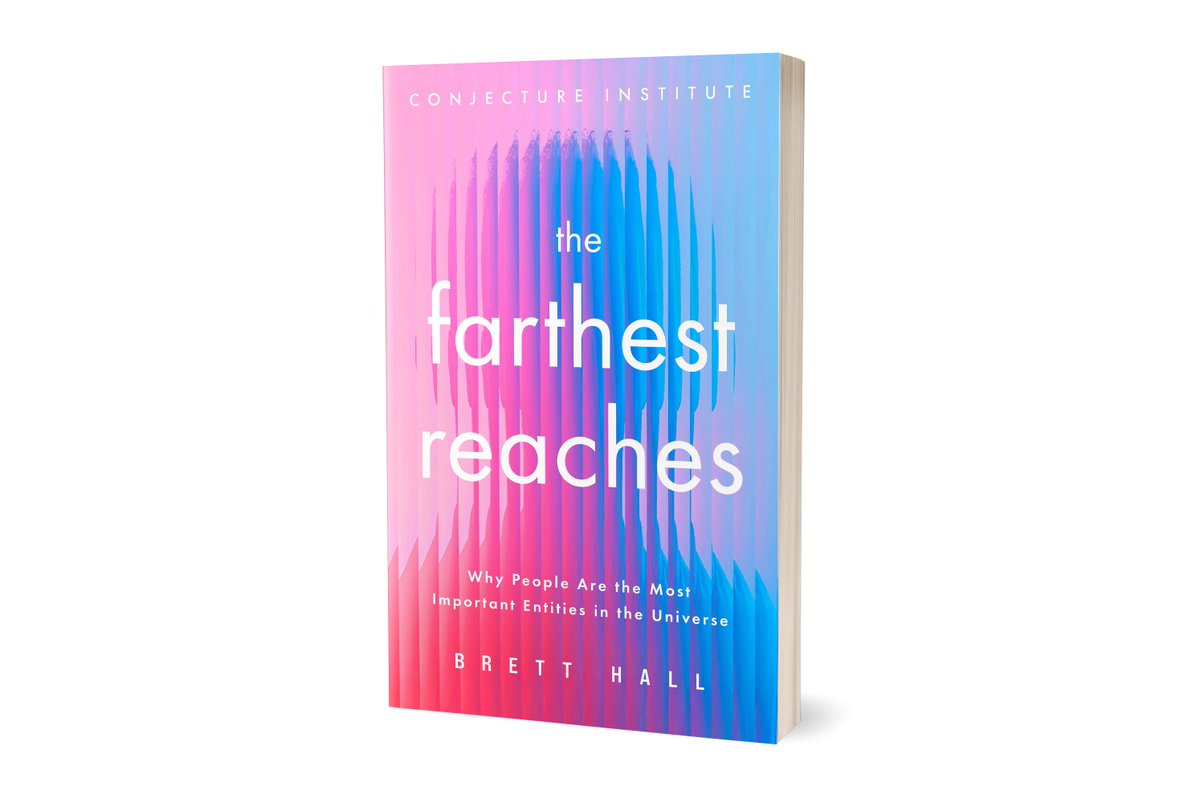
Conjecture Institute
Conjecture Institute@ConjectureInst·
The Farthest Reaches: Why People Are the Most Important Entities in the Universe, by Ambassador @ToKTeacher, is now available in paperback! link below👇 (Kindle version coming soon)
Conjecture Institute tweet media
English
2
9
71
26.3K
Diego Rey
Diego Rey@diegoarey·
Humans are agents - entities that can act. Agency is the capacity to act through the formation and execution of intentions. But why are we agents? Here is my take, please critique it: The Sun supplies a persistent low-entropy energy flux, driving matter far from equilibrium. Energy must dissipate, and the laws of physics restrict how matter can move, forcing dissipation to occur through specific interactions rather than arbitrarily. Transient ordered structures arise as a consequence of these restrictions (Schrödinger, What Is Life?). Most such structures arise only briefly. Some molecular processes, however, use energy flow to repeatedly copy their own structure. Information-encoding molecules enable this repeatable, energy-driven copying. Replication arises from this repeatability, not from preference or stability. Copying with variation enables evolution, as formalized by Marletto’s The Constructor Theory of Life, which shows that self-reproduction and Darwinian evolution are compatible with ordinary, no-design laws of physics when certain informational transformations are possible. Once replication with variation exists, informational structures that are copied more frequently become increasingly represented over time. Genes can be understood as such replicators, with organisms serving as transient vehicles for their propagation (Dawkins, The Selfish Gene). Some systems evolve mechanisms in which internal chemical states trigger physical responses to environmental conditions, for example chemotaxis toward nutrients. Such mechanisms increase replication frequency by coupling sensed conditions to action. Brains evolved as increasingly flexible extensions of this capacity. The control of action they enable is what we call agency.
English
0
0
2
145
Curt Jaimungal
Curt Jaimungal@TOEwithCurt·
What's the ONE question about reality (physics, consciousness, math, philosophy) that you can't stop thinking about? Write as much as you want.
English
444
15
178
28.6K
Jim O’Neill
Jim O’Neill@regardthefrost·
I’m extremely honored to be nominated by President Trump to serve as Director of the National Science Foundation.   Heroic scientists have always challenged consensus to advance the frontiers of knowledge. Recently, many institutions have weakened academic freedom and lost the trust they once enjoyed. Yet across our country, a new golden age of discovery is dawning. Information is open source and debate is public.   The marketplace of ideas is not an efficient market. Finding and funding independent thinkers and builders has taught me to eliminate bottlenecks and favor rigorous science that replicates.  Private funders are developing frontier models and useful technology. Government should take bigger financial risks to pose and answer deeper questions.   NSF’s scientists and staff have built something worth strengthening. Working together, scientists, engineers, investors, research institutions, and businesses can support American genius, enhance national security, enrich our economy, and improve our quality of life.   Entropy is on the march and China is not waiting.
Jim O’Neill tweet media
English
198
295
2.5K
437.1K
Diego Rey retweetledi
Conjecture Institute
Conjecture Institute@ConjectureInst·
Some free resources for our new followers: 📚Conjecture Press (books) 🏫Conjecture University (courses & original research) 🧭Handbook (outline of who we are, what we do, problems we exist to solve) 👇
English
1
7
14
1.6K
Diego Rey
Diego Rey@diegoarey·
I think I’m misunderstanding, but this sounds like spray and pray. What matters isn’t idea generation. It’s the full loop: propose, criticize, design decisive tests, interpret results, update. Endless conjectures don’t move science forward unless they become hard-to-vary explanations that survive criticism and experiment. Not infinite hypotheses. Infinite improvement in explanations.
English
1
0
1
132
Paul Kohlhaas bio/acc
Paul Kohlhaas bio/acc@paulkhls·
The scientific singularity is an infinite number of hypotheses on everything
English
15
7
71
3.8K
Diego Rey
Diego Rey@diegoarey·
@SebastianCaliri Check out Science, the Endless Frontier a.co/d/08rQ47g9 especially the first part 'The Science Bargain' the origin story of the NSF and what it got right and wrong. Jim is perfect for the role of improving how science delivers for the public.
English
0
0
3
1.4K