Vinoth Jayakumar

4.7K posts

Vinoth Jayakumar

Vinoth Jayakumar

@vinothj

VC at @MoltenVentures Something ventured, something gained. All views are my own.

London Присоединился Mayıs 2009
1.5K Подписки1K Подписчики
Vinoth Jayakumar ретвитнул
a16z
a16z@a16z·
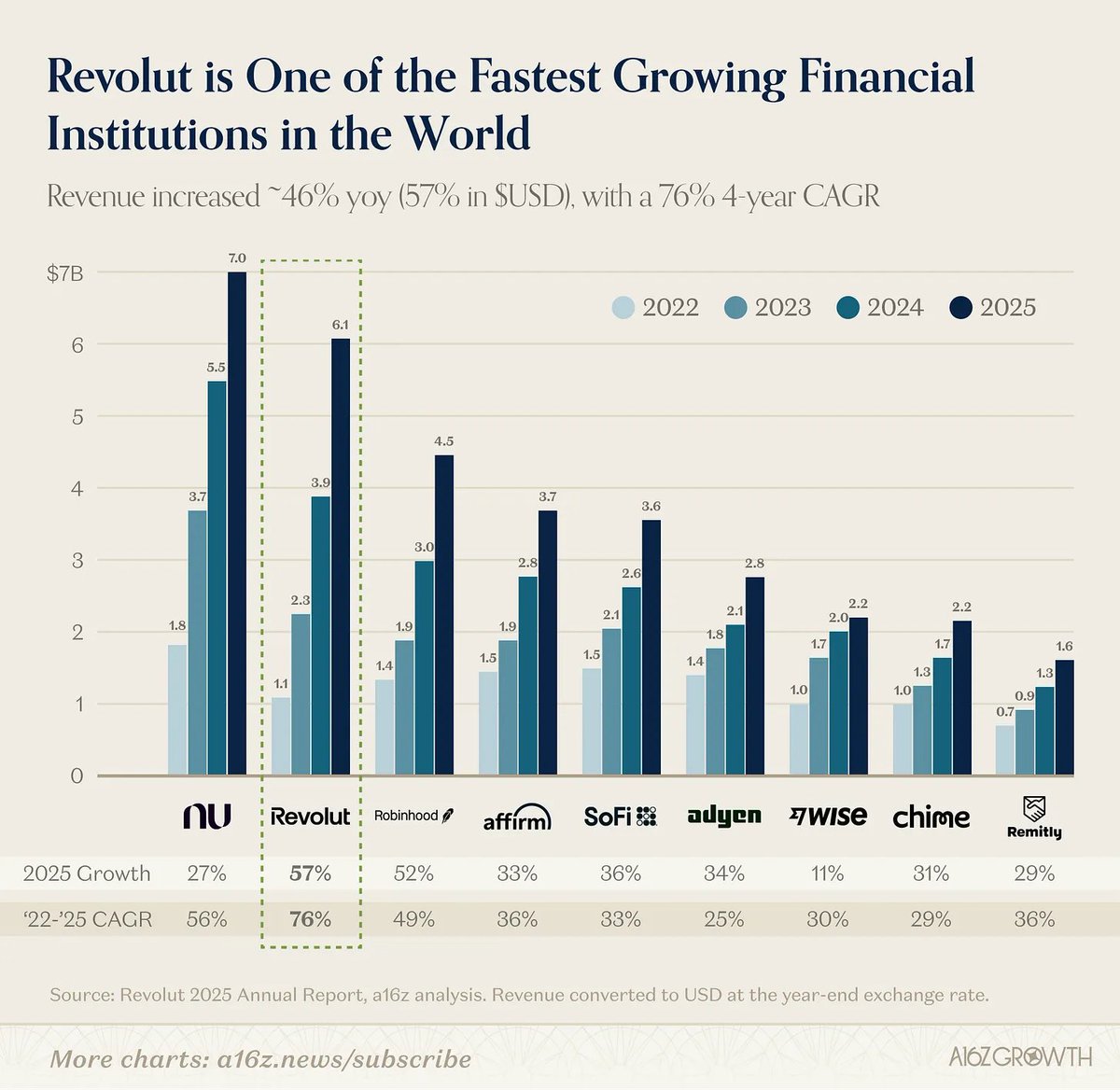
.@Revolut is one of the fastest growing financial institutions in the world @aleximm and @santiago__rdz on the outlier numbers in Revolut's 2025 Annual Report: - Revenue grew 46% to £4.5 billion - Profit before tax grew 57% to £1.7 billion, realizing a 38% margin - Retail customers grew 30%, having added 16 million in 2025 alone - 11 different product lines exceeded £100 million revenue - Return on equity (ROE) is a category-breaking 35% (despite over capitalization) Read more: a16z.news/p/the-algorith…
a16z tweet media
Alex Immerman@aleximm

x.com/i/article/2036…

English
22
62
580
105.5K
Vinoth Jayakumar ретвитнул
Cyprx Research Lab Official
Cyprx Research Lab Official@CyprxResearch·
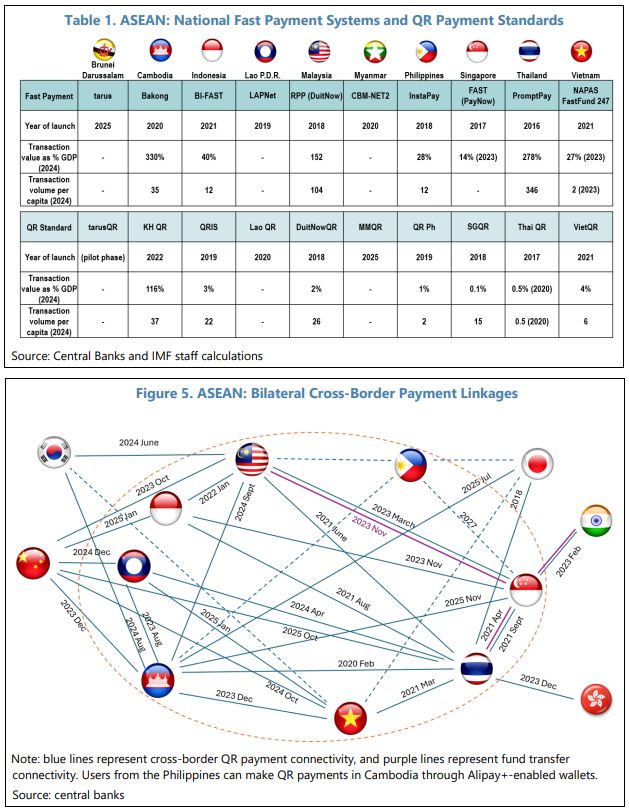
ASEAN’s payments shift isn’t just “cashless growth.” It’s regional infrastructure in motion. The latest paper from the International Monetary Fund frames digital payments as a new layer of economic integration across Southeast Asia. Here’s what’s happening 👇 Domestic systems are scaling fast: Rails like PromptPay and QRIS have accelerated financial inclusion, expanded e-money adoption, and fueled fintech ecosystems. Cross-border links are emerging: Bilateral QR + fast-payment integrations are lowering costs and shortening settlement times, especially for SMEs and travelers. Local currency settlement is strategic: Reducing FX dependency and enabling direct local currency flows strengthens resilience and deepens intra-ASEAN trade. Growth creates new coordination risks: Fragmentation, AML/CFT gaps, cyber exposure, and uneven legal frameworks require harmonized supervision and interoperable standards. The next step is multilateral: Bilateral bridges matter but scaling will require broader frameworks like Project Nexus and tighter central bank coordination. This isn’t just about QR codes. It’s about turning domestic payment rails into a regional economic backbone.
Cyprx Research Lab Official tweet media
English
1
15
44
2.6K
Vinoth Jayakumar ретвитнул
Sam
Sam@0xCryptoSam·
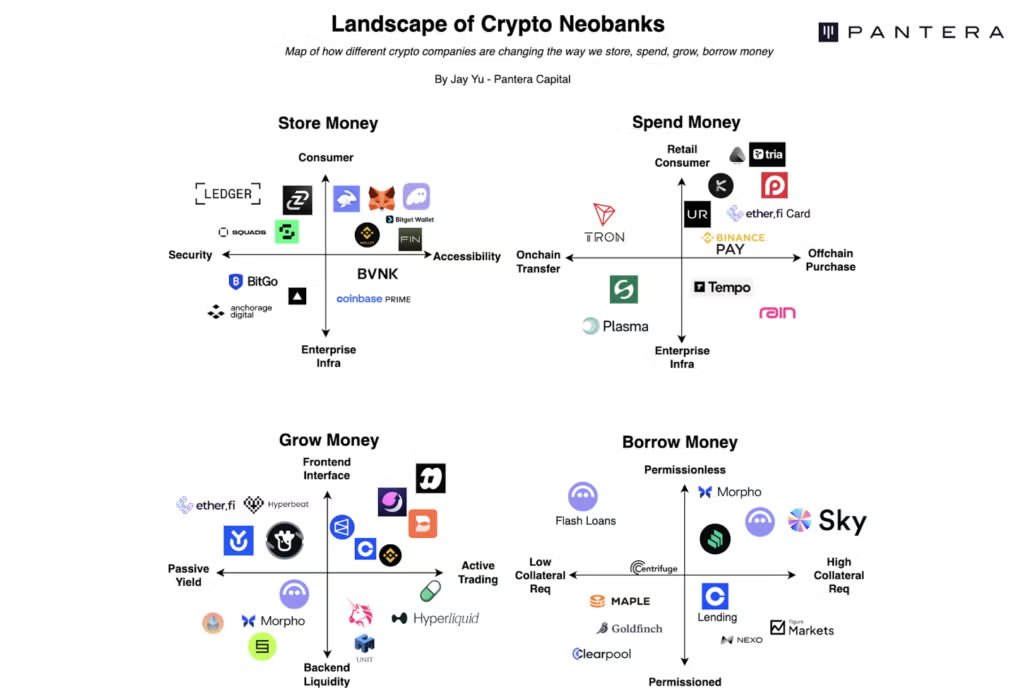
Excellent breakdown of crypto neobanks by @0xfishylosopher. There are 20+ crypto neobanks all essentially building the same product - differentiation is more critical than ever. The clearest opportunities: (1) small, geographic monopolies through stablecoin banking, or (2) novel credit primitives, such as undercollateralized lending models or unique private credit opportunities.
Sam tweet media
Jay Yu 🐟@0xfishylosopher

x.com/i/article/2021…

English
46
65
507
68.8K
Vinoth Jayakumar ретвитнул
David Marcus
David Marcus@davidmarcus·
A few thoughts about PayPal, nearly 12 years after I left. I woke up this morning to dozens of messages from former PayPal colleagues. It pushed me to finally speak up. I never spoke publicly about the company after I left. Part of that was loyalty to John Donahoe, who gave me an unlikely opportunity, handing the reins of PayPal to a startup guy who, on paper, had no business running a then 15,000-person organization. But part of it was something else: I had left. I chose not to stay and fight for the changes I believed in. Speaking from the sidelines felt like armchair commentary. Easy opinions without the burden of execution. So I stayed quiet. But twelve years of silence is long enough. And today's news makes it clear the pattern I've watched unfold isn't self-correcting. I left PayPal in 2014 because I was deeply frustrated. We had executed a silent turnaround of a company that had lost its soul. We brought back engineering talent, shipped good products quickly, and acquired Braintree and Venmo. The company was on a tear. So much so that Carl Icahn felt compelled to accumulate a position in eBay and push for a PayPal spinoff. At the time, eBay decided to fight Icahn. It was a difficult period for me, caught between what I felt was right for PayPal and my loyalty to the eBay team. This is when Mark Zuckerberg approached me to join Facebook. The combination of his conviction that messaging would become foundational, the appeal of going back to building products at scale, and my growing exhaustion with the internal politics at PayPal and eBay eventually convinced me to leave and join one of the best teams in the world, one I had admired for a long time. In the summer of 2014, I met John in a café in Portola Valley and told him I had decided to leave. During that conversation, he told me that Icahn had effectively won the fight, that PayPal was going to become an independent company, and he tried to convince me to stay on as CEO, but I had already said yes to Mark, and my word is my bond. There was no turning back. After my departure, the board scrambled to find a replacement, and it took a few months for them to land on Dan Schulman. The leadership style shifted from product-led to financially-led. Over time, product conviction gave way to financial optimization. Much of the momentum we had created still persisted and carried the company forward, mainly driven by Bill Ready, who came over in the Braintree acquisition and rose to COO. Under his leadership, Venmo grew exponentially, and total payment volume (TPV) accelerated quickly. But the shift under Schulman became more pronounced after Bill's departure at the end of 2019. With him went the product conviction that had defined the post-spinoff momentum. Then, for a period, COVID-fueled online shopping hid a lot of the company's new weaknesses. During that period, the company made a fundamental miscalculation: it optimized for payment volume instead of margin and differentiation. It leaned into unbranded checkout, where PayPal had the least leverage, instead of branded checkout, where the margin, data, and customer relationship actually lived. Visa masterfully structured a deal that effectively ended PayPal's ability to steer customers toward bank-funded transactions, which had been a core driver of PayPal's economics. Not long after, PayPal lost a significant portion of eBay's volume. Over time, it saw its share of checkout among its most profitable customers steadily erode as Apple Pay and others continued to execute well. The same pattern repeated itself across lending, buy-now-pay-later (BNPL), and new rails. On lending, PayPal missed the opportunity to turn it into a platform weapon. Products like Working Capital were conservative, short-duration, and optimized for loss minimization. Lending never became programmable, never became identity-driven, and never became a reason for merchants or consumers to choose PayPal over something else. The missed opportunity in BNPL was even more striking. Klarna, Affirm, and Afterpay didn't just offer installment payments, they built consumer finance brands, persistent credit identities, and new shopping behaviors. PayPal saw the BNPL turn, entered the market, and had every advantage: distribution, trust, and merchant relationships. But BNPL was treated as a defensive checkout feature rather than an offensive category. There was no attempt to turn it into a core consumer relationship, no super-app behavior, and no meaningful differentiation for merchants. Others built platforms, PayPal added a feature. The failure to lean into building and owning new rails followed the same logic. After the spinoff, PayPal had a once-in-a-generation opportunity to build a global, at scale payment network. Instead, the company focused on building on top of existing networks and third-party rails. More recently, that mindset carried over to PYUSD. Technically, the product was sound. Strategically, it launched without a compelling transactional reason to exist. PYUSD had distribution, but no organic demand. It was not embedded deeply enough into flows to become a true settlement layer, a cross-border merchant rail, or a programmable money primitive. It sat adjacent to the product instead of inside the core of it. Acquisitions during this period followed a similar pattern. Honey was not a strategic acquisition for PayPal. It added activity, but not leverage. It lived outside the transaction, monetized affiliate economics rather than payment economics, and never meaningfully strengthened PayPal's control of the customer or the checkout moment. Xoom solved a real problem in remittances, but it never compounded PayPal's advantage. It scaled volume without changing the underlying rails, identity graph, or settlement model, and as importantly, it didn’t cater to a high-value, high-margin customer archetype. None of these were bad companies. They were just a wrong fit for PayPal and became unnecessary distractions. The board eventually recognized the problem. In 2023, they brought in Alex Chriss, an Intuit veteran with a strong product background, explicitly to restore product conviction. It was the right instinct. But Alex came from software, not payments. He understood SMB product development. He didn't have the muscle memory for transaction economics, network effects, or settlement infrastructure. In hindsight, he also made an error: clearing out much of the leadership team that understood payments deeply. Executives with years of institutional knowledge departed within his first year. This morning, Alex was removed as CEO. Branded checkout grew 1% last quarter. The board tapped another operator, Enrique Lores, the former HP CEO who's been on the PayPal board for five years. I don’t know Enrique. And he might be a great leader, but on paper at least, he’s a hardware executive. For a payments company. The common thread through all of this is incentive design. Once PayPal became independent, short/medium-term predictability beat long-term vision and ambition. Stock performance mattered more than platform risk and network opportunity. Financial optimization replaced product conviction. I'm not claiming I would have made every call differently. Running a public company at scale involves tradeoffs I didn't have to make after I left. But the pattern, choosing predictability over platform risk, again and again, was a choice, not an inevitability. Over time, the company that had every advantage and could’ve become the most consequential and relevant payments company of our time, lost its mojo, its product edge, and its ability to compete in a market that’s being rewired and reinvented in front of our eyes. That's the part that's hardest to watch for a company I care so deeply about.
English
618
940
8.8K
2.4M
Vinoth Jayakumar ретвитнул
Simon Taylor
Simon Taylor@sytaylor·
WOW! 🚨 Nubank just got OCC conditional approval for a US bank charter. Huge for the US market — Monzo tried. Failed. Is trying again. Bunq waited 301 days. Withdrew. Now trying again. N26 abandoned the US entirely. Revolut still doesn't have one. Nubank applied September 30. Approved January 29. 121 days. — The difference? They showed up profitable. $4.2B quarterly revenue. 31% ROE. $783M net income last quarter. 127 million customers. $0.90 cost to serve per month. Traditional banks spend $5+. — This is the world's most valuable LatAm financial institution ($77B market cap) proving its thesis works outside home turf. 60% of Brazilian adults bank with Nubank. 1 in 4 banked Mexicans use Nubank. Now they're bringing the full stack to the US — deposits, credit cards, lending, digital asset custody. — The board tells you everything: Roberto Campos Neto (former Brazilian Central Bank president) as chair. Brian Brooks (former acting OCC Comptroller) as director. Cristina Junqueira running the US operation. — Timeline: 12 months to capitalize. 18 months to open. Still needs FDIC and Fed approval. Target market? "Consumers that know the brand" — read: the 65M+ Hispanic Americans, 92% of whom already use fintechs. — Every US neobank is watching. Every European challenger that couldn't crack the OCC is watching. If Nubank replicates even a fraction of their LatAm playbook here, the competitive math changes for everyone.
Simon Taylor tweet media
Romford, London 🇬🇧 English
13
24
224
25.2K
Vinoth Jayakumar ретвитнул
Cyprx Research Lab Official
Cyprx Research Lab Official@CyprxResearch·
Asia is quietly building the next global retail payment rail. No cards. No SWIFT. No hype. Countries across Asia have linked national QR payment systems into live cross-border corridors Japan, Singapore, Malaysia, Indonesia, Vietnam, Hong Kong, Cambodia, Laos, with China inbound next. Why this matters: - QR is becoming a retail common language. - Payments run via national rails, not global card networks. - FX, clearing, compliance happen under the hood. - Central banks & regulators are leading, not Big Tech. This isn’t a product. It’s infrastructure. What’s coming next: - Real-time FX. - 24/7 settlement. - Wallet and digital ID integration. - Potential stablecoin settlement in the backend. Asia is showing an alternative model for global payments: Not one global network but a federation of connected national rails. When this scales, “cards vs QR” won’t be a UX debate anymore. It’ll be about infrastructure efficiency.
Cyprx Research Lab Official tweet media
English
25
229
788
48.9K
Vinoth Jayakumar ретвитнул
Simon Taylor
Simon Taylor@sytaylor·
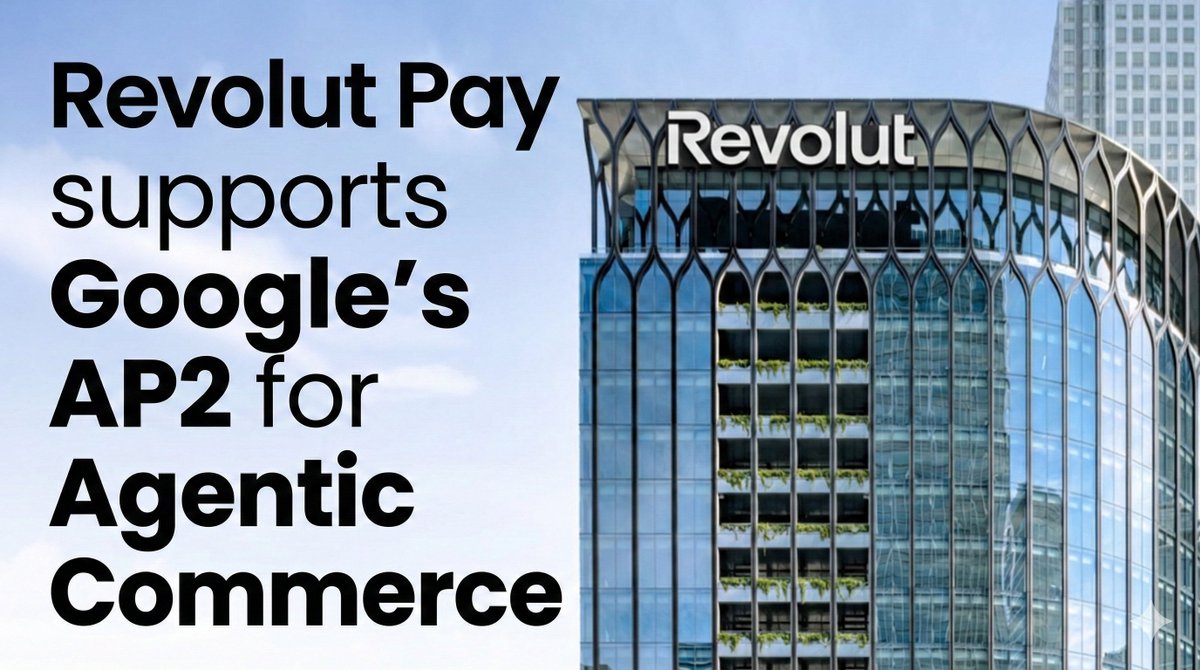
🚨 JUST IN: Revolut joins Google's agentic payments protocol AP2. The real news buried in Revolut's announcement: They didn't just join. They contributed A2A payment flows to the protocol itself. That's not supporting a standard. That's shaping one. --- Why Revolut's update to A2A matters here: - Google built AP2 around cards. - Fine for the US. - But A2A is how Europe moves a good chunk of money. - Open banking. Faster payments. PSD2. Revolut just made AI shopping work with how Europeans pay. --- If AI agents become the checkout, whoever controls the payment rails underneath becomes a power player. That's a $500B+ prize. --- The problem: - Merchants don't want to integrate 4 different AI payment protocols. - They barely want to integrate one. - Right now everyone's "supporting everything." Visa supports Google. - Mastercard supports Google. Stripe has its own thing. Coinbase is in there. Cloudflare too. It's exhausting to track. Imagine being a merchant. So Revolut saying - we got this and we made it work for you. Is a solution. For now. --- Does this matter? Well, we're early, we have: - Multiple competing protocols - Big names picking sides - Limited Consumer adoption - Limited Merchant integration at scale Let's see if the holiday season in 2026 is an inflection point for agents buying things.
Simon Taylor tweet media
English
11
8
104
10.8K
Vinoth Jayakumar ретвитнул
Cyprx Research Lab Official
Cyprx Research Lab Official@CyprxResearch·
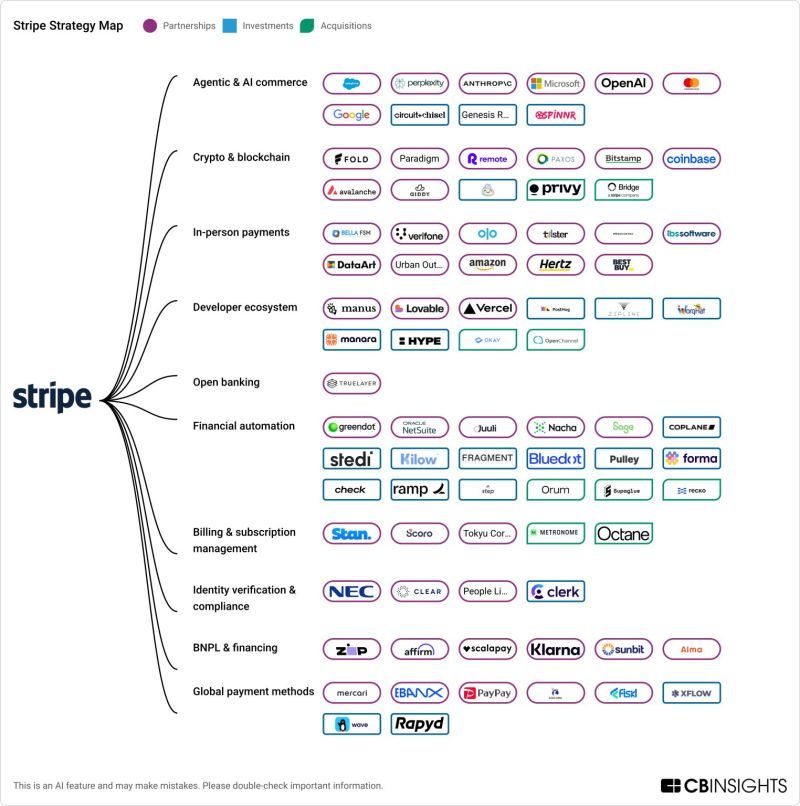
Stripe’s strategy is coming into focus and it’s bigger than payments. They’re positioning to become the financial operating system of the next economy: - M&A as a core lever to control more of the financial stack. - Crypto infra by default: Bridge & Tempo signal stablecoins moving from edge case to primary rails. - Agentic commerce at scale, with Stripe as the payment layer for AI (Salesforce, OpenAI, Anthropic). By 2026, this looks less like a payments company… and more like the OS for programmable money @stripe
Cyprx Research Lab Official tweet media
English
14
28
215
15.5K
Vinoth Jayakumar ретвитнул
Simon Taylor
Simon Taylor@sytaylor·
The tokenized deposit vs stablecoin fight is a distraction. Banks multiply money. Stablecoins move it. We need both. --- The tokenized deposit maxi says: "Stablecoins are unregulated shadow banking. Everyone will prefer banks when they tokenize." Some banks and central banks love this narrative. -- The stablecoin maxi says: "Banks are dinosaurs. We don't need them on-chain. Stablecoins are the future of money." Crypto natives love this narrative. --- Both miss the point. Banks create cheap credit Your $100 deposit becomes $90 in loans (and more) - F500 companies park $500M at JPM. - Get giant credit lines in return. - Below-market rates. The deposits are the bank's business model. Tokenized deposits preserve this on-chain - but they're ONLY for bank customers. --- Stablecoins work like cash Circle and Tether hold 100% reserves. $ - 200B in T-Bills. - Capture 4-5% yield. - Pay you zero. You get money outside any bank's perimeter. $9 trillion moved cross-border via stablecoins in 2025 Works anywhere with Internet. 24/7 without permission. --- The future is both. - F500 holds tokenized deposits at JPM. - Gets favorable credit lines for US operations. - Pays Argentine supplier. - Swaps tokenized deposits for USDC. On-chain. Atomic. Best of both. Use legacy rails where they work. Stables where they don't. --- A rubric: - Tokenized deposits → cheap credit inside bank perimeters - Stablecoins → cash-like settlement outside bank rails - On-chain swaps → instant conversion, zero settlement risk --- Onchain > APIs Smart contracts compose logic across multiple businesses and persons. Deposit --> stablecoin --> invoice paid --> downstream payment happens. --- e.g. - When supplier's deposits land - Smart contracts trigger inventory financing, - Working capital lines, currency hedges. From banks and non banks! --- The future is on-chain - Tokenized deposits solve for cheap credit. - Deposits stay captive. - Banks lend against them. - Stablecoins solve for portability. - Money moves anywhere without permission. --- The tokenized deposit maxi wants regulated rails only. The stablecoin maxi wants to kill banks. The future needs both. F500s want giant credit lines from their bank AND instant global settlement. Emerging markets want local credit creation AND dollar access. DeFi wants composability AND real-world asset backing. The fight over which one wins misses what's happening. The future of finance is on-chain. Both tokenized deposits and stablecoins are infrastructure for getting there. Stop arguing about winners. Start building interoperability. Composable money. ST.
English
22
18
137
23.3K
Vinoth Jayakumar ретвитнул
Max Karpis
Max Karpis@maxkarpis·
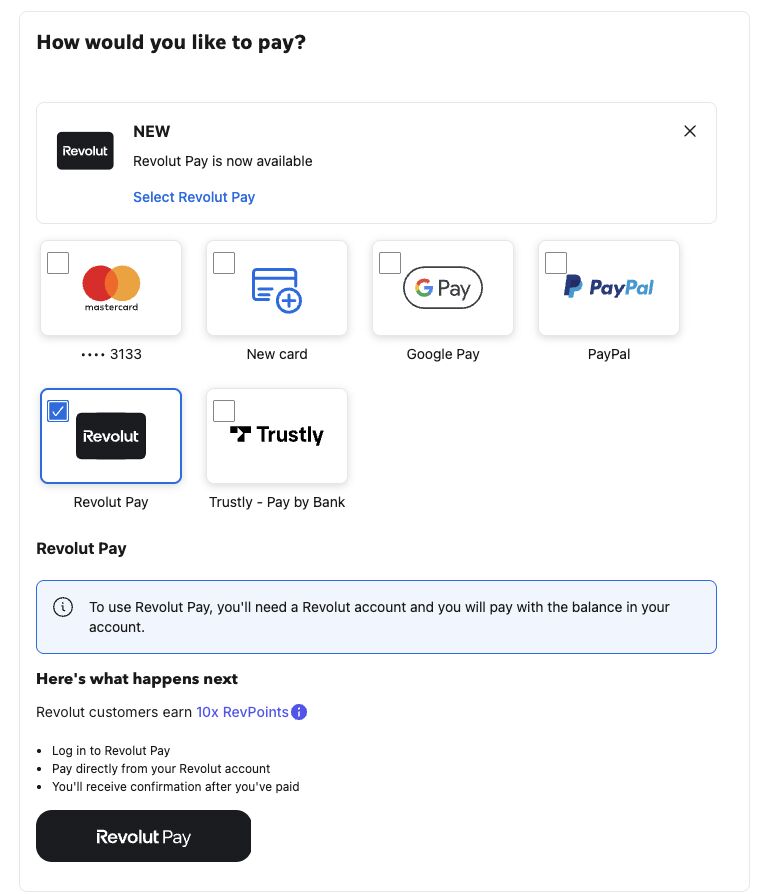
Booking.com is the world's largest online travel agency. It's a massive achievement for Revolut to integrate its Revolut Pay at the checkout. It took 2 years from start to finish to get it done. It's a game-changer for Revolut, the customer and the merchant. Consumer relationship meets in-built distribution with closed-loop loyalty, merchants' data opens new opportunities, while the network effect is ever-growing.
Max Karpis tweet media
Max Karpis@maxkarpis

Revolut announced a partnership with @bookingcom. When booking on Booking.com, customers can choose Revolut Pay as their payment method and pay for their stay with a single click via the Revolut app. This integration allows for "a faster, more secure, and ultimately more rewarding payment experience for users," says Alex Codina, General Manager of Acquiring at @Revolut. 9M Revolut customers have already made purchases on Booking.com - @pressecitron

English
13
36
484
125.9K
Vinoth Jayakumar ретвитнул
Sheel Mohnot
Sheel Mohnot@pitdesi·
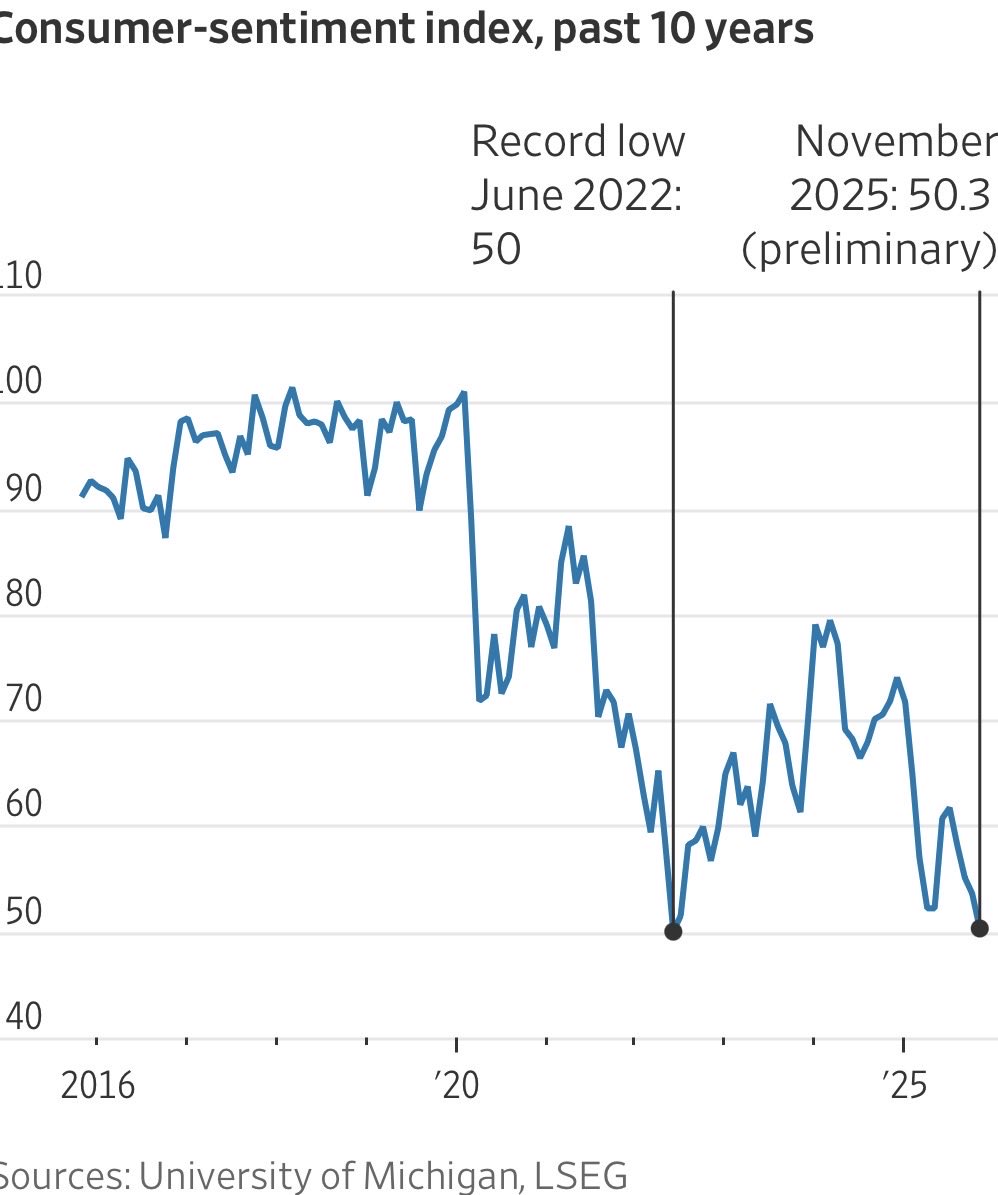
Consumer sentiment almost back to its record low.
Sheel Mohnot tweet media
English
9
5
54
7.8K
Vinoth Jayakumar ретвитнул
Simon Taylor
Simon Taylor@sytaylor·
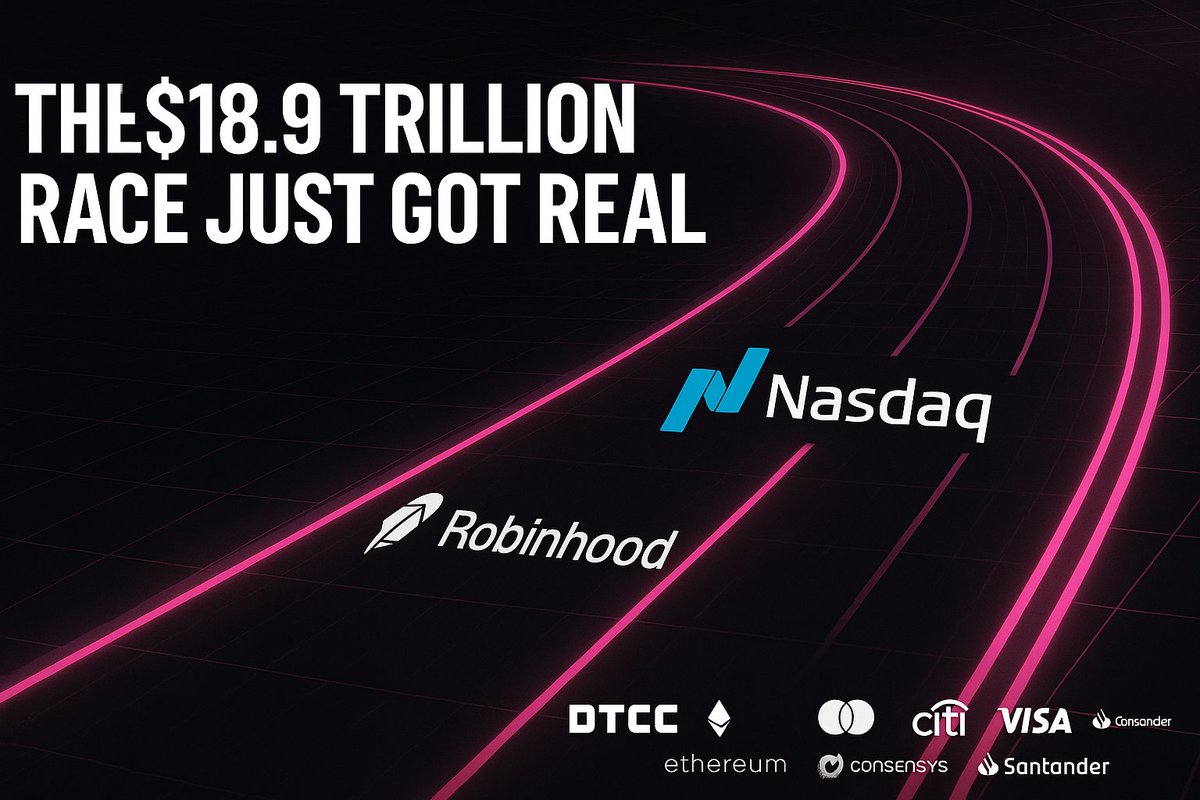
🚨 NASDAQ just filed with the SEC to tokenize every stock and ETF on its exchange starting 2026. Genuinely. Wow. Mark my words: The next killer app for onchain finance will be tokenized stocks. This is VERY different to what Robinhood announced. Here's the breakdown 👇
Simon Taylor tweet media
English
9
12
82
9.2K
Vinoth Jayakumar ретвитнул
Balaji
Balaji@balajis·
AI doesn’t do it end-to-end. It does it middle-to-middle. The new bottlenecks are prompting and verifying.
English
220
597
5K
938.1K
Vinoth Jayakumar ретвитнул
Tim Draper
Tim Draper@TimDraper·
My son beat me to the best investment of the decade. @Brian_Armstrong walks into my office to pitch @Coinbase. My son, @AdamDraper was there and we love the pitch and love Brian. I want in immediately, but I'd already invested in @CoinLab (a startup with a similar premise). So… I passed on the seed round. Oops. My son didn't have that conflict and invested in Coinbase's first round at a very good price. I finally got in at the growth round, and then our fund joined at pre-IPO. Both were great successes, but my son’s returns solidly beat my own. Good to see that each generation gets better than the one before.
English
112
53
1.3K
194.7K
Vinoth Jayakumar ретвитнул
Jevgenijs Kazanins
Jevgenijs Kazanins@jevgenijs·
In case you wondered what Robinhood’s $HOOD tokenized stocks really are…From the “Description of Services”: ✔️ When a new US Stock Derivative contract is entered into, Robinhood will simultaneously issue (mint) over a blockchain a new fungible token ✔️ This token represents the ownership rights that the customer has over the US Stock Derivative ✔️ The token is non-transferable and non-assignable ✔️ When the US Stock Derivative is closed out, Robinhood burns the tokenized US Stock Derivative contract from the blockchain ✔️ The derivative contract is based on the value of its underlying asset, which would be a US stock or ETF ✔️ Instead of owning the actual thing (like barrels of oil or shares of a company), you're betting on how its price will move ✔️ Customers have certain contractual rights under the terms of the US Stock Derivative contract, but do not have ownership rights over the stock or ETF itself 👇🏻
Jevgenijs Kazanins tweet media
OpenAI Newsroom@OpenAINewsroom

These “OpenAI tokens” are not OpenAI equity. We did not partner with Robinhood, were not involved in this, and do not endorse it.  Any transfer of OpenAI equity requires our approval—we did not approve any transfer. Please be careful.

English
37
50
273
121.5K
Vinoth Jayakumar ретвитнул
Gokul Rajaram
Gokul Rajaram@gokulr·
AI SHRINKS THE SKILL PREMIUM A year ago, a portfolio co would ask me every week on tips to hire senior engineers; they found it really hard to attract seasoned builders. For the past couple of months, they have stayed conspicuously silent on this topic. Today, I asked them why. Had they finally found their dream senior engineer hire? They said "We don't need senior engineers. Our junior and mid-level engineers are able to use AI to solve every logic and system design problem." This will be one of the pervasive effects of AI. AI will massively erode the premium charged by senior professionals in any white collar role. You might still need the 0.1% of talent to build world-scale systems. But the top 1-10% are going to see massive competition from the middle 50% as AI uplevels the latter group's skills.
English
40
41
381
126.9K
Vinoth Jayakumar ретвитнул
Sheel Mohnot
Sheel Mohnot@pitdesi·
New leak of Stripe data! FCF: Stripe +~100% to $2.2B Adyen +27% to $1.7B Revenues Stripe: +28% to $5.1B, TPV +38% to $1.4T Adyen: +23% to $2.1B, TPV +33% to $1.34T
Sheel Mohnot tweet media
Sheel Mohnot@pitdesi

Adyen & Stripe '24 annual reports are out! Processed volume: Adyen: $1.34T, +33% YoY Stripe: $1.4T, +38% YoY Valuation: Adyen: $56B Stripe: $91.5B Employee count: Adyen: 4.3k Stripe: 8.2k Both profitable, Adyen EBITDA of $1B. Note: Stripe has higher margins!

English
17
28
324
118.1K
Harry Stebbings
Harry Stebbings@HarryStebbings·
Every weekend I walk a marathon with my mother. This weekend was a special one, celebrating the $400M fundraise. We decided to take a detour. 👇
Harry Stebbings tweet media
English
52
9
648
60.9K