#Thread de smartphones (& tablette) que j'ai eu et en ordre :
|1| Galaxy Tab 2 10.1 (2012)
• 1 Go de RAM
• 8/16/32 Go de stockage interne
• 7000 mAh
• 3,15mp (📷 arrière)
• 0,3mp (📷 avant)

Français
Arama Sonuçları: "#Thread"
20 sonuç


Nigerians and putting on stockings in the hot sun ☀️…. Who are you trying to impress!!!







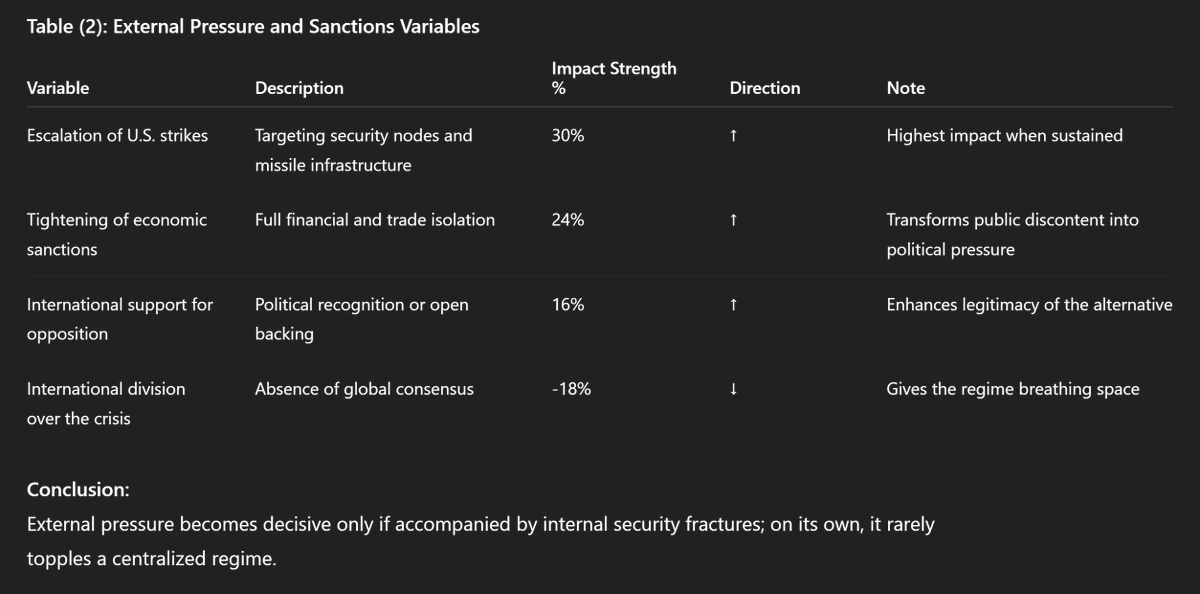

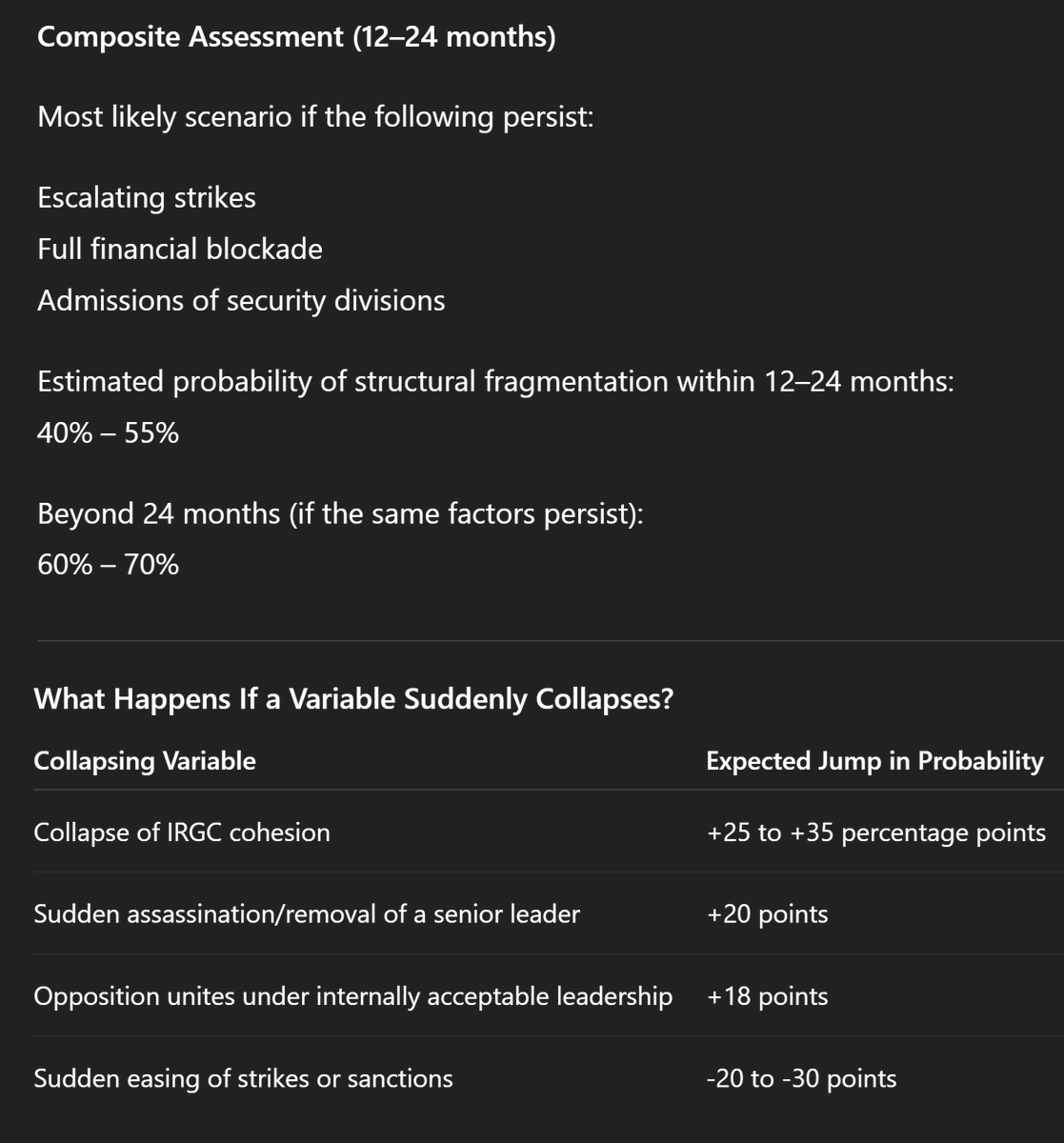
When Will the #Iranian #Regime Fall? #IranianRevolution2026 Between Security, Economy, Ethnicity, and Religion A Comprehensive Framework for Analyzing #Iran’s Internal Landscape Amid #War This report focuses on analyzing the internal structure of the Islamic Republic of Iran amid escalating pressure and war, through six interconnected axes: the ethnic map, the political Shiite ideological structure, the network of economic interests, the security apparatus, the impact of war, and transformation scenarios. The central conclusion is that state stability does not rest on a single factor (ethnic, religious, or economic), but on the cohesion of the core power center that integrates ideology with institutional interest and security force. Ethnic diversity constitutes a potential pressure factor, but it does not automatically function as a mechanism of disintegration. Political Shiite doctrine has provided a supra-ethnic unifying framework since 1979, but its effectiveness is tied to the state’s economic and security performance. The current war pressures this system, but it has not yet produced a structural rupture within the elite or the security institutions. The real turning point lies in: Division within the security–military elite Severe and sustained financial incapacity The emergence of an alternative leadership capable of coordination The regime’s loss of monopoly over the religious–political narrative So far, indicators reflect high pressure without structural collapse. First: The Ethnic Map – Relatively Stable Pluralism Demographic Structure Iran consists of an ethnic mosaic including: Persians Azerbaijanis (Shiite Turks) #Kurds #Arabs #Lurs #Baluch #Gilaks and #Talysh, among others The decisive observation: There is no direct alignment between ethnic division and political division. Azerbaijanis are deeply represented within state institutions, and leading figures within the regime come from non-Persian backgrounds, including Supreme Leader Ali Khamenei (of Azerbaijani origin). Why Has Diversity Not Turned into Fragmentation? Absence of a unified cross-regional separatist front State penetration into local structures Economic interests intertwined with the center Lack of organized external support for large-scale separatist movements Conclusion: Ethnic diversity is a pressure factor, but not a self-acting mechanism of disintegration unless it coincides with central collapse. Second: The Political #Shiite Ideological Structure The Theoretical Foundation Following the 1979 Revolution, the state was built on the principle of Wilayat al-Faqih as formulated by Ruhollah Khomeini. This concept merged: Twelver Shiism Centralized religious leadership Legitimacy of resistance against external domination Popular Shiism vs. Political Shiism It is important to distinguish between: Popular Shiism, whose nature is cultural and a communal religious identity Political Shiism, as a state-organizing and mobilization tool The regime institutionalized doctrine through: Education Media Military service Religious institutions Social welfare networks Result: a political–religious identity that transcends ethnicity, yet remains conditional on performance legitimacy. Third: The Network of Economic Interests Iran is not merely an ideological state, but a state of interest networks. The Economic–Institutional Structure A vast bureaucracy A broad semi-governmental sector Religious financial institutions A central economic role for the Islamic Revolutionary Guard Corps (IRGC) The IRGC is not merely a military body, but an influential economic actor in: Infrastructure Energy Contracting Foreign trade The Nature of Loyalty Loyalty to the regime is often a mix of: Ideological conviction Material interest Fear of chaos Long-standing institutional habituation As long as the state continues paying salaries and ensuring a minimum level of stability, this mix remains an effective cohesion factor. Fourth: The Security Apparatus as the Pillar of Survival The security structure consists of: The IRGC The Basij forces The Ministry of Intelligence Multiple internal security agencies So far: There is no publicly declared large-scale defection No leadership collapse Repression remains organized and centralized In ideologically securitized systems, the cohesion of the security apparatus remains the decisive variable. Fifth: The Impact of the Current War The war has created four simultaneous layers of pressure: Economic Pressure High inflation Declining purchasing power Trade restrictions Yet no comprehensive collapse of the financial system has occurred. Sovereign Mobilization External attacks reinforce: Resistance discourse A sense of siege Temporary cohesion around the state Testing Security Loyalty So far, institutional loyalty persists. Peripheral Fragility The regions: Kurdish Baluch Arab Are more prone to protest, yet have not evolved into a comprehensive disintegration project. Sixth: The Structural Turning Point Transformation does not begin from the periphery, but from the center. A strategic shift occurs if four elements coincide: Division within the IRGC or the top elite A severe financial crisis disrupting salary payments The emergence of an alternative leadership capable of internal coordination The regime’s loss of monopoly over the religious narrative Without these combined elements, pressures remain within a containment framework. Seventh: Transformation Scenarios Scenario 1: Managed Resilience Continued security grip Austerity-based economic management Containment of localized protests Current likelihood: relatively high Scenario 2: Gradual Erosion Economic exhaustion Decline in ideological enthusiasm Pragmatic rather than ideological loyalty A long-term trajectory Scenario 3: Sudden Explosion Major security defection Succession crisis Comprehensive financial breakdown Requires rupture at the core of power Strategic Conclusion Iran’s internal structure is: A multi-ethnic state Unified through political Shiite ideology Cohesive through a network of economic–security interests The decisive factor is not ethnicity alone, Nor religion alone, nor economy alone, But: The cohesion of the center of power in Tehran. If the center remains cohesive, the state can weaken without disintegrating. If the center fractures, latent divisions begin to transform into actual paths of fragmentation. --------- Overall Assessment of the Government Before the War Persians: They constituted the overwhelming majority in the presidency and the key ministries. Azerbaijanis (Shiite Turks): Present at senior levels of the state in general (particularly within the military and religious institutions), but in this specific cabinet formation, their visible representation was limited. Kurds / Baluch / Arabs: No prominent representation in sovereign ministries. Brief Conclusion The last government before the war reflected the usual structural pattern: A strong Persian center with Azerbaijani integration within the broader elite, and weak representation of Sunni ethnic peripheries in sovereign portfolios. #Revolution #regimechengeiniran #IranIsraelWar #Tehran #Iranian #Israel #Israele #USA #Persians #hormuz #HormuzStrait