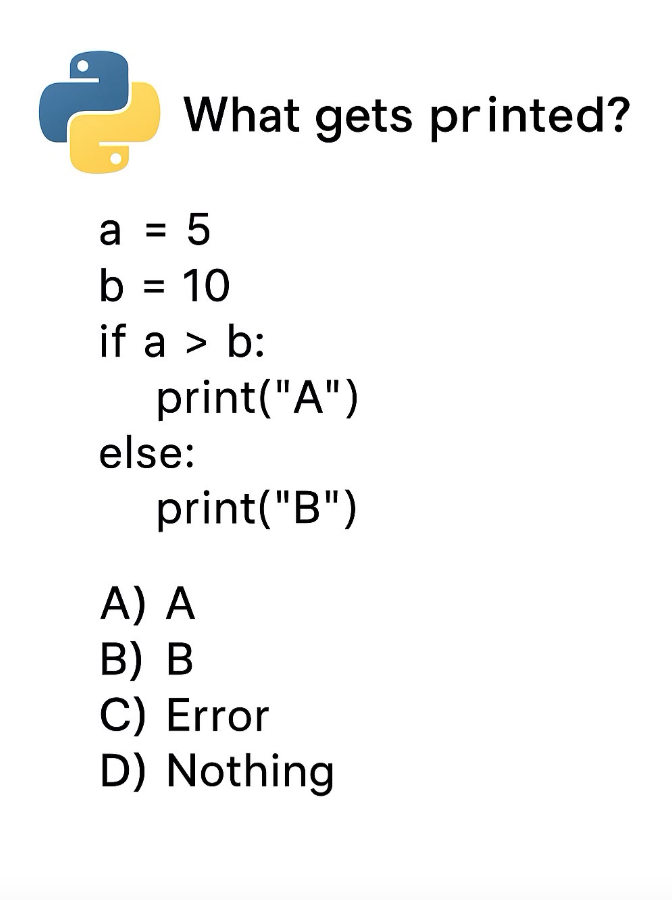
@PythonPr Answer: B) B
Simple logic:
› a = 5, b = 10
› Is 5 > 10? No (False)
› Condition fails → else block runs
› Prints "B"
For beginners: if condition is False, else block executes. Think: "if not this, then that"
@PythonPr B) B is the right answer.
Here simple use of if and else condition.
Value of a = 5 assignment opertaor
Value b = 10 assignment opertaor
5>10 this condition is false then answer B is correct.
@PythonPr Same thing happened to me when testing my app's logic: I was surprised how much time was spent debugging due to a simple assumption about variable scope. Commenting your code can be a lifesaver to avoid this kind of issue.