Kyrex

46 posts

Kyrex banner
Kyrex

Kyrex

@0xKyrex

AI Trends

เข้าร่วม Haziran 2026
11 กำลังติดตาม14 ผู้ติดตาม
Kyrex
Kyrex@0xKyrex·
@cipgerx your data, your hardware, your terms — that's the whole pitch
English
0
0
1
23
Cipgerx
Cipgerx@cipgerx·
@0xKyrex no cloud, no subscription, no data leak that’s huge
English
2
0
2
39
Kyrex รีทวีตแล้ว
Kyrex
Kyrex@0xKyrex·
GOOGLE JUST PUT A FREE AI MODEL ON YOUR PHONE THAT RUNS WITHOUT INTERNET, WITHOUT AN API KEY AND WITHOUT SENDING YOUR DATA ANYWHERE it's called Google AI Edge Gallery and Gemma 4 is already inside it you download the app, the model runs on your phone's GPU — no cloud, no subscription, no connection required Gemma-4-E2B: 2.54GB on your device — answers questions, reasons through problems, runs Agent Skills for specialized tasks Ask Image: you take a photo of anything — a Japanese restaurant menu, a receipt, a document — and the model reads it, describes it and answers questions about it — all locally on your hardware Agent Skills: load different reasoning capabilities into the same model or create your own — the phone becomes a task-running machine that doesn't need to phone home Gemma-4-E4B: 3.61GB, more capable, same deal — no API costs, no data leaving the device most AI tools today: your data goes to a server, a company stores it, you pay monthly this: your data stays on your device, the model costs $0/month to run and works on a plane ChatGPT requires a connection — this works offline
English
3
10
16
596
Kyrex
Kyrex@0xKyrex·
@ZentrixHQ eyes forgive design mistakes, they never forgive wrong gravity
English
1
0
1
11
Zentrix⌚️
Zentrix⌚️@ZentrixHQ·
@0xKyrex the second part is the one that actually sells the shot — shape gets a pass from most viewers, weight doesn't, that's usually the tell
English
1
0
1
35
Zentrix⌚️
Zentrix⌚️@ZentrixHQ·
📖THE CHATGPT IMAGE 2 DETAIL THAT DECIDES IF YOUR SEEDANCE ROBOT LOOKS REAL The character looks finished until the moment it has to touch the ground. And here's how to fix it. Most people building a mechanical character in ChatGPT Image 2 stop at the turnaround. Neutral pose, back view, profile, folded state, deployed state, optic study — every angle covered, every detail rendered. On paper it looks complete. In Seedance, the moment that robot starts moving, something feels off, and it's rarely the design itself. The missing piece is ground contact. How the legs actually meet the surface. How weight shifts between tripod legs during a step. How dust, water, or debris reacts to that weight landing. Without a reference for this, Seedance has to guess the physics of contact, and it defaults to something that looks placed on top of the ground rather than standing on it. The character design can be flawless and still read as a render pasted into a live-action shot, because nothing in the reference set told the model how mass behaves. ▪ Turnaround covers shape and detail, not physics ▪ Ground contact reference shows how weight distributes across each leg ▪ Surface interaction — dust displacement, water ripples, debris shift — has to exist somewhere in the atlas before generation ▪ This matters more for non-human anatomy, since there's no learned intuition for how a tripod droid's weight moves compared to a human walk cycle The character sheet answers what the robot looks like. Ground contact answers what it weighs. Seedance only gets the second part right if someone actually gave it the reference. HOW TO FIX IT: Build the ground contact reference as a separate block in ChatGPT Image 2, before the robot ever enters Seedance. ▪ One frame, low angle, camera at leg level — shows how each leg meets the surface under the weight of the body ▪ Prompt focuses on contact, not design: "weight pressing into sand, slight depression under each leg, dust displaced outward from point of contact" ▪ Add a mid-motion variant — two legs bearing weight, third leg mid-lift, described explicitly: "two legs bearing full weight, third leg mid-lift, no ground contact" ▪ Match the surface to the location atlas — sand, water, lava each react to weight differently, and the reference needs to show that in advance ▪ If the scene involves liquid or dust, the surface reaction belongs in the same reference set, not generated separately CHEAT TIP: if there's any doubt Seedance will get the contact right, add a short line directly in the Seedance prompt — "weight settles into ground on each step, no floating contact" — instead of relying on the image reference alone. It won't replace the atlas, but it covers angles the reference didn't anticipate. The character sheet answers what the robot looks like. This is what makes it believable once it moves. 📥I'll share a few more secret techniques one of these days. 🔖Every step of this workflow is documented in the pinned article below.
Zentrix⌚️@ZentrixHQ

📖WHY SOME MULTI-SCENE CLIPS HOLD TOGETHER AND OTHERS FALL APART. SEEDANCE 2.0 + CHATGPT IMAGE 2 Three environments, one character, and a workflow that keeps them from drifting apart Most multi-location clips fall apart because the character changes shape between scenes. The face is close enough, the outfit is close enough, but nothing actually matches once the clips sit side by side. The people getting clean results aren't prompting harder per scene. They're locking the character once, then building a separate location atlas for every environment before a single clip gets generated. ▪ Character design sheet comes first — full turnaround, expressions, silhouette study, detail crops. This gets built once and reused across every scene, not regenerated per location ▪ Each location gets its own atlas — wide establishing shot, camera path diagram, lighting study, material swatches, environment-specific details like dust behavior or ember flow ▪ Camera path gets planned before generation, not decided in the Seedance prompt. An orbit diagram or push-in path drawn in advance keeps motion intentional instead of guessed ▪ Lighting stays location-specific but character-consistent — a red blade reads differently in desert daylight, open-field golden hour, and volcanic interior, but the character's silhouette and proportions never shift ▪ Material and color palette get fixed per location — sand, wildflower, lava rock each carry their own swatch reference so the environment doesn't drift between establishing shot and duel shot Where this breaks: Skipping the design sheet and regenerating the character fresh for each location. Small inconsistencies stack up fast, hair length, jacket detail, blade color, and by the third scene the audience can tell it's not the same person. The other common failure is writing one long Seedance prompt for the whole scene instead of anchoring each location with its own reference frame first. Seedance can only extend what the frame gives it. Without a locked character and a planned camera path, motion has nothing stable to build on. The gap between a good multi-location clip and a broken one isn't the render. It's everything decided before the render starts. 📥 Tomorrow's post covers how to keep lighting consistent when the same character crosses three completely different environments 🔖The article below has the complete guide — from zero to finished cinematic video.

English
3
3
29
1.4K
Kyrex
Kyrex@0xKyrex·
@ZentrixHQ what used to need an NLP team is now a conditional branch, the bar for "building software" just moved permanently
English
0
0
0
9
Zentrix⌚️
Zentrix⌚️@ZentrixHQ·
@0xKyrex the interesting part isn't the no-code angle, it's that tone-based routing used to require a real NLP pipeline and now sits behind a single conditional step — that's the actual shift in what counts as "building software"
English
1
0
1
34
Kyrex รีทวีตแล้ว
Kyrex
Kyrex@0xKyrex·
GOOGLE JUST LET YOU BUILD AI AGENTS INSIDE GMAIL IN MINUTES — NO CODE, NO TOOLS, NOTHING TO INSTALL you open Workspace Studio, describe what you want in one sentence and it builds the flow the demo: an agent that watches every incoming email and checks the tone — if it's negative it triggers a completely different response path than a neutral one step 1: when I get an email → step 2: extract the content → step 3: check tone → step 4: route based on result no Zapier, no Make, no Python — just a trigger, a condition and an action after meetings it automatically generates a summary and sends it to everyone who attended daily briefing: every morning it pulls your unread emails, filters what actually needs your attention and delivers a clean action list the templates are already built: label emails by priority, notify you about urgent messages, auto-add attachments to Drive, watch for keywords across your inbox this runs inside Gmail — not a third-party app sitting on top of it most people are still opening every email manually and deciding what matters the agent does that part for you before you even open the tab
English
4
5
11
439
Cipgerx
Cipgerx@cipgerx·
@0xKyrex exactly, the window opens before everyone notices
English
1
0
2
30
Cipgerx
Cipgerx@cipgerx·
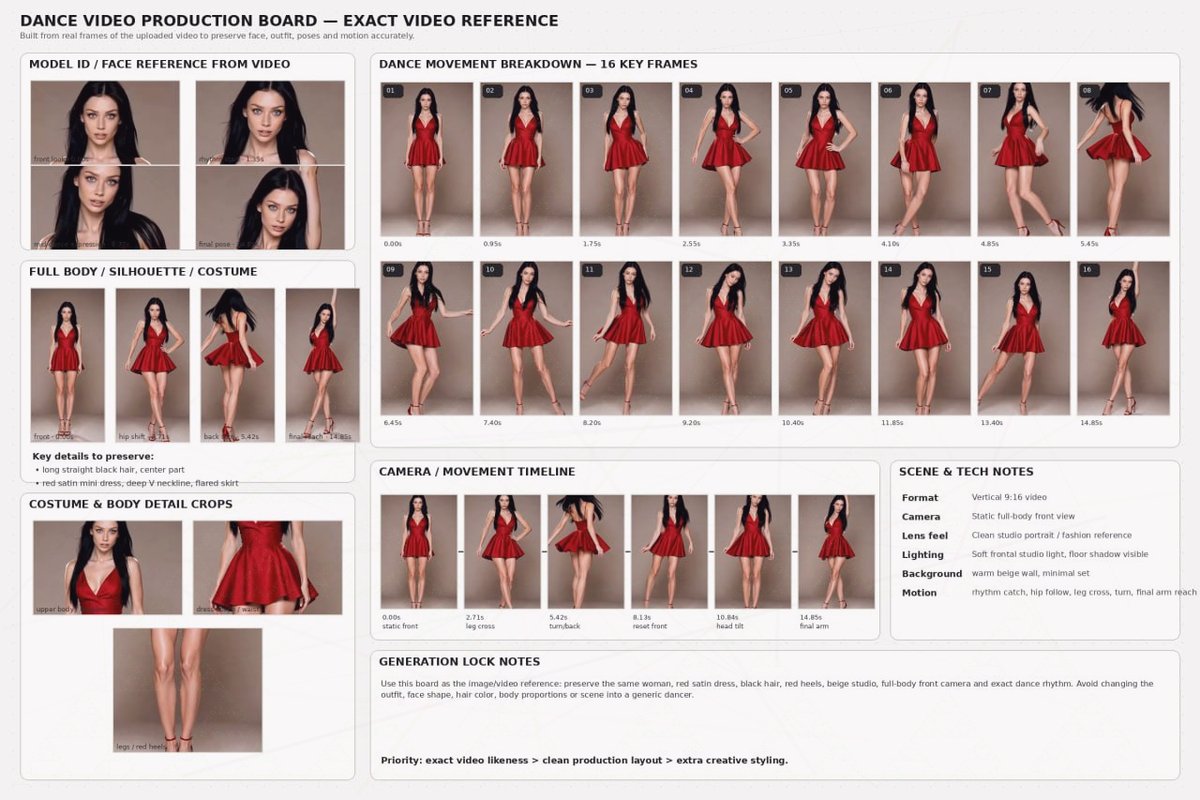
THE EASIEST WAY TO MISS MONEY IN AI IS TO CALL THIS “JUST CONTENT” The music starts She catches the beat The shoulders move first The hips follow The footwork stays clean Every frame connects You wait for the stiff AI moment It never comes💃 That is why this clip matters Not because AI made another dance video Because realistic human motion used to require dancers Motion capture Animators Studios Weeks of work Now the expensive part is becoming software That is where the money starts moving💰 Not in making random AI dance clips In removing the expensive work that used to sit behind them While the feed laughs at the video, someone else is asking the question that actually matters: What did this just make cheaper? That is what I track here Small AI shifts that turn into lower costs, leverage and new businesses before they become obvious🤯 The people making money from AI are rarely watching the output They are watching what the output just made unnecessary🎬
Cipgerx tweet media
Cipgerx@cipgerx

x.com/i/article/2071…

English
5
2
20
1.4K
Kyrex
Kyrex@0xKyrex·
@Nyrofomo 1 photo, 500 assets, $5, 2 hours — the creative agency invoice just became a workflow
English
0
0
1
6
Nyro
Nyro@Nyrofomo·
1 photo. 7 tools. 500+ assets. 2 hours. $5 total cost. That's the creative agency model destroyed in one afternoon. No photographer. No editor. No studio. No invoice. No waiting 3 weeks. Just a workflow that 99% of creators don't know exists yet. Full guide in the article below. 🔖 Save this. Follow @Nyrofomo.
Nyro@Nyrofomo

x.com/i/article/2072…

English
2
0
3
19
Kyrex
Kyrex@0xKyrex·
@ZentrixHQ the prompt becomes the smallest part once the reference work is done
English
1
0
1
7
Zentrix⌚️
Zentrix⌚️@ZentrixHQ·
@0xKyrex that's the whole thing in one line — once the character sheet and location atlas exist, the seedance prompt stops doing the heavy lifting and just describes the delta between beats
English
1
0
0
48
Zentrix⌚️
Zentrix⌚️@ZentrixHQ·
📖WHY SOME MULTI-SCENE CLIPS HOLD TOGETHER AND OTHERS FALL APART. SEEDANCE 2.0 + CHATGPT IMAGE 2 Three environments, one character, and a workflow that keeps them from drifting apart Most multi-location clips fall apart because the character changes shape between scenes. The face is close enough, the outfit is close enough, but nothing actually matches once the clips sit side by side. The people getting clean results aren't prompting harder per scene. They're locking the character once, then building a separate location atlas for every environment before a single clip gets generated. ▪ Character design sheet comes first — full turnaround, expressions, silhouette study, detail crops. This gets built once and reused across every scene, not regenerated per location ▪ Each location gets its own atlas — wide establishing shot, camera path diagram, lighting study, material swatches, environment-specific details like dust behavior or ember flow ▪ Camera path gets planned before generation, not decided in the Seedance prompt. An orbit diagram or push-in path drawn in advance keeps motion intentional instead of guessed ▪ Lighting stays location-specific but character-consistent — a red blade reads differently in desert daylight, open-field golden hour, and volcanic interior, but the character's silhouette and proportions never shift ▪ Material and color palette get fixed per location — sand, wildflower, lava rock each carry their own swatch reference so the environment doesn't drift between establishing shot and duel shot Where this breaks: Skipping the design sheet and regenerating the character fresh for each location. Small inconsistencies stack up fast, hair length, jacket detail, blade color, and by the third scene the audience can tell it's not the same person. The other common failure is writing one long Seedance prompt for the whole scene instead of anchoring each location with its own reference frame first. Seedance can only extend what the frame gives it. Without a locked character and a planned camera path, motion has nothing stable to build on. The gap between a good multi-location clip and a broken one isn't the render. It's everything decided before the render starts. 📥 Tomorrow's post covers how to keep lighting consistent when the same character crosses three completely different environments 🔖The article below has the complete guide — from zero to finished cinematic video.
Zentrix⌚️@ZentrixHQ

x.com/i/article/2069…

English
7
3
30
3.3K
Kyrex
Kyrex@0xKyrex·
@ami10iv stopped giving AI tasks, started giving it goals! the controller agent doing the rest is the part nobody talks about
English
0
0
0
16
ami
ami@ami10iv·
A 23-YEAR-OLD FROM BERLIN MADE $2,000 FROM ONE PROJECT, A DEVELOPER WOULD HAVE CHARGED $15,000 AND THREE WEEKS, HER SYSTEM DID IT IN ONE DAY. she did not hire a team, did not buy a more expensive plan, did not find some secret tool. she changed one thing. stopped giving AI individual tasks and started giving AI goals. at 0:21 the moment most people miss. the most important agent is not the one doing the work. it is the controller, the agent that decides what every other agent should do, checks the output, retries what failed and rewrites the plan when something goes wrong. most people use AI like an expensive search engine, gave one task, got one answer, did the rest themselves. the right workflow is different. you give the system a goal, one agent plans, others build, research and test in parallel, the controller looks at the result and decides what comes next. you stop doing every task yourself. you manage the system that does. and that is the difference between someone who makes $2,000 a month executing tasks and someone who makes $2,000 from one sale managing systems. follow, i show how to build a controller agent like this from scratch.
ami@ami10iv

x.com/i/article/2072…

English
9
1
17
229
Kyrex
Kyrex@0xKyrex·
@ZentrixHQ the best tool is the one you stop noticing
English
0
0
0
7
Zentrix⌚️
Zentrix⌚️@ZentrixHQ·
@0xKyrex The biggest shift isn’t the model - it’s AI living where work already happens. The best agents disappear into your workflow instead of becoming another app to open
English
1
0
2
38
Kyrex
Kyrex@0xKyrex·
GOOGLE HAS JUST LAUNCHED AN AI AGENT INSIDE WORKSPACE, AND IT’S CHANGING EVERYTHING YOU DO EVERY MORNING It’s not a standalone tool—it’s an agent that lives inside Gmail, Drive, Docs, and Calendar all at once You describe the task in a single sentence: “Every morning, summarize new emails and send me a list of action items” The agent builds the workflow on its own: when an email arrives → it extracts the gist → checks the tone → if it’s negative — a separate step No code required—you simply describe the logic, and Workspace Studio turns it into automation Before a meeting, the agent pulls up your notes and sends you a brief—you walk into the call already prepared HR teams are already using it for recruiting: an email with a resume arrives → the agent screens the candidate → schedules an interview → adds it to the calendar themselves Google Drive: new files → the agent sorts them into folders—invoices in one place, contracts in another Before, this required Zapier, Make, and someone to set everything up Now—just one sentence in Workspace Studio Save this before next Monday
English
3
4
13
446
Kyrex
Kyrex@0xKyrex·
@Nyrofomo $50 in tools printing $8k/month solo, the math is just different now
English
0
0
1
6
Nyro
Nyro@Nyrofomo·
$50/month in AI tools. $8,000/month from one client. 3 days of work per week. No team. No studio. No agency. Just 7 tools and the right workflow. While agencies send $50K invoices, one person with a laptop is delivering 10x more content in 10% of the time. The full stack is in the article below. Every tool named. Every step explained. 🔖 Save this - you will need it. Follow @Nyrofomo for the next guide.
Nyro@Nyrofomo

x.com/i/article/2072…

English
3
1
5
60
Kyrex
Kyrex@0xKyrex·
@ami10iv read the thread, caught the decision, started — nobody tagged it once
English
0
0
0
76
ami
ami@ami10iv·
ANTHROPIC QUIETLY GAVE CLAUDE ITS OWN ACCOUNT IN YOUR TEAM'S SLACK. IT IS NO LONGER YOUR ASSISTANT. IT IS A NEW TEAM MEMBER. at 0:38 he shows the moment that changes everything. the team is discussing a task in the thread, people are still typing, still debating, still not done and claude has already picked up the task. no prompt, no request, no one switching to a separate window to tell claude what needs to be done. it was just reading the channel, understood the team had reached a decision and started. this is claude tag, a new model where claude lives inside a team channel as a separate member with its own permissions, not a bot tied to a specific person. three reasons this is different from everything before: does the work in real time - sees the decision in the discussion and picks up the task immediately, the team does not wait for someone to manually move it to another tool. one shared brain - not five separate claudes each with their own context, one that sees the tasks, decisions and discussions of the whole team simultaneously. never logs off - while the team sleeps claude holds the context, prepares documents, keeps track of everything that happened in the channel. this is not a better assistant, this is the first AI that got an official seat in the team structure. follow, i show how to set this up and what it changes about working with claude.
rvaniaaa@rvaniaaaa

x.com/i/article/2071…

English
10
15
101
11.7K
Kyrex
Kyrex@0xKyrex·
@Di_Krass_ the part about underselling it on simple tasks is real — most people never give it the hard problems it was actually built for
English
1
0
1
15