cat รีทวีตแล้ว

cat
11.6K posts


서울남부지검 금융·증권범죄합동수사부는 24일 자본시장법상 사기적 부정거래 혐의로 방 의장에게 신청된 구속영장을 경찰에 되돌려보냈다. 검찰은 "현 단계에서 구속을 필요로 하는 사유 등에 대한 소명이 부족하다고 판단해 보완 수사를 요구했다"라고 밝혔다. 등록 2026-04-24 17:40 yna.co.kr/view/AKR202604…


El hecho de que cancelaran la solicitud de arrestro contra bang pd por "explicación insuficiente" cuando se fue con 190mil mill de wones (aprox 129mill de dolares) de un acuerdo secreto de reparto de ganancias. La policía d corea es un asco.

- n.news.naver.com/mnews/article/… for those who dont know, the current govt is working (for some time now) to abolish the supplementary investigation by the prosecution order so things like this doesn't happen

“The blade of power that boomeranged back”… Prosecution Service heads into history after 78 years hani.co.kr/arti/society/s… Reporters: Kim Ji-eun, Kwak Jin-san (250929) - Amendment to the Government Organization Act passed The Prosecution Service will effectively be dissolved by September next year—78 years after it was established alongside the founding of the government in 1948. Over the decades, it expanded its power by investigating high-level corruption and abuse of authority, but recurring controversies over the fairness of its investigations whenever administrations changed ultimately led to its downfall. Critics say it failed to control the power it accumulated. Former Prosecutors General have already signaled plans to file constitutional challenges, and backlash continues. Within the prosecution, there are also calls to minimize public harm—such as gaps in handling criminal cases—through follow-up measures. On the 26th, the National Assembly passed an amendment to the Government Organization Act, led by the ruling Democratic Party, which includes the abolition of the Prosecution Service. After a one-year grace period, it will be split into two bodies: the Public Prosecution Office (under the Ministry of Justice), responsible for indictments, and the Serious Crimes Investigation Office (under the Ministry of the Interior and Safety), responsible for investigations. The origins of the prosecution were quite different from its current structure. After liberation in August 1945, during the U.S. military government period, prosecutors did not have an independent system and operated as part of the courts. With the enactment of the Prosecutors’ Office Act on August 2, 1948, it became an independent organization. On October 31 of that year, Kwon Seung-yeol became the first Prosecutor General, and up to the 46th Prosecutor General, Shim Woo-jung, a total of 46 individuals have led the institution. In 1988, a fixed two-year term for the Prosecutor General was introduced to ensure independence from political pressure—but ironically, from the 1990s onward, controversies over political neutrality became frequent. At the center of this was the Supreme Prosecutors’ Office Central Investigation Division, often called the Prosecutor General’s direct task force. Though provisions for a central investigative body existed as early as 1949, it was formally launched in 1961. Renamed several times, it became the Central Investigation Division in 1981 under the Chun Doo-hwan administration, serving as the hub for investigating high-level corruption. This division handled major corruption cases involving politicians and conglomerates that local prosecutors struggled to manage. Landmark cases in modern Korean history—such as the Jang Young-ja/Lee Cheol-hee financial fraud case (1982), Roh Tae-woo slush fund case (1995), Hanbo corruption scandal (1997), corruption involving President Kim Young-sam’s son Kim Hyun-chul (1997), and the 2004 presidential campaign funding probe—were all led by this unit. The division’s reputation as the “blade of justice” was a double-edged sword. As prosecutorial power over investigation and indictment grew, so did criticism that it functioned as a “tool of the regime.” Cases frequently raised concerns about compromised independence and fairness depending on political interests, earning the label “politicized prosecution.” An informal personnel system—where elite prosecutors handling political cases were promoted for aligning investigations with those in power—only worsened this perception. The investigation into former President Roh Moo-hyun, which ended in his tragic death in 2009, became a direct trigger for prosecution reform. Amid accusations of “political retaliation,” the Central Investigation Division that led the probe was disbanded in 2013 under the Park Geun-hye administration. Around this time, a broader consensus formed among politicians and civil society that the concentration of both investigative and prosecutorial powers enabled abuse. During Prosecutor General Yoon Suk Yeol’s tenure, criticism intensified further when the prosecution mobilized special units to investigate then–Justice Minister Cho Kuk’s family, with accusations of excessive investigation fueling public backlash. Under the Yoon Suk Yeol administration—where a former Prosecutor General became president—the prosecution was seen as openly conducting power-aligned investigations. Its sweeping probes into then-opposition leader Lee Jae-myung were criticized as retaliatory and humiliating. In contrast, the investigation into First Lady Kim Keon-hee over alleged stock manipulation in the Deutsche Motors case ended in a decision not to indict, despite controversial preferential treatment such as off-site questioning. Ultimately, critics argue, the prosecution itself built the justification for reform, and under the Lee Jae-myung administration, it now faces abolition. Given the scale of change to the criminal justice system, a prosecution reform task force under the Prime Minister’s Office will spend the next year preparing follow-up measures. This includes transferring duties from the current prosecution to the new agencies, defining their roles, allocating personnel, and coordinating authority. A key issue is how much investigative power prosecutors in the new Public Prosecution Office will retain. Discussions are ongoing over supplementary investigation authority and requests—balancing oversight of police and the new investigative agency while preventing abuse through unrelated probes. There is also a possibility that the constitutionality of abolishing the Prosecution Service will be challenged in the Constitutional Court. Former justice ministers and prosecutors general issued a joint statement on the 28th, calling the move “an abuse of legislative power that undermines constitutional values,” and vowed to pursue all legal means, including constitutional complaints. Frontline prosecutors, though subdued in mood, emphasized the need for careful follow-up discussions. One prosecutor in the Seoul metropolitan area said, “Even during the legislative process, I hope ways to restore a proper system are discussed.” Another senior prosecutor added, “If there were wrongdoings, those responsible should be held accountable—but there are concerns that under the new system, ordinary citizens could end up bearing the consequences.”


The prosecution has rejected police request for an arrest warrant against Bang Sihyuk, citing insufficient explanation. m.entertain.naver.com/now/article/31…


This just shows you newjeans lost because of power and corruption like even the police couldn’t put him in jail and yall expect the court to rule in favor of five young women against a multibillion dollar company in a country that’s known for favoring rich people and men?

[속보] 검찰 "경찰, 방시혁 구속 필요 사유 등 소명 부족" yna.co.kr/view/AKR202604…


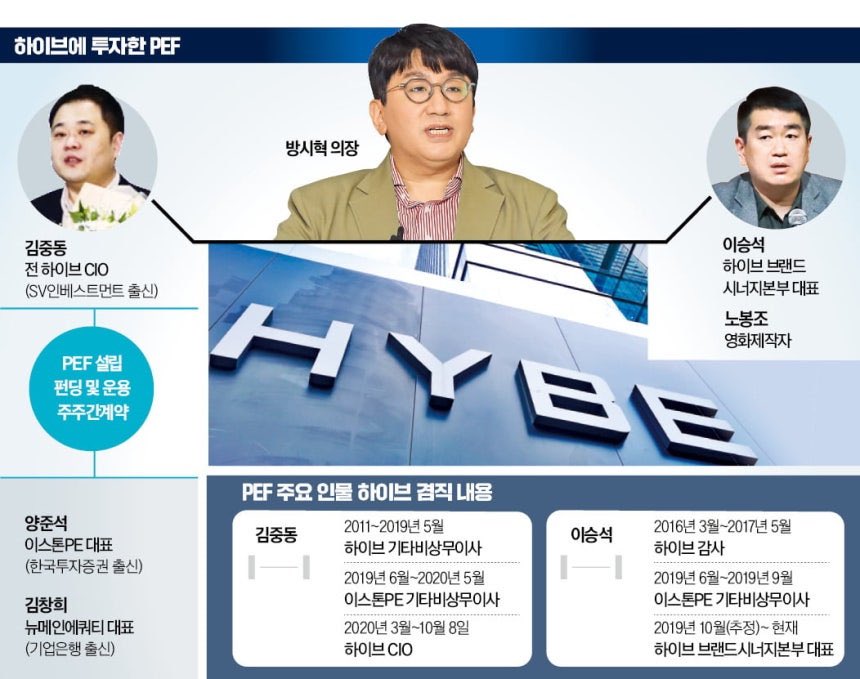
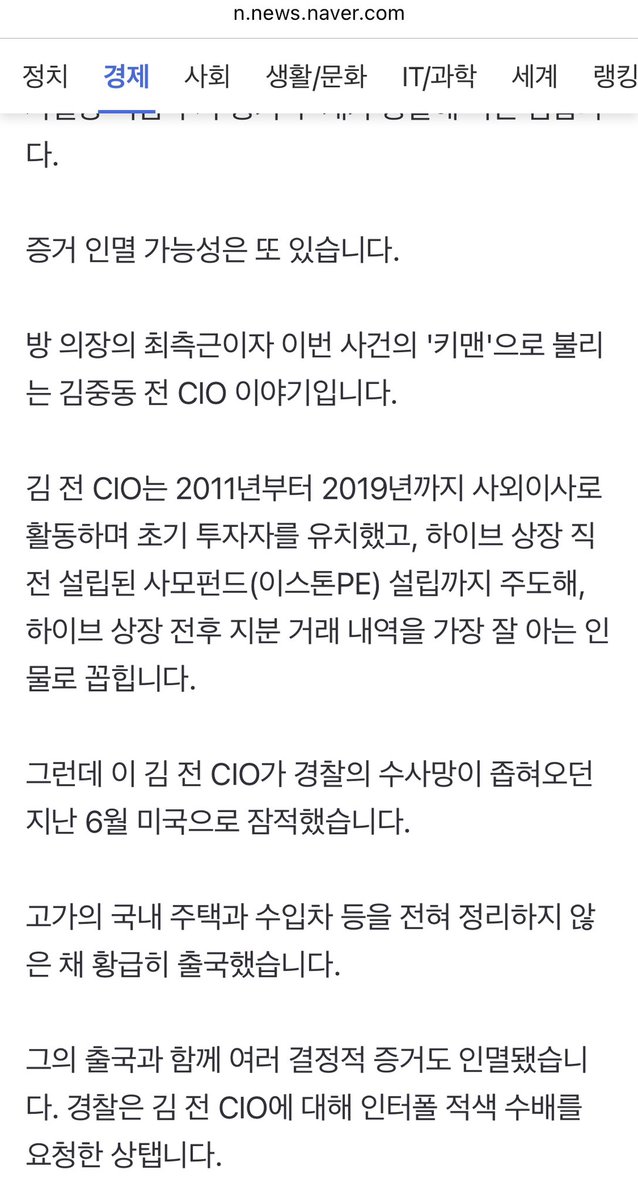
@juantokki They will arrest Bang to bring back former CIO Kim Joong-dong cause his disappearance is the turning point of this case
Prosecution rejects arrest warrant for HYBE chairman #BangSiHyuk, citing insufficient grounds allkpop.com/article/2026/0…

하이브 상장 과정에서 기존 주주들을 속여 수천억원대 부당이득을 챙긴 혐의를 받는 방시혁 의장에 대한 구속영장을 검찰이 반려했습니다. hani.co.kr/arti/society/s…
Breaking: Seoul prosecution rejects arrest warrant request for HYBE Chairman Bang Si-Hyuk Seoul Southern District Prosecutors' Office says it determined that there was "insufficient explanation that would justify detention at this stage and requested supplementary investigation"

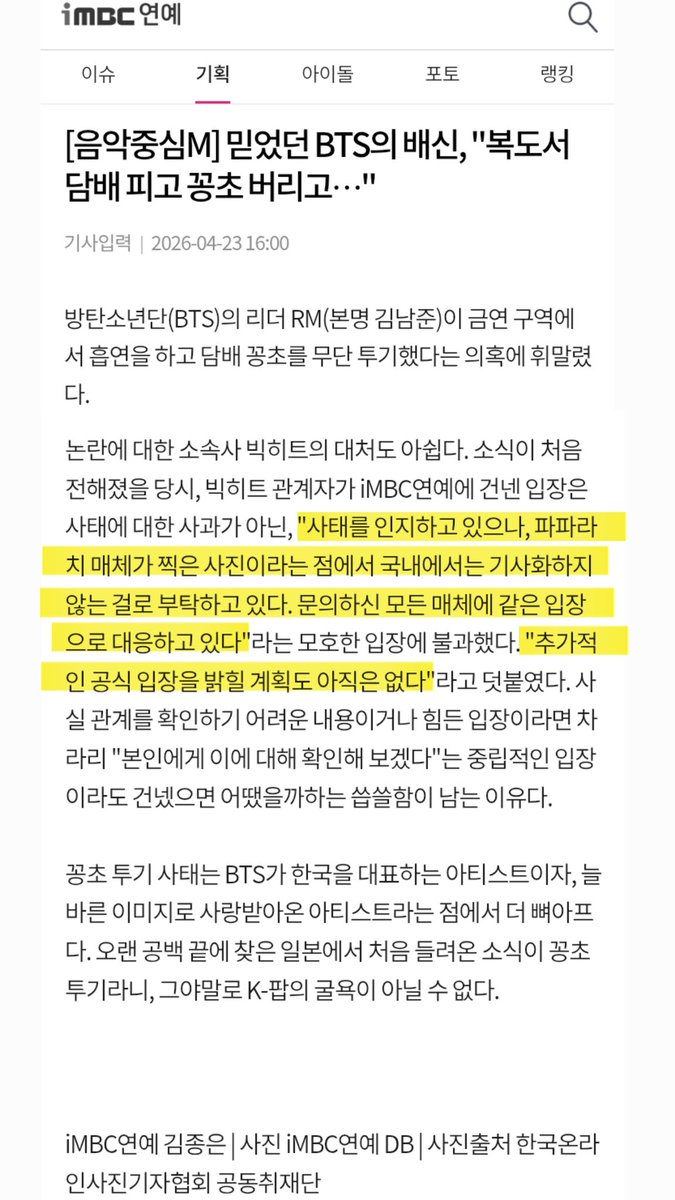
오늘 오전 8시 이후로 기사 많이 났네요 최초(?) 보도한 스포츠조선은 연예면에, 뉴스1 사회면을 시작으로 머니투데이 중앙일보 등등, 유투브 뉴스 영상도..