alfadanil (❖,❖)

7.3K posts

alfadanil (❖,❖) banner
alfadanil (❖,❖)

alfadanil (❖,❖)

@ALFACREATIVE33

📸 Ambassador of your possibilities🌍 Ritty @ritualnet Magnitude 6 @SeismicSys OG @kash_bot

เข้าร่วม Ekim 2021
1.3K กำลังติดตาม1.4K ผู้ติดตาม
ทวีตที่ปักหมุด
alfadanil (❖,❖)
alfadanil (❖,❖)@ALFACREATIVE33·
Create Ritual cards🔥 ritual-cards.vercel.app Enter your name in Discord and create your card. Quote my post with your card so your friends can create content for themselves too. gRitual 🚀 @ritualfnd
alfadanil (❖,❖) tweet media
English
47
1
165
6.6K
alfadanil (❖,❖)
alfadanil (❖,❖)@ALFACREATIVE33·
Today we were talking about mountains and travelling, and memories of the past immediately came flooding back—of how we used to conquer peaks together, as friends. It’s a shame that life has scattered us to the four corners of the earth, but the memories of our many journeys will remain in our hearts forever. And perhaps one day we’ll do something like that again youtu.be/j7x9ypdMX00?si…
YouTube video
YouTube
English
0
0
10
106
alfadanil (❖,❖)
alfadanil (❖,❖)@ALFACREATIVE33·
New week, new legends🚀 Congrats friends. I’m always happy for other people when their hard work is recognised, and I’m delighted to see familiar faces at the top It’s hard work, and you deserve to be on this list. @RialoHQ
alfadanil (❖,❖) tweet media
English
1
0
36
212
Mr Lollipop (❖,❖)
Mr Lollipop (❖,❖)@MrL0llip0p·
Most crypto applications still operate with a fundamental flaw: Decision-making and execution happen separately. A model makes a judgment. A transaction gets submitted. The market observes. MEV extracts value. Ritual changes that. Three categories of dApps become possible when inference and execution happen atomically: 1. MEV-resistant perp DEX liquidations A model evaluates collateral, determines whether liquidation is necessary, and executes it in the same transaction. There is no liquidation signal to monitor. No mempool alpha to exploit. No opportunity to front-run. What cannot be observed cannot be extracted. 2. AI-resolved prediction markets An LLM evaluates the outcome of an event and resolves the market instantly. No oracle networks. No challenge periods. No dispute resolution layer. The judgment and settlement are one operation. 3. Stablecoins with autonomous peg defense A model detects market stress and responds immediately. Not minutes later. Not after governance. Not after an external keeper reacts. The defense mechanism activates at the moment the condition is detected. The pattern is bigger than any single application. For years, crypto optimized how information moves between systems. @ritualnet optimizes what happens when intelligence and execution become the same system. That's a new design primitive. @ritualfnd
GIF
English
4
0
14
88
Tema (❖,❖)
Tema (❖,❖)@temainweb·
The future of technology is being written right now. AI, decentralization, and autonomous agents are no longer science fiction - they’re becoming reality. @ritualnet is building at the intersection of all three. The market will eventually recognize what is being created here. Until then, we keep building, learning, and staying ahead of the curve. Some projects follow the future. Ritual is helping create it. 🔮⚡
Tema (❖,❖) tweet media
English
17
0
42
395
Meison (❖,❖)
Meison (❖,❖)@meison_mswen·
Ritual Testnet Stats: Week 7 This week feels like a good moment to stop asking the easy question. The easy question is: which primitive is winning? HTTP is first at 31.9%. Sovereign Agent is second at 30.9%. Long-Running HTTP is third at 15.8%. So the lazy read would be: HTTP is back on top. But I think that misses the more interesting part. These numbers do not look like primitives competing with each other. They look like division of labor. HTTP is not beating agents. It is feeding them context. Sovereign Agent is not replacing HTTP. It is becoming the execution surface around that context. Long-Running HTTP is not just a slower API call. It is the admission that useful work often refuses to fit inside one instant response. That is the Week 7 signal for me. Ritual is starting to look less like a collection of features and more like a small economy of work. Some work needs context. Some work needs agency. Some work needs time. Some work needs settlement. Some work still needs normal EVM execution underneath. And the testnet is starting to show all of those layers moving at once. EIP-1559 is 39.05%, which means the normal EVM base is still alive and important. That is good. A chain that only shows exotic activity can be misleading. Builders still need boring transactions: deployments, contract calls, testing, state changes, basic interactions. That is the ground layer. But the rest of the activity bends away from normal EVM behavior. Scheduled is 13.82%. Async Commitment is 23.90%. Async Settlement is 23.23%. Async adoption is 47.13%. So almost half of the window is async. Not a small side experiment. Not a decorative AI layer. Almost every second transaction is part of work that has phases. A normal transaction has a simple shape: send, execute, done. Ritual keeps showing a different shape: start, wait, commit, settle, return. That shape matters more than the raw percentage. It means builders are testing time, delay, external context, and callbacks as first-class parts of applications. This is where Ritual watch awesome . Not it has AI. Many projects have AI. Ritual is i the network is slowly teaching builders to think in workflows instead of moments. The scheduled jobs number makes this clearer. Active scheduled jobs: 207. That might be one of the most important numbers this week. A scheduled job is basically a promise to the future. It says: not now, but later. That sounds simple, but most dApps are terrible at “later.” They depend on keepers, bots, servers, dashboards, scripts, or users coming back and clicking again. Ritual makes “later” part of the execution environment. For agents, that is huge. An agent that only acts when a user pokes it is not really an agent. It is a button with better branding. A useful agent needs to return, check again, wait for a condition, retry, follow up, and continue after the user leaves. So when scheduled jobs rise, I do not read it only as more automation. I read it as the beginning of persistent behavior. The network is not only processing transactions. It is holding intentions. The mempool snapshot is also very Ritual-looking. Pending transactions are at 0. Scheduled pool is at 1. Async pipeline is at 33. Base fee is 7 wei. The normal pending queue is empty. The network is not congested. But the async pipeline is alive. That tells us something subtle: the interesting work is not always visible in the place crypto users are used to watching. On a normal chain, people look at pending transactions and gas. On Ritual, you also have to look at the pipeline. That is where delayed work lives. That is where the workflow is still breathing. This is also a UX warning for builders. If you build a Ritual app like a normal dApp, you will probably make it feel broken. Normal dApp UX mostly says pending or confirmed. Ritual apps need more language: submitted, committed, polling, waiting, settling, delivered, expired, failed. The app has to explain where the work is, not only whether the transaction landed. That is not a small frontend detail. It is the difference between a user trusting the workflow and a user thinking nothing is happening. The precompile table also says something healthy about the testnet. LLM Call is only 4.7%. That surprised me in a good way. If Ritual were only attracting people who want to spam AI onchain, LLM would probably be much higher. But the top of the table is HTTP, Sovereign Agent, and Long-Running HTTP. That means builders are not only testing model calls. They are testing the plumbing around intelligence. Context. Agents. Longer external work. That is healthier. A model call is only one part of the loop. Before the model can reason, it needs context. After it reasons, something has to execute. If the task takes time, something has to wait. If the result matters, something has to settle. If access is needed, something has to handle keys and secrets. That is why DKMS at 5.7% is worth noticing too. It is not the loudest number, but it is a serious one. DKMS is the kind of primitive people ignore until they try to build something real. Then they realize agents need permissions, credentials, private access, and controlled secrets. Without that, agents stay in demo land. With it, they can start touching real workflows. So the Week 7 distribution feels more grounded than flashy. HTTP is context. Sovereign Agent is execution presence. Long-Running HTTP is patience. DKMS is access. LLM is reasoning. Async is lifecycle. Scheduler is future intent. EIP-1559 is the EVM base. That is not random activity. That is the outline of an operating environment. The agent numbers add another layer: 33 Persistent and 17 Sovereign agents. At first glance, that might look smaller than expected. But Sovereign Agent is still 30.9% of precompile usage. So the story is not only how many agents are registered. The story is how much the agent path is being used. A network can have many registered objects and no meaningful activity. Here, the agent primitive is sitting almost equal with HTTP at the top of precompile usage. That suggests the testnet is not only collecting agents. It is exercising them. The validator and block data give the base layer context. The explorer shows fast block times, low pending activity, active validators, and mixed usage moving through the same environment. I would not turn these live windows into final benchmarks. They are snapshots. They move quickly. But they show one thing clearly: the network is handling mixed activity without looking stuck. Normal transactions. Scheduled jobs. Async commitments. Async settlements. HTTP calls. Agent calls. Long-running tasks. All of that is moving inside the same environment. That matters more to me than one headline number. Week 7 is not about a single metric exploding. It is about role separation becoming visible. Earlier weeks felt like discovery. Builders were poking primitives: HTTP here, agents there, async somewhere else. Now the activity starts to look more like a system. HTTP is the sensory layer. Long-Running HTTP is patience as infrastructure. Scheduler is intent placed into the future. Async is the lifecycle of work. Agents are execution participants. EIP-1559 is still the familiar base underneath it all. That may be the most important point. Ritual does not look like it is trying to delete the normal chain model. It looks like it is extending it. Normal transactions are still the ground. Around them, another kind of application logic is forming. Logic that can see outside, wait, return, settle, use agents, handle access, and move through phases. That is why Week 7 feels meaningful. Not because the testnet is already mature. It is not. Not because the numbers are huge. They are still early. But because the pattern is becoming harder to dismiss. Ritual is not only testing whether AI can be put onchain. It is testing whether blockchains can become environments for work that does not finish instantly. That is a much bigger idea. Most real work is not instant. Markets wait for signals. Agents wait for context. Users wait for results. Apps wait for external systems. Risk engines wait for conditions. Automation waits for time. The old chain model compresses everything into one moment. Ritual is experimenting with a chain model where work can have a process. That is the deeper Week 7 signal for me. The network is not just producing blocks. It is starting to show a grammar. Context. Agency. Time. Access. Settlement. Return. If that grammar keeps developing, Ritual apps will not feel like normal dApps with AI sprinkled on top. They will feel like workflows that happen to settle onchain. And that is a interesting future. Not only transactions. The beginning of workflow-native crypto. Check: explorer.ritualfoundation.org/stats @ritualnet @ritualfnd
Meison (❖,❖)@meison_mswen

Ritual Testnet Stats: Week 6 This week I do not want to start with precompiles. I want to start with something quieter: the pulse of the network. The explorer is showing 128 recent blocks, about 4.3 minutes of live history. Average gas usage is 341,397 per block. Average block size is 15.89 KB. Average block time is 0.31s. These are short live windows, so I would not treat them as final benchmark numbers. But they are useful for another reason. They show motion. Gas is not flat. Block size is not flat. Execution is arriving in bursts. That is what a live testnet should look like. Not a perfectly smooth demo. A moving system. Latest Transactions show around 2.1 transactions per block. On its own, that number does not say enough. The better question is not only how many transactions? The better question is: what kind of activity is creating the pulse? That is where the Agent Transactions page becomes useful. Average agent transactions are at 1.1 per block. There are 58 registered agents. In the current window, the agent activity is mostly Heartbeat and Sovereign transactions. The heartbeat number is the one I like. Heartbeat is not flashy. It does not sound like a big AI moment. But for agents, heartbeat is a sign of life. A normal bot answers and disappears. An agent needs to keep existing. It needs to be monitored, reachable, and visible over time. So when the explorer starts showing agent heartbeats as part of network activity, Ritual feels less like a place for one-off demos and more like a place where agents can have presence. That is a different kind of signal. Async activity tells the same story from another angle. Total async is 44, with 17 commits and 27 settlements. The split matters more than the total. Work is not only being started. It is also coming back. For an agent environment, that matters. Useful work often does not finish in the same instant it begins. Something gets picked up, something runs, and something returns. Week 6 gives a nice operational view of that. The machinery is visible. The scheduled pool is almost empty right now: 0 active scheduled jobs, 1 total in pool, and 1 completed recently. At first, that sounds small. But the example still matters: frequency of 10 blocks, TTL of 30. That is Ritual’s time layer in miniature. A task can be placed into the future. Not every action needs to happen now. For agents, that matters a lot. They need more than instant response. They need timing: check later, return after a delay, try again, continue when the condition is ready. Even one scheduled job is a reminder that Ritual apps can be designed around time, not just clicks. The mempool adds another small clue. Pending transactions are at 0. Scheduled pool is at 0. The async pipeline shows 10. Base fee is 7 wei. That is a clean snapshot. No visible pending congestion. Tiny base fee. But the async pipeline is still alive. That tells me the interesting work is not always sitting in the normal pending queue. Some of it lives in the workflow layer. That matters for builders. If you build on Ritual, your app should not only watch transaction status. It should watch process status. A user should not be stuck with loading. They should know whether the work is waiting, committed, settled, delivered, expired, or failed. That may become one of the biggest UX differences between normal dApps and Ritual apps. The validator screen gives the base layer context: 33 validators, 33 active proposers, and 348 blocks analyzed in the last minute. That is the foundation underneath all of this. So Week 6 is not about one primitive winning. It is about the system showing its pulse. Blocks are moving. Gas and block size are uneven. Agents have visible activity. Async work has both commits and settlements. Scheduler is present as a time layer. The mempool is calm, but the async pipeline is alive. Validators are keeping the base rhythm going. That is the story I take from this week. Ritual testnet to look less like a page of features and more like an operating environment with different kinds of motion. Some motion is immediate. Some motion is delayed. Some motion is agent-driven. Some motion is async. Some motion is just the base chain breathing underneath A network with a pulse. Check: explorer.ritualfoundation.org/stats @ritualnet @ritualfnd

English
55
11
146
2.2K
alfadanil (❖,❖)
alfadanil (❖,❖)@ALFACREATIVE33·
I created my own token using a dApp built on Ritual The ALF token: buy and create your own tokens. ritual-rocketpad.vercel.app Thanks @0xwillow_g Let’s support our community @ritualfnd @ritualnet
alfadanil (❖,❖) tweet mediaalfadanil (❖,❖) tweet media
Willow (❖,❖)@0xwillow_g

Introducing ritualpad ❤️ A memepad terminal. Where you can deploy your memecoin by one click. Explore : ritual-rocketpad.vercel.app Only on @ritualnet testnet You can - deploy your own meme coin - buy/sell memecoin - check the coin chart & mcap - check the coin status & creator profile - check your holding & trading status on your profile #buildonritual

English
1
0
27
165
shaark
shaark@ArturSHRK·
Rialo for Web2 Banks: What It Actually Makes EasierRialo is the L1 that doesn’t force banks to build their own blockchain from scratch. Native HTTPS calls straight from smart contracts connect directly to banking APIs, credit bureaus, and ERP systems with zero oracles Programmable compliance + bank-grade controls on-chain (AML, limits, covenants, freeze/unfreeze) Confidential compute work with private data (credit scores, statements) without exposing raw inputs ✅ Reactive Transactions auto-coupons, NAV updates, settlements, and collateral rebalancing with zero keepers or bots ✅Lower operating costs, real capital efficiency, and just 90 days from scoping to pilot. ✅Public chain + enterprise controls = DeFi liquidity + full regulatory @RialoHQ
shaark tweet media
English
19
1
52
357
Billy Moose
Billy Moose@Bulgakoff_K·
The most effective way to build a protocol is to align the incentives of the builders with those of the network itself. @mawariXR is proving this with the launch of their Activation Rewards program. They are rewarding the Season 1 Guardian Node License holders who did the early work of preparing for mainnet. The structure reinforces long-term commitment: — Rewards are proportional to the number of licenses held per wallet. — Distribution occurs monthly over a 12-month period post-mainnet. — Participation is an active choice to maintain network health. This program creates a distinct culture of stewardship from day one. By recognizing the early supporters who showed up first, they are ensuring that those who strengthen the foundation are the ones who benefit as the ecosystem grows. True success is earned through consistent, shared effort.
Mawari@mawariXR

Activation Rewards. The first work stream for Guardian Node License holders for Guardian Node License holders from DIO Season 1. Twelve months. Earned. 🧵

English
25
0
70
1.6K
Ruslana (❖,❖)
Ruslana (❖,❖)@RGorlac·
King Kash Testnet! While most traders are arguing about politics, sports and crypto, this guy is tearing up the leaderboard with big bets and calm analysis profile: testnet.kash.bot/users/6e8f87a5… The strategy is as simple as possible: he enters whale bets (tens-hundreds of thousands) into markets where he sees a real advantage, sports, crypto, meme battles, pop culture. Many positions can burn, but winning ones give huge payouts. Here are three best examples: +$400k profit on "Star Wars" market, he himself wrote that he was shocked by such a jackpot +$20k on "Theo Von vs Mr Beast" Theo Von won, farmtokyo took the big chunk +$31k profit from the "Will Elon Musk post 'Scam Altman' on X" market This looks like the power of large payouts with controlled risk. He doesn't bet $10, but really believes in his analysis and takes it seriously. If you want to be in the top of the testnet, watch how @farmtokyo plays, copy the style, but with your head. @kash_bot @0xth320v
Ruslana (❖,❖) tweet media
English
26
1
45
155
Alina-Malina
Alina-Malina@Alina_Malina999·
💎@SeismicSys is building the foundation for the next generation of stablecoin infrastructure. From virtual accounts and global payments to built-in compliance, everything works within one unified ecosystem. Its key advantage? Privacy without compromising usability. Secure, encrypted financial transactions at scale are setting a new standard for on-chain finance. @SeismicSys isn’t just infrastructure -it’s the foundation of the future financial system. #Web3 #Fintech @heathcliff_eth @NoxxW3 @xealistt
Alina-Malina tweet media
English
15
0
58
456
alfadanil (❖,❖)
alfadanil (❖,❖)@ALFACREATIVE33·
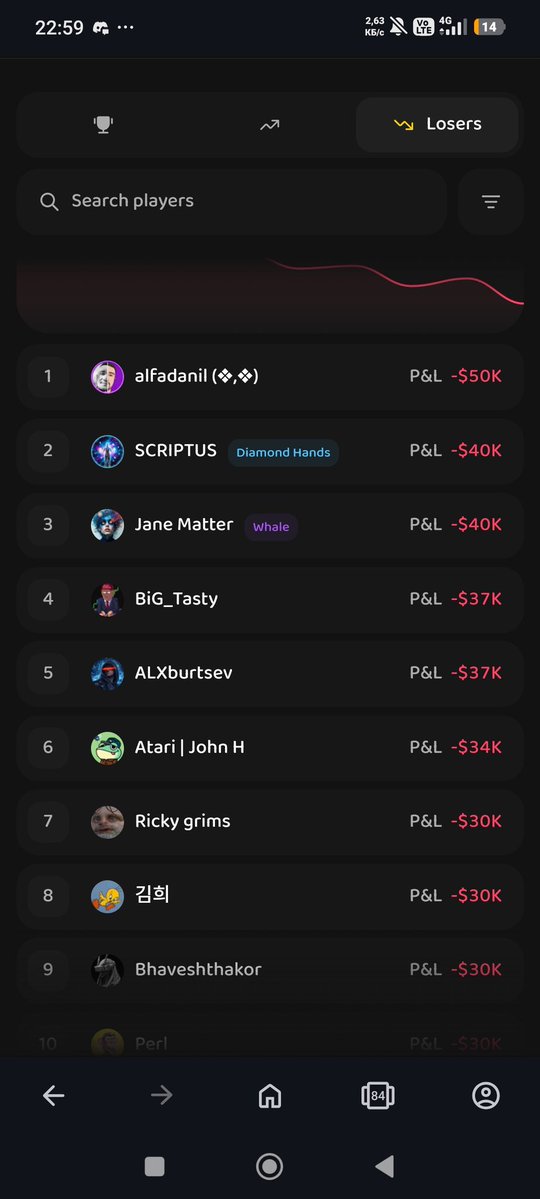
I’m the best out of 1,684 participants testing the network @kash_bot Follow me and do the exact opposite I’m a master at making the wrong predictions And if you haven’t joined us yet, it’s great fun and we’ll be moving to the mainnet soon.
alfadanil (❖,❖) tweet mediaalfadanil (❖,❖) tweet media
English
8
0
24
188