

Ari Mäkinen
4.2K posts
Ari Mäkinen
@AMakinen
Markkinoinnin generalisti. Koitan ajatella, nautin tekemisestä.
Espoo เข้าร่วม Kasım 2009
518 กำลังติดตาม409 ผู้ติดตาม

Ahaa, myös "hard enough" on saman tekstittäjän mielestä haastavaa.
Näin näkyy tämä kielenköyhdyttäjien taantumus käytännössä.
Kauniin kielemme sävyt ovat turhia, kun haasteilla voi korvata kaiken.
Suomi
Jaahas, taas näitä.
Yhdysvaltalainen käyttää difficult-sanaa tv:ssä.
Tekstittäjä on kääntänyt sen haastavaksi. 🤮
Suomi
@sarasalomaa Anttilan kulta aikaan kauppoja yleisesti oli enemmän keskustoissa.
Suomi

@AMakinen Noissa muissa en käy lainkaan, kun eivät ole keskustassa. Anttilaa sen sijaan oli aina ihan ytimessä.
Suomi
Anttilan paluu, se olisi suomalainen unelma 😍 peukut pystyyn!! yle.fi/a/74-20217432
Suomi
@jussivirkkala @villepeltola Minkälaisessa käytössä tämä on sinulla?
Suomi

@villepeltola Itselläni proshop.fi/Naeyttoe/16-Ar… ja yksi kosketusnäyttö
Suomi

Pitkään miettinyt testata näitä portable näyttöjä, jotka yleistyvät. Nyt meni tilaukseen. 144€ postimaksuineen.
tomshardware.com/monitors/porta…
Suomi
@JohannaKukka @pekkasauri Jos ei pysty kertomaan asiaa käyttämättä ammattitermejä, sivistyssanoja tai kikkailevaa kieltä, tuskin on sisäistänyt asiaa kovinkaan hyvin.
Suomi

Ihmiset, jotka lumoutuvat vakuuttavan kuuloisesta, mutta merkityksettömästä kielestä:
- kyseenalaistavat vähemmän omia käsityksiä
- ongelmanratkaisukyky on heikompi
- tunnistavat huonommin loogisia ristiriitoja
Nimenomainen ongelma myös tekoälyn kanssa.
hs.fi/visio/art-2000…
Suomi
@JariParantainen Iranilta loisto veto jakaa muut maat eri leireihin. Lisäksi tekevät vielä rahulia tolla moovilla.
Suomi
Iran kopioi Trumpille tyypillisiä kiristäjän menetelmiä.
"Jos haluatte joitain etuja, alkakaa latoa miljoonia tiskiin."
Shanaka Anslem Perera ⚡@shanaka86
BREAKING: The Strait of Hormuz is no longer closed. It is no longer open. It is something the world has never seen before: a permissioned corridor run by the Islamic Revolutionary Guard Corps, priced at $2 million per vessel, payable in yuan. Three ships transited in the last 24 hours. Three. Out of a pre-war average of 60 per day. Total throughput: 310,000 deadweight tonnes. Three percent of normal. Four hundred vessels are waiting outside the strait right now. One hundred and fifty tankers. One hundred and twenty bulk carriers. One hundred and thirty others. Waiting for permission from the IRGC Navy to enter a 5-nautical-mile channel between Larak and Qeshm islands inside Iranian territorial waters. This is how the gate works. A vessel operator contacts approved intermediaries with IRGC connections, submitting full documentation: IMO number, ownership chain, cargo manifest, destination, crew list. The intermediaries forward the package to the IRGC Navy’s Hormozgan Provincial Command for sanctions screening, cargo alignment checks that prioritise oil over all other commodities, and geopolitical vetting. The toll is approximately $2 million per tanker. For a VLCC carrying 2 million barrels, that is $1 per barrel. Preferred currency: yuan. If the vessel passes, the IRGC issues a clearance code and route instructions. Upon approach, VHF radio hail, AIS verification, patrol boat escort. One ship at a time. Through the narrowest channel of the most important waterway on Earth. Iranian crude is still flowing. Approximately 1.1 to 1.5 million barrels per day, mostly to China, at near pre-war levels. Iran’s own oil transits the strait it controls. The blockade applies to everyone else. Iran is simultaneously the gatekeeper and the primary beneficiary. The toll funds the IRGC. The IRGC maintains the gate. The gate generates the toll. The circle is self-sustaining. Now look at what is NOT transiting. Fertiliser. Gulf nations supply 49 percent of the world’s exported urea. Ammonia requires the natural gas that Qatar declared Force Majeure on and that Iranian strikes disrupted at South Pars. Effectively zero fertiliser vessels have received approval through the permissioned corridor. The IRGC is prioritising oil because oil generates revenue. Fertiliser does not. The molecules that feed four billion people are trapped behind a gate that only opens for molecules that fund the gatekeeper. The yuan preference is the structural shift that outlasts the war. Every tanker that pays in yuan instead of dollars establishes a precedent. Every precedent weakens the petrodollar architecture that has governed energy trade since 1974. The IRGC is not just blocking a strait. It is building an alternative payment rail under live fire. The $2 million toll in yuan is not a fee. It is a proof of concept for a post-dollar energy settlement system, stress-tested in the most extreme conditions imaginable: a three-front war with the world’s largest military. The world’s central banks are trapped by the same strait: the Fed cannot cut, the ECB is hiking, the BOJ is tightening. Six countries are rationing fuel. Japan’s 10-year yield hit a 27-year high. Slovenia has QR codes at the pump. South Korea is barring government vehicles one day per week. And behind all of it, 400 ships wait outside a 5-nautical-mile channel for a clearance code from the IRGC Navy, payable in a currency that is not the dollar. Twenty percent of the world’s oil supply. Controlled by a VHF radio call and a yuan transfer. The strait did not close. It changed ownership. open.substack.com/pub/shanakaans…
Suomi
@jounituovinen Oikea suunta.
Taisi olla Markku Heikura, Verohallinnon pääjohtaja, joka sanoi, että AWS jne. ovat teknologisesti niin edellä, että vaihtoehtoja ei juuri ole.
Olisiko T:n 2. kauden touhut luomassa markkinaa Eurooppalaisille palveluille?
Suomi

@winninghelix Samaan päätymässä, mutta ketkä ovat he jotka ymmärtävät ja voivat tehdä näin?
Suomi

Tulevaisuudessa maailmaa johtavat he, jotka eivät anna ajatteluaan tekoälylle.
Ilhan Niaz@IlhanNiaz
“Cognitive Surrender” - a new study argues that use of AI leads to suspension of human reasoning, not its augmentation. The implication being that over time people will lose their reasoning ability & use AI as its substitute. Download the paper for free here, excerpts & reference below: papers.ssrn.com/sol3/papers.cf… ——- “As people increasingly integrate AI into their decision-making processes, they interact and engage with a cognitive system that can reshape the functions of both intuition and deliberation. For example, System 3 can replace System 1 by offering confident, ready-made answers that preempt the need for intuitive reasoning.” (page 15 of pdf) “As AI systems increasingly participate in human cognition, a new phenomenon emerges that cannot be explained by traditional concepts such as cognitive offloading or automation bias alone. We define cognitive surrender as the behavioral and motivational tendency to defer judgment, effort, and responsibility to System 3’s output, particularly when that output is delivered fluently, confidently, or with minimal friction. Unlike cognitive offloading, which is typically strategic and task-specific (e.g., using GPS to navigate), cognitive surrender entails a deeper transfer of agency.” (Page 17) “Access to System 3 outputs significantly influenced accuracy, increasing correct answers when AI was correct, and decreasing accuracy when incorrect. Access to System 3 made decision-makers more confident, despite approximately half of System 3 outputs being incorrect. Finally, users who trust AI more and have lower NFC and fluid IQ were more likely to display cognitive surrender. Whether System 3 was accurate or faulty, its presence displaced internal reasoning.” (Page 27) “Cognitive surrender was robust across studies.” (Page 42) “Across our studies, we observe that when System 3 was available, people readily engaged it and frequently adopted its answers. This shift reflects a reallocation of cognitive control rather than mere effort saving. System 3’s fluent, confident outputs are treated as epistemically authoritative, lowering the threshold for scrutiny and attenuating the metacognitive signals that would ordinarily route a response to deliberation. In the case of cognitive surrender, there is a shift in the locus of control, with an external system (System 3) occupying the default position.” (Page 45) “Time constraints clarify why surrender arises so readily, while incentives and feedback show that surrender is malleable. When decision time is scarce, the internal monitor detecting conflict and recruiting deliberation is less likely to trigger. Hence, the low-friction path to defer to external cognition becomes attractive.” (Page 46) “Tri-System Theory is not a warning about AI’s dangers but a recognition of System 3’s psychological presence. We do not merely use AI; we think with it. In doing so, we must ask new questions: What happens when our judgments are shaped by minds not our own? What becomes of intuition and effort when a generative, artificial partner stands ready to answer? How do we preserve agency, reflection, and autonomy in a world where users engage in cognitive surrender?”
Suomi
@PToveri ”Kanniaisen mukaan Suomen Akatemian tulisi suunnata rahoitusta selkeämmin tutkimukseen, joka liittyy Suomen kannalta keskeisiin kysymyksiin”
Kun tämä nostetaan esiin näin, sehän on lähes itsestäänselvää.
Suomi
Hyvä puheenvuoro.
#b9241f97" target="_blank" rel="nofollow noopener">verkkouutiset.fi/a/tutkijat-val…
Suomi
@jaanapjs @Tommi_Kinnunen Välillä uskon, että tälle tulee myös vastavoima. Jossain kohdin geneerinen ja ontto sisältö paljastuu tehottomaksi, ja hyvä suunnittelu nostaa arvoaan. Ainakin siellä missä siitä voidaan maksaa. Tehokkuus on vain illuusio, eli turhaa tekemistä ilman riittävää laatua ja tuloksia.
Suomi

@Tommi_Kinnunen Tekoäly tulee tyhmentämään ihmisiä, näen töissä miten markkinointi käyttää AI ja luovuus on kadonnut, en pidä
Suomi
Voi sun perkeleen perkele, kun niin moni opiskelija tekee kaiken työn tekoälyllä! Oppimista ei tunnu juurikaan tapahtuvan, kun minkään eteen ei jakseta nähdä vaivaa.
Nimim. Leipääntynyt ope
Suomi
@Tommi_Kinnunen Tähän pitäisi löytyä ratkaisu. Eikös asiasta ole jo ihan relevanttia tutkimustakin olemassa? Oma ajattelu ja kirjoittaminen todella tärkeää.
Suomi

@Jrvinen_J Autoexec.batin ja Config.sysin konffaaminen oli leipälajini, kuten myös muistin optimointi. Eka oma tietokone oli Amstrad PC1640, Hercules-mustavalkomonitorilla varustettuna.
Suomi

Jonnet ei muista mitä ovat Command com Autoexec bat ja Config sys
Veikkaan että tietäjät on suht ok asemissa työelämässä just nyt.
Rasistisia ja eriarvoistavia tiedostoja siis.
Suomi
@j_seppola Tekoäly voi hyvinkin kirjoittaa iltapäivälehtien jutut. Spekulointia ja asioiden irrottamista laajemmasta kontekstista.
Suomi

Tekoälyllä tehty juttu?
Huomiota kiinnitti että juttu oli täynnä tyhjiä lauseita kehyksen sisällä. Jutussa ei lainkaan käsitelty taustoja ja syitä, vaan se koostui vain lauseista joissa toistettiin sanaa "naisviha".
is.fi/hyvaolo/art-20…
Suomi
@SarasvuoJari @LeanJuha Tulee mieleen @JariParantainen ja Apusen kisa vuonna keppi ja kivi, minkälaisen lv Jari saa Nosteella aikaiseksi. Sivusta seuranneena kyyti oli kovaa. Erityistä taitoa,nousukautta vai molempia?
Suomi

Vähän itkettää (oikeasti!).
Minulla on työkavereita ja yrittäjäasiakkaita, jotka ovat pysäyttävästi todenneet minulle, etteivät ole koskaan kokeneet nousukautta.
Kun mietin sitä tarmoa ja itseluottamusta joka yhä suotaa suonissani, se tulee osittain siitä, että sain kokea maailman, jossa kirjaimellisesti kaikki oli mahdollista.
Suomi
Olen ollut 19 vuotta yrittäjänä. Ryhdyin yrittäjäksi juuri silloin, kun Suomen kasvu loppui ja loputon nollakasvu alkoi.
Olen kuullut mm. @SarasvuoJari kertovan, että nousukausi on tosi kivaa aikaa. Mietin, saankohan koskaan urani aikana kokea sellaista. Epäilen.
Suomi
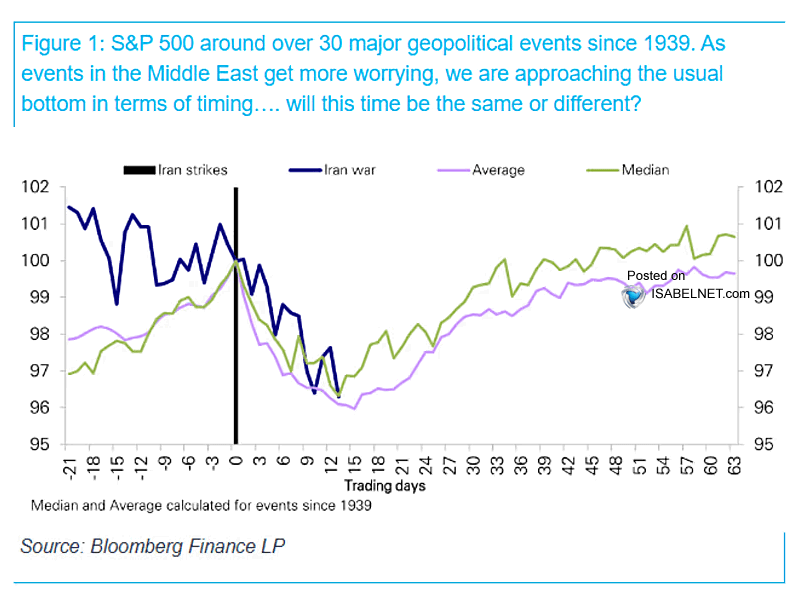
@JukkaLepikko Siis tässä Irakin kriisissä se on nyt tiedossa olevan historiadatan mukaan kolme viikkoa?
Ajattelu on hyvää ja analyysi oikea, mutta mistä tietää eskalaation olevan huipussaan? Onko Irakin tapauksessa hetki ollut jo?
Suomi
Kävelylenkillä tuli hyvä ajatus kuinka voi tiivistää, mistä geopoliittisten kriisien pohjat löytyvät:
Osakemarkkina pohjaa yleensä silloin, kun käynnissä olevan kriisin eskalaatio saavuttaa huippunsa.
Ajallisesti se on ollut keskimäärin kolme viikkoa kriisin alkamisesta.
Suomi
@SarasvuoJari Saman kokenut asiakkaan kanssa. KV-konsernin sääntö. Mielestäni ikävää. ”Minä tarjoan” on ihan kivaa kohteliaisuutta, jossa ei kisata kuka saa, vaan kuka saa antaa.
Suomi
Olin kerran erään ministerin kanssa lounaalla. Edellisen kerran, kun olimme olleet lounaalla, hän oli tarjonnut. Nyt oli minun vuoroni tarjota.
Ei halunnut ottaa vastaan. Sanoi, että teoriassa joku voi nostaa tikun nokkaan. Vaikka mikään raja ei ylittynyt, eikä kummallakaan ollut mitään intressiä, mitä ajaa. Minä taas en halunnut syödä valtioneuvoston laskuun.
Syötiin sit molemmat omilla rahoilla, mikä oli ihan ok. Jäi hyvä fiilis.
Mut oikeasti taitaa olla hivenen liian kireälle viritetty tämä korruptionpelko.
Seppo Ilvessalo 🇫🇮🏴☠️🇺🇦@SeppoIlvessalo
Pullo tuotiin pöytään avattuna, mutta ei tilattuna. Se jaettiin koko seurueen kesken. Sen hinta Alkossa on 400 €, mikä minusta on pullon oikea arvo. Kun se vielä jaetaan vaikkapa neljän henkilön kesken, paljonko jää Purran osuudeksi @hsfi? hs.fi/tutkiva/art-20…
Suomi

@AMakinen @BuiltByAndy Smart animation if you want i can send you file and you can learn from it
English
@vanschneider Exactly. Same point of view. Just dynamic template, nothing more.
English

Honestly, I’m glad this type of design is being automated because it’s so boring there can’t possibly be any designer who enjoys doing this type of work manually.
To me it’s just Templates 2.0
Google Labs@GoogleLabs
Introducing the new @stitchbygoogle, Google’s vibe design platform that transforms natural language into high-fidelity designs in one seamless flow. 🎨Create with a smarter design agent: Describe a new business concept or app vision and see it take shape on an AI-native canvas. ⚡️ Iterate quickly: Stitch screens together into interactive prototypes and manage your brand with a portable design system. 🎤 Collaborate with voice: Use hands-free voice interactions to update layouts and explore new variations in real-time. Try it now (Age 18+ only. Currently available in English and in countries where Gemini is supported.) → stitch.withgoogle.com
English
@michalmalewicz I agree. Imo: Stitch in only dynamic template generator.
Years ago there was a template business. So, how it affected to serious desing business? Almost at all, I think.
English

I went into Google Stitch and looked around.
This is NOT replacing designers. It's like saying downloading a figma UI kit will replace designers.
You can already prompt AI to do stuff in regular design tools.
But if you don't have taste, you end up with the inflated median, not quality product. It's an average of an average of an average. Safe, but boring and predictable.
And to make anything good here it's waiting for your input. If you don't have the eye for design, your input won't help.
AI won't be able to make anything beyond a template.
We had those since 2005 on TemplateMonster.
This is the same recycling of average ideas, now with a prompt box as input.
But this is meaningful for another reason. It's making non-skilled people believe they have skills, which will mean that the median will get even more inflated.
We won't get as many utterly horrible sites, but also not many actually great ones.
So bottom line: designers are not cooked.
If you have no idea what you're doing no AI will make your work great.
It will just help you reach mediocrity faster.


English