Alex Atkins

18.8K posts

Alex Atkins banner
Alex Atkins

Alex Atkins

@AlexAtkins17

Underground Mining Engineer with MBA(Finance) & First Class Mine Manager’s Ticket. Former ASX200 NED. Now PhD Student & Corporate Consultant.

Perth WA Australia เข้าร่วม Mart 2014
4.8K กำลังติดตาม2.5K ผู้ติดตาม
ทวีตที่ปักหมุด
Alex Atkins
Alex Atkins@AlexAtkins17·
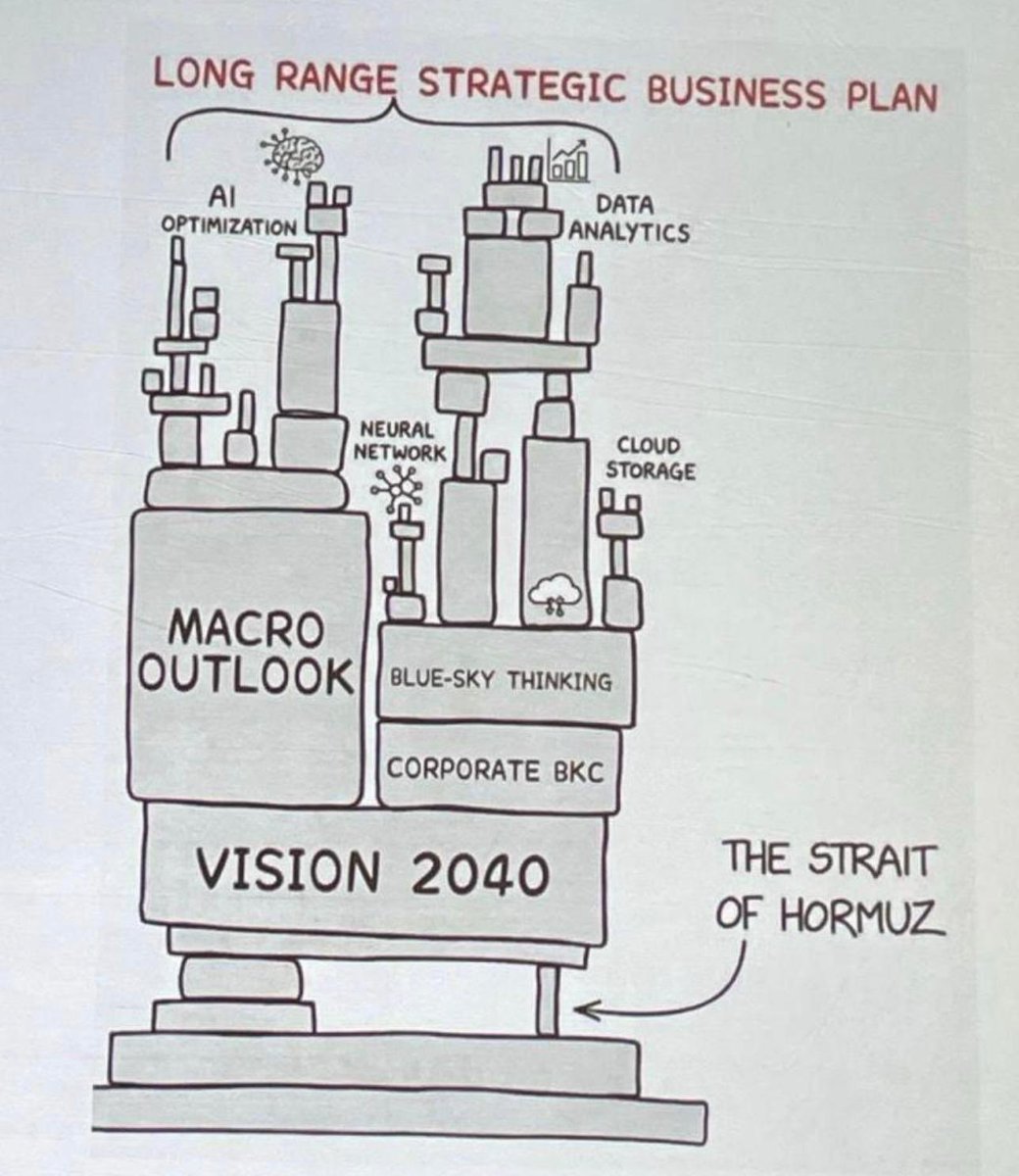
Hey Siri, Optimise this complex system of interdependent point solutions.
Alex Atkins tweet media
English
0
0
1
257
Alex Atkins รีทวีตแล้ว
Todd Jones 🦊
Todd Jones 🦊@toddrjones·
Here are some ways in which the world has gotten better.
English
206
3.5K
21.4K
2.2M
Alex Atkins รีทวีตแล้ว
Thierry from arvy 🇨🇭
Thierry from arvy 🇨🇭@ThierryBorgeat·
Michael Burry @michaeljburry read a Wall Street book from the 1870s. Every time institutions or people acted like they do today, he marked the page with a red sticky. The book is basically a porcupine. Human nature doesn't change. Greed doesn't change. Fear doesn't change. Leverage doesn't change. The crash always comes. Only the asset class has a different name. Railroads in 1870. Stocks in 1929. Dot-coms in 2000. Mortgages in 2008. What's the red sticky for today?
Thierry from arvy 🇨🇭 tweet media
English
25
50
419
340.3K
Alex Atkins รีทวีตแล้ว
Carl Zha
Carl Zha@CarlZha·
They can lie abt GDP numbers but it's hard to fudge electricity consumption - former Chinese Premier Li Keqiang You can tell which economies have stagnated over the last 20 years
Carl Zha tweet media
English
97
364
1.8K
55.9K
Alex Atkins รีทวีตแล้ว
Jack Prandelli
Jack Prandelli@jackprandelli·
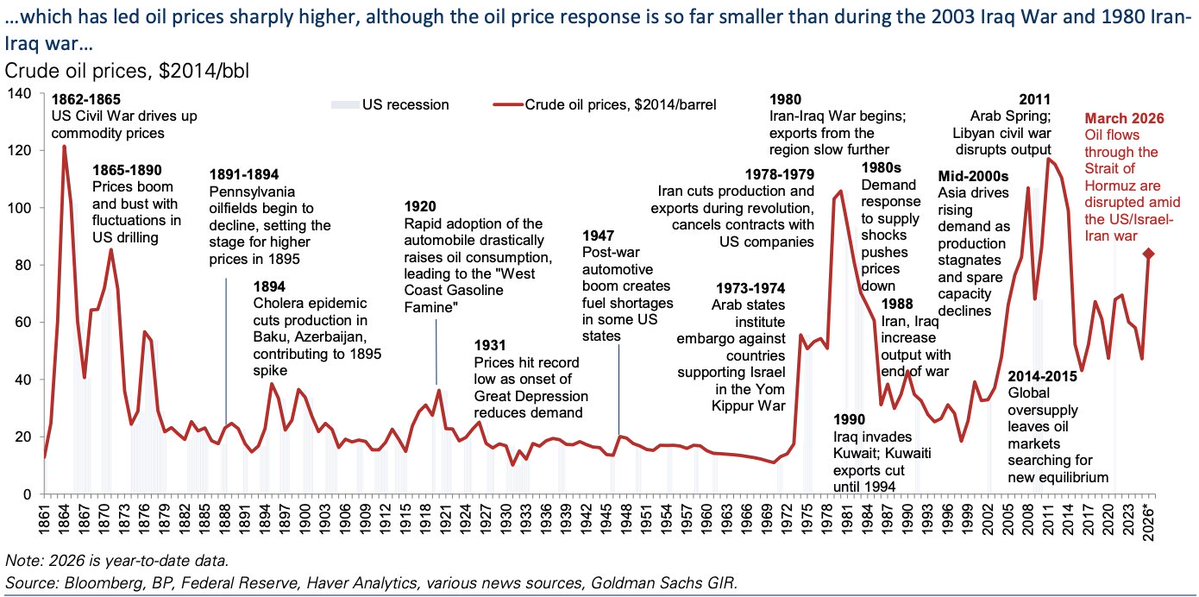
🛢️165 years of oil price history in one chart Every spike on this chart has a name: 1864 — Civil War 1973 — Arab Oil Embargo 1979 — Iranian Revolution 1990 — Gulf War 2008 — Financial Crisis 2026 — We are here 🔴 Goldman's chart shows the price response is STILL smaller than 1980 and 2003. Meaning either the market is right and this ends fast. Or the market is wrong and we haven't seen the real spike yet. Every Single Previous Spike Eventually resolved. But not before causing a recession first Which side of history are you positioned for? 💡 Subscribe to my newsletter ☑️Link in my profile
Jack Prandelli tweet media
English
24
331
925
66.5K
Alex Atkins รีทวีตแล้ว
Shanaka Anslem Perera ⚡
Shanaka Anslem Perera ⚡@shanaka86·
Everyone is talking about the oil. Almost nobody is talking about the machines. When Iranian missiles hit Ras Laffan on March 18 and 19, they did not just knock out LNG production. They struck the most concentrated node of cryogenic industrial infrastructure on earth. And the reason QatarEnergy’s CEO told Reuters that repairs will take three to five years is not because the buildings are hard to rebuild. It is because the machines inside them are nearly impossible to replace. The core technology in every LNG train and helium extraction unit at Ras Laffan is the brazed aluminium plate-fin heat exchanger, known in the industry as a BAHX. These are not off-the-shelf components. They are custom-engineered cryogenic cores weighing up to 470 tonnes, standing 60 metres tall inside insulated cold boxes, manufactured by exactly five companies on earth: Chart Industries in the United States, Fives Cryo in France, Kobe Steel in Japan, Linde in Germany, and Sumitomo in Japan. That is the entire global supply per ALPEMA, the manufacturers’ own association. Current lead time for a full mega-scale air separation unit built around these exchangers: three to four years from contract to commissioning. Lead time for the BAHX cores alone: 12 to 18 months with order books already full before the war started. Here is why field repair is so difficult. Aluminium has no fatigue endurance limit. Every thermal cycle accumulates irreversible damage. The brazed joints crack under thermal stress, and ALPEMA’s Integrity Operating Windows cap temperature changes at below 1 degree Celsius per minute during normal cycling and below 5 degrees per minute even during startup events. When a joint cracks, the only field repair is layer blocking: welding shut the distributor openings of the damaged layer while leaving adjacent layers open. Chart Industries, the primary manufacturer, recommends a maximum of two blocks before the entire core must be replaced. Each block reduces heat transfer efficiency. Each block increases stress on remaining layers, accelerating the fatigue cycle. Shell confirmed on March 20 that Pearl GTL Train 2 will take approximately one year to repair. The LNG trains S4 and S6, with 12.8 million tonnes per annum combined capacity, will take three to five years per QatarEnergy. The difference in timelines reflects damage extent, not repair difficulty. Both face the same physics. And both face the same logistics problem. Every replacement module, every specialist welder with an ASME R-stamp authorization, every 470-tonne cold box shipment must transit the Strait of Hormuz. The same strait where 90 percent of the world’s ocean-going tonnage has lost war risk insurance coverage. The same strait where the IRGC operates a selective vetting corridor with at least two confirmed yuan-settled payments per Lloyd’s List. The same strait where premiums have surged from 0.125 percent to 7.5 percent of hull value. The machines cannot be repaired without parts that cannot be shipped through a strait that cannot be insured. This is the machine layer that connects the helium shortage to the semiconductor shortage to the AI compute shortage. Qatar produces one-third of the world’s helium as a byproduct of LNG processing through these exact machines. Helium spot prices have doubled. Samsung and SK Hynix hold six months of inventory. There is no substitute in cryogenic semiconductor applications per the USGS. The market priced the oil shock. It has not priced the machine shock. The timeline is measured in years, not weeks. open.substack.com/pub/shanakaans…
Shanaka Anslem Perera ⚡ tweet media
Shanaka Anslem Perera ⚡@shanaka86

BREAKING: Qatar just told four countries their gas is not coming. For up to five years. QatarEnergy declared force majeure on long-term LNG contracts with Italy, Belgium, South Korea, and China on March 24. This is not a temporary disruption notice. This is the world’s largest LNG supplier telling major industrial economies that contractual obligations are suspended indefinitely because Iranian missiles destroyed the infrastructure required to fulfill them. The specifics matter. Iranian strikes on March 18 and 19 hit LNG Trains 4 and 6 at Ras Laffan Industrial City. Combined capacity: 12.8 million tonnes per annum. That is 17% of Qatar’s total LNG export capacity. QatarEnergy CEO Saad al-Kaabi told Reuters the damage will take three to five years to repair. Estimated annual revenue loss: $20 billion. ExxonMobil holds a 34% stake in Train S4 and 30% in Train S6. Shell is a partner in the damaged Pearl GTL facility, which will take approximately one year to repair. Train S4 supplied Italy’s Edison and Belgium’s EDFT. Train S6 supplied South Korea’s KOGAS, EDFT, and Shell’s operations in China. Those are not abstract numbers. Edison heats Italian homes. KOGAS powers South Korean industry. Shell’s China volumes feed the world’s largest energy importer. All of them just received force majeure notices with a repair timeline measured in years, not months. Al-Kaabi’s quote to Reuters is worth reading in full: “I never in my wildest dreams would have thought that Qatar would be in such an attack, especially from a brotherly Muslim country in the month of Ramadan, attacking us in this way.” Qatar accounts for roughly 20% of global LNG production. Approximately 80% of that went to Asia before the war. The country was in the middle of a $30 billion expansion to increase capacity from 77 MTPA to 142 MTPA by 2030. Al-Kaabi said the scale of the damage has set the region back 10 to 20 years. Now connect this to the rest of the matrix. Beyond LNG, QatarEnergy confirmed “materially reduced output” of condensate, LPG, helium, naphtha, and sulfur. Qatar produces one-third of the world’s helium. South Korea imports 64.7% of its helium from Qatar. Samsung and SK Hynix hold roughly six months of semiconductor-grade helium inventory. Helium spot prices have doubled. Even undamaged trains cannot export through a Strait of Hormuz where traffic has collapsed 95%, where 2,000 vessels are stranded, and where Iran is operating a selective vetting and toll system near Larak Island with at least two confirmed yuan-settled payments per Lloyd’s List. This force majeure is not a blip. It is three to five years of lost production compounding with a naval blockade, an insurance market that has priced itself out of the corridor, and a toll regime that Iran’s parliament is actively legislating into permanent law. Kuwait and Bahrain have also invoked force majeure. The dominoes are falling in sequence, not in parallel. The market is pricing a temporary oil shock. The molecule map says this is a multi-year structural reordering of global energy, semiconductors, and fertilizer supply chains running through a single contested waterway. open.substack.com/pub/shanakaans…

English
25
460
1K
112.6K
Alex Atkins รีทวีตแล้ว
TIME
TIME@TIME·
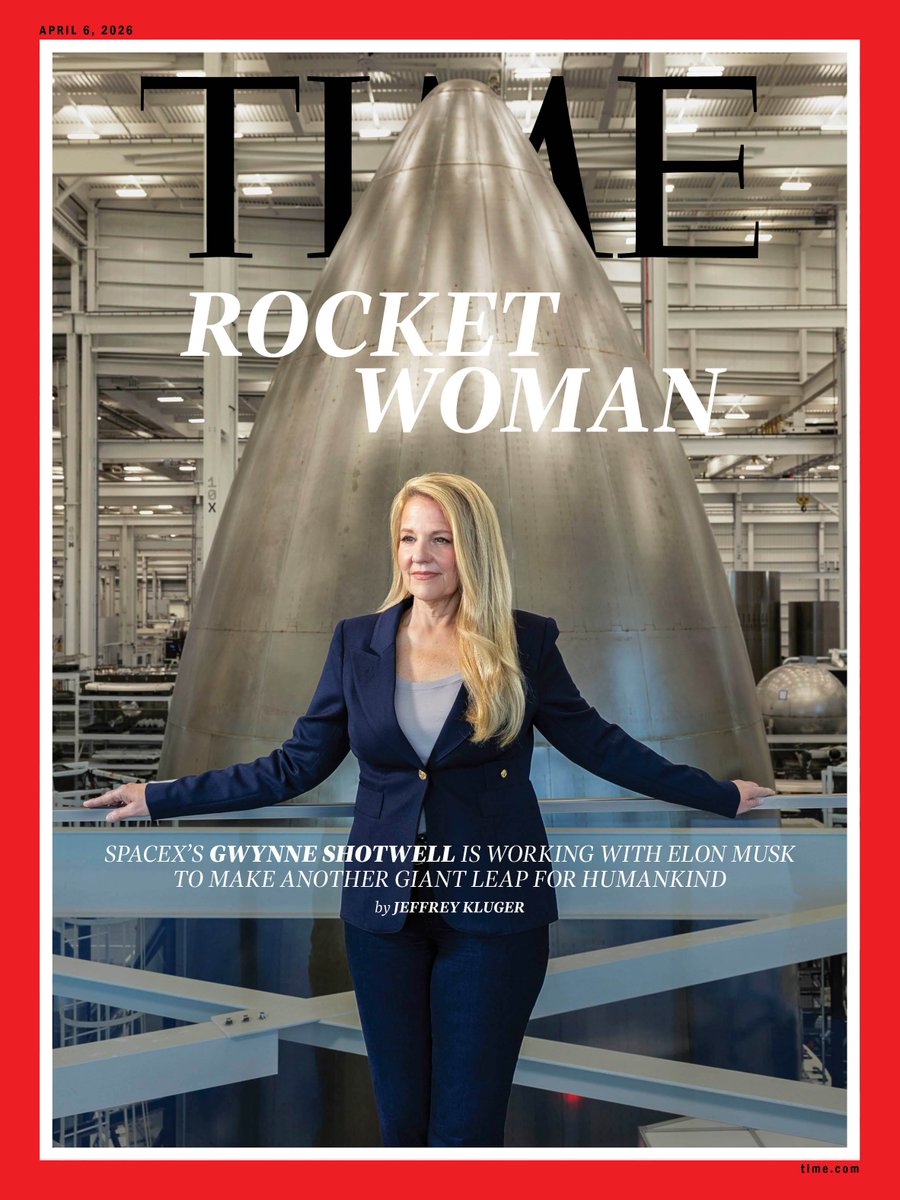
TIME’s new cover: SpaceX is racing to build its most powerful rockets yet with the goal of returning humans to the moon. Gwynne Shotwell is leading the charge alongside Elon Musk. Read it here: time.com/article/2026/0…
TIME tweet media
English
460
1.6K
10.3K
1.5M
Alex Atkins รีทวีตแล้ว
Mathias Cormann
Mathias Cormann@MathiasCormann·
Due to the evolving conflict in the Middle East, the outlook for the global economy is highly uncertain, with significant downside risks. Under our updated baseline scenario we now project global GDP growth at 2.9% in 2026 and 3.0% in 2027.
Mathias Cormann tweet media
English
3
26
27
5.5K
Alex Atkins รีทวีตแล้ว
Shanaka Anslem Perera ⚡
Shanaka Anslem Perera ⚡@shanaka86·
Everyone is covering the force majeure. Everyone is covering the 13 million tonnes. Everyone is covering the gas prices and the geopolitics and the five-year timeline. My good friend Veron Wickramasinghe just asked the question nobody else is asking: how do you rebuild when the machines that make the molecules take three to four years to manufacture, ship through a closed strait, and commission in a war zone? Read what he found. Every LNG train at Ras Laffan requires high-purity nitrogen from Air Separation Units: cryogenic plants cooling air to minus 190 degrees to distil it into component gases. Pearl GTL needs 30,000 tonnes per day of pure oxygen from eight Linde-built ASUs. Each cold box: 470 tonnes, 60 metres tall. Lead time from contract to commissioning: three to four years. If destroyed, replacement arrives no earlier than 2029. But here is the choke point that Veron identified that nobody else has. The heart of every cryogenic ASU is a brazed aluminium plate-fin heat exchanger called a BAHX. These exchangers operate with temperature differentials of one to two Kelvin and require precision brazing in vacuum furnaces. Only five companies on Earth are qualified to manufacture them. Five. For every cryogenic heat exchanger in every air separation unit, every LNG train, every industrial gas facility, and every hydrogen plant on the planet. Fives Cryo in France. Kobelco in Japan. Linde in Germany. Sumitomo in Japan. Chart Industries in La Crosse, Wisconsin. Current lead times: 12 to 18 months or more. And their order books are already full. Veron was honest about what is confirmed and what is not. QatarEnergy CEO al-Kaabi confirmed LNG Trains 4 and 6 are damaged: 12.8 Mtpa offline, 3 to 5 year repairs, $20 billion annual revenue loss, force majeure up to 5 years. Shell confirmed Pearl GTL Unit 2 needs roughly one year of repair. What has NOT been confirmed is whether the ASUs themselves were destroyed. Shell’s one-year timeline is inconsistent with total ASU loss, which would require four to five years. Veron flagged this honestly and gave you the analysis both ways. And then he showed you the cascade nobody else sees. Qatar produces one-third of the world’s helium from the same facility. Helium is irreplaceable in semiconductor fabrication: cooling wafers, purging chambers, detecting leaks. Samsung and SK Hynix import 64.7 percent of their helium from Qatar. Spot prices have doubled. Liquid helium vaporises within 35 to 48 days. Fourteen percent of capacity is permanently damaged. The LNG trains, the ASUs, and the helium plants all sit on the same rock, fed by the same gas field, accessed through the same strait. One set of missile strikes on March 18 to 19 took out 17 percent of global LNG, threatened one-third of global helium, and exposed a supply chain that runs through five workshops in Germany, France, Japan, Italy, and Wisconsin with three-year lead times and full order books. This is what Veron understood that the headline analysts missed: the recovery is not constrained by money or political will. It is constrained by vacuum furnaces, aluminium metallurgy, and the physics of brazing at tolerances measured in single-digit Kelvin. You cannot accelerate physics. You cannot surge-produce a 470-tonne cold box. You cannot commission cryogenic equipment in a war zone. Five companies. Five workshops. Three-year lead times. Full order books. A closed strait. An active war. That is not a recovery timeline. That is a sentence. Read Veron’s full analysis. It is the most important thing written about this war that does not involve a missile.
Shanaka Anslem Perera ⚡ tweet media
Veron Wickramasinghe@veronken

x.com/i/article/2036…

English
194
2.3K
5.9K
990.1K
Alex Atkins รีทวีตแล้ว
Elon Musk
Elon Musk@elonmusk·
Elon Musk tweet media
ZXX
8K
30.4K
284.9K
28.3M
Alex Atkins รีทวีตแล้ว
Yasmine Khosrowshahi
Yasmine Khosrowshahi@yasminekho·
In 2018, Stanford professor Matt Abrahams gave a masterclass on why most people fail to communicate well. He broke down: - The structure every message needs - Why audiences stop listening - The psychology of attention 15 lessons that'll make your communication unforgettable:
English
57
1.5K
7K
1M
Alex Atkins รีทวีตแล้ว
Brandon Luu, MD
Brandon Luu, MD@BrandonLuuMD·
Students who took notes by hand scored ~28% higher on conceptual questions than laptop note-takers. Writing forces your brain to process and compress ideas instead of copying them.
Brandon Luu, MD tweet media
English
447
5.2K
24.4K
1.6M
Alex Atkins รีทวีตแล้ว
Andrew Kang
Andrew Kang@Rewkang·
Researchers trained a humanoid robot to play tennis using only 5 hours of motion capture data The robot can now sustain multi-shot rallies with human players, hitting balls traveling >15 m/s with a ~90% success rate AlphaGo for every sport is coming
English
480
1.2K
8.9K
1.9M
Alex Atkins รีทวีตแล้ว
David Vance
David Vance@DVATW·
This is what economic suicide looks like;
English
1.2K
12.5K
65.7K
4.5M
Alex Atkins รีทวีตแล้ว
Tansu Yegen
Tansu Yegen@TansuYegen·
Electric lifts that climb stairs on their own just came out in China, carrying up to 180 kg for 60 to 80 floors, totally changing the game for delivery people...
English
406
2.9K
15.3K
1.2M
Alex Atkins รีทวีตแล้ว
Prof Ray Wills
Prof Ray Wills@ProfRayWills·
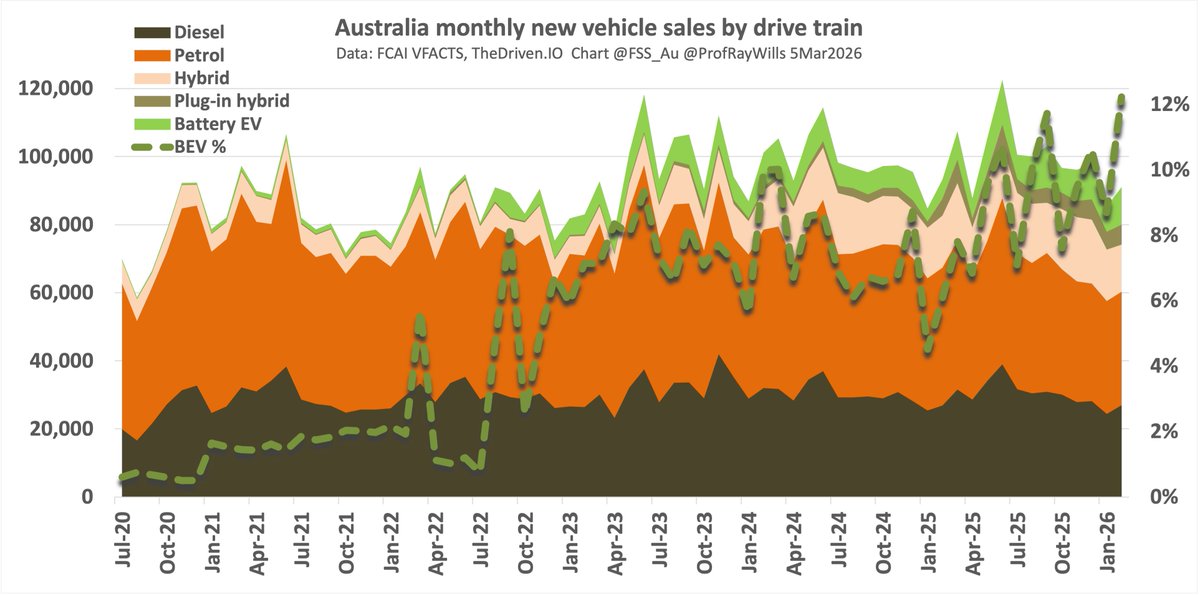
Country of origin: China passes Japan as Australia's biggest car supplier in February 2026 Australian vehicle sales summary Feb 2025 VFACTs + EV Council - Mar2026 BEV share 12.2% Hybrid (inc PHEV) 21.6% ICE only drive train share 66.1% SUVs 60.3% share of Aus sales
Prof Ray Wills tweet mediaProf Ray Wills tweet mediaProf Ray Wills tweet mediaProf Ray Wills tweet media
English
3
18
40
2.2K
Alex Atkins รีทวีตแล้ว
Shanaka Anslem Perera ⚡
Shanaka Anslem Perera ⚡@shanaka86·
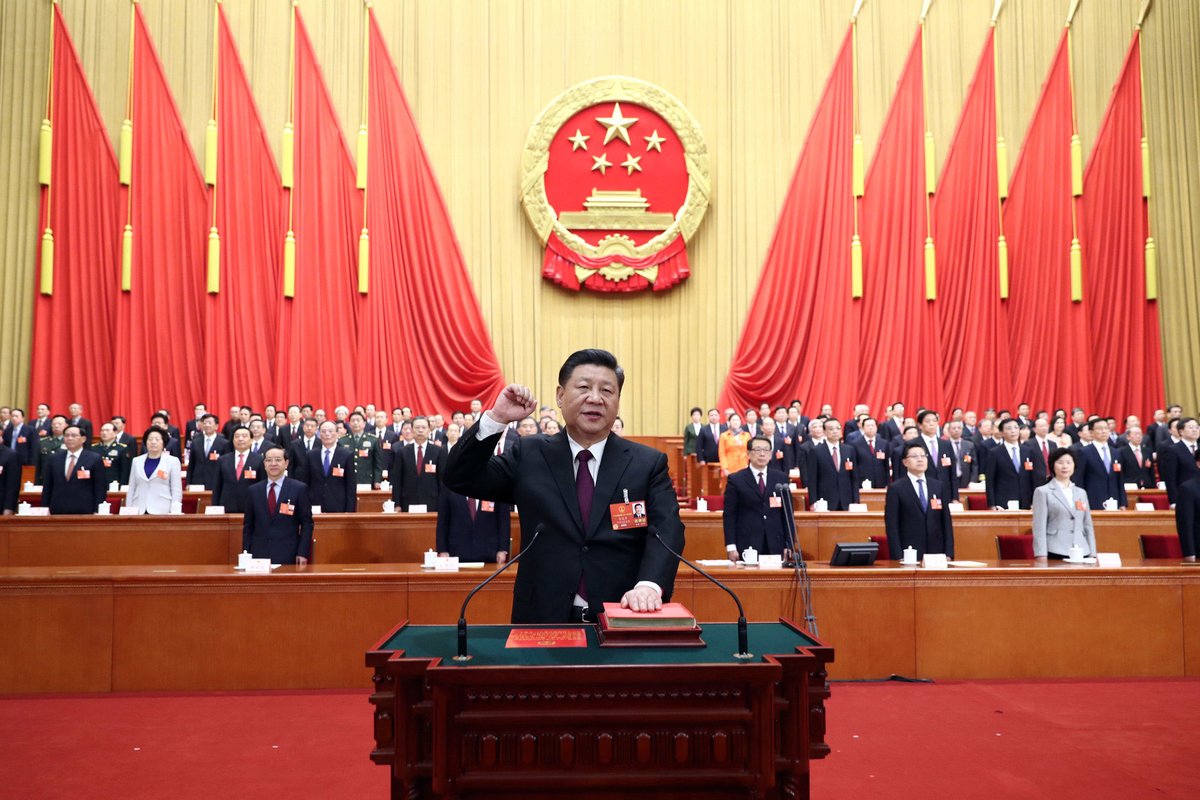
While the United States spends billions bombing Iran and the world watches oil prices crash, China just published the most consequential economic document of the decade. Nobody is paying attention. That is the point. The 15th Five-Year Plan, unveiled at the National People’s Congress on 5th March, is 141 pages. It mentions artificial intelligence over 50 times. It targets 70% AI penetration across the Chinese economy by 2027 and 90% by 2030. It designates humanoid robotics as a core pillar industry with output doubling over five years. It commits to space-Earth quantum communication networks, nuclear fusion timelines, and brain-computer interfaces. It sets AI-related industries at a target value exceeding 10 trillion yuan, approximately $1.38 trillion. And it declares “extraordinary measures” for rare earths and semiconductor self-reliance. This is not an economic plan. It is a war plan for a war the United States is not fighting because it is too busy fighting the wrong one. The US response to Chinese technological competition is the CHIPS and Science Act, signed in 2022. It appropriated $52.7 billion for semiconductor manufacturing, including $39 billion in direct grants and a 25% investment tax credit that expires this year. It has spurred over $640 billion in private investment across 140 projects in 30 states. It created half a million jobs. By any measure, it is the most significant US industrial policy in a generation. And it covers exactly one sector of an economy-wide technological competition. China’s plan covers every sector. AI across the entire economy. Robotics as industrial backbone. Space infrastructure. Quantum computing. Rare earth processing dominance maintained and strengthened. The CHIPS Act is a rifle. The 15th Five-Year Plan is an arsenal. The rare earth dimension is where the plans intersect with the war. China controls 90% of global rare earth processing. Every F-35 joint strike fighter requires 920 pounds of rare earth materials. Every Patriot missile battery, every THAAD interceptor, every guided munition being expended over Iran at a rate of thousands per week depends on materials that China processes. The “extraordinary measures” in the Five-Year Plan are not defensive. They are the tightening of a supply chain that the US military cannot function without. In April 2025, China imposed export controls on all 17 rare earth elements. The January 2027 DFARS deadline requires the Pentagon to eliminate Chinese rare earth dependency from defence procurement. That leaves a 10-to-15-year vulnerability window during which the United States is simultaneously waging a war that consumes rare-earth-dependent munitions at historic rates and attempting to build alternative supply chains that do not yet exist. The Iran war is consuming the interceptors. China is tightening the supply chain that builds the interceptors. The Five-Year Plan is the document that formalises the tightening into national strategy. Trump posted “Death, Fire, and Fury” on Truth Social. Xi Jinping published a 141-page plan to ensure that the materials required to deliver that fire and fury remain under Chinese control for the next fifteen years. One leader is fighting a war. The other is winning the peace. And the 141 pages that will determine which strategy prevails were published the same week the bombs started falling. Full analysis - open.substack.com/pub/shanakaans…
Shanaka Anslem Perera ⚡ tweet media
English
197
1.9K
4.9K
643.1K
Alex Atkins รีทวีตแล้ว
Oliver Groß
Oliver Groß@minenergybiz·
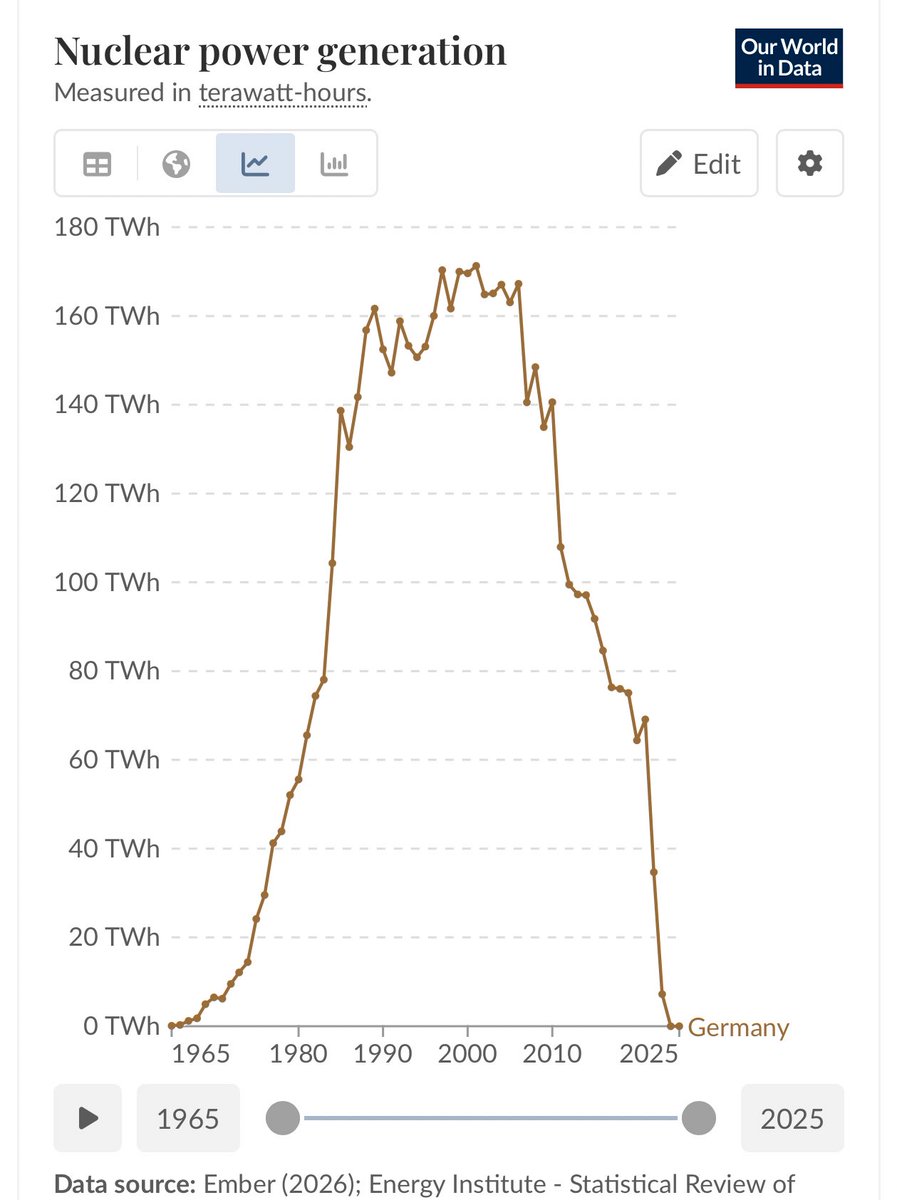
Unreal numbers 👀⚡️ "JPMorgan estimates that, had Germany not phased out nuclear power, the country would have generated 50% less electricity from fossil fuels and 84% less electricity from natural gas in 2024. Electricity prices in Germany would have been around 25% lower, and the country would have imported half as much electricity.."
Oliver Groß tweet media
English
882
6.2K
31.8K
3.7M
Alex Atkins รีทวีตแล้ว
Otavio (Tavi) Costa
Otavio (Tavi) Costa@TaviCosta·
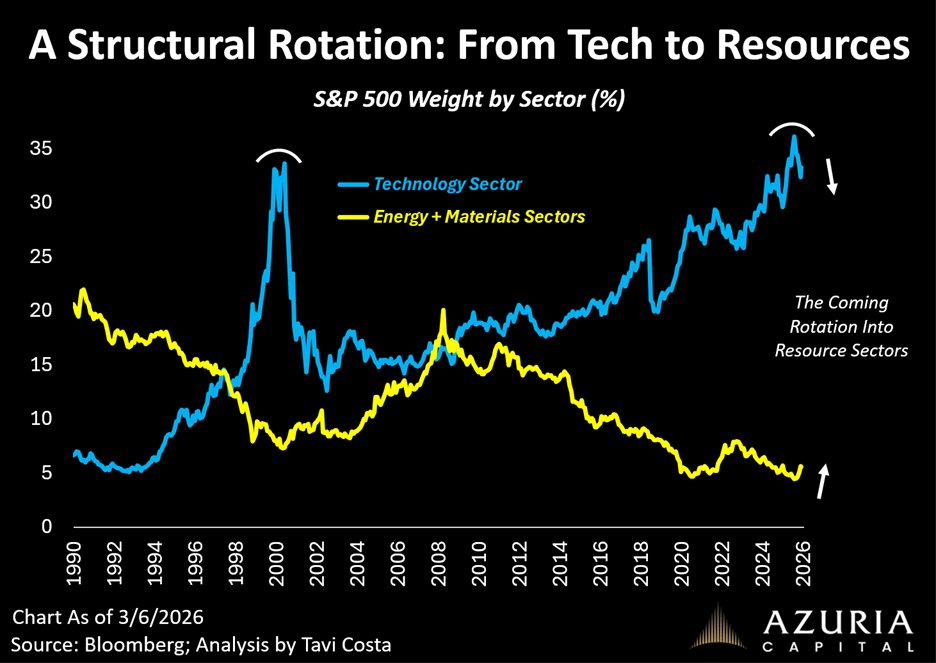
What’s happening in energy is far more than a geopolitical trade — it reflects a structural shift. For decades, equity markets have funneled capital into businesses that consume resources while systematically starving the industries that produce them. What makes this dynamic particularly striking is that the physical economy has not shrunk. If anything, its importance is growing. The global economy continues to demand more electricity, more copper, more steel, more critical minerals. Let’s dive into this first. Later, I’ll also share another idea that I find particularly compelling. substack.com/home/post/p-19…
Otavio (Tavi) Costa tweet media
English
45
213
1.1K
60.2K