

Adaeze Oraeke
31 posts
Adaeze Oraeke
@AnalystAda
I’m a results driven economics graduate skilled in data analysis, Excel, SQL, and Power BI, passionate about data to drive insights and organizational growth.
เข้าร่วม Eylül 2025
9 กำลังติดตาม4 ผู้ติดตาม

Which of this Tools did you enjoy learning?
Excel
SQL
Power Bi
Python
English


I've noticed that linkedin creators are now building on X
If you're a linkedin creator, I would like to connect with you here.
If you're a product manager or into tech, we should be buddies.
Drop a "Hi" let's connect.
English

Adaeze Oraeke รีทวีตแล้ว

Here’s a step-by-step guide to finding a remote job on Google Careers:
1. Go to the site
Visit careers.google.com and click “Jobs” in the top navigation.
2. Search for roles
In the search bar, type a job title or keyword relevant to your skills (e.g., “Data Analyst,” business Analyst, Sales Analyst, “Program Manager,” “UX Writer”).
3. Filter for remote
Under the “Location” filter, type “Remote” or select “Remote eligible” this surfaces roles that are fully remote or hybrid-remote.
4. Narrow down further
Use additional filters to refine results:
∙Team/Area e.g., Engineering, Sales, Operations
∙Type: Full-time, Part-time, Internship
∙Location: if you want remote within a specific country or region
5. Read job descriptions carefully
Open each listing and look for:
∙“Remote eligible” or “Location: Remote” in the details
∙Required location/timezone (some “remote” roles have geographic restrictions)
∙Visa/work authorization requirements
6. Create a Google Careers profile
Click “Sign In” (top right) and log in with your Google account. This lets you save jobs and track applications.
7. Tailor your application
Before applying:
∙Align your CV/resume keywords with the job description
∙Highlight quantifiable achievements (Google loves data-driven results)
∙Prepare a strong cover letter if required
8. Submit your application
Click “Apply” on the listing. Most roles redirect to an internal form where you upload your resume and fill in your details.
9. Set up job alerts
After searching, click “Create email alert” to get notified when new matching roles are posted, useful since remote roles fill fast.
10. Prepare for Google’s hiring process
If shortlisted, expect:
∙Recruiter screen (30 min call)
∙Technical/role-specific interviews (often 3–5 rounds)
∙Behavioral interviews using the STAR method
∙For technical roles, coding challenges or case studies
Annie🦋@DabereNnamani
Dear Data Analysts, you know we don’t gatekeep here!! As usual, I’ve written down websites and step by step guides to help you get a remote data analyst job. Do you want??
English

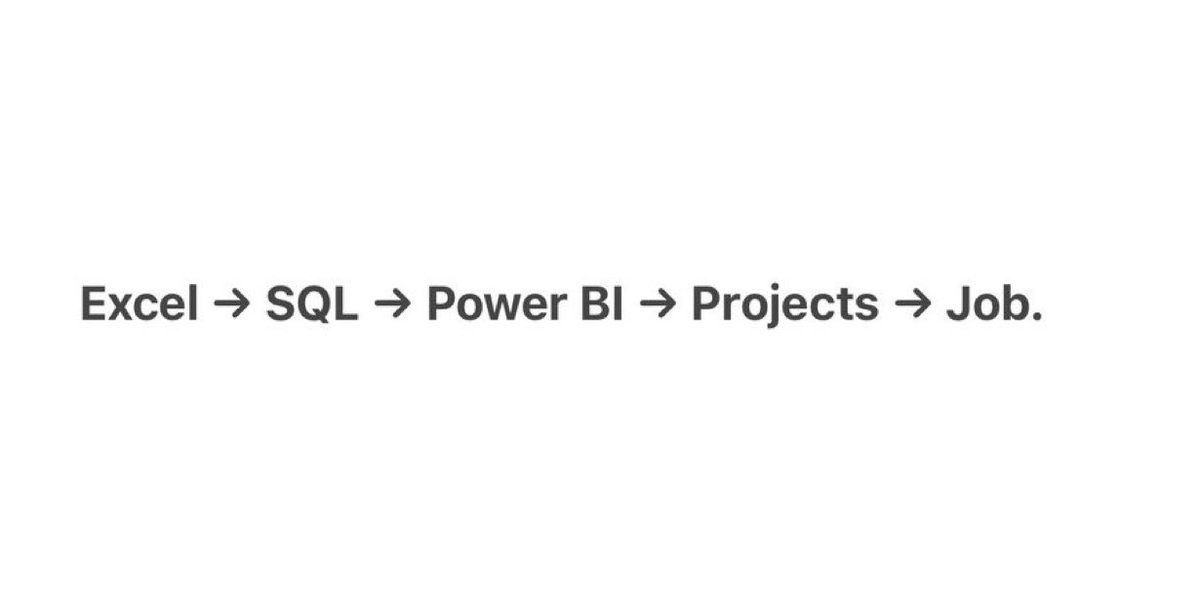




I finally did it… I’m sharing my data analytics portfolio
I’d love to hear your thoughts and feedback.
I’m currently open to data analyst roles, internships, and collaboration opportunities.
Check it out => oraekeadaeze.my.canva.site
English

Data analysis really goes beyond cleaning, modeling or visualizating data. Communicating data is really important.

English
This is why data analysts shouldn’t only focus on queries, dashboards, or models, but also on how insights are communicated.
Good storytelling turns data into understanding, and understanding drives better decisions. 📊
English
To put it simply:
•Concept = the main takeaway from the data
•Narrative = how you guide your audience to understand that takeaway.
Many analyses fail not because the data is wrong, but because the insight isn’t communicated clearly.
Adaeze Oraeke@AnalystAda
Data analysis is not just about numbers, storytelling matters. As a data analyst, understanding the difference between concept and narrative is important. • Concept → the key insight from the data • Narrative → the story that explains that insight
English
Concept: Sales are stagnating because customer acquisition hasn’t increased.
Narrative:
You then show the trend in sales, the number of new customers over time, and explain how the lack of growth in new customers affects revenue.
English
Data analysis is not just about numbers, storytelling matters.
As a data analyst, understanding the difference between concept and narrative is important.
• Concept → the key insight from the data
• Narrative → the story that explains that insight
English
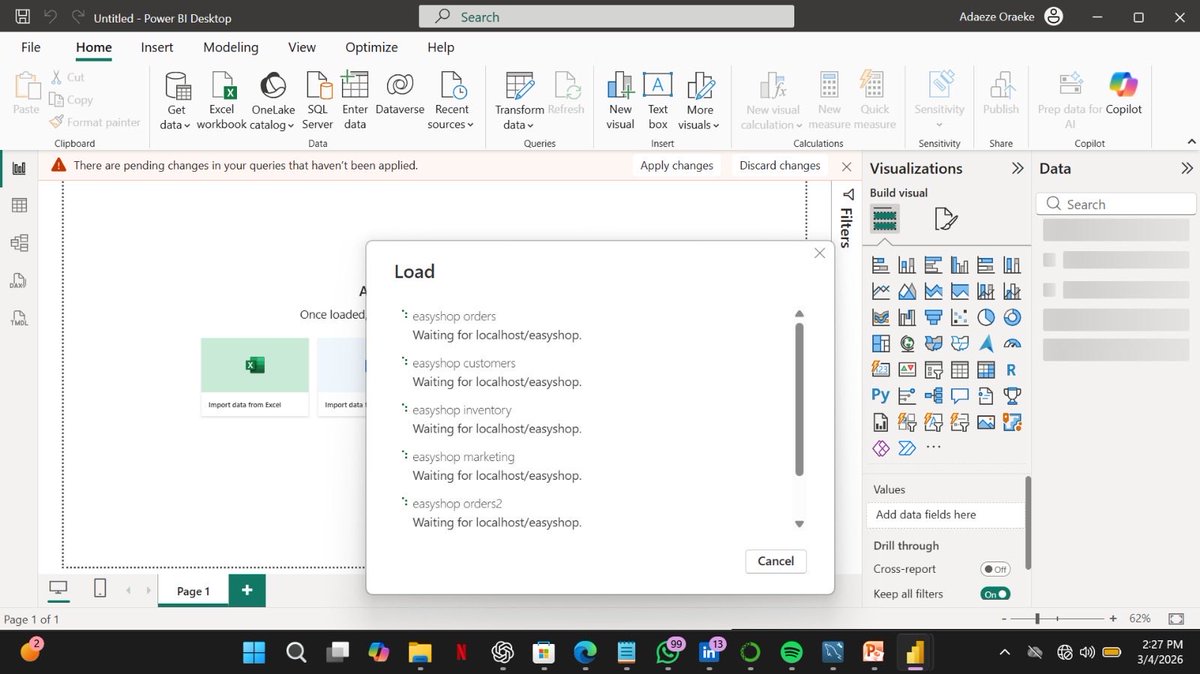
Thought I’d spend my time analyzing data… but 90% went into cleaning it 😅 Missing values, duplicates, weird symbols… data cleaning is the real silent time-sinker. #DataCleaning #Dataanalysis #AnalyticsLife
English
Another milestone unlocked 🎓✨
Certified in Data Analysis for Real World Business Applications.
The journey continues 🚀
@RxData_Hub thank you for the opportunity
#DataAnalytics #BuildInPublic #buildyourportfoliowithme #certification

English
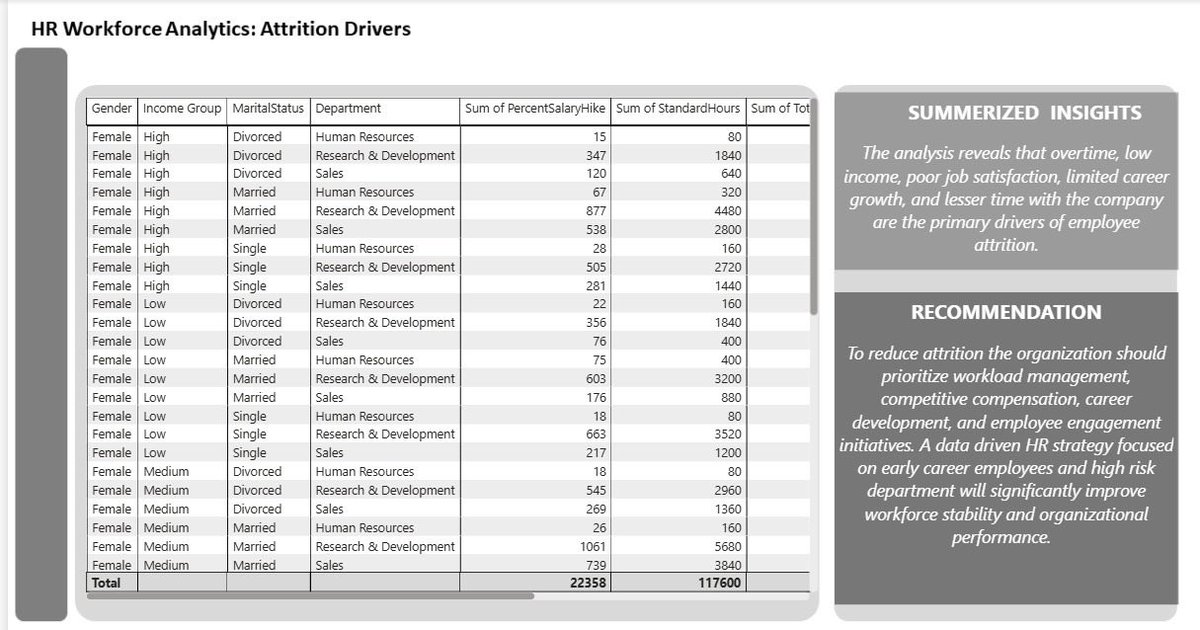
This project demonstrates how data analytics can support strategic HR decision making and reduce employee turnover.
#DataAnalytics #PowerBI #HRAnalytics #BusinessIntelligence #WorkforceAnalytics #DataPortfolio
English
🚀 HR Workforce Analytics: Employee Attrition & Retention Analysis (Power BI Project)
Employee attrition remains one of the biggest challenges organizations face today — impacting productivity, morale, and recruitment costs.
#DataAnalytics #PowerBI #BusinessIntelligence


English