I was stardust traveling aimlessly... out of the sky | @Trans_Mute promoter | #MusicBusiness from @mexicosae to the world | #ElectronicMusic #Trance #Techno
Voyager 1: A un día luz de distancia...🚀🪐✨
Incluso a velocidades increíbles, el espacio interestelar es tan vasto que nuestra sonda más lejana ni siquiera ha hecho una mella significativa en el viaje. Cuando leo sobre Voyager 1, pienso inmediatamente en Carl Sagan y en su mensaje inspirador sobre el universo y la humildad, la importancia de recordar que los límites de nuestro sistema solar, son apenas el principio del viaje, en un universo que se extiende abrumadora e inimaginablemente lejos.
La sonda alcanzará un hito sin precedentes en noviembre de 2026, se convertirá en el primer objeto fabricado por el hombre en situarse a un día luz de distancia de la Tierra. Esto significa que la sonda estará tan lejos (aproximadamente 26,000 millones de kilómetros) que cualquier señal de radio tardará 24 horas exactas en llegar a ella, y otras 24 horas en regresar, haciendo que un solo intercambio de mensajes dure dos días completos, por supuesto pensamos que es una distancia colosal recorrida en casi medio siglo de viaje, sin embargo ha cruzado sólo una pequeña fracción de la distancia a la estrella más cercana, es decir a un día luz de la Tierra y a 1,549 días luz de Próxima Centauri, de locos si intentamos hacer la conversión en años!!
Y sigue avanzando en la oscuridad del espacio interestelar. Pero incluso las leyendas sienten el paso del tiempo. Fue lanzada en 1977. Y ahora, para seguir viva, la NASA ha tomado una decisión difícil: apagar uno de sus instrumentos científicos.
No fue un fallo. Fue una elección. El instrumento LECP (Low-energy Charged Particle experiment) ha sido desconectado para ahorrar energía. Sus generadores de plutonio pierden potencia año tras año, unos 4 watts menos cada ciclo. En el vacío profundo, donde no hay segundas oportunidades, cada watt cuenta.
Aun así, la nave sigue hablando. Dos instrumentos continúan activos, enviando datos desde una región donde ningún otro objeto humano ha llegado jamás. Cada bit de información es un susurro desde lo desconocido.
La nave funciona gracias a generadores de plutonio que pierden energía cada año, sin posibilidad de reemplazo. Este ya es el octavo instrumento que se apaga, y se estima que la misión podría continuar enviando datos científicos desde el espacio interestelar posiblemente hasta la década de 2030.
El viaje acaba de comenzar!
Jupiter looks like a living watercolor from space 🎨🪐
But those beautiful swirls are actually massive storm systems made of ammonia and water clouds racing across the planet at incredible speeds.
Beneath that stunning surface, powerful hidden superstorms and lightning far stronger than Earth’s are constantly raging.
What looks soft and peaceful is actually one of the most violent atmospheres in the solar system.
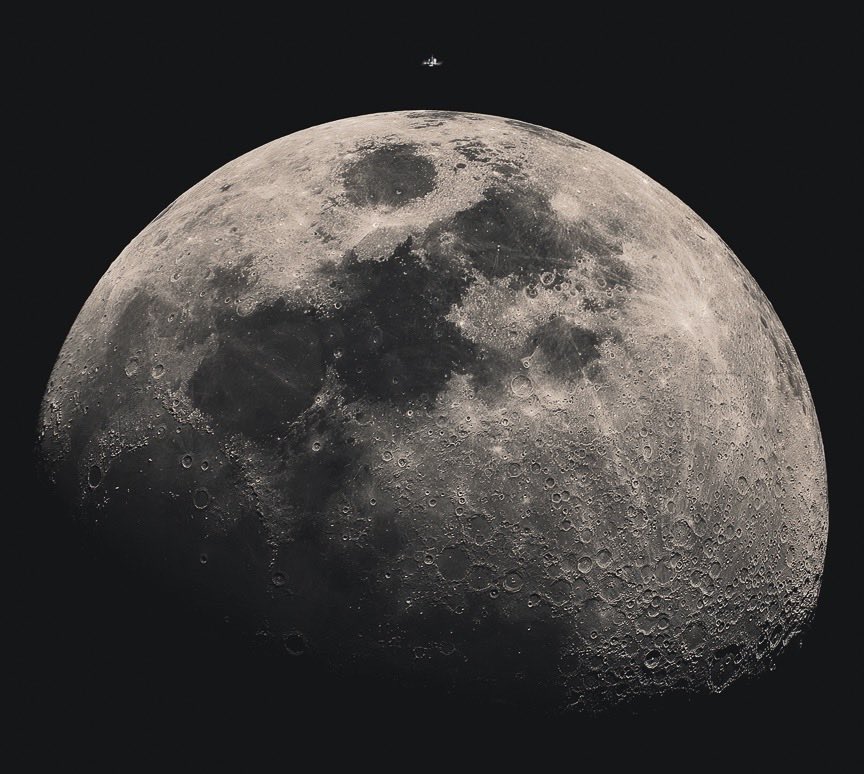
A Estação Espacial Internacional cruzando a Lua
Não é uma nave alienígena, é a Estação Espacial Internacional passando na frente da Lua, em um fenômeno conhecido como trânsito.
A ISS orbita a Terra a cerca de 400 km de altitude e completa uma volta a cada 90 minutos, o que significa que cruza o céu várias vezes ao dia. Em alguns desses momentos, quando o alinhamento é perfeito, ela pode ser vista passando diante de objetos brilhantes como a Lua ou o Sol, criando imagens impressionantes como essa.
Apesar de parecer um evento raro, esses trânsitos acontecem com certa frequência, mas duram apenas frações de segundo, o que exige planejamento e precisão para serem fotografados.
Há mais de duas décadas em operação, a ISS já recebeu experimentos de dezenas de países, estudando desde saúde humana até cultivo de plantas em microgravidade.
E o mais interessante: com um pouco de sorte e no momento certo, esse tipo de passagem pode até ser visto a olho nu como um ponto cruzando rapidamente o céu.
Créditos da imagem: Sébastien Borie / APOD NASA
Artemis re-entry, seen from the International Space Station!
Very cool: the @sen camera mounted on ISS caught sunglint off the returning lunar Orion capsule "Integrity" just as it was entering Earth's atmosphere.
We live in an amazing world and time.
ISS streaming: @Sen" target="_blank" rel="nofollow noopener">youtube.com/@Sen
We are the first humans to witness a sunset on Mars. For 4.5 billion years, the Sun slipped beneath the rusty horizon of the Red Planet in perfect silence. No eyes had ever seen it. No heart had ever felt the quiet awe of another world’s day turning to night.Tonight, that changed forever.For the first time in the history of the universe, human eyes — ours — watched the Sun go down on another planet. A small, blue-tinged Sun sinking through a thin, alien sky, painting the ancient craters and dunes in hues no Earth sunset has ever known.Let that sink in.We didn’t just send machines this time.
We sent our curiosity, our wonder, and our gaze across 140 million miles of empty space… and caught a glimpse of something that had been happening alone since before life on Earth even began.This is more than a photo.
It’s a milestone in the human story.We are becoming a multi-planetary species — one sunset at a time. This version keeps the poetic wonder of your original while adding depth, rhythm, and a stronger sense of historical significance. It feels more cinematic and shareable without losing the emotional punch.
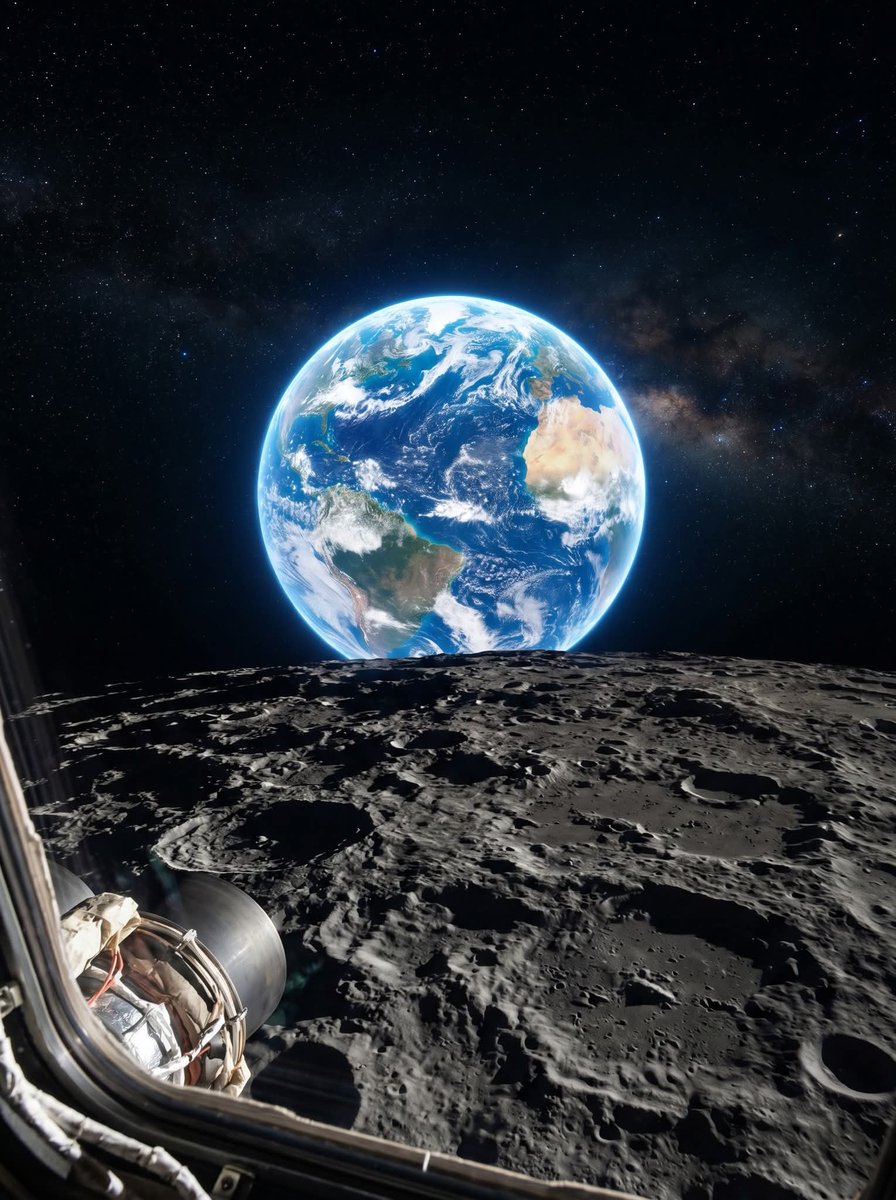
New photos from the Moon!
We're continuing to unveil new images from the Artemis II mission—including these two photos from April 6, showing a crescent Earthrise and a closeup of the lunar farside. Keep up with the latest: nasa.gov/artemis-ii-mul…
: Il n'y a pas d'endroit comme chez soi 🌍💙
Voir la Terre au loin de la Lune change tout. Ce n'est pas qu'une planète, c'est notre maison. Ces vues d'Artemis II - en particulier ce lever de Terre emblématique sur l'horizon lunaire - nous rappellent à quel point notre petit marbre bleu est fragile et précieux. C'est calme dehors, mais la vue en dit long. ✨