ทวีตที่ปักหมุด

📃🛑 | Communiqué : Sur l’apparition de comptes suivant le modèle d’Arab Intelligence.

Français
Arab Intelligence - المخابرات العربية
42.4K posts

@Arab_Intel
Page d'information | Veille politico-stratégique, affaires militaires, terrorisme, pensée Arabe et Histoire des mouvements de libérations nationaux.

Des maires RN retirent le drapeau européen de leur hôtel de ville : "Rien ne prévoit la mise en œuvre de drapeaux européens sur les mairies", réagit @MLP_officiel. #DirectAN


🇺🇦🇸🇦🇦🇪🇶🇦🇯🇴 | Ukraine–Golfe : Kiev exporte son savoir-faire militaire en échange de sécurité énergétique L’Ukraine a signé des accords de défense à long terme avec l’Arabie saoudite, les Émirats arabes unis, le Qatar et la Jordanie, a annoncé lundi le président ukrainien Volodymyr Zelensky. Ces accords portent sur une coopération stratégique dans les domaines des technologies militaires, de l’énergie et du commerce pour une durée d’au moins dix ans. Zelensky a précisé que l’Ukraine cherche à renforcer ses capacités anti-balistiques et à sécuriser ses approvisionnements énergétiques, notamment en diesel. En échange, Kiev fournira son expertise et ses technologies en matière de drones.

🇺🇦🇸🇦🇦🇪🇶🇦🇯🇴 | Ukraine–Golfe : Kiev exporte son savoir-faire militaire en échange de sécurité énergétique L’Ukraine a signé des accords de défense à long terme avec l’Arabie saoudite, les Émirats arabes unis, le Qatar et la Jordanie, a annoncé lundi le président ukrainien Volodymyr Zelensky. Ces accords portent sur une coopération stratégique dans les domaines des technologies militaires, de l’énergie et du commerce pour une durée d’au moins dix ans. Zelensky a précisé que l’Ukraine cherche à renforcer ses capacités anti-balistiques et à sécuriser ses approvisionnements énergétiques, notamment en diesel. En échange, Kiev fournira son expertise et ses technologies en matière de drones.




Strategic brief: Ukraine blocks drone exports to the Gulf to preserve its advantage over Russia 1/2 Ukraine is currently engaged in a particularly strict phase of reasserting control over its drone ecosystem, signaling a shift toward full state management of technologies now deemed critical. The Security Service of Ukraine (SBU) has imposed a formal ban on all export activities by industry players, whether drone manufacturers or interception system developers, unless explicitly approved within a state-sanctioned framework. This decision comes amid heightened regional tensions, as Gulf monarchies actively seek solutions capable of countering strikes attributed to Tehran, thereby increasing the strategic and diplomatic value of these technologies. In the country’s main industrial hubs, notably Dnipro and Lviv, the message delivered to companies is unequivocal and rooted in a logic of direct deterrence. Several executives report having received explicit warnings from the SBU, going well beyond mere regulatory reminders. These interactions are described as at times harsh, clearly aimed at preventing any independent international initiative. Any attempt to engage commercially without prior authorization now exposes companies to immediate responses from the security services, with some officials even referring to existential risks for the survival of their businesses. This tightening reflects a clear intent to lock down a sector that has become central to Ukraine’s operational advantage. One of the most structuring aspects of this policy lies in its extraterritorial extension. Ukrainian companies with structures within the European Union, previously used as relays to circumvent domestic constraints, are now fully integrated into Kyiv’s control perimeter, provided they develop or operate technologies derived from the battlefield. This approach neutralizes outsourcing strategies and imposes continuity of jurisdiction regardless of the geographic location of production capabilities. As a result, industrial arrangements with European or Middle Eastern partners have become significantly more complex, if not impractical, without political approval. Beyond the formal framework, the entire sectoral climate has shifted. Stakeholders describe an atmosphere marked by caution, even fear, leading to a drastic reduction in interactions with foreign partners. Written communications are avoided, contacts are limited, and some companies have stopped responding to international inquiries altogether. This withdrawal does not reflect a lack of commercial interest, but rather an operational constraint imposed by the security services, effectively freezing export dynamics. The effects of this lockdown are already visible in ongoing negotiations. Several advanced discussions, particularly with clients in Southeast Asia and the Gulf, have been abruptly suspended. The case of Skyfall illustrates this paralysis: despite advanced talks surrounding its Vampire bomber drone, the company is now entirely unable to pursue any export activity. The involvement of Ukraine’s Minister of Digital Transformation, Mykhailo Fedorov, in the company’s financial structuring has not led to any relaxation of restrictions, underscoring the transversal, non-negotiable, and systemic nature of the SBU’s measures. This tightening is part of a broader strategy to sanctuarize technologies developed since the beginning of the conflict. FPV drones, interception systems, and fiber-optic guided solutions are now considered major strategic assets, whose uncontrolled proliferation could erode Ukraine’s tactical advantage against Russian forces. In this context, Kyiv seeks to transform its operational edge into a lever of power by strictly conditioning access to these technologies.


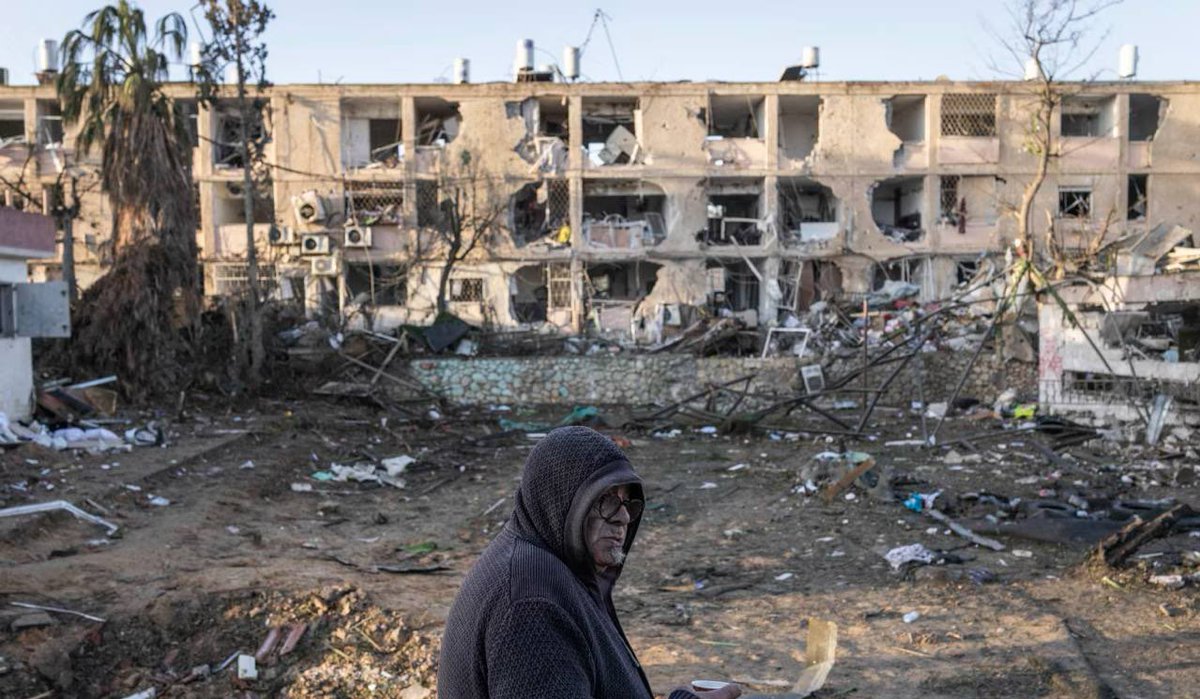
🔎🇮🇱🇮🇷 | The current sequence resembles a phase of internal conflict within the Israeli intelligence community, where the central issue is no longer solely the conduct of the war against Iran, but how prior assessments are now being revisited and redistributed in terms of responsibility. In this context, the Mossad, led by David Barnea, is increasingly exposed to indirect criticism, accused of having overestimated the vulnerability of the Iranian regime prior to the outbreak of hostilities. Facing this pressure, the service is moving away from its long-standing posture of discretion: in recent days, individuals close to its leadership have multiplied exchanges in Jerusalem with specialized journalists in order to counter what they perceive as an unfavorable narrative in the international press. The turning point stems from an article published by The New York Times on March 22, parts of which are reportedly based on information originating from the Israeli military’s operations directorate. This account suggests that, prior to the war, the Mossad had assessed that a rapid collapse of the Tehran regime was plausible. It notably refers to a meeting held in January 2026 between Israeli officials—including Mossad representatives—and CIA Director John Ratcliffe, along with members of the agency and the National Security Council. The objective of this exchange was to identify the conditions necessary for the regime’s fall, but its current portrayal tends to transform a strategic assessment exercise into a near-certain prediction of collapse. Until now, the Mossad had deliberately avoided highlighting its role, primarily for operational reasons related to the protection of hundreds of officers deployed inside Iran. This restraint contrasted with the more assertive communication strategy of the air force, military intelligence, and the operations directorate, which have been more vocal about their actions. The shift in posture now observed reflects a necessity: to reestablish the actual nature of the analyses produced and to prevent them from being reframed as a strategic misjudgment. According to the line defended by the service, the work in question fell within a conditional analytical framework rather than a forecast of rapid collapse. The scenario developed relied on a precise and indirect sequence: it envisioned the possibility of triggering, over time, a chain reaction within Iranian society, leading large segments of the population to mobilize in major urban areas against the regime. However, this mechanism depended on specific conditions, particularly the psychological and material impact of U.S. and Israeli strikes. A central element of this controversy lies in the temporality of the scenario. The Mossad insists that this dynamic was only envisaged for the post-conflict phase, once Iranian public opinion had fully absorbed the scale of the destruction inflicted. It was therefore not an immediate effect of military operations, but a delayed process, unfolding over the long term and potentially extending up to a year. This dimension is essential: it distinguishes a model of gradual destabilization from a hypothesis of rapid tipping point, now attributed to the service in certain media interpretations. The current tensions thus reflect a gap between the production and appropriation of intelligence, where an exploratory scenario is reinterpreted as a firm prediction. In a context of uncertainty regarding the strategic outcome of the war, this reframing fuels competition between agencies for control of the narrative and the preservation of their institutional credibility. This internal fragmentation also provides political leverage to Prime Minister Benjamin Netanyahu. In the event of insufficient results, particularly regarding objectives tied to dismantling Iran’s nuclear and ballistic capabilities these divergences allow him to argue that decisions were made on the basis of questionable assessments.