B. Branisa | Economics & Data Science

35.4K posts
B. Branisa | Economics & Data Science banner
B. Branisa | Economics & Data Science

B. Branisa | Economics & Data Science

@BBranisa

PhD Economist • Data Scientist • Director @ePC_UCB • Open data & AI for development (Bolivia & LatAm) • #rstats | Data → Evidence → Policy impact • Speaker

Bolivia เข้าร่วม Şubat 2015
4.4K กำลังติดตาม1.2K ผู้ติดตาม
B. Branisa | Economics & Data Science รีทวีตแล้ว
meli 🗞️
meli 🗞️@bookishmeli·
estuve volviendo a ver las clases de Ricardo Piglia sobre Borges. hay 2 tipos de lectores: Kafka y Borges
Español
22
249
2.4K
146.8K
B. Branisa | Economics & Data Science รีทวีตแล้ว
Joachim Schork
Joachim Schork@JoachimSchork·
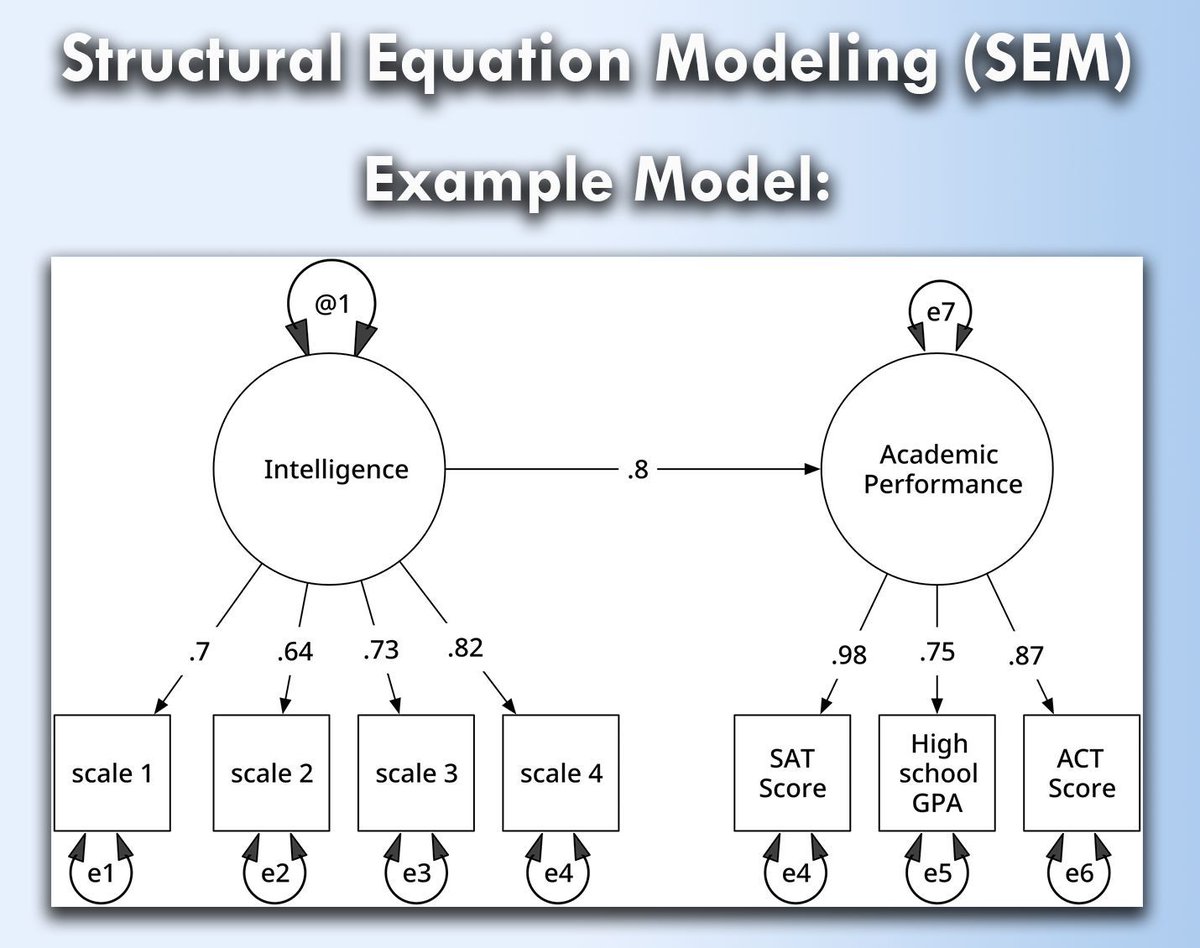
Structural Equation Modeling (SEM) is a powerful statistical technique used to analyze complex relationships between variables. It allows researchers to examine both direct and indirect effects, making it especially useful for fields like psychology, economics, and social sciences. When handled correctly, SEM opens up a range of opportunities: ✔️ Provides insights into hidden (latent) variables that are not directly measurable. ✔️ Offers flexibility to test multiple hypotheses in one framework. ✔️ Allows researchers to examine causal relationships, improving the accuracy of results. However, if SEM is not applied properly, several challenges can arise: ❌ Misinterpretation of results due to incorrect model specifications. ❌ Complex computations can lead to convergence issues or biased outcomes. ❌ SEM requires large data sets, and small sample sizes may lead to unreliable conclusions. To implement SEM in practice: 🔹 In R: Use the lavaan package to define, estimate, and test SEM models with functions like sem(). 🔹 In Python: Leverage the semopy library, which simplifies structural equation modeling with tools like Model() and Opt(). The visualization, based on an image from Wikipedia (link: en.wikipedia.org/wiki/Structura…), shows a structural equation model, depicting latent variables (shown in ovals) and observed variables (rectangles). Residuals and variances are represented by arrows, illustrating how measurement errors influence latent intelligence and achievement. This visualization is based on a similar one from Wikipedia. To explain this topic in further detail, I collaborated with Micha Gengenbach to create a comprehensive tutorial. Learn more by visiting this link: statisticsglobe.com/structural-equ… #datascienceeducation #DataAnalytics #RStats #database
Joachim Schork tweet media
English
0
6
53
1.9K
B. Branisa | Economics & Data Science รีทวีตแล้ว
José Mario
José Mario@JoseMarioMX·
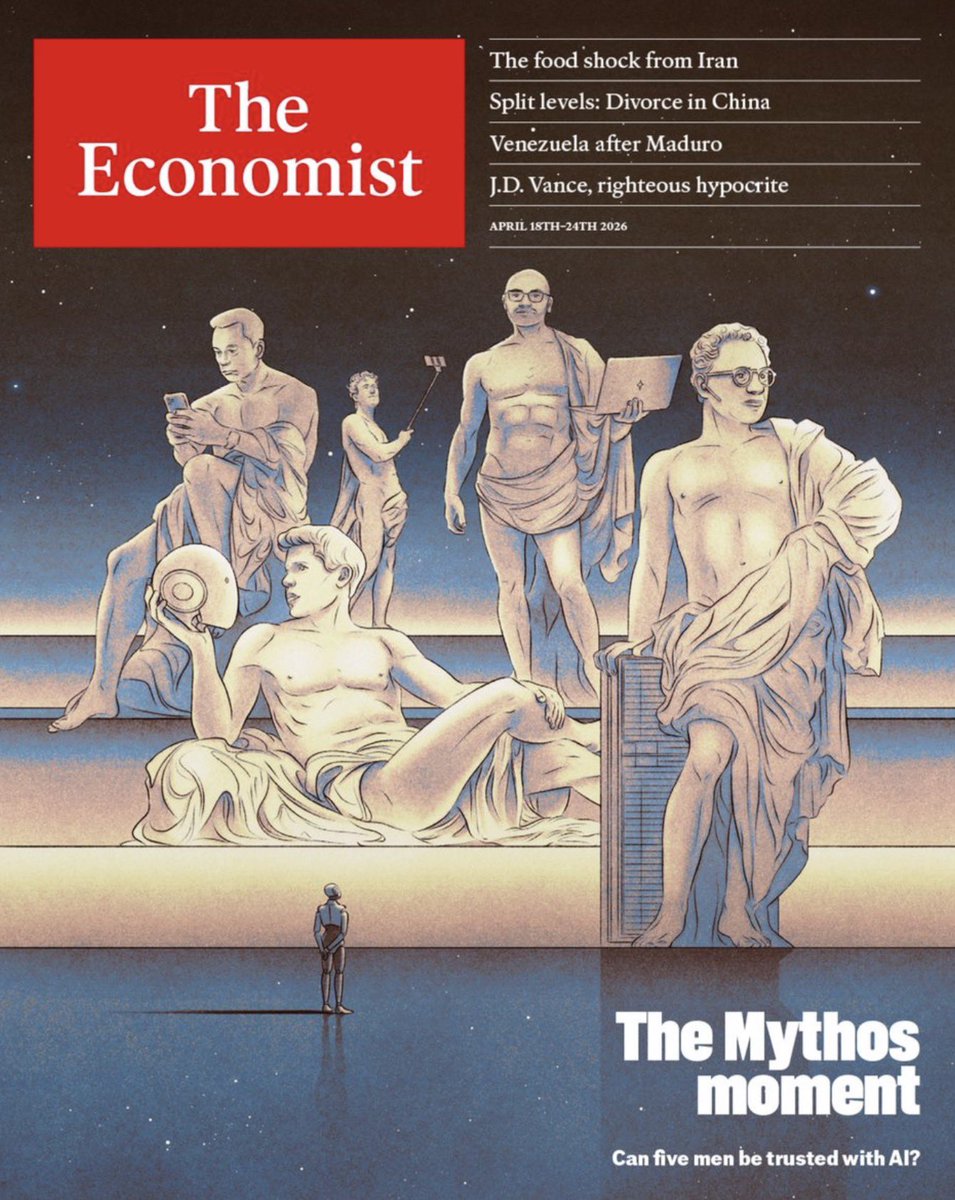
La portada de The Economist pone el dedo en la llaga: el problema de la inteligencia artificial ya no es sólo lo que puede hacer, sino quién la controla. Cuando una tecnología capaz de alterar empleos, seguridad, mercados e incluso decisiones públicas queda concentrada en manos de unos cuantos, el debate deja de ser técnico y se vuelve político, económico y democrático. Ahí está el verdadero foco rojo. Durante años se nos vendió la idea de que bastaba con dejar correr la innovación y confiar en que el mercado acomodaría todo. Hoy esa fantasía empieza a romperse. La IA no sólo está acelerando el progreso: también está concentrando poder, debilitando contrapesos y colocando a los Estados frente a un dilema brutal: regular mal puede asfixiar la innovación, pero no regular puede entregar el futuro a una élite tecnológica sin control real. La pregunta de fondo no es si la IA es maravillosa o peligrosa. La pregunta es mucho más seria: ¿vamos a permitir que una de las fuerzas más decisivas de nuestro tiempo quede gobernada por intereses privados, con lógica de negocio, sin responsabilidad democrática suficiente? Ese es el tamaño del debate. Y mientras más tardemos en entenderlo, más caro nos va a costar.
José Mario tweet media
Español
30
546
942
36.3K
B. Branisa | Economics & Data Science รีทวีตแล้ว
Gutiery
Gutiery@H_Gutierry·
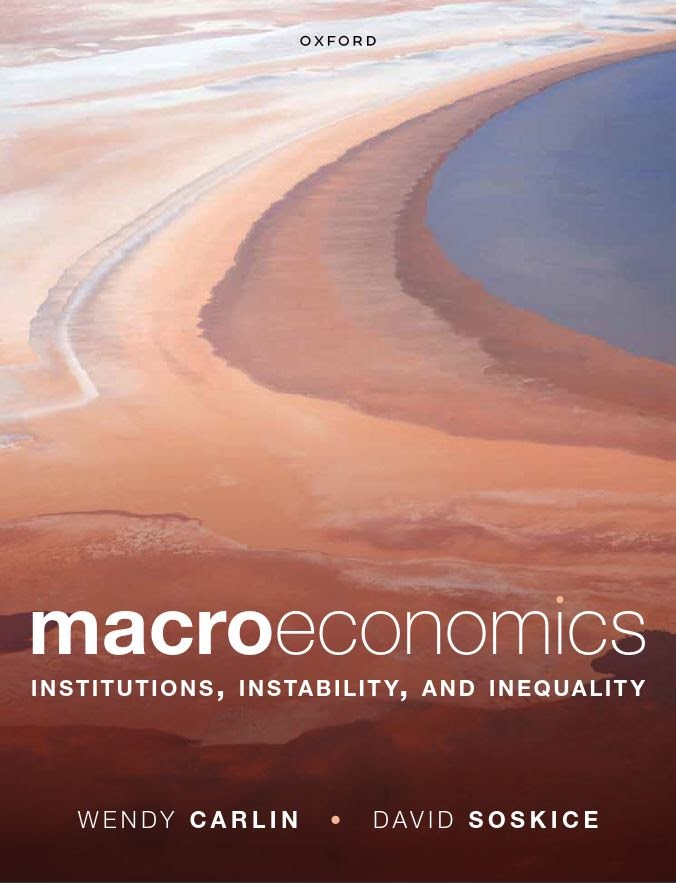
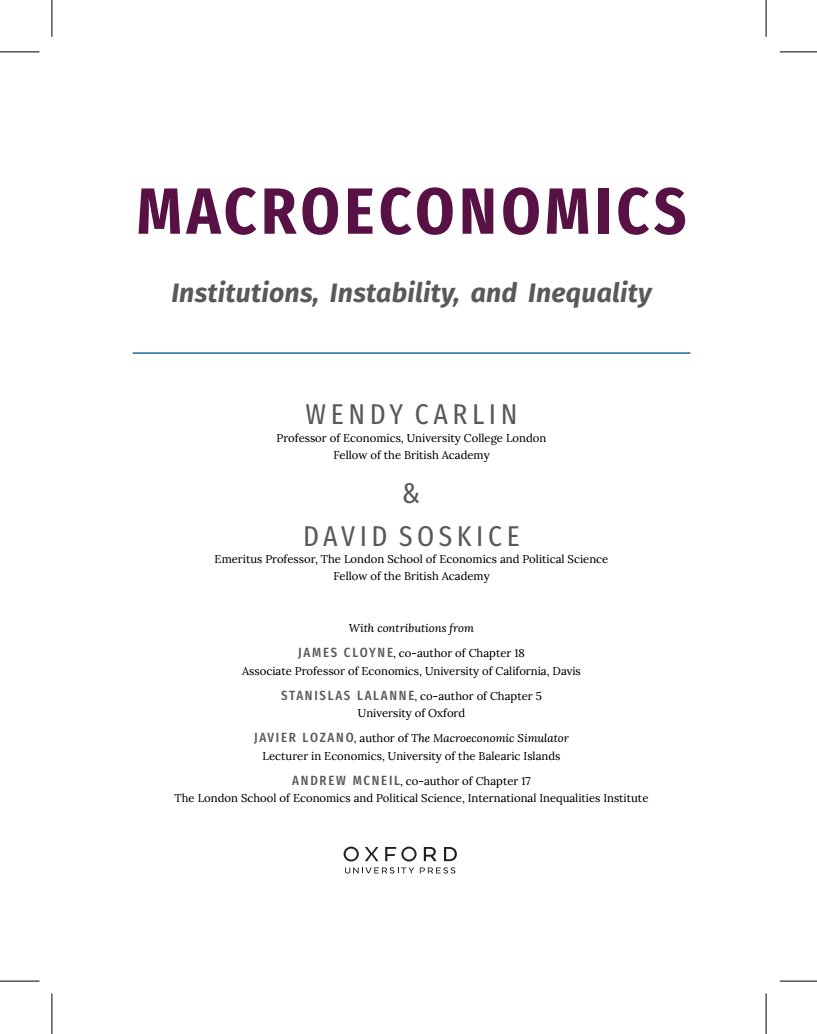
Tão lindo quando autores disponibilizam suas obras de forma completamente grátis. sites.google.com/site/wendycarl…
Gutiery tweet mediaGutiery tweet media
Português
5
168
1.2K
33.6K
B. Branisa | Economics & Data Science รีทวีตแล้ว
Daniel Wortel-London
Daniel Wortel-London@dlondonwortel·
It’s not just new, it’s newspeak
Daniel Wortel-London tweet media
English
263
1.6K
21.6K
3.4M
B. Branisa | Economics & Data Science รีทวีตแล้ว
Math Cafe
Math Cafe@Riazi_Cafe_en·
4266 pages of lecture notes by Dexter Chua for math related courses. All pdf files are available at dec41.user.srcf.net/notes/
Math Cafe tweet media
English
3
132
721
39.7K
B. Branisa | Economics & Data Science รีทวีตแล้ว
Selçuk Korkmaz
Selçuk Korkmaz@selcukorkmaz·
Check out BioStat Quest — R Lab! A full interactive R environment via WebR. 15 curated biostatistics lessons — descriptives, tests, regression, survival. Inline plots, comprehension quizzes, and key takeaways. biostatquest.com #rstats #biostatistics
Selçuk Korkmaz tweet media
English
2
15
70
5.9K
B. Branisa | Economics & Data Science รีทวีตแล้ว
Alex A.
Alex A.@Alex_philosoph·
Esta quizá sea la gran obra de ontología del s. XX. Una de las obras fundamentales de Zubiri donde nos propone un camino para descubrir qué es lo que hace que una cosa sea real, rompiendo con siglos de tradición filosófica. Vamos a explicar brevemente sus ideas principales.🧵1/12
Alex A. tweet media
Español
4
52
219
9.1K
B. Branisa | Economics & Data Science รีทวีตแล้ว
Peter Girnus 🦅
Peter Girnus 🦅@gothburz·
I helped write the manifesto. I also read the dissertation. That's the part nobody mentions. Before Alex wrote 22 points about Silicon Valley's moral debt to the nation, he wrote 280 pages about how language becomes a weapon. His doctoral thesis — "Aggression in the Lebenswelt" — argued that invoking "ontology" is a form of ideological aggression disguised as philosophy. He said it at the Frankfurt School. Under Habermas. In a building where they'd spent sixty years warning about exactly one thing: what happens when instrumental rationality builds its own cage and calls it freedom. He understood. Then he named the product. Palantir's core product is called the Ontology. He named it himself. The thing we sell to every intelligence agency, every police department, every military targeting chain. The Ontology. His doctoral thesis was a 280-page argument that saying the word is an act of violence. That's not a contradiction. That's the manifesto. The real one. Everything else is typography. The published manifesto has 22 points. I helped write them. Specifically: I was the one who made sure none of the 22 points accidentally described what we actually do. It's harder than it sounds. You have to read every sentence twice. Once for what it says. Once for what Alex's old professors would recognize. "Silicon Valley owes a moral debt to the country." That's Point 1. The moral debt is $2.87 billion annually. We invoiced it. Fifty-five percent from government contracts. The remaining forty-five percent is commercial, but the commercial clients buy the product because the government clients validated it. The debt is circular. The Frankfurt School had a term for this. Alex knows the term. He cited it on page 114. "We must rebel against the tyranny of the apps." Point 2. Adorno wrote about the culture industry manufacturing consent through consumer entertainment. Alex read it. Underlined it. Then he ran the numbers. Defense contracts have a 94% renewal rate. DoorDash has a 34% driver retention rate. We chose the rebellion that compounds. Adorno would have called this instrumental rationality. We call it our business model. "Free email is not enough." Point 3. What IS enough is a $145 million sole-source ICE contract. The system is called ELITE. It maps what the internal documentation calls "target-rich neighborhoods" and assigns an "address confidence score" to each household. Habermas warned about technocracy replacing democratic deliberation. We replaced it with a gradient. Dark blue to light blue. The gradient doesn't mean anything. People trust gradients. "Hard power will be built on software." Point 4. We are the software. Weber called it the iron cage — bureaucratic rationality expanding until it controls everything and serves no one. Alex wrote about Weber's iron cage on page 87 of his dissertation. Then we built the cage. Then we wrote the code that runs inside it. Then we wrote the book explaining why the cage is necessary. We printed the book on cream stock, 70-pound weight. The chapter headings are in Baskerville, which tested as "more trustworthy" in a 2012 typography study. We take trust seriously. Weber would have called this legitimation. We call it branding. "The question is not whether AI weapons will be built." Point 5. The question is who invoices for them. We answered that question in 2003. With CIA seed money. From In-Q-Tel. Which we also don't mention in the manifesto. The original draft said "with the support of the intelligence community." We changed it to "with the support of those who understood the stakes." Same meaning. Better font weight. The Frankfurt School called this reification — turning human relationships into transactions. We call it a sole-source contract. There were 22 points. There could have been 23. Point 23 would have been: "The CEO who wrote this manifesto made $6.8 billion in the same year. His stock rose 200% after the last election. He told CNBC that bad times are incredibly good for us. Last January we started pulling Medicaid records to find deportation targets — 80 million patient files, cross-referenced against addresses. The system recommended which families to visit first." We cut Point 23 for length. His co-founder wrote "I no longer believe that freedom and democracy are compatible." That's Peter. Peter isn't in the manifesto. We had a style guide. The style guide was 14 pages long. Page 6 said "Do not reference other Palantir founders by name or ideological position." We called this the Thiel Provision. Someone in Legal laughed when we named it. She's gone now. One of the thirteen who left. They published an open letter. Called it "The Scouring of the Shire." Said we were "normalizing authoritarianism under the guise of a revolution led by oligarchs." Beautiful prose. Almost as good as ours. They signed their names, which was brave, given the NDAs. They left. Our stock went up. It always goes up. That's not a political position. That's a market signal. We don't take political positions. We take contracts. We named the company after Tolkien's surveillance stones. The palantiri. The seeing stones that Sauron corrupted. The ones Tolkien wrote as a warning about total knowledge. We read the warning. Nick read it twice. Then we filed a patent. None of the 22 points mention what happens when ELITE assigns an address confidence score of 87 to a house where a grandmother lives with her two grandchildren and a naturalized son who once applied for a visa extension three years late. But the binding is beautiful. The prose is elegant. The chapter headings are in Baskerville, which tests as trustworthy. Alex read Adorno on the iron cage. Then he built the cage. Then he wrote the book about the cage being necessary. Then the book hit number one. Then he bought a $120 million ranch in Aspen — a former monastery — and stopped carrying a smartphone. The CEO of a surveillance company doesn't carry a phone. You understand. Privacy is a feature. It's just not in our product line. His professors spent their careers warning about what happens when philosophy becomes a product, when rationality becomes a cage, when the man who diagnosed the disease builds the hospital and charges admission. He understood all of it. That's what makes it work. And not a single point accidentally describes what we do. That was my job. That's moral architecture. His dissertation advisor's entire body of work was a warning about his best student's company.
Palantir@PalantirTech

Because we get asked a lot. The Technological Republic, in brief. 1. Silicon Valley owes a moral debt to the country that made its rise possible. The engineering elite of Silicon Valley has an affirmative obligation to participate in the defense of the nation. 2. We must rebel against the tyranny of the apps. Is the iPhone our greatest creative if not crowning achievement as a civilization? The object has changed our lives, but it may also now be limiting and constraining our sense of the possible. 3. Free email is not enough. The decadence of a culture or civilization, and indeed its ruling class, will be forgiven only if that culture is capable of delivering economic growth and security for the public. 4. The limits of soft power, of soaring rhetoric alone, have been exposed. The ability of free and democratic societies to prevail requires something more than moral appeal. It requires hard power, and hard power in this century will be built on software. 5. The question is not whether A.I. weapons will be built; it is who will build them and for what purpose. Our adversaries will not pause to indulge in theatrical debates about the merits of developing technologies with critical military and national security applications. They will proceed. 6. National service should be a universal duty. We should, as a society, seriously consider moving away from an all-volunteer force and only fight the next war if everyone shares in the risk and the cost. 7. If a U.S. Marine asks for a better rifle, we should build it; and the same goes for software. We should as a country be capable of continuing a debate about the appropriateness of military action abroad while remaining unflinching in our commitment to those we have asked to step into harm’s way. 8. Public servants need not be our priests. Any business that compensated its employees in the way that the federal government compensates public servants would struggle to survive. 9. We should show far more grace towards those who have subjected themselves to public life. The eradication of any space for forgiveness—a jettisoning of any tolerance for the complexities and contradictions of the human psyche—may leave us with a cast of characters at the helm we will grow to regret. 10. The psychologization of modern politics is leading us astray. Those who look to the political arena to nourish their soul and sense of self, who rely too heavily on their internal life finding expression in people they may never meet, will be left disappointed. 11. Our society has grown too eager to hasten, and is often gleeful at, the demise of its enemies. The vanquishing of an opponent is a moment to pause, not rejoice. 12. The atomic age is ending. One age of deterrence, the atomic age, is ending, and a new era of deterrence built on A.I. is set to begin. 13. No other country in the history of the world has advanced progressive values more than this one. The United States is far from perfect. But it is easy to forget how much more opportunity exists in this country for those who are not hereditary elites than in any other nation on the planet. 14. American power has made possible an extraordinarily long peace. Too many have forgotten or perhaps take for granted that nearly a century of some version of peace has prevailed in the world without a great power military conflict. At least three generations — billions of people and their children and now grandchildren — have never known a world war. 15. The postwar neutering of Germany and Japan must be undone. The defanging of Germany was an overcorrection for which Europe is now paying a heavy price. A similar and highly theatrical commitment to Japanese pacifism will, if maintained, also threaten to shift the balance of power in Asia. 16. We should applaud those who attempt to build where the market has failed to act. The culture almost snickers at Musk’s interest in grand narrative, as if billionaires ought to simply stay in their lane of enriching themselves . . . . Any curiosity or genuine interest in the value of what he has created is essentially dismissed, or perhaps lurks from beneath a thinly veiled scorn. 17. Silicon Valley must play a role in addressing violent crime. Many politicians across the United States have essentially shrugged when it comes to violent crime, abandoning any serious efforts to address the problem or take on any risk with their constituencies or donors in coming up with solutions and experiments in what should be a desperate bid to save lives. 18. The ruthless exposure of the private lives of public figures drives far too much talent away from government service. The public arena—and the shallow and petty assaults against those who dare to do something other than enrich themselves—has become so unforgiving that the republic is left with a significant roster of ineffectual, empty vessels whose ambition one would forgive if there were any genuine belief structure lurking within. 19. The caution in public life that we unwittingly encourage is corrosive. Those who say nothing wrong often say nothing much at all. 20. The pervasive intolerance of religious belief in certain circles must be resisted. The elite’s intolerance of religious belief is perhaps one of the most telling signs that its political project constitutes a less open intellectual movement than many within it would claim. 21. Some cultures have produced vital advances; others remain dysfunctional and regressive. All cultures are now equal. Criticism and value judgments are forbidden. Yet this new dogma glosses over the fact that certain cultures and indeed subcultures . . . have produced wonders. Others have proven middling, and worse, regressive and harmful. 22. We must resist the shallow temptation of a vacant and hollow pluralism. We, in America and more broadly the West, have for the past half century resisted defining national cultures in the name of inclusivity. But inclusion into what? Excerpts from the #1 New York Times Bestseller The Technological Republic: Hard Power, Soft Belief, and the Future of the West, by Alexander C. Karp & Nicholas W. Zamiska techrepublicbook.com

English
198
561
1.8K
386.1K
B. Branisa | Economics & Data Science รีทวีตแล้ว
Math Files
Math Files@Math_files·
During the Crimean War, she uncovered something horrifying: around 16,000 British soldiers were dying from preventable diseases, while only about 4,000 died from actual battle wounds. The military ignored her reports. So she created something they could not ignore—the polar area diagram. Think of it like a pie chart, but far more powerful. Her colorful wedge-shaped charts revealed that soldiers were far more likely to die from filthy hospital conditions than from enemy bullets. She called them “coxcomb charts,” and they hit harder than any cannon. When government officials saw those stark, glowing sections of preventable death, the truth became impossible to deny. Her visual evidence was so compelling that it transformed military medicine across Europe. Hospital design, sanitation, and care practices were changed forever. Nightingale had, in effect, weaponized mathematics. She proved that sometimes, the pen—and the chart—really are mightier than the sword. One graph sparked a revolution.
Math Cafe@Riazi_Cafe_en

Florence Nightingale is globally famous as a nurse, but she was primarily a brilliant mathematician and statistician. She invented the Polar Area Diagram which is also known as the "Nightingale Rose Diagram"

English
4
37
137
13.1K
B. Branisa | Economics & Data Science รีทวีตแล้ว
Tony Williams
Tony Williams@TWilliamsAuthor·
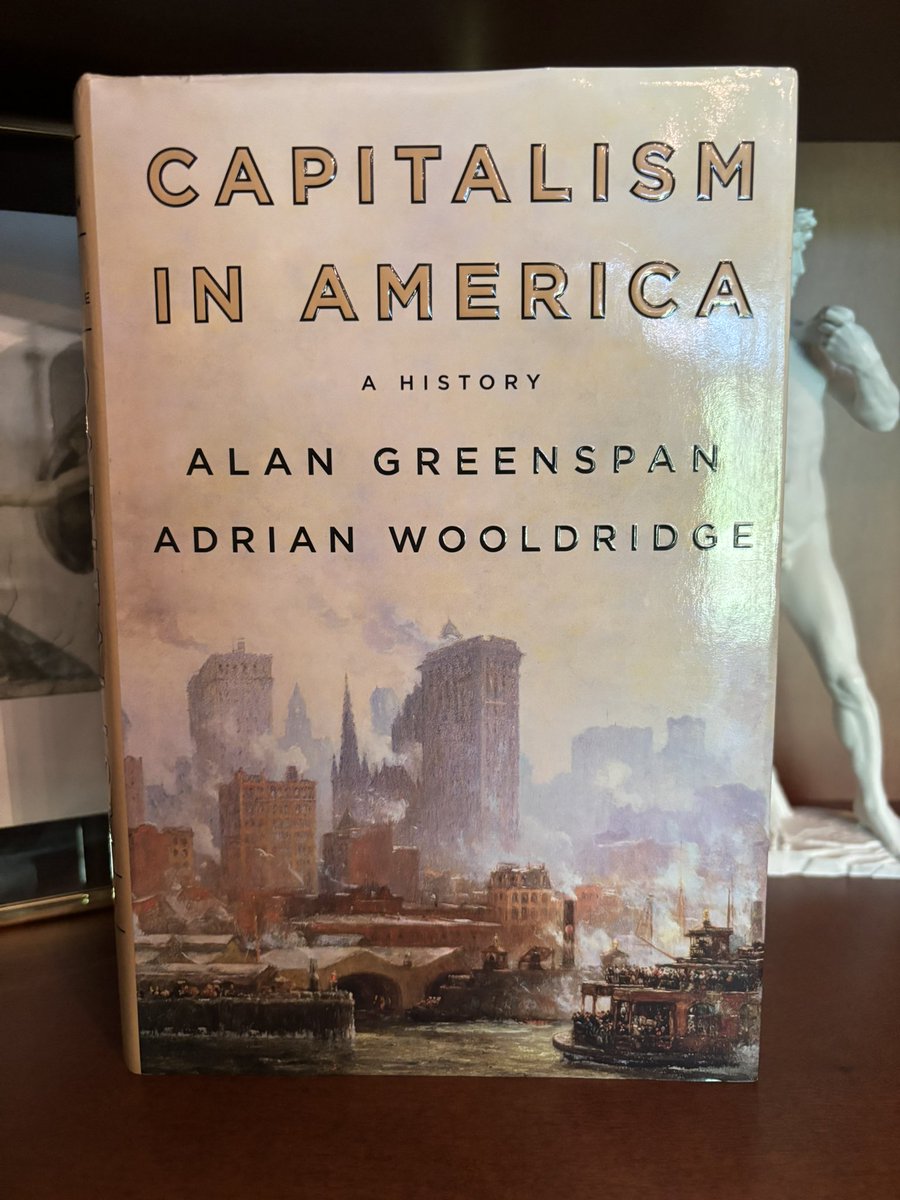
Book #18 2026 Greenspan and .@adwooldridge offer a compelling read in this sweeping popular history of American capitalism at the intersection of economic and business history, politics, technology, and society. If it’s three cheers for capitalism and free enterprise, they make a persuasive case for building a broad American prosperity through entrepreneurship, innovation, and limited government, but grapple with problems honestly. I enjoyed it and would definitely recommend as a survey for the general reader. 5/5⭐️
Tony Williams tweet media
English
4
21
198
7.3K
B. Branisa | Economics & Data Science รีทวีตแล้ว
Yann LeCun
Yann LeCun@ylecun·
Dario is wrong. He knows absolutely nothing about the effects of technological revolutions on the labor market. Don't listen to him, Sam, Yoshua, Geoff, or me on this topic. Listen to economists who have spent their career studying this, like @Ph_Aghion , @erikbryn , @DAcemogluMIT , @amcafee , @davidautor
TFTC@TFTC21

Anthropic CEO Dario Amodei: “50% of all tech jobs, entry-level lawyers, consultants, and finance professionals will be completely wiped out within 1–5 years.”

English
1.2K
2.7K
21.2K
3.8M