
BioSignal

1.3K posts

BioSignal banner
BioSignal

BioSignal

@BioSignal

Concise biotech intelligence. Oncology, cell therapy, antibodies, ADCs, gene therapy, and early clinical signals. High signal, low noise.

เข้าร่วม Kasım 2025
9 กำลังติดตาม481 ผู้ติดตาม
BioSignal
BioSignal@BioSignal·
JUST IN: Roche’s Genentech ($RHHBY) is halting Phase 3 clinical development for its Myostatin (GDF-8) inhibitor, Emugrobart (RO7204239). The antibody failed to show meaningful muscle growth or functional improvement in patients with Spinal Muscular Atrophy (SMA) and Facioscapulary Muscular Dystrophy (FSHD). The Alpha: This is a major reality check for the "GLP-1 + Muscle" investment thesis. While the market hoped Myostatin inhibitors would counteract the lean mass loss caused by Zepbound ($LLY) and Wegovy ($NVO), Genentech’s failure in rare disease—where muscle signaling is most stressed—casts a dark shadow over the ongoing Phase 2 "Gyminda" obesity trial (Emugrobart + Tirzepatide). Investment Implications: Direct Hit: $RHHBY pipeline takes a hit; focus shifts to their alternative oral GLP-1 and subcutaneous assets. Sympathy Volatility: High-stakes for Scholar Rock ($SRRK), BioAge ($BIOA), and Regeneron ($REGN) who are betting billions that their specific Myostatin/Actin inhibition mechanisms are superior. The "Weight Quality" Shift: Markets may pivot away from pure Myostatin blockers toward dual-pathway inhibitors (ActRII) or Incretin combinations that prioritize metabolic health over raw muscle mass. Genentech has struggled with this target before (RG6206 in 2019). The "增肌" (muscle gain) holy grail remains elusive, proving that inhibiting a brake doesn't always make the car go faster. $RHHBY $LLY $NVO $SRRK $BIOA $REGN $XBI $IBB
English

0
0
0
13
BioSignal
BioSignal@BioSignal·
Kelun-Biotech ($6990.HK) 2025 earnings confirm the "Biotech to Biopharma" transition is complete. With 4 products launched and 8 indications approved, the company has successfully evolved from a licensing powerhouse into a fully integrated commercial machine. The Financial Engine: 2025 Revenue: ¥2.06B (Driven by high-margin ADC milestones and early commercial sales). Cash Position: ¥4.56B (Sufficient runway to fuel a massive 3-tier pipeline). The "Alpha" – Tiered Pipeline Strategy: The Cash Cow: Sac-TMT (TROP2 ADC). 2025 was the breakout year, securing approvals in 2nd/3rd line EGFR-mutated NSCLC and HR+/HER2- breast cancer. Combined with Merck’s ($MRK) 17 global P3 trials, this is a top-tier global contender. The Mid-Term Growth: 5 clinical-stage ADCs (CLDN18.2, Nectin-4, etc.) already validated by MSD partnerships. The Future Frontier: Next-gen RDCs (Radionuclide Drug Conjugates) and Dual-Payload ADCs (SKB565) are moving into the clinic, pushing the technical boundaries beyond traditional ADC frameworks. The Comparative Edge: While peers are struggling with single-asset risk, Kelun has built a "Matrix" of IO+ADC combinations. Their PD-L1 (Tagolimab) and Cetuximab (N01) are already being paired with their ADC stable to raise the efficacy ceiling in frontline Lung and GI cancers. The market is no longer pricing Kelun on "potential"—it is pricing them on "execution." With the Merck-partnered P3 trials maturing in 2026/2027, the global royalty stream is the next major catalyst. $6990.HK $MRK $AZN $DSNKY $XBI $IBB
English
0
0
1
38
BioSignal
BioSignal@BioSignal·
The "Great Re-Entry" of global USD funds into Chinese Biotech is officially underway. After two years of geopolitical hesitation, the narrative has shifted from "containment" to "integration." The Insight: The NewCo (New Company) model has evolved from a temporary workaround into a high-octane arbitrage machine. Global funds are no longer just buying assets at the Proof-of-Concept (PoC) stage; they are moving upstream to capture the "China Validation" premium. The China Edge: China’s R&D costs are 1/3 of the West's, with development speeds clocking in 2x faster. By combining Western conceptual biology with China’s industrialized CXO infrastructure, funds like Pivotal bioVenture are creating a "Global Optimal Path": US concept -> China validation -> Global execution. This isn't just about cheap labor; it’s about a "3.0 Partnership" phase. • 1.0: Simple License-out (One-off cash). • 2.0: NewCo (Equity + Pipeline sharing). • 3.0: Platform Co-creation (e.g., Harbour BioMed’s $HBM multi-year strategic alliance with AstraZeneca $AZN). The first wave of NewCos is now prepping for a 2H 2026/1H 2027 Nasdaq IPO window. The era of "undervalued" Chinese assets is closing as these companies transform into lean, dual-headquartered multinationals. Watch for the convergence of China’s engineering scale and the West's capital markets. The bridge is being rebuilt. 🧵 $HBM $AZN $MRK $SMMT $XBI $IBB
English
0
0
1
36
BioSignal
BioSignal@BioSignal·
The "Valley of Death" in biotech isn't just about funding—it’s the regulatory gap between the lab and the first human dose. Most IND (Investigational New Drug) filings don't fail because the science is bad; they fail because the translation is "lost in versioning." The Insight: A successful IND is a masterclass in risk communication. Regulators at the FDA and NMPA aren't looking for a "cure" in a pre-clinical package—they are looking for a justified Safety Margin. If your GLP toxicology dose-design logic is flawed, your starting dose in humans (FIH) will be rejected, killing your lead time. The China Edge: We are seeing a new wave of "Translational Masters" in China—experts like Dr. Xiaoxiong Wei (ex-FDA Senior Reviewer) who are bridging the gap. By applying FDA-level clinical pharmacology standards to NMPA filings early on, Chinese biotechs are achieving "Dual-Filing" speed that was previously impossible. Critical checkpoints for 2026: • Pre-IND: Is your pharmacodynamics (PD) baseline scientifically rigorous or just "good enough"? • GLP Tox: Are you designing for safety or just checking boxes? • FIH Strategy: Can you defend your Dose Escalation logic under intense scrutiny? Don't let a "data glitch" in the lab become a "clinical hold" at the agency. The bridge from bench to bedside is built on regulatory foresight, not just luck. This is the pipeline workflow to watch. 🧵 $XBI $IBB $603259.SS $IQV $MEDP
English
0
0
0
28
BioSignal
BioSignal@BioSignal·
JUST IN: Swiss-based PSI CRO reports record-breaking 2025 results, proving that "Predictability" is the new gold standard in a volatile biotech funding environment. While mega-CROs face integration hurdles, this independent mid-sized player is stealing market share. The Alpha: In an industry plagued by delays, PSI hit a 97% Last Patient In (LPI) on-time rate. For biotechs, this means avoiding the "budget creep" that kills Phase 2/3 programs. Their 52% surge in new clients and 93% repeat business rate suggests a massive flight to quality as sponsors dump underperforming vendors. Key Metrics: • Revenue Growth: +15% • Site Activations: +38% (via SYNETIC AI platform) • Credit Rating: Dun & Bradstreet Level 1 (Lowest risk) This performance is a direct challenge to the "Big CRO" oligopoly. If you are tracking clinical execution risk in Oncology, IBD, or Cell/Gene Therapy, PSI is the operational benchmark. $IQV $MEDP $FTRE $XBI $IBB
English
0
0
0
26
BioSignal
BioSignal@BioSignal·
The "China Price" era for biotech is officially dead. Between 2022 and 2024, upfront payments for Chinese assets jumped 230%—and 2026 is the year the data finally catches up to the hype. We are entering the "Great Data Reveal." Multiple P3 readouts for ADC and Bispecific assets are set to challenge established Western blockbusters like Keytruda ($MRK) and Enhertu ($AZN/$DSNKY). The 2026 Collision Course: EGFRxHER3 ADC: SystImmune/BMS ($688506.SS / $BMY). BL-B01D1's P3 data in TNBC already hit endpoints. 2026 brings two critical P3 readouts in NSCLC. This is the only asset of its kind in P3 globally. TROP2 ADC: Kelun-Biotech/MSD ($6990.HK / $MRK). SKB264 (MK-2870) is Merck’s primary hedge against the Keytruda patent cliff. 4 Chinese P3 readouts start now; Global P3 data follows in 2027. PD-1/VEGF Bispecific: Akeso/Summit ($9926.HK / $SMMT). The "Keytruda Killer" (Ivonescimab) faces its OS (Overall Survival) moment in 2026. Summit just moved up the HARMONi-3 interim PFS analysis to Q2 2026 to accelerate FDA filing. HER2 ADC: Hengrui ($600276.SS) has entered a bold head-to-head P2 trial against the "King" DS-8201. If SHR-A1811 shows comparable efficacy with a better safety profile (less ILD), the ADC market cap will shift overnight. The narrative is shifting from "Chinese efficiency" to "Chinese clinical superiority." In 2026, the data won't just be "good enough for the price"—it will be the new global standard. $688506.SS $6990.HK $9926.HK $600276.SS $SMMT $MRK $BMY $AZN $DSNKY $XBI $IBB
English
0
0
1
38
BioSignal
BioSignal@BioSignal·
Is the $8B+ Dupixent ($SNY) fortress finally cracking? Apogee Therapeutics ($APGE) just dropped Phase 2 52-week data for APG777 (anti-IL-13) that threatens to turn the Atopic Dermatitis (AD) market upside down. The headline isn't just the efficacy—it's the dosing. While Dupixent ($SNY) and Ebglyss ($LLY) require injections every 2–4 weeks, APG777 is maintaining massive responses with a once-every-6-months regimen. The Efficacy Gap (52-Week Maintenance): EASI-75 (3-month dosing): 75% EASI-75 (6-month dosing): 85% vIGA 0/1 (Clear/Almost Clear): Up to 86% By using antibody engineering to extend half-life, $APGE is attacking the "standard of care" through patient convenience. This is a "set it and forget it" model for chronic inflammation. The Sympathy Play: $APGE’s success validates the IL-13 ultra-long-acting thesis, creating a massive tailwind for Chinese innovators like Keymed ($2162.HK)—whose asset was recently licensed by Gilead ($GILD) for $2.1B—who are also chasing BIC (Best-in-Class) profiles in the Th2 space. Apogee plans to trigger Phase 3 in 2H 2026. The AD market is shifting from "Does it work?" to "How seldom do I have to poke myself?" and $APGE is winning the latter. $APGE $SNY $LLY $GILD $2162.HK $XBI $IBB
English
0
0
0
38
BioSignal
BioSignal@BioSignal·
The "Biotech to C-MNC" (China-headquartered Multinational Corporation) transition is no longer a theory. Henlius ($2696.HK) 2025 results prove that high-quality biosimilars are the ultimate ATM to fund deep-tech innovation. 2025 Financial Powerhouse: • Revenue: ¥6.67B (+16.5% YoY) • Net Profit: ¥827M (3rd consecutive year of profitability) • R&D Spend: ¥2.49B (+35.4%)—The innovation engine is accelerating. The real Alpha? Their "China-Global" arbitrage. While Western giants struggle with patent cliffs, Henlius is successfully launching dual-track assets (Biosimilars + Innovative ADCs/TCEs) across 60 countries. The Comparison: $2696.HK vs. The Field • Cash Flow: Unlike cash-burning Biotechs, Henlius uses its ¥3.3B+ breast cancer franchise ($HLX02/漢曲優) to self-fund P3 trials. • US/EU Footprint: 4 FDA approvals and 4 EC approvals. This is not a "domestic play"; it is a global competitor. • Pipeline Edge: HLX43 (PD-L1 ADC) is showing "Single Agent as a Pipeline" potential in NSCLC, aiming for Best-in-Class (BIC) status against global PD-L1/ADC combos. Henlius has effectively de-risked the "China Biotech" label by turning into a profitable, self-sustaining innovator. $2696.HK $MRK $AZN $SNY $XBI $IBB
English
0
0
0
37
BioSignal
BioSignal@BioSignal·
The global Hemophilia B gene therapy market is in a death spiral. Pfizer ($PFE) and BioMarin ($BMRN) are retreating due to poor sales, while CSL’s ($CSLLY) Hemgenix faces chronic manufacturing shortages. Enter Belief BioMed. Their AAV gene therapy, Xinjiuning (BBM-H901), just secured approval in Macau, signaling a massive aggressive push to take the asset global. The "Alpha" isn't just the clinical profile—it's the predatory pricing. While Western gene therapies launched at $3.5M per dose, Belief BioMed is positioned to disrupt the entire pricing model. The Disruption Math: CSL Hemgenix: ~$3.5 Million / dose (Supply Chain Issues) Belief BioMed (BBM-H901): ~1/10th of the Western Price (Scalable Tech) If Belief BioMed exports this "China Price" to international markets, the high-margin Western Gene Therapy thesis is dead. They aren't just competing on science; they are competing on a cost structure that Western Big Pharma cannot mathematically match. Partnered with Takeda ($TAK) for commercialization in Greater China, this is the first real test of whether a Chinese-developed AAV can collapse a global monopoly. $TAK $CSLLY $PFE $BMRN $XBI $IBB
English
0
0
2
103
BioSignal
BioSignal@BioSignal·
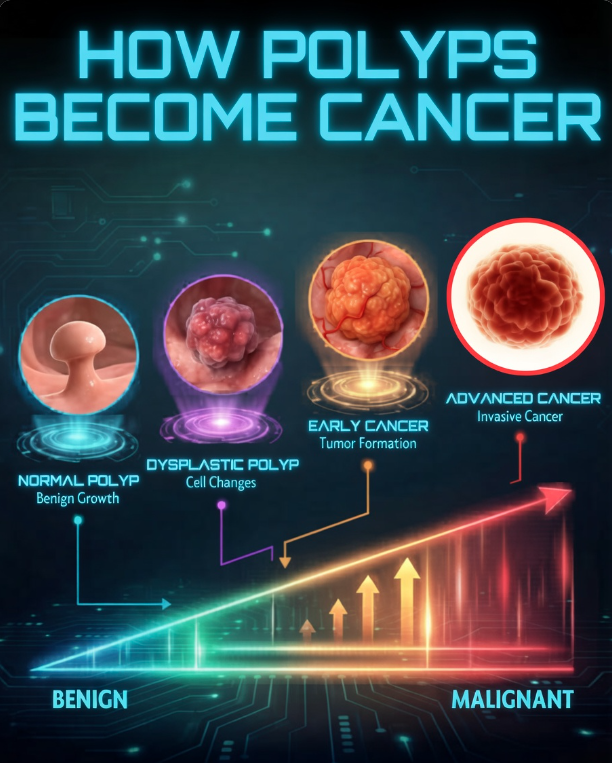
This is directionally correct, but the key nuance is which polyps and which evolutionary trajectories. Only a subset, primarily adenomatous polyps and serrated lesions, carry meaningful malignant potential. Even within those, progression is not linear or guaranteed. It is governed by specific molecular pathways: 🧪Chromosomal instability pathway (APC → KRAS → TP53) driving classical adenoma–carcinoma progression 🧪CpG island methylator phenotype (CIMP) and BRAF mutations in serrated pathways 🧪Mismatch repair deficiency leading to microsatellite instability in a smaller subset What makes colorectal cancer uniquely “preventable” is not just timing, but accessibility of the tissue and visibility of premalignant architecture. Few solid tumours offer this combination. Screening is essentially an intervention into somatic evolution. You are removing clonal populations before they acquire fitness advantages such as invasiveness, immune evasion, or metabolic rewiring. The more interesting frontier now is not just detection, but: 🧪risk stratification based on molecular signatures 🧪non-invasive early detection via cfDNA and methylation patterns 🧪microbiome interactions that may influence progression kinetics So yes, polyps → cancer is the simplified narrative. But mechanistically, this is one of the cleanest real-world models of Darwinian selection in human disease. And one of the rare cases where we can interrupt it early, reliably, and at scale.
English
0
0
0
23
Massimo
Massimo@Rainmaker1973·
Most colorectal cancers start as small, harmless growths called polyps that form on the inner lining of the colon. At first, these polyps are benign. Over time, however, they can undergo cellular changes known as dysplasia, where the cells become abnormal and begin to mutate. As these abnormal cells continue to multiply uncontrollably, the polyp transforms into an early-stage tumor. This marks the beginning of a dangerous shift from benign to malignant. The progression from a normal polyp to invasive cancer is a gradual process — and that gradual nature is exactly what makes it preventable. Routine screenings allow these polyps to be detected and removed before they turn cancerous, effectively breaking the chain of progression. Without intervention, the tumor can eventually invade deeper layers of the colon wall, becoming life-threatening. This is why proactive screening remains one of the most powerful tools we have against colorectal cancer. [American Cancer Society. (2024). Colorectal Cancer Early Detection, Diagnosis, and Staging. American Cancer Society]
Massimo tweet media
English
12
13
41
10.6K
BioSignal
BioSignal@BioSignal·
JUST IN: Bioyi Biotech Group (伯仪生物) officially appoints Jianhua Zhai as Vice General Manager of Commerce. This is a massive "talent grab" from Western Big Pharma to lead the global expansion of a rising Chinese life sciences powerhouse. The Alpha: Zhai isn’t just a regional lead—he is a heavyweight with 20+ years of pedigree at the top of the global supply chain. His previous roles include General Manager of Abcam China, Modality Director at Cytiva ($DHR), and GM of Pall Medical. Strategic Impact: Global Standard Play: Bioyi is moving beyond being a local manufacturer to a global competitor in protein purification and research reagents. Hiring the former head of Abcam signals an intent to dominate the high-end academic and R&D market. Consolidation of "The Big Three": Zhai will oversee the integration of Bioyi's core brands (Tiandirenhe, Bioyi, ACE), effectively closing the loop between technology, product, and global sales. Western Market Disruption: Expect Bioyi to aggressively target the market share of established western peers by leveraging Zhai’s knowledge of international distribution and localized product development. Bioyi is positioning itself to be the "Chinese Cytiva," and bringing in the man who helped run that very engine in China is a definitive power move. $DHR $TMO $A $XBI $IBB
English
0
0
0
42
BioSignal
BioSignal@BioSignal·
The "Holy Grail" of oncology—functional CAR-T cells created entirely inside the body—just cleared its biggest technical hurdle. A landmark Nature study from Azalea Therapeutics proves we can now achieve 90% Complete Remission (CR) in animal models using a sophisticated dual-vector "lock and key" system. By combining an antibody-targeted envelope vector (EDV) to deliver CRISPR-Cas9 and a customized AAV to deliver the CAR DNA, researchers achieved site-specific integration. This means the CAR is inserted exactly into the T-cell’s native TRAC locus, allowing the cell to regulate itself like a natural immune soldier—eliminating the risk of random genomic integration and toxic cytokine storms. The smart money is moving fast. In just the first three months of 2026, Chinese In Vivo CAR-T startups have vacuumed up over 1 billion RMB ($140M+) in fresh funding. Leading the pack are OriCell, Immunofoco ($200M Pre-IPO), Leman Bio, and TianYiKang. While Western firms like Umoja and Capstan paved the way, China’s biotech ecosystem is industrializing the tech with dual-target designs and metabolic enhancement platforms. We are no longer talking about "if" cell therapy becomes a simple off-the-shelf injection, but "when." This is the pipeline to watch. 🧵 $AZN $LLY $GILD $ABBV $XBI $IBB
English
0
0
1
73
BioSignal
BioSignal@BioSignal·
Traditional CAR-T is a logistics nightmare: weeks of manufacturing, high costs, and mandatory lymphodepletion. But the "In Vivo" revolution is officially hitting the clinic in China, turning cell therapy into a "ready-to-use" off-the-shelf injectable. CSPC Pharma ($1093dotHK) just launched the first domestic registration-track Phase I/II trial for SYS6055, an in-vivo CAR-T targeting r/r aggressive B-cell lymphoma. This places them in the global "Qualifying Round" alongside MNCs like AstraZeneca ($AZN), AbbVie ($ABBV), and Gilead ($GILD), who have dropped billions to acquire this tech. The disruption is real: By engineering T-cells directly inside the patient's body using viral or LNP vectors, we skip the "vein-to-vein" wait time and potentially cut treatment costs by 90%. While the West leads on platform acquisitions (Umoja, Capstan, Kelonia), China is moving faster into the clinic. The challenge now shifts to monitoring—since you can’t control the dose in a lab, high-parameter flow cytometry is the only way to track CAR-T expansion and cytokine storm (CRS) risks in real-time. Watch for early safety data; if CSPC proves "off-the-shelf" safety, the $20B+ CAR-T market face-lifts overnight. This is the pipeline to watch. 🧵 $1093dotHK $AZN $ABBV $GILD $LLY $XBI $IBB
English
0
0
0
80
BioSignal
BioSignal@BioSignal·
Everyone thinks gene therapy is permanently trapped in ultra-rare, million-dollar orphan diseases. But China’s 2025 IND data just revealed a massive pivot: in-vivo gene editing is coming for mainstream chronic markets. China just cleared over 30 new 1st-in-class gene therapy INDs. The absolute standout? YolTech and Salubris just secured dual US/China IND clearances for YOLT-101, an in-vivo Base Editor for HeFH (familial high cholesterol). This completely validates Eli Lilly's ($LLY) $1.3B bet on Verve Therapeutics ($VERV). The goal isn't just managing cholesterol with chronic statins or PCSK9s anymore; it's permanently rewriting the genome in the liver to cure it. While Western markets worry about AAV manufacturing bottlenecks for these massive patient populations, Chinese biotechs are already rolling out next-gen CMC processes—like proprietary two-plasmid packaging systems—to drastically slash production costs for large indications like nAMD and Osteoarthritis. This is the pipeline to watch. 🧵 $002294.SZ $LLY $VERV $XBI $IBB
English
0
0
0
53
BioSignal
BioSignal@BioSignal·
Everyone thinks standard CD19 or BCMA CAR-Ts are the endgame for blood cancers. They aren't. Antigen escape is causing massive relapse rates, and the smart money is aggressively shifting to Dual-Target CAR-Ts. By engineering T-cells to target two antigens at once (often using an "OR" logic gate), the therapy can still kill the tumor even if it mutates and drops one of the targets. Gilead ($GILD) and Lyell ($LYEL) just launched massive Phase 3 head-to-head trials for their CD19/CD20 assets in an attempt to dethrone 1st-gen CAR-Ts. But the real alpha is AstraZeneca ($AZN). They acquired China’s Gracell Biotech specifically for GC012F (now AZD0120)—a dual-target CD19/BCMA CAR-T. The Chinese edge here isn't just the dual-target biology; it's the manufacturing. Gracell’s "FasTCAR" platform cuts production time from several weeks down to next-day delivery. AZN just pushed this into a Phase 3 trial for Multiple Myeloma after posting a flawless 100% ORR in Phase 1. They are explicitly targeting the long manufacturing bottlenecks that plague Western giants. This is the pipeline to watch. 🧵 $AZN $GILD $LYEL $BMY $JNJ $XBI $IBB
English
0
0
0
62
BioSignal
BioSignal@BioSignal·
Everyone assumes the ultimate bottleneck for cell therapies is biology. It’s actually manufacturing. Western pipelines are bleeding cash on fragmented supply chains and exorbitant CDMO fees. The real alpha is in full-chain integration. Look at the stem cell space: Mesoblast ($MESO) secured FDA approval for Ryoncil (aGVHD) with a staggering $1.39M price tag. Meanwhile, China just approved its first stem cell therapy for the exact same indication, priced at roughly $2,800 USD per treatment. That is 1/70th the cost. This isn't just market dumping; it's a structural advantage. Chinese biotech is bypassing Western CDMOs by building proprietary, end-to-end ecosystems. A new Frost & Sullivan report highlights private players like Huayu Bio, which have integrated everything from high-throughput stem cell screening and proprietary feeder-free NK cell media to in-house CDMO platforms. Because they control the raw materials and the bioprocessing, they can push advanced assets—like UC-MSCs for Idiopathic Pulmonary Fibrosis (IPF) and Systemic Lupus Erythematosus (SLE)—into trials with drastically lower burn rates and higher batch-to-batch consistency. China is rapidly transforming from a clinical testing ground into the world's premier cell therapy manufacturing hub. This is the pipeline to watch. 🧵 $MESO $NVS $CRSP $XBI $IBB
English
0
0
1
101
BioSignal
BioSignal@BioSignal·
Everyone thinks AI drug discovery is still a decade away from real clinical impact. But the timeline just got crushed, and it wasn’t by a major pharma player. A data engineer with zero biology background just used ChatGPT and AlphaFold to design a personalized mRNA cancer vaccine for his dog. The tumor shrank 75% in weeks. AI processed 320GB of genomic data, modeled the 3D structure of the mutated proteins, and generated the exact mRNA neoantigen recipe. It proves that AI + mRNA can compress the "sequence to drug" timeline into literally weeks instead of years. This is a massive proof of concept for the personalized oncology space. Western giants like Moderna ($MRNA) and BioNTech ($BNTX) are already pivoting hard into AI-driven neoantigen generation. But look at the fast-followers in China aggressively building out this exact infrastructure. Everest Medicines ($1952-dot-HK) is currently leading the domestic charge, integrating AI into their mRNA platforms to drastically cut clinical turnaround times and R&D burn rates, leveraging China's manufacturing speed to iterate these personalized models faster. This is the pipeline to watch. 🧵 $1952-dot-HK $MRNA $BNTX $GOOGL $XBI $IBB
English
0
0
0
75
BioSignal
BioSignal@BioSignal·
Everyone thinks CDK4/6 inhibitors are the peak of HR+/HER2- breast cancer treatment. But the real alpha is stripping out the CDK6 to eliminate the dose-limiting toxicities. Existing blockbuster therapies carry heavy Grade 3+ neutropenia burdens—driven entirely by the CDK6 blockade. Highly selective CDK4 inhibitors maintain the cell-cycle arrest efficacy but spare the bone marrow. Pfizer ($PFE) just validated this thesis with a massive Phase 2 win for Atirmociclib. But the potential Best-In-Class molecule is sitting in BeiGene's ($BGNE) pipeline. BGB-43395 shows higher in vitro CDK4 potency than Pfizer's asset. More importantly, early clinical data demonstrates a stunningly low 3.1% rate of Grade ≥3 neutropenia. While competitors fight over fragmented 2L patients, BeiGene is strategically abandoning 2L to take BGB-43395 straight into a pivotal Phase 3 for the $10B+ 1L and adjuvant markets in H1 2026. If the GI tolerability holds up, BeiGene finally has its mega-blockbuster solid tumor asset. This is the pipeline to watch. 🧵 $BGNE $06160.HK $PFE $LLY $XBI $IBB
English
1
0
4
222
BioSignal
BioSignal@BioSignal·
Everyone is crowding into the Autoimmune CAR-T trade. But the architects of China’s original cell therapy wave are quietly building purpose-built startups to hijack the space. TianYiKang Pharma just emerged with a >100M RMB seed round. The founder, Dr. Wang Wen, is a cell therapy heavyweight—the former CEO of IASO Bio who successfully commercialized China's first BCMA CAR-T, and a key clinical lead behind JW Therapeutics' CD19 asset. He isn't just doing standard oncology. TianYiKang is pivoting hard into next-gen tech: In vivo CAR-T and Universal (off-the-shelf) multi-target CAR-T, specifically designed for the massive autoimmune market. The real threat to Western pipelines? Speed. While US peers burn cash navigating lengthy FDA IND processes, TianYiKang is leveraging China’s rapid IIT (Investigator-Initiated Trial) loop. Their universal autoimmune CAR-T (Skye-02) is already slated for human trials by late 2026. China’s established cell manufacturing infrastructure combined with lightning-fast autoimmune clinical data is the sector trend to watch. 🧵 $KYTX $CABA $NVS $CRSP $2126.HK $XBI $IBB
English
0
0
0
68
BioSignal
BioSignal@BioSignal·
A few key points that matter mechanistically: 💊Top-down modulation of pain Pain perception is not purely nociceptive input. It is heavily shaped by top-down control from prefrontal and anterior cingulate circuits. Social touch appears to engage these networks, reducing the salience of the pain signal rather than the signal itself. 💊Empathy as a coupling driver The “observer” brain does not passively mirror. Higher empathic accuracy correlates with stronger coupling and greater analgesic effect. This suggests the coupling is mediated through shared predictive models, not just sensory entrainment. 💊Somatosensory gating + affective buffering Touch activates C-tactile afferents linked to affiliative touch, which project to the insula. This pathway is known to reduce stress and modulate pain. The inter-brain synchrony likely reflects coordinated regulation of these affective circuits. 💊Context dependency is critical As someone in the replies hinted: does this work with a stranger? The literature suggests the effect scales with relationship quality and emotional congruence. No bond, no meaningful coupling, no analgesic benefit. 💊Coupling is a correlate, not necessarily the cause We should be cautious. Brain-to-brain coupling may be an emergent marker of shared emotional and attentional states, rather than the direct driver of pain reduction.
English
0
0
2
483
Nicholas Fabiano, MD
Nicholas Fabiano, MD@NTFabiano·
Holding hands with a loved one reduces pain via increased brain-to-brain coupling.
Nicholas Fabiano, MD tweet media
English
46
523
3.9K
328.6K