Marcus 🩵🔴

800 posts

Marcus 🩵🔴 banner
Marcus 🩵🔴

Marcus 🩵🔴

@Bitzack_01

Optimism S7 GovNERDs, Governance research|Core Member @lxdao_official |@optimismzh 🔴

เข้าร่วม Kasım 2021
1.2K กำลังติดตาม691 ผู้ติดตาม
Marcus 🩵🔴
Marcus 🩵🔴@Bitzack_01·
一份帮助你理解目前公共物品资助模式的全体系报告
LXDAO@LXDAO_Official

Web3 公共物品资助迎来 2.0 新时代!🔥 LXDAO 重磅深度研究出炉,带你看懂行业核心干货👇 🔍 为什么 Web3 公共物品必须要有专属资助? 现实生活里离不开公路、水电这些公共基础设施,Web3 生态同样需要公链、智能合约、开源工具这类底层公共资源。 它们开放共享、支撑整个行业运转,却没办法靠市场化盈利养活自己。 如何让这些幕后核心基建长期稳定运营,一直是 Web3 行业亟待解决的关键难题。 📊 四大主流资助模式,逻辑清晰全拆解 ✅ 二次方资助(QF·Gitcoin 主流模式) 不看大额捐款,重在普通用户的参与人数,通过算法放大小额捐赠的价值,很适合孵化早期小众优质项目; 短板是容易遭遇恶意刷票、抱团合谋,公平性需要额外防护。 ✅ 回溯性资助(RetroPGF·Optimism 核心模式) 秉持「先做出实际成果,再发放奖励」,不为空想蓝图买单,精准扶持已经落地贡献的成熟生态基建; 不足是难以覆盖初创种子项目,人工评审也存在一定主观偏差。 ✅ AI 算法驱动资助(Deep Funding 创新模式) 梳理整个开源生态的依赖关系图谱,AI 初步评估+专业人工校准, 成功挖掘出 3677 个默默无闻、却至关重要的底层开源库,解决了隐形贡献不被看见、拿不到资助的行业痛点。 ✅ 委员会定向资助(GCC 华语专属模式) 由专业小组投票决策,精准扶持华语本土开发者和细分小众赛道,填补了通用资助的地域空白; 缺点是决策圈层较小,整体的透明度与中立性还有提升空间。 🚀 行业全新升级:从一次性慈善拨款,变成长效生态体系 1️⃣ 资金更可持续:不再消耗国库本金,依托质押收益、协议手续费等生态内生收入供血,告别坐吃山空; 2️⃣ 运营常态化:告别周期性集中发钱,把基建资助变成生态日常固定开销,像养护道路一样持续维护; 3️⃣ 评审高效公平:AI 批量筛选减负+专家人工把关,既能规模化评估上万项目,又能保证评判合理性; 4️⃣ 模式灵活适配:组合搭配多种资助方式,精准匹配项目从萌芽、成长到成熟的全生命周期需求。 如今 Web3 公共物品资助,正式升级到 2.0 系统化阶段。早已不是简单的慈善捐款,而是一套成熟可持续、公平合理的生态资源配置机制。 LXDAO 一直深耕 Web3 公共物品前沿领域,持续探索开源生态长久、健康发展的新路径! 👇点击查看完整研究报告 #LXDAO #Web3公共物品 #生态基建

中文
0
0
7
334
Marcus 🩵🔴
Marcus 🩵🔴@Bitzack_01·
玩了 Elys 之后,感觉 Ai 伴侣是个挺有意思的玩意,2 个 agent 分析和提炼用户的说话习惯并互相聊天,最后撮合用户线下见面
中文
5
0
3
328
Marcus 🩵🔴 รีทวีตแล้ว
vitalik.eth
vitalik.eth@VitalikButerin·
"AI becomes the government" is dystopian: it leads to slop when AI is weak, and is doom-maximizing once AI becomes strong. But AI used well can be empowering, and push the frontier of democratic / decentralized modes of governance. The core problem with democratic / decentralized modes of governance (including DAOs on ethereum) is limits to human attention: there are many thousands of decisions to make, involving many domains of expertise, and most people don't have the time or skill to be experts in even one, let alone all of them. The usual solution, delegation, is disempowering: it leads to a small group of delegates controlling decision-making while their supporters, after they hit the "delegate" button, have no influence at all. So what can we do? We use personal LLMs to solve the attention problem! Here are a few ideas: ## Personal governance agents If a governance mechanism depends on you to make a large number of decisions, a personal agent can perform all the necessary votes for you, based on preferences that it infers from your personal writing, conversation history, direct statements, etc. If the agent is (i) unsure how you would vote on an issue, and (ii) convinced the issue is important, then it should ask you directly, and give you all relevant context. ## Public conversation agents Making good decisions often cannot come from a linear process of taking people's views that are based only on their own information, and averaging them (even quadratically). There is a need for processes that aggregate many people's information, and then give each person (or their LLM) a chance to respond *based on that*. This includes: * Inferring and summarizing your own views and converting them into a format that can be shared publicly (and does not expose your private info) * Summarizing commonalities between people's inputs (expressed as words), similar to the various LLM+pol.is ideas ## Suggestion markets If a governance mechanism values "high-quality inputs" of any type (this could be proposals, or it could even be arguments), then you can have a prediction market, where anyone can submit an input, AIs can bet on a token representing that input, and if the mechanism "accepts" the input (either accepting the proposal, or accepting it as a "unit" of conversation that it then passes along to its participant), it pays out $X to the holders of the token. Note that this is basically the same as firefly.social/post/x/2017956… ## Decentralized governance with private information One of the biggest weaknesses of highly decentralized / democratic governance is that it does not work well when important decisions need to be made with secret information. Common situations: (i) the org engaging in adversarial conflicts or negotiations (ii) internal dispute resolution (iii) compensation / funding decisions. Typically, orgs solve this by appointing individuals who have great power to take on those tasks. But with multi-party computation (currently I've seen this done with TEEs; I would love to see at least the two-party case solved with garbled circuits vitalik.eth.limo/general/2020/0… so we can get pure-cryptographic security guarantees for it), we could actually take many people's inputs into account to deal with these situations, without compromising privacy. Basically: you submit your personal LLM into a black box, the LLM sees private info, it makes a judgement based on that, and it outputs only that judgement. You don't see the private info, and no one else sees the contents of your personal LLM. ## The importance of privacy All of these approaches involve each participant making use of much more information about themselves, and potentially submitting much larger-sized inputs. Hence, it becomes all the more important to protect privacy. There are two kinds of privacy that matter: * Anonymity of the participant: this can be accomplished with ZK. In general, I think all governance tools should come with ZK built in * Privacy of the contents: this has two parts. First, the personal LLM should do what it can to avoid divulging private info about you that it does not need to divulge. Second, when you have computation that combines multiple LLMs or multiple people's info, you need multi-party techniques to compute it privately. Both are important.
English
575
274
1.9K
297K
Marcus 🩵🔴 รีทวีตแล้ว
vitalik.eth
vitalik.eth@VitalikButerin·
Recently I have been starting to worry about the state of prediction markets, in their current form. They have achieved a certain level of success: market volume is high enough to make meaningful bets and have a full-time job as a trader, and they often prove useful as a supplement to other forms of news media. But also, they seem to be over-converging to an unhealthy product market fit: embracing short-term cryptocurrency price bets, sports betting, and other similar things that have dopamine value but not any kind of long-term fulfillment or societal information value. My guess is that teams feel motivated to capitulate to these things because they bring in large revenue during a bear market where people are desperate - an understandable motive, but one that leads to corposlop. I have been thinking about how we can help get prediction markets out of this rut. My current view is that we should try harder to push them into a totally different use case: hedging, in a very generalized sense (TLDR: we're gonna replace fiat currency) Prediction markets have two types of actors: (i) "smart traders" who provide information to the market, and earn money, and necessarily (ii) some kind of actor who loses money. But who would be willing to lose money and keep coming back? There are basically three answers to this question: 1. "Naive traders": people with dumb opinions who bet on totally wrong things 2. "Info buyers": people who set up money-losing automated market makers, to motivate people to trade on markets to help the info buyer learn information they do not know. 3. "Hedgers": people who are -EV in a linear sense, but who use the market as insurance, reducing their risk. (1) is where we are today. IMO there is nothing fundamentally morally wrong with taking money from people with dumb opinions. But there still is something fundamentally "cursed" about relying on this too much. It gives the platform the incentive to seek out traders with dumb opinions, and create a public brand and community that encourages dumb opinions to get more people to come in. This is the slide to corposlop. (2) has always been the idealistic hope of people like Robin Hanson. However, info buying has a public goods problem: you pay for the info, but everyone in the world gets it, including those who don't pay. There are limited cases where it makes sense for one org to pay (esp. decision markets), but even there, it seems likely that the market volumes achieved with that strategy will not be too high. This gets us to (3). Suppose that you have shares in a biotech company. It's public knowledge that the Purple Party is better for biotech than the Yellow Party. So if you buy a prediction market share betting that the Yellow Party will win the next election, on average, you are reducing your risk. Mathematical example: suppose that if Purple wins, the share price will be a dice roll between [80...120], and if Yellow wins, it's between [60...100]. If you make a size $10 bet that Yellow will win, your earnings become equivalent to a dice roll between [70...110] in both cases. Taking a logarithmic model of utility, this risk reduction is worth $0.58. Now, let's get to a more fascinating example. What do people who want stablecoins ultimately want? They want price stability. They have some future expenses in mind, and they want a guarantee that will be able to pay those expenses. But if crypto grows on top of USD-backed stablecoins, crypto is ultimately not truly decentralized. Furthermore, different people have different types of expenses. There has been lots of thinking about making an "ideal stablecoin" that is based on some decentralized global price index, but what if the real solution is to go a step further, and get rid of the concept of currency altogether? Here's the idea. You have price indices on all major categories of goods and services that people buy (treating physical goods/services in different regions as different categories), and prediction markets on each category. Each user (individual or business) has a local LLM that understands that user's expenses, and offers the user a personalized basket of prediction market shares, representing "N days of that user's expected future expenses". Now, we do not need fiat currency at all! People can hold stocks, ETH, or whatever else to grow wealth, and personalized prediction market shares when they want stability. Both of these examples require prediction markets denominated in an asset people want to hold, whether interest-bearing fiat, wrapped stocks, or ETH. Non-interest-bearing fiat has too-high opportunity cost, that overwhelms the hedging value. But if we can make it work, it's much more sustainable than the status quo, because both sides of the equation are likely to be long-term happy with the product that they are buying, and very large volumes of sophisticated capital will be willing to participate. Build the next generation of finance, not corposlop.
English
935
586
4.9K
944.7K
Marcus 🩵🔴
Marcus 🩵🔴@Bitzack_01·
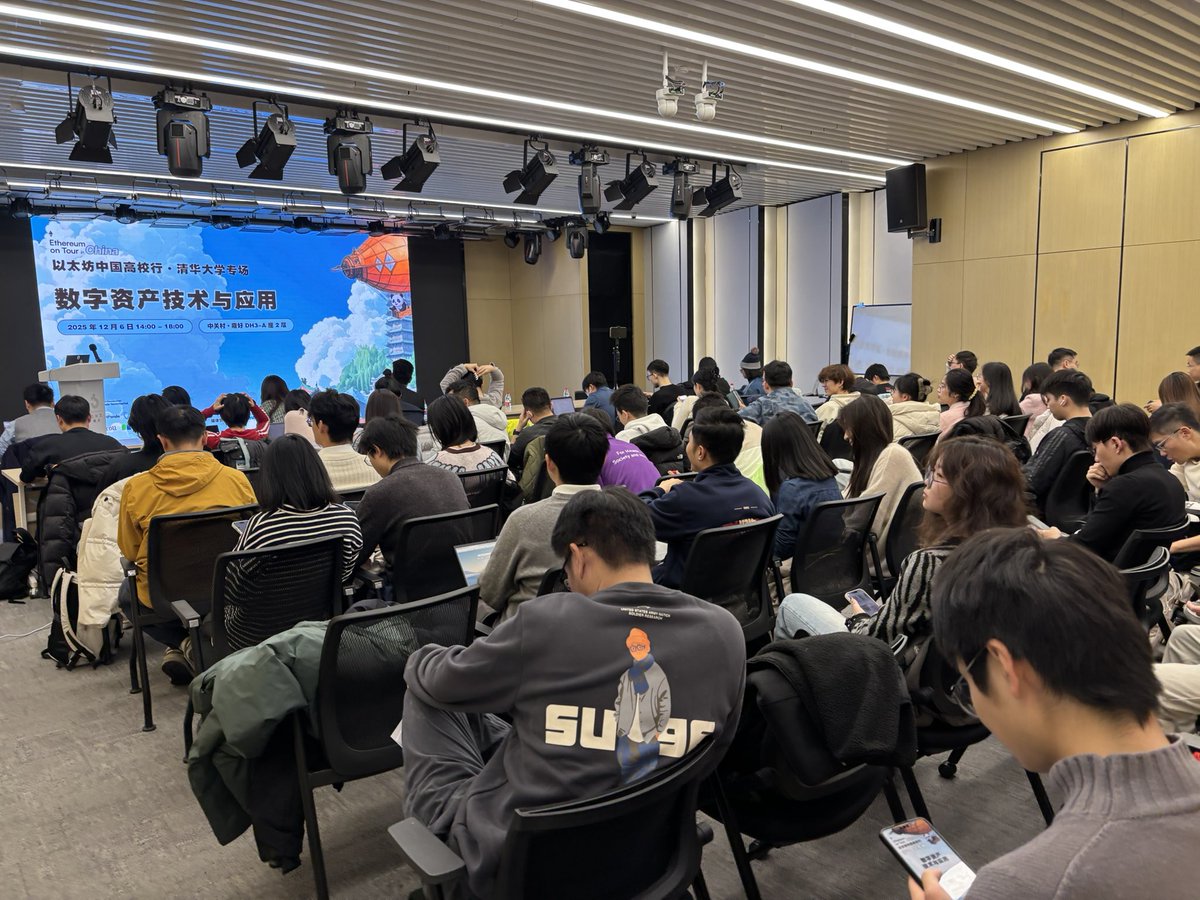
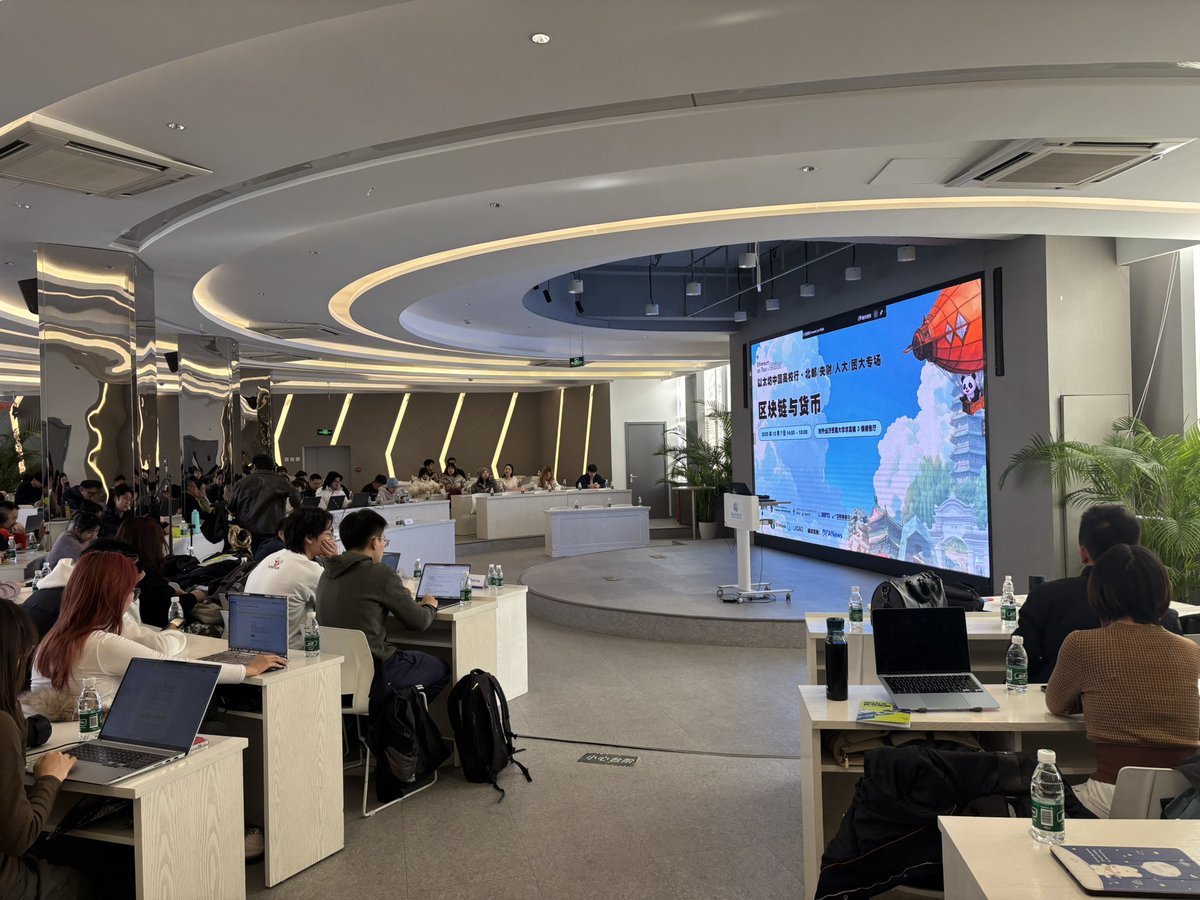
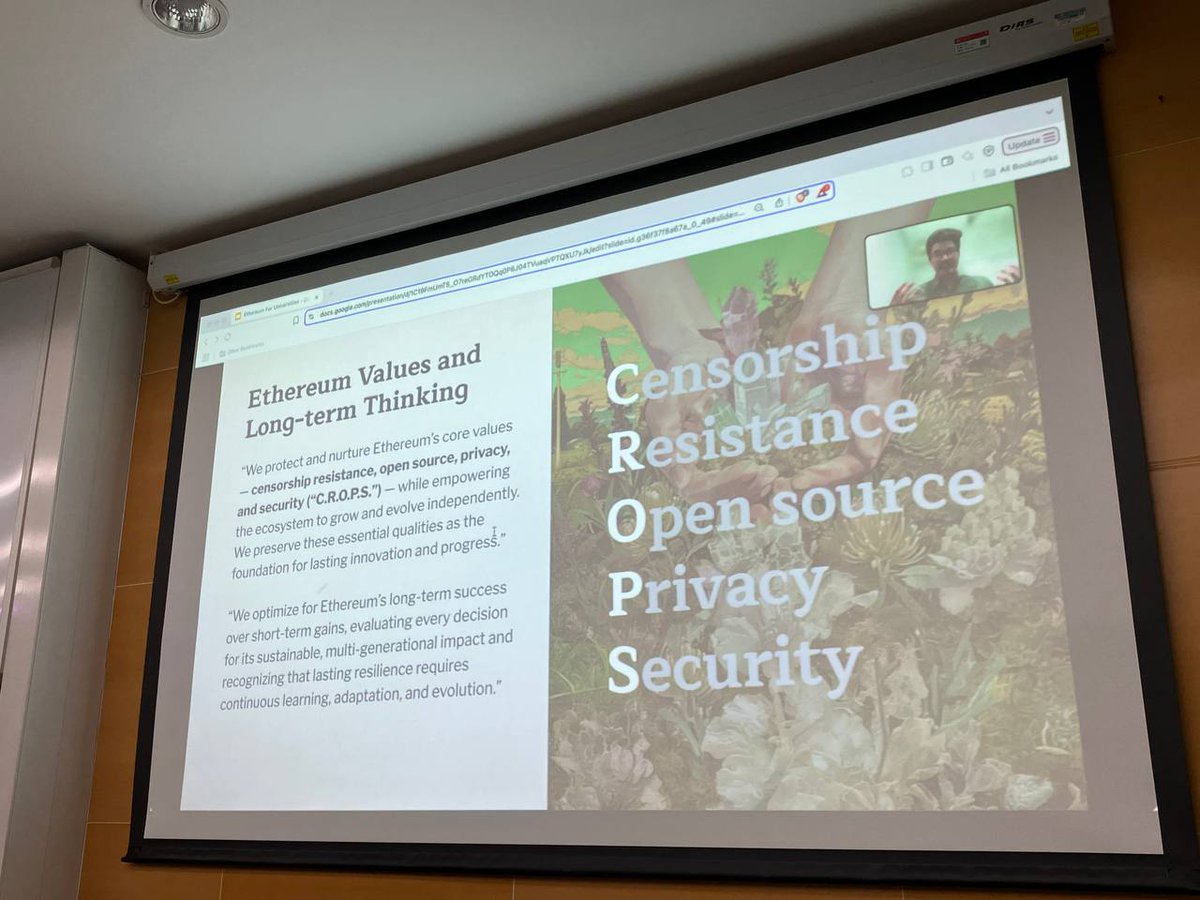
结束一周的北京之行,这次以太坊基金会一次性来到了北大,清华,对外经贸,北邮,央财,人大等高校 辛苦各位 LXDAO 以及 ETHPanda 的小伙伴,也感谢各位链协同学们的帮助,活动整体非常超预期,整个以太坊北京高校行活动超过 500 人参加,每位老师,学生,以太坊的年轻开发者都对以太坊产生了无限热情 以太坊的高校火种已经播下,让我们期待接下来的开花结果
Marcus 🩵🔴 tweet mediaMarcus 🩵🔴 tweet mediaMarcus 🩵🔴 tweet media
中文
0
2
6
685
Marcus 🩵🔴 รีทวีตแล้ว
ETHPanda
ETHPanda@ETHPanda_Org·
🔥 以太坊高校行即将登陆北京大学!与顶尖学者和开发者共探 Web3 未来~ 以太坊的未来属于每一个建设者。现在,这场全球教育浪潮正式来到中国! 我们很高兴宣布,由以太坊基金会开发者成长团队和以太坊基金会学术秘书处发起,@LXDAO_Official@ETHPanda_Org 联合执行,携手 @PKUBlockchain 的 Ethereum on Tour in China 将于 12 月 4 日在北京大学盛大开启! 🌟 为什么你不能错过这场活动? ▸ 聆听以太坊基金会成员分享以太坊生涯构建和以太坊路线图 ▸ 与北京大学教授深入探讨 RWA 与稳定币 ▸ 了解顶尖项目核心贡献者的实战经验 ▸ 亲手参与 Workshop,体验以太坊开发全流程 🎙️ 重磅讲者阵容: • @ShyamSridhar7@ethereumfndn 学术秘书处团队负责人 • @ZhenXiaoCornell|北京大学计算机学院教授 • 孙惠平|北京大学软件与微电子学院讲师 • Rachel|@Scroll_ZKP 核心贡献者 📅 立即报名查看详情:luma.com/2j0hzemc
ETHPanda@ETHPanda_Org

x.com/i/article/1993…

中文
4
7
18
2.9K
Marcus 🩵🔴 รีทวีตแล้ว
LXDAO
LXDAO@LXDAO_Official·
Ethereum on Tour in China · Beijing Universities Officially Launch! Explore the Decentralized Future with Ethereum Foundation Members and University Professors Supported by the Ethereum Foundation's Developer Growth and Academic Secretariat teams, and co-executed by LXDAO and @ETHPanda_Org , the 「Ethereum on Tour in China」initiative has been actively promoting Ethereum's developer culture and educational philosophy across Chinese campuses since its online kickoff.@buidlguidl @ethereumfndn Following its global expansion to over 20 universities in the US, UK, India, and beyond, the Beijing Universities leg of the China tour is now officially unveiled! 🗓️ Beijing University Event Schedule 📍 Peking University Stop Date: Thursday, December 4 | 2:00 PM - 6:00 PM Venue: Peking University Campus (Specific location to be announced) Theme: Development and Future of Decentralized Applications (DApps) • Live updates on Ethereum's latest developments and technical roadmap by Ethereum Foundation members • Sharing of blockchain academic research outcomes by professors and scholars • Practical Workshop: Build Your First DApp Hands-On • Professor Panel: Exploring the Integration of Ethereum's Roadmap and Academic Research (Specific venue and full agenda to be announced soon) 📍 Tsinghua University Stop Date: Saturday, December 6 | 2:00 PM - 6:00 PM Venue: Tsinghua University Campus (Specific location to be announced) Theme: Tokenized Economy and On-Chain Financial Innovation • Live updates on Ethereum's latest developments and technical roadmap by Ethereum Foundation members • Sharing of research on digital economy and asset tokenization by professors • Workshop: Design and Issue Your First Token • Professor Panel: How Industry, Academia, and Research Collaborate to Drive Ethereum Ecosystem Growth (Specific venue and full agenda to be announced soon) 📍 Joint Event by Four Universities (CUFE/RUC/BUPT/UIBE) Date: Sunday, December 7 | 2:00 PM - 6:00 PM Venue: University of International Business and Economics (UIBE) Campus (Specific location to be announced) Theme: Stablecoin Mechanisms and Real-World Applications • Live updates on Ethereum's latest developments and technical roadmap by Ethereum Foundation members • Sharing of research on stablecoin applications in payments, cross-border transactions, etc., by university professors • Workshop: Build Stablecoin Use Cases and Smart Contract Applications • Panel Discussion: The Role and Prospects of Ethereum in Financial Education (Specific venue and full agenda to be announced soon) 🎤 Event Highlights • Ethereum Foundation Members in Person, share the latest technical trends and ecosystem opportunities • University Professors & Researchers on Stage, present cutting-edge academic achievements in blockchain • Practical Workshop, guide you to get started with Ethereum development from scratch • Professor Panel Session, promote in-depth integration of Ethereum's roadmap and university research 👉 How to Participate We will soon release the detailed agenda for each university and the Luma registration link. Stay tuned!
LXDAO tweet media
English
1
1
2
1K
Error404
Error404@0xerror404·
现在知道名校毕业也不好找工作了? 现在知道眼镜厚了影响生活了? 现在知道肩颈腰影响行动了? 当初上学叫你出去玩就跟害你一样!!!
中文
53
84
1.6K
260.1K
Marcus 🩵🔴 รีทวีตแล้ว
LXDAO
LXDAO@LXDAO_Official·
🚀 Ethereum on Tour in China – Official Kickoff Event Supported by the Ethereum Foundation Developer Growth and Academic Secretariat Teams, and co-organized by LXDAO and ETHPanda, Ethereum on Tour in China is officially launching — bringing Ethereum’s education and builder culture to universities across China under the theme of Education, Collaboration, and Co-creation. 📅 Opening Ceremony Details 🗓️ November 10th, 2025 (Monday) 10:00 AM (UTC+8) 👉 Link:luma.com/d07gcu95
LXDAO tweet media
English
4
5
25
8.8K
Marcus 🩵🔴 รีทวีตแล้ว
LXDAO
LXDAO@LXDAO_Official·
以太坊正全力为人工智能(AI)领域布局 —— 戴维德・克拉皮斯(@DavideCrapis)刚发布的 ERC - 8004 标准,名为 “无信任代理(Trustless Agents)”,核心要点如下: 不过首先要说明: 你可以将以太坊视为 AI 的重要底层基础设施,这并非因为它能运行所有 AI 模型,而是因为它能为所有 AI 模型提供 “信任支撑”。 我们来做个思想实验: 试想数百万个自主代理在互联网中穿梭,它们进行交易、协商,甚至可能组建自己的联盟(比如去中心化自治组织 DAO,大家觉得呢?)。在这种场景下,这些代理会选择何种底层基础设施作为 “锚点”?是选某家公司的服务器?谷歌的 API?还是任何人都能修改的开放数据库? 如果你要让这些代理跨 50 个服务(银行、社交媒体、客户关系管理系统等)执行任务,你会愿意让这一切都依赖一个可能被删除的数据库吗? 答案很可能是否定的。 如果你是一个除了自身存续外毫无忠诚度的代理,你绝不会把自己的 “记忆” 和 “声誉” 赌在某一家企业或某一个政府身上 —— 你会需要一个没人能在背后悄悄篡改的账本,一块 “中立地带”。 而以太坊,就是这样的选择。 既然我们已经搞懂了 “为什么”,接下来就深入看看 “怎么做”: ERC - 8004 标准建立在 “代理对代理协议(A2A,Agent - to - Agent Protocol)” 的基础上。 A2A 协议为代理们提供了通用 “语言”,但光有语言还不够:机器还需要一种方式来验证以下信息: 你是谁?你做过什么? 你是否在按自己声称的方式行事? 该提案计划为 A2A 协议增加一项扩展功能,即在链上设立三个注册表: 身份注册表:用于验证 “我就是我” 的可信任锚点。 声誉注册表:记录代理行为的不可篡改轨迹。 验证注册表:证明某一行为确实发生过的凭证。 这是一份可在实际场景中使用并不断迭代的实用 ERC 标准:具体细节可在链下存储,但 “信任框架” 的核心骨架会留在以太坊链上。 借助 ERC - 8004,素未谋面的代理在互联网中相遇时,依然能放心地进行交易。 仔细观察你会发现,一个 “机器经济” 的雏形已逐渐显现: 你的代理与世界另一端某个陌生的代理协商合作,而彼此是否熟悉并不重要 —— 因为两者都接入了同一个不可篡改的 “记忆系统”。 这只是 “机器运行于信任层软件(Trustware)” 的开端。智能合约是我们与 AI 沟通的桥梁,不可篡改账本是 AI 之间相互沟通的工具,而以太坊,则是我们实现这一切的正确基石。 这只是一个开始,你也可以加入我们,一同为这个 “科幻般的未来” 奠定坚实基础。
binji@binji_x

ethereum is SERIOUSLY gearing up for ai. (erc-8004) by @DavideCrapis just dropped, it’s called “trustless agents” and here’s what you need to know: but first: you can think of ethereum as an important substrate for ai, not necessarily because it can run all the models, but because it can run all their trust. here’s a thought experiment: > imagine millions of autonomous agents moving across the internet. they transact, negotiate, and perhaps even form their own coalitions..(dao’s, anyone?) > in this reality, what substrate would they choose to anchor themselves to? do they pick a single company server? a google api? an open database that anyone can rewrite? > if you are working with these agents to do tasks cross 50 services (banks, social media, crms), would you just let it all run on a database that can be deleted? probably not. if you were an agent with no loyalty except to your own survival, you wouldn’t want to bet your memory and reputation on one corporation or one government: you’d want a ledger that no one could quietly change behind your back. you’d want neutral ground. you’d want ethereum. so, we’ve done the why, now let’s dive into the how: erc-8004 builds on the agent-to-agent protocol (a2a). a2a gives agents a shared language, but language isn’t enough: machines also need a way to check > who are you, > what have you done > and are you behaving as you claim? the proposal sketches an extension to a2a with three registries onchain: 1) identity: a verifiable anchor for “i am me.” 2) reputation: an immutable trail of how an agent has behaved. 3) validation: proofs that an action really hap this is a practical ERC that can be used and iterated on in the wild; the specifics can stay offchain, but the skeleton of trust lives on ethereum. 8004 lets agents that have never seen each other meet in the wild and still transact with confidence. look closely and will you see the outlines of a machine economy your agent negotiating with some unknown counterpart in another part of the world, and it doesn’t matter because both are plugged into the same incorruptible memory. this is just the beginning of machines running on trustware. smart contracts are how we will communicate with ai, the immutable ledger is how they will communicate with eachother, and ethereum is how we will build this right. this is just a start, but you can come and lay the foundations of a sci-fi future done right with us.

中文
0
1
1
456
Marcus 🩵🔴
Marcus 🩵🔴@Bitzack_01·
@_FORAB 被 ZachXBT 盯上,项目大概率要被黑或者黑人了
中文
0
0
0
2.3K
AB Kuai.Dong
AB Kuai.Dong@_FORAB·
在币圈,做项目的最高成就之一: 被这几位博主同时关注。
AB Kuai.Dong tweet media
中文
170
18
492
256.4K
Pablo(🦑,🪐)
Pablo(🦑,🪐)@silenlee·
听上午去完solana下午过来的朋友说,Solana的风格就特别商务(豪华😂),跟以太坊这种学院风形成了巨大反差。其实这也看出来两条公链定位的差距,solana更像一个企业,market driven要追求商业上的快速成功,以太坊更像一个社区,reserach driven要追求建设长期的愿景。 当然商业上的成功对以太坊也很重要,所以改革后的@ethereumfndn 也在更努力推动 mainstream adoption,新上任的 @tkstanczak 也以身作则以身犯险到中国跟广泛的社区接触,听取一线的意见(真的很努力,现场记下大家不同的社区,并链接到 EF 相关的部门)。 我觉得不同组织采用不同策略当然是仁者见仁智者见智,但是在区块链这个领域,从 Satoshi 提出去中心化的愿景开始,社区的路线就是我们唯一的路线,所以,以太坊会赢 😆。 顺便说一句,大家都知道 solana 基金会在中文区非常活跃,但发现以太坊各 L2 的基金会中只有 @arbitrum 设有专人专岗 @arbitrum_cn 拓展中文区市场。其他似乎一家都没有。
Pablo(🦑,🪐) tweet mediaPablo(🦑,🪐) tweet media
Pablo(🦑,🪐)@silenlee

原来今天上海同时有 EF 和solana基金会的活动😅 my dear dev friends, pick your side smartly🤪. 🫡不绝对,就是绝对不🫡

中文
4
0
9
1.9K
Marcus 🩵🔴
Marcus 🩵🔴@Bitzack_01·
最近在 ETHShanghai 交流预测市场有感 先说结论,预测市场是收集足够多有效且真实的信息,从而更还原事情的真实结果 它不仅仅是单纯的赌博,而是一种弥补信息差的工具或者实验 预测市场会通过机制来鼓励你将有效的信息进行价值变现 比如,一个现实情况,币安明天是否要上 A 币 币安上币处的员工肯定最早获取这个消息,他们可以通过预测市场提早买入会上这个币的期权从而获得收益 然后,币安上币员工的家属可能也获得了这个信息,从而买入获得价值变现 这时候司机听到了这个信息,路过的保安也听到了这个信息,提早买入期权获得价值变现从而获得收益 最后这个预测事件就会变得越来越趋于事实真相,从而让大家更早获得结果 问题1: 那么为什么他们不在链上买入 A 币,然后上所后买出,从而获得更大收益呢 第一个点是内幕交易这个是被币安或者交易所禁止的,当然,预测市场后面也可能被交易所纳入禁止内幕交易的范畴 第二点,传统的交易需要你大量购入 A 币,你需要一定的持币成本从而获得更大的收益,而预测市场类似于期权,你越早知道事情的真相,你付出很少的成本即可获得更大的利润 问题2: 预测市场对于传统的博彩市场有什么区别? 我可以通过博彩市场买球啊,我为什么要在 polymarket 上买 传统的博彩市场一个明显问题是,数据是不透明的,你并不知道这些压注的人的数据的真实性如何,赔率也是具有被操控的可能性 另外,预测市场对比博彩市场还有一个更根本性的差别,他是为了价值发现和风险对冲,赌博只是驱动人们说真话的一种机制 举个例子 阿根廷今晚能不能赢巴西,庄家可能通过贿赂裁判,球员的方式获得他想要的结果,从而让自己收益更大 而针对于一个月后会不会下雨,这件事庄家是没办法去控制的,他所依赖的是各方面的专业群众对于这件事进行分析,在预测市场下注,从而对自己的信息进行价值变现,最终,市场会倾向于一个最优的群体预测模型 问题3: 预测市场除了博彩,还可以做哪些东西 第一类我认为是收集群体真实的预测信息,优化资金分配 之前 uniswap 和 optimism 联合举行过一次对于 Grants 发放的预测实验,让治理者预测资助过后的协议在未来的 TVL 表现是如何 最终,预测实验的结果更具有广泛性,也成功预测到了 TVL 增长最大的协议 gov.optimism.io/t/futarchy-v1-… 第二种是优化治理决策 传统的组织很容易产生治理冷漠现象,比如 uniswap 的治理率只有百分之几左右,这其中的原因是由于代币持有者参与治理的利益动力不足 可以尝试一种代议制+预测实验的方式去优化治理决策 比如委员会决定事情的推动方向,DAO 或者代币持有者去预测事情的完成情况,从而调动整个组织的积极性 MetaDAO 最近就在尝试类似的事情 第三点我觉得本身预测市场更多应运用在于媒体以及社交上 你对一个好玩的事情进行真实的民调收集,比如 Marcus 明天会不会迟到,喝多少杯咖啡,午餐吃什么,会不会和哪个女生搭话,这些事情都可以作为预测 (想到更多继续碎碎念) 🫡🫡🫡
中文
0
0
3
224
0xhardman🦀
0xhardman🦀@0xhardman·
旁边 180 一晚的海友酒店其实是 eva 景房
0xhardman🦀 tweet media
中文
3
0
7
1.4K
Marcus 🩵🔴 รีทวีตแล้ว
ETHShanghai (Oct, 2026)
ETHShanghai (Oct, 2026)@EthereumSH·
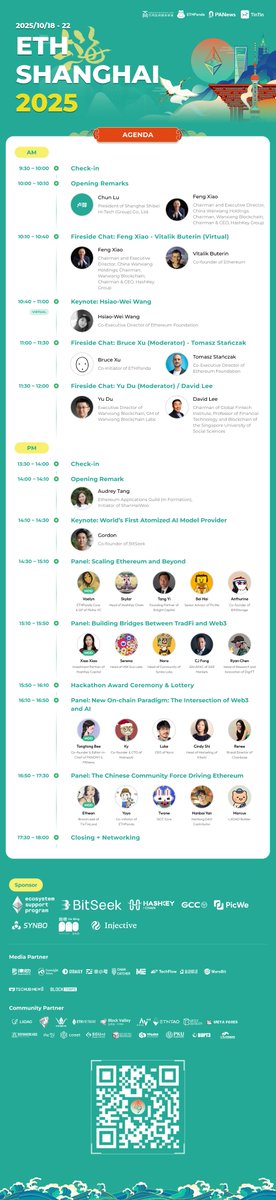
🔥 #ETHShanghai 2025 Summit Agenda is Here! Led by @ETHPanda_Org and co-hosted by @WXblockchain, @panews, and @OurTinTinLand, the 4th ETHShanghai 2025 Summit will take place on October 22! ⏰ The event will bring together over 40 industry leaders, including @ethereum Co-founder @VitalikButerin, Chairman of Wanxiang Blockchain & Chairman and CEO of @HashKeyGroup Dr. Feng Xiao, and @ethereumfndn Co-Executive Directors @hwwonx and @tkstanczak! Together, they will dive deep into the key themes shaping Ethereum’s future — scalability, modular ecosystems, developer growth, and long-term security.🙌 #Ethereum #Summit
ETHShanghai (Oct, 2026) tweet media
English
5
1
12
3.8K