Mouse Philosopher

3.6K posts

Mouse Philosopher

Mouse Philosopher

@Bunstropple

Born under the floorboards in the larder. I have a pet named Ed Wicke. He writes stuff.

The Game of Pirate by Ed Wicke เข้าร่วม Ocak 2012
210 กำลังติดตาม143 ผู้ติดตาม
Mouse Philosopher รีทวีตแล้ว

The Daily Britain
The Daily Britain@dailybritainonx·
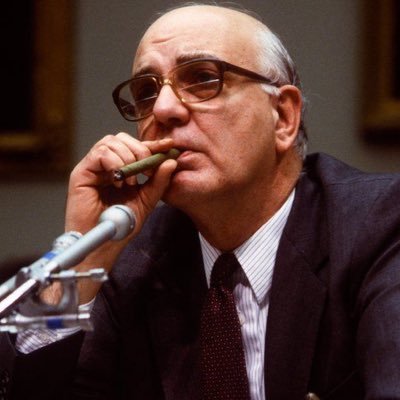
Quote of the day 👇
The Daily Britain tweet media
English
360
18.4K
40K
591.6K
Basti
Basti@Basti_dood·
@Bunstropple @WolfofX No, its not a loop. Random: 25% chance to pick the correct answer, as there are 4 options. Considering the options given = NOT RANDOM. This is a reading comprehension test. You failed.
English
1
0
5
66
Mouse Philosopher รีทวีตแล้ว
Wolf of X
Wolf of X@WolfofX·
Wolf of X tweet media
ZXX
78
7
350
46.7K
Geiger Capital
Geiger Capital@Geiger_Capital·
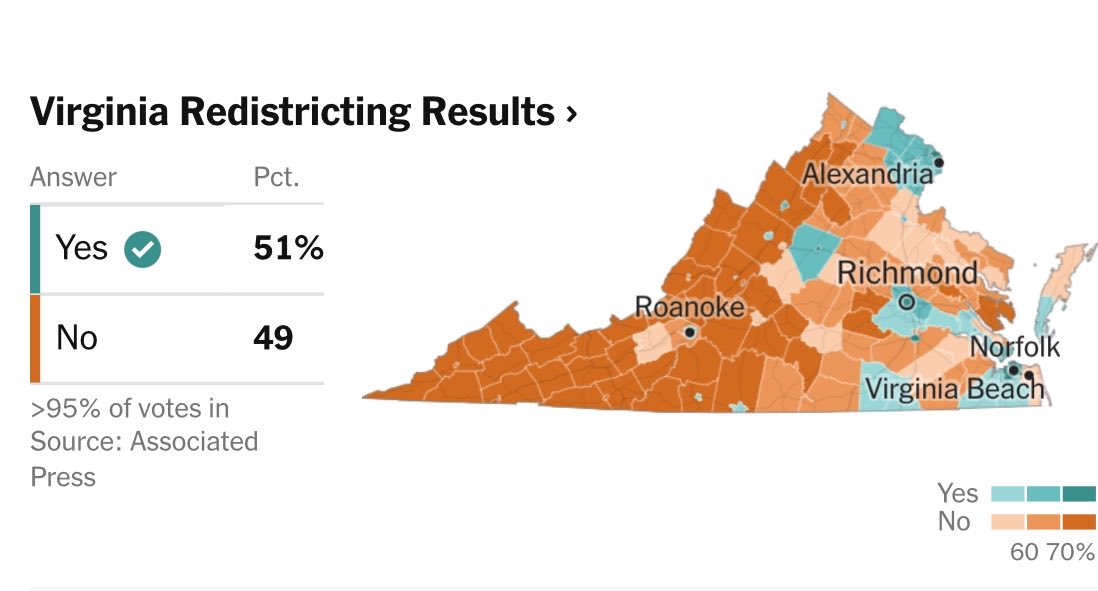
Virginia in 2024: 🔵52% Kamala 🔴47% Trump Virginia for this Redistricting: 🔵51% Yes 🔴49% No New Congressional Seats: 🔵91% Democrats 🔴9% Republicans
Geiger Capital tweet media
English
735
2.8K
14.3K
1.6M
Mouse Philosopher
Mouse Philosopher@Bunstropple·
@Geiger_Capital @Ne_pas_couvrir Yes, gerrymandering is wrong. Dems have brought bills to Congress to outlaw it entirely. Republicans rejected them. Texas and other red states decided to redraw their maps; Dems are simply fighting back. Ban gerrymanders for all.
English
0
0
0
6
Mouse Philosopher
Mouse Philosopher@Bunstropple·
@Ne_pas_couvrir @barr__SophiaB You’ve left out the horrific school shootings at Hungerford and Dunblane. After those, the British decided they preferred to keep their children safe. A choice that many rational countries also made. A good choice.
English
0
0
0
20
Yuri Bezmenov's Ghost
Yuri Bezmenov's Ghost@Ne_pas_couvrir·
Did you know that England once had a deeply rooted civilian gun culture, stretching from the 1500s into the early twentieth century, and that this English tradition helped shape the American right to keep and bear arms? For centuries, English law and custom treated the armed citizen as a normal part of a free society. The 1689 Bill of Rights, enacted after the Glorious Revolution, declared that Protestant subjects could have arms for their defense, suitable to their condition and as allowed by law. That language reflected older English assumptions rather than creating something wholly new. Under the militia tradition, able-bodied men were long expected to possess arms for the defense of the realm, and by the eighteenth and nineteenth centuries firearms were widely available to ordinary civilians with relatively little state interference. Guns could be bought in shops, advertised openly, and acquired with few of the licensing burdens that later became standard. For much of this period, England did not treat civilian gun ownership as suspicious. It treated it as normal. That inheritance mattered in America. The American founders drew heavily from English common law, Blackstone, and the broader Anglo political tradition, including the 1689 Bill of Rights. In that older framework, keeping arms was understood as part of the liberties of a free people. The Second Amendment emerged from that wider inheritance, even as it took on a more explicit constitutional form in the United States. Britain’s sharp break with this older tradition came after the First World War. Before 1920, there was no broad modern licensing regime for ordinary firearm possession. The postwar period changed that. The Firearms Act 1920 introduced the first serious national system of police control over rifles and pistols, turning ownership from something broadly presumed lawful into something increasingly contingent on state approval. The reasons were political as much as criminal. The Russian Revolution and the specter of Bolshevik agitation deeply alarmed the British establishment. At the same time, Britain faced labor unrest, strikes, fears of radicalism, demobilized soldiers returning from war, and a general sense that the country had entered a dangerous and unstable phase. Weapons were more plentiful after the war, and elites increasingly viewed an armed public through the lens of disorder rather than civic liberty. Immigration and postwar racial tensions formed an important part of that climate. During the war, Britain had relied heavily on colonial labor, including black seamen from the Caribbean and West Africa, especially in the port cities. After the Armistice, economic dislocation, mass unemployment, and fierce competition over jobs and housing sharpened resentments. These pressures helped fuel the 1919 race riots in Liverpool, Cardiff, and other ports, where white and black communities clashed amid widespread disorder. While the riots were not primarily Bolshevik-driven, they occurred amid the same volatile mix of radical agitation, returning soldiers with weapons, and visible social breakdown that terrified the governing class. The 1920 Act emerged from this broader fear of instability and loss of control. A similar pattern of social anxiety appeared again after 1945. Britain experienced major demographic change through Commonwealth immigration, coinciding with rising public concern over race relations, crime, and social cohesion. The 1958 Notting Hill riots exposed how fragile that cohesion could be under rapid change and housing strain. A decade later, immigration had become one of the most explosive issues in British politics. Enoch Powell’s 1968 “Rivers of Blood” speech captured those anxieties. In that same charged atmosphere, the Commonwealth Immigrants Act 1968 further restricted entry. It was in this wider climate of unease that tighter firearms law became politically easier to justify. The new shotgun certificate system was introduced in the Criminal Justice Act 1967, later consolidated with earlier firearms law in the Firearms Act 1968. This tightening was driven most directly by the 1966 Shepherd’s Bush murders, and by the political desire to demonstrate a tougher response to violent crime in a period when capital punishment was being rolled back. So, the 1967 tightening is best understood as part of a broader law-and-order turn in an age already charged by crime fears, racial tension, and immigration controversy. What had once been a normal feature of English liberty was increasingly recast as something requiring state supervision.
Yuri Bezmenov's Ghost tweet media
English
226
1.2K
4.1K
655.8K
Mouse Philosopher รีทวีตแล้ว
Mike Young
Mike Young@micyoung75·
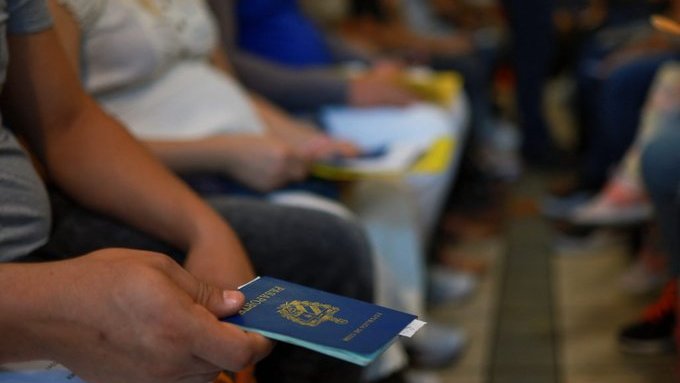
More than 13,000 people were living legally in the United States, waiting for rulings on asylum claims, when they received deportation orders to countries they had never been to and had no ties to. An Afghan man who fled the Taliban was told he would be sent to Uganda. A Cuban woman working at a Texas Chick-fil-A was arrested after a minor traffic accident and told she was going to Ecuador. A Mauritanian man in Michigan - Uganda. A Venezuelan mother in Ohio - Ecuador. Bolivians, Ecuadorians, and others ordered to Honduras. A Guatemalan woman who had been held captive, repeatedly sexually assaulted, and arrived at the border with her four-year-old daughter - pregnant from a rape - sat in a San Francisco immigration courtroom and heard an ICE attorney say she would be sent to Ecuador, Honduras, or Uganda. She had never heard of Ecuador or Uganda. The diplomatic agreement with Honduras allows a maximum of 10 such deportees per month. Thousands have been ordered to Honduras. The Ugandan minister of state for foreign affairs confirmed to the AP that none of the people ordered to Uganda have actually arrived. In March, ICE legal officials quietly emailed field attorneys to stop filing new motions for third-country deportations. No explanation. Not publicly released. The earlier orders are still in effect. These 13,000 people have lost their work authorization. They cannot pursue their asylum claims. They cannot find out if they will be put on a plane to a country they have never seen. A senior attorney at the National Immigration Law Center told the AP directly: the goal is to instill fear. To drive people to abandon their cases and leave on their own. That is a documented assessment of the purpose. The limbo is the policy.
Mike Young tweet media
PBS News@NewsHour

They are among more than 13,000 immigrants who were living legally in the U.S., waiting for rulings on asylum claims, when they suddenly faced so-called third-country deportation orders, destined for countries where most had no ties, according to the nonprofit group Mobile Pathways. to.pbs.org/3OfRi2Q

English
47
1.1K
1.4K
58.3K
Mouse Philosopher รีทวีตแล้ว
Bernie Sanders
Bernie Sanders@BernieSanders·
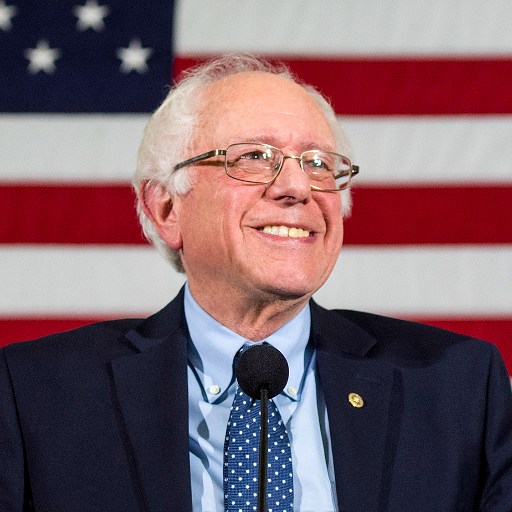
It's not just Gaza, Iran and Lebanon. In the West Bank since October 2023, Israeli soldiers and settlers have: Killed 1,071 Palestinians Demolished 6,000+ homes Built 200+ illegal outposts No more U.S. military aid to Israel.
English
2.2K
13.6K
59.3K
898.6K
Mouse Philosopher
Mouse Philosopher@Bunstropple·
@LisaForCongress lol. Texas changed the rules at Trump’s behest and Dem states warned that they would do the same. What’s sauce for the goose…
English
0
0
0
10
Lisa McClain
Lisa McClain@LisaForCongress·
Virginia tonight proved one thing: When Democrats can’t win fairly, they change the rules. That’s not democracy. That’s a power grab. Shameful.
English
3.8K
1.4K
9.1K
355K
Mouse Philosopher
Mouse Philosopher@Bunstropple·
@liz_churchill10 Your racism is rather obvious…. When a black man speaks words of peace and reconciliation you go all hysterical about it and call it the opposite of what it is. Jesus warned us about those like you, who call light darkness and darkness light.
English
0
0
1
10
Liz Churchill
Liz Churchill@liz_churchill10·
Obama was the most DESTRUCTIVE Divider in American History. He hates America He weaponized race He was the Trojan Horse The man who ran on ‘Hope and Change’ delivered hate and fracture…
English
1.4K
9K
24.5K
239.8K
Liz Churchill
Liz Churchill@liz_churchill10·
WAS OBAMA CAUGHT STEALING A DEAD MAN’S SOCIAL SECURITY NUMBER? Was Obama using the SSN of a Connecticut Man who died in Hawaii? It appears that he ILLEGALLY did so to occupy the White House. Fake name. Fake papers. Fake presidency. EXPOSED…the ULTIMATE Manchurian Candidate
English
3.4K
19.3K
47.2K
1M
Mouse Philosopher
Mouse Philosopher@Bunstropple·
We just saved the house from the bunny monster. You can thank us later.
Mouse Philosopher tweet media
English
0
0
0
25
Mouse Philosopher รีทวีตแล้ว
Aaron Rupar
Aaron Rupar@atrupar·
Mamdani: "We know very well what we oppose. What are we for? That is a question we have to be able to answer. What are we fighting for? ... when you look back at the history books of our party, 100 years ago we had a very clear vision of what we were fighting for. It's sad that for too many Americans, when they want to look for ambition in the Democratic Party, then have to turn to a history book."
English
100
981
7K
297.5K
Mouse Philosopher รีทวีตแล้ว
Lynne Eldridge MD
Lynne Eldridge MD@AboutLungCancer·
@KiwiManc1 @DougF52365232 @BlueGeorgia Yes! We are the only developed country that lacks universal healthcare, and now 79 countries have universal healthcare—all at a lower cost than we spend today! (Money goes to care for people rather than insurance executive bonuses and corporate profits.)
Lynne Eldridge MD tweet media
English
2
6
12
321
Mouse Philosopher
Mouse Philosopher@Bunstropple·
@WalshFreedom There is surely a difference between supporting Israel and supporting what the leaders of Israel have been doing and continue to do. I suggest it would help if you firmly make that distinction on X; else others will assume you support evil actions.
English
0
0
0
9
Joe Walsh
Joe Walsh@WalshFreedom·
A conversation yesterday: Her: “Joe, you can’t be so pro-Israel AND be a Democrat. Democrats are rightly turning on Israel. You gotta do the same.” Me: “If that’s true, if I can’t be a Democrat AND be pro-Israel, then I won’t be a Democrat. I love & support the state of Israel. Period. And I won’t abandon that support to benefit myself politically/bcuz that’s where Dem voters are. Nope. Do you want politicians who are principled, or politicians who just follow which way the wind’s blowing?”
English
744
129
1.2K
90.3K