

Candyy
78.2K posts

Candyy
@CandyCripto
Content Creator | Researcher #web3 | InfoFi |
İstanbul, Türkiye เข้าร่วม Mart 2023
10.6K กำลังติดตาม32.8K ผู้ติดตาม

Big opportunity for you guys.
@PerleLabs Community Voice Campaign
Perle has announced a campaign with the Prize Pool of 55,000 USD1 for 400 winners
<> Top 50 winners $350 each
<> Top 51-150 users $200 each
<> Top 151-400 users $50 each
How to Participate:
★ Create original content (text, memes, images)
★ Max 3 submissions per person
★ You can save drafts & submit anytime before the deadline
⚠️ Don’t use exchange deposit addresses for your EVM wallet
Before submitting, make sure your post:
1. Includes #PerleAI and #ToPerle
2. Ends with: "— participating in @PerleLabs community campaign"
3. Follows all campaign guidelines
That's all for now keep making content and paste your links of all tweets in form.
Hope for best

English

💜 @3look_io's leaderboard went live yesterday and I'm sure most of you checked it right away
I'm currently at 208th place and as more people join the competition is only going to heat up
Season 1 The Loop is straightforward join a campaign share meaningful stuff on X claim your Lookz rewards every 24 hours
Quality content and real conversations get rewarded
Today 1.36 Lookz dropped straight into my wallet
The real excitement is in the Creator Ecosystem 😎 your account quality and consistency let you climb tiers and unlock bigger, curated opportunities
The buzz here is just getting started
Opportunities are only beginning

English

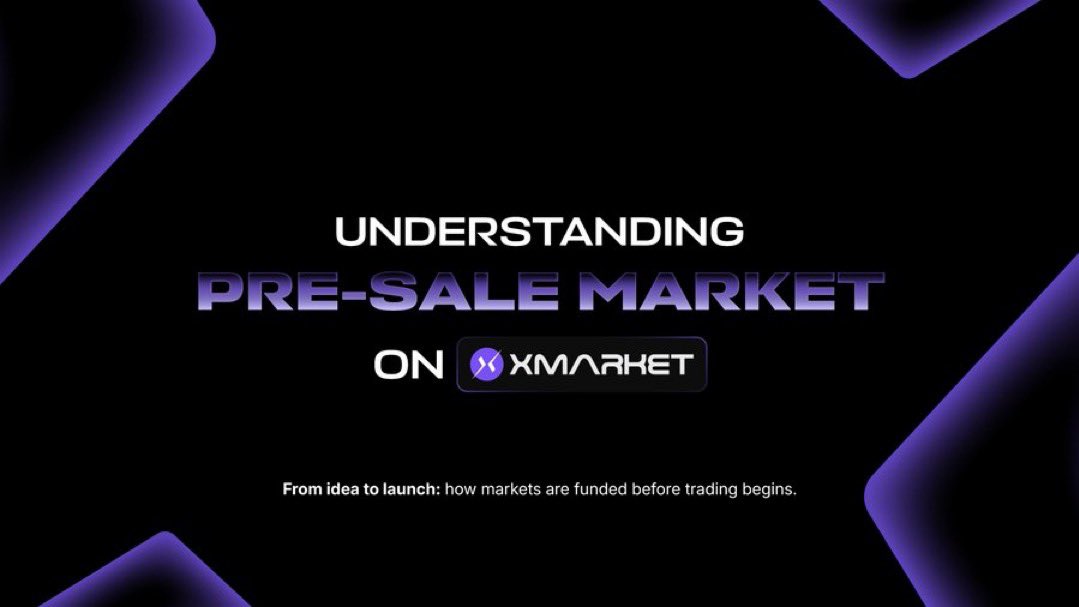
Not every idea deserves a market.
@Xmarketapp puts that decision in the hands of the community.
Before anything goes live, people actually have to back it.
If a market hits the $100 soft cap, it launches.
If it does not, it gets refunded and fades out.
Simple filter.
Creators bring ideas.
Supporters back them early.
And if it works, both sides benefit from the activity that follows.
Feels like a more natural way for markets to form.
English



kinda obvious now why some wallets climb faster than others
airdrop ss2 exp on @SoSoValueCrypto is easy to stack if you stay active
but it’s mostly surface-level signals
sopoint tells a deeper story
you only really build it through trade volume and staking in ssi vaults on @sodex_official
leaderboard movement reflects that difference pretty clearly
valuechain tracks both, but advanced users are combining them
exp for coverage, sopoint for actual weight in the system
Keng@kengdaica
feels like a lot of people are mixing up signals in this system airdrop ss2 exp on @SoSoValueCrypto is easy to grind mostly tasks and surface participation but sopoint comes from actual usage trade volume, staking in ssi vaults, climbing leaderboard on @sodex_official valuechain tracks both layers but they don’t mean the same thing exp shows you’re active sopoint shows how deep you’re actually involved Trade top Crypto and Stocks on SoDEX. Share 1M SoPoints weekly rewards. Join SoDEX Mainnet with my referral code and get a 5% SoPoints Boost! sodex.com/join/AIOTDVQU
English

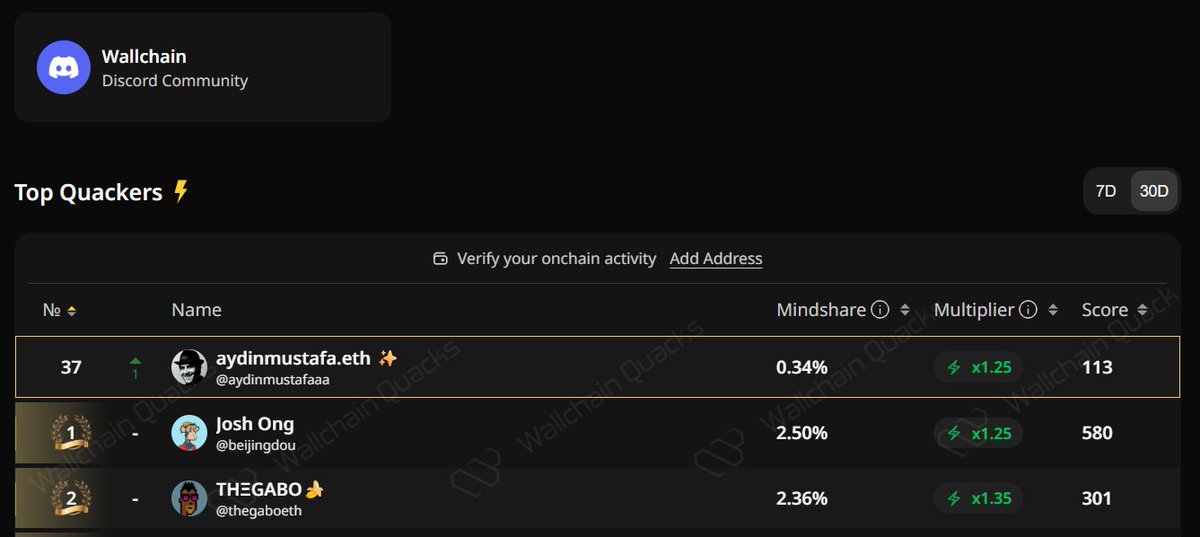
What is happening in @wallchain?
We are on the 4th day without a leaderboard update, no other updates on finished campaigns, no updates on the announcement that the team said they would make, and now new campaign.
Do you think it is worrisome or are they cooking behind the scenes?
English


RWA looping is one of the fastest-growing plays in DeFi already ~1/3 of Ethereum lending.
Simple idea:
deposit a yield asset → borrow stables → buy more → repeat.
You’re just amplifying the yield spread.
@YieldNestFi ’s ynRWAx fits this perfectly:
• ~11% stable APY
• Backed by real Australian mortgage credit
• ERC-4626 + auto-compounding
No synthetic yield. Just real-world secured debt.
Even without looping, it’s a strong base asset.
With looping → it becomes a carry trade engine.
Infra is already there:
@eulerfinance (one-click loops)
@MorphoLabs (isolated pools)
@pendle_fi / @spectra_finance (PT/YT)
@BrevisNetwork + @merkl_xyz (extra rewards)
DeFi is shifting to real yield + efficiency.
Are you positioned for RWA looping yet?
YieldNest@YieldNestFi
1/ Looping makes up ~1/3 of all Ethereum lending activity. Most of it is staked ETH and stablecoins. RWA looping is next, and it changes everything. It’s the biggest DeFi strategy most people still aren’t talking about. Here’s how it works and how ynRWAx fits in 🧵
English



Eid Mubarak to every Muslim across the globe
May this blessed day bring you joy, peace, and prosperity. May Allah accept our prayers, forgive our sins, and shower His mercy upon us all.
Wishing you and your loved ones a beautiful celebration!

English




QAM

I met @mayemusk yesterday, I was lucky enough to have a conversation with her and she signed her book “A Woman Makes a Plan”
She advised me to post my request to receive a brain chip on X and tag @elonmusk and @neuralink
I told her I have been doing it for years, but nothing happened yet. I believe this time we are gonna make it! ♿️
@DRdunyasi @destekyayinlari
Here is the videos of the event and my letter to Elon Musk:


English

When @XOOBNetwork talks about rewarding real impact, it’s pointing to actions like:
Education content that helps people understand how something works
Conversion content that brings users onchain wallets, swaps, staking, etc.
Retention → keeping people engaged over time, not just one interaction
Community building → thoughtful replies, discussions, answering questions
These are harder to measure offchain, but onchain signals make them more visible.

Praise Ahmed@PraiseA89258
Don't forget to check out @XOOBNetwork $XOOB is backed by Chromia, which is not just a random investor. Chromia is a Layer 1 blockchain designed for: complex data tracking structured on chain logic scalable apps with custom chains
English


I did a bit of research on current airdrops and found one that’s almost ending, but still worth it. River Season 4.
There are about 13 days left, so you still have time to position yourself and earn.
Here’s how it works:
⟶ Create X content about River and tag @River4fun and @RiverdotInc
⟶ Earn points through posting, engagement, and staking
⟶ Points convert to $RIVER tokens
This current season ends March 31, 2026, just 13 more days.
You can join here: app.river.inc/fun and connect your X
Referral link: app.river.inc/fun?ref=Mido_r…
This is a good opportunity if you want SocialFi + DeFi rewards with multipliers for staking, so...
Good luck💜

English

BFT consensus protocols in live blockchains come with two big headaches. Upgrading them? It’s a nightmare. Coordinating the change is complex, and downtime can get painfully expensive. And then there’s the other problem: swapping out an entire committee. Do that, and you risk throwing the whole network off balance.
Rialo tackles both challenges with Gauss. What’s neat about Gauss is that it lets @RialoHQ hot swap consensus protocols and validator sets on the fly literally without a single second of downtime. How? By separating the consensus protocol’s inner log from a sanitized outer log. This lets the network finalize and secure its state independently, while consensus keeps chugging along underneath.
Because of this separation, things that used to be rigid committee membership, failure thresholds, even the consensus protocol itself can now evolve independently. Upgrades? Smooth. Committee changes? No hiccups. The end result: a blockchain that’s flexible, resilient, and future ready. Oh, and a nice cherry on top of the Gauss paper has officially been accepted, putting this innovation firmly on the map.
@itachee_x
@noblesnft
@RialoBangladesh

Izh Imon@IzhImon
How do we bring private credit onchain? The hardest problem isn’t rules it’s the truth. Verifying real-world financial data onchain is the real challenge. Signs of stress in private credit are clear. Blackstone’s $82B fund, BCRED, faced $3.7B in redemption requests in Q1 2026. BlackRock’s HLEND had gate withdrawals. Blue Owl halted redemptions. Many BDCs trade at 20% discounts, and default rates hit 9%. Not a systemic crisis yet. Private credit is $1.8–2T small versus $130T in bonds. The market could likely absorb a few defaults. But confidence is fragile, and inefficiencies are real. Intermediaries, misaligned incentives, and costs are bloating the system. Crypto and DeFi propose moving private credit onchain. Smart contracts can encode redemption rules, collateral ratios, and distribution policies making them immutable. No more arbitrary changes by fund managers under pressure. Automation is powerful. Debt issuance, repayments, covenant testing, redemptions, liquidations all can run deterministically. Transparency improves. Intermediaries with conflicts of interest? Eliminated. But here’s the catch: the truth problem. Smart contracts enforce rules perfectly but only if they know the facts. Financial data lives offchain, in ERPs, bank systems, dashboards. How can a contract know EBITDA or interest coverage ratio without reliable inputs? Traditional markets fail here too. Servicers calculate covenant compliance, but incentives are misaligned. Defaults can be delayed, misreported, or ignored. Onchain doesn’t automatically fix this if the data source is biased. This creates the “verification gap.” Tokenized loans are easy. Verifying the underlying reality? Much harder. Smart contracts can enforce rules but if the data is wrong, the outcome is wrong. Solution: a determination layer. Between raw real-world data and smart contracts sits a system that: Pulls verified data natively from ERPs, banks, APIs Performs confidential, verifiable computations Encodes complex bespoke covenants faithfully @RialoHQ’s approach. Their REX environment allows smart contracts to evaluate covenant compliance confidentially. Data is pulled directly from verified sources. Any counterpart can independently verify results. No single party needs to be trusted. Bottom line: Smart contracts aren’t enough. To move private credit onchain, we need to know the truth. Determination layers bridge the gap, enabling trustless, verifiable, private credit markets. At Rialo, the vision is clear: Efficient. Transparent. Composable. Secure. Accessible. Onchain private credit isn’t just tokenization. it’s trust, automation, and verified reality working together. @itachee_x @noblesnft @RialoBangladesh
English

Most of Web3 is still caught up in infrastructure and short-term narratives. We talk about TPS and TVL, but we often overlook the most important layer: How community value is actually tracked and shared.
In the current digital landscape, value usually flows one way. Users provide the attention, and the platform captures the rewards. @XOOBNetwork is flipping that script.
Instead of just being an "audience," users are treated as the engine of an economic system. By moving from an attention economy to a participation economy, the focus shifts to three pillars:
* Measurable Contribution: Not all activity is noise. Whether it’s insights, referrals, or community-building, @XOOBNetwork identifies and gives visibility to actions that actually move the needle.
* Transparent Flow: No hidden algorithms. The pathway from contribution to reward is clear, ensuring your effort translates into tangible outcomes.
* Chromia-Backed Security: This isn't just a social layer. With Chromia powering the quests, NFTs, and rewards, the technical foundation is fast, secure, and backed by institutional belief.
The Bottom Line
The next phase of Web3 isn't about who builds the loudest platform; it’s about who builds the fairest system for distributing value. When incentives are aligned and tracking is transparent, people don’t just "use" a platform,they commit to the ecosystem.
Success in this space isn't just about being active; it’s about making an impact that carries weight.
Join the ecosystem and see how your contribution scales:
👉 xoob.link/?ref=55ed2c3155

English