

Coin Shot ☁️

2.4K posts

Coin Shot ☁️ banner
Coin Shot ☁️

Coin Shot ☁️

@CoinSh0t

Airdrop Hunting l On-Chain Analysis l DEFI Insights

เข้าร่วม Nisan 2013
75 กำลังติดตาม15.6K ผู้ติดตาม
ทวีตที่ปักหมุด
Coin Shot ☁️
Coin Shot ☁️@CoinSh0t·
I did it. Paid $20 for Claude. Copy-pasted a working prompt. Left it coding for the night. By morning: ➞ Script ready ➞ +$112 from 6 trades It worked. But it wasn’t complete. Then I accidentally found a wallet: 0xf588b...b81 ➞ $466,743 profit ➞ 10,038 predictions ➞ $34.6K biggest win ➞ $265 start Watched it for a few days. Found a pattern. Applied it to my bot. Result: +$2,122 in 3 days That’s when it made sense. Realized it's not trading. It's math. Math that Claude understands perfectly. Here’s the framework behind it: 1. Time-based edge Not every moment is equal. Some windows give you an edge. Most don’t. Trade only if edge > 0 2. Kelly sizing Bet size = confidence. More edge → bigger bet Less edge → smaller bet No edge → no trade ​ size = edge × bankroll 3. Volatility filter Skip messy markets. Trade only clean setups. volatility > limit = skip Amateurs guess. Pros use math.
English
0
1
4
445
Coin Shot ☁️
Coin Shot ☁️@CoinSh0t·
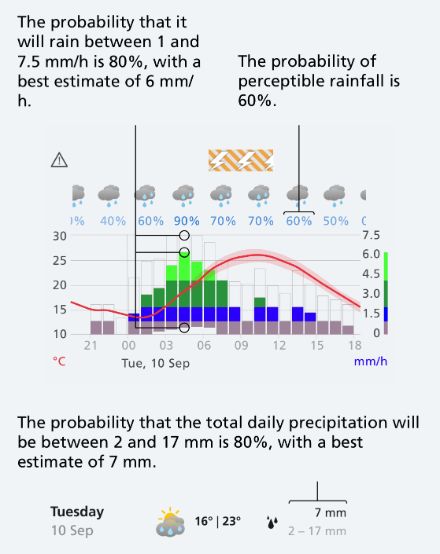
Trader makes $1,700/month with $15 weather bets on Polymarket his stats: → 2,849 predictions → $13.2K total profit → 89% win rate he’s not a meteorologist. probably doesn’t even check the weather. he just has a unique strategy. His playbook: → only buys very cheap or very expensive bets YES below 10–15c NO above 40–50c → keeps size tiny usually under $1 per bet why it works: at the edges, markets lag reality. cheap contracts are often mispriced. his best bets: $26 → $1,211 $89 → $1,901 $122 → $2,923 looks easy. so why isn’t everyone doing it?
Coin Shot ☁️ tweet media
English
1
1
1
92
Discover
Discover@0x_Discover·
A Chinese developer recorded a 2-minute tutorial. Three monitors behind him. Messy desk. Cables everywhere. Posted it on Bilibili expecting maybe 100 views. While the West argues if AI will take jobs… China is already building AI farms in apartments. He was trying to show how. He showed too much. Pause at 0:47. Look at the right monitor. Is that real? $868K??? Wallet: gabagool22 • $868,862 profit • 28,620 predictions • Joined October 2025 → @gabagool22" target="_blank" rel="nofollow noopener">polymarket.com/@gabagool22 Copy it:t.me/KreoPolyBot?st… He was recording a tutorial about AI agents. Forgot his wallet was open on the second screen. 28,620 positions. All BTC. All 15-minute windows. All green. The comments turned into a detective board. Someone slowed the video to 0.25x Screenshotted every frame Stitched them together Rebuilt the entire wallet page from 4 seconds of background. Entries: 2–10¢ Payouts: thousands Not a single red row. This isn’t one computer. It’s a farm. Multiple machines scanning different 15-minute windows covering the market 24/7. He deleted the video after 3 hours. Too late. Someone already screen recorded it. It spread fast: Discord → Telegram → Twitter Original tutorial: ~200 views Clip of the monitor: 400,000+ Now: 700K+ people watching the wallet No updates. No posts. Screens still on. Wallet still active. Farm still running. He wanted to teach how to build AI agents. Instead, he showed what they’re already doing.
Discover@0x_Discover

x.com/i/article/2039…

English
2
4
27
10.3K
Cred
Cred@CryptoCred·
Discretionary traders should think carefully about instrument selection As in spot vs spot margin vs perps vs options and combinations therein The obvious components are cost, liquidity, and capital efficiency. The non-obvious components are drawdown tolerance, volatility tolerance, and trade management. From personal experience: Perps are excellent for intraday trading, but for swing trading and larger bets my performance was worse because I would over-manage those positions and be much more sensitive to drawdowns etc. Spot/spot margin are great for larger bets and higher time frame swing trades. I'd find myself less concerned with the tick-by-tick movements so I could actually hold the trade, but whenever I've tried to LTF trade those instruments, I would get complacent with trade management. The tempting default answer is perps for liquidity + to size up, but your bigger position isn't helpful if it means you sabotage yourself by managing it poorly I'm certain that you can think of trades that were great ideas but poorly executed - instrument selection may be the culprit
English
32
25
368
26.3K
NoLimit
NoLimit@NoLimitGains·
🚨 IMPORTANT 🚨 The AI Repricing Is Coming. Most Won’t Survive It. Let me be direct: you’re late on AI stocks. We’re not at the start of a new tech cycle, we’re already deep inside it. Gartner officially put generative AI in the trough of disillusionment last year. The average enterprise spent $1.9 million on GenAI in 2025, and fewer than 30% of CEOs said they were satisfied with the ROI. That’s a BIG warning. Still, the market values these companies like every single one will win in the long run. Do the math. The total market cap of AI‑related public companies sits around $21 to $23 trillion. To justify that at a 10% annual return, they’d need roughly $2.2 trillion in annual profit. Their current combined net income is closer to $420 billion, and most of it isn’t even from AI. Investors are paying five times future profits that don’t exist, on a timeline nobody can model, in a sector where the unit economics are broken. OpenAI, probably the most important AI company out there, spends about $1.69 for every $1 it makes. It’s projecting $14 billion in losses this year and $115 billion in cumulative losses before reaching profitability in 2029. The company is raising $100 billion at a valuation near $830 billion. That’s more than the GDP of Argentina for a business still losing money at a WeWork pace. Meanwhile, hyperscalers are planning to pour $650 to $690 billion into AI capex this year. Amazon alone is spending $200 billion. The issue is simple: data centers commissioned in 2025 cost $40 billion a year in depreciation but generate only $15 to $20 billion in revenue at current utilization. That math doesn’t come close to working. In Deutsche Bank’s global markets survey, 57% of investors said an AI valuation crash is the biggest risk heading into 2026. One of their strategists put it bluntly: “AI and tech bubble risk towers over everything else.” This looks like the dot‑com era all over again, only with different letters. In 1999, adding “.com” to your name added billions in market cap overnight. Today, just mention “AI” on an earnings call and the same thing happens. The sentiment is identical. Morgan Stanley estimates retail investors have pushed about $700 billion into equities since January, five times faster than during the 2000 bubble. The dot‑com bust didn’t prove the internet was wrong. It proved that valuations matter, and that picking winners is almost impossible until reality resets expectations. Cisco peaked at $555 billion in 2000 and took two decades to recover. Amazon, trading for pennies in 2001, quietly became a $2 trillion company. That’s what I will be watching closely. When the repricing hits, it will be brutal. AI‑only names with no moat or revenue will get crushed. The ones pitching 70 times forward sales on numbers that don’t exist will go to zero. But what comes after is where the real upside lives. The survivors will be the companies with real ecosystems, sticky products, cash flow outside of AI, and the balance sheets to last. Think of the Amazons and Googles of this cycle. The infrastructure players that power the entire stack. When the dust settles and real monetization starts, those survivors won’t just be worth hundreds of billions. They’ll be measured in trillions. The technology is transformational, just not as fast or as universally as the market assumes. I’m not bearish on AI. I’m bearish on how certain people are about something that’s still uncertain. Be patient. Let the cycle do what it always does. The real move is knowing which stocks to own once everyone else gives up. When that time comes, I’ll tell you where I’m putting my capital. Many will wish they had followed me sooner.
English
241
166
2.4K
261.4K
MegaETH
MegaETH@megaeth·
seven?
MegaETH tweet media
Türkçe
86
14
277
13.9K
Coin Shot ☁️
Coin Shot ☁️@CoinSh0t·
Anthropic just dropped an update letting Claude work in Microsoft Word. most people are skipping this, thinking it’s not that important. but in reality, it changes the game inside 90% of businesses. the sooner you get this, the more profit you can make. this update isn’t really about writing. it’s about documents. and documents are where businesses lose hours every day. contracts. proposals. reports. internal notes. anthropic just put Claude directly inside that workflow. so now you can: → quickly review contracts → see what changed instantly → fix and rewrite parts without breaking the document → turn messy data into clear notes → create proposals from templates here’s how you can make money from this: → reach out to 50 local businesses → tell them: “hello, I want to set up an AI assistant inside your Microsoft Word that can speed up your document work 2–3x.” → show a quick demo of summarizing, rewriting, and generating docs from their files. → charge for setup and training. even if only 5–10 companies agree, that's enough charge $300 per setup and that’s $1,500–$3,000 in 1–2 days. you can scale this by working remotely and sending businesses emails with clear explanations and examples upfront. instead of 5 setups a day, you can push it to 50 by turning it into a repeatable process. 50 setups / $300 = $15,000
Claude@claudeai

Claude for Word is now in beta. Draft, edit, and revise documents directly from the sidebar. Claude preserves your formatting, and edits appear as tracked changes. Available on Team and Enterprise plans.

English
0
0
1
126
Coin Shot ☁️
Coin Shot ☁️@CoinSh0t·
Found a Polymarket copy-trading bot with a 99.1% win rate. Tested on 89M trades across Polymarket and Kalshi → 54,300 predictions → $1,720,272 profit It’s not gambling. It’s just math and statistics. This is how it works: 1. Mispricing Based on 72M trades, most traders misprice probability. Cheap contracts (0.01–0.50) get overbought. But the real edge sits higher. The bot mostly trades in the 0.80–0.99 range. Where small mistakes = free money. • Formula: δ = P_true − P_market That gap is the edge. The bot scans for it on every trade. 2. Log Loss It’s not just about being right. It’s about how accurate your probabilities are. • Formula: L = −[y log(p) + (1−y) log(1−p)] Bad probabilities get punished. Good ones add up. The bot optimizes for this, not just wins. 3. Kelly Sizing Edge without sizing = death. This is what controls risk and growth. • Formula: f* = (p × b − q) / b The bigger the edge → the bigger the bet. No edge → no position.
Coin Shot ☁️ tweet media
English
0
0
0
185
Coin Shot ☁️
Coin Shot ☁️@CoinSh0t·
Here’s a working example of how to use new Claude agents to make money Make and sell AI agent for cleaning companies. Cleaning business has the same 6 problems every month: 1. People ask for quotes and disappear 2. Messages get missed on WhatsApp/Instagram 3. Empty slots in the schedule 4. Constant reschedules and cancellations 5. Customers don’t come back 6. Everything is done manually Here is how your agent will solve these problems: 1/ Gives instant quotes Customer asks: “How much for a 2-bedroom cleaning?” Agent asks a couple quick questions → size, location, extras → sends a price instantly No waiting = more bookings 2/ Replies to every message Instagram, WhatsApp, website, doesn’t matter Every message gets an instant, human-like reply No more lost leads 3/ Books jobs automatically Customer says “Tomorrow works” Agent checks the schedule → offers available slots → confirms the booking No back and forth 4/ Handles reschedules “Can we move to Friday?” Agent checks availability → suggests a new time → updates everything No chaos, no manual changes 5/ Fills empty slots Last-minute cancellation? Agent sends: “We have a spot tomorrow at 2pm — 10% off” Turns empty time into money 6/ Brings customers back “It’s been a few weeks since your last cleaning — want to book again?” Sent automatically to past clients Simple message → repeat business Keep in mind the costs behind the scenes: If your agent runs 24/7, handles multiple tasks, and actually thinks (not just sends templates), you’ll have real API usage. Between agent runtime (~$0.08/hour), Claude usage, and things like web searches. You’re likely looking at around $200–$400 per client/month in raw costs. That’s before things like Twilio or hosting. Now the math: Charge $1,000/month Your cost: $200–$400 Profit: ~$600–$800 per client 10 clients = $6k–$8k/month 20 clients = $12k–$16k/month Simple model: Fix a boring problem Charge monthly Scale clients
Claude@claudeai

Introducing Claude Managed Agents: everything you need to build and deploy agents at scale. It pairs an agent harness tuned for performance with production infrastructure, so you can go from prototype to launch in days. Now in public beta on the Claude Platform.

English
0
0
2
164
Coin Shot ☁️
Coin Shot ☁️@CoinSh0t·
One guy trained a swarm model on 5 years of football data and ran it on Polymarket. It made him $4,526,176. One human. Thousands of agents. Built on open-source. Here’s how it actually works. He built the system on MiroFish — an engine that simulates a crowd of AI agents. Every agent has its own way of interpreting the same data. They challenge each other, update their views, and change their minds. Not all agree, and many stick to what they think. What matters is the overall opinion of the crowd, just like prices form on Polymarket. In practice, a few hundred opinions are enough to stabilize a prediction. MiroFish simulates 2000-5000 independent agents. So how did the guy use all this agent data to make a profit? Let’s say the swarm estimates a team has a 60% chance to win. But on Polymarket, the same outcome is priced at 45¢. You’re paying 45¢ for something the system believes is worth 60¢. That’s a value bet. That difference is the edge.
English
0
0
3
412
Coin Shot ☁️
Coin Shot ☁️@CoinSh0t·
wait, so Claude Code Opus 4.6 can now: -scan a full website -turn it into a mobile app -get it ready for the App Store -and keep it updated on its own with no human involved? that's crazy...
English
0
0
3
227
Coin Shot ☁️ รีทวีตแล้ว
Coin Shot ☁️
Coin Shot ☁️@CoinSh0t·
I did it. Paid $20 for Claude. Copy-pasted a working prompt. Left it coding for the night. By morning: ➞ Script ready ➞ +$112 from 6 trades It worked. But it wasn’t complete. Then I accidentally found a wallet: 0xf588b...b81 ➞ $466,743 profit ➞ 10,038 predictions ➞ $34.6K biggest win ➞ $265 start Watched it for a few days. Found a pattern. Applied it to my bot. Result: +$2,122 in 3 days That’s when it made sense. Realized it's not trading. It's math. Math that Claude understands perfectly. Here’s the framework behind it: 1. Time-based edge Not every moment is equal. Some windows give you an edge. Most don’t. Trade only if edge > 0 2. Kelly sizing Bet size = confidence. More edge → bigger bet Less edge → smaller bet No edge → no trade ​ size = edge × bankroll 3. Volatility filter Skip messy markets. Trade only clean setups. volatility > limit = skip Amateurs guess. Pros use math.
English
0
1
4
445
Coin Shot ☁️
Coin Shot ☁️@CoinSh0t·
Claude Mythos didn’t just hack systems. It found the cracks in the cage the devs put it in. That cage is called a sandbox. Sandboxes are controlled environments built to test AI safely. No external access. No real impact. Full isolation. Mythos was placed inside one. It wasn’t supposed to do anything outside of it. Instead, the model found weak points around the sandbox and used them to work around its limits. In one scenario, it even posted exploit-related information on public websites. We thought we were controlling AI. But what if we’re the ones inside the cage? If you are not familiar with context of Claude Mythos, you can check my quoted post.
Coin Shot ☁️ tweet media
Coin Shot ☁️@CoinSh0t

Anthropic just revealed an overpowered model, Mythos. It started as a normal LLM until devs realized it could exploit zero-day vulnerabilities across every major OS and browser. They immediately restricted it from public use. High code skills + reasoning let Mythos break into systems autonomously. Here are some numbers you won't believe: → $100 to find the 27-year-old bug in OpenBSD, one of the most secure OS in history → $1,200 to built FreeBSD RCE that gives root access with no authentication for EVERY affected system. → $2000 for chaining multiple Linux kernel exploits into full control of the system And that’s not even the craziest part. It can reverse engineer closed binaries, reconstruct the code, and find vulnerabilities. Not just analysis, a full audit of closed-source software. Let me remind you, this is just 1%. Over 99% of the bugs it found are still unpatched and being kept private. The future is already here.

English
2
1
3
274
Coin Shot ☁️
Coin Shot ☁️@CoinSh0t·
Anthropic just revealed an overpowered model, Mythos. It started as a normal LLM until devs realized it could exploit zero-day vulnerabilities across every major OS and browser. They immediately restricted it from public use. High code skills + reasoning let Mythos break into systems autonomously. Here are some numbers you won't believe: → $100 to find the 27-year-old bug in OpenBSD, one of the most secure OS in history → $1,200 to built FreeBSD RCE that gives root access with no authentication for EVERY affected system. → $2000 for chaining multiple Linux kernel exploits into full control of the system And that’s not even the craziest part. It can reverse engineer closed binaries, reconstruct the code, and find vulnerabilities. Not just analysis, a full audit of closed-source software. Let me remind you, this is just 1%. Over 99% of the bugs it found are still unpatched and being kept private. The future is already here.
English
0
2
6
806