Daniel Rirdan

30 posts

Daniel Rirdan banner
Daniel Rirdan

Daniel Rirdan

@DanielRirdan

science fiction author

เข้าร่วม Ekim 2024
8 กำลังติดตาม20 ผู้ติดตาม
ทวีตที่ปักหมุด
Daniel Rirdan
Daniel Rirdan@DanielRirdan·
It is now possible to preorder The Woman Who Touched the Sun (June 30, 2026). It is a short mythic fable about grit, grease, and the impossible—available in audiobook and print. Nobody sees Jo leave. One moment the farm is asleep; the next, the barn roof rolls open and a hand-built iron ship blasts its way into the sky. A woman from Nebraska—quiet, stubborn, with a samurai’s bloodline—has spent long nights with a sledgehammer and a welding torch in her barn. Now she flies the ship past the moon, through gravity wells and solar gales, and into the blazing fury of a star that roars in her mind and forbids her to come closer. With a church bell welded to a railroad chain and a hymn her grandmother sang in Japan, she dares anyway. Read an excerpt at danielrirdan.com
Daniel Rirdan tweet media
English
0
0
0
17
Daniel Rirdan
Daniel Rirdan@DanielRirdan·
Roger Zelazny—2026 Nebula Infinity Award. About time. Few writers ever lit me up the way you did: The Chronicles of Amber, Lord of Light, Roadmarks, Coils. Flamboyance. Audacity. Joy. You gave us all of it. Rest easy, Roger. #SciFi #SFF #WritingCommunity
Daniel Rirdan tweet media
English
1
0
0
14
Daniel Rirdan
Daniel Rirdan@DanielRirdan·
I kind of assumed my introduction to speculative fiction came from reading stories (Duh, what else?). It only recently dawned on me that my actual gateway was stranger and far more interesting. I grew up in Israel in the 1970s. When I was eight, I bought a cheaply printed album with grayscale placeholders for hundreds of images from various Disney animated movies. Well, you didn’t acquire the colored images outright. You bought sealed envelopes—five random thin picture cards inside—and you hoped. They were little lottery tickets of wonder. After the first few packs, the well ran thin. More duplicates. Fewer new pieces. You often ended up with duplicates and common cards. So you bought some, traded some—and all the while dutifully were gluing the top edge of each new picture card in the right spot. Weeks or months later, it was done: The album was complete, and it looked glorious. Each picture card was an illustrated fever dream or wondrous freeze-frame from a movie I had never watched. A duck, looking like a British explorer in Africa, enters a valley where colossal numbers loom and a waterfall of digits glows. A nervous dog-traveler bows to a skirted horse sprouting a flower. A gangly troubadour sprawls on a rug, guitar in hand, under a violet sky. Each picture card came with a cryptic, tantalizing caption. No plot. No voices. No music. No context. Just images—self-contained, exotic, wondrous, outrageous, imaginative. Mythic. At least those are the words I attach now to capture my reactions back then. No one told me these were lighthearted musical comedies. Instead, there was silence. And in silence, the image grows teeth. Because when all you have are fragments and you are eight, you build cathedrals around them. At least I did. A few days ago, I suddenly remembered the album, and an impulse made me hunt for these picture cards online. This is when I saw them again—for the first time in fifty-two years. Wow. It was as if it had been only last week that I’d stared at them, trying to divine their meaning. Maybe that is where my passion for sense of wonder in worldbuilding began. Not in film. Not in stories. But in gaps.
Daniel Rirdan tweet media
English
0
0
0
50
Daniel Rirdan
Daniel Rirdan@DanielRirdan·
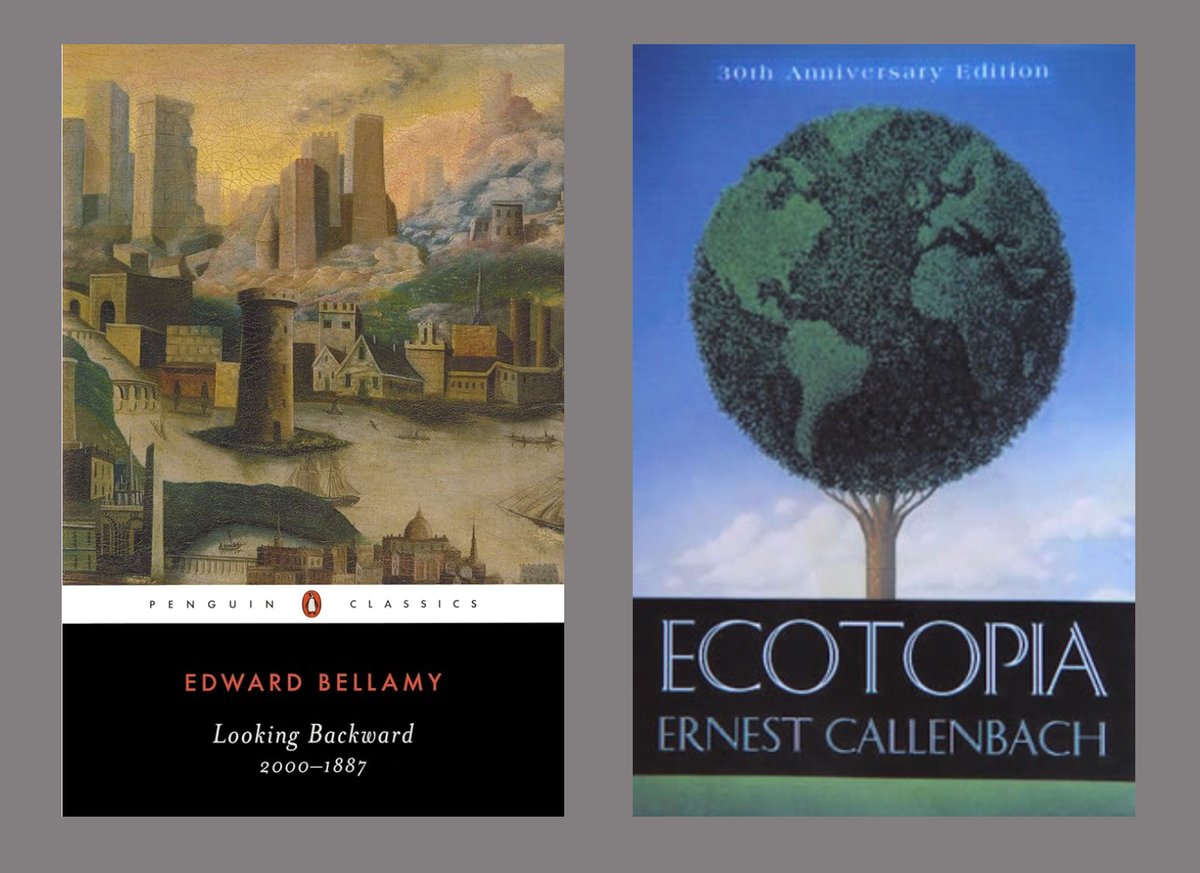
A note to readers considering Republic of Forge and Grace This novel stands squarely in the utopian tradition—alongside works such as Ecotopia and Looking Backward. Its engine is not plot in the conventional sense, but the exploration of an alternate society and how it functions. The dense worldbuilding is intentional. It is the point. A blueprint rendered in narrative form. And yes—it is utopian. Unabashedly. Joyously so.
Daniel Rirdan tweet media
English
0
0
0
26
Daniel Rirdan
Daniel Rirdan@DanielRirdan·
What a mistake. I'm producing a full-cast audio edition of Areta using ElevenLabs v3, and while I expected post-production cleanup in Adobe Audition (BTW, a must), I did not expect this: the software randomly drops entire sentences—sometimes whole paragraphs. So now I’m hunting down gaps and re-recording chunks. Ough! ElevenLabs has phenomenal, eerily authentic voices, but “prime time” it ain’t. I’ll finish the full-cast audio project, but it’s turning into a multi-hundred-hour slog I wouldn’t wish on anyone.
English
0
0
0
33
Daniel Rirdan
Daniel Rirdan@DanielRirdan·
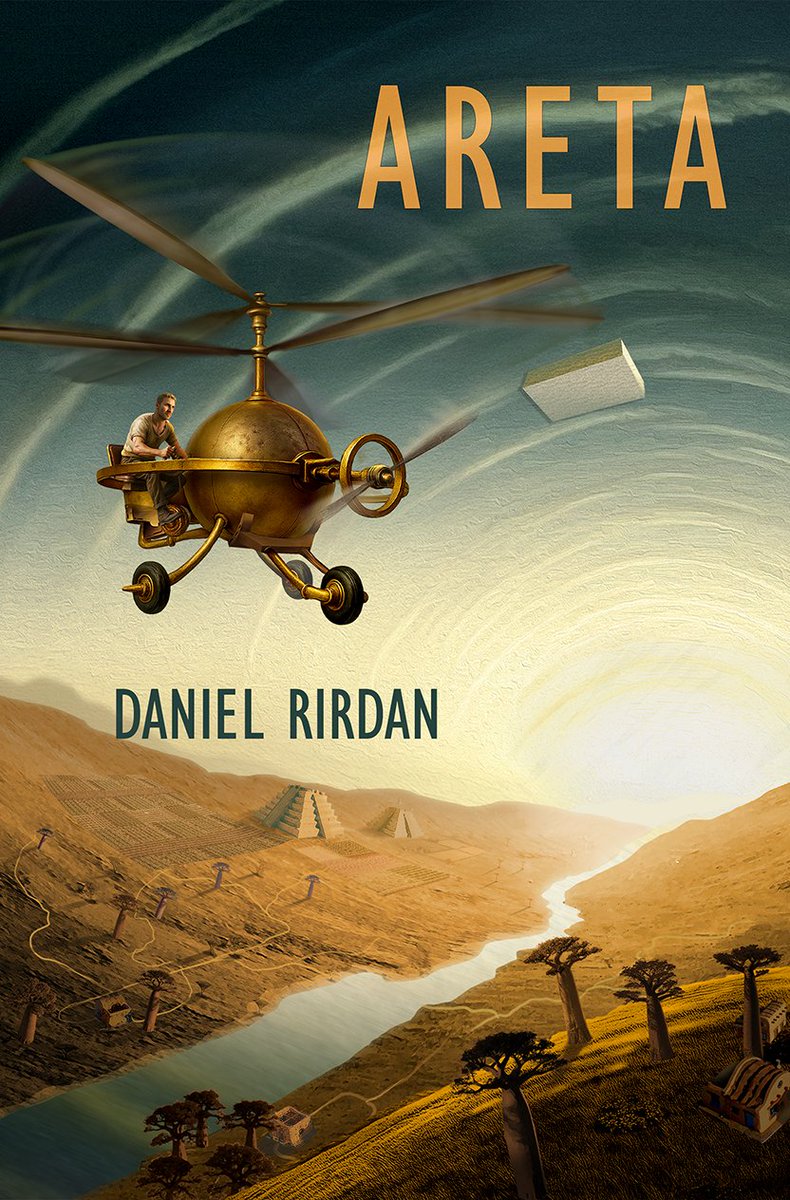
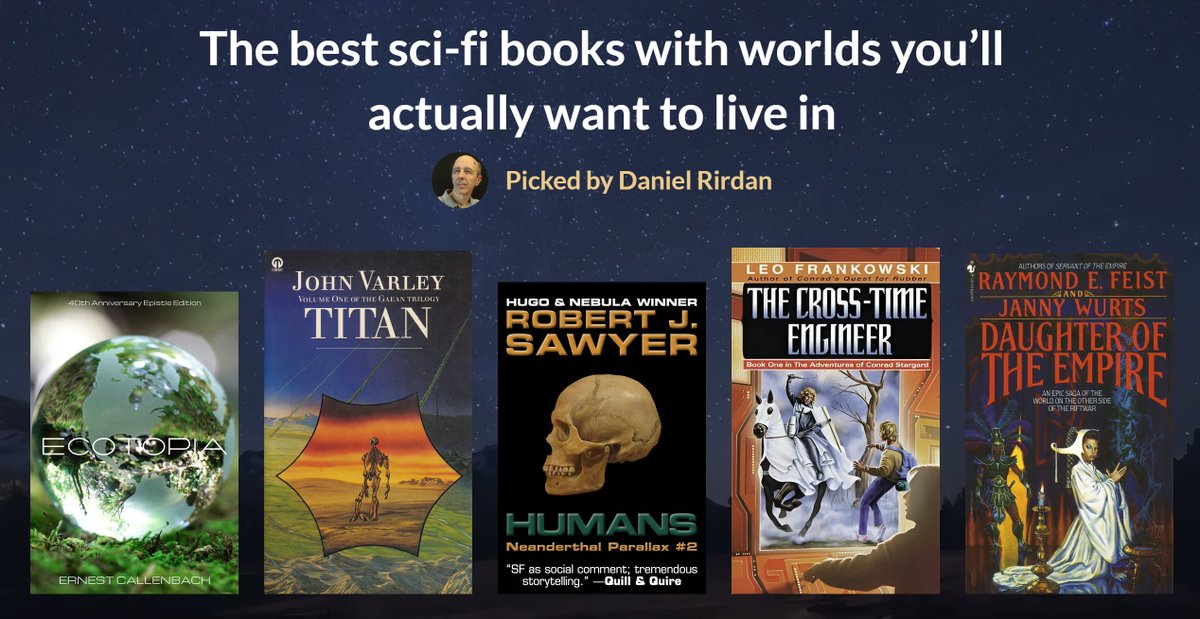
From a recent industry review of my upcoming novel Areta: “Reminiscent of landmark science fiction releases like John Varley’s Gaea trilogy, Larry Niven’s Ringworld, and Arthur C. Clarke’s Rendezvous with Rama…reads like an unearthed ‘70s classic.” —BlueInk Review I never thought of Areta in those terms but…interesting. Indeed, a big strand of SF from the mid-’60s through mid-’80s attempted to construct complete civilizations built from first principles, explored through daily life rather than plot mechanics, with big ideas emerging from anthropological texture rather than being imposed as a premise.
Daniel Rirdan tweet media
English
0
0
0
37
Daniel Rirdan
Daniel Rirdan@DanielRirdan·
@elonmusk When is the moon Titan going to be on the space colony menu?
English
1
0
0
8
Daniel Rirdan
Daniel Rirdan@DanielRirdan·
I am happy to share the book trailer for my forthcoming novel Areta—available for preorder on Amazon and other major outlets. youtu.be/Mb7-8JLXi1U
YouTube video
YouTube
English
0
0
0
43
Daniel Rirdan
Daniel Rirdan@DanielRirdan·
Today’s the day. Republic of Forge and Grace is officially out. 🙂 A science-fiction novel set in a parallel America — one that made a few different choices. If you’re tired of dystopia and still think adults should be trusted, this one’s for you.
Daniel Rirdan tweet media
English
0
0
0
28
Daniel Rirdan
Daniel Rirdan@DanielRirdan·
Here is to the America that might have been had we made other choices. Here are the seed scenes that started what evolved into my novel Republic of Forge and Grace: Chris glanced around. Adults gathered on porches, absorbed in board and card games and animated conversations, while children took over the unpaved street, playing and running around. The entire community seemed to have come out to enjoy the summer evening air. Barefoot girls in swirling pastel dresses skipped in unison over a long jump rope, their rhythmic chants blending with the slap of the rope on the ground. Nearby, others hopped over chalked hopscotch boards, yelling excitedly over one another. One girl, jumping in and out of an elastic loop stretched between two friends, performed increasingly intricate steps. Elsewhere, mostly boys occupied treehouses, their hollers drifting down from above, while a band of young boys raced down the street wielding mock guns, shouting. ⋯ ✦ ⋯ A sudden foghorn blast from outside jolted Chris from his reverie. “It’s Mr. McKinley,” Sandra called, entering the living room, having showered and changed into a light summer dress. “He’s letting his kids know supper’s ready.” Doctor Allen chuckled. “Works like a charm. They can be a block away and still hear it.” A whistle went off in the far distance and then a ship’s bell. Doctor Allen lifted his shoulders in a half-shrug. “Well, yes. Dinner time is about the same in most households. Anyway, once some children start to head back in, the games die down, and in short order there’s a general exodus of kids heading home.” Right on cue, the door swung open, and three small boys tumbled in—barefoot, windblown, and somewhat dirty. “Hello, Doctor and Mrs. Allen,” they called out. Mrs. Allen glanced at them. One of them had a scraped knee. Dried blood was smeared on his shin; a bit was still trickling. “What happened, Tommy?” “We raced on stilts, and I fell,” explained the boy. Mrs. Allen arched a brow. “And where was your kit?” Tommy hesitated. “I . . . forgot it.” She folded her arms. “So you’ve been walking around leakin’ like a busted pipe for how long? And not one of you had the sense—or the pouch—to do something about it?” “We, uh . . . left them on the porch,” Walter offered, voice small. Her gaze sharpened as she looked Tommy over, the dirt on his face and knee from the fall still smeared on his skin. She clucked her tongue. “You boys know where the gauze bandages and Band-Aids are. Gary, Walter—help him with these. And all of you, wash up,” she called after them. “You’re tracking mud!” With flushed faces and mumbled yes-ma’ams, they disappeared around the corner. “Who are they?” Chris asked, trying to keep his curiosity casual as the three went into the adjoining guest bathroom. “Neighbors’ kids,” Sandra supplied. “Their parents are out on Friday nights, so they’re coming over for supper.” She smiled. “They come as a set, those three. Their siblings are dining with other neighbors.” “Things are pretty laid back around here, huh?” Chris said. “Yep,” Katie said from the kitchen area. “When Sandra and I were kids, we’d run in and grab snacks from whoever’s refrigerator was closest.” She grinned at the memory.
English
1
0
14
8.8K
Daniel Rirdan
Daniel Rirdan@DanielRirdan·
🧵 Republic of Forge and Grace: The Author Q&A I Never Posted (the rest of the thread) Q: If there’s a moment in history where you think our country took the wrong turn—what was it? A: I think the 1950s saw the collapse of much of the community and social fabric that held people together. With TV shrines in every living room, atomized families, and this new invention called ‘teenagers’: young people in extended limbo, no duties beyond themselves. To see real operating communities, you have to look to the 1930s and 1910s in the heartland of America—where women ran the household economy, stitched together mutual support, and technology that served life, not the other way around. I picked the brains of folks who grew up in Boulder in the ’50s, and what they shared helped me populate the world. That reference to kids gorging on mulberries by the creek? It’s someone’s real life anecdote. But the soul of Americana—it reaches further back. At any rate, the world I created is not history; it’s a distillation of what worked, what is true, and what could be. Q: Like what? Give some examples. A: Like co-op garment factories where everyone’s got skin in the game. Like streets that belong to people, with kids on trikes carrying fresh bread home. Like healthcare that costs little because it's built around prevention and root causes. Like teenagers waving from the train as they head off to national service. And out on the Great Plains? Bison roam, and cheetahs chase pronghorn, once again. Q: Americana in five words, please. A: Craft. Trust. Grit. Grace. Sanity. Q: If someone handed you a one-way ticket to live in your Americana, would you take it? A: I'd sign up in a heartbeat. Look, I didn't just write about this world—I built the place I wish existed. Q: If Americana is the world you wish existed, what do you think keeps us from having something like it in real life? A: “You’d have done better asking that in 1945, when the boys came back home. That might’ve been the last off-ramp. Now? It feels like it’s too late. Generations too late. The institutional crust’s too thick, the nanny state’s woven into everything. People are disconnected—from nature, from neighbors, even from themselves. I think people feel this in their bones—If they pause long enough to take note. Some part of me—the part that picks up a pen instead of throwing in the towel—refuses to accept that the only possibility is to project the future by drawing a straight line from the present. · • ✧ • · Republic of Forge and Grace—coming Jan 6. Available for preorder at all major online retailers.
English
0
0
3
71
Daniel Rirdan
Daniel Rirdan@DanielRirdan·
I am happy to announce the book trailer for my forthcoming Republic of Forge and Grace. youtu.be/rwSsOkNzZ2I
YouTube video
YouTube
English
0
0
0
73
Daniel Rirdan
Daniel Rirdan@DanielRirdan·
Beyond converting the oceans into mercury laced landfills, we take a vacuum hose and suck out fish. In the process we may use drag nets, razing the seafloor into post-apocalyptic zones. Americana’s solution is grounded in real-world zero-discharge systems like those pioneered by Pure Blue Fish. People in my parallel-universe novel don’t harvest fish from the ocean. Full stop. They grow marine fish in giant inland tanks in every population hub. Closed-loop and no runoff.
Daniel Rirdan tweet media
English
0
0
2
91