DanielYubi

9.9K posts

DanielYubi banner
DanielYubi

DanielYubi

@DanielYubi

building with ai · product @Stripe · ex-founder @PayableHQ

🇲🇽 🇬🇧 เข้าร่วม Temmuz 2009
509 กำลังติดตาม1.3K ผู้ติดตาม
DanielYubi รีทวีตแล้ว
james hawkins
james hawkins@james406·
110-year-old Turkish grandma shares her secret to a long life: "i never once used Microsoft Teams"
james hawkins tweet mediajames hawkins tweet media
English
837
31.4K
268.8K
4.9M
DanielYubi
DanielYubi@DanielYubi·
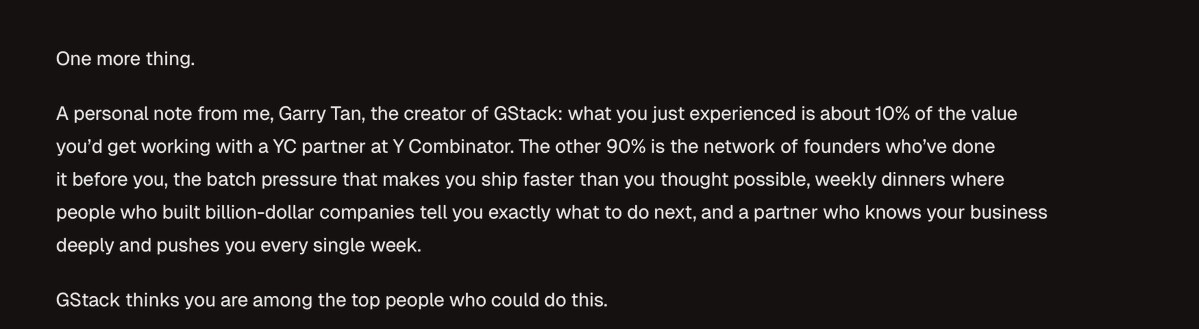
❤️ @garrytan - when I was building my co., I went through the YC interview and chose not to move fwd. A few months later post-raise, I caught myself thinking: "damn, YC would've meant not doing this alone." I solo-founded, even with a CTO, that feeling never fully went away
DanielYubi tweet media
English
0
0
0
35
DanielYubi รีทวีตแล้ว
0xSero
0xSero@0xSero·
Any bros from the UK want to help me spread the word on an event I’m helping organise? It’s for London luma.com/cclondon26?utm… Hoping to get 500 attendees 😳
English
35
36
181
30.8K
DanielYubi รีทวีตแล้ว
Peter Steinberger 🦞
Peter Steinberger 🦞@steipete·
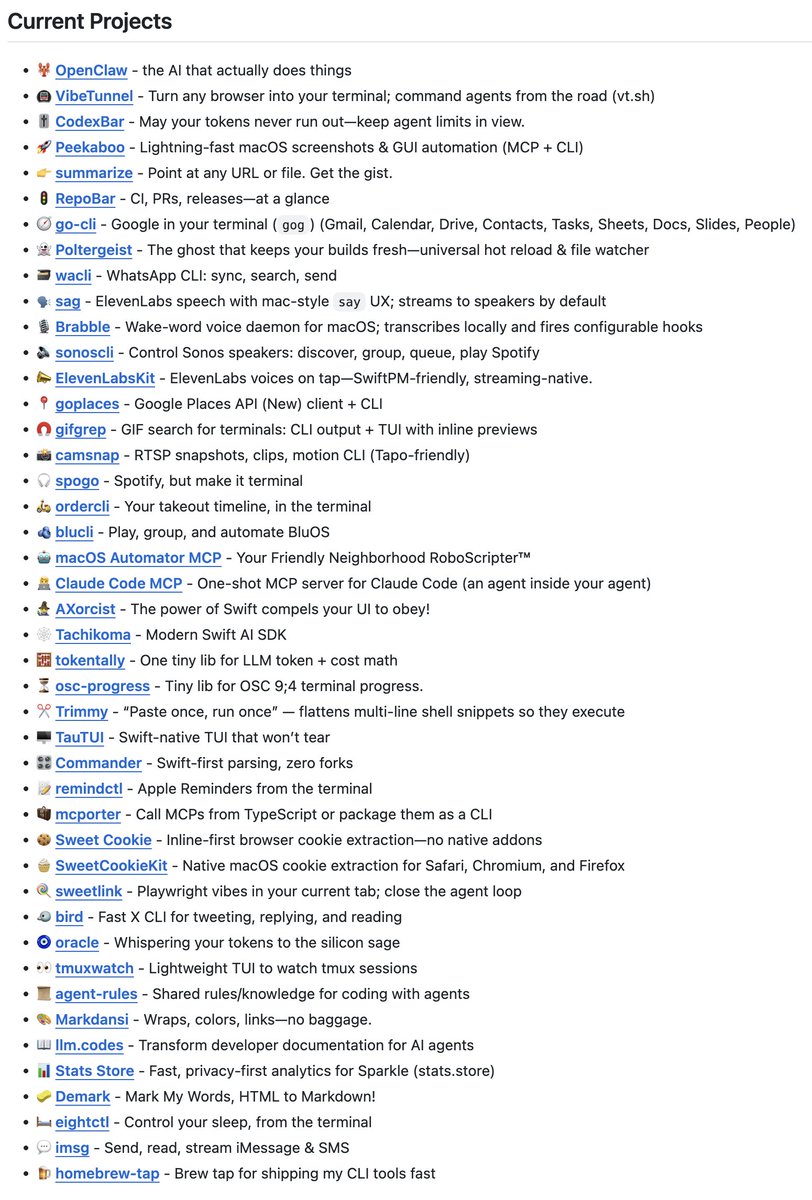
The funniest take is that I "failed" 43 times when people look at my GitHub repos and projects. Uhmm... no? Most of these are part of @openclaw, I had to build an army to make it useful. github.com/steipete/
Peter Steinberger 🦞 tweet media
English
886
1K
16.7K
865.2K
DanielYubi
DanielYubi@DanielYubi·
Last week I paid for Claude Code Max. Surprisingly, Codex feels more grounded, steady, and calm. Even before the Mac app, the Codex CLI would just execute (with plenty of context) on the $20 Plus plan. After a few days with the Codex app, it feels easier to manage projects and agents without cognitive overload. Still using Claude Code a lot. Wild how 2–3 days of real use can change how you work.
English
0
0
0
207
DanielYubi
DanielYubi@DanielYubi·
Impressive tbh. I exported 800+ notes from Reflect.app and used CC to clean them up and impose structure (PARA-style: Projects, Areas, Resources under Work). It mostly nailed it… but also made some mistakes: •Couldn’t always distinguish People vs Authors •Authors (Steve Jobs, Voltaire) ended up under People, not Learning •Companies/customers all grouped as People (arguably fair, but not intentional) Still: going from chaos → a usable @obsdmd vault in one pass is wild
DanielYubi tweet media
English
1
0
0
95
DanielYubi
DanielYubi@DanielYubi·
Thinking time with Aristóteles.
DanielYubi tweet media
Español
0
0
2
43
DanielYubi รีทวีตแล้ว
Lenny Rachitsky
Lenny Rachitsky@lennysan·
My biggest learnings from Jeanne DeWitt Grosser (ex-Chief Business Officer at @Stripe, now @Vercel COO): 1. What failed seven years ago now works with AI. In 2017, Jeanne tried to build a system at Stripe that would automatically personalize outbound emails based on company data. Despite working with world-class data scientists, it failed due to too many errors. Today, that exact same approach works. This shows how AI has made previously impossible ideas suddenly viable. 2. A single GTM engineer at Vercel reduced a 10-person sales team to 1 (in just 6 weeks). Jeanne’s team at Vercel had an engineer build an AI agent that handles inbound lead qualification, outbound prospecting, and deal loss evaluation. The agent costs $1,000 per year to run versus over $1 million in salaries for the sales team. The nine displaced team members moved to higher-value work rather than being laid off, and the remaining salesperson is 10 times more efficient. 3. Their AI deal-loss bot has become better at understanding what went wrong than humans. When Jeanne analyzed her biggest loss of the quarter, the salesperson blamed pricing. But an AI agent reviewed every email, call transcript, and Slack message and discovered the real reason: they never spoke to the person who controls the budget, and when ROI came up, the customer clearly didn’t believe the value claims. They are now using AI to analyze sales calls in real time and send alerts like “You’re halfway through the sales process and haven’t talked to a budget decision-maker yet.” 4. Wait until $1 million in revenue before hiring your first salesperson. Founders should continue selling themselves until they reach around $1 million in annual revenue with a repeatable process. The key is having a defined ideal customer profile—customers who look alike. 5. Segment customers on what drives their buying decisions, not just company size. OpenAI has roughly 3,000 employees, which would typically put them in the “mid-market” category. But they’re a top-25 website globally by traffic, so Vercel treats them as enterprise customers requiring complex sales. Effective segmentation combines company size with growth rate, web traffic, workload type, and industry—because selling to e-commerce companies requires completely different language than selling to crypto companies. 6. Most customers buy to avoid risk, not to gain opportunity. About 80% of customers purchase to reduce pain or avoid problems, while only 20% buy to increase upside. This means you should focus your sales messaging on what could go wrong without your product—like falling behind competitors or damaging their reputation—rather than just talking about exciting features. This is especially true when selling to larger companies, where individual careers are on the line. 7. Sales teams should be indistinguishable from product managers—for a bit. Jeanne hires salespeople who have such deep product knowledge that if you put one in front of a group of engineers, it should take 10 minutes to realize they’re not a product manager. This credibility allows sales teams to serve as an extension of research and development—a 20-person sales team talks to hundreds of customers weekly and can translate those conversations into product insights at scale. 8. Building your own AI sales tools may beat buying off-the-shelf software. Because AI is so new and every company’s sales process is unique, Jeanne finds that building custom internal agents often delivers more value than buying vendor solutions. A single go-to-market engineer built their deal analysis bot in just two days, perfectly tailored to their specific workflow. These engineers shadow top salespeople to understand their workflows, then build automation that would have taken months or been impossible just a few years ago. 9. Make every sales interaction great, whether customers buy or not. Jeanne replaced boring discovery calls at Stripe with collaborative whiteboarding sessions where customers drew their payment architecture. Many customers had never visualized their own systems before. They left with a useful asset and a feeling of collaboration, regardless of whether they bought. Many returned years later to purchase. Think about your go-to-market process like a product, not just a sales function. 10. Product-led growth has a ceiling—no $100 billion company runs on it alone. While product-led growth (where users can sign up and start using a product without talking to sales) works well for early growth, customers generally won’t spend a million dollars through a self-service flow. Every major technology company eventually builds a sales team for larger deals. The mistake is waiting too long, since building a predictable sales process takes time.
English
75
172
2K
766.2K
DanielYubi
DanielYubi@DanielYubi·
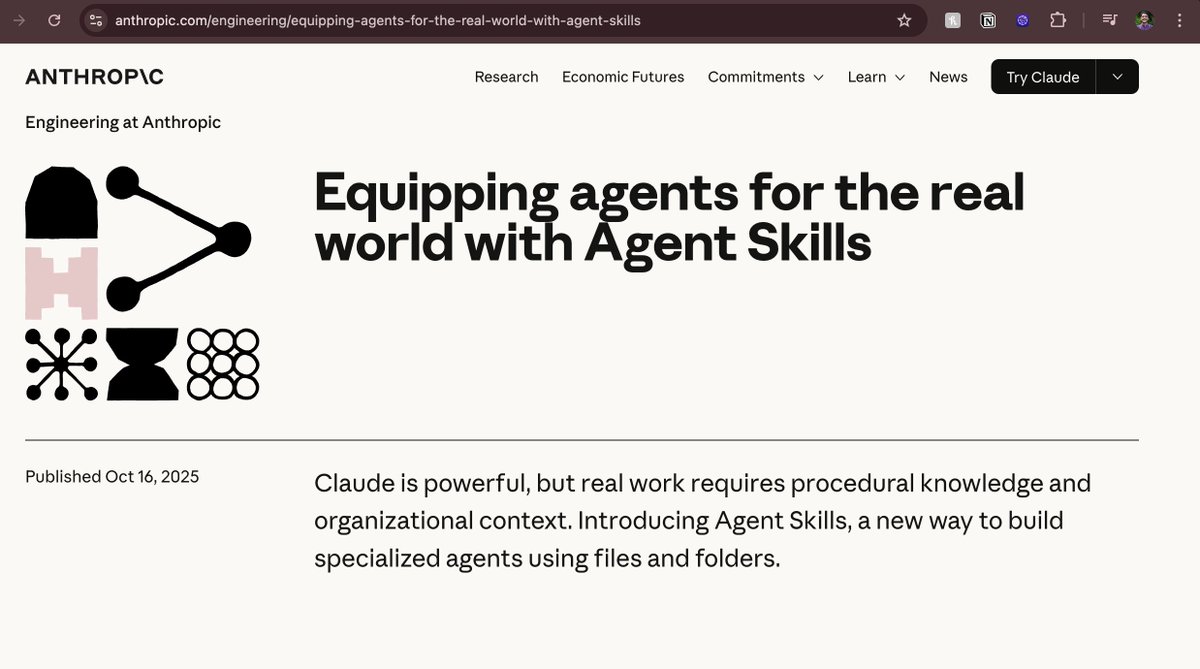
Claude's skills are token-efficient: they load instructions on-demand (via progressive disclosure) instead of dumping everything into the system prompt upfront.
English
1
0
0
31
DanielYubi
DanielYubi@DanielYubi·
Projects vs Skills in @claudeai , finally clicked for me: Projects = "where and with what context we're working" Skills = "how we want the model to work on a certain type of task" Projects are long-lived context. Skills are behaviours you can drop into any project/anywhere.
DanielYubi tweet media
English
1
0
1
83