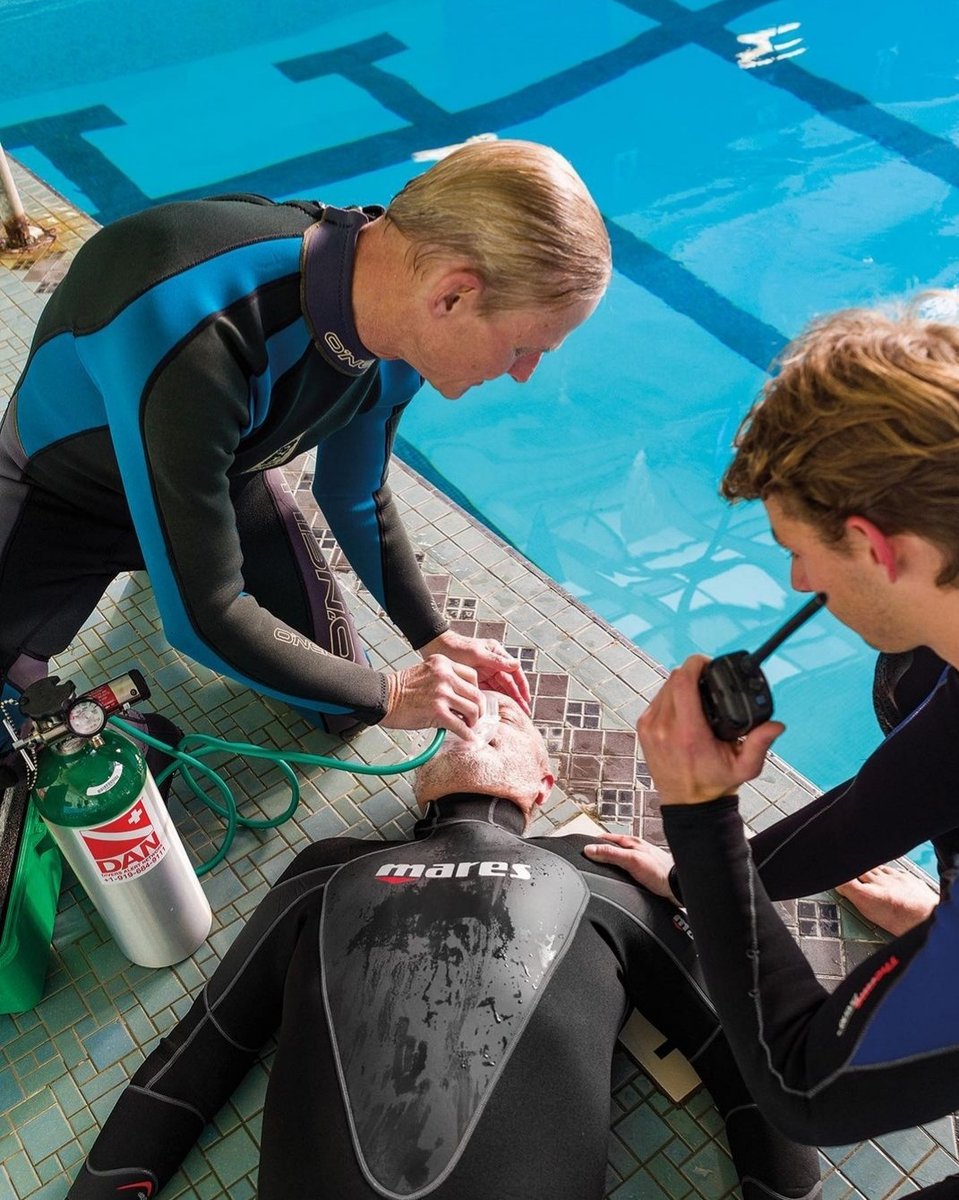
Any diver with suspected Arterial Gas Embolism requires immediate medical treatment. If you observe symptoms of #AGE, summon EMS and provide the diver with emergency oxygen. And if you need further guidance afterward, call the DAN Emergency Hotline at +1-919-684-9111 ⛑
Immersion-Induced Mitral Regurgitation: A Novel Risk Factor for Swimming-Induced Pulmonary Edema (SIPE) in @journal_CHEST
Mitral valve regurgitation at rest can worsen during immersion and represents a novel and measurable risk factor for SIPE
sciencedirect.com/science/articl…
Immersion Pulmonary Edema, Swimming-Induced Pulmonary Edema: Shortness of breath of cough during swim or dive? Navy funded study at Duke Medical Center to investigate whether SIPE risk can be reduced by sildenafil (Viagra®). For details click here: #1551294588795-1f3fa7c9-10c9" target="_blank" rel="nofollow noopener">anesthesiology.duke.edu/?page_id=84858…
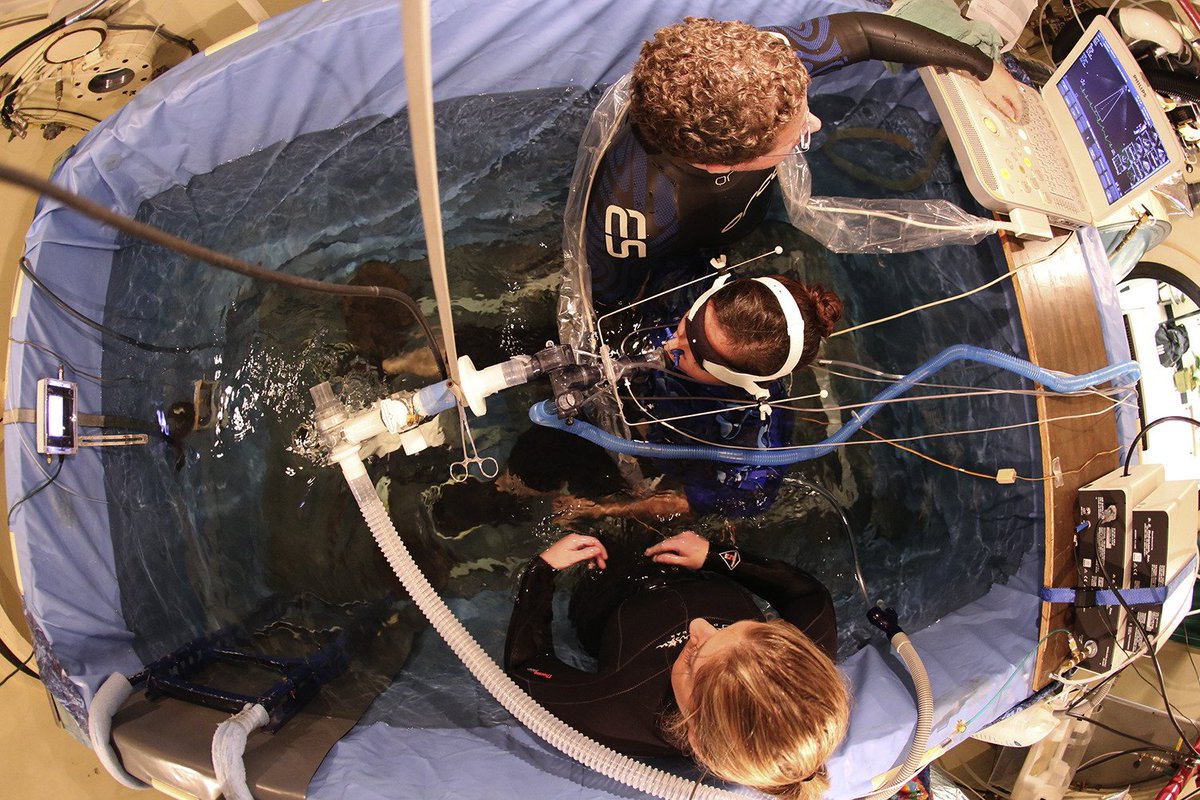
Did you know you can volunteer for paid research studies in the Duke hyperbaric chambers? Go diving without all those pesky fish!
clinicaltrials.gov/ct2/show/NCT04…
A plea for hospitals with hyperbaric chambers to provide 24/7 service: Butler FK, Moon RE. Emergency hyperbaric oxygen therapy: A service in need of resuscitation - an open letter. Undersea Hyperb Med. 2020 Fourth-Quarter;47(4):649-652. PMID: 33227841.
During a swim or dive have you experienced symptoms of swimming-induced pulmonary edema (SIPE)? If you are between 18 and 45 years old and are interested in participating in a study click here: #1551294588795-1f3fa7c9-10c9" target="_blank" rel="nofollow noopener">anesthesiology.duke.edu/?page_id=84858…
Healthy, fit non-smoking males ages 18-40 needed for altitude research
You may be eligible if:
• In the last 5 years you have ascended to 16,400 ft at least 3 times for 2-3 weeks each time
OR
• You are simply healthy
Click here for details: #1542306934976-b2215cfa-1268" target="_blank" rel="nofollow noopener">anesthesiology.duke.edu/?page_id=84858…
Interested in participating in diving research? Click here for opportunities at Duke Center for Hyperbaric Medicine & Environmental Physiology: #1539371371422-03df5421-e6fe" target="_blank" rel="nofollow noopener">anesthesiology.duke.edu/?page_id=84858…
How can humans possibly dive to over 700 feet underwater while holding their breath? Fabulous new review article from Dr. Fitz-Clarke of Dalhousie University explains the physiology: ncbi.nlm.nih.gov/m/pubmed/29687…