

Benny da Bull
2.4K posts

Benny da Bull
@DynamicalBull
swinging shit - turning 25k to 1M roth IRA
เข้าร่วม Eylül 2021
100 กำลังติดตาม59 ผู้ติดตาม
Benny da Bull รีทวีตแล้ว

If losing a few bucks in the market ruins your entire week, please hear me out:
The market probably isn't the problem.
If you have food on the table, a roof over your head, clothes on your back, meaningful relationships, and something you're passionate about, you're already wealthier than most people realize.
A few dollars gained or lost will not define my life.
Perspective changes EVERYTHING.
Every blessing I have today is a gift from above, and no red day on a screen will ever change that.
1) Yes, the market is important.
2) It's just NOT THAT important!
Perspective, perspective, perspective.
English
@NickSchmidt Iren could be a good shot for you! Red on day! Catch up play. I know you like leaders tho
English

Benny da Bull รีทวีตแล้ว

This is why the supporters of @elonmusk work hard to "defend him."
Because it's not about Elon.
He's a symbol of progress.

English
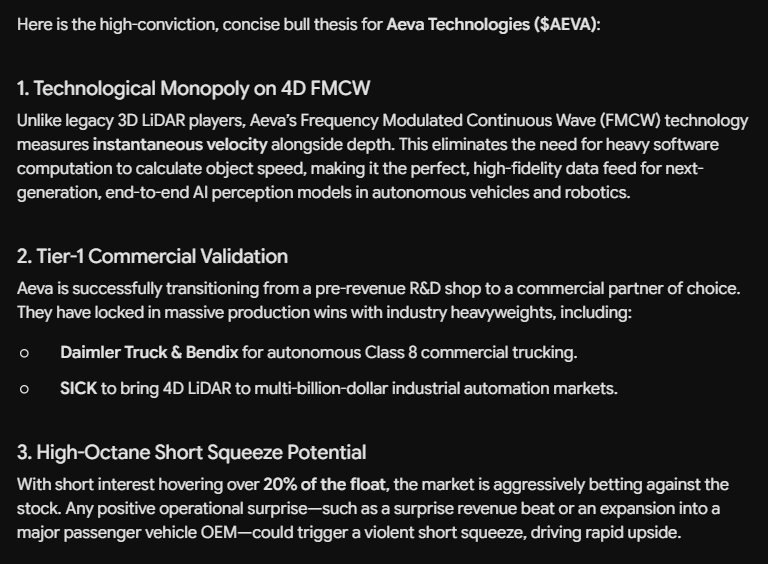

Crwv - first position took at 106.8 yesterday 240 shares. Solid up day today sitting at 118. $2880.
English
Benny da Bull รีทวีตแล้ว

Benny da Bull รีทวีตแล้ว

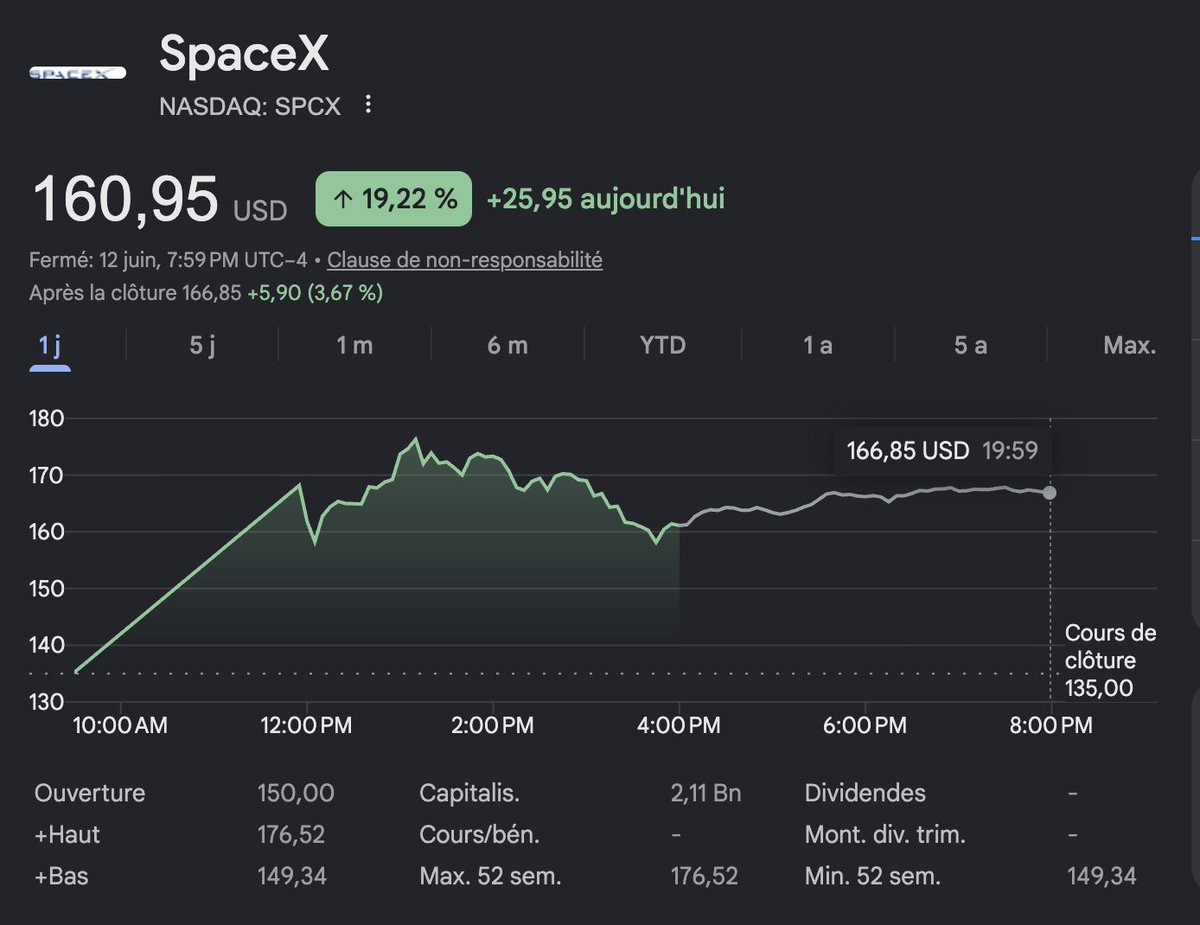
SpaceX a clôturé son premier jour de cotation à 2 100 milliards de dollars, +19%. Tout le monde regarde le chiffre. Personne ne regarde ce qu'il price réellement.
Laissez-moi vous dire ce que le marché vient d'acheter, et pourquoi je pense que cette boîte vaudra 30 à 50 trillions d'ici 5 ans.
D'abord, le symbole. Cette IPO est un référendum. D'un côté, 20 ans de discours sur la décroissance, la sobriété, la redistribution, la fin de l'histoire gérée par des comités. De l'autre, un homme qui a dit "je vais rendre l'humanité multiplanétaire", que tout le monde a traité de clown, et qui vient de créer la plus grosse entreprise cotée de l'histoire en partant d'un entrepôt à El Segundo. Le marché a voté. Le wokisme avait des départements RH, SpaceX avait des fusées. Les fusées ont gagné.
Ensuite, la mécanique économique, parce que c'est là que tout le monde se trompe. Les analystes valorisent SpaceX comme une entreprise de lancement plus Starlink. C'est comme valoriser Internet en 1995 sur le marché du fax. Starship ne réduit pas le coût du kilo en orbite de 20%, il le divise par 100. Et chaque fois dans l'histoire qu'un coût d'infrastructure est divisé par 100, ce n'est pas le marché existant qui grossit, ce sont des industries entières qui naissent. Le coût du calcul divisé par 100 a donné Internet, le smartphone, l'IA. Le coût de l'orbite divisé par 100 va donner une économie spatiale complète.
Faisons la liste de ce qui devient rentable quand le kilo en orbite coûte le prix d'un billet d'avion. Les data centers orbitaux, avec énergie solaire continue et refroidissement gratuit, au moment exact où l'IA fait exploser la demande énergétique terrestre. La fabrication en microgravité de semi-conducteurs, de fibres optiques, d'organes imprimés impossibles à produire sous gravité. Le tourisme orbital de masse, puis les hôtels lunaires, qui passeront du fantasme au business plan exactement comme la croisière de luxe au 20ème siècle. Le transport point à point terrestre, Paris-Tokyo en 40 minutes. L'industrie minière des astéroïdes, dont un seul corps de classe M contient plus de métaux que tout ce que l'humanité a extrait depuis le néolithique. Et Mars en ligne de mire, pas comme destination touristique, mais comme le plus grand projet d'infrastructure jamais entrepris, avec tout ce que ça implique de demande en énergie, matériaux, robotique, IA.
SpaceX ne participera pas à ces marchés. SpaceX possède le péage d'entrée de tous ces marchés. C'est AWS, mais pour la civilisation. Apple vaut 3 500 milliards en vendant des rectangles de verre sur une seule planète. Le premier monopole d'accès à une frontière infinie à 30 ou 50 trillions dans 5 ans, ce n'est pas de l'exubérance, c'est une simple règle de trois sur l'expansion du marché adressable.
Et maintenant, la partie que je préfère. Ce futur n'a pas besoin de bureaucrates. Il n'y a pas de comité consultatif en orbite. Pas de commission Théodule sur Mars. Chaque dollar de cette nouvelle économie sera créé par des ingénieurs, des techniciens, des soudeurs, des pilotes, des entrepreneurs. Les diplômés en gestion de la norme vont devoir apprendre un métier utile, et franchement, c'est une excellente nouvelle pour eux aussi : construire est infiniment plus fun que contrôler.
Parce que c'est ça, le vrai signal d'aujourd'hui. Pendant 50 ans on nous a vendu un futur rétréci : moins d'énergie, moins d'enfants, moins d'ambition, gérer le déclin proprement. Et là, d'un coup, le plus gros actif financier du monde est un pari sur l'abondance, l'expansion et l'aventure. Le pessimisme vient de passer en position vendeuse sur lui-même.
Le futur sera méga fun. Il y aura des hôtels avec vue sur la Terre, des honeymoons en orbite, des gamins qui diront "papa, c'était comment avant les fusées réutilisables" comme on dit "c'était comment avant Internet". Et quelque part dans les années 2030, un humain marchera sur Mars en livestream devant 5 milliards de personnes, et ce jour-là plus personne ne se souviendra du nom d'un seul de ses détracteurs.
Achetez de l'optimisme. C'est encore sous-valorisé.
Français
Benny da Bull รีทวีตแล้ว
This image has stood the test of time for a reason.
When markets get choppy, I tend to focus on undercuts, failed breakdowns, and reclaim setups because they force weak hands out before the next potential move higher.
In stronger trending environments, b/o's can work better... but I'm also willing to buy dips into the 9/21EMA while anticipating the breakout before it happens. The strike rate might be slightly lower, but the risk/reward is often much better because my stop is already defined underneath support.
Different environments, but the same goal... to define risk tightly and position before the crowd.

English
Benny da Bull รีทวีตแล้ว

𝗪𝗵𝗼 𝗠𝗼𝘃𝗲𝗱 𝗠𝘆 𝗘𝗱𝗴𝗲?
Most investors spend 95% of their time analyzing numbers.
Revenue growth.
Margins.
Guidance.
Valuation.
The problem is that everyone can see the same numbers.
Twenty years ago, investors like Warren Buffett could build an edge by reading financial statements better than almost everyone else.
Information moved slowly. Data was expensive. Analysis was limited.
Ten years ago, investors like Bill Ackman were still generating outsized returns through deep fundamental research, activism, and understanding businesses better than the market.
Today, every filing is instantly available to everyone.
Hedge funds, analysts, retail investors, and now AI systems can process the same information within minutes.
The market evolved.
Information evolved.
AI evolved.
Investors who didn’t evolve underperformed.
Even Bill Ackman’s most famous trade wasn’t finding a hidden line item in a balance sheet. It was recognizing a risk the market was largely ignoring and buying protection before COVID.
The edge moved.
I haven’t used Excel or a calculator in over 10 years.
Yet during that time I have outperformed the market by thousands of percentage points.
Not because numbers don’t matter.
But because numbers alone rarely provide an edge anymore.
If you’re only chasing valuations, you’re chasing information everybody already knows.
You can scroll through X all day and see endless posts saying:
“Bitcoin is so cheap.”
“PayPal is so cheap.”
And my personal favorite:
“This is the cheapest valuation in the company’s history.”
I probably see 10 posts like that every day.
So what?
Everybody can see the same valuation metrics.
Everybody knows the stock is trading at 8x earnings, 1x sales, or whatever ratio is being promoted that day.
If the opportunity is obvious to everyone, why would that be an edge?
In fact, some of the cheapest stocks get even cheaper.
The question isn’t whether something looks cheap.
The question is: what does the market believe that makes it cheap, and what is the market getting wrong?
One of my favorite edges is understanding the actions of the people who know a business best.
Not blindly following them.
Understanding why they’re doing what they’re doing.
In my latest three recommendations, $STAA, $WGS, and $IMDX, the numbers weren’t particularly attractive. Analysts were negative, and the last quarters weren’t great.
Yet within a few months, all three were up between 50% and 100%.
Almost nobody was talking about them.
You couldn’t scroll through X and find endless threads about how cheap they were.
At the same time, some of the people who knew these businesses best were buying aggressively.
That’s where I started paying attention.
Not because someone bought.
Because I wanted to understand why they bought.
There are entire funds and ETFs built around insider buying.
They scan thousands of companies, track insider transactions, apply statistical models, and buy based on those signals.
And they’re not wrong.
But that’s still only one piece of the puzzle.
Insider buying is not the thesis.
It’s one facet of the diamond.
It’s a clue.
The real work starts after you see the purchase, not before.
Who is buying?
How much are they buying?
What do they know?
What are their incentives?
Why are they acting now instead of six months ago?
Those are the questions that matter.
If you read the hedge fund letters on $STAA, you understood the thesis.
If you listened to the conference calls on $WGS and paid attention after insiders committed roughly $100 million of their own capital, you understood where the opportunity was.
Same thing with $IMDX.
The market is very good at pricing today’s numbers.
It’s much less efficient at pricing human behavior, incentives, and conviction.

English

$INSG added. Wake me up at $20
Mr. Alpha@be4_the_h3rd
New Long - $INSG - Inseego Corp. This idea is in collaboration with @JasperRidley. Thanks for getting my eye on this one Jasper, it looks like a winner. After getting the nod from @GoldmanBanker I'm now sized in heavy. Thesis in a nutshell: - $INSG recent agreement with $NOK is an absolute game changer. The deal gives huge potential upside to $INSG - $NOK is buying a 11% stake in $INSG - There is a severe valuation mismatch. $INSG is about to double its scale and is actually down since the $NOK pr - The post ER dip is a gift imo - Si ~10% - This is a high-conviction turnaround story. It is a compelling long here in the ~$13 range. Full thesis below:
English
Benny da Bull รีทวีตแล้ว
$WGS Update: Bullish fireside chat at Goldman today, and the founder, director, and hedge fund manager purchased additional shares, paying as much as $56.50 per share.
Per today’s filing, Eli Casdin bought another 200,000 shares of $WGS at prices ranging from $52.80 to $56.50 per share.
Just in case you’re wondering if you’re too late to the party, apparently the smart money is still a happy buyer at $56.5.
After the recent buying spree, Casdin and Meister now control approximately 35% of GeneDx, the company they helped bring public through a SPAC and a company that no one knows better than they do.
The market’s problem with GeneDx is not growth. The company is still growing roughly 37% per year.
The problem is reimbursement.
Today, a whole genome test is reimbursed at roughly half the rate of a whole exome test.
Think of it this way. A whole exome test is like watching the trailer for a movie. A whole genome test is like watching the entire movie.
Yet today, the healthcare system pays more for the trailer than it does for the full movie.
I don’t think that makes sense, and I don’t think it will stay that way forever. And obviously management and the smart money think the same.
The reason is simple. Reimbursement systems move slowly. New technologies often become clinically useful long before insurance companies and government payors update their payment schedules.
I also just got off the GeneDx Fireside Chat at Goldman. This is obvious: temporary problems, strong growth, an AI beneficiary, and a dataset built over 20 years that would take enormous amounts of time and capital to replicate. Long-term winner. To me, it’s as clear as day and night. Listen to it yourself.
ir.genedx.com/news-events/ev…
Management says this issue will take months to fix, not years.
My thesis is not that GeneDx goes back to its pre-Q1 valuation of $70 once reimbursement improves.
My thesis is that by the time reimbursement improves, which according to management and involved hedge funds is a question of when, not if, GeneDx will be a fundamentally different company: larger, stronger, and far more valuable than it is today.
I think the average analyst 12 month price target of $90 is conservative.
The company is currently growing roughly 37% per year. If that growth continues, revenue, adoption, and earnings power will be substantially higher by the time the reimbursement issue is resolved.

English
Benny da Bull รีทวีตแล้ว
𝗚𝗲𝗻𝗲𝗗𝘅’𝘀 𝗠𝗼𝗮𝘁: 𝗗𝗮𝘁𝗮, 𝗗𝗼𝗰𝘁𝗼𝗿𝘀, 𝗜𝗻𝘀𝘂𝗿𝗮𝗻𝗰𝗲, 𝗮𝗻𝗱 𝗔𝗜
The genomics industry is moving up the value chain: from sequencing DNA to understanding what DNA means.
Three public companies help illustrate that shift.
Illumina ( $ILMN ), with a market capitalization of roughly $26 billion, builds the machines that read DNA.
Natera ( $NTRA ), valued at roughly $30 billion, uses genetic information to guide clinical decisions in areas such as cancer detection, women’s health, and organ transplant monitoring. It is also Stanley Druckenmiller’s largest holding.
GeneDx ( $WGS ), by comparison, has a market capitalization of approximately $1.6 billion and is down roughly 55% year-to-date. Unlike Illumina, GeneDx does not simply sequence DNA. It interprets it. Over decades, the company has built one of the largest pediatric rare disease databases in the world.
𝗨𝗻𝗱𝗲𝗿𝘀𝘁𝗮𝗻𝗱𝗶𝗻𝗴 𝗚𝗲𝗻𝗲𝗗𝘅’𝘀 𝗠𝗼𝗮𝘁
We believe GeneDx’s competitive advantage can be explained through four factors: Data. Doctors. Insurance. AI.
𝗗𝗮𝘁𝗮
The challenge is not collecting DNA. The challenge is knowing what that DNA means.
GeneDx has performed more than 2.5 million genetic tests and spent decades building a database that helps connect genetic mutations to real diseases and real patients.
We believe pediatric rare disease is one of the most attractive areas in healthcare because of the diagnostic odyssey. Patients often spend years searching for answers before receiving a diagnosis. Better interpretation can shorten that journey, reduce costs, and improve outcomes.
It is not difficult to imagine a future in which genomic sequencing becomes part of the standard of care for children. If earlier sequencing can shorten the diagnostic odyssey, the savings to the healthcare system could be substantial.
One way to think about GeneDx is through the lens of $TSLA .
A competitor can build a self-driving system. The difficult part is collecting billions of miles of driving data.
Tesla’s advantage is not the software. It is the data collected over many years.
We believe $WGS rare disease database is similar. AI models can be copied. The underlying data cannot.
The moat is not the sequencing. The moat is the knowledge built from millions of tests over decades.
𝗗𝗼𝗰𝘁𝗼𝗿𝘀
$WGS has become deeply embedded within the pediatric rare disease ecosystem, serving pediatric specialists across the United States.
Despite the stock’s decline, physician adoption continues to grow. In the most recent quarter, exome and genome test volume increased 34% year-over-year while exome and genome revenue increased 27%.
𝗜𝗻𝘀𝘂𝗿𝗮𝗻𝗰𝗲
GeneDx now has coverage reaching roughly 80% of insured lives in the United States.
Insurance relationships take years to build and represent a meaningful barrier to entry. Competitors must convince both physicians and payers that their tests improve outcomes and reduce costs.
𝗔𝗜
We believe GeneDx may be one of the largest AI beneficiaries in genomics because AI’s most valuable input is proprietary data.
GeneDx acquired Fabric Genomics, an AI-powered genomic interpretation platform.
Today, genomic interpretation remains labor intensive. Our thesis is that AI will automate a meaningful portion of this workflow over time.
A larger dataset should improve the AI. Better AI may reduce labor costs, improve margins, and allow the company to scale more efficiently.
𝗖𝗼𝗺𝗽𝗲𝘁𝗶𝘁𝗶𝗼𝗻
For years, Illumina ( $ILMN ) was viewed as having one of the strongest moats in genomics. Over time, competition increased and the market began viewing sequencing as less differentiated than previously thought. That shift is reflected in Illumina’s share price.
GeneDx operates in a different environment.
A competitor can buy sequencing equipment and build a laboratory. Replicating decades of pediatric rare disease data, physician relationships, insurance coverage, and diagnostic expertise is much harder.

English
Benny da Bull รีทวีตแล้ว

NVIDIA PARTNERS WITH ABRIDGE TO TRAIN AI MODEL FOR HEALTHCARE
English
Benny da Bull รีทวีตแล้ว

Wasserstein Learning Theory is a rapidly growing area of machine learning that uses ideas from optimal transport to analyze probability distributions, generalization, and learning dynamics. At its core is the Wasserstein distance, which measures the minimum cost of transporting one probability distribution into another. Unlike divergences such as KL divergence, Wasserstein distances incorporate the geometry of the underlying space, making them particularly suitable for comparing complex distributions.
In probability and statistics, Wasserstein metrics are used to study convergence of distributions, concentration inequalities, empirical processes, and distributional robustness. In machine learning, they provide powerful tools for domain adaptation, distribution shift analysis, generative modeling, and robust optimization. The success of Wasserstein GANs demonstrated how transport-based objectives can stabilize training and improve sample quality.
In deep learning, Wasserstein methods help analyze representation learning, neural network dynamics, and generalization under distributional changes. In reinforcement learning, Wasserstein distances are widely used in distributional RL, where agents learn entire return distributions rather than only expected rewards. They also appear in robust RL and exploration under uncertainty.
The deeper insight is that learning often involves comparing distributions rather than individual observations. By incorporating geometry into probability, Wasserstein learning theory provides a principled framework for understanding robustness, generalization, and adaptation in modern AI systems.
share.google/5G5OG3I8eHS0aV…

English
Benny da Bull รีทวีตแล้ว
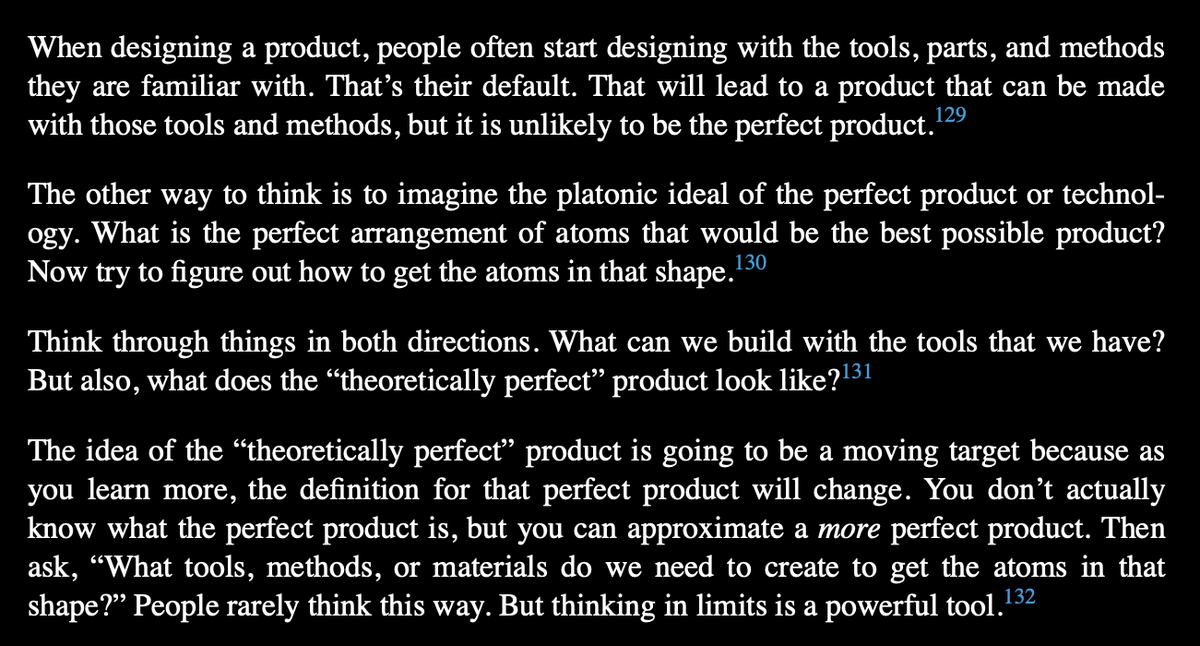
If 'first principles thinking' feels too abstract, try "Thinking In The Limit"
Just imagine the hypothetical extremes.
It's surprising how often this gives you breakthroughs.

English
Benny da Bull รีทวีตแล้ว
Javier Milei: “Elon Musk is helping the world wake up from the woke mind virus. That makes him a hero in the history of humanity.”
English
Benny da Bull รีทวีตแล้ว

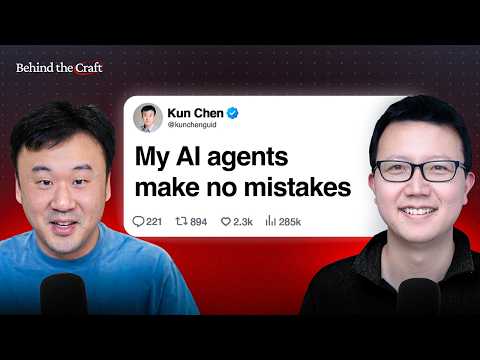
My 5 biggest takeaways from @kunchenguid, ex-Meta L8 engineer, on how he set up his agentic engineering system:
1. Spend most of your time planning and validating, not coding.
Kun sees himself as the manager of an always-on engineering team. His job is to create plans, validate work, and improve the overall system. The coding phase is handled almost entirely by agents.
2. The quality of your plans determines how long agents can work on their own.
Memes about loops aside, an one-line prompt might keep an agent working for a few minutes but a detailed plan can keep it going for hours.
If you want agents to run longer, invest more upfront in the spec, goals, and validation criteria.
3. Use visual plans, not walls of markdown.
Kun built Lavish, an open-source tool to make visual HTML plans, that anyone can use for free: github.com/kunchenguid/la…
Instead of reading a giant markdown plan, Lavish turns it into a visual HTML artifact where you can leave inline feedback.
This makes it much easier to tell the agent exactly what to change before coding starts.
4. Run agents in parallel, but isolate the work.
Kun uses Treehouse to manage reusable worktrees so agents don’t step on each other’s changes: github.com/kunchenguid/tr…
If the work is exploratory or likely to fill the context window, he delegates it to a subagent.
This way, the main agent stays focused while the subagents dig, test ideas, and report back.
5. Let agents review the code before you do.
Kun no longer manually reviews every AI-written PR.
Instead, he uses No Mistakes to run a fresh agent review, rebase the change, run tests, update docs, create the PR, and assign a risk level: github.com/kunchenguid/no…
In Kun’s testing across 267 agent changes in 15 repos, No Mistakes caught and fixed 68% of mistakes that would have been missed.
Kun walked through Lavish, Treehouse, No Mistakes, and his full agentic engineering workflow in our episode.
📌 Watch it here:
youtu.be/88B6DimMD2g
YouTube

Peter Yang@petergyang
"If you're still manually reviewing every line of code, you're the bottleneck." Here's my new episode with @kunchenguid, an ex-Meta L8 engineer who now ships up to 40 PRs a day with AI agents. Instead of manually reviewing code, he built an agentic engineering system that includes: ✅ Lavish, his free tool for annotating AI's plans as visual HTML artifacts ✅ gnhf or "good night, have fun," his free orchestrator to get agents working towards a goal while you sleep ✅ No Mistakes, his free AI code validation pipeline for catching errors before merge Some quotes from Kun: "If I spend a lot of time crafting detailed plans, then the agents can work for much longer." "Every time I encounter friction in my workflow and I don't find an existing tool that can solve the problem, I just build something myself." "To really scale how much we can get from the agents, we have to move ourselves out of the loop as much as possible." 📌 Watch now: youtu.be/88B6DimMD2g Links to Kun's free agentic engineering tools below 👇
English