Ese pelo tuyo

1.8K posts

Ese pelo tuyo banner
Ese pelo tuyo

Ese pelo tuyo

@EPTcol

Sociedad y Cultura. Una plataforma para que las mujeres negras de cualquier parte de la diáspora compartan historias de sus universos a través de sus cabellos.

Bogotá, D.C., Colombia เข้าร่วม Ekim 2021
394 กำลังติดตาม366 ผู้ติดตาม
ทวีตที่ปักหมุด
Ese pelo tuyo
Ese pelo tuyo@EPTcol·
Acabamos de celebrar el día de la mujer Afrolatina y Afrocaribeña desde Brasil contamos con algunos testimonios de mujeres Afrobrasileñas que muy pronto saldrán al aire en Ese Pelo Tuyo. Una de ellas Jaqueline da Silva! #saopaulo #RepresentationMatters #afrolatina #Afrocaribeña
Ese pelo tuyo tweet media
Español
0
0
5
366
Ese pelo tuyo
Ese pelo tuyo@EPTcol·
Take a look! 📌 pin.it/1CiJM8xHI No body talks about Tina Bell and where and what she was to the grunge musical movement! But this picture tells you a lot about it!
English
0
0
0
28
Ese pelo tuyo รีทวีตแล้ว
BlackHistoryStudies
BlackHistoryStudies@BlkHistStudies·
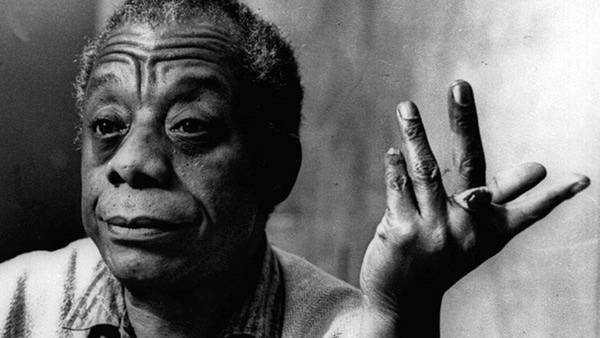
“I can’t believe what you say, because I see what you do.” - James Baldwin ❤️💚🖤
BlackHistoryStudies tweet media
English
8
320
1.1K
17.5K
Ese pelo tuyo รีทวีตแล้ว
Black Media Hub ✊🏿
Black Media Hub ✊🏿@BlackMediaHub·
For More Than 30 Years, Angela Bassett Has Played Some Of The Most Renowned Black Women Of The 20th Century
Black Media Hub ✊🏿 tweet media
English
75
3.7K
19.3K
369.7K
Ese pelo tuyo รีทวีตแล้ว
AFRICAN & BLACK HISTORY
AFRICAN & BLACK HISTORY@AfricanArchives·
Oseola McCarty was a Mississippi philanthropist who donated most of her life savings, $150,000, to the University of Southern Mississippi to provide scholarships for African American students in need. A seamstress and washerwoman who was paid mostly in dollar bills and loose change her entire life, McCarty was praised for her generosity and received many awards, including an honorary degree from the university. McCarty was born on March 7, 1908, in Shubuta, Mississippi. McCarty was born on March 7, 1908, in Shubuta, Mississippi. She was raised in nearby Hattiesburg by her aunt and grandmother, both of whom cleaned houses, cooked, and took in washing to make money. McCarty quit school in the sixth grade in order to care for her ailing aunt, and she took over the domestic work that she would do for the rest of her life. McCarty, who never married and had no children, lived frugally in a house without air conditioning. She never had a car or learned to drive, so she walked everywhere, including the grocery store that was one mile from her home. Her thriftiness would become legendary: she cut the toes out of shoes that did not fit right, and she bound her well-worn Bible with Scotch tape. When she was eight years old, McCarty opened a savings account at a bank in Hattiesburg and began depositing the coins she earned from her laundry work. She would eventually open accounts in several local banks. By the time McCarty retired at age 86, her hands crippled by arthritis, she had saved $280,000. She set aside a pension for herself to live on, a donation to her church, and small inheritances for three of her relatives. The remainder—$150,000—she donated to the University of Southern Mississippi, a school that had remained all-white until the 1960s. McCarty stipulated that her gift be used for scholarships for Black students from southern Mississippi who otherwise would not be able to enroll in college due to financial hardship. Business leaders in Hattiesburg matched her bequest and hundreds of additional donations poured in from around the country, bringing the total endowment to nearly half a million dollars. The first beneficiary of McCarty’s largesse was Stephanie Bullock, an 18-year-old honors student from Hattiesburg, who received a $1,000 scholarship. Bullock subsequently visited McCarty regularly and drove her around town on errands. In 1998 the University of Southern Mississippi awarded McCarty an honorary degree. She received an honorary doctorate from Harvard University, and President Bill Clinton awarded her the Presidential Citizens Medal, the nation’s second-highest civilian award. Oseola McCarty died of liver cancer on September 26, 1999, at the age of 91. In 2019 McCarty’s home was moved to Hattiesburg’s Sixth Street Museum District and turned into a museum.
AFRICAN & BLACK HISTORY tweet media
English
83
1.4K
7.7K
129.9K
Ese pelo tuyo รีทวีตแล้ว
AFRICAN & BLACK HISTORY
AFRICAN & BLACK HISTORY@AfricanArchives·
“would you rather be black and live to a 100? Or white and live to 50?”
English
148
608
3.2K
193.7K
Ese pelo tuyo รีทวีตแล้ว
AFRICAN & BLACK HISTORY
AFRICAN & BLACK HISTORY@AfricanArchives·
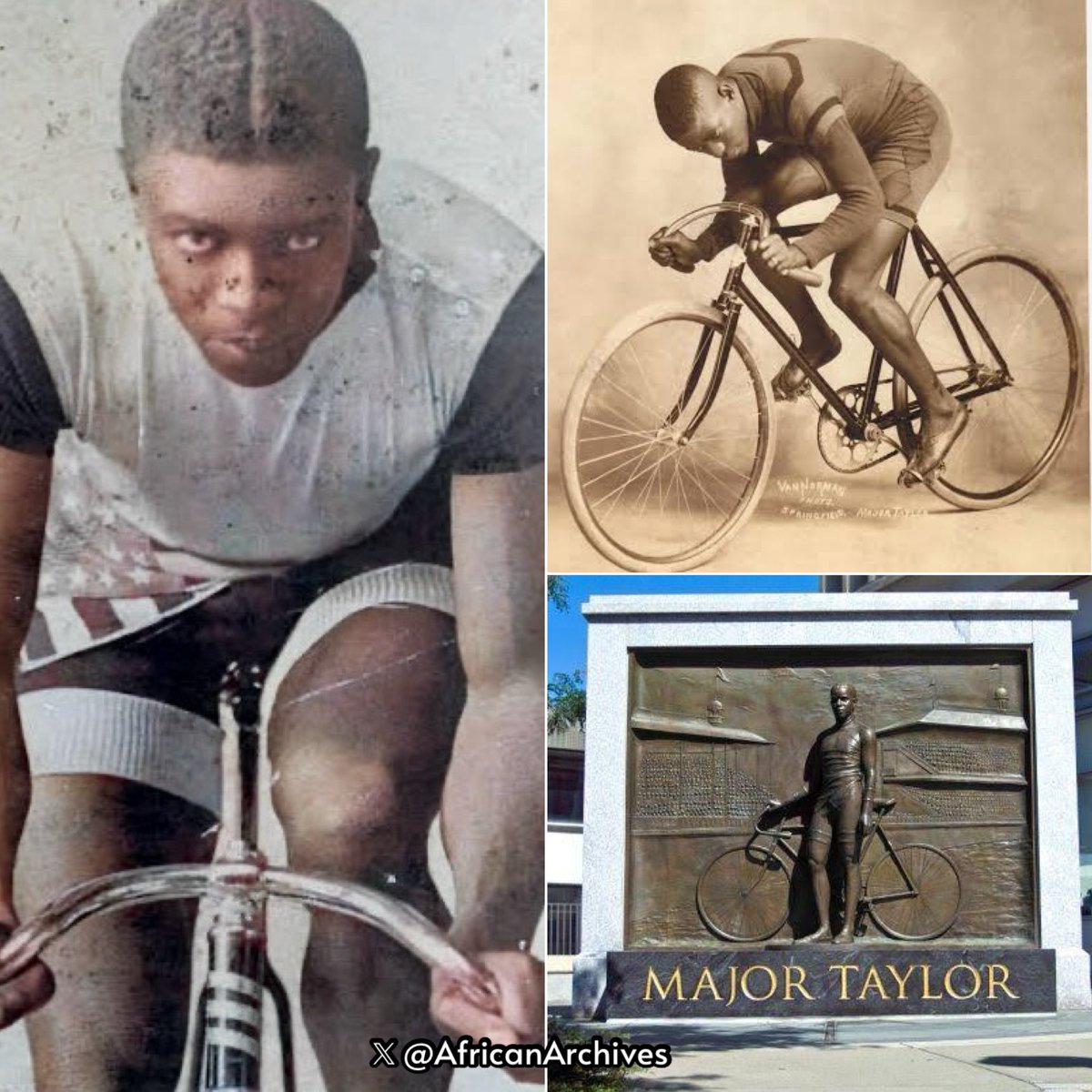
Marshall “Major” Taylor was the fastest bicyclist in the world. Thousands of fans packed indoor sports arenas called velodromes to watch his high-speed races. Taylor won thousands of dollars as a bicycle racer and became the most famous African-American in the United States. He broke the international color barrier in sports a full decade before boxer Jack Johnson. —Marshall "Major" Taylor was an American cyclist who won the world 1 mile track cycling championship in 1899 after setting numerous world records and overcoming racial discrimination. Taylor was the 1st African-American athlete to achieve the level of world champion and only the 2nd Black man to win a world championship—after Canadian boxer George Dixon. Taylor turned professional in 1896 at the age of 18 and soon emerged as the "most formidable racer in America." One of his biggest supporters was President Theodore Roosevelt who kept track of Taylor throughout his 17-year racing career. RACISM IN THE FIELD: Although he was greatly celebrated abroad, particularly in France, Taylor's career was still held back by racism, particularly in the Southern states where he was not permitted to compete against Caucasians. The League of American Wheelmen for a time excluded Black people from membership. Other prominent bicycle racers of the era, such as Tom Cooper and Eddie Bald, often cooperated to ensure Taylor's defeat. During his career he had ice water thrown at him during races, and nails scattered in front of his wheels, and was often boxed in by other riders, preventing the sprints to the front of the pack at which he was so successful. DEATH: Taylor was still breaking records in 1908 but age was starting to "creep up on him." He finally quit the track in 1910 at the age of 32. While Taylor was reported to have earned between $25,000 and $30,000 a year when he returned to Worcester at the end of his career, by the time of his death he had lost everything to bad investments (including self-publishing his autobiography), persistent illness, and the stock market crash. LEGACY: 🚴🏿The Major Taylor Velodrome in Indianapolis was opened in July 1982 for the U.S. Olympic Festival. 🚴🏿Taylor was posthumously inducted into the United States Bicycling Hall of Fame in 1989. 🚴🏿In April 2002, Taylor was one of the nine track cyclists inducted into the UCI Hall of Fame, created to commemorate 100 years of the Paris–Roubaix one-day road race and the inauguration of the World Cycling Centre. 🖋️Hey everyone! I have a Ko-fi page where you can support my page. If you appreciate my work, your support would mean the world to me. ko-fi.com/africanarchives .Together, let’s keep these important stories alive. Thank you! 📚💫
AFRICAN & BLACK HISTORY tweet media
English
17
576
2.2K
64.9K
Ese pelo tuyo รีทวีตแล้ว
The African History School
The African History School@_africanhistory·
Ancient African Hairstyles
The African History School tweet media
English
14
151
635
14.9K
Ese pelo tuyo รีทวีตแล้ว
ada.
ada.@adaezeokaro·
ada. tweet media
ZXX
14
147
713
14.2K
Ese pelo tuyo รีทวีตแล้ว
The Cake Lady
The Cake Lady@got_cake·
I like when truth shows up in fiction
English
40
190
1.5K
34.5K
Ese pelo tuyo รีทวีตแล้ว
AFRICAN & BLACK HISTORY
AFRICAN & BLACK HISTORY@AfricanArchives·
The British almost eliminated the entire Tasmanian Population of Australia in the 1800s by kidnapping, enslaving, torturing and murdering them.   A THREAD!
AFRICAN & BLACK HISTORY tweet media
English
162
3.2K
8.7K
473.2K
Ese pelo tuyo รีทวีตแล้ว
Typical African
Typical African@Joe__Bassey·
Recreating the beauty of our ancestral hairstyles.
English
70
1.5K
8.2K
170.3K
Ese pelo tuyo รีทวีตแล้ว
Typical African
Typical African@Joe__Bassey·
Captain Ibrahim Traore is ready to keep all the best brain of Burkina Faso 🇧🇫 in the country, he is not ready to lose them.
English
31
534
1.6K
31K
Ese pelo tuyo รีทวีตแล้ว
AFRICAN & BLACK HISTORY
AFRICAN & BLACK HISTORY@AfricanArchives·
Black Neighborhood In North Carolina, 1938.
English
421
4.9K
34.8K
5.2M
Ese pelo tuyo รีทวีตแล้ว
LAVE
LAVE@TheLakersAve·
“You can kill a revolutionary but you can never kill the revolution.” -Fred Hampton “Let me just say: Peace to you, if you're willing to fight for it.” HBD FRED❗️✊
AFRICAN & BLACK HISTORY@AfricanArchives

Happy birthday to activist and chairman of the Black Panther Party Fred Hampton. He was assassinated by Chicago police and the FBI at just 21 years old. William O'Neal, an FBI informant, infiltrated the Black Panthers and set up Fred Hampton for $300. A THREAD

English
14
1.3K
4K
166.4K