ทวีตที่ปักหมุด
Emma Scott, PhD
3.8K posts

Emma Scott, PhD
@EmmaZkott
Award-winning scientific writer, publishing strategist, and research-to-publication coach. Retweets ≠ Endorsement|
Chicago, United States เข้าร่วม Nisan 2023
599 กำลังติดตาม10.9K ผู้ติดตาม

An interesting article on scientific editing.
educba.com/manuscript-edi…
English

𝗠𝗼𝘀𝘁 𝗿𝗲𝘀𝗲𝗮𝗿𝗰𝗵𝗲𝗿𝘀 𝘄𝗿𝗶𝘁𝗲 𝗴𝗿𝗮𝗻𝘁 𝗮𝗽𝗽𝗹𝗶𝗰𝗮𝘁𝗶𝗼𝗻𝘀.
Very few write winning ones.
The difference is not intelligence.
It is not the quality of the research.
It is not even the prestige of the institution.
𝗜𝘁 𝗶𝘀 𝘄𝗿𝗶𝘁𝗶𝗻𝗴 𝘀𝗸𝗶𝗹𝗹. 𝗦𝘁𝗿𝗮𝘁𝗲𝗴𝘆. 𝗔𝗻𝗱 𝘀𝗲𝗰𝗿𝗲𝘁𝘀 𝗻𝗼𝗯𝗼𝗱𝘆 𝗲𝘃𝗲𝗿 𝘁𝗼𝗹𝗱 𝘆𝗼𝘂.
Here is what the consistently funded researchers know that you don't. 👇
𝗚𝗿𝗮𝗻𝘁 𝗿𝗲𝘃𝗶𝗲𝘄𝗲𝗿𝘀 𝗮𝗿𝗲 𝗻𝗼𝘁 𝗿𝗲𝗮𝗱𝗶𝗻𝗴 𝘆𝗼𝘂𝗿 𝗮𝗽𝗽𝗹𝗶𝗰𝗮𝘁𝗶𝗼𝗻. 𝗧𝗵𝗲𝘆 𝗮𝗿𝗲 𝘀𝗰𝗼𝗿𝗶𝗻𝗴 𝗶𝘁.
This changes everything about how you should write.
Every sentence must serve a scoring criterion.
Every paragraph must answer an evaluator's unspoken question.
Every section must make the reviewer's job of giving you points effortless.
Stop writing for yourself.
𝗦𝘁𝗮𝗿𝘁 𝘄𝗿𝗶𝘁𝗶𝗻𝗴 𝗳𝗼𝗿 𝘁𝗵𝗲 𝘀𝗰𝗼𝗿𝗲𝘀𝗵𝗲𝗲𝘁.
𝗦𝗲𝗰𝗿𝗲𝘁 𝟭 — 𝗧𝗵𝗲 𝗳𝗶𝗿𝘀𝘁 𝗽𝗮𝗴𝗲 𝗶𝘀 𝘆𝗼𝘂𝗿 𝗲𝗻𝘁𝗶𝗿𝗲 𝗮𝗽𝗽𝗹𝗶𝗰𝗮𝘁𝗶𝗼𝗻.
Grant reviewers read dozens of applications in a single sitting.
By page three your application is competing against reviewer fatigue.
Your entire argument — the problem, your solution, your credibility, your impact — must be crystal clear on page one.
Not page two.
Not your abstract.
𝗣𝗮𝗴𝗲 𝗼𝗻𝗲.
If a busy reviewer cannot summarise your proposal after reading only the first page — you have already lost.
𝗦𝗲𝗰𝗿𝗲𝘁 𝟮 — 𝗙𝘂𝗻𝗱𝗲𝗿𝘀 𝗱𝗼 𝗻𝗼𝘁 𝗳𝘂𝗻𝗱 𝗿𝗲𝘀𝗲𝗮𝗿𝗰𝗵. 𝗧𝗵𝗲𝘆 𝗳𝘂𝗻𝗱 𝘀𝗼𝗹𝘂𝘁𝗶𝗼𝗻𝘀.
This is the single most important mindset shift in grant writing.
Funders are not investing in your intellectual curiosity.
They are investing in outcomes — in change — in a world that looks different because of your work.
Every grant application must answer one question above all others:
𝘞𝘩𝘢𝘵 𝘸𝘪𝘭𝘭 𝘣𝘦 𝘥𝘪𝘧𝘧𝘦𝘳𝘦𝘯𝘵 𝘣𝘦𝘤𝘢𝘶𝘴𝘦 𝘺𝘰𝘶 𝘥𝘪𝘥 𝘵𝘩𝘪𝘴 𝘳𝘦𝘴𝘦𝘢𝘳𝘤𝗁?
If your answer is vague — your application is unfundable.
𝗜𝗳 𝘆𝗼𝘂𝗿 𝗮𝗻𝘀𝘄𝗲𝗿 𝗶𝘀 𝘀𝗽𝗲𝗰𝗶𝗳𝗶𝗰, 𝗺𝗲𝗮𝘀𝘂𝗿𝗮𝗯𝗹𝗲, 𝗮𝗻𝗱 𝗰𝗼𝗺𝗽𝗲𝗹𝗹𝗶𝗻𝗴 — 𝘆𝗼𝘂 𝗮𝗿𝗲 𝗮𝗹𝗿𝗲𝗮𝗱𝘆 𝗮𝗵𝗲𝗮𝗱 𝗼𝗳 𝟴𝟬% 𝗼𝗳 𝗮𝗽𝗽𝗹𝗶𝗰𝗮𝗻𝘁𝘀.
𝗦𝗲𝗰𝗿𝗲𝘁 𝟯 — 𝗧𝗵𝗲 𝗴𝗮𝗽 𝘀𝘁𝗮𝘁𝗲𝗺𝗲𝗻𝘁 𝗶𝘀 𝘄𝗵𝗲𝗿𝗲 𝗺𝗼𝘀𝘁 𝗮𝗽𝗽𝗹𝗶𝗰𝗮𝘁𝗶𝗼𝗻𝘀 𝗱𝗶𝗲.
Every funded grant answers three questions in this exact order:
What do we know?
What don't we know?
𝗪𝗵𝘆 𝗱𝗼𝗲𝘀 𝘁𝗵𝗮𝘁 𝗴𝗮𝗽 𝗺𝗮𝘁𝘁𝗲𝗿 𝗿𝗶𝗴𝗵𝘁 𝗻𝗼𝘄?
Most researchers spend five paragraphs on what we know.
They rush through what we don't know in two sentences.
And they never explain why the gap is urgent.
𝗧𝗵𝗲 𝗴𝗮𝗽 𝗶𝘀 𝘆𝗼𝘂𝗿 𝗲𝗻𝘁𝗶𝗿𝗲 𝗮𝗿𝗴𝘂𝗺𝗲𝗻𝘁 𝗳𝗼𝗿 𝗳𝘂𝗻𝗱𝗶𝗻𝗴.
𝗧𝗿𝗲𝗮𝘁 𝗶𝘁 𝘁𝗵𝗮𝘁 𝘄𝗮𝘆.
𝗦𝗲𝗰𝗿𝗲𝘁 𝟰 — 𝗥𝗲𝘃𝗶𝗲𝘄𝗲𝗿𝘀 𝗿𝗲𝗺𝗲𝗺𝗯𝗲𝗿 𝘄𝗵𝗮𝘁 𝘁𝗵𝗲𝘆 𝗳𝗲𝗲𝗹. 𝗡𝗼𝘁 𝘄𝗵𝗮𝘁 𝘁𝗵𝗲𝘆 𝗿𝗲𝗮𝗱.
The funded applications are not always the most technically rigorous.
They are the ones that made the reviewer feel something.
Urgency. Excitement. Confidence. Hope.
𝗧𝗵𝗶𝘀 𝗶𝘀 𝗻𝗼𝘁 𝗺𝗮𝗻𝗶𝗽𝘂𝗹𝗮𝘁𝗶𝗼𝗻.
𝗜𝘁 𝗶𝘀 𝗰𝗼𝗺𝗺𝘂𝗻𝗶𝗰𝗮𝘁𝗶𝗼𝗻.
Use concrete numbers. Specific populations. Real consequences.
Make the problem feel human — not just academic.
𝗔 𝗿𝗲𝘃𝗶𝗲𝘄𝗲𝗿 𝘄𝗵𝗼 𝗰𝗮𝗿𝗲𝘀 𝗮𝗯𝗼𝘂𝘁 𝘆𝗼𝘂𝗿 𝗽𝗿𝗼𝗯𝗹𝗲𝗺 𝘄𝗶𝗹𝗹 𝗳𝗶𝗴𝗵𝘁 𝗳𝗼𝗿 𝘆𝗼𝘂𝗿 𝗳𝘂𝗻𝗱𝗶𝗻𝗴.
𝗦𝗲𝗰𝗿𝗲𝘁 𝟱 — 𝗬𝗼𝘂𝗿 𝗳𝗲𝗮𝘀𝗶𝗯𝗶𝗹𝗶𝘁𝘆 𝘀𝗲𝗰𝘁𝗶𝗼𝗻 𝗶𝘀 𝘆𝗼𝘂𝗿 𝘀𝗲𝗰𝗿𝗲𝘁 𝘄𝗲𝗮𝗽𝗼𝗻.
Reviewers fund researchers they believe can deliver.
Brilliant ideas proposed by researchers who cannot convincingly demonstrate execution capacity get rejected every single day.
Your feasibility section must answer one question ruthlessly:
𝘞𝘩𝘺 𝘢𝘳𝘦 𝘺𝘰𝘶 𝘵𝘩𝘦 𝘳𝘪𝘨𝘩𝘵 𝘱𝘦𝘳𝘴𝘰𝘯 𝘵𝘰 𝘥𝘰 𝘵𝘩𝘪𝘴 𝘳𝘦𝘴𝘦𝘢𝘳𝘤𝘩 𝘳𝘪𝘨𝘩𝘵 𝘯𝘰𝘸?
Preliminary data. Relevant experience. The right team. Access to the right population.
𝗜𝗳 𝘆𝗼𝘂 𝗰𝗮𝗻𝗻𝗼𝘁 𝗮𝗻𝘀𝘄𝗲𝗿 𝘁𝗵𝗮𝘁 𝗰𝗼𝗻𝘃𝗶𝗻𝗰𝗶𝗻𝗴𝗹𝘆 — 𝗻𝗲𝗶𝘁𝗵𝗲𝗿 𝗰𝗮𝗻 𝘆𝗼𝘂𝗿 𝗿𝗲𝘃𝗶𝗲𝘄𝗲𝗿.
𝗦𝗲𝗰𝗿𝗲𝘁 𝟲 — 𝗦𝗶𝗺𝗽𝗹𝗲 𝘄𝗿𝗶𝘁𝗶𝗻𝗴 𝘄𝗶𝗻𝘀 𝗺𝗼𝗿𝗲 𝗴𝗿𝗮𝗻𝘁𝘀 𝘁𝗵𝗮𝗻 𝗰𝗼𝗺𝗽𝗹𝗲𝘅 𝘄𝗿𝗶𝘁𝗶𝗻𝗹𝗴.
Grant panels are multidisciplinary.
The scientist reviewing your application may not be in your exact field.
Jargon that impresses your department confuses your reviewer.
A confused reviewer cannot champion your application.
Write so clearly that a brilliant non-specialist understands every word.
𝗖𝗹𝗮𝗿𝗶𝘁𝘆 𝗶𝘀 𝗻𝗼𝘁 𝗱𝘂𝗺𝗯𝗶𝗻𝗴 𝗱𝗼𝘄𝗻.
𝗖𝗹𝗮𝗿𝗶𝘁𝘆 𝗶𝘀 𝗿𝗲𝘀𝗽𝗲𝗰𝘁𝗶𝗻𝗴 𝘆𝗼𝘂𝗿 𝗿𝗲𝘃𝗶𝗲𝘄𝗲𝗿'𝘀 𝘁𝗶𝗺𝗲.
𝗦𝗲𝗰𝗿𝗲𝘁 𝟳 — 𝗥𝗲𝗷𝗲𝗰𝘁𝗲𝗱 𝗴𝗿𝗮𝗻𝘁𝘀 𝗮𝗿𝗲 𝗴𝗼𝗹𝗱.
Every rejection comes with reviewer feedback.
Most researchers read it once, feel deflated, and file it away.
The researchers who consistently get funded do something different.
They 𝘀𝘁𝘂𝗱𝘆 every comment.
They treat every critique as a free masterclass in what their application failed to communicate.
They resubmit — stronger, sharper, more strategically aligned.
𝗧𝗵𝗲 𝗮𝘃𝗲𝗿𝗮𝗴𝗲 𝘀𝘂𝗰𝗰𝗲𝘀𝘀𝗳𝘂𝗹 𝗴𝗿𝗮𝗻𝘁 𝘄𝗮𝘀 𝗿𝗲𝗷𝗲𝗰𝘁𝗲𝗱 𝗮𝘁 𝗹𝗲𝗮𝘀𝘁 𝗼𝗻𝗰𝗲 𝗯𝗲𝗳𝗼𝗿𝗲 𝗳𝘂𝗻𝗱𝗶𝗻𝗴.
𝗧𝗿𝗲𝗮𝘁 𝗿𝗲𝗷𝗲𝗰𝘁𝗶𝗼𝗻 𝗮𝘀 𝗮 𝗱𝗿𝗮𝗳𝘁, 𝗻𝗼𝘁 𝗮 𝘃𝗲𝗿𝗱𝗶𝗰𝘁.
𝗦𝗲𝗰𝗿𝗲𝘁 𝟴 — 𝗧𝗵𝗲 𝗯𝘂𝗱𝗴𝗲𝘁 𝗶𝘀 𝗮𝗹𝘀𝗼 𝗮 𝘄𝗿𝗶𝘁𝗶𝗻𝗴 𝗲𝘅𝗲𝗿𝗰𝗶𝘀𝗲.
A budget that is not justified clearly in plain language signals poor planning.
Every line item must be connected to a specific research activity.
Every cost must feel inevitable — not inflated and not suspicious.
Reviewers notice when budgets feel padded.
They also notice when budgets feel unrealistically lean.
𝗔 𝗯𝘂𝗱𝗴𝗲𝘁 𝘁𝗵𝗮𝘁 𝗿𝗲𝗮𝗱𝘀 𝗹𝗶𝗸𝗲 𝗮 𝘄𝗲𝗹𝗹-𝗮𝗿𝗴𝘂𝗲𝗱 𝗰𝗮𝘀𝗲 𝗯𝘂𝗶𝗹𝗱𝘀 𝘁𝗿𝘂𝘀𝘁.
𝗧𝗿𝘂𝘀𝘁 𝗴𝗲𝘁𝘀 𝗳𝘂𝗻𝗱𝗲𝗱.
𝗧𝗵𝗲 𝗵𝗮𝗿𝗱𝗲𝘀𝘁 𝘁𝗿𝘂𝘁𝗵 𝗮𝗯𝗼𝘂𝘁 𝗴𝗿𝗮𝗻𝘁 𝘄𝗿𝗶𝘁𝗶𝗻𝗴:
𝗚𝗿𝗮𝗻𝘁 𝗿𝗲𝘃𝗶𝗲𝘄𝗲𝗿𝘀 𝗱𝗼 𝗻𝗼𝘁 𝗳𝘂𝗻𝗱 𝘁𝗵𝗲 𝗯𝗲𝘀𝘁 𝗿𝗲𝘀𝗲𝗮𝗿𝗰𝗵. 𝗧𝗵𝗲𝘆 𝗳𝘂𝗻𝗱 𝘁𝗵𝗲 𝗯𝗲𝘀𝘁-𝘄𝗿𝗶𝘁𝘁𝗲𝗻 𝗿𝗲𝘀𝗲𝗮𝗿𝗰𝗵.
That is not fair.
But it is true.
And once you accept it — you stop writing grant applications and start writing winning ones.
Your research deserves funding.
Now write like it does.
💬 𝗪𝗵𝗮𝘁 𝗶𝘀 𝘆𝗼𝘂𝗿 𝗯𝗶𝗴𝗴𝗲𝘀𝘁 𝗴𝗿𝗮𝗻𝘁 𝘄𝗿𝗶𝘁𝗶𝗻𝗴 𝘀𝘁𝗿𝘂𝗴𝗴𝗹𝗲?
𝗗𝗿𝗼𝗽 𝗶𝘁 𝗯𝗲𝗹𝗼𝘄 — 𝗹𝗲𝘁'𝘀 𝘀𝗼𝗹𝘃𝗲 𝗶𝘁 𝘁𝗼𝗴𝗲𝘁𝗵𝗲𝗿. 👇
📌 𝗦𝗮𝘃𝗲 𝘁𝗵𝗶𝘀. 𝗦𝗵𝗮𝗿𝗲 𝗶𝘁 𝘄𝗶𝘁𝗵 𝗲𝘃𝗲𝗿𝘆 𝗿𝗲𝘀𝗲𝗮𝗿𝗰𝗵𝗲𝗿 𝗮𝗽𝗽𝗹𝘆𝗶𝗻𝗴 𝗳𝗼𝗿 𝗳𝘂𝗻𝗱𝗶𝗻𝗴 𝘁𝗵𝗶𝘀 𝘆𝗲𝗮𝗿.
English

𝗠𝗼𝘀𝘁 𝗿𝗲𝘀𝗲𝗮𝗿𝗰𝗵𝗲𝗿𝘀 𝘄𝗿𝗶𝘁𝗲 𝗴𝗿𝗮𝗻𝘁 𝗮𝗽𝗽𝗹𝗶𝗰𝗮𝘁𝗶𝗼𝗻𝘀.
Very few write winning ones.
The difference is not intelligence.
It is not the quality of the research.
It is not even the prestige of the institution.
𝗜𝘁 𝗶𝘀 𝘄𝗿𝗶𝘁𝗶𝗻𝗴 𝘀𝗸𝗶𝗹𝗹. 𝗦𝘁𝗿𝗮𝘁𝗲𝗴𝘆. 𝗔𝗻𝗱 𝘀𝗲𝗰𝗿𝗲𝘁𝘀 𝗻𝗼𝗯𝗼𝗱𝘆 𝗲𝘃𝗲𝗿 𝘁𝗼𝗹𝗱 𝘆𝗼𝘂.
Here is what the consistently funded researchers know that you don't. 👇
𝗚𝗿𝗮𝗻𝘁 𝗿𝗲𝘃𝗶𝗲𝘄𝗲𝗿𝘀 𝗮𝗿𝗲 𝗻𝗼𝘁 𝗿𝗲𝗮𝗱𝗶𝗻𝗴 𝘆𝗼𝘂𝗿 𝗮𝗽𝗽𝗹𝗶𝗰𝗮𝘁𝗶𝗼𝗻. 𝗧𝗵𝗲𝘆 𝗮𝗿𝗲 𝘀𝗰𝗼𝗿𝗶𝗻𝗴 𝗶𝘁.
This changes everything about how you should write.
Every sentence must serve a scoring criterion.
Every paragraph must answer an evaluator's unspoken question.
Every section must make the reviewer's job of giving you points effortless.
Stop writing for yourself.
𝗦𝘁𝗮𝗿𝘁 𝘄𝗿𝗶𝘁𝗶𝗻𝗴 𝗳𝗼𝗿 𝘁𝗵𝗲 𝘀𝗰𝗼𝗿𝗲𝘀𝗵𝗲𝗲𝘁.
𝗦𝗲𝗰𝗿𝗲𝘁 𝟭 — 𝗧𝗵𝗲 𝗳𝗶𝗿𝘀𝘁 𝗽𝗮𝗴𝗲 𝗶𝘀 𝘆𝗼𝘂𝗿 𝗲𝗻𝘁𝗶𝗿𝗲 𝗮𝗽𝗽𝗹𝗶𝗰𝗮𝘁𝗶𝗼𝗻.
Grant reviewers read dozens of applications in a single sitting.
By page three your application is competing against reviewer fatigue.
Your entire argument — the problem, your solution, your credibility, your impact — must be crystal clear on page one.
Not page two.
Not your abstract.
𝗣𝗮𝗴𝗲 𝗼𝗻𝗲.
If a busy reviewer cannot summarise your proposal after reading only the first page — you have already lost.
𝗦𝗲𝗰𝗿𝗲𝘁 𝟮 — 𝗙𝘂𝗻𝗱𝗲𝗿𝘀 𝗱𝗼 𝗻𝗼𝘁 𝗳𝘂𝗻𝗱 𝗿𝗲𝘀𝗲𝗮𝗿𝗰𝗵. 𝗧𝗵𝗲𝘆 𝗳𝘂𝗻𝗱 𝘀𝗼𝗹𝘂𝘁𝗶𝗼𝗻𝘀.
This is the single most important mindset shift in grant writing.
Funders are not investing in your intellectual curiosity.
They are investing in outcomes — in change — in a world that looks different because of your work.
Every grant application must answer one question above all others:
𝘞𝘩𝘢𝘵 𝘸𝘪𝘭𝘭 𝘣𝘦 𝘥𝘪𝘧𝘧𝘦𝘳𝘦𝘯𝘵 𝘣𝘦𝘤𝘢𝘶𝘴𝘦 𝘺𝘰𝘶 𝘥𝘪𝘥 𝘵𝘩𝘪𝘴 𝘳𝘦𝘴𝘦𝘢𝘳𝘤𝗁?
If your answer is vague — your application is unfundable.
𝗜𝗳 𝘆𝗼𝘂𝗿 𝗮𝗻𝘀𝘄𝗲𝗿 𝗶𝘀 𝘀𝗽𝗲𝗰𝗶𝗳𝗶𝗰, 𝗺𝗲𝗮𝘀𝘂𝗿𝗮𝗯𝗹𝗲, 𝗮𝗻𝗱 𝗰𝗼𝗺𝗽𝗲𝗹𝗹𝗶𝗻𝗴 — 𝘆𝗼𝘂 𝗮𝗿𝗲 𝗮𝗹𝗿𝗲𝗮𝗱𝘆 𝗮𝗵𝗲𝗮𝗱 𝗼𝗳 𝟴𝟬% 𝗼𝗳 𝗮𝗽𝗽𝗹𝗶𝗰𝗮𝗻𝘁𝘀.
𝗦𝗲𝗰𝗿𝗲𝘁 𝟯 — 𝗧𝗵𝗲 𝗴𝗮𝗽 𝘀𝘁𝗮𝘁𝗲𝗺𝗲𝗻𝘁 𝗶𝘀 𝘄𝗵𝗲𝗿𝗲 𝗺𝗼𝘀𝘁 𝗮𝗽𝗽𝗹𝗶𝗰𝗮𝘁𝗶𝗼𝗻𝘀 𝗱𝗶𝗲.
Every funded grant answers three questions in this exact order:
What do we know?
What don't we know?
𝗪𝗵𝘆 𝗱𝗼𝗲𝘀 𝘁𝗵𝗮𝘁 𝗴𝗮𝗽 𝗺𝗮𝘁𝘁𝗲𝗿 𝗿𝗶𝗴𝗵𝘁 𝗻𝗼𝘄?
Most researchers spend five paragraphs on what we know.
They rush through what we don't know in two sentences.
And they never explain why the gap is urgent.
𝗧𝗵𝗲 𝗴𝗮𝗽 𝗶𝘀 𝘆𝗼𝘂𝗿 𝗲𝗻𝘁𝗶𝗿𝗲 𝗮𝗿𝗴𝘂𝗺𝗲𝗻𝘁 𝗳𝗼𝗿 𝗳𝘂𝗻𝗱𝗶𝗻𝗴.
𝗧𝗿𝗲𝗮𝘁 𝗶𝘁 𝘁𝗵𝗮𝘁 𝘄𝗮𝘆.
𝗦𝗲𝗰𝗿𝗲𝘁 𝟰 — 𝗥𝗲𝘃𝗶𝗲𝘄𝗲𝗿𝘀 𝗿𝗲𝗺𝗲𝗺𝗯𝗲𝗿 𝘄𝗵𝗮𝘁 𝘁𝗵𝗲𝘆 𝗳𝗲𝗲𝗹. 𝗡𝗼𝘁 𝘄𝗵𝗮𝘁 𝘁𝗵𝗲𝘆 𝗿𝗲𝗮𝗱.
The funded applications are not always the most technically rigorous.
They are the ones that made the reviewer feel something.
Urgency. Excitement. Confidence. Hope.
𝗧𝗵𝗶𝘀 𝗶𝘀 𝗻𝗼𝘁 𝗺𝗮𝗻𝗶𝗽𝘂𝗹𝗮𝘁𝗶𝗼𝗻.
𝗜𝘁 𝗶𝘀 𝗰𝗼𝗺𝗺𝘂𝗻𝗶𝗰𝗮𝘁𝗶𝗼𝗻.
Use concrete numbers. Specific populations. Real consequences.
Make the problem feel human — not just academic.
𝗔 𝗿𝗲𝘃𝗶𝗲𝘄𝗲𝗿 𝘄𝗵𝗼 𝗰𝗮𝗿𝗲𝘀 𝗮𝗯𝗼𝘂𝘁 𝘆𝗼𝘂𝗿 𝗽𝗿𝗼𝗯𝗹𝗲𝗺 𝘄𝗶𝗹𝗹 𝗳𝗶𝗴𝗵𝘁 𝗳𝗼𝗿 𝘆𝗼𝘂𝗿 𝗳𝘂𝗻𝗱𝗶𝗻𝗴.
𝗦𝗲𝗰𝗿𝗲𝘁 𝟱 — 𝗬𝗼𝘂𝗿 𝗳𝗲𝗮𝘀𝗶𝗯𝗶𝗹𝗶𝘁𝘆 𝘀𝗲𝗰𝘁𝗶𝗼𝗻 𝗶𝘀 𝘆𝗼𝘂𝗿 𝘀𝗲𝗰𝗿𝗲𝘁 𝘄𝗲𝗮𝗽𝗼𝗻.
Reviewers fund researchers they believe can deliver.
Brilliant ideas proposed by researchers who cannot convincingly demonstrate execution capacity get rejected every single day.
Your feasibility section must answer one question ruthlessly:
𝘞𝘩𝘺 𝘢𝘳𝘦 𝘺𝘰𝘶 𝘵𝘩𝘦 𝘳𝘪𝘨𝘩𝘵 𝘱𝘦𝘳𝘴𝘰𝘯 𝘵𝘰 𝘥𝘰 𝘵𝘩𝘪𝘴 𝘳𝘦𝘴𝘦𝘢𝘳𝘤𝘩 𝘳𝘪𝘨𝘩𝘵 𝘯𝘰𝘸?
Preliminary data. Relevant experience. The right team. Access to the right population.
𝗜𝗳 𝘆𝗼𝘂 𝗰𝗮𝗻𝗻𝗼𝘁 𝗮𝗻𝘀𝘄𝗲𝗿 𝘁𝗵𝗮𝘁 𝗰𝗼𝗻𝘃𝗶𝗻𝗰𝗶𝗻𝗴𝗹𝘆 — 𝗻𝗲𝗶𝘁𝗵𝗲𝗿 𝗰𝗮𝗻 𝘆𝗼𝘂𝗿 𝗿𝗲𝘃𝗶𝗲𝘄𝗲𝗿.
𝗦𝗲𝗰𝗿𝗲𝘁 𝟲 — 𝗦𝗶𝗺𝗽𝗹𝗲 𝘄𝗿𝗶𝘁𝗶𝗻𝗴 𝘄𝗶𝗻𝘀 𝗺𝗼𝗿𝗲 𝗴𝗿𝗮𝗻𝘁𝘀 𝘁𝗵𝗮𝗻 𝗰𝗼𝗺𝗽𝗹𝗲𝘅 𝘄𝗿𝗶𝘁𝗶𝗻𝗹𝗴.
Grant panels are multidisciplinary.
The scientist reviewing your application may not be in your exact field.
Jargon that impresses your department confuses your reviewer.
A confused reviewer cannot champion your application.
Write so clearly that a brilliant non-specialist understands every word.
𝗖𝗹𝗮𝗿𝗶𝘁𝘆 𝗶𝘀 𝗻𝗼𝘁 𝗱𝘂𝗺𝗯𝗶𝗻𝗴 𝗱𝗼𝘄𝗻.
𝗖𝗹𝗮𝗿𝗶𝘁𝘆 𝗶𝘀 𝗿𝗲𝘀𝗽𝗲𝗰𝘁𝗶𝗻𝗴 𝘆𝗼𝘂𝗿 𝗿𝗲𝘃𝗶𝗲𝘄𝗲𝗿'𝘀 𝘁𝗶𝗺𝗲.
𝗦𝗲𝗰𝗿𝗲𝘁 𝟳 — 𝗥𝗲𝗷𝗲𝗰𝘁𝗲𝗱 𝗴𝗿𝗮𝗻𝘁𝘀 𝗮𝗿𝗲 𝗴𝗼𝗹𝗱.
Every rejection comes with reviewer feedback.
Most researchers read it once, feel deflated, and file it away.
The researchers who consistently get funded do something different.
They 𝘀𝘁𝘂𝗱𝘆 every comment.
They treat every critique as a free masterclass in what their application failed to communicate.
They resubmit — stronger, sharper, more strategically aligned.
𝗧𝗵𝗲 𝗮𝘃𝗲𝗿𝗮𝗴𝗲 𝘀𝘂𝗰𝗰𝗲𝘀𝘀𝗳𝘂𝗹 𝗴𝗿𝗮𝗻𝘁 𝘄𝗮𝘀 𝗿𝗲𝗷𝗲𝗰𝘁𝗲𝗱 𝗮𝘁 𝗹𝗲𝗮𝘀𝘁 𝗼𝗻𝗰𝗲 𝗯𝗲𝗳𝗼𝗿𝗲 𝗳𝘂𝗻𝗱𝗶𝗻𝗴.
𝗧𝗿𝗲𝗮𝘁 𝗿𝗲𝗷𝗲𝗰𝘁𝗶𝗼𝗻 𝗮𝘀 𝗮 𝗱𝗿𝗮𝗳𝘁, 𝗻𝗼𝘁 𝗮 𝘃𝗲𝗿𝗱𝗶𝗰𝘁.
𝗦𝗲𝗰𝗿𝗲𝘁 𝟴 — 𝗧𝗵𝗲 𝗯𝘂𝗱𝗴𝗲𝘁 𝗶𝘀 𝗮𝗹𝘀𝗼 𝗮 𝘄𝗿𝗶𝘁𝗶𝗻𝗴 𝗲𝘅𝗲𝗿𝗰𝗶𝘀𝗲.
A budget that is not justified clearly in plain language signals poor planning.
Every line item must be connected to a specific research activity.
Every cost must feel inevitable — not inflated and not suspicious.
Reviewers notice when budgets feel padded.
They also notice when budgets feel unrealistically lean.
𝗔 𝗯𝘂𝗱𝗴𝗲𝘁 𝘁𝗵𝗮𝘁 𝗿𝗲𝗮𝗱𝘀 𝗹𝗶𝗸𝗲 𝗮 𝘄𝗲𝗹𝗹-𝗮𝗿𝗴𝘂𝗲𝗱 𝗰𝗮𝘀𝗲 𝗯𝘂𝗶𝗹𝗱𝘀 𝘁𝗿𝘂𝘀𝘁.
𝗧𝗿𝘂𝘀𝘁 𝗴𝗲𝘁𝘀 𝗳𝘂𝗻𝗱𝗲𝗱.
𝗧𝗵𝗲 𝗵𝗮𝗿𝗱𝗲𝘀𝘁 𝘁𝗿𝘂𝘁𝗵 𝗮𝗯𝗼𝘂𝘁 𝗴𝗿𝗮𝗻𝘁 𝘄𝗿𝗶𝘁𝗶𝗻𝗴:
𝗚𝗿𝗮𝗻𝘁 𝗿𝗲𝘃𝗶𝗲𝘄𝗲𝗿𝘀 𝗱𝗼 𝗻𝗼𝘁 𝗳𝘂𝗻𝗱 𝘁𝗵𝗲 𝗯𝗲𝘀𝘁 𝗿𝗲𝘀𝗲𝗮𝗿𝗰𝗵. 𝗧𝗵𝗲𝘆 𝗳𝘂𝗻𝗱 𝘁𝗵𝗲 𝗯𝗲𝘀𝘁-𝘄𝗿𝗶𝘁𝘁𝗲𝗻 𝗿𝗲𝘀𝗲𝗮𝗿𝗰𝗵.
That is not fair.
But it is true.
And once you accept it — you stop writing grant applications and start writing winning ones.
Your research deserves funding.
Now write like it does.
💬 𝗪𝗵𝗮𝘁 𝗶𝘀 𝘆𝗼𝘂𝗿 𝗯𝗶𝗴𝗴𝗲𝘀𝘁 𝗴𝗿𝗮𝗻𝘁 𝘄𝗿𝗶𝘁𝗶𝗻𝗴 𝘀𝘁𝗿𝘂𝗴𝗴𝗹𝗲?
𝗗𝗿𝗼𝗽 𝗶𝘁 𝗯𝗲𝗹𝗼𝘄 — 𝗹𝗲𝘁'𝘀 𝘀𝗼𝗹𝘃𝗲 𝗶𝘁 𝘁𝗼𝗴𝗲𝘁𝗵𝗲𝗿. 👇
📌 𝗦𝗮𝘃𝗲 𝘁𝗵𝗶𝘀. 𝗦𝗵𝗮𝗿𝗲 𝗶𝘁 𝘄𝗶𝘁𝗵 𝗲𝘃𝗲𝗿𝘆 𝗿𝗲𝘀𝗲𝗮𝗿𝗰𝗵𝗲𝗿 𝗮𝗽𝗽𝗹𝘆𝗶𝗻𝗴 𝗳𝗼𝗿 𝗳𝘂𝗻𝗱𝗶𝗻𝗴 𝘁𝗵𝗶𝘀 𝘆𝗲𝗮𝗿.
English

A brilliant discussion can save an average paper. Nothing saves a poor discussion!!
𝗛𝗲𝗿 𝗻𝗮𝗺𝗲 𝘄𝗮𝘀 𝗗𝗿. 𝗟𝗮𝗶𝗹𝗮.
Molecular biology researcher. Four years into her postdoc.
Her data was meticulous. Her methodology was airtight.
Her results section was, by every measure, publication-ready.
Two journals had rejected her in the same month.
When she sent me both rejection letters and I read the reviewer comments — the pattern was immediate and unmistakable.
Reviewer after reviewer said the same thing using different words.
𝘛𝘩𝘦 𝘢𝘶𝘵𝘩𝘰𝘳𝘴 𝘧𝘢𝘪𝘭 𝘵𝘰 𝘢𝘥𝘦𝘲𝘶𝘢𝘵𝘦𝘭𝘺 𝘤𝘰𝘯𝘵𝘦𝘹𝘵𝘶𝘢𝘭𝘪𝘴𝘦 𝘵𝘩𝘦𝘪𝘳 𝘧𝘪𝘯𝘥𝘪𝘯𝘨𝘴 𝘸𝘪𝘵𝘩𝘪𝘯 𝘵𝘩𝘦 𝘣𝘳𝘰𝘢𝘥𝘦𝘳 𝘭𝘪𝘵𝘦𝘳𝘢𝘵𝘶𝘳𝘦.
Translation?
𝗬𝗼𝘂𝗿 𝗱𝗶𝘀𝗰𝘂𝘀𝘀𝗶𝗼𝗻 𝘀𝗲𝗰𝘁𝗶𝗼𝗻 𝗶𝘀 𝘀𝗶𝗻𝗸𝗶𝗻𝗴 𝘆𝗼𝘂𝗿 𝗽𝗮𝗽𝗲𝗿.
She had done what thousands of researchers do every day without realising it.
She had written a second results section and called it a discussion.
𝗛𝗲𝗿𝗲 𝗶𝘀 𝘁𝗵𝗲 𝗱𝗶𝗳𝗳𝗲𝗿𝗲𝗻𝗰𝗲 𝗯𝗲𝘁𝘄𝗲𝗲𝗻 𝗮 𝗿𝗲𝘀𝘂𝗹𝘁𝘀 𝘀𝗲𝗰𝘁𝗶𝗼𝗻 𝗮𝗻𝗱 𝗮 𝗱𝗶𝘀𝗰𝘂𝘀𝘀𝗶𝗼𝗻 𝘀𝗲𝗰𝘁𝗶𝗼𝗻.
𝗥𝗲𝘀𝘂𝗹𝘁𝘀 𝘀𝗮𝘆𝘀: 𝘞𝘦 𝘧𝘰𝘶𝘯𝘥 𝘵𝘩𝘢𝘵 𝘹 𝘪𝘯𝘤𝘳𝘦𝘢𝘴𝘦𝘥 𝘣𝘺 𝘺 𝘶𝘯𝘥𝘦𝘳 𝘤𝘰𝘯𝘥𝘪𝘵𝘪𝘰𝘯 𝘻.
𝗗𝗶𝘀𝗰𝘂𝘀𝘀𝗶𝗼𝗻 𝘀𝗮𝘆𝘀: 𝘛𝘩𝘪𝘴 𝘧𝘪𝘯𝘥𝘪𝘯𝘨 𝘮𝘢𝘵𝘵𝘦𝘳𝘴 𝘣𝘦𝘤𝘢𝘶𝘴𝘦 — 𝘢𝘯𝘥 𝘩𝘦𝘳𝘦 𝘪𝘴 𝘸𝘩𝘦𝘳𝘦 𝘪𝘵 𝘴𝘪𝘵𝘴 𝘪𝘯 𝘵𝘩𝘦 𝘭𝘢𝘳𝘨𝘦𝘳 𝘤𝘰𝘯𝘷𝘦𝘳𝘴𝘢𝘵𝘪𝘰𝘯 𝘰𝘧 𝘺𝘰𝘶𝘳 𝘧𝘪𝘦𝘭𝘥.
𝗥𝗲𝘀𝘂𝗹𝘁𝘀 𝗿𝗲𝗽𝗼𝗿𝘁𝘀 𝗱𝗮𝘁𝗮.
𝗗𝗶𝘀𝗰𝘂𝘀𝘀𝗶𝗼𝗻 𝗰𝗿𝗲𝗮𝘁𝗲𝘀 𝗺𝗲𝗮𝗻𝗶𝗻𝗴.
If your discussion reads like your results — you have not written a discussion.
You have written a problem.
𝗪𝗵𝗮𝘁 𝗮 𝗱𝗶𝘀𝗰𝘂𝘀𝘀𝗶𝗼𝗻 𝘀𝗲𝗰𝘁𝗶𝗼𝗻 𝗺𝘂𝘀𝘁 𝗱𝗼 — 𝗶𝗻 𝘁𝗵𝗶𝘀 𝗲𝘅𝗮𝗰𝘁 𝗼𝗿𝗱𝗲𝗿
𝗣𝗮𝗿𝗮𝗴𝗿𝗮𝗽𝗵 𝟭 — 𝗦𝘁𝗮𝘁𝗲 𝘆𝗼𝘂𝗿 𝗽𝗿𝗶𝗻𝗰𝗶𝗽𝗮𝗹 𝗳𝗶𝗻𝗱𝗶𝗻𝗴. 𝗖𝗹𝗲𝗮𝗿𝗹𝘆. 𝗕𝗼𝗹𝗱𝗹𝘆.
Your discussion opens with one sentence that states your most important finding in plain language.
Not hedged. Not buried. Not qualified into invisibility.
𝗕𝗼𝗹𝗱. 𝗦𝗽𝗲𝗰𝗶𝗳𝗶𝗰. 𝗨𝗻𝗮𝗽𝗼𝗹𝗼𝗴𝗲𝘁𝗶𝗰.
This is your anchor. Every paragraph that follows connects back to it.
𝗣𝗮𝗿𝗮𝗴𝗿𝗮𝗽𝗵 𝟮 — 𝗖𝗼𝗻𝘁𝗲𝘅𝘁𝘂𝗮𝗹𝗶𝘀𝗲 𝗮𝗴𝗮𝗶𝗻𝘀𝘁 𝘁𝗵𝗲 𝗲𝘅𝗶𝘀𝘁𝗶𝗻𝗴 𝗹𝗶𝘁𝗲𝗿𝗮𝘁𝘂𝗿𝗲.
Does your finding confirm, contradict, or extend what others have found?
Be specific. Name the studies. Engage with the science.
This is where reviewers — who are experts in your field — see whether you truly understand the conversation you are entering.
𝗔 𝗿𝗲𝘃𝗶𝗲𝘄𝗲𝗿 𝘄𝗵𝗼 𝗳𝗲𝗲𝗹𝘀 𝘀𝗲𝗲𝗻 𝗶𝗻 𝘆𝗼𝘂𝗿 𝗱𝗶𝘀𝗰𝘂𝘀𝘀𝗶𝗼𝗻 𝗶𝘀 𝗮 𝗿𝗲𝘃𝗶𝗲𝘄𝗲𝗿 𝗹𝗲𝗮𝗻𝗶𝗻𝗴 𝘁𝗼𝘄𝗮𝗿𝗱 𝗮𝗰𝗰𝗲𝗽𝘁𝗮𝗻𝗰𝗲.
𝗣𝗮𝗿𝗮𝗴𝗿𝗮𝗽𝗵 𝟯 — 𝗔𝗱𝗱𝗿𝗲𝘀𝘀 𝘆𝗼𝘂𝗿 𝗹𝗶𝗺𝗶𝘁𝗮𝘁𝗶𝗼𝗻𝘀 𝗯𝗲𝗳𝗼𝗿𝗲 𝘁𝗵𝗲 𝗿𝗲𝘃𝗶𝗲𝘄𝗲𝗿 𝗱𝗼𝗲𝘀.
Every study has limitations. Every reviewer knows this.
The researchers who hide their limitations look defensive.
The researchers who name them clearly look rigorous.
𝗜𝗱𝗲𝗻𝘁𝗶𝗳𝘆 𝘆𝗼𝘂𝗿 𝗹𝗶𝗺𝗶𝘁𝗮𝘁𝗶𝗼𝗻𝘀. 𝗘𝘅𝗽𝗹𝗮𝗶𝗻 𝘄𝗵𝘆 𝘁𝗵𝗲𝘆 𝗱𝗼 𝗻𝗼𝘁 𝗶𝗻𝘃𝗮𝗹𝗶𝗱𝗮𝘁𝗲 𝘆𝗼𝘂𝗿 𝗳𝗶𝗻𝗱𝗶𝗻𝗴𝘀.
Then move on. Do not dwell. Do not apologise excessively.
Name it. Frame it. Own it.
𝗣𝗮𝗿𝗮𝗴𝗿𝗮𝗽𝗵 𝟰 — 𝗦𝘁𝗮𝘁𝗲 𝘁𝗵𝗲 𝗶𝗺𝗽𝗹𝗶𝗰𝗮𝘁𝗶𝗼𝗻𝘀.
What does your finding mean for theory? For practice? For policy?
This is the paragraph most researchers skip or write in one vague sentence.
𝗗𝗼 𝗻𝗼𝘁 𝘀𝗸𝗶𝗽 𝗶𝘁.
Reviewers evaluate whether your work has significance beyond the data.
Implications are where you demonstrate that significance explicitly.
𝗣𝗮𝗿𝗮𝗴𝗿𝗮𝗽𝗵 𝟱 — 𝗣𝗿𝗼𝗽𝗼𝘀𝗲 𝗳𝘂𝘁𝘂𝗿𝗲 𝗿𝗲𝘀𝗲𝗮𝗿𝗰𝗵 𝗱𝗶𝗿𝗲𝗰𝘁𝗶𝗼𝗻𝘀.
Not vaguely. Not generically.
Specifically. What exact questions does your work open up?
What methodology would you recommend for the next study?
𝗙𝘂𝘁𝘂𝗿𝗲 𝗿𝗲𝘀𝗲𝗮𝗿𝗰𝗵 𝗱𝗶𝗿𝗲𝗰𝘁𝗶𝗼𝗻𝘀 𝗽𝗿𝗼𝘃𝗲 𝘆𝗼𝘂 𝘂𝗻𝗱𝗲𝗿𝘀𝘁𝗮𝗻𝗱 𝘁𝗵𝗲 𝗯𝗿𝗼𝗮𝗱𝗲𝗿 𝘀𝗰𝗶𝗲𝗻𝘁𝗶𝗳𝗶𝗰 𝗷𝗼𝘂𝗿𝗻𝗲𝘆 —
𝗻𝗼𝘁 𝗷𝘂𝘀𝘁 𝘆𝗼𝘂𝗿 𝗼𝘄𝗻 𝗰𝗼𝗿𝗻𝗲𝗿 𝗼𝗳 𝗶𝘁.
𝗣𝗮𝗿𝗮𝗴𝗿𝗮𝗽𝗵 𝟲 — 𝗖𝗹𝗼𝘀𝗲 𝘄𝗶𝘁𝗵 𝗮 𝗰𝗼𝗻𝗰𝗹𝘂𝘀𝗶𝗼𝗻 𝘁𝗵𝗮𝘁 𝗿𝗲𝘀𝗼𝗻𝗮𝘁𝗲𝘀.
Your final paragraph should leave the reviewer with one clear thought:
𝘛𝘩𝘪𝘴 𝘸𝘰𝘳𝘬 𝘮𝘢𝘵𝘵𝘦𝘳𝘴.
Not because you said it matters.
Because you proved it — through context, implication, and argument.
𝗔 𝗱𝗶𝘀𝗰𝘂𝘀𝘀𝗶𝗼𝗻 𝘁𝗵𝗮𝘁 𝗲𝗻𝗱𝘀 𝗽𝗼𝘄𝗲𝗿𝗳𝘂𝗹𝗹𝘆 𝗹𝗶𝗻𝗴𝗲𝗿𝘀 𝗶𝗻 𝘁𝗵𝗲 𝗿𝗲𝘃𝗶𝗲𝘄𝗲𝗿'𝘀 𝗺𝗶𝗻𝗱 𝘄𝗵𝗲𝗻 𝘁𝗵𝗲𝘆 𝘄𝗿𝗶𝘁𝗲 𝘁𝗵𝗲𝗶𝗿 𝗿𝗲𝗰𝗼𝗺𝗺𝗲𝗻𝗱𝗮𝘁𝗶𝗼𝗻.
𝗪𝗵𝗮𝘁 𝗵𝗮𝗽𝗽𝗲𝗻𝗲𝗱 𝘁𝗼 𝗗𝗿. 𝗟𝗮𝗶𝗹𝗮?
We rebuilt her discussion from scratch using exactly this framework.
Her opening paragraph went from a restatement of her results
to a bold, specific, standalone claim about what her finding meant for her field.
Her literature engagement went from three vague references
to a precise, confident dialogue with twelve key studies — agreeing with some, challenging others, extending all of them.
Her limitations paragraph went from two apologetic sentences
to a confident, three-paragraph acknowledgment that actually strengthened her credibility.
Her implications went from one line to an entire paragraph
that connected her molecular findings to real-world treatment implications.
Her conclusion stopped summarising.
It started 𝗮𝗿𝗴𝘂𝗶𝗻𝗴.
𝗦𝗵𝗲 𝘀𝘂𝗯𝗺𝗶𝘁𝘁𝗲𝗱 𝘁𝗼 𝗮 𝗻𝗲𝘄 𝗷𝗼𝘂𝗿𝗻𝗮𝗹.
𝗥𝗲𝘃𝗶𝗲𝘄𝗲𝗿 𝟭 𝗿𝗲𝗰𝗼𝗺𝗺𝗲𝗻𝗱𝗲𝗱 𝗮𝗰𝗰𝗲𝗽𝘁𝗮𝗻𝗰𝗲 𝘄𝗶𝘁𝗵 𝗺𝗶𝗻𝗼𝗿 𝗿𝗲𝘃𝗶𝘀𝗶𝗼𝗻𝘀.
𝗥𝗲𝘃𝗶𝗲𝘄𝗲𝗿 𝟮 𝗿𝗲𝗰𝗼𝗺𝗺𝗲𝗻𝗱𝗲𝗱 𝗮𝗰𝗰𝗲𝗽𝘁𝗮𝗻𝗰𝗲 𝘄𝗶𝘁𝗵 𝗺𝗶𝗻𝗼𝗿 𝗿𝗲𝘃𝗶𝘀𝗶𝗼𝗻𝘀.
𝗙𝘂𝗹𝗹 𝗮𝗰𝗰𝗲𝗽𝘁𝗮𝗻𝗰𝗲 𝘀𝗶𝘅 𝘄𝗲𝗲𝗸𝘀 𝗹𝗮𝘁𝗲𝗿.
Same data.
Same results.
Same methodology.
𝗔 𝗰𝗼𝗺𝗽𝗹𝗲𝘁𝗲𝗹𝘆 𝗿𝗲𝗯𝘂𝗶𝗹𝘁 𝗱𝗶𝘀𝗰𝘂𝘀𝘀𝗶𝗼𝗻.
𝗬𝗼𝘂𝗿 𝗿𝗲𝘀𝘂𝗹𝘁𝘀 𝘁𝗲𝗹𝗹 𝘁𝗵𝗲 𝗿𝗲𝘃𝗶𝗲𝘄𝗲𝗿 𝘄𝗵𝗮𝘁 𝘆𝗼𝘂 𝗳𝗼𝘂𝗻𝗱.
Your discussion tells them why they should care.
𝗡𝗲𝘃𝗲𝗿 𝗺𝗮𝗸𝗲 𝗮 𝗿𝗲𝘃𝗶𝗲𝘄𝗲𝗿 𝗮𝗿𝗴𝘂𝗲 𝗳𝗼𝗿 𝘆𝗼𝘂𝗿 𝗽𝗮𝗽𝗲𝗿'𝘀 𝗿𝗲𝗹𝗲𝘃𝗮𝗻𝗰𝗲.
𝗠𝗮𝗸𝗲 𝘁𝗵𝗮𝘁 𝗮𝗿𝗴𝘂𝗺𝗲𝗻𝘁 𝘆𝗼𝘂𝗿𝘀𝗲𝗹𝗳 — 𝗰𝗼𝗻𝗳𝗶𝗱𝗲𝗻𝘁𝗹𝘆 𝗮𝗻𝗱 𝗽𝗿𝗲𝗰𝗶𝘀𝗲𝗹𝘆 — 𝗶𝗻 𝗲𝘃𝗲𝗿𝘆 𝗱𝗶𝘀𝗰𝘂𝘀𝘀𝗶𝗼𝗻 𝘀𝗲𝗰𝘁𝗶𝗼𝗻 𝘆𝗼𝘂 𝗲𝘃𝗲𝗿 𝘄𝗿𝗶𝘁𝗲.
𝗛𝗮𝘃𝗲 𝘆𝗼𝘂 𝗲𝘃𝗲𝗿 𝗿𝗲𝗰𝗲𝗶𝘃𝗲𝗱 𝗮 𝗿𝗲𝗷𝗲𝗰𝘁𝗶𝗼𝗻 𝗯𝗮𝘀𝗲𝗱 𝗼𝗻 𝘆𝗼𝘂𝗿 𝗱𝗶𝘀𝗰𝘂𝘀𝘀𝗶𝗼𝗻 𝘀𝗲𝗰𝘁𝗶𝗼𝗻?
𝗧𝗲𝗹𝗹 𝗺𝗲 𝗯𝗲𝗹𝗼𝘄 — 𝗹𝗲𝘁'𝘀 𝘁𝗮𝗹𝗸 𝗮𝗯𝗼𝘂𝘁 𝗶𝘁.
𝗦𝗮𝘃𝗲 𝘁𝗵𝗶𝘀 𝗽𝗼𝘀𝘁. 𝗬𝗼𝘂 𝘄𝗶𝗹𝗹 𝗿𝗲𝗳𝗲𝗿 𝘁𝗼 𝗶𝘁 𝗯𝗲𝗳𝗼𝗿𝗲 𝗲𝘃𝗲𝗿𝘆 𝘀𝘂𝗯𝗺𝗶𝘀𝘀𝗶𝗼𝗻.
𝗗𝗿. 𝗘𝗺𝗺𝗮 𝗦𝗰𝗼𝘁𝘁, 𝗣𝗵𝗗 | 𝗦𝗰𝗶𝗲𝗻𝘁𝗶𝗳𝗶𝗰 𝗪𝗿𝗶𝘁𝗶𝗻𝗴 𝗖𝗼𝗮𝗰𝗵 & 𝗣𝘂𝗯𝗹𝗶𝘀𝗵𝗶𝗻𝗴 𝗖𝗼𝗻𝘀𝘂𝗹𝘁𝗮𝗻𝘁
English

Your PhD is finished. Your paper is not. That gap is career death.
𝗜 𝗻𝗲𝗲𝗱 𝘁𝗼 𝘁𝗲𝗹𝗹 𝘆𝗼𝘂 𝗮𝗯𝗼𝘂𝘁 𝗔𝗺𝗮𝗿𝗮.
She completed her PhD in public health with distinction. Her thesis received the highest praise her department had given in a decade. Her supervisor called her research 𝗿𝗲𝗮𝗱𝘆 𝘁𝗼 𝗰𝗵𝗮𝗻𝗴𝗲 𝗽𝗼𝗹𝗶𝗰𝘆.
That was three years ago.
Not one paper published. Not one submission made. Not one journal contacted.
When Amara came to me she said something I have heard dozens of times in exactly these words:
𝘐 𝘬𝘦𝘦𝘱 𝘵𝘦𝘭𝘭𝘪𝘯𝘨 𝘮𝘺𝘴𝘦𝘭𝘧 𝘐'𝘭𝘭 𝘥𝘰 𝘪𝘵 𝘸𝘩𝘦𝘯 𝘐'𝘮 𝘳𝘦𝘢𝘥𝘺.
I asked her one question.
𝗪𝗵𝗮𝘁 𝘄𝗼𝘂𝗹𝗱 𝗿𝗲𝗮𝗱𝘆 𝗹𝗼𝗼𝗸 𝗹𝗶𝗸𝗲?
She went quiet for a long time.
She had no answer. Because 𝗿𝗲𝗮𝗱𝘆 was never coming. Ready was the story she told herself to avoid the fear of rejection.
𝗧𝗵𝗶𝘀 𝗶𝘀 𝘁𝗵𝗲 𝘀𝗶𝗹𝗲𝗻𝘁 𝗰𝗿𝗶𝘀𝗶𝘀 𝗻𝗼𝗯𝗼𝗱𝘆 𝗱𝗶𝘀𝗰𝘂𝘀𝘀𝗲𝘀 𝗮𝘁 𝗰𝗼𝗻𝗳𝗲𝗿𝗲𝗻𝗰𝗲𝘀.
Thousands of PhD graduates every year complete extraordinary research. Research that could reshape medicine, policy, education, and science.
And then they disappear into jobs, families, self-doubt, and busyness — while their data sits in a folder on a laptop gathering digital dust.
𝗜𝘁 𝗶𝘀 𝗻𝗼𝘁 𝗹𝗮𝘇𝗶𝗻𝗲𝘀𝘀. 𝗜𝘁 𝗶𝘀 𝗻𝗼𝘁 𝗶𝗻𝗱𝗶𝗳𝗳𝗲𝗿𝗲𝗻𝗰𝗲. 𝗜𝘁 𝗶𝘀 𝗻𝗼𝘁 𝗮 𝗹𝗮𝗰𝗸 𝗼𝗳 𝗮𝗺𝗯𝗶𝘁𝗶𝗼𝗻.
It is a system that trains researchers to 𝗱𝗼 𝘀𝗰𝗶𝗲𝗻𝗰𝗲 — but never teaches them to 𝗰𝗼𝗺𝗺𝘂𝗻𝗶𝗰𝗮𝘁𝗲 𝗶𝘁.
𝗧𝗵𝗲 𝗿𝗲𝗮𝗹 𝗿𝗲𝗮𝘀𝗼𝗻𝘀 𝗣𝗵𝗗 𝘀𝘁𝘂𝗱𝗲𝗻𝘁𝘀 𝗻𝗲𝘃𝗲𝗿 𝗳𝗶𝗻𝗶𝘀𝗵 𝗽𝘂𝗯𝗹𝗶𝘀𝗵𝗶𝗻𝗴 👇
𝗥𝗲𝗮𝘀𝗼𝗻 𝟭 — 𝗧𝗵𝗲𝘆 𝘁𝗿𝗲𝗮𝘁 𝘁𝗵𝗲𝗶𝗿 𝘁𝗵𝗲𝘀𝗶𝘀 𝗮𝘀 𝗮 𝗿𝗲𝗮𝗱𝘆-𝗺𝗮𝗱𝗲 𝗽𝗮𝗽𝗲𝗿. A thesis and a journal article are 𝗳𝘂𝗻𝗱𝗮𝗺𝗲𝗻𝘁𝗮𝗹𝗹𝘆 different documents. A thesis proves you can do research. A journal article proves your research 𝗺𝗮𝘁𝘁𝗲𝗿𝘀 𝘁𝗼 𝗮 𝗳𝗶𝗲𝗹𝗱. One is written for a committee. The other is written for a community. Submitting a thesis chapter directly to a journal is one of the most common — and most painful — mistakes PhD graduates make.
𝗥𝗲𝗮𝘀𝗼𝗻 𝟮 — 𝗧𝗵𝗲𝘆 𝗮𝗿𝗲 𝘄𝗮𝗶𝘁𝗶𝗻𝗴 𝘁𝗼 𝗳𝗲𝗲𝗹 𝗿𝗲𝗮𝗱𝘆. Ready is a myth academics invented to protect themselves from rejection. Your paper will never feel finished enough. Your data will never feel comprehensive enough. Your writing will never feel polished enough. 𝗧𝗵𝗲 𝗽𝗮𝗽𝗲𝗿𝘀 𝘁𝗵𝗮𝘁 𝗴𝗲𝘁 𝗽𝘂𝗯𝗹𝗶𝘀𝗵𝗲𝗱 𝗮𝗿𝗲 𝘁𝗵𝗲 𝗼𝗻𝗲𝘀 𝘁𝗵𝗮𝘁 𝗴𝗲𝘁 𝘀𝘂𝗯𝗺𝗶𝘁𝘁𝗲𝗱.
𝗥𝗲𝗮𝘀𝗼𝗻 𝟯 — 𝗡𝗼𝗯𝗼𝗱𝘆 𝘁𝗮𝘂𝗴𝗵𝘁 𝘁𝗵𝗲𝗺 𝗷𝗼𝘂𝗿𝗻𝗮𝗹 𝘀𝗲𝗹𝗲𝗰𝘁𝗶𝗼𝗻. Choosing the wrong journal is the single most common reason good research never gets published. PhD programs teach methodology. They teach statistics. They teach literature review. 𝗧𝗵𝗲𝘆 𝗱𝗼 𝗻𝗼𝘁 𝘁𝗲𝗮𝗰𝗵 𝘁𝗵𝗲 𝗽𝘂𝗯𝗹𝗶𝘀𝗵𝗶𝗻𝗴 𝗹𝗮𝗻𝗱𝘀𝗰𝗮𝗽𝗲. And so researchers submit blindly — and get rejected — and stop trying.
𝗥𝗲𝗮𝘀𝗼𝗻 𝟰 — 𝗢𝗻𝗲 𝗿𝗲𝗷𝗲𝗰𝘁𝗶𝗼𝗻 𝗯𝗲𝗰𝗼𝗺𝗲𝘀 𝘁𝗵𝗲 𝗳𝗶𝗻𝗮𝗹 𝘄𝗼𝗿𝗱. The average published paper was rejected 𝗮𝘁 𝗹𝗲𝗮𝘀𝘁 𝘁𝘄𝗶𝗰𝗲 before acceptance. Many landmark papers were rejected four, five, six times. PhD students who receive their first rejection often interpret it as confirmation of their deepest fear. 𝗧𝗵𝗮𝘁 𝘁𝗵𝗲𝘆 𝗮𝗿𝗲 𝗻𝗼𝘁 𝗴𝗼𝗼𝗱 𝗲𝗻𝗼𝘂𝗴𝗵. They are wrong. They are just inexperienced with rejection.
𝗥𝗲𝗮𝘀𝗼𝗻 𝟱 — 𝗟𝗶𝗳𝗲 𝗴𝗲𝘁𝘀 𝗹𝗼𝘂𝗱𝗲𝗿 𝗮𝗳𝘁𝗲𝗿 𝘁𝗵𝗲 𝗣𝗵𝗗. Jobs. Families. Financial pressure. New responsibilities. The urgency that existed during the PhD evaporates the moment it ends. And writing — which was always hard — becomes almost impossible without the structure, accountability, and community of a PhD program. 𝗧𝗵𝗲 𝗽𝗮𝗽𝗲𝗿 𝗸𝗲𝗲𝗽𝘀 𝗴𝗲𝘁𝘁𝗶𝗻𝗴 𝗽𝘂𝘀𝗵𝗲𝗱 𝘁𝗼 𝗻𝗲𝘅𝘁 𝘄𝗲𝗲𝗸. Until next week becomes next year. Until next year becomes never.
𝗪𝗵𝗮𝘁 𝗵𝗮𝗽𝗽𝗲𝗻𝗲𝗱 𝘁𝗼 𝗔𝗺𝗮𝗿𝗮?
We spent six weeks together. We restructured her thesis chapter into a focused, compelling journal article. We identified the right journal on the first attempt. We wrote her cover letter with precision. We submitted.
𝗦𝗶𝘅 𝘄𝗲𝗲𝗸𝘀 𝗹𝗮𝘁𝗲𝗿 𝘀𝗵𝗲 𝗿𝗲𝗰𝗲𝗶𝘃𝗲𝗱 𝗮 𝗿𝗲𝘃𝗶𝘀𝗲 𝗮𝗻𝗱 𝗿𝗲𝘀𝘂𝗯𝗺𝗶𝘁. 𝗧𝗵𝗿𝗲𝗲 𝗺𝗼𝗻𝘁𝗵𝘀 𝗮𝗳𝘁𝗲𝗿 𝘁𝗵𝗮𝘁 — 𝗳𝘂𝗹𝗹 𝗮𝗰𝗰𝗲𝗽𝘁𝗮𝗻𝗰𝗲.
Three years of waiting. Nine months of action. One published paper that is already being cited.
The research was always good enough. 𝗦𝗵𝗲 𝗷𝘂𝘀𝘁 𝗻𝗲𝗲𝗱𝗲𝗱 𝘀𝗼𝗺𝗲𝗼𝗻𝗲 𝘁𝗼 𝘁𝗲𝗹𝗹 𝗵𝗲𝗿 𝗿𝗲𝗮𝗱𝘆 𝘄𝗮𝘀 𝗻𝗼𝘁 𝗰𝗼𝗺𝗶𝗻𝗴. 𝗔𝗻𝗱 𝘁𝗵𝗮𝘁 𝘀𝘂𝗯𝗺𝗶𝘁𝘁𝗶𝗻𝗴 𝘄𝗮𝘀.
𝗜𝗳 𝘆𝗼𝘂 𝗵𝗮𝘃𝗲 𝗮 𝗳𝗶𝗻𝗶𝘀𝗵𝗲𝗱 𝗣𝗵𝗗 𝗮𝗻𝗱 𝗮𝗻 𝘂𝗻𝗽𝘂𝗯𝗹𝗶𝘀𝗵𝗲𝗱 𝗽𝗮𝗽𝗲𝗿 — 𝘁𝗵𝗶𝘀 𝗽𝗼𝘀𝘁 𝗶𝘀 𝗳𝗼𝗿 𝘆𝗼𝘂.
Your research is not too old. Your data is not too outdated. Your window has not closed.
𝗕𝘂𝘁 𝗲𝘃𝗲𝗿𝘆 𝗱𝗮𝘆 𝘆𝗼𝘂 𝘄𝗮𝗶𝘁 𝗺𝗮𝗸𝗲𝘀 𝗶𝘁 𝗵𝗮𝗿𝗱𝗲𝗿. 𝗦𝘁𝗮𝗿𝘁 𝘁𝗼𝗱𝗮𝘆.
💬 𝗗𝗼 𝘆𝗼𝘂 𝗵𝗮𝘃𝗲 𝗮 𝗳𝗶𝗻𝗶𝘀𝗵𝗲𝗱 𝗣𝗵𝗗 𝗮𝗻𝗱 𝗮𝗻 𝘂𝗻𝗽𝘂𝗯𝗹𝗶𝘀𝗵𝗲𝗱 𝗽𝗮𝗽𝗲𝗿 𝘀𝗶𝘁𝘁𝗶𝗻𝗴 𝗶𝗻 𝗮 𝗳𝗼𝗹𝗱𝗲𝗿? 𝗧𝘆𝗽𝗲 𝗬𝗘𝗦 𝗯𝗲𝗹𝗼𝘄. 𝗡𝗼 𝗷𝘂𝗱𝗴𝗲𝗺𝗲𝗻𝘁. 𝗝𝘂𝘀𝘁 𝗵𝗼𝗻𝗲𝘀𝘁𝘆. 👇
📌 𝗦𝗮𝘃𝗲 𝘁𝗵𝗶𝘀 𝗮𝗻𝗱 𝘀𝗵𝗮𝗿𝗲 𝗶𝘁 𝘄𝗶𝘁𝗵 𝗲𝘃𝗲𝗿𝘆 𝗣𝗵𝗗 𝗴𝗿𝗮𝗱𝘂𝗮𝘁𝗲 𝘆𝗼𝘂 𝗸𝗻𝗼𝘄.
𝗗𝗿. 𝗘𝗺𝗺𝗮 𝗦𝗰𝗼𝘁𝘁, 𝗣𝗵𝗗 | 𝗦𝗰𝗶𝗲𝗻𝘁𝗶𝗳𝗶𝗰 𝗪𝗿𝗶𝘁𝗶𝗻𝗴 𝗖𝗼𝗮𝗰𝗵 & 𝗣𝘂𝗯𝗹𝗶𝘀𝗵𝗶𝗻𝗴 𝗖𝗼𝗻𝘀𝘂𝗹𝘁𝗮𝗻𝘁
English

Your PhD is finished. Your paper is not. That gap is career death.
𝗜 𝗻𝗲𝗲𝗱 𝘁𝗼 𝘁𝗲𝗹𝗹 𝘆𝗼𝘂 𝗮𝗯𝗼𝘂𝘁 𝗔𝗺𝗮𝗿𝗮.
She completed her PhD in public health with distinction.
Her thesis received the highest praise her department had given in a decade.
Her supervisor called her research 𝗿𝗲𝗮𝗱𝘆 𝘁𝗼 𝗰𝗵𝗮𝗻𝗴𝗲 𝗽𝗼𝗹𝗶𝗰𝘆.
That was three years ago.
Not one paper published.
Not one submission made.
Not one journal contacted.
When Amara came to me she said something I have heard dozens of times in exactly these words:
𝘐 𝘬𝘦𝘦𝘱 𝘵𝘦𝘭𝘭𝘪𝘯𝘨 𝘮𝘺𝘴𝘦𝘭𝘧 𝘐'𝘭𝘭 𝘥𝘰 𝘪𝘵 𝘸𝘩𝘦𝘯 𝘐'𝘮 𝘳𝘦𝘢𝘥𝘺.
I asked her one question.
𝗪𝗵𝗮𝘁 𝘄𝗼𝘂𝗹𝗱 𝗿𝗲𝗮𝗱𝘆 𝗹𝗼𝗼𝗸 𝗹𝗶𝗸𝗲?
She went quiet for a long time.
She had no answer.
Because 𝗿𝗲𝗮𝗱𝘆 was never coming.
Ready was the story she told herself to avoid the fear of rejection.
𝗧𝗵𝗶𝘀 𝗶𝘀 𝘁𝗵𝗲 𝘀𝗶𝗹𝗲𝗻𝘁 𝗰𝗿𝗶𝘀𝗶𝘀 𝗻𝗼𝗯𝗼𝗱𝘆 𝗱𝗶𝘀𝗰𝘂𝘀𝘀𝗲𝘀 𝗮𝘁 𝗰𝗼𝗻𝗳𝗲𝗿𝗲𝗻𝗰𝗲𝘀.
Thousands of PhD graduates every year complete extraordinary research.
Research that could reshape medicine, policy, education, and science.
And then they disappear into jobs, families, self-doubt, and busyness —
while their data sits in a folder on a laptop gathering digital dust.
𝗜𝘁 𝗶𝘀 𝗻𝗼𝘁 𝗹𝗮𝘇𝗶𝗻𝗲𝘀𝘀.
𝗜𝘁 𝗶𝘀 𝗻𝗼𝘁 𝗶𝗻𝗱𝗶𝗳𝗳𝗲𝗿𝗲𝗻𝗰𝗲.
𝗜𝘁 𝗶𝘀 𝗻𝗼𝘁 𝗮 𝗹𝗮𝗰𝗸 𝗼𝗳 𝗮𝗺𝗯𝗶𝘁𝗶𝗼𝗻.
It is a system that trains researchers to 𝗱𝗼 𝘀𝗰𝗶𝗲𝗻𝗰𝗲 — but never teaches them to 𝗰𝗼𝗺𝗺𝘂𝗻𝗶𝗰𝗮𝘁𝗲 𝗶𝘁.
𝗧𝗵𝗲 𝗿𝗲𝗮𝗹 𝗿𝗲𝗮𝘀𝗼𝗻𝘀 𝗣𝗵𝗗 𝘀𝘁𝘂𝗱𝗲𝗻𝘁𝘀 𝗻𝗲𝘃𝗲𝗿 𝗳𝗶𝗻𝗶𝘀𝗵 𝗽𝘂𝗯𝗹𝗶𝘀𝗵𝗶𝗻𝗴 👇
𝗥𝗲𝗮𝘀𝗼𝗻 𝟭 — 𝗧𝗵𝗲𝘆 𝘁𝗿𝗲𝗮𝘁 𝘁𝗵𝗲𝗶𝗿 𝘁𝗵𝗲𝘀𝗶𝘀 𝗮𝘀 𝗮 𝗿𝗲𝗮𝗱𝘆-𝗺𝗮𝗱𝗲 𝗽𝗮𝗽𝗲𝗿.
A thesis and a journal article are 𝗳𝘂𝗻𝗱𝗮𝗺𝗲𝗻𝘁𝗮𝗹𝗹𝘆 different documents.
A thesis proves you can do research.
A journal article proves your research 𝗺𝗮𝘁𝘁𝗲𝗿𝘀 𝘁𝗼 𝗮 𝗳𝗶𝗲𝗹𝗱.
One is written for a committee. The other is written for a community.
Submitting a thesis chapter directly to a journal is one of the most common — and most painful — mistakes PhD graduates make.
𝗥𝗲𝗮𝘀𝗼𝗻 𝟮 — 𝗧𝗵𝗲𝘆 𝗮𝗿𝗲 𝘄𝗮𝗶𝘁𝗶𝗻𝗴 𝘁𝗼 𝗳𝗲𝗲𝗹 𝗿𝗲𝗮𝗱𝘆.
Ready is a myth academics invented to protect themselves from rejection.
Your paper will never feel finished enough.
Your data will never feel comprehensive enough.
Your writing will never feel polished enough.
𝗧𝗵𝗲 𝗽𝗮𝗽𝗲𝗿𝘀 𝘁𝗵𝗮𝘁 𝗴𝗲𝘁 𝗽𝘂𝗯𝗹𝗶𝘀𝗵𝗲𝗱 𝗮𝗿𝗲 𝘁𝗵𝗲 𝗼𝗻𝗲𝘀 𝘁𝗵𝗮𝘁 𝗴𝗲𝘁 𝘀𝘂𝗯𝗺𝗶𝘁𝘁𝗲𝗱.
𝗥𝗲𝗮𝘀𝗼𝗻 𝟯 — 𝗡𝗼𝗯𝗼𝗱𝘆 𝘁𝗮𝘂𝗴𝗵𝘁 𝘁𝗵𝗲𝗺 𝗷𝗼𝘂𝗿𝗻𝗮𝗹 𝘀𝗲𝗹𝗲𝗰𝘁𝗶𝗼𝗻.
Choosing the wrong journal is the single most common reason good research never gets published.
PhD programs teach methodology.
They teach statistics.
They teach literature review.
𝗧𝗵𝗲𝘆 𝗱𝗼 𝗻𝗼𝘁 𝘁𝗲𝗮𝗰𝗵 𝘁𝗵𝗲 𝗽𝘂𝗯𝗹𝗶𝘀𝗵𝗶𝗻𝗴 𝗹𝗮𝗻𝗱𝘀𝗰𝗮𝗽𝗲.
And so researchers submit blindly — and get rejected — and stop trying.
𝗥𝗲𝗮𝘀𝗼𝗻 𝟰 — 𝗢𝗻𝗲 𝗿𝗲𝗷𝗲𝗰𝘁𝗶𝗼𝗻 𝗯𝗲𝗰𝗼𝗺𝗲𝘀 𝘁𝗵𝗲 𝗳𝗶𝗻𝗮𝗹 𝘄𝗼𝗿𝗱.
The average published paper was rejected 𝗮𝘁 𝗹𝗲𝗮𝘀𝘁 𝘁𝘄𝗶𝗰𝗲 before acceptance.
Many landmark papers were rejected four, five, six times.
PhD students who receive their first rejection often interpret it as confirmation of their deepest fear.
𝗧𝗵𝗮𝘁 𝘁𝗵𝗲𝘆 𝗮𝗿𝗲 𝗻𝗼𝘁 𝗴𝗼𝗼𝗱 𝗲𝗻𝗼𝘂𝗴𝗵.
They are wrong. They are just inexperienced with rejection.
𝗥𝗲𝗮𝘀𝗼𝗻 𝟱 — 𝗟𝗶𝗳𝗲 𝗴𝗲𝘁𝘀 𝗹𝗼𝘂𝗱𝗲𝗿 𝗮𝗳𝘁𝗲𝗿 𝘁𝗵𝗲 𝗣𝗵𝗗.
Jobs. Families. Financial pressure. New responsibilities.
The urgency that existed during the PhD evaporates the moment it ends.
And writing — which was always hard — becomes almost impossible
without the structure, accountability, and community of a PhD program.
𝗧𝗵𝗲 𝗽𝗮𝗽𝗲𝗿 𝗸𝗲𝗲𝗽𝘀 𝗴𝗲𝘁𝘁𝗶𝗻𝗴 𝗽𝘂𝘀𝗵𝗲𝗱 𝘁𝗼 𝗻𝗲𝘅𝘁 𝘄𝗲𝗲𝗸.
Until next week becomes next year.
Until next year becomes never.
𝗪𝗵𝗮𝘁 𝗵𝗮𝗽𝗽𝗲𝗻𝗲𝗱 𝘁𝗼 𝗔𝗺𝗮𝗿𝗮?
We spent six weeks together.
We restructured her thesis chapter into a focused, compelling journal article.
We identified the right journal on the first attempt.
We wrote her cover letter with precision.
We submitted.
𝗦𝗶𝘅 𝘄𝗲𝗲𝗸𝘀 𝗹𝗮𝘁𝗲𝗿 𝘀𝗵𝗲 𝗿𝗲𝗰𝗲𝗶𝘃𝗲𝗱 𝗮 𝗿𝗲𝘃𝗶𝘀𝗲 𝗮𝗻𝗱 𝗿𝗲𝘀𝘂𝗯𝗺𝗶𝘁.
𝗧𝗵𝗿𝗲𝗲 𝗺𝗼𝗻𝘁𝗵𝘀 𝗮𝗳𝘁𝗲𝗿 𝘁𝗵𝗮𝘁 — 𝗳𝘂𝗹𝗹 𝗮𝗰𝗰𝗲𝗽𝘁𝗮𝗻𝗰𝗲.
Three years of waiting.
Nine months of action.
One published paper that is already being cited.
The research was always good enough.
𝗦𝗵𝗲 𝗷𝘂𝘀𝘁 𝗻𝗲𝗲𝗱𝗲𝗱 𝘀𝗼𝗺𝗲𝗼𝗻𝗲 𝘁𝗼 𝘁𝗲𝗹𝗹 𝗵𝗲𝗿 𝗿𝗲𝗮𝗱𝘆 𝘄𝗮𝘀 𝗻𝗼𝘁 𝗰𝗼𝗺𝗶𝗻𝗴.
𝗔𝗻𝗱 𝘁𝗵𝗮𝘁 𝘀𝘂𝗯𝗺𝗶𝘁𝘁𝗶𝗻𝗴 𝘄𝗮𝘀.
𝗜𝗳 𝘆𝗼𝘂 𝗵𝗮𝘃𝗲 𝗮 𝗳𝗶𝗻𝗶𝘀𝗵𝗲𝗱 𝗣𝗵𝗗 𝗮𝗻𝗱 𝗮𝗻 𝘂𝗻𝗽𝘂𝗯𝗹𝗶𝘀𝗵𝗲𝗱 𝗽𝗮𝗽𝗲𝗿 —
𝘁𝗵𝗶𝘀 𝗽𝗼𝘀𝘁 𝗶𝘀 𝗳𝗼𝗿 𝘆𝗼𝘂.
Your research is not too old.
Your data is not too outdated.
Your window has not closed.
𝗕𝘂𝘁 𝗲𝘃𝗲𝗿𝘆 𝗱𝗮𝘆 𝘆𝗼𝘂 𝘄𝗮𝗶𝘁 𝗺𝗮𝗸𝗲𝘀 𝗶𝘁 𝗵𝗮𝗿𝗱𝗲𝗿.
𝗦𝘁𝗮𝗿𝘁 𝘁𝗼𝗱𝗮𝘆.
💬 𝗗𝗼 𝘆𝗼𝘂 𝗵𝗮𝘃𝗲 𝗮 𝗳𝗶𝗻𝗶𝘀𝗵𝗲𝗱 𝗣𝗵𝗗 𝗮𝗻𝗱 𝗮𝗻 𝘂𝗻𝗽𝘂𝗯𝗹𝗶𝘀𝗵𝗲𝗱 𝗽𝗮𝗽𝗲𝗿 𝘀𝗶𝘁𝘁𝗶𝗻𝗴 𝗶𝗻 𝗮 𝗳𝗼𝗹𝗱𝗲𝗿?
𝗧𝘆𝗽𝗲 𝗬𝗘𝗦 𝗯𝗲𝗹𝗼𝘄. 𝗡𝗼 𝗷𝘂𝗱𝗴𝗲𝗺𝗲𝗻𝘁. 𝗝𝘂𝘀𝘁 𝗵𝗼𝗻𝗲𝘀𝘁𝘆. 👇
📌 𝗦𝗮𝘃𝗲 𝘁𝗵𝗶𝘀 𝗮𝗻𝗱 𝘀𝗵𝗮𝗿𝗲 𝗶𝘁 𝘄𝗶𝘁𝗵 𝗲𝘃𝗲𝗿𝘆 𝗣𝗵𝗗 𝗴𝗿𝗮𝗱𝘂𝗮𝘁𝗲 𝘆𝗼𝘂 𝗸𝗻𝗼𝘄.
𝗗𝗿. 𝗘𝗺𝗺𝗮 𝗦𝗰𝗼𝘁𝘁, 𝗣𝗵𝗗 | 𝗦𝗰𝗶𝗲𝗻𝘁𝗶𝗳𝗶𝗰 𝗪𝗿𝗶𝘁𝗶𝗻𝗴 𝗖𝗼𝗮𝗰𝗵 & 𝗣𝘂𝗯𝗹𝗶𝘀𝗵𝗶𝗻𝗴 𝗖𝗼𝗻𝘀𝘂𝗹𝘁𝗮𝗻𝘁
English

𝗦𝗼𝗺𝗲𝗼𝗻𝗲 𝗷𝘂𝘀𝘁 𝗲𝗺𝗮𝗶𝗹𝗲𝗱 𝘆𝗼𝘂 𝗮𝗯𝗼𝘂𝘁 𝗮 𝗷𝗼𝘂𝗿𝗻𝗮𝗹 𝘁𝗵𝗮𝘁 𝘄𝗮𝗻𝘁𝘀 𝘁𝗼 𝗽𝘂𝗯𝗹𝗶𝘀𝗵 𝘆𝗼𝘂𝗿 𝘄𝗼𝗿𝗸.
They found your research online. They loved your previous publications. They want your manuscript — fast. The review process takes only 7 days.
𝗗𝗼 𝗻𝗼𝘁 𝗿𝗲𝗽𝗹𝘆.
That email is not an opportunity. 𝗧𝗵𝗮𝘁 𝗲𝗺𝗮𝗶𝗹 𝗶𝘀 𝗮 𝘁𝗿𝗮𝗽.
𝗣𝗿𝗲𝗱𝗮𝘁𝗼𝗿𝘆 𝗷𝗼𝘂𝗿𝗻𝗮𝗹𝘀 𝗮𝗿𝗲 𝗼𝗻𝗲 𝗼𝗳 𝘁𝗵𝗲 𝗯𝗶𝗴𝗴𝗲𝘀𝘁 𝘁𝗵𝗿𝗲𝗮𝘁𝘀 𝘁𝗼 𝗮𝗰𝗮𝗱𝗲𝗺𝗶𝗰 𝗿𝗲𝗽𝘂𝘁𝗮𝘁𝗶𝗼𝗻𝘀 𝘁𝗼𝗱𝗮𝘆.
And they are getting smarter. More convincing. More dangerous.
Here is everything you need to know to protect yourself and your research. 👇
𝗪𝗵𝗮𝘁 𝗶𝘀 𝗮 𝗽𝗿𝗲𝗱𝗮𝘁𝗼𝗿𝘆 𝗷𝗼𝘂𝗿𝗻𝗮𝗹?
A predatory journal is a fake or low-quality publication that charges researchers to publish — without providing legitimate peer review, editorial standards, or scientific credibility.
They exist for one reason only. 𝗬𝗼𝘂𝗿 𝗺𝗼𝗻𝗲𝘆.
Not your science. Not your impact. Not your career. Your money.
𝗧𝗵𝗲 𝗻𝘂𝗺𝗯𝗲𝗿𝘀 𝘄𝗶𝗹𝗹 𝘀𝗵𝗼𝗰𝗸 𝘆𝗼𝘂.
There are now over 15,000 suspected predatory journals operating worldwide. They publish hundreds of thousands of papers every year. Many are indexed — or claim to be — in legitimate databases. Thousands of researchers have unknowingly destroyed their credibility publishing in them.
𝗧𝗵𝗶𝘀 𝗶𝘀 𝗻𝗼𝘁 𝗮 𝗳𝗿𝗶𝗻𝗴𝗲 𝗽𝗿𝗼𝗯𝗹𝗲𝗺. 𝗜𝘁 𝗶𝘀 𝗮𝗻 𝗲𝗽𝗶𝗱𝗲𝗺𝗶𝗰.
𝟭𝟯 𝘄𝗮𝗿𝗻𝗶𝗻𝗴 𝘀𝗶𝗴𝗻𝘀 𝘆𝗼𝘂 𝗮𝗿𝗲 𝗱𝗲𝗮𝗹𝗶𝗻𝗴 𝘄𝗶𝘁𝗵 𝗮 𝗽𝗿𝗲𝗱𝗮𝘁𝗼𝗿𝘆 𝗷𝗼𝘂𝗿𝗻𝗮𝗹 👇
𝟭. 𝗧𝗵𝗲𝘆 𝗰𝗼𝗻𝘁𝗮𝗰𝘁𝗲𝗱 𝘆𝗼𝘂 𝗳𝗶𝗿𝘀𝘁. Legitimate journals do not cold-email researchers begging for manuscripts. If they found you — run.
𝟮. 𝗧𝗵𝗲 𝗿𝗲𝘃𝗶𝗲𝘄 𝘁𝗶𝗺𝗲𝗹𝗶𝗻𝗲 𝗶𝘀 𝗿𝗶𝗱𝗶𝗰𝘂𝗹𝗼𝘂𝘀𝗹𝘆 𝗳𝗮𝘀𝘁. Real peer review takes weeks to months. A 7-day turnaround means there was no peer review. 𝗡𝗼𝗻𝗲.
𝟯. 𝗬𝗼𝘂 𝗰𝗮𝗻𝗻𝗼𝘁 𝗳𝗶𝗻𝗱 𝘁𝗵𝗲 𝗲𝗱𝗶𝘁𝗼𝗿𝗶𝗮𝗹 𝗯𝗼𝗮𝗿𝗱 𝗼𝗻𝗹𝗶𝗻𝗲. Every legitimate journal has real, verifiable editors with real academic profiles. Fake names. Stock photos. Empty LinkedIn pages. These are red flags screaming at you.
𝟰. 𝗧𝗵𝗲 𝗷𝗼𝘂𝗿𝗻𝗮𝗹 𝗻𝗮𝗺𝗲 𝘀𝗼𝘂𝗻𝗱𝘀 𝗹𝗲𝗴𝗶𝘁𝗶𝗺𝗮𝘁𝗲 𝗯𝘂𝘁 𝗶𝘀 𝘀𝗹𝗶𝗴𝗵𝘁𝗹𝘆 𝗼𝗳𝗳. 𝘑𝘰𝘶𝘳𝘯𝘢𝘭 𝘰𝘧 𝘐𝘯𝘵𝘦𝘳𝘯𝘢𝘵𝘪𝘰𝘯𝘢𝘭 𝘚𝘤𝘪𝘦𝘯𝘵𝘪𝘧𝘪𝘤 𝘙𝘦𝘴𝘦𝘢𝘳𝘤𝘩 𝘢𝘯𝘥 𝘐𝘯𝘯𝘰𝘷𝘢𝘵𝘪𝘰𝘯. It sounds real. It means nothing. Predatory journals deliberately mimic legitimate journal names to confuse you.
𝟱. 𝗧𝗵𝗲𝗶𝗿 𝘄𝗲𝗯𝘀𝗶𝘁𝗲 𝗵𝗮𝘀 𝗴𝗿𝗮𝗺𝗺𝗮𝗿 𝗲𝗿𝗿𝗼𝗿𝘀. A journal that cannot write its own homepage correctly will not edit your manuscript carefully.
𝟲. 𝗡𝗼 𝗜𝗦𝗦𝗡 — 𝗼𝗿 𝗮 𝗳𝗮𝗸𝗲 𝗼𝗻𝗲. Every legitimate journal has a registered International Standard Serial Number. Check it at portal.issn.org before you do anything else. 𝗔 𝗳𝗲𝘄 𝘀𝗲𝗰𝗼𝗻𝗱𝘀 𝗰𝗮𝗻 𝘀𝗮𝘃𝗲 𝘆𝗼𝘂𝗿 𝗰𝗮𝗿𝗲𝗲𝗿.
𝟳. 𝗧𝗵𝗲𝘆 𝗮𝗰𝗰𝗲𝗽𝘁 𝗮𝗹𝗺𝗼𝘀𝘁 𝗲𝘃𝗲𝗿𝘆𝘁𝗵𝗶𝗻𝗴. High acceptance rates are not a sign of a welcoming journal. They are a sign of a journal that does not reject anything. Because rejection requires actual reading.
𝟴. 𝗧𝗵𝗲 𝗔𝗣𝗖 𝗶𝘀 𝗻𝗼𝘁 𝗰𝗹𝗲𝗮𝗿𝗹𝘆 𝗱𝗶𝘀𝗰𝗹𝗼𝘀𝗲𝗱 𝗯𝗲𝗳𝗼𝗿𝗲 𝘀𝘂𝗯𝗺𝗶𝘀𝘀𝗶𝗼𝗻. Legitimate open-access journals tell you the Article Processing Charge upfront. Predatory journals hide it — then invoice you after acceptance. 𝗪𝗵𝗲𝗻 𝘆𝗼𝘂 𝗮𝗹𝗿𝗲𝗮𝗱𝘆 𝗳𝗲𝗲𝗹 𝗼𝗯𝗹𝗶𝗴𝗮𝘁𝗲𝗱 𝘁𝗼 𝗽𝗮𝘆.
𝟵. 𝗧𝗵𝗲𝘆 𝗮𝗿𝗲 𝗻𝗼𝘁 𝗶𝗻𝗱𝗲𝘅𝗲𝗱 𝗶𝗻 𝗦𝗰𝗼𝗽𝘂𝘀 𝗼𝗿 𝗪𝗼𝗦. If a journal is not indexed in Scopus or Web of Science — your paper effectively does not exist to the academic world. Predatory journals love to 𝗰𝗹𝗮𝗶𝗺 indexing they do not have. Always verify directly on the database website.
𝟭𝟬. 𝗧𝗵𝗲𝗶𝗿 𝗜𝗺𝗽𝗮𝗰𝘁 𝗙𝗮𝗰𝘁𝗼𝗿 𝗶𝘀 𝘀𝗲𝗹𝗳-𝗿𝗲𝗽𝗼𝗿𝘁𝗲𝗱. Real Impact Factors are assigned by Clarivate Analytics — not claimed by the journal itself. Any journal advertising its own Impact Factor is lying to you. 𝗙𝘂𝗹𝗹 𝘀𝘁𝗼𝗽.
𝟭𝟭. 𝗬𝗼𝘂 𝗰𝗮𝗻𝗻𝗼𝘁 𝘄𝗶𝘁𝗵𝗱𝗿𝗮𝘄 𝘆𝗼𝘂𝗿 𝗽𝗮𝗽𝗲𝗿 𝗮𝗳𝘁𝗲𝗿 𝘀𝘂𝗯𝗺𝗶𝘀𝘀𝗶𝗼𝗻. Legitimate journals allow withdrawal before publication. Predatory journals trap your manuscript — and your copyright — the moment you submit. 𝗢𝗻𝗰𝗲 𝗶𝗻, 𝘆𝗼𝘂 𝗰𝗮𝗻𝗻𝗼𝘁 𝘀𝘂𝗯𝗺𝗶𝘁 𝘁𝗵𝗮𝘁 𝘄𝗼𝗿𝗸 𝗲𝗹𝘀𝗲𝘄𝗵𝗲𝗿𝗲.
𝟭𝟮. 𝗧𝗵𝗲 𝗽𝘂𝗯𝗹𝗶𝘀𝗵𝗲𝗿 𝗿𝘂𝗻𝘀 𝗱𝗼𝘇𝗲𝗻𝘀 𝗼𝗳 𝗷𝗼𝘂𝗿𝗻𝗮𝗹𝘀 𝗮𝗰𝗿𝗼𝘀𝘀 𝗺𝘂𝗹𝘁𝗶𝗽𝗹𝗲 𝗱𝗶𝘀𝗰𝗶𝗽𝗹𝗶𝗻𝗲𝘀. A single publisher running 200 journals covering medicine, engineering, literature, and agriculture simultaneously? That is not a publishing house. 𝗧𝗵𝗮𝘁 𝗶𝘀 𝗮 𝗳𝗮𝗰𝘁𝗼𝗿𝘆.
𝟭𝟯. 𝗬𝗼𝘂𝗿 𝗴𝘂𝘁 𝘀𝗮𝗶𝗱 𝘀𝗼𝗺𝗲𝘁𝗵𝗶𝗻𝗴 𝗳𝗲𝗲𝗹𝘀 𝗼𝗳𝗳. Trust it. Years of legitimate publishing experience have given you an instinct. 𝗟𝗶𝘀𝘁𝗲𝗻 𝘁𝗼 𝗶𝘁.
𝗬𝗼𝘂𝗿 𝟯-𝘀𝘁𝗲𝗽 𝘀𝗮𝗳𝗲𝘁𝘆 𝗰𝗵𝗲𝗰𝗸 𝗯𝗲𝗳𝗼𝗿𝗲 𝘀𝘂𝗯𝗺𝗶𝘁𝘁𝗶𝗻𝗴 𝗮𝗻𝘆𝘄𝗵𝗲𝗿𝗲:
✅ 𝗖𝗵𝗲𝗰𝗸 𝗯𝗲𝗮𝗹𝗹.𝗼𝗿𝗴 — the most comprehensive database of predatory journals and publishers maintained by academics for academics. Free. Searchable. Essential.
✅ 𝗩𝗲𝗿𝗶𝗳𝘆 𝗦𝗰𝗼𝗽𝘂𝘀 𝗼𝗿 𝗪𝗼𝗦 𝗶𝗻𝗱𝗲𝘅𝗶𝗻𝗴 𝗱𝗶𝗿𝗲𝗰𝘁𝗹𝘆 — not from what the journal claims. Go to the database itself and search.
✅ 𝗚𝗼𝗼𝗴𝗹𝗲 𝘁𝗵𝗲 𝗷𝗼𝘂𝗿𝗻𝗮𝗹 𝗻𝗮𝗺𝗲 + "𝗽𝗿𝗲𝗱𝗮𝘁𝗼𝗿𝘆" — researchers talk. If a journal has trapped others before you, someone has written about it. Find them before you become one of them.
𝗪𝗵𝘆 𝗱𝗼𝗲𝘀 𝘁𝗵𝗶𝘀 𝗺𝗮𝘁𝘁𝗲𝗿 𝘀𝗼 𝗺𝘂𝗰𝗵?
Publishing in a predatory journal does not just waste your money.
It permanently associates your name with fraudulent science. It can invalidate your entire research profile in a grant review. It can cost you promotions, collaborations, and academic positions. It hands your copyright to an organisation with no ethical obligations.
𝗔𝗻𝗱 𝗼𝗻𝗰𝗲 𝘆𝗼𝘂𝗿 𝗻𝗮𝗺𝗲 𝗶𝘀 𝗼𝗻 𝗮 𝗽𝗿𝗲𝗱𝗮𝘁𝗼𝗿𝘆 𝗷𝗼𝘂𝗿𝗻𝗮𝗹 𝗽𝗮𝗽𝗲𝗿 — 𝘆𝗼𝘂 𝗰𝗮𝗻𝗻𝗼𝘁 𝘂𝗻𝗽𝘂𝗯𝗹𝗶𝘀𝗵 𝗶𝘁.
𝗬𝗼𝘂𝗿 𝗿𝗲𝘀𝗲𝗮𝗿𝗰𝗵 𝘁𝗼𝗼𝗸 𝘆𝗲𝗮𝗿𝘀.
It deserves a journal that took it seriously. It deserves real peer review. It deserves legitimate indexing. It deserves an audience that can actually find it, read it, and cite it.
𝗗𝗼𝗻'𝘁 𝗹𝗲𝘁 𝗮 𝗽𝗿𝗲𝗱𝗮𝘁𝗼𝗿𝘆 𝗷𝗼𝘂𝗿𝗻𝗮𝗹 𝗯𝘂𝗿𝘆 𝗶𝘁 𝗳𝗼𝗿𝗲𝘃𝗲𝗿.
📌 𝗦𝗮𝘃𝗲 𝘁𝗵𝗶𝘀 𝗽𝗼𝘀𝘁. 𝗘𝘃𝗲𝗿𝘆 𝗿𝗲𝘀𝗲𝗮𝗿𝗰𝗵𝗲𝗿 𝗻𝗲𝗲𝗱𝘀 𝘁𝗵𝗶𝘀 𝗶𝗻𝗳𝗼𝗿𝗺𝗮𝘁𝗶𝗼𝗻.
💬 𝗛𝗮𝘃𝗲 𝘆𝗼𝘂 𝗲𝘃𝗲𝗿 𝗯𝗲𝗲𝗻 𝘁𝗮𝗿𝗴𝗲𝘁𝗲𝗱 𝗯𝘆 𝗮 𝗽𝗿𝗲𝗱𝗮𝘁𝗼𝗿𝘆 𝗷𝗼𝘂𝗿𝗻𝗮𝗹? 𝗗𝗿𝗼𝗽 𝗮 🚩 𝗯𝗲𝗹𝗼𝘄 𝗶𝗳 𝘆𝗼𝘂 𝗵𝗮𝘃𝗲. 𝗟𝗲𝘁'𝘀 𝘄𝗮𝗿𝗻 𝗲𝗮𝗰𝗵 𝗼𝘁𝗵𝗲𝗿. 👇
𝗗𝗿. 𝗘𝗺𝗺𝗮 𝗦𝗰𝗼𝘁𝘁, 𝗣𝗵𝗗 | 𝗦𝗰𝗶𝗲𝗻𝘁𝗶𝗳𝗶𝗰 𝗪𝗿𝗶𝘁𝗶𝗻𝗴 𝗖𝗼𝗮𝗰𝗵 & 𝗣𝘂𝗯𝗹𝗶𝘀𝗵𝗶𝗻𝗴 𝗖𝗼𝗻𝘀𝘂𝗹𝘁𝗮𝗻𝘁
English

Here are 20 essential tools for students, researchers, and creators
1. Zotero (Open Source Reference Manager)
2. WordTune (Rewriter/Paraphraser)
3. Turnitin (Plagiarism Checker)
4. Scrivener (Docs Combiner/Long-form Writing)
5. Grammarly Premium (For Grammar Correction)
6. Canva (Graphics Designing)
7. Endnote (Referencing/Bibliography)
8. Quillbot (Rewriter/Summarizer)
9. Mendeley (Reference Manager/PDF Organizer)
10. Evernote (Comprehensive Note-Taking)
11. Notion (All-in-one Workspace/Project Management)
12. Hemingway Editor (Readability & Style Enhancer)
13. Overleaf (Collaborative LaTeX Editor)
14. Otter.ai (Transcription/Meeting Notes)
15. DeepL (High-Accuracy Language Translator)
16. Trello (Visual Task Management)
17. Forest (Focus & Productivity Timer)
18. Tableau (Data Visualization)
19. Slack (Team Communication/Collaboration)
20. WolframAlpha (Computational Intelligence/Problem Solving)
English

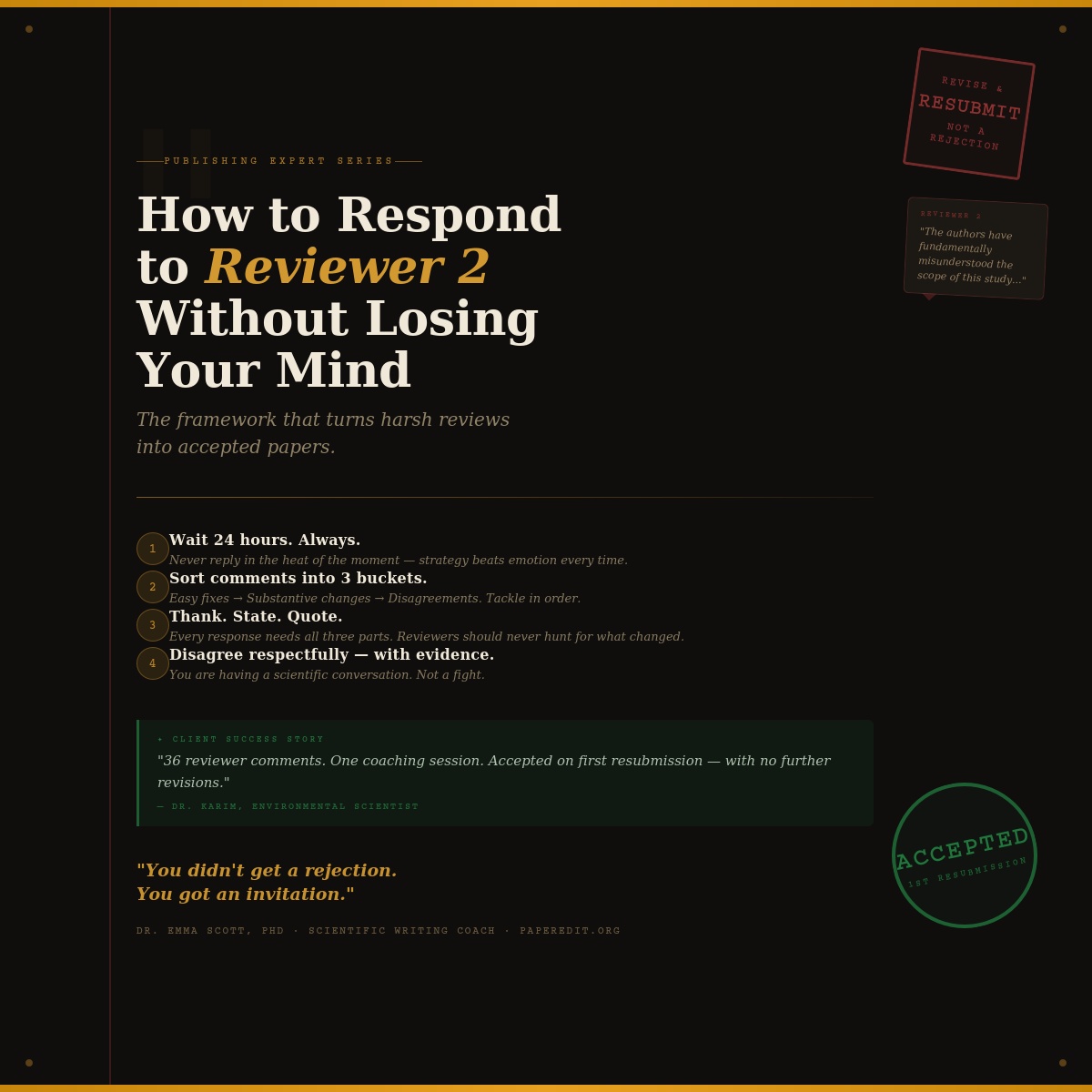
𝗬𝗼𝘂 𝗷𝘂𝘀𝘁 𝗿𝗲𝗰𝗲𝗶𝘃𝗲𝗱 𝘆𝗼𝘂𝗿 𝗿𝗲𝘃𝗶𝗲𝘄𝗲𝗿 𝗰𝗼𝗺𝗺𝗲𝗻𝘁𝘀.
Your stomach dropped.
Reviewer 2 has written four paragraphs telling you everything that is wrong with your life's work.
You feel attacked. Misunderstood. Furious.
𝗗𝗼 𝗻𝗼𝘁 𝗿𝗲𝗽𝗹𝘆 𝘆𝗲𝘁.
Step away from the keyboard.
Walk away from the screen.
Give yourself 24 hours before you write a single word.
𝗧𝗵𝗮𝘁 𝗶𝘀 𝗻𝗼𝘁 𝘄𝗲𝗮𝗸𝗻𝗲𝘀𝘀. 𝗧𝗵𝗮𝘁 𝗶𝘀 𝘀𝘁𝗿𝗮𝘁𝗲𝗴𝘆.
Because what happens in the next few days will determine whether your paper gets accepted or rejected for good.
Here is exactly how to respond — and come out the other side with an acceptance. 👇
𝗙𝗜𝗥𝗦𝗧 — 𝗨𝗻𝗱𝗲𝗿𝘀𝘁𝗮𝗻𝗱 𝘄𝗵𝗮𝘁 𝗮 𝗿𝗲𝘃𝗶𝘀𝗲 & 𝗿𝗲𝘀𝘂𝗯𝗺𝗶𝘁 𝗮𝗰𝘁𝘂𝗮𝗹𝗹𝘆 𝗺𝗲𝗮𝗻𝘀.
A revise and resubmit is NOT a rejection.
It is the journal saying — 𝘸𝘦 𝘴𝘦𝘦 𝘱𝘰𝘵𝘦𝘯𝘵𝘪𝘢𝘭 𝘩𝘦𝘳𝘦. 𝘕𝘰𝘸 𝘱𝘳𝘰𝘷𝘦 𝘪𝘵.
Editors do not invest time in papers they intend to reject.
If they sent you reviewer comments — they want you to succeed.
𝗥𝗲𝗮𝗱 𝗲𝘃𝗲𝗿𝘆 𝗰𝗼𝗺𝗺𝗲𝗻𝘁 𝘁𝗵𝗿𝗼𝘂𝗴𝗵 𝘁𝗵𝗮𝘁 𝗹𝗲𝗻𝘀.
𝗦𝗘𝗖𝗢𝗡𝗗 — 𝗦𝗼𝗿𝘁 𝗲𝘃𝗲𝗿𝘆 𝗰𝗼𝗺𝗺𝗲𝗻𝘁 𝗶𝗻𝘁𝗼 𝘁𝗵𝗿𝗲𝗲 𝗯𝘂𝗰𝗸𝗲𝘁𝘀.
𝗕𝘂𝗰𝗸𝗲𝘁 𝟭 — 𝗘𝗮𝘀𝘆 𝗙𝗶𝘅𝗲𝘀
Typos, references, formatting, minor clarifications.
Do these first. They build momentum and confidence.
𝗕𝘂𝗰𝗸𝗲𝘁 𝟮 — 𝗦𝘂𝗯𝘀𝘁𝗮𝗻𝘁𝗶𝘃𝗲 𝗖𝗵𝗮𝗻𝗴𝗲𝘀
Additional analysis, restructured sections, expanded discussion.
These take time — plan them carefully before starting.
𝗕𝘂𝗰𝗸𝗲𝘁 𝟯 — 𝗧𝗵𝗶𝗻𝗴𝘀 𝗬𝗼𝘂 𝗗𝗶𝘀𝗮𝗴𝗿𝗲𝗲 𝗪𝗶𝘁𝗵
These exist. They are valid.
𝗕𝘂𝘁 𝗵𝗼𝘄 𝘆𝗼𝘂 𝗵𝗮𝗻𝗱𝗹𝗲 𝘁𝗵𝗲𝗺 𝘄𝗶𝗹𝗹 𝗺𝗮𝗸𝗲 𝗼𝗿 𝗯𝗿𝗲𝗮𝗸 𝘆𝗼𝘂𝗿 𝗿𝗲𝘃𝗶𝘀𝗶𝗼𝗻.
𝗧𝗛𝗜𝗥𝗗 — 𝗧𝗵𝗲 𝗳𝗼𝗿𝗺𝗮𝘁 𝗲𝘃𝗲𝗿𝘆 𝘀𝘂𝗰𝗰𝗲𝘀𝘀𝗳𝘂𝗹 𝗿𝗲𝘀𝗽𝗼𝗻𝘀𝗲 𝗹𝗲𝘁𝘁𝗲𝗿 𝗳𝗼𝗹𝗹𝗼𝘄𝘀.
For 𝗲𝘃𝗲𝗿𝘆 𝘀𝗶𝗻𝗴𝗹𝗲 comment — your response must have three parts:
→ 𝗧𝗵𝗮𝗻𝗸 𝘁𝗵𝗲 𝗿𝗲𝘃𝗶𝗲𝘄𝗲𝗿 𝗴𝗲𝗻𝘂𝗶𝗻𝗲𝗹𝘆.
Not sarcastically. Not performatively. Genuinely.
→ 𝗦𝘁𝗮𝘁𝗲 𝗲𝘅𝗮𝗰𝘁𝗹𝘆 𝘄𝗵𝗮𝘁 𝘆𝗼𝘂 𝗱𝗶𝗱.
Page number. Paragraph. Line. Make verification effortless.
→ 𝗤𝘂𝗼𝘁𝗲 𝘆𝗼𝘂𝗿 𝗿𝗲𝘃𝗶𝘀𝗲𝗱 𝘁𝗲𝘅𝘁 𝗱𝗶𝗿𝗲𝗰𝘁𝗹𝘆.
Reviewers should never hunt for what changed.
𝗥𝗲𝘀𝗽𝗲𝗰𝘁 𝘁𝗵𝗲𝗶𝗿 𝘁𝗶𝗺𝗲 𝗮𝗻𝗱 𝘁𝗵𝗲𝘆 𝘄𝗶𝗹𝗹 𝗿𝗲𝘀𝗽𝗲𝗰𝘁 𝘆𝗼𝘂𝗿 𝘄𝗼𝗿𝗸.
𝗙𝗢𝗨𝗥𝗧𝗛 — 𝗛𝗼𝘄 𝘁𝗼 𝗱𝗶𝘀𝗮𝗴𝗿𝗲𝗲 𝘄𝗶𝘁𝗵𝗼𝘂𝘁 𝗱𝗲𝘀𝘁𝗿𝗼𝘆𝗶𝗻𝗴 𝘆𝗼𝘂𝗿 𝗰𝗵𝗮𝗻𝗰𝗲𝘀.
You are allowed to push back.
𝗕𝘂𝘁 𝗵𝗼𝘄 𝘆𝗼𝘂 𝗽𝘂𝘀𝗵 𝗯𝗮𝗰𝗸 𝗶𝘀 𝗲𝘃𝗲𝗿𝘆𝘁𝗵𝗶𝗻𝗴.
Never say: "The reviewer has misunderstood our work."
Always say: "We appreciate this comment as it signals our original text was not sufficiently clear. We have revised the relevant section — however, we respectfully maintain our original conclusion because..."
Then cite evidence. Then cite literature. Then close respectfully.
𝗬𝗼𝘂 𝗮𝗿𝗲 𝗻𝗼𝘁 𝗳𝗶𝗴𝗵𝘁𝗶𝗻𝗴 𝘁𝗵𝗲 𝗿𝗲𝘃𝗶𝗲𝘄𝗲𝗿.
𝗬𝗼𝘂 𝗮𝗿𝗲 𝗵𝗮𝘃𝗶𝗻𝗴 𝗮 𝘀𝗰𝗶𝗲𝗻𝘁𝗶𝗳𝗶𝗰 𝗰𝗼𝗻𝘃𝗲𝗿𝘀𝗮𝘁𝗶𝗼𝗻. 𝗧𝗿𝗲𝗮𝘁 𝗶𝘁 𝘁𝗵𝗮𝘁 𝘄𝗮𝘆.
𝗙𝗜𝗙𝗧𝗛 — 𝗧𝗵𝗲 𝗿𝘂𝗹𝗲𝘀 𝗺𝗼𝘀𝘁 𝗿𝗲𝘀𝗲𝗮𝗿𝗰𝗵𝗲𝗿𝘀 𝗻𝗲𝘃𝗲𝗿 𝗹𝗲𝗮𝗿𝗻.
Never ignore a comment. Ever.
Number every comment and every response.
Put reviewer comments in black. Your responses in blue.
Start with a one-paragraph summary of all major changes.
𝗙𝗶𝗻𝗶𝘀𝗵 𝘄𝗶𝘁𝗵 𝗴𝗿𝗮𝘁𝗶𝘁𝘂𝗱𝗲 — 𝗮𝗻𝗱 𝗺𝗲𝗮𝗻 𝗶𝘁.
𝗦𝗨𝗖𝗖𝗘𝗦𝗦 𝗦𝗧𝗢𝗥𝗬:
𝗗𝗿. 𝗞𝗮𝗿𝗶𝗺 — 𝗘𝗻𝘃𝗶𝗿𝗼𝗻𝗺𝗲𝗻𝘁𝗮𝗹 𝗦𝗰𝗶𝗲𝗻𝗰𝗲 𝗥𝗲𝘀𝗲𝗮𝗿𝗰𝗵𝗲𝗿, 𝗡𝗼𝗿𝘁𝗵 𝗔𝗳𝗿𝗶𝗰𝗮
Dr. Karim came to me in a state I recognise immediately — exhausted, deflated, and ready to abandon a paper he had worked on for three years.
He had received a major revision request from a mid-tier environmental science journal. Reviewer 1 had 11 comments. Reviewer 2 had 19. The editor had added 6 more of his own.
Total: 36 comments. 3 pages of critique. A six-week deadline.
His first response draft was what I call the 𝗱𝗲𝗳𝗲𝗻𝘀𝗶𝘃𝗲 𝗿𝗲𝗽𝗹𝘆 — short, resistant, and reading like a researcher arguing with someone rather than collaborating with them. I see this every week. And it almost always ends in rejection.
We rebuilt his response letter from scratch using the exact framework above.
Every comment was numbered.
Every response had three clear parts.
Every disagreement was reframed as a clarification opportunity.
The letter opened with a warm, professional summary of all major changes.
The revised text was quoted directly under each relevant response.
𝗧𝗵𝗲 𝗿𝗲𝘀𝘂𝗹𝘁?
His paper was accepted 𝘄𝗶𝘁𝗵𝗼𝘂𝘁 𝗳𝘂𝗿𝘁𝗵𝗲𝗿 𝗿𝗲𝘃𝗶𝘀𝗶𝗼𝗻 on the first resubmission.
The editor's note read: "The authors have responded to all reviewer concerns with exceptional thoroughness and professionalism."
Dr. Karim messaged me the day the acceptance came through.
He wrote three words: 𝘐 𝘤𝘢𝘯'𝘵 𝘣𝘦𝘭𝘪𝘦𝘷𝘦 𝘪𝘵.
𝗜 𝗱𝗶𝗱.
Because the science was always good enough.
He just needed to learn how to speak the language of peer review.
𝗧𝗵𝗮𝘁 𝗶𝘀 𝗮 𝗹𝗲𝗮𝗿𝗻𝗮𝗯𝗹𝗲 𝘀𝗸𝗶𝗹𝗹.
𝗔𝗻𝗱 𝗶𝘁 𝗰𝗵𝗮𝗻𝗴𝗲𝘀 𝗲𝘃𝗲𝗿𝘆𝘁𝗵𝗶𝗻𝗴.
𝗧𝗵𝗲 𝗿𝗲𝘃𝗶𝘀𝗶𝗼𝗻 𝗽𝗿𝗼𝗰𝗲𝘀𝘀 𝗶𝘀 𝘄𝗵𝗲𝗿𝗲 𝗮𝘃𝗲𝗿𝗮𝗴𝗲 𝗽𝗮𝗽𝗲𝗿𝘀 𝗯𝗲𝗰𝗼𝗺𝗲 𝗴𝗿𝗲𝗮𝘁 𝗼𝗻𝗲𝘀.
You did not get a rejection.
You got an invitation.
𝗡𝗼𝘄 𝗴𝗼 𝗮𝗻𝘀𝘄𝗲𝗿 𝗶𝘁.
💬 𝗪𝗵𝗮𝘁 𝗶𝘀 𝘁𝗵𝗲 𝗵𝗮𝗿𝘀𝗵𝗲𝘀𝘁 𝗿𝗲𝘃𝗶𝗲𝘄𝗲𝗿 𝗰𝗼𝗺𝗺𝗲𝗻𝘁 𝘆𝗼𝘂 𝗵𝗮𝘃𝗲 𝗲𝘃𝗲𝗿 𝗿𝗲𝗰𝗲𝗶𝘃𝗲𝗱?
𝗗𝗿𝗼𝗽 𝗶𝘁 𝗯𝗲𝗹𝗼𝘄. 𝗟𝗲𝘁'𝘀 𝘁𝗮𝗹𝗸 𝗮𝗯𝗼𝘂𝘁 𝗶𝘁. 👇
📌 𝗦𝗮𝘃𝗲 𝘁𝗵𝗶𝘀. 𝗦𝗲𝗻𝗱 𝗶𝘁 𝘁𝗼 𝗲𝘃𝗲𝗿𝘆 𝗿𝗲𝘀𝗲𝗮𝗿𝗰𝗵𝗲𝗿 𝘄𝗵𝗼 𝗷𝘂𝘀𝘁 𝗴𝗼𝘁 𝗮 𝗿𝗲𝘃𝗶𝘀𝗲 & 𝗿𝗲𝘀𝘂𝗯𝗺𝗶𝘁.
𝗗𝗿. 𝗘𝗺𝗺𝗮 𝗦𝗰𝗼𝘁𝘁, 𝗣𝗵𝗗 | 𝗦𝗰𝗶𝗲𝗻𝘁𝗶𝗳𝗶𝗰 𝗪𝗿𝗶𝘁𝗶𝗻𝗴 𝗖𝗼𝗮𝗰𝗵 & 𝗣𝘂𝗯𝗹𝗶𝘀𝗵𝗶𝗻𝗴 𝗖𝗼𝗻𝘀𝘂𝗹𝘁𝗮𝗻𝘁

English

I just published Top 15 Proofreading & Editing Companies for Researchers and Academics in 2026 medium.com/p/top-15-proof…
English

What's the harshest peer review comment you've ever received — and did it actually make your paper better?
I've been thinking about this a lot lately after going through a brutal round of revisions.
Reviewer 2 tore apart my Discussion section. At the time I was frustrated and honestly a little crushed. But when I sat down and really worked through their comments, the revised version was significantly stronger — clearer argument, tighter conclusions, better positioned for the field.
It got me wondering whether the most uncomfortable feedback is sometimes the most valuable.
So I want to hear from other researchers:
What's the harshest or most unexpected review comment you've ever received? Did you push back on it or incorporate it? And looking back — was the reviewer right?
I'm especially curious whether early-career researchers experience this differently than people who've been publishing for years. There's a lot of talk about building a "thick skin" in academia, but I think the more useful skill is learning to separate your ego from your work — and that takes time.
English

𝗜 𝗿𝗲𝗺𝗲𝗺𝗯𝗲𝗿 𝘁𝗵𝗲 𝗱𝗮𝘆 𝗜 𝘀𝗮𝘁 𝗶𝗻 𝗮 𝗿𝗼𝗼𝗺 𝗳𝘂𝗹𝗹 𝗼𝗳 𝗣𝗵𝗱𝘀 𝗮𝗻𝗱 𝘁𝗵𝗼𝘂𝗴𝗵𝘁:
𝗘𝘃𝗲𝗿𝘆𝗼𝗻𝗲 𝗵𝗲𝗿𝗲 𝗸𝗻𝗼𝘄𝘀 𝗲𝘅𝗮𝗰𝘁𝗹𝘆 𝘄𝗵𝗮𝘁 𝘁𝗵𝗲𝘆'𝗿𝗲 𝗱𝗼𝗶𝗻𝗴. 𝗘𝘅𝗰𝗲𝗽𝘁 𝗺𝗲.
I had a PhD. A publication. A coaching practice already taking shape.
And I still felt like someone was going to stand up, point at me, and say — 𝘴𝘩𝘦 𝘥𝘰𝘦𝘴𝘯'𝘵 𝘣𝘦𝘭𝘰𝘯𝘨 𝘩𝘦𝘳𝘦.
Nobody did.
But the voice inside me was louder than anyone in that room.
If you've ever felt that way — you are not broken. You are not weak. You are not alone.
You are experiencing something that affects 𝟳𝟬% 𝗼𝗳 𝗮𝗰𝗮𝗱𝗲𝗺𝗶𝗰𝘀 𝗮𝘁 𝘀𝗼𝗺𝗲 𝗽𝗼𝗶𝗻𝘁 𝗶𝗻 𝘁𝗵𝗲𝗶𝗿 𝗰𝗮𝗿𝗲𝗲𝗿.
It even has a name.
𝗜𝗺𝗽𝗼𝘀𝘁𝗲𝗿 𝗦𝘆𝗻𝗱𝗿𝗼𝗺𝗲.
And in academia — where you are constantly evaluated, critiqued, reviewed, and rejected — it doesn't just visit.
𝗜𝘁 𝗺𝗼𝘃𝗲𝘀 𝗶𝗻.
𝗛𝗲𝗿𝗲'𝘀 𝘄𝗵𝗮𝘁 𝗻𝗼𝗯𝗼𝗱𝘆 𝘁𝗲𝗹𝗹𝘀 𝘆𝗼𝘂 𝗮𝗯𝗼𝘂𝘁 𝗶𝗺𝗽𝗼𝘀𝘁𝗲𝗿 𝘀𝘆𝗻𝗱𝗿𝗼𝗺𝗲 𝗶𝗻 𝗮𝗰𝗮𝗱𝗲𝗺𝗶𝗮 👇
𝗜𝘁 𝗴𝗲𝘁𝘀 𝘄𝗼𝗿𝘀𝗲 𝗮𝘀 𝘆𝗼𝘂 𝗴𝗿𝗼𝘄. You'd think success cures it. It doesn't. Every new achievement raises the bar of what you think you should already know. The more you accomplish — the more exposed you fear you'll become.
𝗜𝘁 𝗶𝘀 𝗻𝗼𝘁 𝗮 𝘀𝗶𝗴𝗻 𝘆𝗼𝘂 𝗱𝗼𝗻'𝘁 𝗯𝗲𝗹𝗼𝗻𝗴. It is a sign you 𝗰𝗮𝗿𝗲 𝗱𝗲𝗲𝗽𝗹𝘆 about the quality of your work. Indifferent people never feel like impostors. Passionate ones always do.
𝗥𝗲𝗷𝗲𝗰𝘁𝗶𝗼𝗻 𝗳𝗲𝗲𝗱𝘀 𝗶𝘁. Every rejected paper. Every harsh review. Every unanswered email. Imposter syndrome collects them like evidence. 𝗗𝗼𝗻'𝘁 𝗹𝗲𝘁 𝗶𝘁 𝗯𝘂𝗶𝗹𝗱 𝗶𝘁𝘀 𝗰𝗮𝘀𝗲 𝘂𝗻𝗰𝗵𝗮𝗹𝗹𝗲𝗻𝗴𝗲𝗱.
𝗦𝗶𝗹𝗲𝗻𝗰𝗲 𝗺𝗮𝗸𝗲𝘀 𝗶𝘁 𝘀𝘁𝗿𝗼𝗻𝗴𝗲𝗿. The moment you say out loud — 𝘐 𝘧𝘦𝘦𝘭 𝘭𝘪𝘬𝘦 𝘢 𝘧𝘳𝘢𝘶𝘥 — it loses half its power. Every academic around you has whispered the same thing. The ones who never say it are just better at hiding it.
𝗜𝘁 𝗹𝗶𝗲𝘀 𝘁𝗼 𝘆𝗼𝘂 𝗮𝗯𝗼𝘂𝘁 𝘆𝗼𝘂𝗿 𝘄𝗿𝗶𝘁𝗶𝗻𝗴. It tells you your manuscript isn't ready. That your ideas aren't original enough. That someone will read your work and laugh. 𝗧𝗵𝗮𝘁 𝘃𝗼𝗶𝗰𝗲 𝗶𝘀 𝗻𝗼𝘁 𝘆𝗼𝘂𝗿 𝗶𝗻𝘀𝘁𝗶𝗻𝗰𝘁. 𝗜𝘁 𝗶𝘀 𝘆𝗼𝘂𝗿 𝗳𝗲𝗮𝗿.
𝗛𝗼𝘄 𝗜 𝗯𝗲𝗮𝘁 𝗶𝘁 — 𝗮𝗻𝗱 𝗵𝗼𝘄 𝘆𝗼𝘂 𝗰𝗮𝗻 𝘁𝗼𝗼 👇
𝟭. 𝗞𝗲𝗲𝗽 𝗮 𝗪𝗶𝗻 𝗙𝗶𝗹𝗲. Every acceptance. Every kind review. Every moment someone said your work helped them. Write it down. Save it. Read it on the hard days. Imposter syndrome only shows you the losses. You need proof of the wins.
𝟮. 𝗦𝗲𝗽𝗮𝗿𝗮𝘁𝗲 𝘁𝗵𝗲 𝗳𝗲𝗲𝗹𝗶𝗻𝗴 𝗳𝗿𝗼𝗺 𝘁𝗵𝗲 𝗳𝗮𝗰𝘁. Feeling like a fraud is not evidence of being one. You earned your degree. You did the research. You wrote the work. 𝗙𝗲𝗲𝗹𝗶𝗻𝗴𝘀 𝗮𝗿𝗲 𝗿𝗲𝗮𝗹. 𝗧𝗵𝗲𝘆 𝗮𝗿𝗲 𝗻𝗼𝘁 𝗮𝗹𝘄𝗮𝘆𝘀 𝘁𝗿𝘂𝘁𝗵.
𝟯. 𝗦𝘁𝗼𝗽 𝗰𝗼𝗺𝗽𝗮𝗿𝗶𝗻𝗴 𝘆𝗼𝘂𝗿 𝗱𝗿𝗮𝗳𝘁 𝘁𝗼 𝘁𝗵𝗲𝗶𝗿 𝗽𝘂𝗯𝗹𝗶𝘀𝗵𝗲𝗱. You are reading polished final work and comparing it to your raw process. That comparison is rigged. It was always rigged. Their drafts looked exactly like yours.
𝟰. 𝗦𝘂𝗯𝗺𝗶𝘁 𝗮𝗻𝘆𝘄𝗮𝘆. Not when you feel ready. You will never feel ready. Submit when the work is done — not when the fear is gone. 𝗖𝗼𝘂𝗿𝗮𝗴𝗲 𝗶𝘀 𝗻𝗼𝘁 𝘁𝗵𝗲 𝗮𝗯𝘀𝗲𝗻𝗰𝗲 𝗼𝗳 𝗱𝗼𝘂𝗯𝘁. 𝗜𝘁 𝗶𝘀 𝘀𝘂𝗯𝗺𝗶𝘁𝘁𝗶𝗻𝗴 𝗱𝗲𝘀𝗽𝗶𝘁𝗲 𝗶𝘁.
𝟱. 𝗧𝗮𝗹𝗸 𝗮𝗯𝗼𝘂𝘁 𝗶𝘁. Find one person — a colleague, a mentor, a community — and say it out loud. 𝗜 𝗳𝗲𝗲𝗹 𝗹𝗶𝗸𝗲 𝗜 𝗱𝗼𝗻'𝘁 𝗯𝗲𝗹𝗼𝗻𝗴 𝗵𝗲𝗿𝗲. Watch how fast they say — 𝗺𝗲 𝘁𝗼𝗼.
That room full of PhDs I sat in years ago?
I later found out three of them came to me privately and said they felt exactly the same way that day.
𝗪𝗲 𝘄𝗲𝗿𝗲 𝗮𝗹𝗹 𝘀𝗶𝘁𝘁𝗶𝗻𝗴 𝗶𝗻 𝘁𝗵𝗮𝘁 𝗿𝗼𝗼𝗺 𝗳𝗲𝗲𝗹𝗶𝗻𝗴 𝗹𝗶𝗸𝗲 𝘁𝗵𝗲 𝗼𝗻𝗹𝘆 𝗼𝗻𝗲 𝘄𝗵𝗼 𝗱𝗶𝗱𝗻'𝘁 𝗯𝗲𝗹𝗼𝗻𝗴.
You belong here. Your research matters. 𝗔𝗻𝗱 𝘁𝗵𝗲 𝘄𝗼𝗿𝗹𝗱 𝗻𝗲𝗲𝗱𝘀 𝘆𝗼𝘂 𝘁𝗼 𝗽𝘂𝗯𝗹𝗶𝘀𝗵 𝗶𝘁.
💬 𝗛𝗮𝘃𝗲 𝘆𝗼𝘂 𝗲𝘃𝗲𝗿 𝗳𝗲𝗹𝘁 𝗹𝗶𝗸𝗲 𝗮𝗻 𝗶𝗺𝗽𝗼𝘀𝘁𝗼𝗿 𝗶𝗻 𝗮𝗰𝗮𝗱𝗲𝗺𝗶𝗮? 𝗧𝘆𝗽𝗲 𝗬𝗘𝗦 𝗯𝗲𝗹𝗼𝘄 𝗶𝗳 𝘁𝗵𝗶𝘀 𝗿𝗲𝘀𝗼𝗻𝗮𝘁𝗲𝗱 𝘄𝗶𝘁𝗵 𝘆𝗼𝘂. 𝗬𝗼𝘂 𝗮𝗿𝗲 𝗻𝗼𝘁 𝗮𝗹𝗼𝗻𝗲. 👇
📌 𝗦𝗮𝘃𝗲 𝘁𝗵𝗶𝘀 𝗳𝗼𝗿 𝘁𝗵𝗲 𝗱𝗮𝘆 𝘆𝗼𝘂 𝗻𝗲𝗲𝗱 𝗶𝘁.
𝗗𝗿. 𝗘𝗺𝗺𝗮 𝗦𝗰𝗼𝘁𝘁, 𝗣𝗵𝗗 | 𝗦𝗰𝗶𝗲𝗻𝘁𝗶𝗳𝗶𝗰 𝗪𝗿𝗶𝘁𝗶𝗻𝗴 𝗖𝗼𝗮𝗰𝗵 & 𝗣𝘂𝗯𝗹𝗶𝘀𝗵𝗶𝗻𝗴 𝗖𝗼𝗻𝘀𝘂𝗹𝘁𝗮𝗻𝘁
English

𝗧𝗵𝗲 𝗿𝗲𝗮𝘀𝗼𝗻 𝘆𝗼𝘂𝗿 𝗽𝗮𝗽𝗲𝗿𝘀 𝗮𝗿𝗲𝗻'𝘁 𝗴𝗲𝘁𝘁𝗶𝗻𝗴 𝗰𝗶𝘁𝗲𝗱 𝗵𝗮𝘀 𝗻𝗼𝘁𝗵𝗶𝗻𝗴 𝘁𝗼 𝗱𝗼 𝘄𝗶𝘁𝗵 𝘆𝗼𝘂𝗿 𝗿𝗲𝘀𝗲𝗮𝗿𝗰𝗵.
It has everything to do with how you wrote it.
Here's what the most-cited researchers do differently 👇
𝗖𝗶𝘁𝗮𝘁𝗶𝗼𝗻𝘀 𝗮𝗿𝗲 𝗻𝗼𝘁 𝗮𝘄𝗮𝗿𝗱𝗲𝗱. They are 𝗲𝗮𝗿𝗻𝗲𝗱 — word by word.
𝗬𝗼𝘂𝗿 𝘁𝗶𝘁𝗹𝗲 𝗶𝘀 𝘆𝗼𝘂𝗿 𝗯𝗶𝗴𝗴𝗲𝘀𝘁 𝗺𝗮𝗿𝗸𝗲𝘁𝗶𝗻𝗴 𝘁𝗼𝗼𝗹. Nobody cites a paper they never clicked on. A vague title = an invisible paper.
𝗪𝗿𝗶𝘁𝗲 𝗳𝗼𝗿 𝘁𝗵𝗲 𝗿𝗲𝘀𝗲𝗮𝗿𝗰𝗵𝗲𝗿 𝘄𝗵𝗼 𝗶𝘀 𝗮𝗹𝘄𝗮𝘆𝘀 𝗶𝗻 𝗮 𝗵𝘂𝗿𝗿𝘆. They skim. They scan. They cite what they can understand fast. Clarity is not dumbing down. Clarity is 𝗽𝗼𝘄𝗲𝗿.
𝗬𝗼𝘂𝗿 𝗮𝗯𝘀𝘁𝗿𝗮𝗰𝘁 𝗶𝘀 𝘄𝗼𝗿𝗸𝗶𝗻𝗴 𝟮𝟰/𝟳 𝘄𝗶𝘁𝗵𝗼𝘂𝘁 𝘆𝗼𝘂. Researchers decide to cite — or not — based on your abstract alone. Most never read past it. 𝗧𝗿𝗲𝗮𝘁 𝗶𝘁 𝗹𝗶𝗸𝗲 𝘆𝗼𝘂𝗿 𝗺𝗼𝘀𝘁 𝗶𝗺𝗽𝗼𝗿𝘁𝗮𝗻𝘁 𝗽𝗮𝗿𝗮𝗴𝗿𝗮𝗽𝗵.
𝗞𝗲𝘆𝘄𝗼𝗿𝗱𝘀 𝗮𝗿𝗲 𝗻𝗼𝘁 𝗮𝗻 𝗮𝗳𝘁𝗲𝗿𝘁𝗵𝗼𝘂𝗴𝗵𝘁. The wrong keywords bury your paper in a database forever. The right ones put it in front of every researcher in your field. 𝗧𝗵𝗶𝗻𝗸 𝗹𝗶𝗸𝗲 𝗮 𝘀𝗲𝗮𝗿𝗰𝗵𝗲𝗿, 𝗻𝗼𝘁 𝗷𝘂𝘀𝘁 𝗮𝗻 𝗮𝘂𝘁𝗵𝗼𝗿.
𝗦𝘁𝗮𝘁𝗲 𝘆𝗼𝘂𝗿 𝗳𝗶𝗻𝗱𝗶𝗻𝗴 𝗹𝗶𝗸𝗲 𝗶𝘁 𝗺𝗮𝘁𝘁𝗲𝗿𝘀. Because it does. Researchers cite papers that make bold, clear, useful claims. Hedging every sentence to death kills your citability. 𝗦𝗮𝘆 𝘄𝗵𝗮𝘁 𝘆𝗼𝘂 𝗳𝗼𝘂𝗻𝗱. 𝗢𝘄𝗻 𝗶𝘁.
𝗦𝗵𝗼𝗿𝘁 𝘀𝗲𝗻𝘁𝗲𝗻𝗰𝗲𝘀 𝗴𝗲𝘁 𝗰𝗶𝘁𝗲𝗱 𝗺𝗼𝗿𝗲. Complex sentences wrapped in academic fog get skipped. The most cited lines in science history are shockingly simple. 𝗦𝗶𝗺𝗽𝗹𝗶𝗰𝗶𝘁𝘆 𝗶𝘀 𝗻𝗼𝘁 𝘄𝗲𝗮𝗸𝗻𝗲𝘀𝘀. 𝗜𝘁 𝗶𝘀 𝗺𝗮𝘀𝘁𝗲𝗿𝘆.
𝗣𝘂𝗯𝗹𝗶𝘀𝗵 𝘄𝗵𝗲𝗿𝗲 𝘆𝗼𝘂𝗿 𝗿𝗲𝗮𝗱𝗲𝗿𝘀 𝗮𝗰𝘁𝘂𝗮𝗹𝗹𝘆 𝗿𝗲𝗮𝗱. A paper in the wrong journal is a paper in the wrong room. Match your work to where your target audience actively searches. 𝗩𝗶𝘀𝗶𝗯𝗶𝗹𝗶𝘁𝘆 𝗮𝗹𝘄𝗮𝘆𝘀 𝗽𝗿𝗲𝗰𝗲𝗱𝗲𝘀 𝗰𝗶𝘁𝗮𝘁𝗶𝗼𝗻.
𝗦𝗵𝗮𝗿𝗲 𝘆𝗼𝘂𝗿 𝗽𝗮𝗽𝗲𝗿 𝗹𝗶𝗸𝗲 𝗮 𝗵𝘂𝗺𝗮𝗻, 𝗻𝗼𝘁 𝗮 𝗿𝗼𝗯𝗼𝘁. Post it on ResearchGate. LinkedIn. X. Email the researchers you cited — tell them your work builds on theirs. 𝗖𝗶𝘁𝗮𝘁𝗶𝗼𝗻𝘀 𝗳𝗼𝗹𝗹𝗼𝘄 𝗿𝗲𝗹𝗮𝘁𝗶𝗼𝗻𝘀𝗵𝗶𝗽𝘀 𝗮𝘀 𝗺𝘂𝗰𝗵 𝗮𝘀 𝗿𝗲𝘀𝗲𝗮𝗿𝗰𝗵.
𝗢𝗽𝗲𝗻 𝗔𝗰𝗰𝗲𝘀𝘀 𝗴𝗲𝘁𝘀 𝗰𝗶𝘁𝗲𝗱 𝗺𝗼𝗿𝗲. 𝗙𝘂𝗹𝗹 𝘀𝘁𝗼𝗽. A paper behind a paywall is a paper half the world cannot read. If open access is an option — take it seriously. 𝗔𝗰𝗰𝗲𝘀𝘀𝗶𝗯𝗶𝗹𝗶𝘁𝘆 𝗶𝘀 𝗰𝗶𝘁𝗮𝗯𝗶𝗹𝗶𝘁𝘆.
𝗢𝗻𝗲 𝗽𝗮𝗽𝗲𝗿 𝗿𝗮𝗿𝗲𝗹𝘆 𝗯𝘂𝗶𝗹𝗱𝘀 𝗮 𝗿𝗲𝗽𝘂𝘁𝗮𝘁𝗶𝗼𝗻. A body of work does. The most-cited researchers publish 𝗰𝗼𝗻𝘀𝗶𝘀𝘁𝗲𝗻𝘁𝗹𝘆 in a defined niche. They become 𝘁𝗵𝗲 𝗻𝗮𝗺𝗲 people cite when they think of that topic. 𝗕𝗲 𝘁𝗵𝗮𝘁 𝗻𝗮𝗺𝗲.
Citations are not luck. Citations are not politics. Citations are not reserved for Ivy League researchers.
𝗖𝗶𝘁𝗮𝘁𝗶𝗼𝗻𝘀 𝗮𝗿𝗲 𝘁𝗵𝗲 𝗿𝗲𝘄𝗮𝗿𝗱 𝗳𝗼𝗿 𝘄𝗿𝗶𝘁𝗶𝗻𝗴 𝘄𝗲𝗹𝗹, 𝘀𝗵𝗮𝗿𝗶𝗻𝗴 𝗯𝗼𝗹𝗱𝗹𝘆, 𝗮𝗻𝗱 𝘀𝗵𝗼𝘄𝗶𝗻𝗴 𝘂𝗽 𝗰𝗼𝗻𝘀𝗶𝘀𝘁𝗲𝗻𝘁𝗹𝘆.
Your research deserves to be found. Your work deserves to be built upon. 𝗬𝗼𝘂𝗿 𝗻𝗮𝗺𝗲 𝗱𝗲𝘀𝗲𝗿𝘃𝗲𝘀 𝘁𝗼 𝗯𝗲 𝗰𝗶𝘁𝗲𝗱.
💬 𝗪𝗵𝗶𝗰𝗵 𝗼𝗳 𝘁𝗵𝗲𝘀𝗲 𝗮𝗿𝗲 𝘆𝗼𝘂 𝗴𝘂𝗶𝗹𝘁𝘆 𝗼𝗳 𝗶𝗴𝗻𝗼𝗿𝗶𝗻𝗴? 𝗕𝗲 𝗵𝗼𝗻𝗲𝘀𝘁 𝗯𝗲𝗹𝗼𝘄 👇
📌 𝗦𝗮𝘃𝗲 𝘁𝗵𝗶𝘀 𝗽𝗼𝘀𝘁. 𝗬𝗼𝘂 𝘄𝗶𝗹𝗹 𝗻𝗲𝗲𝗱 𝗶𝘁.
𝗗𝗿. 𝗘𝗺𝗺𝗮 𝗦𝗰𝗼𝘁𝘁, 𝗣𝗵𝗗 | 𝗦𝗰𝗶𝗲𝗻𝘁𝗶𝗳𝗶𝗰 𝗪𝗿𝗶𝘁𝗶𝗻𝗴 𝗖𝗼𝗮𝗰𝗵 & 𝗣𝘂𝗯𝗹𝗶𝘀𝗵𝗶𝗻𝗴 𝗖𝗼𝗻𝘀𝘂𝗹𝘁𝗮𝗻𝘁
English

𝗬𝗼𝘂𝗿 𝗽𝗮𝗽𝗲𝗿 𝘄𝗮𝘀 𝗿𝗲𝗷𝗲𝗰𝘁𝗲𝗱 𝗯𝗲𝗳𝗼𝗿𝗲 𝗮𝗻𝘆𝗼𝗻𝗲 𝗿𝗲𝗮𝗱 𝗶𝘁.
I know that sounds impossible.
But here is exactly what happened 👇
The editor opened your submission at 8:47am between two meetings.
They read your title.
Skimmed your abstract.
Glanced at your introduction.
And in under 90 seconds — before reaching your methods, your data, your years of work — they made their decision.
𝗥𝗲𝗷𝗲𝗰𝘁.
Not because your science failed.
Because your 𝗳𝗶𝗿𝘀𝘁 𝟵𝟬 𝘀𝗲𝗰𝗼𝗻𝗱𝘀 failed.
This is the part of publishing nobody teaches you.
Editors are not reading your paper.
They are 𝘀𝗰𝗿𝗲𝗲𝗻𝗶𝗻𝗴 it.
And screening happens at three checkpoints only:
𝗖𝗵𝗲𝗰𝗸𝗽𝗼𝗶𝗻𝘁 𝟭 — Your title
Does it tell me immediately what you found — not what you studied?
"Effect of X on Y in Z population" is a topic.
"X reduces Y by 34% in Z population" is a 𝗳𝗶𝗻𝗱𝗶𝗻𝗴.
Editors want findings. Not topics.
𝗖𝗵𝗲𝗰𝗸𝗽𝗼𝗶𝗻𝘁 𝟮 — Your abstract's first sentence
If it starts with background — you've already lost them.
Your first sentence must answer: 𝘄𝗵𝘆 𝗱𝗼𝗲𝘀 𝘁𝗵𝗶𝘀 𝗺𝗮𝘁𝘁𝗲𝗿 𝗿𝗶𝗴𝗵𝘁 𝗻𝗼𝘄?
Not in 1995. Not in theory. Right now.
𝗖𝗵𝗲𝗰𝗸𝗽𝗼𝗶𝗻𝘁 𝟯 — Your introduction's final paragraph
This is where editors look to understand your contribution.
If they cannot find one clear, bold claim about what 𝘆𝗼𝘂𝗿 𝘀𝘁𝘂𝗱𝘆 𝗮𝗱𝗱𝘀 to existing knowledge —
the manuscript goes in the reject pile.
Fix these three checkpoints.
Before you change a single word of your methods or results.
Because your science was never the problem.
𝗬𝗼𝘂𝗿 𝗳𝗶𝗿𝘀𝘁 𝟵𝟬 𝘀𝗲𝗰𝗼𝗻𝗱𝘀 𝘄𝗲𝗿𝗲.
💬 𝗦𝗲𝗻𝗱 𝘁𝗵𝗶𝘀 𝘁𝗼 𝗼𝗻𝗲 𝗿𝗲𝘀𝗲𝗮𝗿𝗰𝗵𝗲𝗿 𝘄𝗵𝗼 𝗵𝗮𝘀 𝗮 𝗿𝗲𝗷𝗲𝗰𝘁𝗶𝗼𝗻 𝘀𝗶𝘁𝘁𝗶𝗻𝗴 𝗶𝗻 𝘁𝗵𝗲𝗶𝗿 𝗱𝗿𝗮𝗳𝘁𝘀 𝗿𝗶𝗴𝗵𝘁 𝗻𝗼𝘄. 👇
𝗗𝗿. 𝗘𝗺𝗺𝗮 𝗦𝗰𝗼𝘁𝘁, 𝗣𝗵𝗗 | 𝗦𝗰𝗶𝗲𝗻𝘁𝗶𝗳𝗶𝗰 𝗪𝗿𝗶𝘁𝗶𝗻𝗴 𝗖𝗼𝗮𝗰𝗵 & 𝗣𝘂𝗯𝗹𝗶𝘀𝗵𝗶𝗻𝗴 𝗖𝗼𝗻𝘀𝘂𝗹𝘁𝗮𝗻𝘁
English

𝗜 𝗮𝗹𝗺𝗼𝘀𝘁 𝘁𝗼𝗹𝗱 𝗵𝗶𝗺 𝘁𝗼 𝗾𝘂𝗶𝘁.
Not because his research wasn't good.
Because I had never seen someone so broken by rejection.
His name was Aleksander.
A physician from Romania. Twelve years of clinical practice. A research study on early cardiac biomarker detection that — if published — could genuinely change how rural hospitals screened for heart failure.
He came to me after his third rejection in fourteen months.
Not a form letter this time. A brutal peer review. Two pages of comments that essentially told him his writing was incomprehensible.
When we first spoke, he didn't ask me to help him get published.
He asked me if his English was simply 𝘵𝘰𝘰 𝘣𝘢𝘥 to ever be taken seriously.
That question broke my heart.
Because his English wasn't the problem.
His 𝘀𝘁𝗿𝘂𝗰𝘁𝘂𝗿𝗲 was the problem.
His 𝗮𝗯𝘀𝘁𝗿𝗮𝗰𝘁 was the problem.
His habit of burying his most important finding in 𝗽𝗮𝗴𝗲 𝗻𝗶𝗻𝗲 was the problem.
He was a brilliant clinician trying to write like a scientist.
Nobody had ever taught him the difference.
We worked together for eleven weeks.
Not just editing. 𝗥𝗲𝗯𝘂𝗶𝗹𝗱𝗶𝗻𝗴.
We restructured his entire argument from the ground up.
We rewrote his abstract four times.
We moved his key finding to the second paragraph of the introduction — where editors actually look.
We stripped out the clinical language and replaced it with scientific precision.
Every session, he showed up.
Exhausted after night shifts. Typing from hospital break rooms. Never once complaining.
𝗧𝗵𝗮𝘁 𝗸𝗶𝗻𝗱 𝗼𝗳 𝗱𝗲𝗱𝗶𝗰𝗮𝘁𝗶𝗼𝗻 𝗵𝘂𝗺𝗯𝗹𝗲𝘀 𝘆𝗼𝘂.
Week eleven. He submitted to the European Journal of Internal Medicine.
I told him to prepare for another wait.
To stay patient.
To not check his inbox every hour.
He checked his inbox every hour.
𝗦𝗶𝘅𝘁𝘆-𝘀𝗲𝘃𝗲𝗻 𝗱𝗮𝘆𝘀 𝗹𝗮𝘁𝗲𝗿.
A decision email arrived.
𝗠𝗶𝗻𝗼𝗿 𝗿𝗲𝘃𝗶𝘀𝗶𝗼𝗻𝘀.
He called me before he even finished reading it.
I could barely understand him through the tears.
Twelve years of clinical work.
Fourteen months of rejection.
Eleven weeks of rebuilding everything.
And a Q1 journal said 𝘺𝗲𝘀.
After acceptance he sent me one message.
No long email. No formal thank you.
Just this:
𝘋𝘳. 𝘌𝘮𝘮𝘢. 𝘛𝘩𝘦𝘺 𝘢𝘤𝘤𝘦𝘱𝘵𝘦𝘥 𝘪𝘵. 𝘐 𝘢𝘮 𝘤𝘳𝘺𝘪𝘯𝘨 𝘢𝘵 𝘮𝘺 𝘥𝘦𝘴𝘬 𝘢𝘯𝘥 𝘐 𝘥𝘰 𝘯𝘰𝘵 𝘤𝘢𝘳𝘦 𝘸𝘩𝘰 𝘴𝘦𝘦𝘴 𝘮𝘦.
I saved that message.
I read it on the days when this work feels hard.
Here is what Aleksander taught me — and what I want you to hear today:
𝗬𝗼𝘂𝗿 𝗿𝗲𝘀𝗲𝗮𝗿𝗰𝗵 𝗶𝘀 𝗻𝗼𝘁 𝘁𝗵𝗲 𝗽𝗿𝗼𝗯𝗹𝗲𝗺.
Rejection is not a verdict on your intelligence.
It is feedback on your communication.
And communication — unlike talent — 𝗰𝗮𝗻 𝗮𝗹𝘄𝗮𝘆𝘀 𝗯𝗲 𝗹𝗲𝗮𝗿𝗻𝗲𝗱.
Somewhere right now there is a researcher sitting with a rejected manuscript and a quiet voice telling them they are not good enough.
𝗧𝗵𝗶𝘀 𝗽𝗼𝘀𝘁 𝗶𝘀 𝗳𝗼𝗿 𝘁𝗵𝗲𝗺.
💬 𝗜𝗳 𝘁𝗵𝗶𝘀 𝘀𝘁𝗼𝗿𝘆 𝘁𝗼𝘂𝗰𝗵𝗲𝗱 𝘆𝗼𝘂 — 𝘀𝗵𝗮𝗿𝗲 𝗶𝘁. 𝗦𝗼𝗺𝗲𝗼𝗻𝗲 𝗶𝗻 𝘆𝗼𝘂𝗿 𝗻𝗲𝘁𝘄𝗼𝗿𝗸 𝗻𝗲𝗲𝗱𝘀 𝘁𝗼 𝗿𝗲𝗮𝗱 𝗶𝘁 𝘁𝗼𝗱𝗮𝘆. 👇
𝗗𝗿. 𝗘𝗺𝗺𝗮 𝗦𝗰𝗼𝘁𝘁, 𝗣𝗵𝗗 | 𝗦𝗰𝗶𝗲𝗻𝘁𝗶𝗳𝗶𝗰 𝗪𝗿𝗶𝘁𝗶𝗻𝗴 𝗖𝗼𝗮𝗰𝗵 & 𝗣𝘂𝗯𝗹𝗶𝘀𝗵𝗶𝗻𝗴 𝗖𝗼𝗻𝘀𝘂𝗹𝘁𝗮𝗻𝘁
English