Human Peacocking

4.1K posts

Human Peacocking banner
Human Peacocking

Human Peacocking

@HumanPeacocking

🦚🦚 Research/write on/ celebrate status signals & showing off 🦚🦚 Lover of charlatans, shamans, & charade in management, investing, & research

New York เข้าร่วม Nisan 2020
1.7K กำลังติดตาม2K ผู้ติดตาม
Human Peacocking
Human Peacocking@HumanPeacocking·
Boring Autocracy Hypothesis Autocratic govts sometimes can be effective at coordinating resources & econ development. But they stifle creative expression / development of cultural industries. Won’t progress past middle income b/c skilled people move to higher status places.
English
2
1
8
0
Human Peacocking
Human Peacocking@HumanPeacocking·
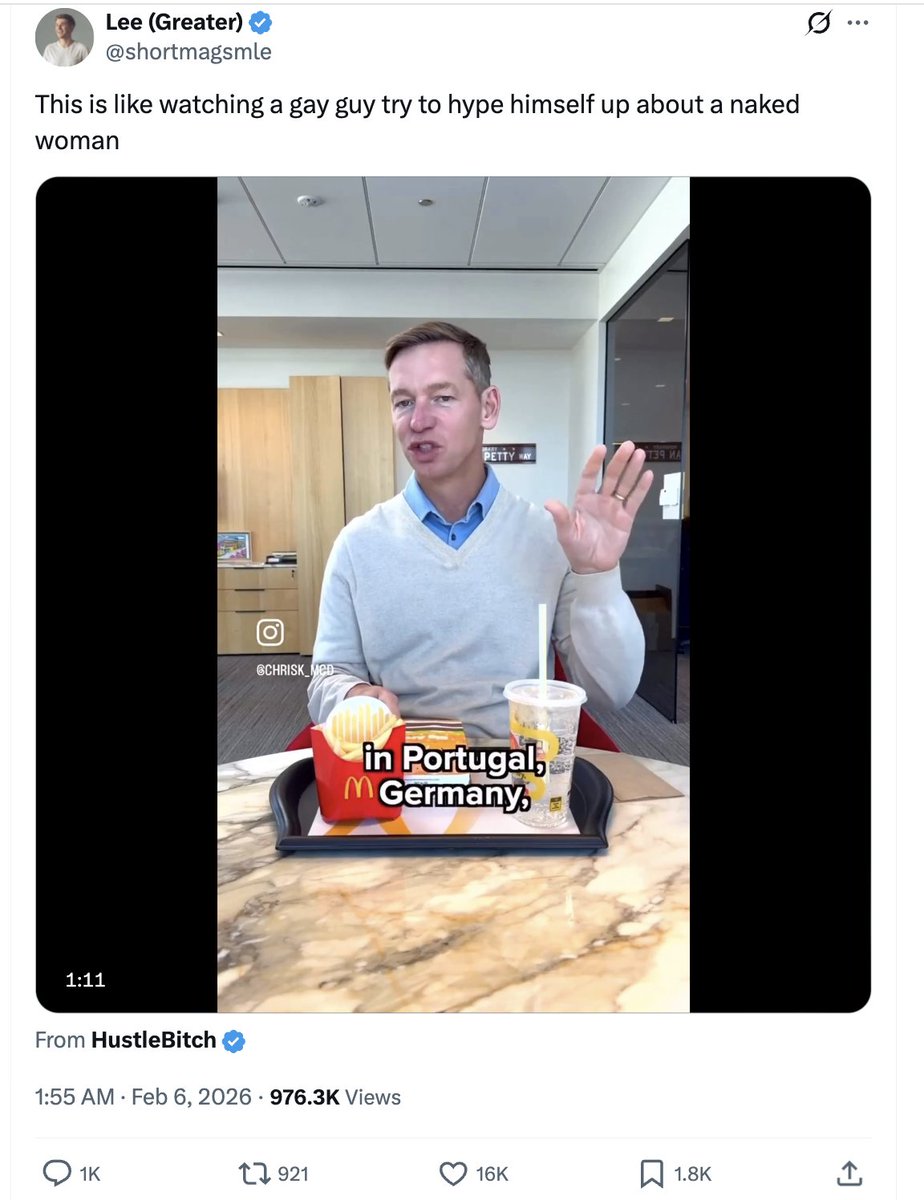
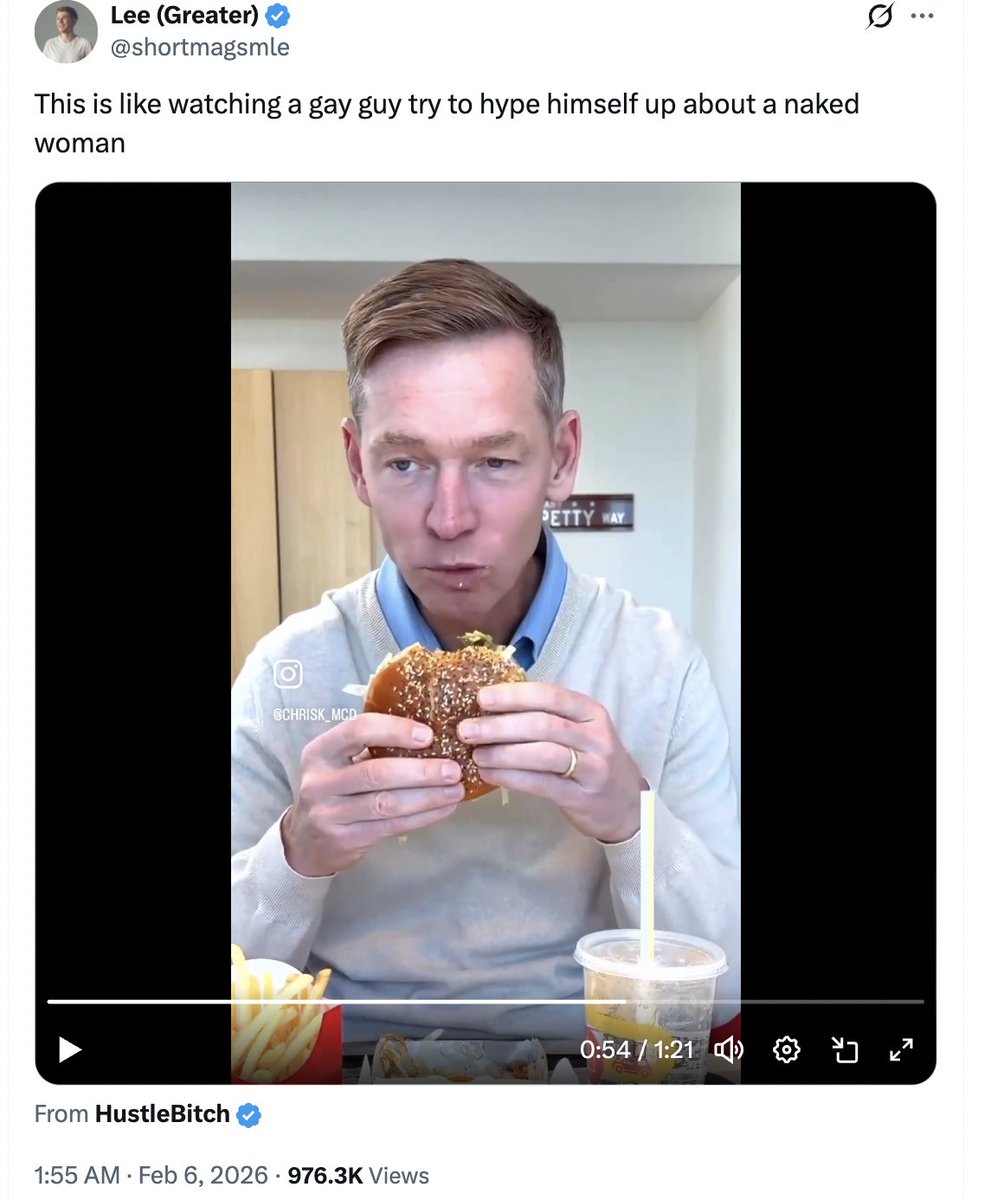
I sometimes have PR friends ask me for advice for their ultra high status clients who just got award/recognition tons of attention - How to make the most of it? My response - Tell them to go to the cheapest, well known local eatery (McDonalds, Jollebees, Dai Pai Dong, street stall, mediocre local steak house) & eat as visibly as possible until photographers show up. This is hands down the most successful way to capitalize on the stream of fame/attention. #Mcdonaldsmaneuver
English
2
0
3
297
Human Peacocking รีทวีตแล้ว
Koenfucius 🔍
Koenfucius 🔍@koenfucius·
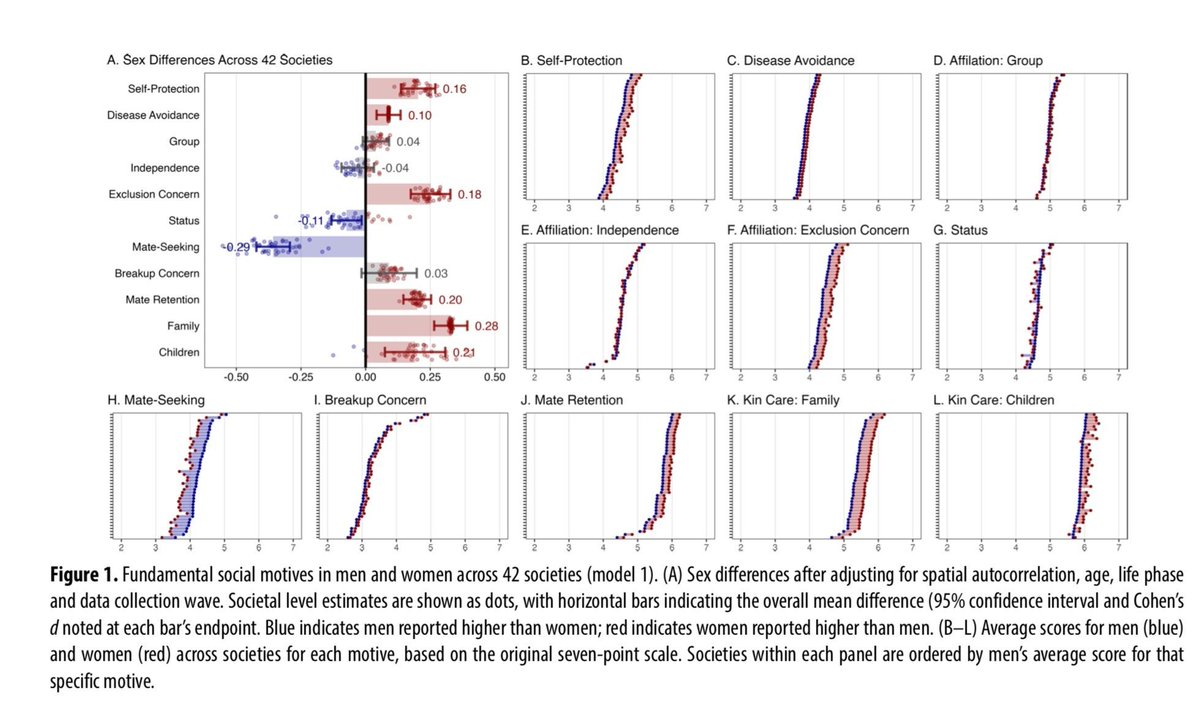
Research by Ko et al (N=14 532, 42 societies) suggests men and women have different fundamental social motives (♀→threat avoidance, long-term pair bonding, caregiving; ♂→status, mate-seeking)—more pronounced in societies with greater gender equality: buff.ly/xKUzuLE
Koenfucius 🔍 tweet media
English
0
7
15
10.1K
Human Peacocking
Human Peacocking@HumanPeacocking·
The 'McDonalds Maneuver' is when an ultra high status person in high status circumstances eats at a very lowly, common, base food establishment. Its commonly used by politicians, rich, and other elite who want to get further attention from masses urbandictionary.com/define.php?ter…
English
1
4
20
1.9K
Human Peacocking
Human Peacocking@HumanPeacocking·
The second option, I tell them, is to advise their client to conspicuously reject the award It has to be a conspicuous, visible rejection, can't be hidden like declining a knighthood honor. Or go up to get the award but leave it on the stand and walk off with statute sitting on podium.
English
0
0
1
99
Human Peacocking รีทวีตแล้ว
Quillette
Quillette@Quillette·
Trivers also developed parental investment theory, explaining why females tend to be choosier in mating and why males often compete more intensely for status and mates. These ideas reshaped debates about sex differences across biology and the social sciences. quillette.com/2020/11/02/sex…
English
1
4
26
2.3K
Human Peacocking รีทวีตแล้ว
Quillette
Quillette@Quillette·
His 1971 theory of reciprocal altruism changed everything. Cooperation, he argued, isn’t a noble exception to “survival of the fittest.” It’s an evolved strategy—one that works when individuals interact repeatedly and remember who helped (or cheated) whom. quillette.com/2022/10/07/on-…
English
1
7
27
2.1K
Human Peacocking รีทวีตแล้ว
Steve Stewart-Williams
Steve Stewart-Williams@SteveStuWill·
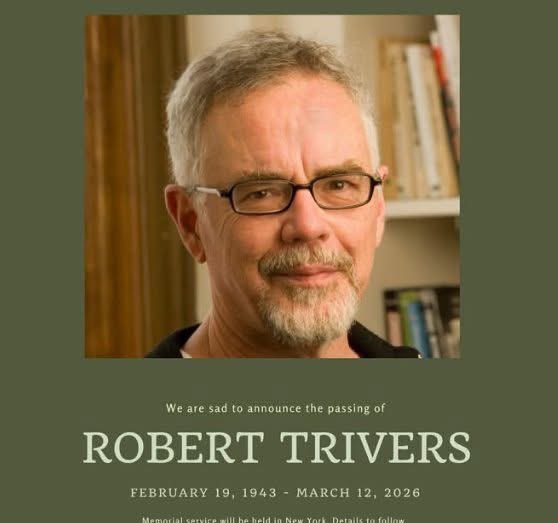
RIP Robert Trivers - the Einstein of evolutionary biology and one the greatest thinkers of our age. Among other things, Trivers came up with parental investment theory, reciprocal altruism theory, and parent-offspring conflict theory.
Steve Stewart-Williams tweet media
English
41
269
1.2K
200K
Anish Moonka
Anish Moonka@AnishA_Moonka·
Scientists put kids through 100 hours of reading, then scanned their brains. New wiring had physically grown inside the language regions. Communication between brain areas sped up by a factor of 10. Kids who didn't read showed zero change. That was a 2009 Carnegie Mellon study. It gets wilder. In 2013, Emory University scanned 19 students every morning for 19 straight days while they read one novel chapter each night. Mornings after reading, the brain areas responsible for understanding other people's emotions lit up with new connections. So did the region that processes physical sensation. Their brains were simulating what the characters felt, as if it were happening to them. Those changes stuck around for 5 days after they finished the book. Now flip to scrolling. A massive review published in Psychological Bulletin last September pulled together 71 studies covering 98,299 people. Heavy short-form video use (TikTok, Reels, Shorts) showed a clear pattern: worse attention, weaker self-control, and more anxiety. Consistent across teenagers and adults, across every platform tested. Oxford didn't name "brain rot" its 2024 Word of the Year for nothing. A 2024 brain wave study found that people hooked on short-form video had weaker activity in the front of the brain, the part that controls focus and impulse control. Separate brain scans showed the same thing: heavy scrollers had less activation in the exact regions that deep reading strengthens. UCLA neuroscientist Maryanne Wolf has been studying this for decades. Humans were never born to read. There's no gene for it. Reading is something we invented, and it hijacked neurons that were originally meant for recognizing faces. Over time, it built entirely new brain circuits connecting language, vision, and emotion. But those circuits only survive if you use them. Stop reading, and they fade. Wolf's conclusion is simple: screens built for speed produce a speed-wired brain. Books built for depth produce a depth-wired brain. One honest caveat: most of these studies are snapshots, not long-term tracking. People who already struggle to focus might just prefer short videos. But the same pattern showing up across nearly 100,000 people is hard to shrug off. The tweet repeats the line seven times. The research backs it up with brain scans, EEG data, and white-matter imaging across tens of thousands of people.
✒️@Literariium

The antidote for brain rot is books. The antidote for brain rot is books. The antidote for brain rot is books. The antidote for brain rot is books. The antidote for brain rot is books. The antidote for brain rot is books. The antidote for brain rot is books.
English
166
5.2K
25.5K
2M
Human Peacocking
Human Peacocking@HumanPeacocking·
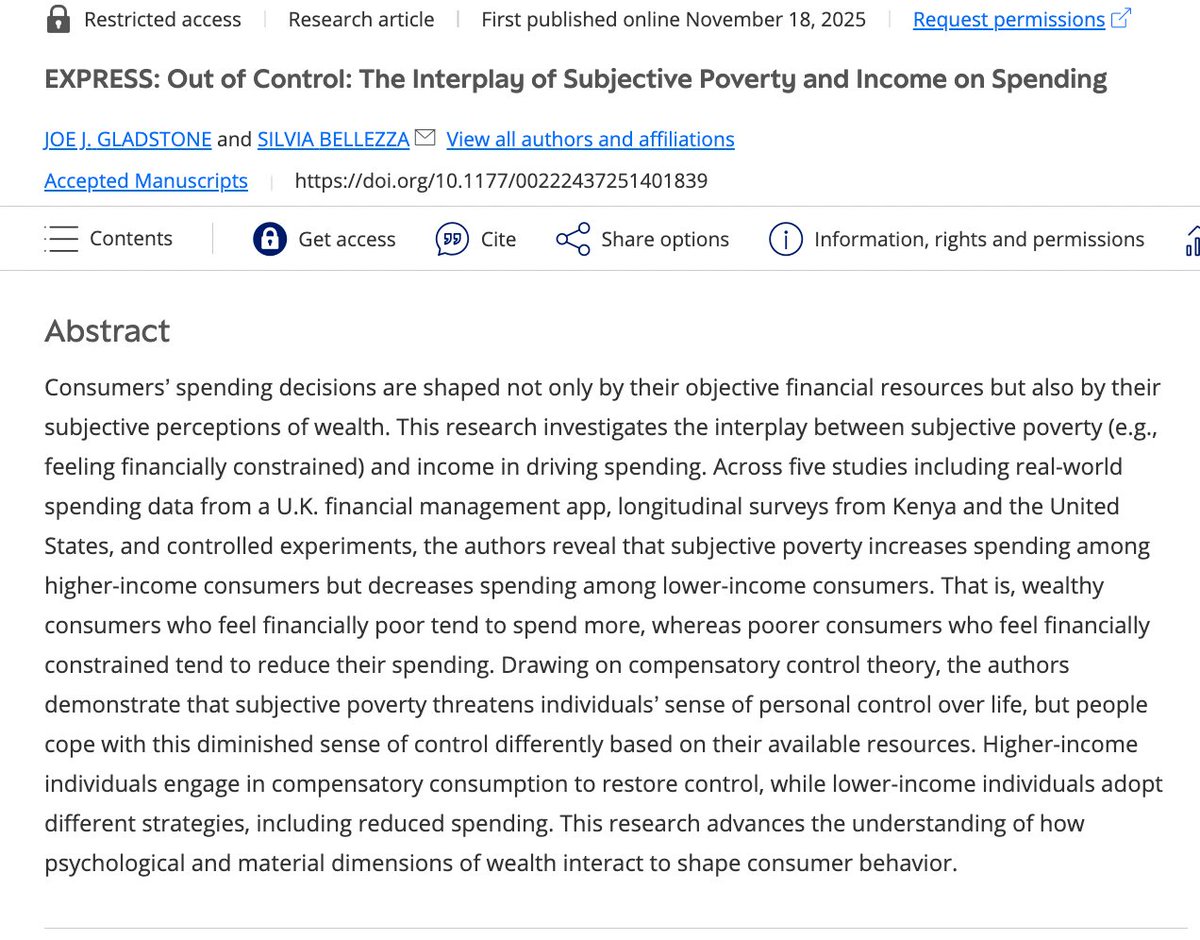
Poorer people reduce spending when feeling poorer than peers, whereas the rich increase spending, esp on visible goods People responded differently to the Joneses effect depending on their income.
Human Peacocking tweet media
English
0
0
4
200