

JC
1K posts

JC
@JC_G33K
Exploring crypto through code & research💡 Learn. Build. Share. Repeat. 😊
เข้าร่วม Mayıs 2018
160 กำลังติดตาม262 ผู้ติดตาม

@eliottmea @jarlaxle82 Kaspa is PoW, meaning finality is probabilistic, not deterministic.
Today, practical finality is ~8–10s.
DAGKnight could bring that down to ~1s.
English

@jarlaxle82 just a small correction, the op talks about finality (a valid measure), in which case we aren't at 100ms for Kaspa (I don't recall where we sit actually)
English

@elldeeone @VJCrypto_ Claude Design is about to become the best-paid Kaspa builder 😅
English



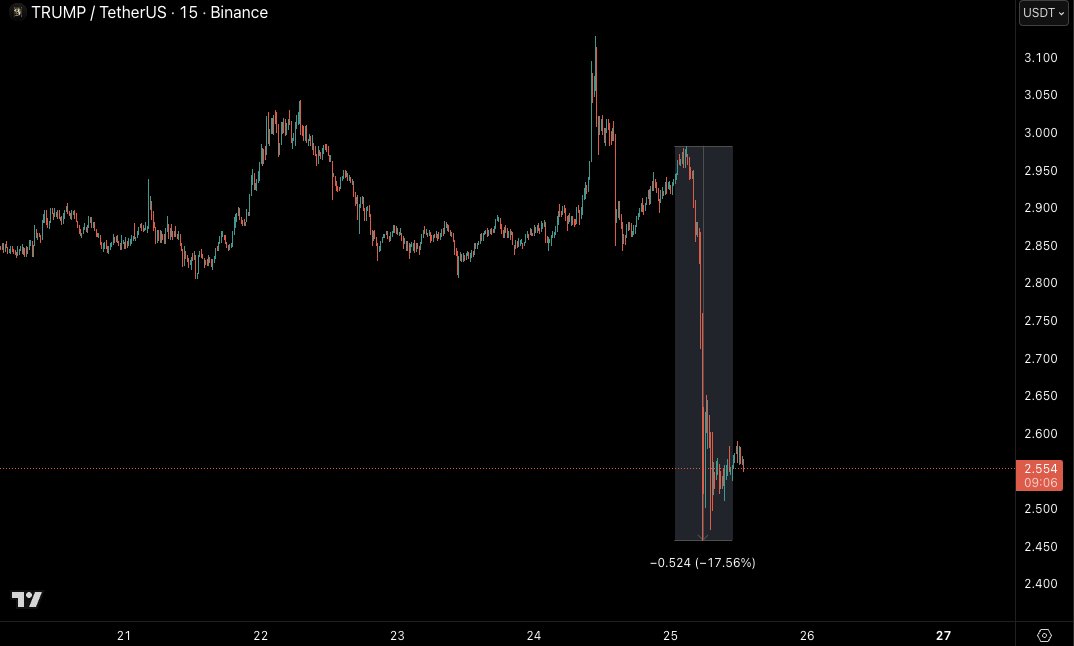
-17% drop in about 3hrs after already being down -96% from ATHs.
$TRUMP
English
@KaspaSilver @Igra_Labs Not covenant++ but zk. Once implemented, bridge to L1 will be permissionless, fast and secure.
English

@Igra_Labs Will this exit always be this slow? Will covenants make this process less trustless at all?
English

Exit to Kaspa L1 (aka iKAS unwrapping) is live.
Anyone can send iKAS on Igra to the KasExitBridge smart contract (explorer.igralabs.com/address/0x00d3…) to receive KAS on L1 at their designated address.
Parameters for the initial rollout:
- Rate limit: 20 withdrawals per 2^16 blocks (~24 hours)
- Minimum: 1000 iKAS (dust would congest the Kaspa-side release pipeline)
- Maximum: 50000 iKAS
- Processing: typically within 72 hours
These conservative limits exist since the bridge is currently secured by federated multi-sig and each outgoing transaction is semi-manually reviewed as part of operational risk controls during the initial rollout. We're optimizing for zero loss of funds over speed.
Process is conducted by a designated operations group, consisting of experienced ecosystem contributors familiar to the Igra team. Processing typically completes within 72 hours and may take longer in exceptional cases.
Transfer of exit bridge contract ownership and control to the Igra DAO has been proposed for DAO voting. Details to follow.
Developer guide: igra-labs.gitbook.io/igralabs-docs/…
Detailed specs: igra-labs.gitbook.io/igralabs-docs/…
English
@eliottmea @Justin_Bons Technically speaking, Solana is still in public mainnet beta. They’ve made solid progress, but the trade-offs they’ve chosen are problematic in many ways. PoH is a dead end (from day one)
English
@Justin_Bons solana is just as bad lmao, @JC_G33K is it still in testnet phase ?
English

Crypto is absurd:
The top 3 chains are nonsense, that is, if we are honest with ourselves:
BTC has no capacity, programmability, & no long-term security or scarcity!
ETH also pivoted to reject utility, only to become a worse version of BTC... All while XRP remains centralized!
English
After review of this I wouldn't use it. Private transfers is simply whenever you send an asset it routes the transfer through changenow to make it more difficult to track.
Basically they are providing a centralized mixer for you. On top of that the wallet you are using is not open source.
When testing Kaspa the minimum you must send is 241.17 $KAS to use the private feature they offer.
Kaspa Silver@KaspaSilver
This looks interesting for $KAS. Will try it out and let you know more details.
English
@OriNewman Why keep the "20". KCC is fine, and perhaps we should find our own naming convention for future improvements?
English

Okay, for now I chose the name KCC20, where KCC stands for Kaspa Contract Convention.
I also made an md book that goes over the contract and the examples in the code
kaspanet.github.io/silverscript/k…
Ori Newman@OriNewman
I wrote a PoC token contract in Silverscript, currently called DOG20 (better name ideas are welcome). It supports token ownership by 3 kinds of entities: 1. Public keys — like any regular Kaspa address. 2. P2SH addresses — which means ownership by a stateless contract, e.g. multisig. 3. Covenant IDs — which means ownership by a stateful contract. The third option is the interesting one, and it's a demonstration of a broader concept (that might be familiar to whoever watched the webinar by @IzioDev and @michaelsuttonil), called inter-covenant-communication (ICC). In this context, it means you can put arbitrary stateful rules around token control. For example: - “after the first 10 spends, wait a year before spending again” - zk-rollups can manage their L1 tokens using a stateful bridge. DOG20 also supports minters that are allowed to mint indefinitely — but that does not mean the supply must be unbounded. Let's say you want to publish a token and allow to issue only 100 new tokens each month. DOG20 doesn't support it natively, but you can achieve that by making the only minting entity a covenant. That covenant will store in its state `nextIssuance`, and will allow spends of 100 tokens only if `time > nextIssuance`, and will set `nextIssuance = nextIssuance + 30 days` each time it's used. I hope to explain about it a bit more in the future, but in the meantime, feel free to look at the examples linked in the next comment.
English
JC รีทวีตแล้ว
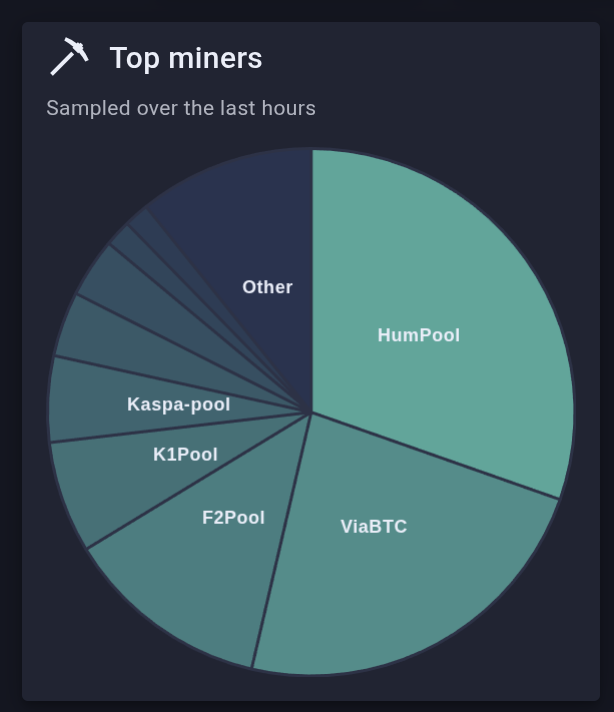
Two pools are making up 53% of the hashrate. If you are in HumPool or ViaBTC consider moving your hash to another pool or start solo mining instead.
Reach out if you need any help with this.
$KAS
English
JC รีทวีตแล้ว
DeBank @DeBankDeFi is one of the best DeFi portfolio trackers.
Please vote to add Igra Mainnet: debank.com/proposal/84430
26 votes already. Takes 30 seconds, requires a DeBank Web3 ID.
English

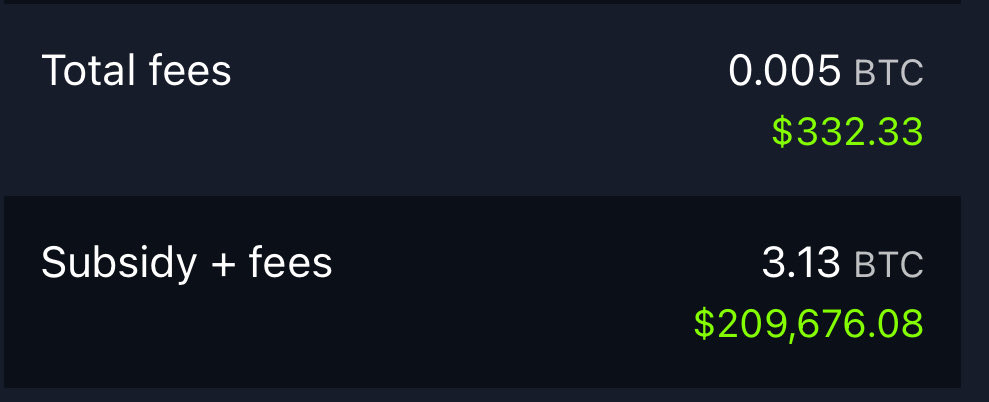
Brother I am begging you to delete this and never shit talk $KAS again without having some basic knowledge about $BTC first. You are referring to the block subsidy as the fees 🤦🏻♂️
Aardvark@TheFnAardvark
@monrad24 @PoW_Odie Right now bitcoin generates approximately $2.7 million dollars a day in fees. That is known as the fee market. Kas generates less than a dollar.
English
JC รีทวีตแล้ว


JC รีทวีตแล้ว

🚨 CRITICAL: Active supply chain attack on axios -- one of npm's most depended-on packages.
The latest axios@1.14.1 now pulls in plain-crypto-js@4.2.1, a package that did not exist before today. This is a live compromise.
This is textbook supply chain installer malware. axios has 100M+ weekly downloads. Every npm install pulling the latest version is potentially compromised right now.
Socket AI analysis confirms this is malware. plain-crypto-js is an obfuscated dropper/loader that:
• Deobfuscates embedded payloads and operational strings at runtime
• Dynamically loads fs, os, and execSync to evade static analysis
• Executes decoded shell commands
• Stages and copies payload files into OS temp and Windows ProgramData directories
• Deletes and renames artifacts post-execution to destroy forensic evidence
If you use axios, pin your version immediately and audit your lockfiles. Do not upgrade.
English
@BitcoinRachy @nvassilo One thing we can all agree on: Bitcoin will always be older than Kaspa 😅
English

@nvassilo Yeah if they came out at the same exact time and had the same adoption/network effect, Kaspa may have something here
English
I finally did some research on Bitcoin vs Kaspa.
Here’s what I found.
Mega thread below 🧵
English
@BitcoinRachy I appreciate your honesty and the time you take to learn about Kaspa. It's always better to have meaningful discussions than pointless arguments, and you did a great job with that thread.
English
JC รีทวีตแล้ว

Okay, it's time for a little update:
I just finished the work on the zero knowledge part of the vprogs framework, which introduces the ability to prove arbitrary computation.
It consists of the following 8 PRs that gradually introduce the necessary features:
1. ZK-framework preparations (github.com/kaspanet/vprog…):
This PR cleans up the scheduler and storage layers, extends the build tooling with workspace-wide dependency checking, adds the ability to publish artifacts for transactions and batches (which will later hold the proofs), renames some core types for clarity, and introduces lifecycle events on the Processor trait that allow a VM to hook into key scheduler events like batch creation, commit, shutdown, and rollback.
2. Core Codec (github.com/kaspanet/vprog…):
This PR introduces a lightweight encoding library for ZK wire formats.
In a zkVM guest, every byte operation contributes to the proof cost, so the codec is designed to reinterpret data in-place rather than copying it.
It includes zero-copy binary decoding (Reader, Bits) and sorted-unique encoding for deterministic key ordering. It is built for no_std so it runs inside zkVM guests.
3. Core SMT (github.com/kaspanet/vprog…):
To prove state transitions, we need cryptographic state commitments. This PR adds a versioned Sparse Merkle Tree that produces a single root hash representing the entire state.
It includes all state-of-the-art optimizations: shortcut leaves at higher tree levels to avoid full-depth paths for sparse regions, multi-proof compression that shares sibling hashes across multiple keys, and compact topology bit-packing to minimize proof size.
It integrates into the existing storage and scheduler layers so that every batch commit updates the authenticated state root, while rollback and pruning maintain tree consistency.
4. ZK ABI (github.com/kaspanet/vprog…):
Defines the wire format for communication between the host and zkVM guest programs, establishing a universal language for proof composition. It specifies how inputs, outputs, and journals are structured for two levels of proving: the transaction processor, which proves individual transaction execution against a set of resources, and the batch processor, which aggregates transaction proofs and proves the resulting state root transition.
Because the ABI is backend-agnostic and no_std compatible, any zkVM backend can directly use it (non-Rust zkVMs would need to reimplement the ABI in their language).
5. ZK Transaction Prover (github.com/kaspanet/vprog…):
Introduces the transaction proving worker, which receives serialized execution contexts via the ABI wire format and submits them to a backend-specific prover on a dedicated thread. The Backend trait abstracts the actual proof generation, so different zkVM backends can be swapped without changing the pipeline.
6. ZK Batch Prover (github.com/kaspanet/vprog…):
Introduces the batch proving worker, which collects the individual transaction proof artifacts, pairs them with an SMT proof covering the batch's resources, and submits the combined input to a backend-specific batch prover. The result is a single proof attesting to the entire batch's state root transition.
Like the transaction prover, the Backend trait abstracts proof generation so different zkVM backends can be swapped without changing the pipeline.
7. ZK VM (github.com/kaspanet/vprog…):
Wires everything together by implementing the scheduler's Processor trait with ZK proving support. The VM hooks into the lifecycle events introduced in PR 1 to feed executed transactions into the transaction prover and batches into the batch prover.
Proving is optional and configurable - it can be disabled entirely, run at the transaction level only, or run the full batch proving pipeline.
8. ZK Backend RISC0 (github.com/kaspanet/vprog…):
Provides the first concrete zkVM backend using risc0. It implements the transaction and batch Backend traits, includes two pre-compiled guest programs (one for transaction processing, one for batch aggregation), and ships with an integration test suite that verifies the full pipeline end-to-end - from transaction execution through batch proof generation to state root verification.
TL;DR:
While the early version of the framework focused on maximizing the parallelizability of execution, this feature focuses on extending this capability to maximizing the parallelizability of proof production.
If you're a builder: this is the first version of the framework that lets you write guest programs with a Solana-like API (resources, instructions, program contexts) and have them proven in a zkVM.
The current milestone uses a single hardcoded guest program - composability across multiple programs and bridging assets in and out of the L1 are part of the upcoming milestones, but if you're eager to start tinkering, the execution and proving pipeline is fully functional and provides a minimal environment to build and test guest logic today.
Once we add user-deployed guests, they will move one logical layer down: the current transaction processor will become a hardcoded-circuit that handles invocation and access delegation to user programs, similar to how SUI handles programmable transactions (including linear type safety at the program boundary).
In practice, this means guest programs will be invoked with a very similar API but scoped to a subset of resources, so the basic programming model won't change. Note that guests currently handle their own access authentication (e.g. signature checks) - the framework will eventually manage this automatically.
If you want to contribute, two areas where community involvement would be especially impactful:
- An Anchor-like DSL for writing guest programs -- the ABI is stable enough to build on, and a good developer experience layer would make this accessible to a much wider audience.
- A second zkVM backend (e.g. SP1) - the Backend traits are designed for this, and a second implementation would prove out the abstraction.
One thing I find particularly interesting in the context of PoW: the block hash provides an unpredictable, unbiasable random input that is revealed after transaction sequencing.
This gives guest programs native access to on-chain randomness without oracles or additional infrastructure - something traditionally hard to achieve in smart contract platforms.
PS: I am also planning to start with the promised regular hangouts but since I will visit my family over easter and want to get a better understanding of the open questions next week (it's good to have some problems to wrestle during that slower time 😅), I decided to start with that once I am back (12th of April).
Generally speaking, is there a day that people would prefer for these hangouts? I guess monday would be bad as there is already another community event (write your preferences in the comments if you have a strong opinion).
English
@Chriscrypto_89 To be fair, there's at least 1 other L2 that gives back to the base layer. I'm talking about Taiko, a based rollup on Ethereum.
English

$ARB launched at $1.2B FDV
$OP launched at $1.5B FDV
$STRK launched at $700M FDV
$IGRA will launch at approx. $60M FDV
Same vision. Same EVM compatibility.
But $IGRA is the ONLY L2 where the base layer actually benefits.
No centralized sequencer. Kaspa miners sequence every transaction. L2 activity flows directly back to L1 security.
$ARB, $OP, $STRK extract from Ethereum.
$IGRA feeds $KAS.
The only based rollup on a $1B proof of work chain.
Do your own research fellas.

English
for those not monitoring the situation, there is some IMO weird shit going on in the ef community (aka the eth arbiters of all that is right).
employees are being forced to make a public pledge or take a severance package and leave.
this feels so antithetical to the entire point of crypto: voluntary cooperation w/out coercion.
tbh why the fk wouldn't someone just make the pledge over losing the bag? it's literally under duress, just a cringe loyalty statement.
oh how eth has lost its way.
Aerugo@aerugoettinea
[X] I affirm the direction set out in the mandate, will help translate it into thoroughly reasoned strategies for my domain, and will maintain an exclusive and energetic focus on the mission-critical tasks necessary for its implementation, from today until my last day at the EF.
English