@ThePeteL Tänään meinasin ajaa spandexin päälle Lidlin reissulla.
Mutta ei niitä perkeleitä juuri silloin tule vastaan tietenkään.
Suomi
Jarno Saksinen
7.6K posts

@JSaksinen
Ei se o niin justiisa. Lakitarkkailija.



@tomiihalainen tänään haagassa





Tämä neropatti vertaa autoilijan kykyä liikenteessä hirviin ja peuroihin… Melko huolestuttavaa, mutta selittää kyllä monta asiaa liikennekulttuurissamme… 🤦🏻♂️

Tämä neropatti vertaa autoilijan kykyä liikenteessä hirviin ja peuroihin… Melko huolestuttavaa, mutta selittää kyllä monta asiaa liikennekulttuurissamme… 🤦🏻♂️


On nämä,iltasanomien toimimittaja sitä mieltä että lätkä natioinalistien laji😀😅😀mikään muu media kuin yle ei olisi keksinyt yhdistää maahanmuuttoa Suomen MM kultaan😀

Yleisradio täräyttää: ”JÄÄKIEKKO ON LIIAN NATIONALISTINEN LAJI JA SIINÄ ON LIIAN VÄHÄN MAAHANMUUTTAJIA” ..joten siksi MM-juhlaakaan ei yleisradion kanavilta näkynyt? Liian ”suomalainen”? No ei yllätä. Ennen vanhaan tällainen olisi maanpetoksellista.


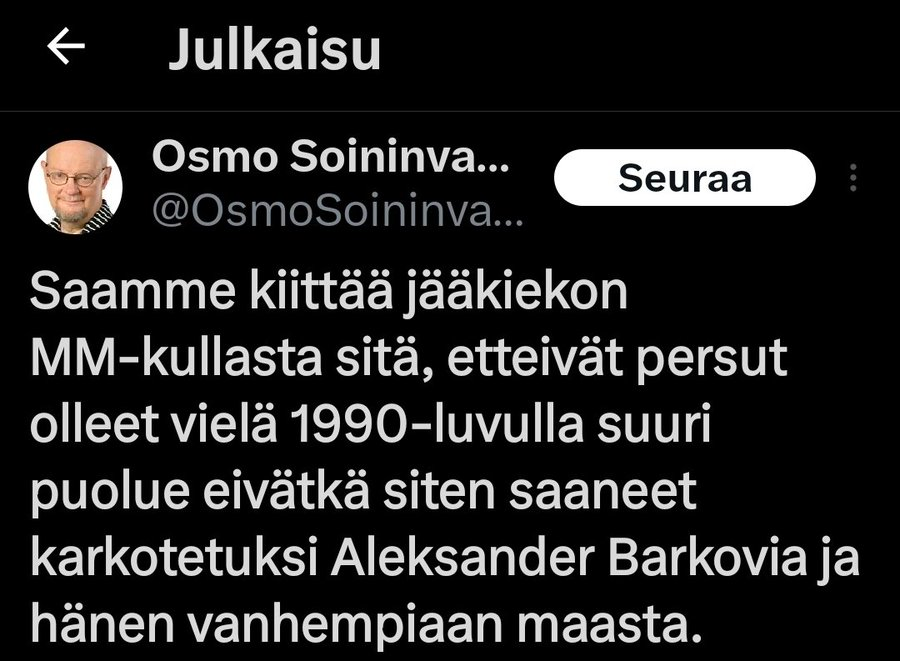






Koska ne rahat tulee? 🤷🏻♂️