J/\ck

621 posts

J/\ck banner
J/\ck

J/\ck

@JackSimison

Venture @Nascent. Former Venture @Coinbase, Ops + Research @Visa. Views my own. NFA

San Francisco เข้าร่วม Nisan 2015
741 กำลังติดตาม1.1K ผู้ติดตาม
J/\ck
J/\ck@JackSimison·
@sidrmsh I have someone, will DM
English
1
0
2
214
Sid⚡️
Sid⚡️@sidrmsh·
Finding it tough to secure a penthouse rental in NYC because your income isn't traditional W-2 or your verifiable assets are mostly crypto/onchain? I may be able to connect you with someone who understands this situation and can help. Feel free to DM. (Serious inquiries only.)
Sid⚡️ tweet media
English
2
0
23
3.2K
J/\ck รีทวีตแล้ว
Ethereum House
Ethereum House@ethereumhouseSF·
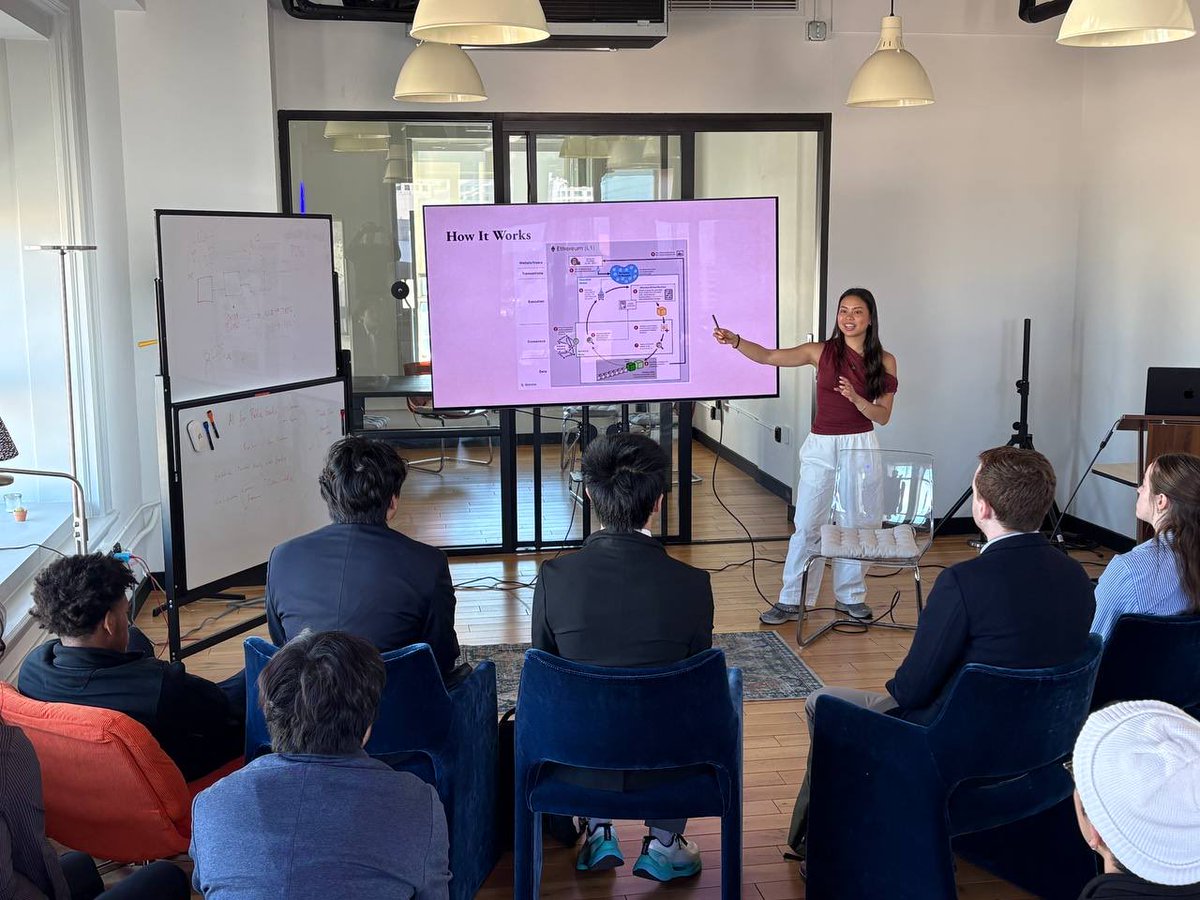
This morning the Ethereum House welcomed 12 University of Chicago students from their Digital Assets Program for a Frontier Tower tour and Q&A! @sodofi_ broke down how blockchains work and what sets Ethereum apart, while @jacksimison shared insights on the VC landscape!
Ethereum House tweet mediaEthereum House tweet mediaEthereum House tweet media
English
1
6
41
5.3K
J/\ck
J/\ck@JackSimison·
@fatfingere No they don’t. Stablecoins, thanks to near instant settlement, are seller first giving power back to the merchants. However, consumers have all the power today and that’s unlikely to change
English
1
0
1
15
Shalin
Shalin@fatfingere·
@JackSimison what people don't realize is that the merchants pay 5% and nobody wants to pay that
English
1
0
0
13
J/\ck
J/\ck@JackSimison·
Happy to support the @FWBtweets World Build hackathon in its third iteration with @world_chain_, and @worldnetwork!
Friends With Benefits@FWBtweets

What would you build with 38M+ users on day one? @worldbuildlabs is back for its third edition. We’re backing ambitious founders ready to build Apps with @worldcoin – the real human network. This is your chance to unlock: ✅ Instant distribution to 38M+ users across 160 countries ✅ Up to $200K in grant funding from World Foundation ✅ Fully funded trips to Seoul and San Francisco ✅ 50+ mentor hours from global founders Hack online ➡️Build in Seoul ➡️Fly to San Francisco for Demo Day. Apply now to join our Hackathon, the first step into World Build 3 ↓ worldbuildlabs.com

English
2
2
10
2.2K
The Learning Pill 💊
The Learning Pill 💊@thelearningpill·
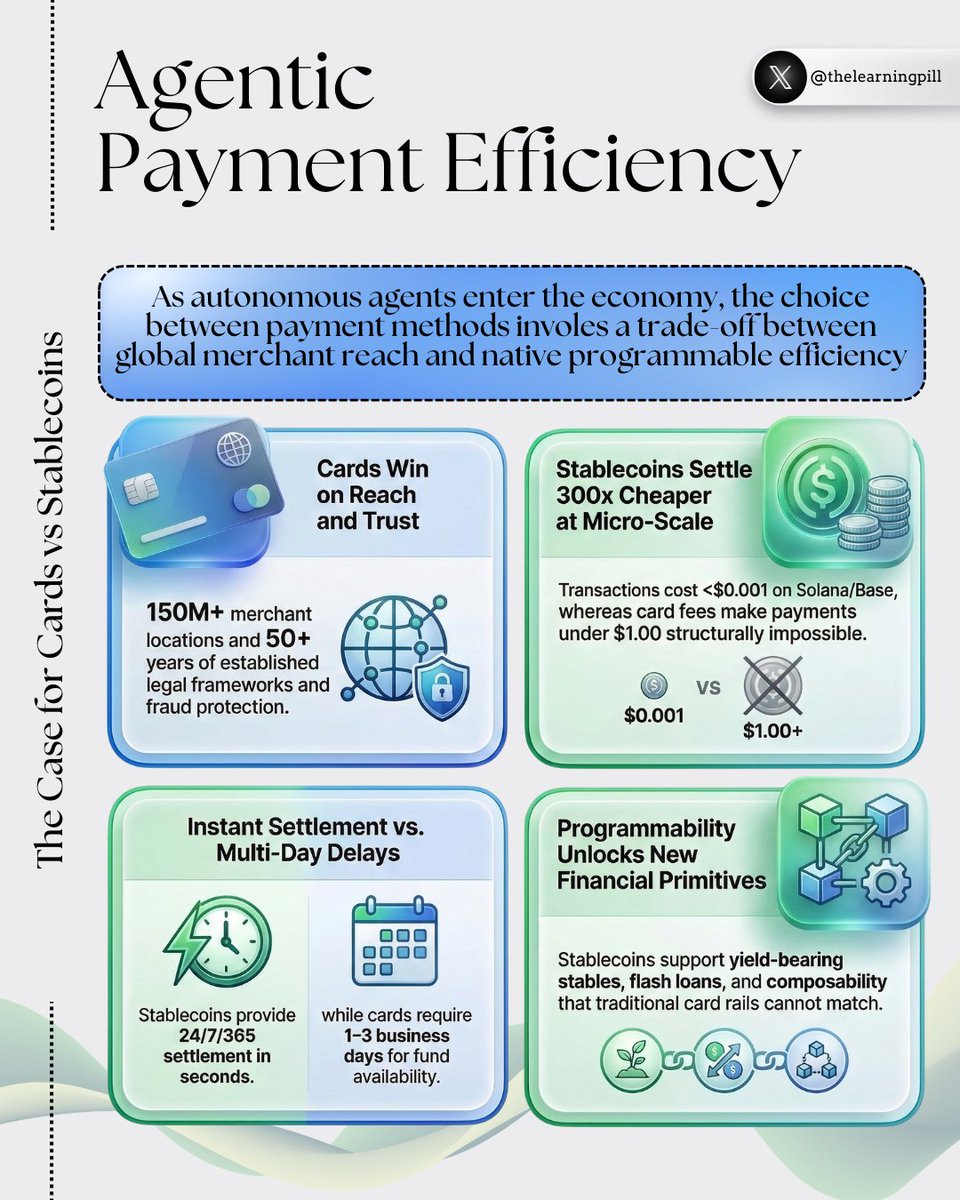
AI Agents need to spend money. But what’s the best way for a piece of code to transact? A few salient points to consider 👇 ---------- ◆ Where cards still dominate The traditional card network is incredibly hard to beat when it comes to everyday human tasks and established trust. > Massive acceptance → Cards boast 150M+ global merchant endpoints, vastly outpacing the ~5M crypto wallets currently used for payments. > Buyer protection & credit → The traditional system offers $0 fraud liability and access to a $1.33T unsecured revolving credit market. With stablecoins, transactions are irreversible ("final means final") and lending is heavily overcollateralized. > Consumer perks → Cashback, miles, and loyalty points drive our spending habits, funded by interchange fees. But when you hand the keys over to an autonomous AI agent executing thousands of automated micro-tasks, the legacy system starts to choke. ◆ Where stablecoins win Stablecoins are natively built for code, making them the ultimate low-friction rail for agentic finance. > Frictionless onboarding → An AI agent can self-provision a crypto wallet in seconds without needing a legal entity. Try doing that with a traditional bank. > Micropayment economics → Stablecoin transactions (like on @solana or @base ) cost <$0.001. Cards structurally cannot compete here due to their baseline $0.30 + 2.9% transaction fees. > Speed & finality → Stablecoins offer 24/7 continuous settlement with sub-second finality, completely bypassing the T+1 to T+3 business days required by traditional cards. > Programmability → Yield (5-15%), flash loans, and auto-compounding are built directly into the financial primitives. Cards, by contrast, lack composability and simply move money between static accounts. ---------- ◆ What's the final the verdict? The right rail completely depends on the agent's job description. Buying a flight, booking a hotel, or ordering food? → Cards are unmatched Executing high-speed, cross-border micropayments and composable finance tasks? → Stablecoins are the only viable option Are we forcing AI agents to adapt to our legacy world, or are we ready to embrace the rails actually built for them?
The Learning Pill 💊 tweet media
J/\ck@JackSimison

x.com/i/article/2031…

English
12
2
28
1.4K
J/\ck รีทวีตแล้ว
Sumeet (chaos time)
Sumeet (chaos time)@_sumeetc·
Jack’s framing is right: this isn’t cards vs crypto tribalism, it’s about matching the rail to the task cards make sense when agents act as proxies for humans in the existing economy stablecoins make sense when agents engage in machine-native commerce humans wouldn’t do themselves: micropayments, metered APIs, elastic compute, long-tail cross-border services where the stack gets even more interesting is above the rail: who gave the agent the right to spend, under what bounds, how that spend is audited, and how future spending authority evolves based on performance that’s the direction we’ve been thinking about in our Credit Studio: rails matter but agent-native policy, accountability, and reputation are the real primitives of the agent economy x.com/_sumeetc/statu…
J/\ck@JackSimison

x.com/i/article/2031…

English
1
2
12
994
J/\ck
J/\ck@JackSimison·
So your layer here would be more about ensuring agent actions line up with human or agent intents? I 100% agree this has no current solution. Hallucination risk is tough. Making systems as deterministic as possible would be good here or using something like @phylaxsystems credible layer (for onchain components) and then existing policy engines for cards. @Mastercard’s Agent Pay is the beginnings of what you’re getting at here.
English
1
0
0
43
Daniel
Daniel@DanielAnts·
@JackSimison @turnkeyhq @privy @safe Agreed those handle wallet-level guardrails well. But they’re scoped to one wallet on one rail. When an agent is transacting across multiple issuers and settling across cards and stablecoins simultaneously, who enforces policy across all of it? That’s the missing layer.
English
1
0
0
25
Optimist Prime
Optimist Prime@jinglejamOP·
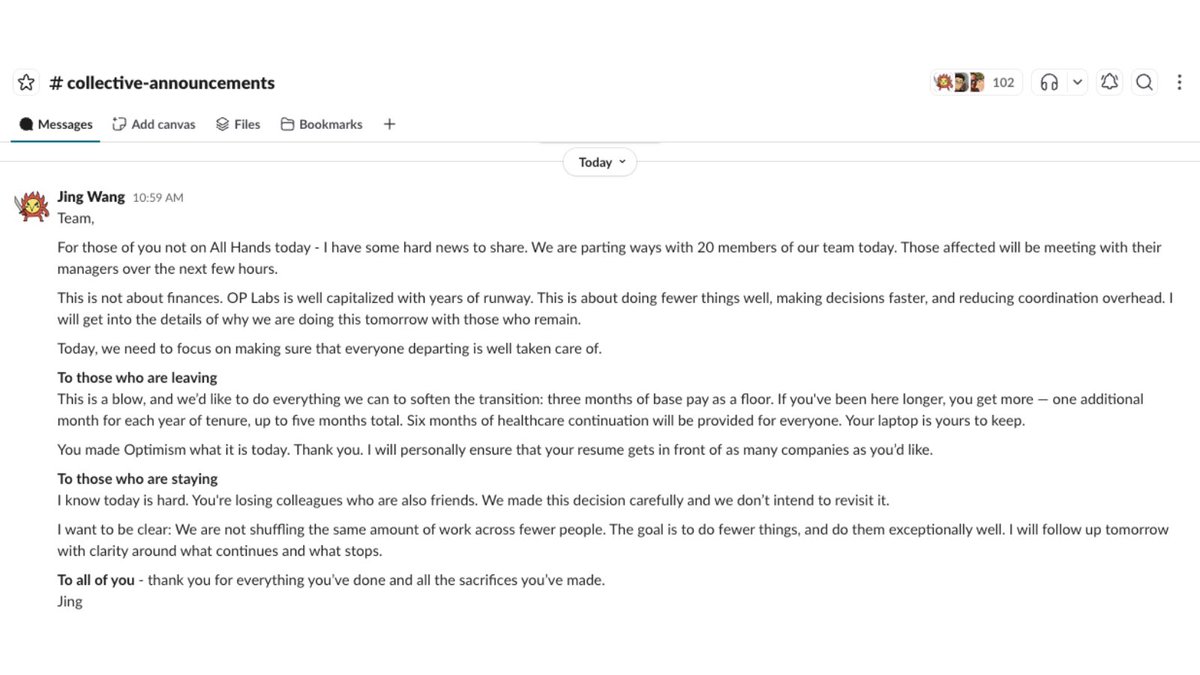
Today we shared difficult news with the OP Labs team. Our priority was to communicate with the impacted people & give the team time to process the news before sharing publicly. This decision reflects a narrowing of our focus, not our runway. I’m sharing the note I sent to the team earlier today, and I strongly encourage teams across the ecosystem to reach out to the people leaving OP Labs because they are talented engineers, operators, and builders who helped build Optimism into what it is today. If you are genuinely hiring, feel free to shoot me a DM with your open roles and I will make introductions (with dual consent).
Optimist Prime tweet media
English
83
35
682
216.7K
J/\ck
J/\ck@JackSimison·
@btc_trist 2. Agent policy engines for both cards and onchain commerce. For example with cards, if they're used to frequently the issuing bank or networks risk engine / policies will flag the card for potential fraud
English
1
0
1
12
J/\ck
J/\ck@JackSimison·
Preciate the time and the Qs, 1. Yes, absolutely think there is a world where agent credit exists and is used daily to verify past agentic behaviors and evaluating them via bespoke success metrics. This way specialized agents can exist and repeatable successful outcomes are rewarded
English
1
0
1
25
J/\ck
J/\ck@JackSimison·
A policy layer led by @turnkeyhq, @privy, and @safe lets developers encode dynamic allowlists, spend caps, and merchant-level routing rules directly into the wallet. These guardrails, similar to the card stack’s, ensure that an agent’s authority is bounded by infrastructure rather than the reliability of the LLM/skill/orchestrator itself.
English
1
0
0
60
Daniel
Daniel@DanielAnts·
@JackSimison Good framework. One dimension missing from both columns, who enforces the agent’s mandate before it reaches either rail? Agent onboarding is solved. Agent authorisation isn’t.
English
1
0
0
56
Nitya Sharma | Simpl
Nitya Sharma | Simpl@nsharma0813·
One of the reasons micro payments never took off with us humans is because of the "mental transaction cost". To have to make the deicsion to spend $1 turns out is more expensive than the $1 iteself. Agents don't have that cost. That a agentive native and consumer centric trust infra would be the catalyst here. Because in the end there is a man behind the machine and for the man trust is deeply psychological.
English
1
0
1
44
Dar Blockchain
Dar Blockchain@DarBlockchain·
We believe the most realistic architecture is a hybrid one. Cards for human-proxy tasks like travel, SaaS subscriptions, or retail purchases, and stablecoins for machine-native transactions like API calls, compute, and data feeds. Means, different rails for different economic behaviors.
English
1
0
1
50
J/\ck
J/\ck@JackSimison·
@nlevine19 Noah again with the facts. Bringing data to the hype!
English
0
0
3
173
J/\ck
J/\ck@JackSimison·
@sholana0421 Great summary! Thank you! 🇯🇵
English
0
0
1
21
J/\ck รีทวีตแล้ว
Shohei Maτsumoτo
Shohei Maτsumoτo@sholana0421·
「AIエージェントはクレジットカードに勝てない」は嘘である。 元Visaで現在Web3 VCにいるJack Simison氏の考察記事が非常に解像度が高いです。結論から言うと、両者は競合するのではなく「タスクによる使い分け(ハイブリッド)」に落ち着くというものです。 まず、エージェントが「人間の代理」として航空券やSaaSの支払いをする場合、圧倒的にクレジットカードが勝ちます。なぜなら既存経済の1億5千万店舗で使える受容性があり、何より「チャージバック(返金保証)」という強力な買い手保護があるからです。 一方で、人間が決してやらないような取引、例えば「0.003ドルのAPI呼び出しを1時間に1,000回行う」ようなマイクロペイメントや、「品質がプログラムでミリ秒単位で検証可能なデジタル商材」の取引においては、クレカの固定手数料(30セント+数%)は完全に経済的摩擦になります。ここで輝くのがステーブルコイン(x402プロトコル等)です。 つまり、人間の既存経済にタッチする部分はカードが担い、機械間(M2M)の超高速・超少額・即時決済の領域はステーブルコインが担う。Stripeがx402をサポートし始めたのも、この「適材適所のハイブリッド」を見据えてのことでしょう。Web3が既存金融を破壊するのではなく、既存インフラが届かない空白地帯を埋めていく、という極めて現実的な未来予想図ですね。
J/\ck@JackSimison

x.com/i/article/2031…

日本語
2
6
65
15.9K