Mythic Picnic@MythicPicnic
Stargazing is for Daydreamers Too
A collection of writing by Shannon Kenny / @ShannonKenny031
#MythicPicnicTweetStory
_______
(We are still alive)
Originally published in The Journal of Expressive Writing
_
In the waiting area of the public hospital where my husband is receiving treatment
I shut my eyes and listen
as the words of others –
English, isiZulu, isiXhosa, Shona, Afrikaans, French, Sesotho –
first ricochet off walls and ceilings
then gather on the floor
like dust to rise and swirl about the room as
a whirlwind of consonants and vowels
syllables, sibilance
stretched and
clipped
are woven by accent, timbre, pitch, tone, rhythm
into worlds, meaning
curled, twisted
misheard, misinterpreted, modified
repeated, repurposed
punctuated by pause
and affect
our very core as they are moulded
within a few short breaths,
to provide comfort
and the assurance
that we are still alive
~ end ~
_______
Stargazing is for Daydreamers, too
Originally published in Kalahari Review / @KalahariReview
_
As she stood outside, a break in the clouds offered Mina’s swollen eyes a glimpse of the stars. Orion’s Belt, perfectly dotted onto black space. The Southern Cross, a martyrless crucifix. Saturn and Jupiter, luminous, impotent gods who only ever looked on in silence as the blows bruised her ribs and encouraged her signature smokey-eye camouflage.
The cast-iron skillet became a tennis-racquet in her hands as she swayed left to right, spinning, gripping the handle and murmuring: “Hard against back of head. Aim above ponytail and serve!”
Familiar footsteps startled her and she rushed inside to prepare a fried egg and steak supper.
Mina slid the food onto his plate. Hunched over as usual, he scoffed his meal, slick ponytail neatly fixed at the nape of his neck.
The greasy skillet glistened and Mina smiled, imagining how she’d answer when they took her for questioning.
She was her own oracle – and knew well that she would never be immortalised and placed amongst the gods as Orion had for his misdeeds.
~ end ~
_______
Addressing her inner voices
Originally published in Janus Literary / @JanusLiterary
_
I have a thick skin
but the patriots and bigots
are wearing it thin.
The blood of the world is all over my phone
and laptop
and my kid’s waking up.
Be nice, assholes
I’ve got a day to get through.
~ end ~
_______
To Lenora Gobert: for Rachel, nine-years-old, of the Buena Vista plantation, Louisiana
Originally published in Pepper Coast Lit / @LPeppercoast
_
Oh Rachel, just nine-years-old
I wept when I read, when I was told
this fragment of your life’s story:
that at $250 Winchester valued you as collateral for his mortgage
that you died before you were 10, in 1832
that logic tells us you are buried at Buena Vista
Would you have lingered over the eponymous view, Rachel-nine-years-old
what did you see as you fetched and carried
as you weeded and sowed, as you hurried to and fro
till your little body gave up its soul?
For me and my Little One, just nine-years-old
Our liberty affords us the luxury of boredom
fretting over the mundane, procrastination, irritation
Did you wince as your hair was parted to be brushed?
Did you have a favorite song?
Like Winchester’s progeny I enjoy the freedom of the sunshine
without hard labor, without the threat of punishment for
dawdling my way through an errand
I can escape the scorching sun at will
and stare, unhurried, unhindered at the view before me
and dream
Today, Rachel just nine-years-old
Winchester’s ink-on-paper
Record of your death and
the very body that gave you up and nourished the earth lies here
to resist
those who would further ravage the land you toiled
and sicken those who continue to live long after you
Today there is a crowd of witnesses who
in your name will stand firm
against the irony of the promise
of Formosa-the-beautiful that is anything but
Accept my tears as libation, as honour
as they fall to the ground here in Africa
that their salt and water
would feed and nourish
the justice-spark in my own Little One, just nine-years-old
for she is loved and cherished (were you?)
For little people are meant for freedom
and it is for freedom that we are set free
-
This poem was written in response to a news article by Geoff Dembicki in The Guardian about how the very short life - and subsequent death - of the enslaved Rachel on the Buena Vista plantation is helping to build a case for environmental activists in their campaign against a fossil fuel company’s intention to establish a petrochemical plant. Lenora Gobert is a historian who works with the Louisiana Bucket Brigade.
~ end ~
_______
Deadlines and Cuddles
Originally published in 100 Words of Solitude, Rare Swan Press / @100WordSolitude @rare_swan_press
_
“Oh, Mum, is this work really that important? It’s like we’re here but we’re not together.”
She crawls into my lap and I place one arm around her while the other is still wearily poised to continue with my pressing assignment, elbow on the desk, wrist raised, fingertips tapping the keyboard.
“This isn’t how it’s supposed to be,” she opines.
“If I get this work done, I get paid,” I say.
“But money isn’t more important than love, Mum.”
I agree, remove my hand from the keyboard and snuggle in close, taking in the fragrance of her freshly washed hair.
~ end ~
_______
Coming home
Originally published in Ake Review
_
Here is home
where the hands extended greet
meet
where the arms outstretched embrace
shelter
Here is home
where my head and my heart though
not of this land
not of this place
are welcome
find comfort
rest
solace
~ end ~
_______
Remnants of Night’s Tears
Originally published in Rainbow Punch (Arkbound Press; editor: Dr Lauren Hayhurst)
@LDBabyBabble @arkbounduk
_
Round midnight the sky drew a veil of cloud across the moon and stars, blocking all light from our distant suns.
And the sky mourned like only it could.
In an instant, a flash of lightning scarred the heavens and a crash of thunder echoed the cry of a billion bereft hearts.
Near and far, in homes and offices, hospitals and refugee camps, villages and cities around the world, hearts were waiting and bending and breaking.
By morning the sodden earth could not contain all that the sky had poured out, and the remnant of the night’s tears covered the ground in little pools reflecting clear blue and birds on the wing in silhouette.
On the horizon a few clouds clung to the sky while an ocean breeze wafted over our city.
Wishful thinking (or hopeful wonder) lifted our eyes and spirits as the sky-prism drew its colour-arch and reminded us - of a time before we were locked down and locked in; before we had to assure a loved one that the bee-keeper zombie at their bedside was one of the good guys in the story; before we were afraid of what we could not see; before the eyes became our only window to another’s soul - that hearts bend and break and mend.
~ end ~
_______
Petrichor
Originally published in Pepper Coast Lit / @LPeppercoast
_
slips in and out
of anger and sleep, anger and sleep
Rain clouds gather
as we wail and weep, wail and weep
over a nation
Somewhere over the rainbow
a nation is click-click clicking songs
of hope deferred, of loss of hope
of pride, of place
of station, of face
click-click clicking because
Qongqothwane
is hard for some to say because
sometimes it’s hardest to say the words
you really mean, to say what you really want, what you really feel
so we click tongues and pens and keyboards and heels
because there’s no place like home
there’s no place like home
there’s no place like where the heartache is
because we have had enough
of drought and desperation
and dirges and cold blood
and the smell of fear and smoke and fire
because we want to hear the knock-knock knocking
of Qongqothwane,
because we want to click our fingers
as we sway our hips to wedding songs
and kick up our heels on dance-floors
and on dirt roads and follow Qongqothwane
bold, up the hill, to survey what is ours
because we want to hear the knock-knock knocking
of Qongqothwane
as it strikes the earth with its belly,
knock-knock knocking as it points the way home,
knock-knock knocking as it spells
the promise
of the softening of parched clay
the promise
of the fragrance of
heaven touching earth
~ end ~
_______
Pine: I cannot speak for all of us
Originally published in Rejection Letters / @rejectionlit
_
I love to walk in the pine forest where I live because I find its alien stillness comforting, protective, like a warm hug from a loved one when that is just what you need. No words, just an embrace that at once draws you in and confines you and gives you the space to wrestle with your thoughts and unravel a tangle of emotions, unhindered, without judgment.
Pine trees are trespassers, Category-2 invasive weeds, and alien to our land. My botanist neighbour never tires of reminding me.
The pines were brought here because they grew fast and straight and were easy to harvest, and therefore ideal for timber. After the last of the slow growing indigenous forests had been felled to the point of extinction - their precious hardwoods exported around the globe - the rare and precious fynbos, too, was summarily obliterated from the landscape to make way for the pine plantations that sprang up to feed the commercial logging industry.
I understand and appreciate my neighbour’s frustration at the slow pace at which our indigenous plants are being reintroduced to areas where they should be thriving, and his dismay that his proposal to rather consider paper production from cannabis plants – they’re indigenous, require little to no tending and need no pesticides - has been ridiculed or ignored by industry moguls.
It’s not the trees’ fault, though. And besides, the pines are being kept in check these days, the forest regularly cut back at the mere hint of creep beyond its now defined border.
I am gifted with a silent sanctuary. I love how my feet are cushioned, the sound of my footsteps muffled by the myriad needles discarded by their former hosts.
The leaf-litter, according to my neighbour, is precisely the major problem. The pines seem to have evolved this protective mechanism where their leaf litter changes the pH of the surrounding soil and poisons any plants that attempt to grow there. The needles I so love have created a green wasteland that cannot meaningfully sustain any other plant and therefore, animal life. No other plants other than the odd, badass fern, really. No small mammals, though someone claims to have spotted a solitary mouse. And birds don’t even roost in those trees – except for a pair of pigeons and black sparrowhawks, but they could nest on a bed of nails if they had to. Nothing else really makes its home in the pine forest. Nothing else can really grow where the pine trees grow.
So when I go there, I never feel as though I’m disturbing anyone, intruding on anything, invading. No delicate biological balance is going to be disrupted because of my presence. I am not to blame, there.
It’s just me, and the trees. Even the shhhhhh of the wind blowing through their needles is the kind of ‘there there it’s okay now-shhhhh’ rather than the ‘pull yourself together now-shhhhh.’
And so it is there, when I am overwhelmed by my own discomfort that I go to receive the comfort that I crave, that I need. And I receive it without judging the provider.
~ end ~
_______
No Words
Originally published in The Bosphorus Review of Books / @BosphorusReview
_
“Agh shame, my darling. So sore your face looks. Come close so Auntie can see,” beckoned the kindly old lady at the spice shop, squinting as she perched her glasses on her nose for a better view.
She was referring to the bruise I sported round my right eye, courtesy of an apartment-moving accident that involved a flight of stairs and my face connecting with a desk drawer.
“It’s nothing, Auntie,” I giggled, and proceeded to give her what I thought was a rather funny account of the event. “I was helping Judy, here, to move house and we were carrying her desk up the stairs. She was at the top, I was at the bottom and the drawer was facing me. And it wasn’t taped down and the next thing I knew, it came flying out at me and… “
Auntie interrupted, “Shhh, it’s okay my darling. You already put ice? You can tell me what-what. Auntie knows.”
Judy rolled her eyes and darted off to the back of the store to stock up on supplies for her new kitchen, abandoning me to my inquisitor.
Before I could ask Auntie what she meant, she continued, “That fella of yours, he’s so nice. Same like my husband. But you know, men. Sometimes we must take it a long time. Sometimes, only a little bit. Me, I’m lucky. He don’t drink, and so only once or twice he let go his frustrations. But I’m strong and he love me. But we all go through it, darling.”
She paused then shouted something in Tamil to her husband over the store intercom.
I was aghast when it dawned on me what she was inferring; that she would so easily assume my injury had been violently inflicted; that to her mind, I was meant to endure and accept that violence from the very person I professed to love and who professed to love me. And that it was as normal and commonplace as grocery shopping for all women, from even the nicest of men.
“No, really, Auntie. It was a drawer that hit my face, Judy will tell you. My boyfriend’s been in Joburg for three days. So, he couldn’t have done it, anyway.”
She looked at me quizzically, deciding whether to believe my story. Her eyes started to shimmer. From under the sleeve of the beige cardigan that didn’t quite match or successfully dull her fuschia and green sari, she retrieved a tissue and dabbed the tears from her kohl-lined eyes, careful not to smudge her make-up. “Your mummy never told you?” she asked as she tucked the tissue back under her sleeve.
I felt incredibly awkward; the kind of awkward you feel when you can’t unsee something. The kind of awkward you feel when you’ve been let in on a secret you hadn’t even asked to be let in on, but you get let in on it anyway and it changes how you view people and respond to them, forever. Except, this wasn’t a secret.
To Auntie, she was assuming some maternal duty - the impartation of vital knowledge - that my own mother had clearly reneged on. She had that look in her eyes that seemed to say: “Has your mother taught you nothing? Do you even know how babies are made and that you should be careful to wash bloodstained underwear in cold water?”
I’d only come to the shop to fetch my weekly order of Auntie’s chevda, moorkhoo and puri patha, and here she was messing with how I saw her, how I saw Uncle, how I saw the world.
It was not that I didn’t know that domestic violence existed, or that some people endured it often unbeknownst to others, sometimes for their whole lives. What unsettled me most was Auntie’s acceptance of it as her - and all of womanhood’s - lot in life. And it flew in the face of all that I’d been taught and what I believed to be straightforward and true: This violation of someone else’s body - their person - was wrong, always, regardless of how sober or drunk the perpetrator; regardless of how seldom or often it happened; and that under no circumstances should it be accepted or acceptable. And that over and above all, victims and perps needed help and that it was up to society – you and I - to be part of that help through education and support.
And there I, society, stood with the spotlight fixed on me for all the wrong reasons and no words to console, or encourage or educate because Auntie wasn’t asking for any of those things. I was the one being pitied. Me, when she was the one who’d been dealt the injustice goodness knows how many times! When she was the one who’d accepted that being brutalised was something you endured and accepted readily! And how many more like her were there? How many old women who’d accepted their lot; how many older women by their words and actions were teaching younger women the same? But I was trapped in the ramblings of my own mind, of the armchair debates about ‘the patriarchy’ from the vantage point afforded me by my privileged, insular life, comfortable home, progressive parents and social circle.
My 20 odd years on earth and a liberal education had not prepared me for this, the powerlessness to even say the right thing.
Auntie’s husband appeared suddenly at the counter, smiling, holding a package with my name on it. “Auntie told me to make up special package for you today. Here is your chevda, moorkhoo and puri patha. Oh, and some burfee. No charge. Auntie wanted to keep it a surprise for you but then I said what if poor child thinks it’s a mistake, Mummy.”
“Thanks Uncle,” I muttered as I took the package and stared at him while he looked at me quizzically. Then he turned to leave. My eyes fell to my hand holding the parcel with my fingers like it was a dirty rag. I blinked as my eyes tingled.
Judy finally made an appearance and paid for her shopping.
Uncle suddenly stopped, looked back at me, nodded, then shuffled on to the back of the store in his usual taciturn way.
Auntie smiled. “See you next week, darling. I know you don’t normally wear make-up, but you an actress, you must put concealer, right? So well they cater for dark complexion like ours these days, not like when I was your age.”
~ end ~
_______
Notes on War
Originally published in The Red Fern Review, May 2022
_
Wars are fought on sunny days
while starlings chirp and swirl
and babies are born
and couples fall
in and out
of love
Wars are fought in the pouring rain while spiders cling to silken thread and earthworms burrow
and memories flood
the mind
Wars are fought in the dead of night while distant neutron stars collide and precious gold
is flung across
our universe
Wars are fought when the sky is blue
and the surf is up
and conditions
are perfect
~ end ~
_______
Bio:
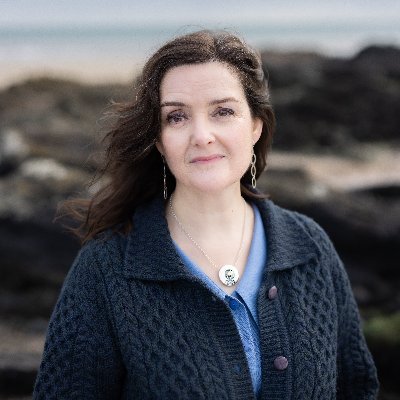
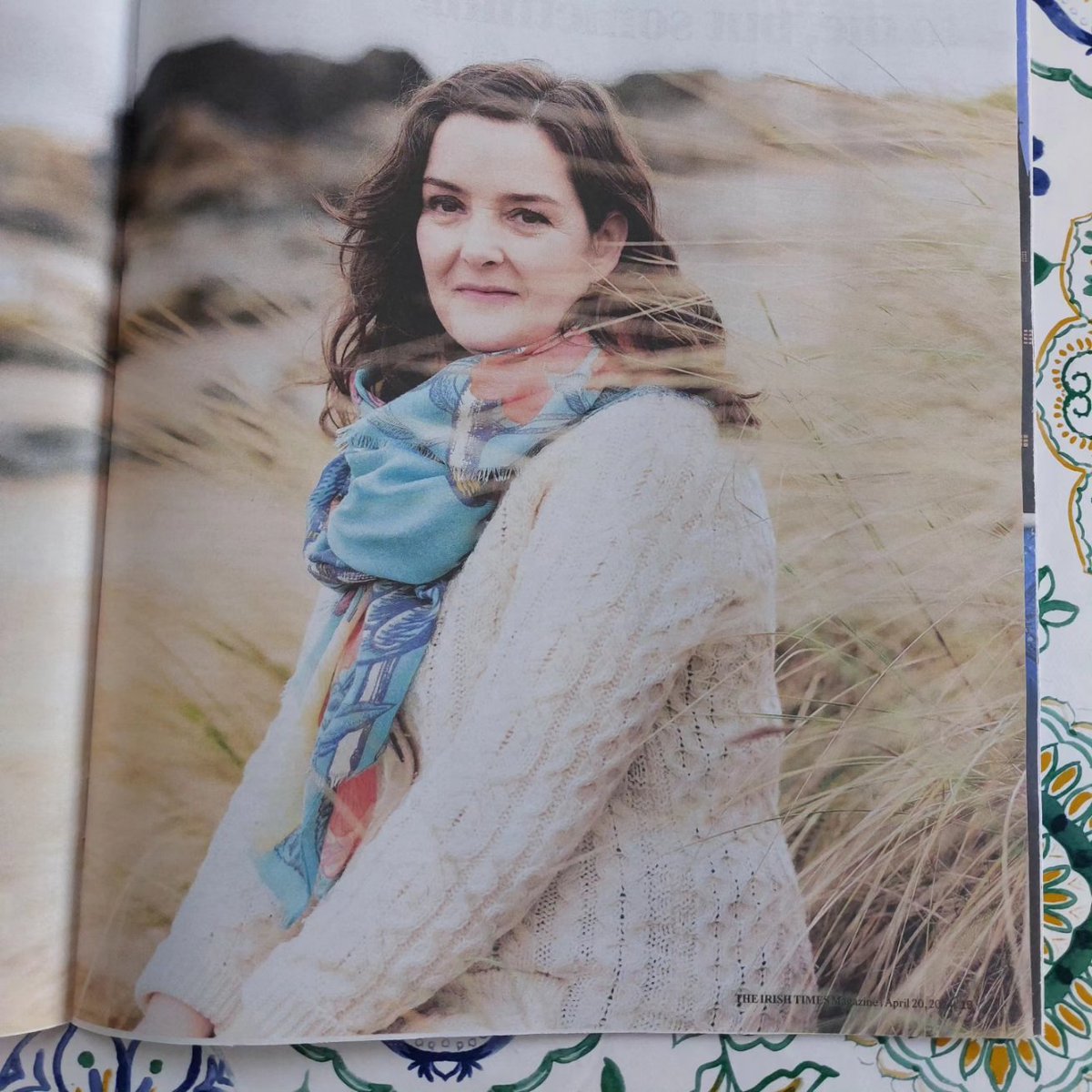
Shannon writes flash, short stories and poetry, some of which have found their way into print and online anthologies and lit mags. She is an actor and theatre-maker who sometimes moonlights as a jazz singer. Shannon once sat next to a Booker Prize-winning author at a coffee bar and couldn’t manage more than “could you please pass me the newspaper when you’re done.” She lives in Durban, South Africa with her family. They laugh a lot.