Jon Gale
15K posts

Jon Gale
@JonGale4
Ex ship & yacht builder. Pirate, cider maker, parent, husband, grumpa, morris dancer, Lab owner. Bowel cancer survivor, Fellow of The English Breakfast Society.
Hampshire เข้าร่วม Eylül 2013
468 กำลังติดตาม579 ผู้ติดตาม
Jon Gale รีทวีตแล้ว

Labour Loves the Countryside. It Just Hates the People Who Run It.
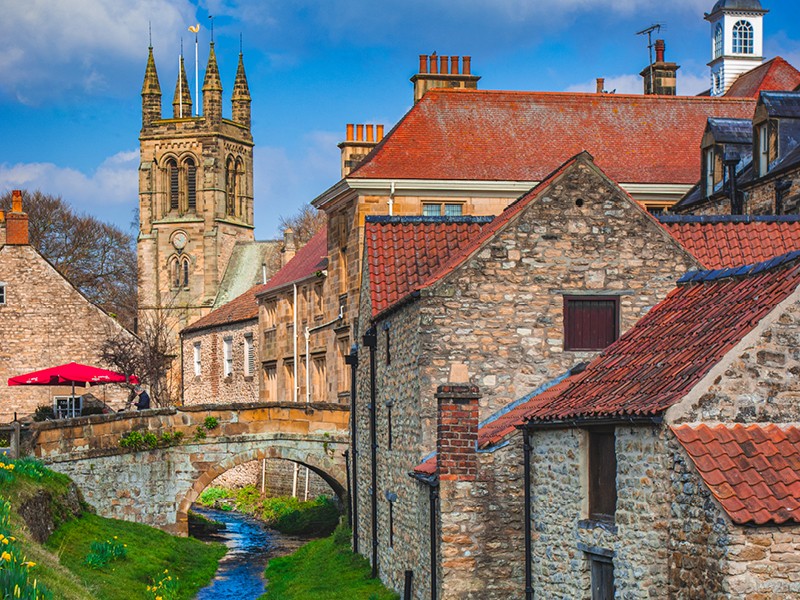
A woman walks into a tailor's shop in Helmsley, North Yorkshire. She loves the heather hills, she says. The wooded dales. The purple moorland stretching to the horizon. What she cannot stand is the shooting that takes place on the Glorious Twelfth.
Jeremy Shaw, the tailor, has heard this before. He considers whether to explain that the heather she travelled three hours to admire exists because of the grouse moor she despises. The gamekeepers who manage the land, suppress the bracken, and keep the moorland in the condition that makes it worth visiting. The cake, in other words, was baked by the baker she came to castigate. What is worrying is that the government shares her confusion.
On March 18, Labour published its Land Use Framework. Half a million acres earmarked for solar panels. Nine percent of farmland committed to rewilding. And buried on page 45, a proposal to license game bird shooting, potentially restricting pheasant and partridge releases onto estates. The trail hunting ban came first. Licensing comes next. Each measure arrives with its own rationale. Together they form a programme.
Licensing does not prohibit. Bureaucracy does not ban. Smaller shoots simply cannot absorb compliance costs, fold quietly, and nobody in Whitehall answers for the consequence. A Natural England case near Helmsley shows the method. A longstanding partridge shoot was barred from releasing birds until after the season had already started. Shoot days cancelled. Revenue gone. Natural England's hands formally clean.
Helmsley bucks every trend in British retail. Four pubs in the town square. A Michelin-starred inn nearby. A tailor forty years in business in what a mentor once called a dying trade. Seventy-five percent of Shaw's revenue is shooting-related. The Pheasant hotel runs at sixty percent shooting occupancy through winter. The deli sells local cheese to Norwegian and German sportsmen. Shooting contributes £3.3 billion annually to the UK economy and supports nearly 147,000 jobs. Pull the shooting thread and the weave comes apart.
One Helmsley pub changed hands a few years ago. The new owners decided they wanted nothing to do with shoot trade. They lost heavily, then went back to the estates cap in hand. The market delivered the verdict that policy is not yet ready to impose openly. Licensing achieves the same result without anyone having to take responsibility.
The conservation argument collapses under scrutiny. Grouse moor owners have restored 217,000 acres of upland heath in the past 25 years. The almost-extinct curlew is four times more likely to fledge on a managed grouse moor than on unmanaged moorland. The landscape that Whitehall has identified as the problem is the reason the landscape exists in the form they claim to value.
When asked what economic trade-offs it had actually modelled, the government was vague. Officials said they recognised shooting's cultural importance and would work with industry toward a sustainable relationship. Starmer has been invited to visit Helmsley and see how the economy functions. He has not replied.
He should go. He should meet the gamekeeper loading double guns through winter to keep the household solvent. The beaters earning seventy pounds a day. The tailor measuring 24 keepers for tweed suits stitched with Essex lining and Yorkshire zips.
What rural Britain is being offered instead is a licensing regime that will first eliminate smaller shoots, then larger ones, then the hotels and tailors and pubs, until the moorland reverts to bracken and the towns that shooting sustained join the dying high streets that apparently only the countryside had managed to avoid.
The heather on the North York Moors, Jeremy Shaw at Carters Country Wear, and the market town of Helmsley. All three exist because of shooting. Labour's Land Use Framework puts all three at risk.


English
Jon Gale รีทวีตแล้ว
Jon Gale รีทวีตแล้ว


🚨NEW VIDEO!🚨
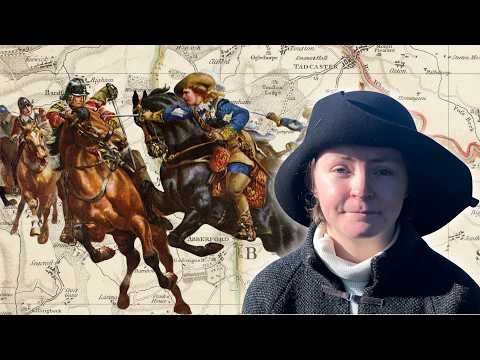
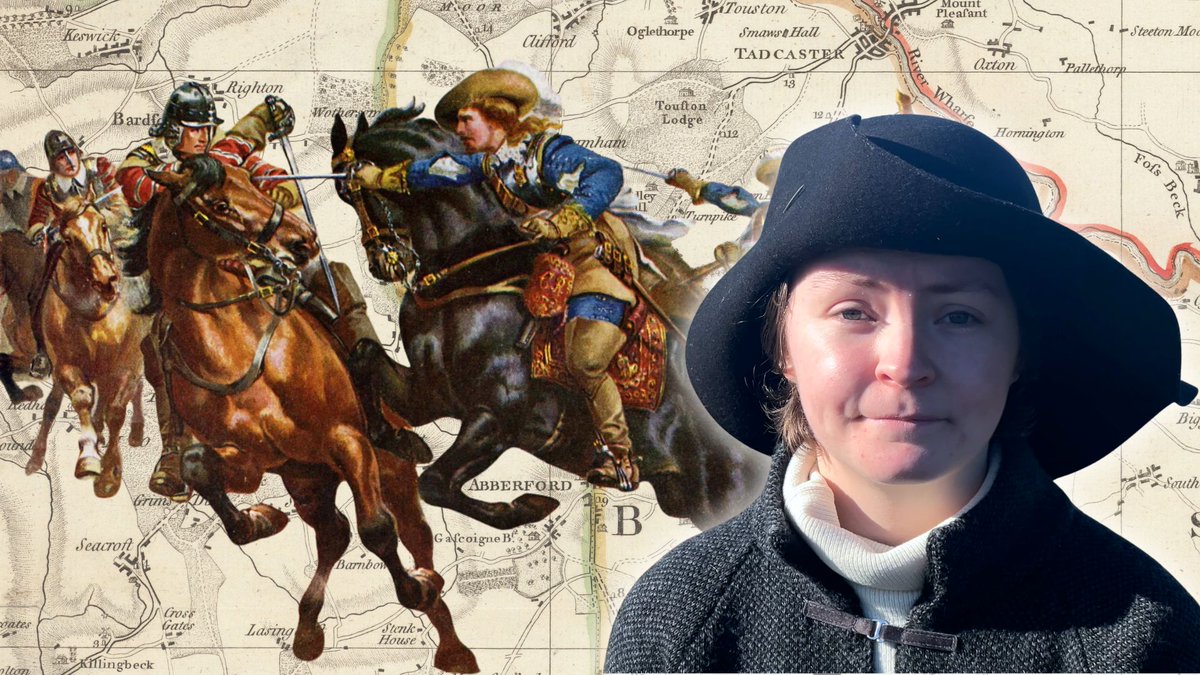
In 1643, the Parliamentarians suffered a stunning loss at Seacroft Moor. But where is Seacroft Moor? It's not on any map. Being from Seacroft myself, I thought it was about time that someone does a proper investigation of the battle.
youtu.be/k3lTM3clIgA

YouTube

English

@kbw1001 @somersetlevel Luckily it was when pubs closed after lunch & reopened at 6pm. They had to support the building with Acro Jacks while they removed the lorry. The pub was closed for a few months for refurbishment. The landlady’s elderly mother was asleep in the room over the bar & didn’t wake up!
English

@JonGale4 @somersetlevel A lorry through the bar ?!
English

Marvellous: who remembers Jack Hargreaves and his country ways? Quite a sad ending to this remarkable clip from Fred Dinenage # How ❤️
Lance 🇬🇧@iamL4NCE
English

@kbw1001 @somersetlevel The heavily loaded lorry broke a front axel as it was passing the pub. Veered across the road and crashed through the corner of the pub, coming to rest with its front bumper against the bar. Had the pub been open, customers would have been killed.
English
Jon Gale รีทวีตแล้ว

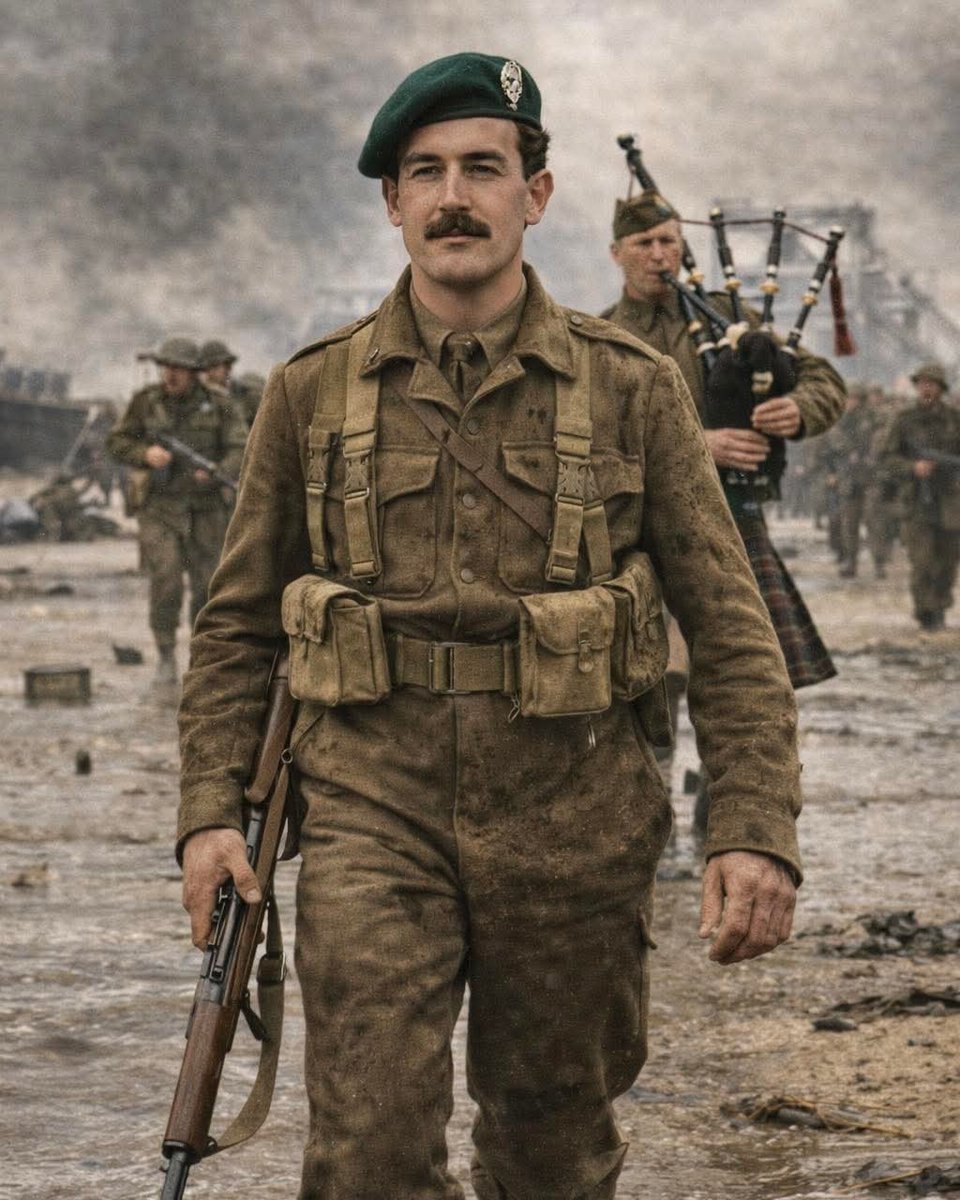
On this day in 1995, the last clan chief in history known to have led his men into battle died at the age of 83.
Simon Fraser, the 15th Lord Lovat, was the Chief of Clan Fraser.
He was the man Winston Churchill described, in a letter to Joseph Stalin, as “the mildest-mannered man that ever scuttled ship or cut a throat.”
The Scottish Commando chief whom Hitler placed a 100,000 Reichsmark bounty on, dead or alive.
He was a well respected man that already had a serious war record before D-Day.
The night before D-Day, Lovat addressed his men. He closed with this: “A hundred years from now, your children’s children will say - they must have been giants in those days.”
Then came June 6th, 1944. Sword Beach, Normandy.
As Brigadier of the 1st Special Service Brigade, Lord Lovat waded ashore leading 3,000 commandos into hell.
And behind him came the sound that made the whole scene unforgettable.
The English War Office had strictly banned bagpipes in battle. They said it was too conspicuous. Too dangerous.
Lovat brought his personal piper, Bill Millin, and gave the order: “Play us ashore.”
When Millin hesitated, citing the regulations, Lovat smiled and replied:
“Ah, but that’s the English War Office. You and I are both Scottish, and that doesn’t apply.”
So Millin played Highland Laddie, The Road to the Isles, and All The Blue Bonnets Are Over the Border.
Men fell around them. Bullets tore through the surf. The noise of artillery was deafening.
And through it all, the unmistakable scream of the bagpipes.
Captured German snipers later admitted they had Millin in their sights, but didn’t shoot him because they assumed he had gone completely mad.
Lovat’s mission was to reach Pegasus Bridge, where British glider troops were desperately holding on.
The schedule said 1pm. Lovat and his men fought their way off the beach and arrived at exactly 1:02 PM.
He calmly walked up to the commanding officer under enemy fire and apologised for being two and a half minutes late.
His commandos then marched across the bridge in the open.
Lovat had ordered his men to wear their green berets instead of steel helmets, so the Germans would know exactly who was coming for them.
Twelve men were shot through their berets that day. After that, they finally put their helmets on.
But they held the bridge.
For Clan Fraser, there was something almost mythic about it. Their ancestors had come from Normandy centuries earlier. Now their chief had led Highland soldiers back onto those same shores in one of the most decisive battles in modern history.
Six days later, Lovat was given his last rites after being hit by friendly fire from a stray artillery shell.
Against all odds, he survived. He returned home a hero.
He went on to serve in Parliament, judge cattle internationally, and manage his massive 250,000-acre Highland estate.
But his final years were marked by grief. Two of his sons died within weeks of each other in 1994. Beaufort Castle, his ancestral home, had to be sold that same year.
When Lord Lovat died on 16 March 1995, an era died with him. Bill Millin later played at his funeral, bringing the story full circle.
The last clan chief who went to war.
The brigadier who brought bagpipes onto D-Day.
The Highlander with a price on his head.
Scotland does not produce many men like that ⚔️🏴

English
Jon Gale รีทวีตแล้ว

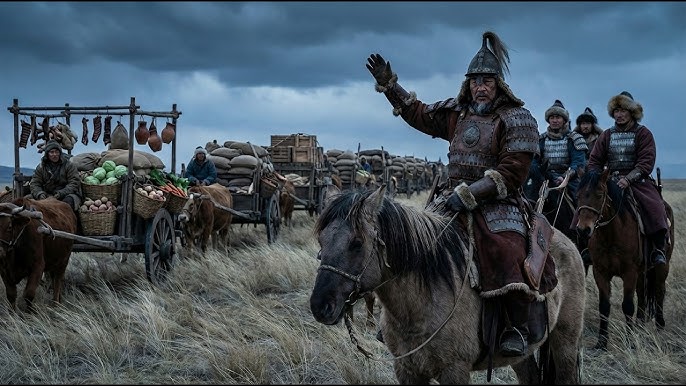
The army that conquered more land than any force in human history didn't have supply lines. No granaries. No bread carts. No kitchen staff marching behind the cavalry.
They carried everything they needed on their horse, or they took it from the horse itself. Jerky, mare's milk, and a bit of millet. That's it.
Marco Polo rode with Mongol warriors in the 13th century and documented what he witnessed firsthand. A soldier on campaign could go ten days without lighting a fire or stopping to cook. His rations were dried milk curd, fermented mare's milk, and a powder called borts, which was horse or goat meat sliced thin, dried in the open steppe wind, and crushed until it fit in a small leather pouch. Add water to the powder and you had a stew. One horse, fully processed into borts, could feed a soldier for months, and this was the world's first dehydrated military ration, roughly 800 years before the United States Army developed the MRE.
The Italian friar Giovanni da Pian del Carpini traveled through Mongol territory in 1245 on a diplomatic mission for Pope Innocent IV and recorded everything he observed with the eye of someone genuinely trying to understand how these people functioned. He noted that the Mongols drank fermented mare's milk called airag in quantities that stunned outside observers, and that intoxication carried no social stigma whatsoever.
The airag was made in large leather bags hung from the frame of the yurt, stirred continuously by anyone who passed through the doorway, and left to ferment until lightly alcoholic and sour. It was their water, their wine, and their calories all in one vessel. Carpini also documented qurut, the dried cheese curds that every warrior carried as a compact, high-fat field ration, cured on top of the yurt in sun and wind until they were so hard that a Western knight who encountered them reportedly cracked a tooth trying to eat one without soaking them first.
When even that ran out, the horse gave more. A warrior would locate a vein in his mount's neck, make a small cut, drink what he needed, and seal the wound, and the horse kept moving and the soldier kept riding. Chinese military commanders who faced the Mongol armies across the steppe noted something that disturbed them deeply. No smoke rose from the Mongol encampment at night.
An army that did not need fire to eat was an army that could move in total darkness, appear without warning, and sustain itself in terrain where a conventional force would starve in a week. The Chinese infantry, built around grain and cooked rice, had no answer for an enemy running on fat, blood, and fermented milk.
Genghis Khan understood that the speed of his army was its greatest weapon, and the diet was engineered entirely around that speed. When his forces were in genuine survival conditions they cooked whole animals in the hide of the animal itself, stuffing the cavity with heated rocks to roast it from the inside out, and leaving no smoke, no fire, no trace. A Persian chronicler recorded watching a Mongol column cover ground that took his own caravan three days in a single night, and they were not superhuman. They were just running on a completely different fuel system than everyone they were fighting.
No fire needed, no resupply needed, no stopping needed. The kitchen was the horse and the leather bag on the saddle.
© Eats History
#drthehistories

English

@Suffragent_ What dose of Ozempic is she on? I’m on the max that the NHS will let me have and I’m still as fat as a pug!

English

I'm sorry, but a lot of this is due to our 3rd world visitors, they just don't give a shit. I have had customers come down from Bradford that just tipped their rubbish out on the ground as they got out of their car in front of me - I made them pick it all up and bin it before I would look at their car 🤬
Benonwine@benonwine
Has anyone else noticed how filthy our roadsides and countryside have become? Plastic everywhere. Bottles in the hedges. Fast food packaging all along the verges. It isn’t normal. It’s vile.
English

@natalieben The Right to Roam comes with various responsibilities. Most people that I meet when they have illegally wandered off the footpath, have absolutely no idea of their responsibilities whilst there. They trample wild endangered flora & are completely unaware of ground nesting birds.
English

#RightToRoam - there is so little nature on these depleted islands, we need access to all of it
theguardian.com/environment/20…
Marks Tey, England 🇬🇧 English

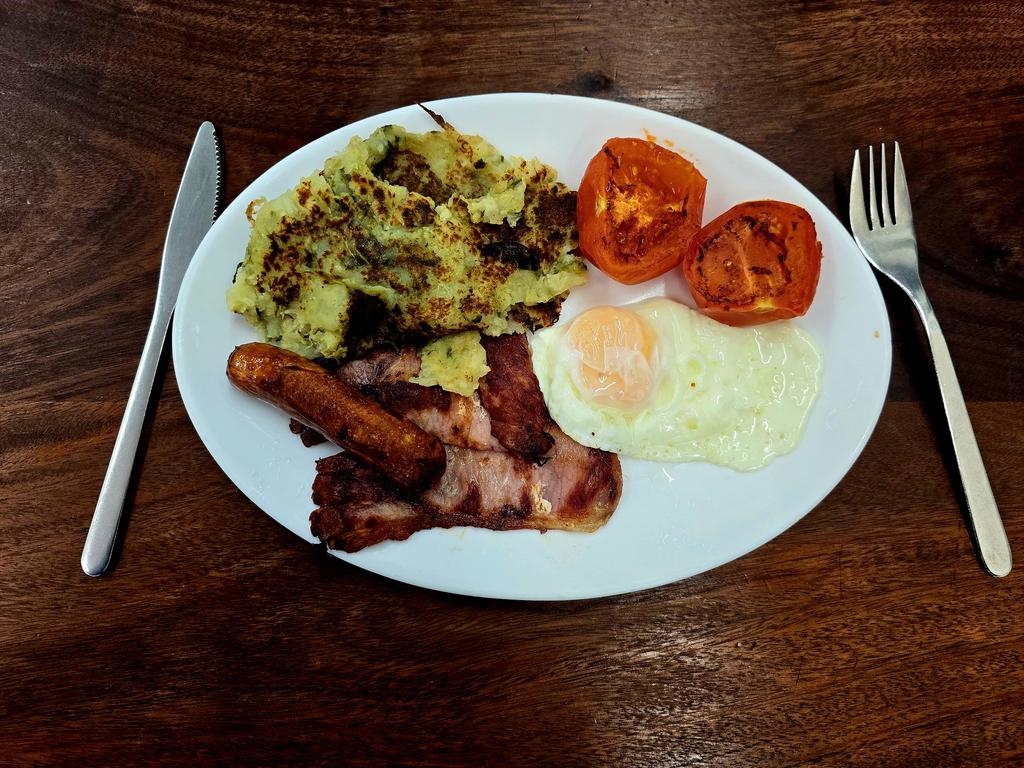
@ChelseaDan5 @FryUpSociety Not much wrong with that! Can’t beat a bit of bubble on yer brekki!
English

@lucybrazier @Drystonesonnet That’s the BBC for you. Fiona is only managing their agenda.
English

It’s called Question Time. The format is supposed to be that the audience ask questions and the panel answers. Fiona is meant to moderate. Week after week, she interrupts, talks over people and aggressively pushes her own agenda. It’s becoming almost unwatchable. #bbcqt
English