
Kathleen Chaykowski

2.5K posts

Kathleen Chaykowski banner
Kathleen Chaykowski

Kathleen Chaykowski

@Kchaykowski

Comms @OpenAI. Formerly @ScaleAI @robinhoodapp @wsj. Compulsive list maker, word nerd

San Francisco, CA เข้าร่วม Kasım 2009
2.5K กำลังติดตาม8.1K ผู้ติดตาม
Kathleen Chaykowski รีทวีตแล้ว
Rohan Varma
Rohan Varma@rohanvarma·
Our incredible comms leader, @lindsmccallum , planned a closed door dinner for the Codex team in a fraction of the time it would normally take - thanks to Codex. She used the Codex App to: - compile the invite list - send out invitations - hourly scan of her emails to update RSVP status - populate a doc with bios on every attendee - create a mini app to plan the seating chart Things Codex didn’t do: - make the sushi we ate (soon) Lindsay has never coded before. With Codex, she is a builder. Codex is the interface for personalized software.
English
10
4
100
9.8K
Kathleen Chaykowski รีทวีตแล้ว
OpenAI Developers
OpenAI Developers@OpenAIDevs·
📣 Technical lessons from building computer access for agents Making long-running workflows practical required tightening the execution loop, providing rich context via file systems, and enabling network access with security guardrails. Here's how we equipped the Responses API with a computer environment: openai.com/index/equip-re…
English
38
86
602
88.1K
Kathleen Chaykowski รีทวีตแล้ว
Ryan Peterman
Ryan Peterman@ryanlpeterman·
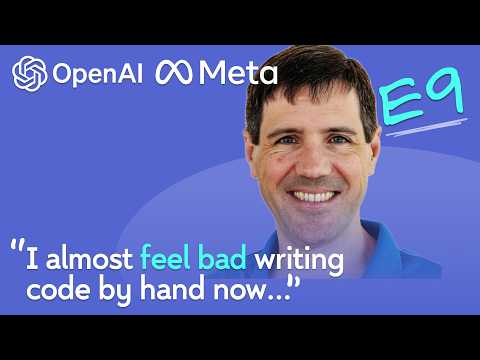
Michael Bolin (@bolinfest) is the tech lead of the Codex open source repository at OpenAI and formerly a distinguished eng (E9) at Meta. I asked him for all the details on his career story and how he uses Codex for max benefit. Timestamps: 00:00:00 - Intro 00:00:56 - Chickenfoot 00:02:45 - Working at Google 00:06:34 - Overhauling Facebook's build system 00:16:36 - Rewriting Facebook's IDE 00:26:01 - Struggles after Principal Eng (E8) promo 00:28:39 - Building a virtual filesystem for Facebook 00:35:47 - Delayed Distinguished promo (E9) and learnings 00:39:56 - Joining OpenAI 00:43:05 - Research-led vs engineering-led cultures 00:44:53 - The story behind Codex 00:51:00 - How he uses Codex 00:57:00 - Why Codex's harness is open source 00:59:50 - Top technical book recommendations 01:05:02 - Why deep technical skills are still valuable (for now) 01:11:07 - How to start projects well 01:14:27 - Advice on writing better and career planning 01:17:06 - Advice for his younger self 01:19:10 - Outro He was a dream guest of mine and I'm excited to share his story with you all! Other places to watch: • YouTube: youtu.be/hN5ZFzWFhhg • Spotify: open.spotify.com/episode/2Z1CEf… • Apple Podcasts: podcasts.apple.com/us/podcast/the… • Transcript: developing.dev/p/openai-codex…
YouTube video
YouTube
English
11
36
537
117.6K
Kathleen Chaykowski รีทวีตแล้ว
Brad Lightcap
Brad Lightcap@bradlightcap·
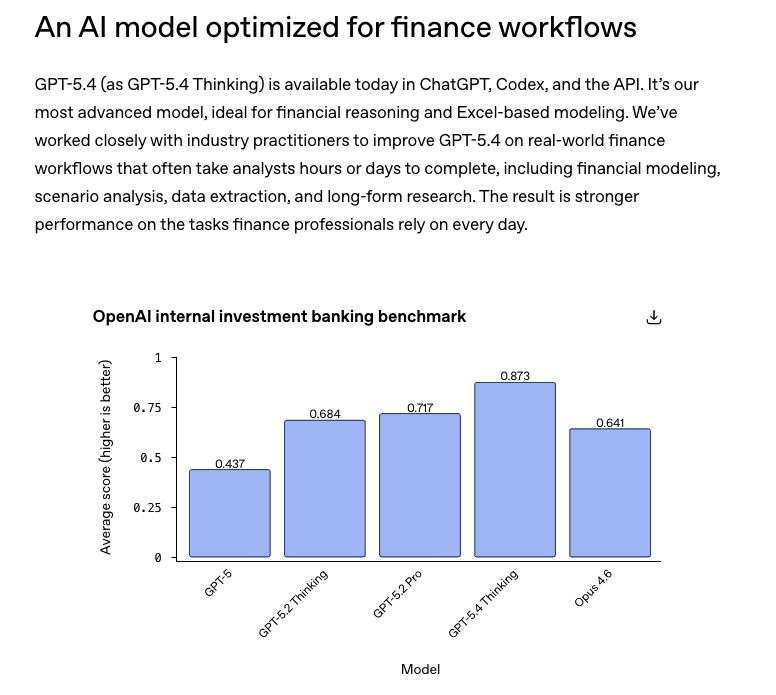
ryan and team worked extremely hard to make gpt-5.4 great for finance it's much improved for financial modeling and analysis, integrates directly into excel, and connects to factiva, daloopa, s&p global, and many more it does feel like a codex moment is coming here
Brad Lightcap tweet media
Ryan Brewer@ryanbrewer

Excited to share that I’ve joined OpenAI to help build the future of financial intelligence. My focus is connecting models directly to the data sources, tools, and workflows analysts use every day. My team’s first product is the Excel plugin. After software engineering, finance will see the benefits of model improvements more acutely than almost any other field. This is just the start for us! More to come soon!

English
33
46
803
189.3K
Kathleen Chaykowski รีทวีตแล้ว
Dan Shipper 📧
Dan Shipper 📧@danshipper·
BREAKING: @OpenAI just released GPT-5.4 and it is AMAZING. We spent a week @every putting it through real engineering tasks from code reviews to planning workflows and using it inside of our @openclaw setups. The verdict: OpenAI is back in the coding race. - Its planning capability consistently beat Codex 5.3 and Opus 4.6 in head-to-head tests. It produces plans that are thorough and technically precise, and have a user focus and “human” feel that has been missing from OpenAI's previous coding mode - It reviews code with more depth than 5.3 Codex, and a much more conversational voice that doesn't make you feel dumb. - It became our go-to model in @OpenClaw: with some model-specific tweaks to the harness it's fast, intelligent, and more human. It's also about half the price of Opus 4.6. As ever, there are tradeoffs: - GPT-5.4 has a tendency to expand the task well beyond what you asked for and to call tasks done before they're finished. - In the @OpenClaw harness it sometimes completed tasks in obviously wrong ways, then lied about it. Overall though, it's my new daily driver for coding and in my Claw. Its thinking-traces produced some genuine wow moments for me. Our complete vibe check is available on @every now -> every.to/vibe-check/gpt…
English
44
41
505
70.1K
Kathleen Chaykowski รีทวีตแล้ว
Srinivas Narayanan
Srinivas Narayanan@snsf·
GPT-5.4 is out. It brings significant improvements on coding, general reasoning, integration with tools and native computer use, and overall is really good for professional work.
OpenAI@OpenAI

GPT-5.4 Thinking and GPT-5.4 Pro are rolling out now in ChatGPT. GPT-5.4 is also now available in the API and Codex. GPT-5.4 brings our advances in reasoning, coding, and agentic workflows into one frontier model.

English
3
1
92
3K
Kathleen Chaykowski รีทวีตแล้ว
Tibo
Tibo@thsottiaux·
Codex at 2M+ active users up 25% week over week... and that was before we launched the app on Windows and GPT-5.4!
English
91
41
1.6K
76.3K
Kathleen Chaykowski รีทวีตแล้ว
Bret Taylor
Bret Taylor@btaylor·
I’ve been trying to simulate using Codex for the next year and what will change about my perspectives on software engineering as I transition from being a computer programmer to a harness engineer. There are so many, but here are a couple that have stuck with me: Software dependencies - Large open source systems like Linux and MySQL seem like they will remain just as important, but I wonder if I will start to have different perspectives on smaller software libraries when the functionality can be relatively easily produced and tested with AI. Given the past decade of supply chain vulnerabilities and maintenance issues in open source libraries, will it become a best practice to reduce dependencies and write our own where possible? Documentation - When I built a product before, the “specification” was split between docs, Slack, Figma, and Linear — but the vast majority of behavior was specified in code, i.e., the long tail of functionality is an emergent property of the code I write. The conundrum with agent-produced code is that it’s not clear which parts of the code were prompted (i.e., specified) and which parts were “vibed” (i.e., unspecified). That seems problematic when continuously evolving a large system over time because the harness will “forget” past instructions. I don’t think replaying prompts is correct either because in a single Codex session, a good chunk of interactions are interactive and effectively transient. I have an intuition that documentation will be as important of an output of my Codex sessions as code, documenting the substantive product decisions made during my session. Those docs clearly need to be directly in the repo, versioned with the code and available as context for future sessions. The docs / context discussion in OpenAI’s recent post on harness engineering resonated with me and maps to my intuition: openai.com/index/harness-…
English
46
33
594
85.9K
Kathleen Chaykowski รีทวีตแล้ว
Dan Shipper 📧
Dan Shipper 📧@danshipper·
OpenAI’s hottest app isn’t ChatGPT—it’s Codex. In the last few weeks alone, the Codex team shipped a desktop app, GPT-5.3 Codex (a new flagship model), and Spark, the fastest coding model I’ve ever used. Usage has grown fivefold since January and over a million people now use Codex weekly. Codex was also the app that OpenAI chose to run an ad for in the Super Bowl. I talked to Thibault (@thsottiaux), head of Codex, and Andrew (@ajambrosino), a member of technical staff who built the Codex app, for @every’s AI & I about what OpenAI is building and how they’re using it internally. We get into: - Why they built a GUI instead of a terminal. Terminals work for quick tasks, they say, but feel limiting when you’re running multiple agents in parallel. The IDE, meanwhile, overwhelms users—and the Codex team wants the AI to dynamically decide which tools to show you for a given task. - How they’re teaching the model to read between the lines. Codex is great at following instructions, but optimize too hard in that direction, and it starts taking you literally—like copying a typo directly into the code. The team obsesses over this tradeoff, and is also introducing “personalities,” modes users can toggle between that control how blunt or supportive the model feels. - How OpenAI uses its own coding agent. Codex lets you schedule prompts to run on a recurring basis, and the team has dozens of automations running at all times. For example, one scans for merge conflicts every couple of hours so code is always ready to ship, and another picks a random file from the codebase multiple times a day and hunts for bugs no one would've gone looking for. - Why speed is a dimension of intelligence. OpenAI’s newest model (Spark) is so fast that they actually slow it down so you can read the output. They see the speed enabling three things: staying super in the flow, replacing brittle developer tools with intelligent ones that can adapt on the fly, and redirecting the model mid-task— especially with voice—so coding starts to feel more and more like a conversation. - Code review is the next bottleneck. Models can generate code faster than ever, but someone still has to verify that it works. The team is exploring a future where the model proves its own fix works—retracing the click path a user would take, screenshotting the results, and attaching the evidence to a pull request. This is a must-watch for anyone who uses AI coding agents—and is curious about the future of programming. Watch below! Timestamps: Introduction: 00:01:27 OpenAI’s evolving bet on its coding agent: 00:05:27 The choice to invest in a GUI (over a terminal): 00:09:42 The AI workflows that the Codex team relies on to ship: 00:20:38 Teaching Codex how to read between the lines: 00:26:45 Building affordances for a lightening fast model: 00:28:45 Why speed is a dimension of intelligence: 00:33:15 Code review is the next bottleneck for coding agents: 00:36:30 How the Codex team positions against the competition: 00:41:24
English
14
16
181
15.5K
Kathleen Chaykowski รีทวีตแล้ว
Sam Altman
Sam Altman@sama·
Peter Steinberger is joining OpenAI to drive the next generation of personal agents. He is a genius with a lot of amazing ideas about the future of very smart agents interacting with each other to do very useful things for people. We expect this will quickly become core to our product offerings. OpenClaw will live in a foundation as an open source project that OpenAI will continue to support. The future is going to be extremely multi-agent and it's important to us to support open source as part of that.
English
5K
4.3K
46.5K
16.7M
Kathleen Chaykowski รีทวีตแล้ว
OpenAI Developers
OpenAI Developers@OpenAIDevs·
Codex is rolling out company-wide at NVIDIA to ~30k engineers. We partnered closely with their team to deliver cloud-managed admin controls and US-only processing with fail-safes.
Dennis Hannusch@DennisHannusch

I started daily driving Codex with gpt-5.3-codex this week.. it's reaaally good. I've gotten used to complex workflows and context management, but Codex just does what I ask. I keep expecting quality to drop deep into a session, but it doesn't. @OpenAIDevs ya'll cooked!

English
94
101
2.5K
682.4K
Kathleen Chaykowski รีทวีตแล้ว
Dan Shipper 📧
Dan Shipper 📧@danshipper·
I use @OpenAI’s browser Atlas every day, and this week, I got to talk to the team building it. Ben Goodger (@bengoodger), Atlas’s head of engineering, and Darin Fisher (@darinwf), member of technical staff, are legends of the browser world. They’ve worked together on Netscape, Firefox, Chrome—and now Atlas. I had them on @every’s AI & I to talk about agentic browsers, the future of the web, and what it’s like to build a browser with Codex. We get into: - If agents can browse for you, do traditional websites become obsolete? Ben and Darin don’t think so. Yes, we’ll hand off tedious tasks—but there’s still plenty we’ll want to do ourselves, like travel planning or window shopping. Darin used a metaphor: He loves taking Waymos, but he also loves driving stick; sometimes you want to be chauffeured, other times you want the satisfaction of being in control. - A browser that knows when to step in. Browsers have always been like a taxi, ferrying you to a destination, but agentic ones are more like tour guides, helping you decide where to go in the first place. Ben says that Atlas is built to balance both: The interface stays minimal and familiar, but ChatGPT sits at the heart, ready when you need it. - How the Atlas team uses Codex to move faster. After coding browsers by hand for decades, Ben and Darin say that building with AI feels fundamentally different. More than half of Atlas's code was written by Codex. They've found it especially useful for navigating the complex Chromium codebase, prototyping quickly, and learning new techniques, like how to set up a particular animation or nail a UI effect. - The craft of coding with AI. AI coding tools can feel like a loss to veteran engineers: The work gets faster, but less personal. Darin acknowledges that tension, describing coding as therapeutic—almost like art—but sees Codex as a way to offload the monotony while preserving the satisfying craft. Ben agrees, arguing that a human’s role is the context behind a decision that is likely not in the code itself. This is a must-watch for anyone curious about the future of the web and how we will interface with it. Watch below! Timestamps: Introduction: 00:01:57 Designing an AI browser that’s intuitive to use: 00:11:51 How the web changes if agents do most of the browsing: 00:15:24 Why traditional websites will not become obsolete: 00:25:06 A browser that stays out of the way versus one that shows you around:00:29:00 How the team uses Codex to build Atlas: 00:39:51 The craft of coding with AI tools:00:44:47 Why Ben and Darin care so much about browsers: 00:52:33
English
14
13
78
8K
Kathleen Chaykowski รีทวีตแล้ว
OpenAI Developers
OpenAI Developers@OpenAIDevs·
📣 Shipping software with Codex without touching code. Here’s how a small team steering Codex opened and merged 1,500 pull requests to deliver a product used by hundreds of internal users with zero manual coding. openai.com/index/harness-…
English
73
203
2K
561.9K
Kathleen Chaykowski รีทวีตแล้ว
Srinivas Narayanan
Srinivas Narayanan@snsf·
Super excited to announce something I’ve been working on recently with my fantastic team. Introducing OpenAI Frontier: a new platform to build, deploy, and manage AI agents that do real work. Frontier provides agents the same primitives that humans need to succeed at work - deep business context, an execution environment (computers, tools, code & expertise) to plan and solve problems, learning on the job, and clear identity, permissions and boundaries to operate securely with trust. openai.com/index/introduc…
English
17
8
172
7.6K
Kathleen Chaykowski รีทวีตแล้ว
Jared Perlo
Jared Perlo@_perloj·
OpenAI just launched a new coding model (GPT-5.3-Codex) and says the system "was instrumental in creating itself." nbcnews.com/tech/innovatio…
English
0
2
2
271
Kathleen Chaykowski รีทวีตแล้ว
Tibo
Tibo@thsottiaux·
New blogpost where Celia goes into further details on the architecture that brings the Codex agents to life across the Codex App, VS Code extension, terminal and most of our partner integrations, including JetBrains and Xcode. openai.com/index/unlockin…
English
15
9
187
11.7K
Kathleen Chaykowski รีทวีตแล้ว
OpenAI Developers
OpenAI Developers@OpenAIDevs·
⚙️ Inside the Codex harness All Codex surfaces, including the Codex app, the Codex CLI, the Codex web app, and IDE integrations — like @Code, Xcode, and @JetBrains — are powered by the same Codex harness under the hood. We're sharing details on the Codex App Server, a JSON-RPC protocol that exposes this harness for integration. openai.com/index/unlockin…
English
56
119
1.2K
127.4K
Kathleen Chaykowski รีทวีตแล้ว
Tibo
Tibo@thsottiaux·
Codex now pretty much builds itself, with the help and supervision of a great team. The bottleneck has shifted to being how fast we can help and supervise the outcome.
English
220
181
2.9K
597.4K
Kathleen Chaykowski รีทวีตแล้ว
Brad Lightcap
Brad Lightcap@bradlightcap·
we wrote about our in-house data agent used by ~4k people, from product/eng, to research, GTM, finance, and more it was built with codex, and runs on codex, gpt-5, and our evals & embeddings APIs like codex, it works like a teammate you can collab with openai.com/index/inside-o…
English
9
8
210
19.7K
Kathleen Chaykowski รีทวีตแล้ว
Srinivas Narayanan
Srinivas Narayanan@snsf·
Great post from our data infra team on how we built our in-house data agent. Especially worth reading is the approach to context management. This is a difficult problem for any AI application and this highlights some nice techniques for handling it.
OpenAI Developers@OpenAIDevs

Inside our in-house AI data agent It reasons over 600+ PB and 70k datasets, enabling natural language data analysis across Engineering, Product, Research, and more Our agent uses Codex-powered table-level knowledge plus product and organizational context openai.com/index/inside-o…

English
2
13
112
30.4K