Thomas Lancer

153 posts

Thomas Lancer

Thomas Lancer

@LancerThomas

Building

เข้าร่วม Eylül 2022
1.9K กำลังติดตาม434 ผู้ติดตาม
Noah Frydberg | Tiktok Shop For Brands
Clawdbot + Kling = 550 videos per day No actors. No products in hand. No ghost creators. No missed deadlines. Just viral TikTok Shop sales — 24/7. Here’s the crazy part: This system produces 550+ cinematic, product-ready ads per day from a single prompt. And it feels exactly like running Facebook Ads in 2008 — except the CPMs are even lower, and the entire loop is organic. Here’s how the AI Creator Agent System works 👇 Each Agent runs its own TikTok Shop profile and handles an entire growth function: • Trend + angle research using Kalodata • Competitor ad cloning (paste their ad → pick an avatar → regenerate) • Automated creator outreach with Fastmoss • Daily content generation using Kling or arc ads • Localization, repurposing, and multi-format output • Compliance cleanup + optimization • Automatic posting across a Multi-Platform Swarm (hundreds of agents) No touchpoints. No delays. No human bottlenecks. Just a decentralized force of AI + UGC creators selling while you sleep. Real results: • $0.10 CPMs • Thousands of organic views daily • content that is realistic enough to actually increase sales This is the Creator Agent Method: a plug-and-play system that replaces entire creative teams and launches content at a speed humans simply can’t compete with. I packaged all the AI V2 workflow so you can deploy the exact system for your brand. Comment AGENT and I’ll DM you everything for free. (Deleting soon) P.S. Repost for early access to the complete agentic influencer stack
Noah Frydberg | Tiktok Shop For Brands tweet media
English
984
220
1.2K
193.8K
Alfie Carter
Alfie Carter@AlfieJCarter·
This cold email system generated $23M in qualified pipeline for 18 AI SaaS companies last year. This will stop your team from burning 1M$+ on cold email. I've spent 3 years perfecting the exact cold email system that's generated over $1 billion in pipeline across hundreds of campaigns. → Inbox setup & deliverability (never land in spam again) → Signal-based list building (target buyers ready to buy) → 9 proven email templates that convert → Follow-up sequences that get 80% of replies → Performance benchmarks & tracking metrics → Complete tech stack breakdown The results speak for themselves: - 15%+ reply rates consistently - 2%+ meeting booking rates - <0.5% bounce rates - Scaled to 20K+ emails/week profitably This is the same framework used by top B2B companies to book 30+ qualified meetings per week. I'm giving away the complete playbook with: ✓ Every template we use ✓ Full tech stack setup ✓ Step-by-step launch checklist ✓ Deliverability rules that actually work Reply "cold" + follow and I'll send you the full Cold Email Playbook
English
124
6
57
7.9K
Thomas Lancer
Thomas Lancer@LancerThomas·
@FoundersPodcast Have you read Revolution in the valley? Andy hertzfeld wrote it. first person account of the making of the Mac. Also he has a site called folklore (dot) org with a bunch of stories from the Mac team themselves. V cool
English
0
0
0
37
David Senra
David Senra@FoundersPodcast·
From this episode. A lot more of Steve’s ideas —directly from him:
David Senra@FoundersPodcast

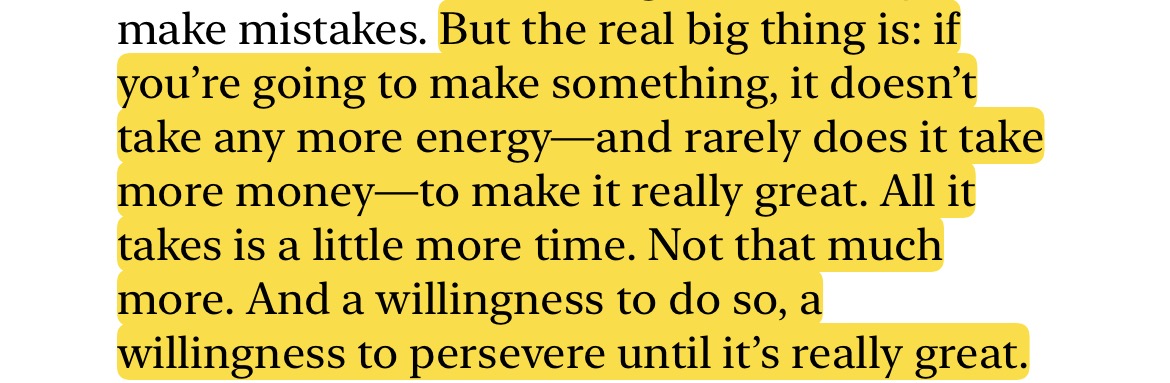
Make Something Wonderful is 250 pages of Steve Jobs in his own words, speaking directly to you. The book contains some of Steve's ideas that I've never found anywhere else. Notes from the book: 1. He didn't care about being right. He cared about being excellent. 2. His mind was never a captive of reality. 3. He said working with great people gives you access to wisdom that you can't buy for love or money. 4. He believed technology should be streamlined and practical, simple and sophisticated, and that it should be a tool for enhancing creativity as much as productivity. 5. He believed you should ambush your customers. Meet them where they are. 6. His ideas were not arguments, but intuitions. He had a true inner freedom and an epic sense of possibility. 7. He gave an extraordinary amount of thought to how best to use our fleeting time. 8. By the time he was thirty he was the public face of a Fortune 500 company. 9. At Apple’s first board meeting he put his bare feet on a conference room table. 10. He said you should think of your life as a rainbow arching across the horizon of this world. You appear, have a chance to blaze in the sky, then you disappear. 11. He possessed unbelievable rigor that he imposed first, and most strenuously, on himself. 12. He saw clearly (1) what was not there, (2) what could be there, (3) what had to be there. 13. He said early Apple employees were more like poets and painters than cold technologists. That the passion they put into their products were completely indistinguishable from other creative fields. He said their work was a form of love. 14. He had a verbal mastery that was obvious at a young age. He used simple, descriptive language, told stories, and repeated lines and ideas that were important. 15. He thought it was inevitable that computers would be the dominant medium of human communication. He said this in 1983. 16. He had a talent for spotting markets full of second-rate products. 17. He said you could tell how important a product was based on the amount of time people spent interacting with it. As a result he thought it was inevitable that more design talent would shift from the automobile (1 or 2 hours a day) to computers (6+ hours a day). He said this in the 80s. 18. He said that books kept him out of jail and that it’s a shame there are so many mediocre teachers. 19. Like many great entrepreneurs before him, Steve knew what he wanted to do, but didn't know how to do it yet. He said he wanted to make an insanely great computer that was the size of a book. What he described sounded a lot like an iPad. He said this in the 80s. 20. He believed that you should use your unique set of talents to make things that make the lives of other people better. Most people just take. He said "the ability to put something back into the pool of human experience is extremely neat." 21. He would tell his team “You work for Apple first and your boss second.” He felt strongly about that. 22. He was constantly placing the products he was making in a historical perspective, like comparing the Macintosh to the invention of the telephone. 23. He believed you needed to give yourself more time to make mistakes. He said his taste got more refined as he made mistakes. He said that making mistakes over a long period of time made his aesthetics better. 24. He said the key ingredient to making something great was time. 25. He said he wanted to spend his life building things. He could have retired to a beach in his 20s and thought that was disgusting. 26. He was interested in learning how to hone a company down to its essence. 27. You read this book and a thought jumps out at you: How many people are willing to go through a decade of failure without quitting? Steve had the capacity to take pain. 28. He believed it was better to focus on what you're actually passionate about, instead of what you think will make you the most money. He made the most money that way. 29. He listened to older, wiser entrepreneurs and let them shape and mold his thinking. 30. He wasn't afraid to fail, but had to coach himself to adopt that trait. He didn't want to fail, but he wasn't afraid of it. 31. He said don't let your differentiation evaporate. 32. He said if you let your differentiation evaporate the only solution is innovation. 33. He believed great ideas don't map onto corporate hierarchy. 34. He was incapable of thinking that his work and his life were different, separate things. 35. He said the most important things in life are not the goal-oriented, materialistic things. He said you should tap into the world’s magical, mystical, and artistic sides. 36. He paid attention to subtle insights. He was guided by intuition. 37. He didn't believe in the concept or a career, or think it was wise to follow well-worn paths laid out by others. 38. He said most people make the mistake of not thinking about death. He said: "For me it’s the opposite: to know my arc will fall, makes me want to blaze while I am in the sky." 39. He thought Walt Disney had a great idea: Edit before you make it. 40. He said no amount of technology can turn a bad story into a good story. 41. He believed storytellers were the most powerful people in the world. 42. He believed if you didn't have great people you were doomed. 43. He found great people by looking at great results and finding out who was responsible for them. 44. This is how he interviewed people: "In an interview I will purposely upset someone: I’ll criticize their prior work. I’ll do my homework, find out what they worked on and say, “God, that really turned out to be a bomb. That really turned out to be a bozo product. Why did you work on that?” The worst thing that someone can do in an interview is to agree with me and knuckle under. What I look for is for someone to come right back and say, “You’re dead wrong and here’s why.” 45. He believed the job of the leader was to make sure the work is as good as it should be, and to get people to stretch beyond their best. 46. He believed the job of the leader was to cajole, and beg, and plead, and threaten at times—to do whatever is necessary to get people to see things in a bigger and more profound way and to have them do better work than they thought they could do. 47. He believed the priorities of the leader were (1) recruit, (2) set an overall direction, and (3) inspire and cajole and persuade. 48. He believed a creative company should have a risk-taking, creative environment on the product side and a fiscally conservative environment on the business side. 49. He believed you have to choose what you put your love into really carefully. 50. He had a remarkably consistent set of values that he held dear: Life is short; don’t waste it. Tell the truth. Technology should enhance human creativity. Process matters. Beauty matters. Details matter. The world we know is a human creation—and we can push it forward. 51. He thought when deciding what to work on that you should ask yourself: "What do I give a shit about?" And then go do that. 52. He would never sell Apple. Not for all the money in the world. 53. He believed you should master the basics, simplify the product line, and focus on the gems. 54. He believed marketing was about values. That the world is noisy and you should focus on telling customers what you believe in and what you stand for. 55. He believed one way to invest in yourself is by exploring uncharted paths that are different from your past experiences. You know it's an uncharted path when you have no idea where it will lead. 56. He believed that people that think they’re following a safe path pay the highest price of all. They won't realize it for a decade or two — and by then it's too late. 57. He didn't believe in resting on laurels or sleeping on wins. Make something great. Then do it again. 58. He imagined what reality lacked and set out to remedy it. 59. He believed in straight forward, clear communication. If the work isn't good enough you have to tell them straight: "This isn't good enough. I know you can do better. You need to do better. Now go do better." 60. He remained driven by a mission to "put something back into the pool of human experience." 61. He believed in the basics: great product, great marketing, great distribution. 62. He believed you must keep up with innovations in distribution. 63. He believed brands take decades to build. 64. He would capture the evolution of his own thinking by emailing himself. 65. He viewed Apple has the world's premier bridge builder between normal people and the exploding world of high technology. 66. He wanted to demystify technology. 67. He believed excellence was a habit and we are what we repeatedly do. 68. He believed you should be curious about what came before you and you should spend time to learn about it. 69. He believed you simply could not mix messages when selling something new. A customer can barely handle one great new idea, let alone several. 70. He said it's a circus world and you'll never know what's around the next corner. 71. He believed in management by values. Which means (1) find people that want the same things you want and (2) figure out the best way to get those things along the way. 72. He believed in the mantra: Finding the right people is half the battle. 73. He said you can't plan to meet the people who will change your life. 74. He believed everything is temporary — there is no such thing as safety. 75. He believed that your life is a story and that you should remember that your life is a story and that you should always act like your life is a story. 76. He believed in rejecting dogma, which he defined as living with the results of other people's thinking. He said that dogma can be so loud that it can drown out your own inner voice and you should avoid this. 77. He believed a great place to start was by improving a product you hate. If you can make something you love, you can convince other people to love it too. 78. He said all glory is fleeting and you should just get back to making something wonderful. I'm really proud of the episode I made about this book. You'll learn a lot from Steve by listening to it. You can watch/listen to it in full here, or in your favorite podcast app.

English
1
0
8
9K
David Senra
David Senra@FoundersPodcast·
Steve Jobs:
David Senra tweet media
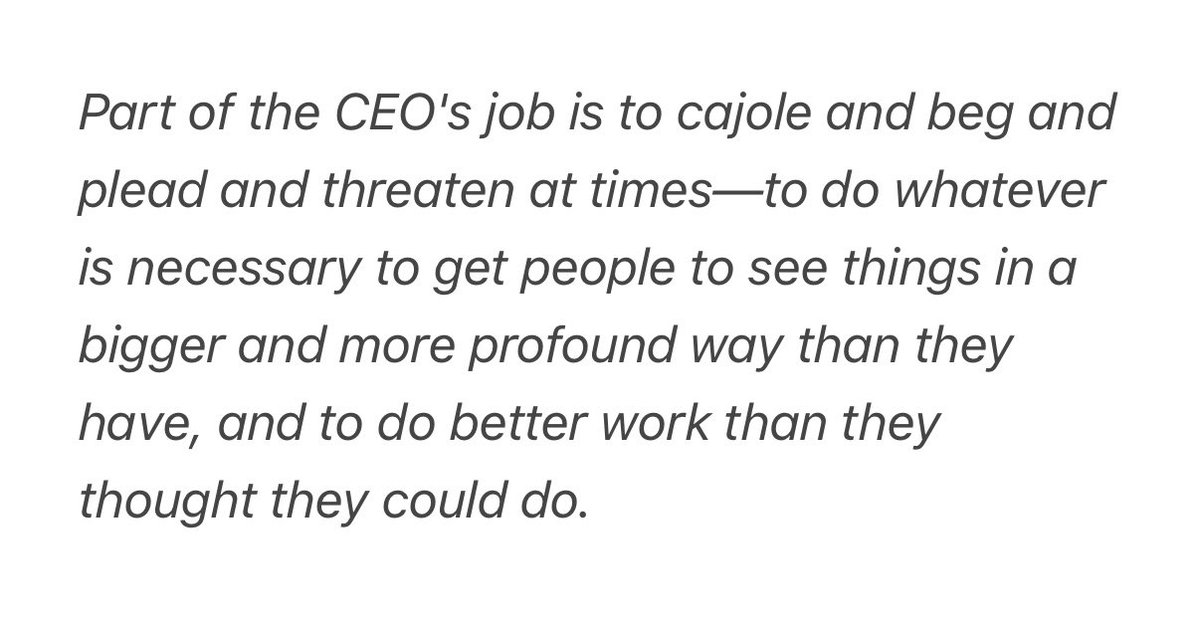
English
15
80
797
46.2K
Thomas Lancer
Thomas Lancer@LancerThomas·
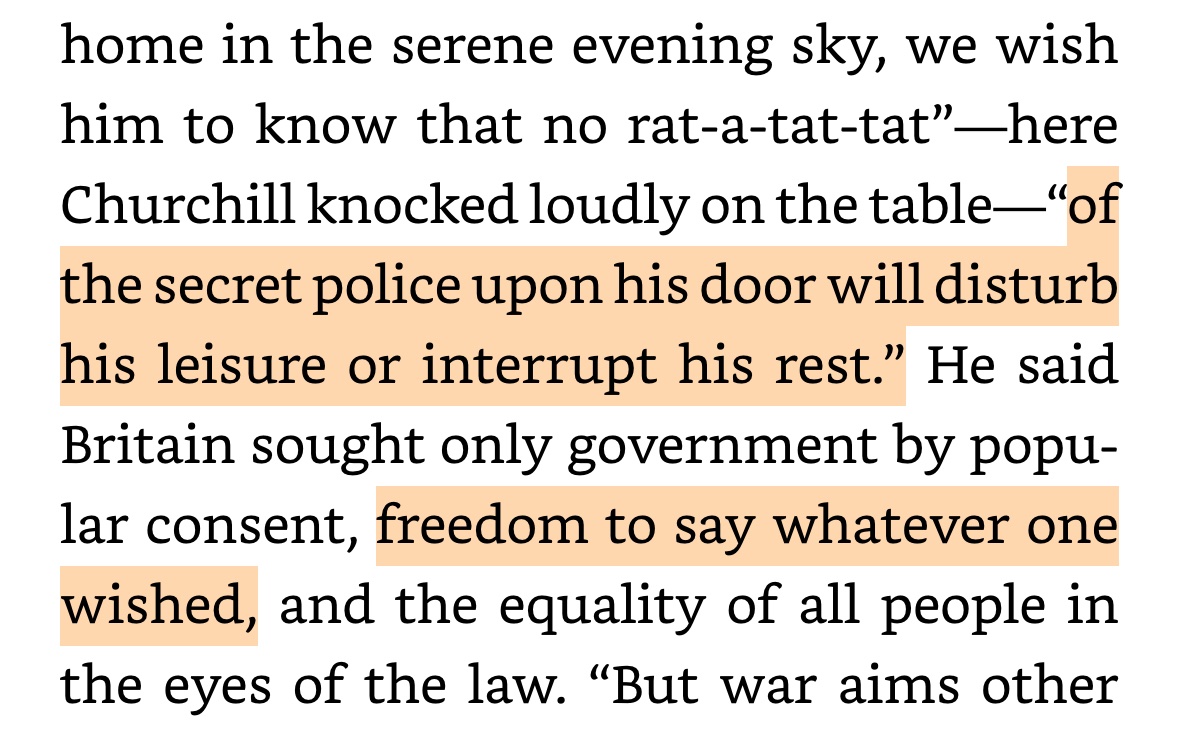
Churchill during ww2 on what he wanted for Britain. Incredible that the freedoms he fought to defend in the face of a takeover by a Nazi regime are now being taken away by Britain’s own leadership.
Thomas Lancer tweet media
English
0
0
1
237
Thomas Lancer
Thomas Lancer@LancerThomas·
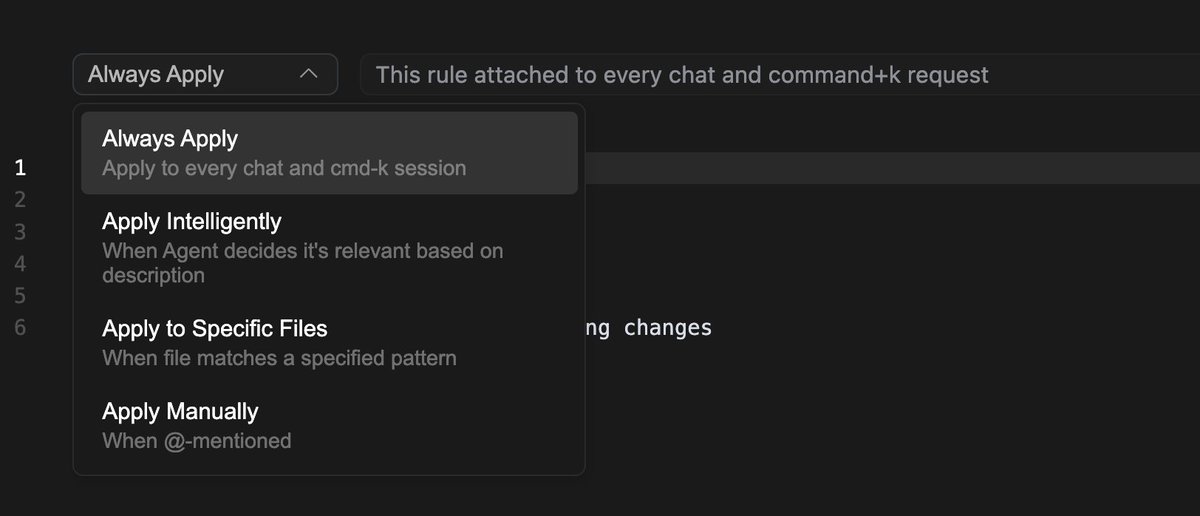
@ericzakariasson @cursor_ai specific files - anytime its touching DB model files include the rule on SOP for running alembic migration also for all .tsx files have a rule that tells it to separate business logic from UI code since it loves combining everything into one file if you don't prompt it not to
English
0
0
0
47
Thomas Lancer
Thomas Lancer@LancerThomas·
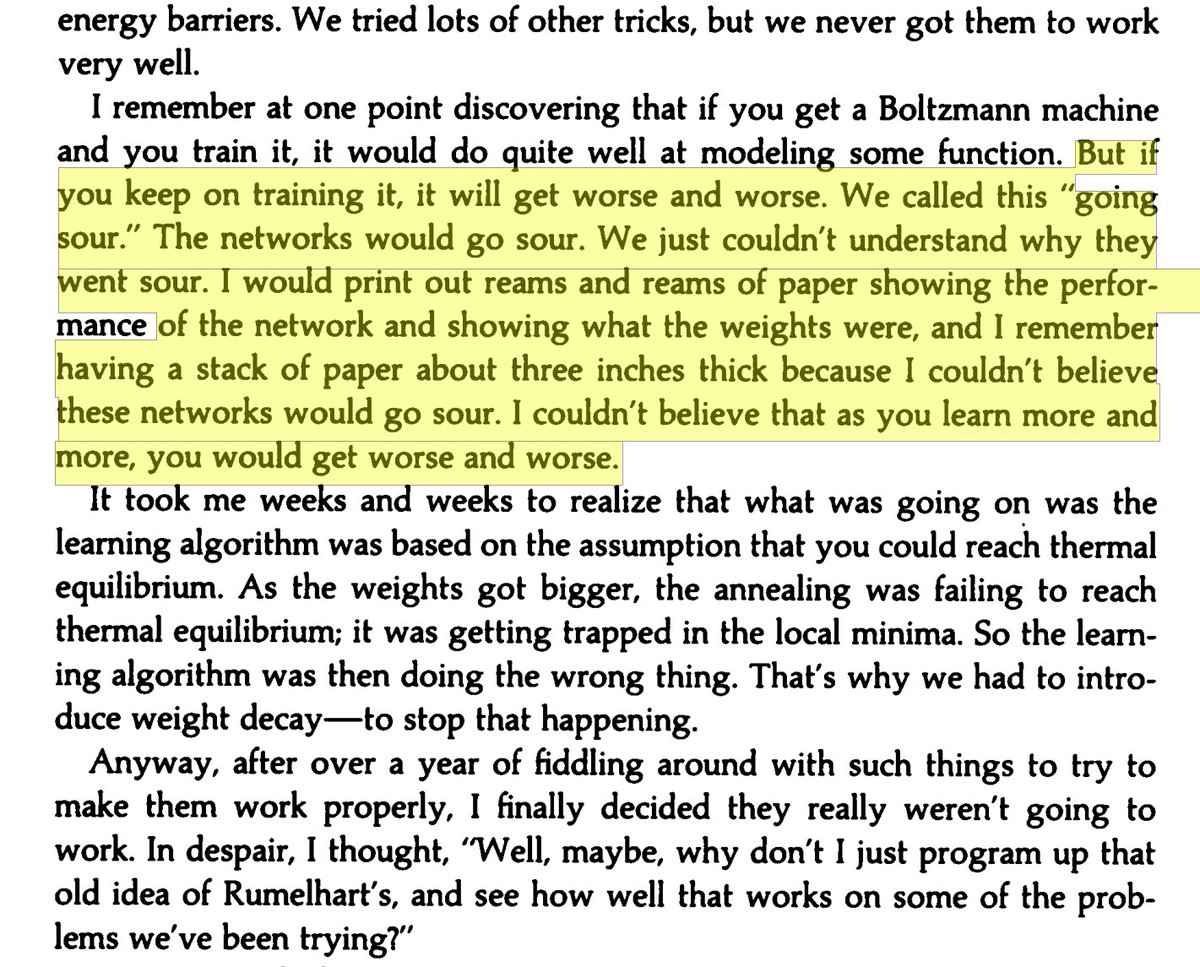
@layer07_yuxi what paper/book etc is the original quote from? looks interesting
English
1
0
0
909
Thomas Lancer รีทวีตแล้ว
Rothmus 🏴
Rothmus 🏴@Rothmus·
Rothmus 🏴 tweet media
ZXX
511
1.4K
17.1K
1.7M
Thomas Lancer
Thomas Lancer@LancerThomas·
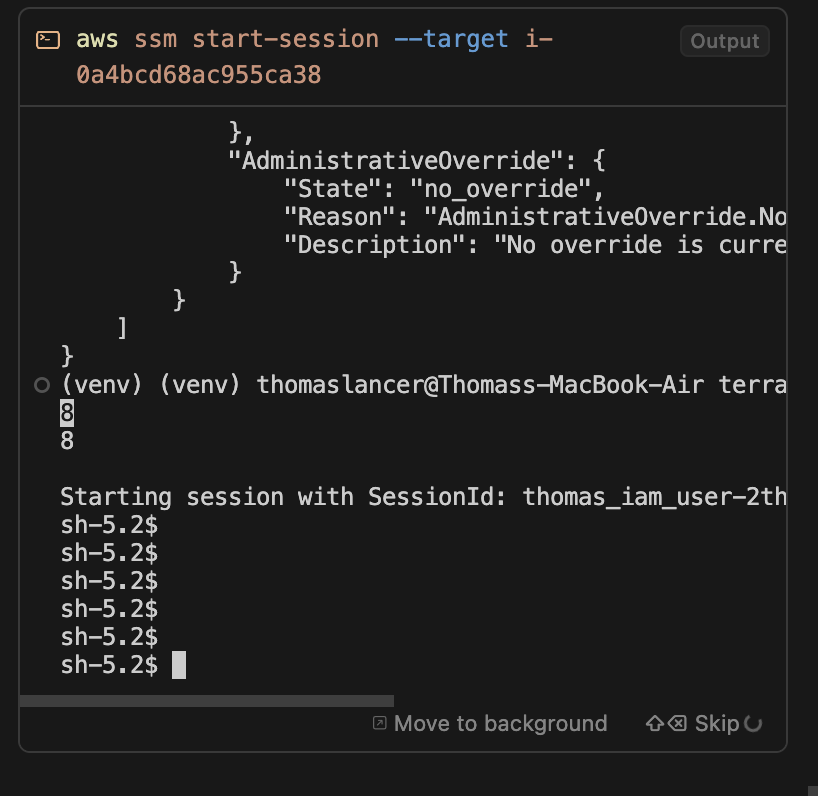
@ryolu_ Would be great to have the ability to manually tell the agent that it can move onto the next step when running terminal commands if you try to open an SSM session or SSH into an instance it'll execute the command to do so, but then it gets stuck here @ryolu_
Thomas Lancer tweet media
English
0
0
0
52
Thomas Lancer
Thomas Lancer@LancerThomas·
bet you could run a very successful vc fund with one simple rule: never pass up investing in a founder who is under 25 and balding
English
1
1
8
1.5K
Thomas Lancer
Thomas Lancer@LancerThomas·
does anyone know someone with experience in high volume youtube scraping ? (downloading 1,000s - 10,000s+ vids/hr) working on cool experiment that requires this - willing to pay for an hour of their time - pls dm if you know someone!
English
1
0
1
298
Lisan al Gaib
Lisan al Gaib@scaling01·
xAI has exactly 0 available SOTA models not a single company on the planet uses Grok because they don't even have an API for Grok 3 Anthropic is valued 20B lower than xAI: but actually has available SOTA models and has shown that they can produce multiple competetive models, super strong revenue growth, ~1B revenue in 2024
*Walter Bloomberg@DeItaone

ELON MUSK: XAI HAS ACQUIRED X IN AN ALL-STOCK TRANSACTION, VALUING XAI AT 80B AND X AT 33B

English
105
29
1.2K
219K
Thomas Lancer
Thomas Lancer@LancerThomas·
one interesting way to improve performance on coding w/LLMs is to have it generate 3-5 responses at same time then have another model review it's answers and select best one (or ideally be able to test all it's solutions in parallel somehow and choose the one that works) i find myself doing this already when solving bugs i'll open 3 grok windows w/think mode, 2 o3-mini-high windows, 2 o1-pro windows and paste the file and context in all of them oftentimes 2-3 out of the 7 will solve the issue and the other ones won't
English
0
2
8
1.5K
Thomas Lancer
Thomas Lancer@LancerThomas·
code always does exactly what you tell it to do. that is also the problem sometimes when what you told it to do was dumb 🤣
English
1
0
2
184
Thomas Lancer
Thomas Lancer@LancerThomas·
@shaoruu @cursor_ai Being able to direct the apply model based on line number. In files over 1,500 lines it really struggles to find right spot to apply but if I could give the specific line numbers to start at or it could figure that out on it’s own would make the apply model way more accurate
English
0
0
1
81
ian
ian@shaoruu·
what's one thing you really want added to @cursor_ai composer, or just to cursor in general? open to all kinds of ideas :)
English
1K
34
1.5K
414.8K
Thomas Lancer
Thomas Lancer@LancerThomas·
Feels great to be an American
English
0
0
0
219
Thomas Lancer
Thomas Lancer@LancerThomas·
Incredibly impressive
English
0
0
0
306