Luke

929 posts

Luke banner
Luke

Luke

@Lukbut

Founder in Silicon Valley. Building https://t.co/uaAVfQsiyq to help Gen Z understand the markets and the economy.

San Francisco, CA เข้าร่วม Kasım 2022
501 กำลังติดตาม946 ผู้ติดตาม
ทวีตที่ปักหมุด
Luke
Luke@Lukbut·
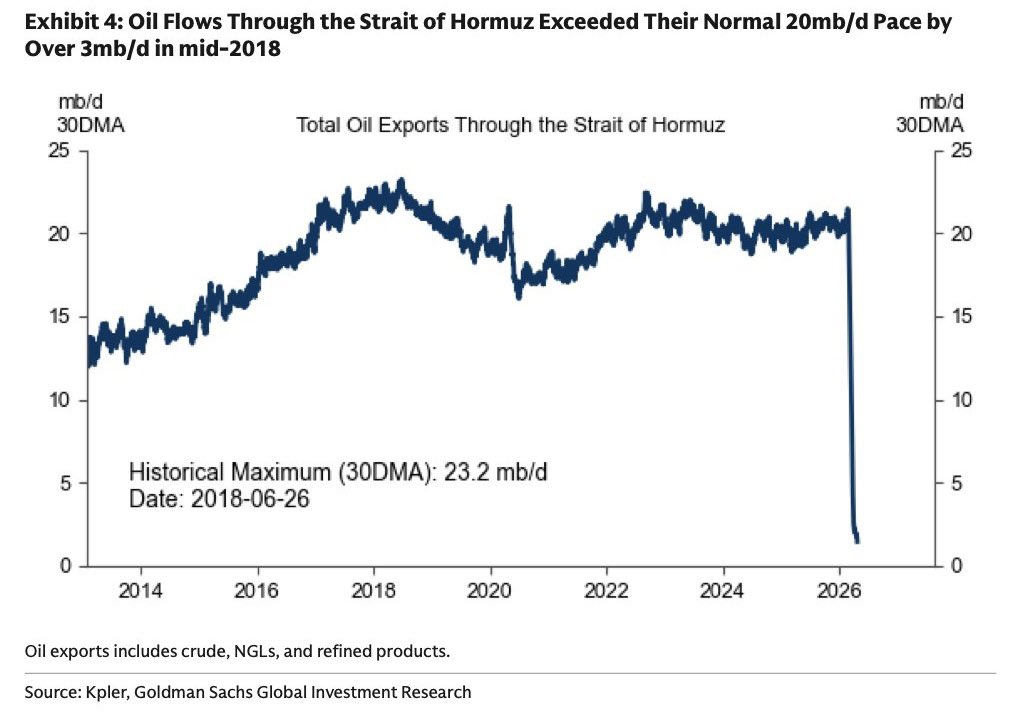
CHINA IS PREPARING FOR A MASSIVE SUPPLY SHOCK Oil in China just hit $100 per barrel and they ordered its largest refiners to stop exporting diesel and gasoline China is the largest crude oil importer in the world, and 50% of that oil flows through the Strait of Hormuz They are preparing for a scenario where global energy supply becomes very unstable When countries start fearing shortages, they stop exporting fuel and start keeping it at home It also means that they expect a prolonged disruption, not just a short term spike We saw similar behavior during past energy shocks, when countries moved to protect domestic supply first. That can tighten global markets even further and the supply shock people fear can become self reinforcing
Luke tweet media
English
3
3
29
5.7K
Luke
Luke@Lukbut·
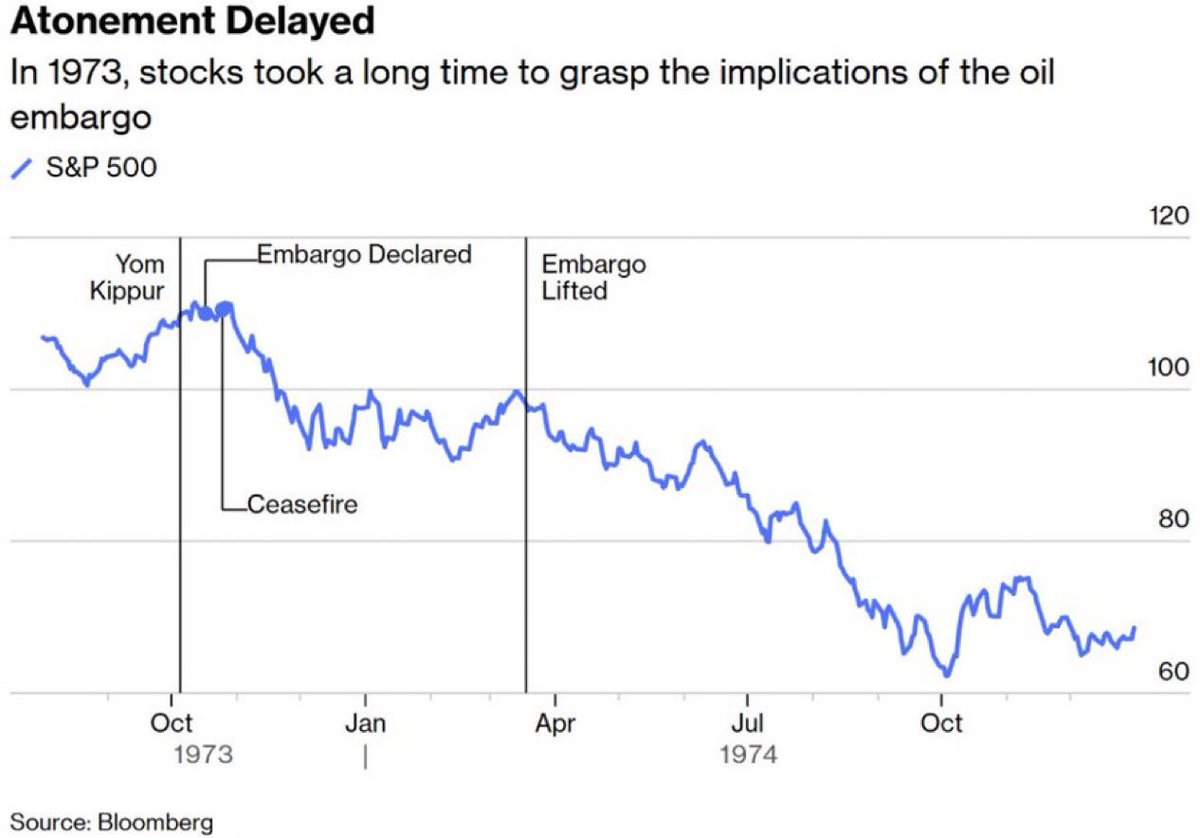
They crash when the illusion of safety returns During the embargo: - Everyone knew things were bad - Expectations were already low - Risk was obvious After it was lifted: - People thought the worst was over - Markets stabilized - Positioning got complacent But then the damage was already done
English
0
0
2
88
NoLimit
NoLimit@NoLimitGains·
The 1973 stock market crash didn’t happen during the oil embargo, it happened in the 6 months after it was lifted.
NoLimit tweet media
English
147
196
1.8K
172.9K
Luke
Luke@Lukbut·
SpaceX, OpenAI, and Anthropic are projected to IPO in the next 12 months But think about how fast this is happening... It took decades to build companies to 1T valuations: - Apple (42 years) - Microsoft (44 years) - Amazon (24 years) Now we’re creating trillion-dollar companies in under a decade - SpaceX controls access to space + satellites (20 years) - OpenAI controls intelligence layers (11 years) - Anthropic controls intelligence layers (6 years) That’s very different from past cycles Before: Companies sold products BUT NOW: Companies control entire systems
shirish@shiri_shh

The biggest IPO run in the history of the market three $1T+ companies. possibly all going public in the next 12 months. SpaceX IPO: $1.75T. OpenAI IPO: $1T Anthropic IPO: $1T we're living through the greatest technological wealth creation in history.

English
0
0
4
359
Luke
Luke@Lukbut·
EXPLAINED: OPEC is a group of oil-producing countries that work together to: - Control supply - Influence oil prices Think of it like a "team" that limits how much oil gets sold to keep prices stable (or higher) So what does it mean if the UAE leaves? It means one of the biggest oil producers is no longer following the team rules If the UAE leaves, it can: - Produce more oil whenever it wants - Ignore production cuts - Compete directly with other OPEC countries
English
0
0
9
389
The Kobeissi Letter
The Kobeissi Letter@KobeissiLetter·
BREAKING: The UAE announces it will be leaving OPEC effective May 1st. This will officially end the UAE's 59-year membership in the organization. The Iran War is redefining the global energy industry forever.
The Kobeissi Letter tweet media
English
384
1.9K
10.3K
894.6K
Luke
Luke@Lukbut·
For 20+ years the model was simple: - Build property - Sell land - Use debt to fund more growth That cycle is now broken China has to rebuild its economy without real estate BUT Consumers aren’t stepping in Because when 70% of your wealth is tied to housing… And then housing falls… People won't spend And that results in a LOOP where: 1. Property falls 2. Consumers pull back 3. Growth slows 4. Property falls even more
English
2
0
5
69
NoLimit
NoLimit@NoLimitGains·
🚨 CHINA IS COLLAPSING China’s real estate just hit its lowest level since 2005. The index peaked at 114 in 2021 and sits at 86 today. That is a 25% collapse in four years. Real estate was 25% of China’s entire GDP and 70% of household wealth was tied to property. That wealth is being permanently destroyed. Local governments funded themselves through land sales for decades. That revenue is gone and local government debt now stands at $18.9 trillion. Two thirds of new borrowing is being used just to service old debt. 80 million homes are sitting empty with no buyer in sight. Evergrande collapsed under $300 billion in liabilities and got liquidated. China Vanke is fighting to avoid the same outcome. Beijing has officially declared the old model dead: high debt, high leverage, high turnover, buried without a replacement ready. This is not a housing correction. This is the largest ongoing wealth destruction event in the world right now and Western markets are not pricing any of it in. The second order effects haven’t even started. I’ll make another post later and trust me, you don’t want to miss it. Turn on notifications, this is important. A lot of people will regret not following me.
NoLimit tweet media
English
319
525
3.2K
370.9K
Luke
Luke@Lukbut·
Its not just OpenAI It’s an AI business model problem AI has a hidden issue: Costs scale with usage More users doesn’t always mean more profit It can actually mean: - Higher compute costs - More infrastructure spend - Thinner margins And with competition: - Anthropic - Google - Open source models Their pricing power disappears fast
English
8
0
7
170
NoLimit
NoLimit@NoLimitGains·
🚨 OpenAI missed its own revenue and user targets. They failed to hit multiple monthly revenue goals in 2026 after losing ground to Anthropic in coding and enterprise markets. The CFO warns that OpenAI might not be able to pay for contracts if revenue doesn’t grow fast enough.
English
151
68
1.2K
125.8K
Luke
Luke@Lukbut·
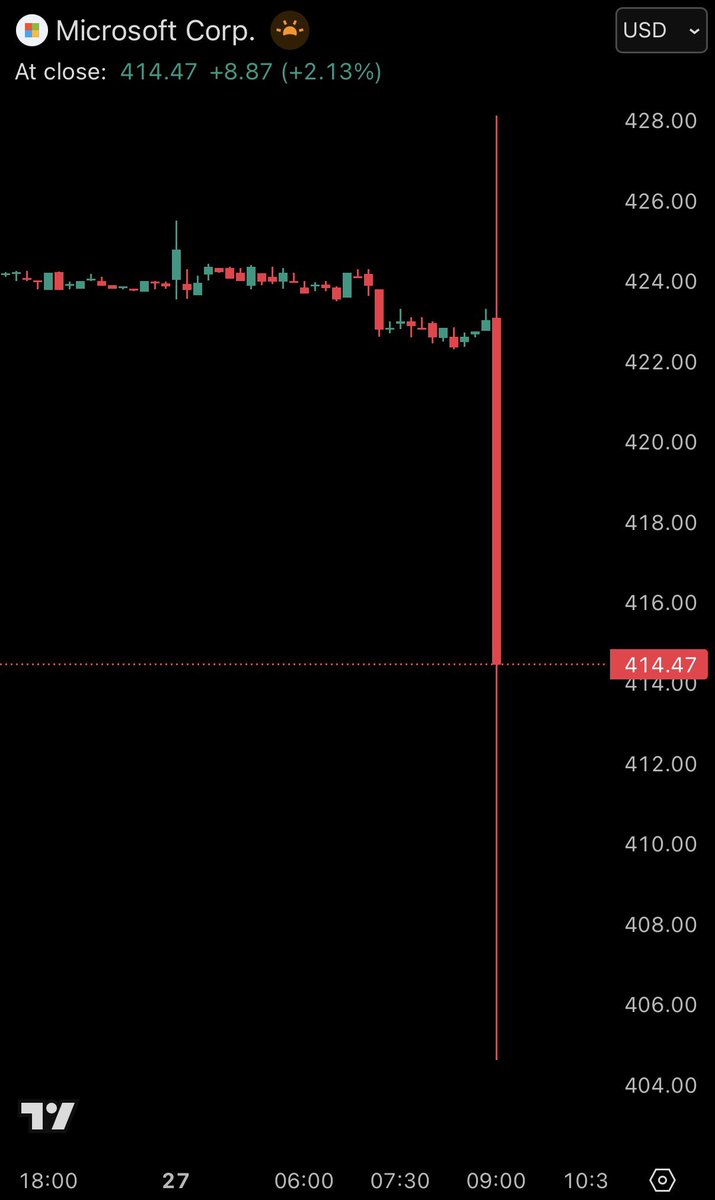
Before: Microsoft had a special deal with OpenAI - Exclusive access to the tech - Deep integration into products (Copilot, Azure, etc.) - Revenue sharing = Microsoft pays OpenAI when it makes money from it That exclusivity = competitive advantage Now: Microsoft is saying: - The license is non-exclusive - It may stop sharing revenue Why the stock dropped: 1. Losing exclusivity = losing an edge If others can access similar tech, Microsoft is no longer "special" 2. More competition is coming Think Google, Amazon, others building or partnering with AI models 3. Uncertainty Investors don’t like when a winning formula changes
English
0
0
5
292
The Kobeissi Letter
The Kobeissi Letter@KobeissiLetter·
BREAKING: Microsoft stock, $MSFT, falls -5% after announcing that its OpenAI license will now be nonexclusive and it will no longer pay revenue share to OpenAI.
The Kobeissi Letter tweet media
English
448
984
7.9K
1.5M
Luke
Luke@Lukbut·
9. Weekly US Jobless Claims – Thursday (Key real-time signal of whether the labor market is starting to crack) 10. US Treasury auctions (2Y, 5Y, 7Y) - This week (Demand for US debt = direct signal of global confidence + impacts rates) 11. Oil inventory data (EIA) - Wednesday (Critical right now with supply disruptions and volatility in energy markets) 12. US Dollar volatility/positioning shifts - Ongoing (Hedge funds recently flipped heavily long USD - any unwind could move everything) 13. Airline/travel guidance updates - Ongoing (Flight cuts, fuel cost pressures, and geopolitical rerouting are starting to show up) 14. Semiconductor supply chain/AI capex commentary during earnings - Wednesday/Thursday (This is the real driver behind the market right now, not just headline earnings)
English
0
0
4
830
The Kobeissi Letter
The Kobeissi Letter@KobeissiLetter·
Key Events This Week: 1. US Markets React to Cancellation of US-Iran Talks - 6 PM ET Today 2. April Consumer Confidence data - Tuesday 3. April Fed Interest Rate Decision and Statement - Wednesday 4. Microsoft, Amazon, Meta, Google Report Earnings - Wednesday 5. Apple Reports Earnings - Thursday 6. US Q1 2026 GDP Data - Thursday 7. March PCE Inflation data - Thursday 8. ~20% of S&P 500 companies report earnings this week Buckle up for a highly eventful week ahead.
English
163
614
4.1K
349.3K
Luke
Luke@Lukbut·
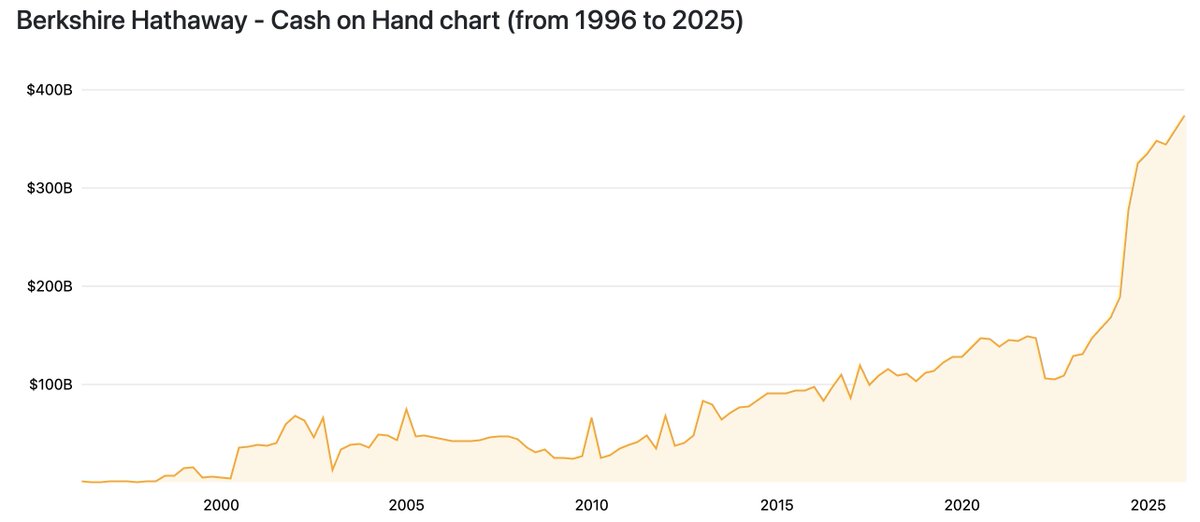
Warren Buffett is sitting on $382 BILLION in cash BUT why now? Let’s start with history: The last times Buffett held unusually high cash levels: 1999 - right before the dot-com crash 2007 - right before the financial crisis Both times, markets were expensive Both times, he waited Both times, he deployed cash AFTER things broke apart But here’s the part most people miss: Buffett doesn’t hold cash because he’s trying to time the market He holds cash because he can’t find enough good deals... So what’s happening today? Valuations are stretched Stocks are near highs, especially in AI and tech Interest rates are high He can earn ~5%+ risk-free in Treasuries That’s a HUGE change from the last decade Deal flow is weak Private equity + companies aren’t desperate yet Meaning fewer bargain opportunities Buffett is waiting for stress
Luke tweet media
English
0
0
5
244
Luke
Luke@Lukbut·
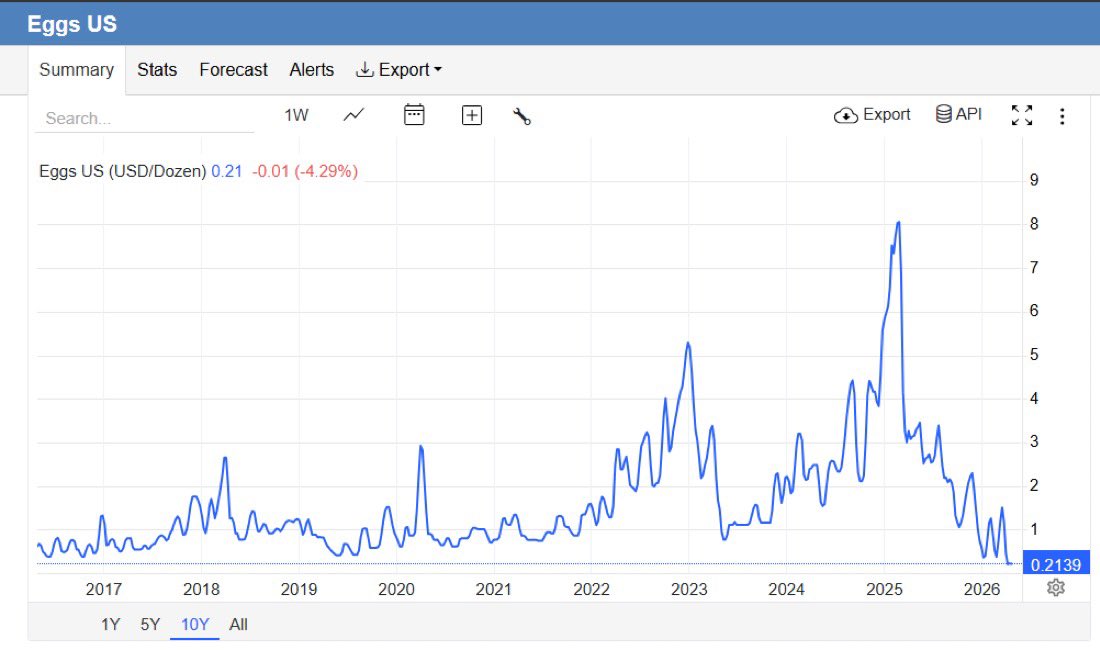
EXPLAINED: Egg prices exploded over the last couple years mainly because of avian flu (bird flu) - populations declined - fewer chickens = fewer eggs Farmers responded the only way they can: - Rebuilt flocks - Increased production - Expanded supply Now we have the opposite problem: Too many eggs relative to the demand This is a classic cycle: Shortage = prices spike Producers overreact = oversupply Therefore prices crash
English
7
0
9
152
NoLimit
NoLimit@NoLimitGains·
Eggs are about to turn negative. Meaning you will soon be paid to “buy” eggs.
NoLimit tweet media
English
261
175
4K
453K
Luke
Luke@Lukbut·
BUT prices can stay high even while money flows out Why? Because flows and prices aren’t the same thing Flows = who is entering or exiting positions Price = where supply and demand are right now So you can have: Outflows (people taking profits) At the same time as: High prices (because supply is still tight)
English
0
0
12
773
The Kobeissi Letter
The Kobeissi Letter@KobeissiLetter·
Investors are cashing-in massive profits from the oil trade: The United States Oil ETF, $USO, has posted -$900 million in outflows so far in April, on track for its largest monthly withdrawal since the 2009 record of -$1.2 billion. Still, the ETF is up +2% month-to-date, after rising as much as +100% from January to early April. This comes after +$700 million in inflows in March, the highest monthly intake since the 2020 pandemic. By comparison, the largest monthly inflow on record was +$3.2 billion in April 2020, followed by +$2.1 billion in March 2020. Overall, $USO has surged +91% year-to-date, on track for one of its best annual performances this century, followed by +65% in 2021 and +47% in 2007. Oil markets have made history.
The Kobeissi Letter tweet media
English
106
131
919
145.4K
Luke
Luke@Lukbut·
@NoLimitGains Even if the Strait reopens tomorrow It doesn’t fix instantly Because now you have a backlog of ships waiting So supply comes back slowly
English
3
0
10
2.6K
NoLimit
NoLimit@NoLimitGains·
Omg. This is absolutely insane. Why is everyone acting like this is normal?
NoLimit tweet media
English
314
288
2.6K
301.4K
Luke
Luke@Lukbut·
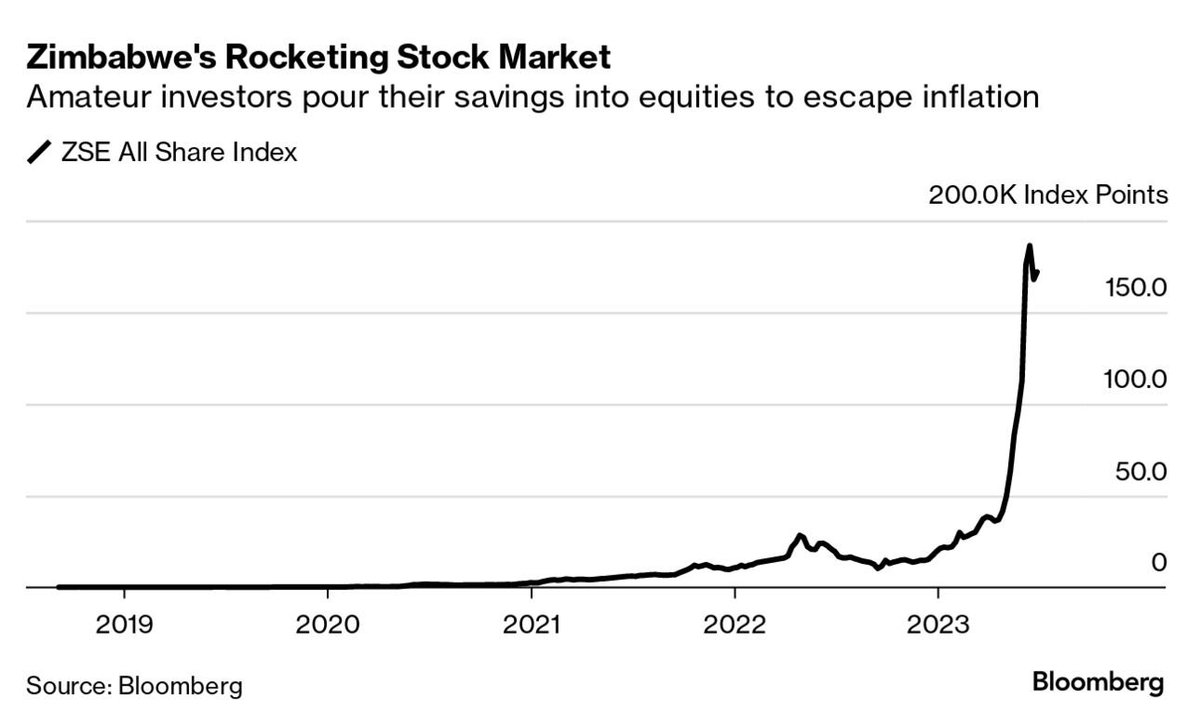
EXPLAINED: Their currency keeps losing value very fast So if you hold cash, you get poorer every day So what do people do? They buy anything that might hold value - Stocks - Real estate - Even basic goods That pushes stock prices up It's not like these companies are doing great Its only because money is trying to escape the currency
English
6
0
9
332
NoLimit
NoLimit@NoLimitGains·
Zimbabwe’s stock market is exploding. The reason behind this will surprise you.
NoLimit tweet media
English
177
75
1.4K
334.3K
Luke
Luke@Lukbut·
@NoLimitGains So basically shorts were buying because they had to That’s forced demand And then retail shows up They sees the price going up Adds then they optional demand on top of forced demand and the stock skyrockets even more
English
3
0
5
1.8K
NoLimit
NoLimit@NoLimitGains·
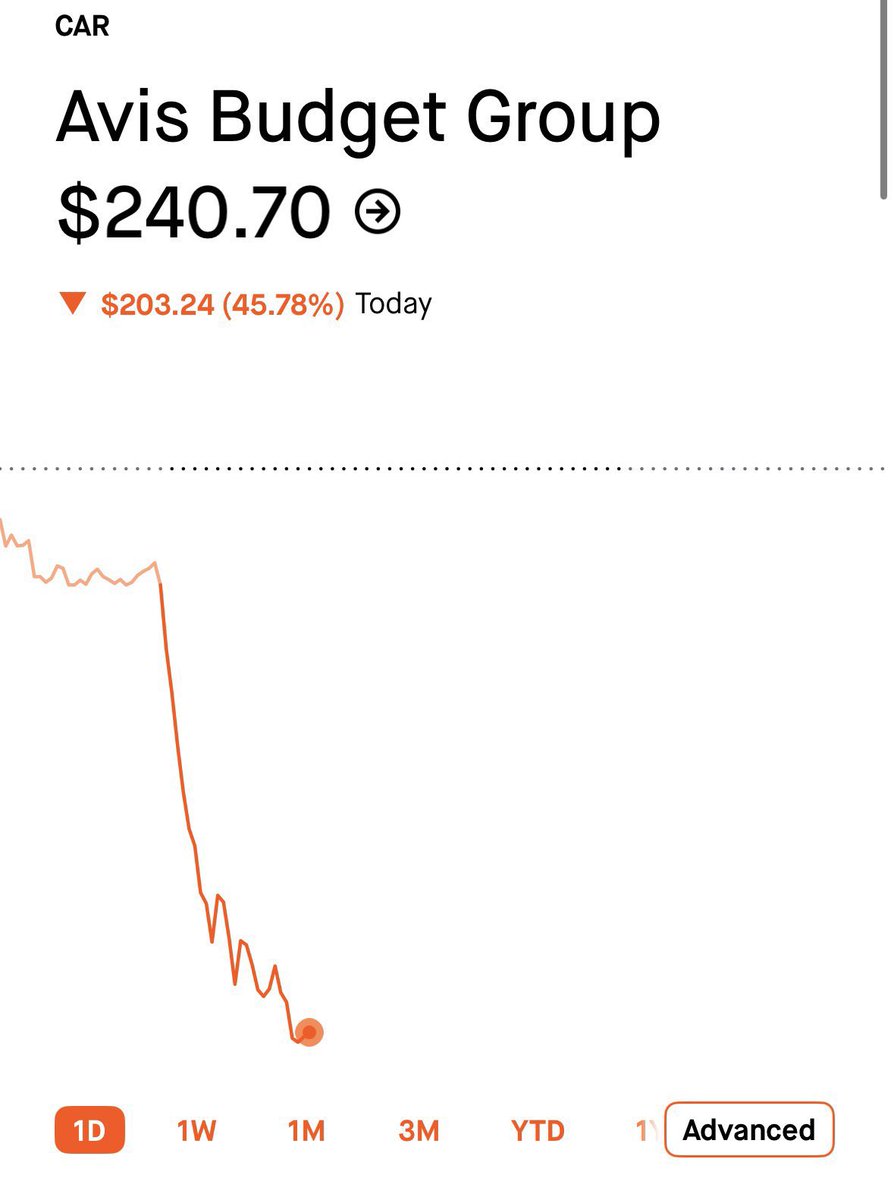
🚨 THIS SHOULD BE ILLEGAL What happened to CAR this week should not be legal. A company with $8.6 billion in debt, losing money, no major news, no earnings beat. Stock goes from $107 to $850 in a month. Then crashes 80% in 2 days. Here’s exactly what happened, read it twice: Two funds, RS Investment and Pentwater Capital, quietly bought up over 71% of the entire freely traded float. At the same time, 86% of that same float was shorted. Once they controlled that much of the supply, short sellers couldn’t buy back their positions without pushing the price up themselves. THEY WERE TRAPPED. So the stock went vertical. Not because Avis suddenly became a great business, but because two players engineered a situation where the other side had NO EXIT. That’s a corner. In most markets, cornering a stock is ILLEGAL. In the US equity market in 2026, it just gets called “a short squeeze” and ends up on CNBC. By the time retail saw the headlines, it was too late but they bought it anyway. Every single person who bought above $300 because they saw a number going up fast is now underwater, waiting for a recovery that WILL NEVER HAPPEN. The funds that built the position are GONE. THEY SOLD INTO THE “SQUEEZE”. Into the retail buying. The SEC will probably open an inquiry, write a strongly worded letter, and close the file in 18 months. Absolutely NOTHING will change. And the next one is already being set up somewhere else. If you want to know where I AM deploying capital, turn on notifications and pay close attention. A lot of people will regret not following me.
NoLimit tweet media
English
398
404
3.1K
660.2K
Luke
Luke@Lukbut·
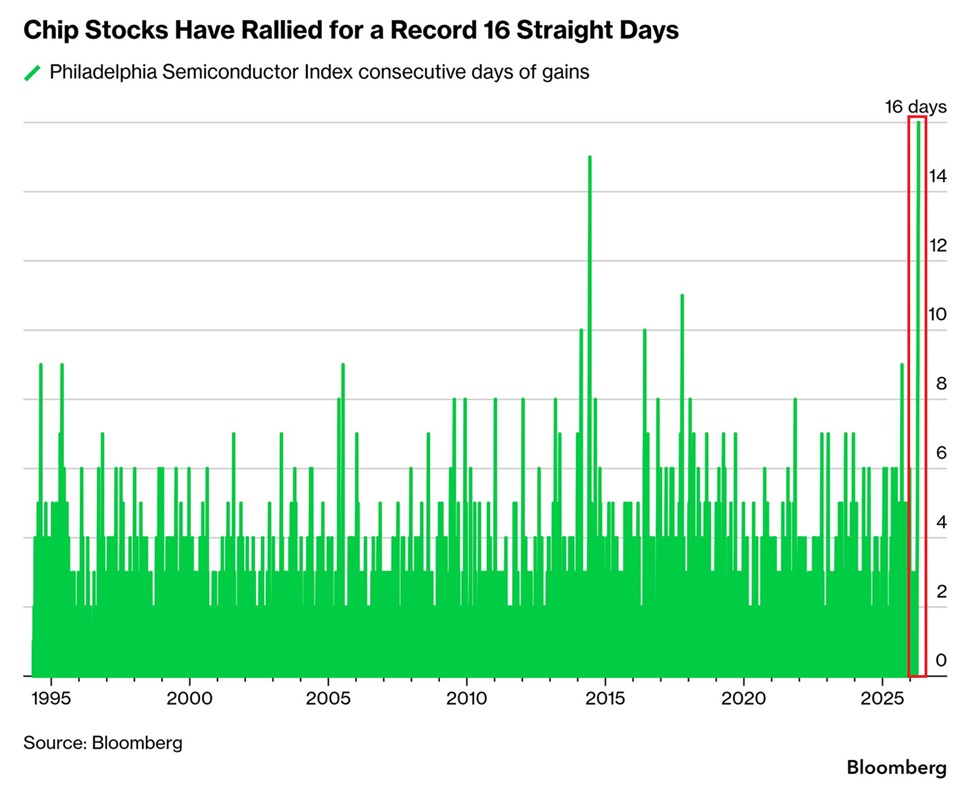
Think about what’s happening globally: War = supply chains matter again Energy shocks = infrastructure matters AI race = compute matters Semiconductors sit in the middle of all three...
English
0
0
5
506
The Kobeissi Letter
The Kobeissi Letter@KobeissiLetter·
US semiconductor stocks are extending their historic rally: The Semiconductor Index, $SOX, has gained for 16 consecutive trading sessions, the longest streak in history. This has officially surpassed the previous record stretch of 15 days posted in 2014. Over this period, $SOX has surged +38.7%, on track for its largest monthly gain since February 2000. Semiconductor ETFs $SOXX and $SMH have attracted +$2.1 billion and +$3.4 billion in inflows so far in April. Combined, they have pulled in +$5.5 billion, already surpassing any other full month of inflows on record. The tech trade is back.
The Kobeissi Letter tweet media
English
122
169
1K
180.9K
Luke
Luke@Lukbut·
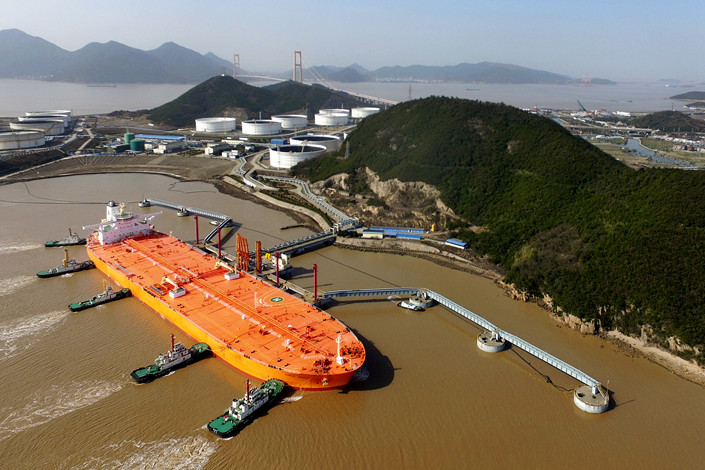
If the US can decide who moves through the Strait It can influence: - Who gets oil - When they get it - How much they pay for it Countries like China, India, and Europe rely heavily on that flow So this becomes global leverage overnight Before = oil price was set by supply and demand Now = oil price is also set by politics and access
English
2
0
5
87
NoLimit
NoLimit@NoLimitGains·
JUST NOW: Trump issues new Truth Social statement declaring total US control over the Strait of Hormuz. Key details: 1: Trump says Iran is “having a very hard time figuring out who their leader is”, citing an internal power struggle between “Hardliners” losing on the battlefield and “Moderates” gaining respect 2: Trump states: “We have total control over the Strait of Hormuz, no ship can enter or leave without the approval of the United States Navy” 3: Trump describes the Strait as “Sealed up Tight” until Iran is able to make a deal 4: US Interior Minister Burgum clarifies: “Trump’s order on boats laying mines is not an escalation” The Strait of Hormuz handles roughly 20% of global oil supply. Trump is using it as his primary leverage. I’ll keep you updated. Turn on notifications right now. Many people will wish they followed me sooner.
English
159
51
879
170.4K
Luke
Luke@Lukbut·
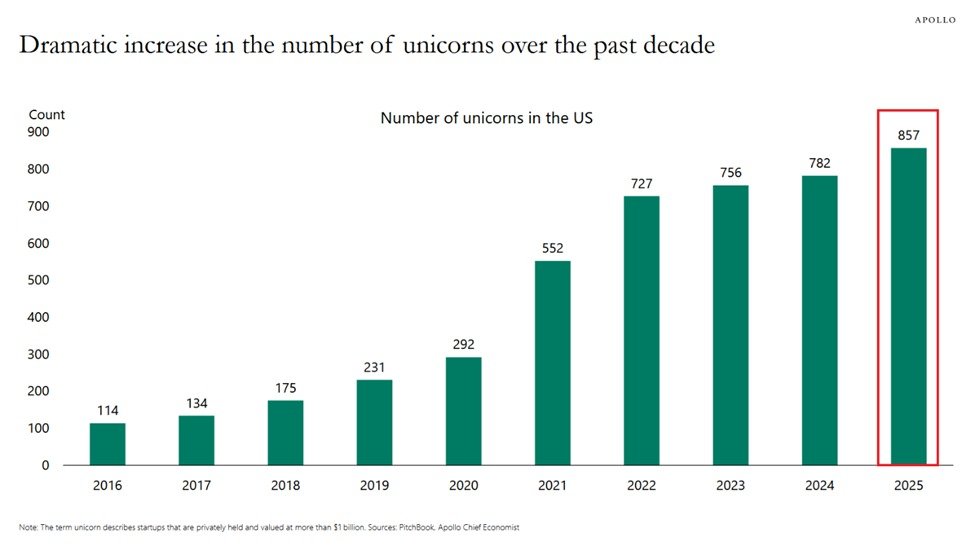
A big part of this surge is AI… but not in the way people think AI didn’t only create new companies It also inflated these companies valuations faster than fundamentals Why? Because capital is chasing a single theme These funds NEED exposure to AI so they compete to get in early That drives valuations up quickly And that’s how you get more $1B companies Even if the business itself isn’t proven yet
English
0
0
5
476
The Kobeissi Letter
The Kobeissi Letter@KobeissiLetter·
The US has never had more billion-Dollar startups: The number of unicorns in the US surged +75 YoY, or +9.6%, to a record 857 in 2025. A unicorn is a privately held startup valued at more than $1 billion. This marks the 9th consecutive annual increase. Since 2016, the number of unicorns has risen more than +600%. The US private market has never been this large.
The Kobeissi Letter tweet media
English
107
122
1K
182.5K
Luke
Luke@Lukbut·
So why were ships still near or trying to move? 1. Positioning A lot of vessels were already inside the Gulf before things escalated They now have to get out eventually So they sit near the exit waiting for any possible window 2. Conflicting signals They've had mixed messages: - Ceasefire headlines - Talks restarting - Claims it’s “open” - Then military saying it’s still controlled That creates confusion Some operators test the route
English
9
0
8
1.6K
NoLimit
NoLimit@NoLimitGains·
🚨 Two container ships were hit near the Strait of Hormuz today Brent touched $100 before pulling back to $99.20, WTI is sitting at $90.30, both up roughly 0.8% on the day. One of the attacks has been directly pinned on the IRGC, both crews are reportedly safe. Trump extended the ceasefire and markets held onto that, but nobody is pretending talks are actually moving forward. That tension is exactly why oil can’t find a direction right now, the headline looks fine but the reality underneath it doesn’t. Most analysts have $75–80 as their price target for the next 3–6 months once the risk premium starts bleeding out, but every ship that gets hit keeps that premium alive longer than expected​​​​​​​​​​​​​​​​. I’ll share another update shortly. Follow with notifications before it’s too late.
English
104
54
989
236.5K
Luke
Luke@Lukbut·
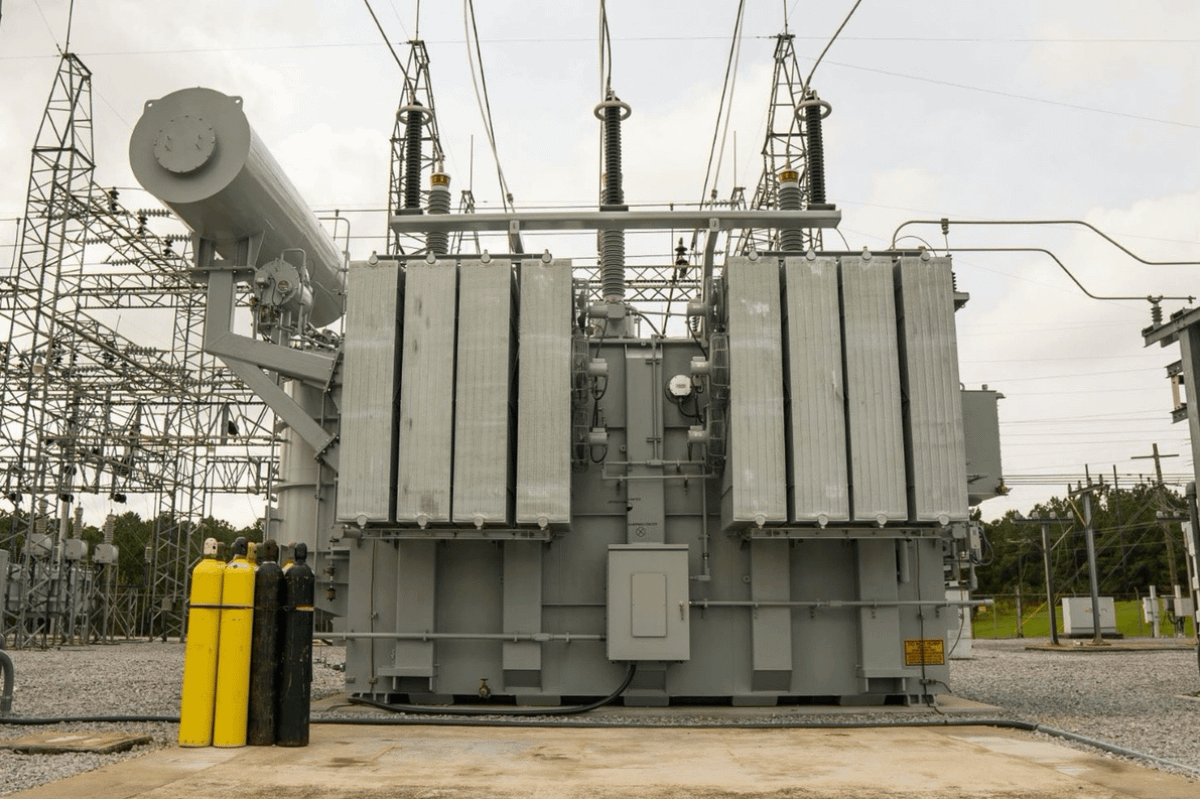
This is turning into an infrastructure race, and not really a technology race The winners will be the ones that can secure the most electricity first not the ones with the best models Data centers = massive power demand Transformers = what actually delivers that power No transformers = no data center = no AI
English
1
0
18
3.6K
Gaurab Chakrabarti
Gaurab Chakrabarti@Gaurab·
Half of America's AI data centers planned for 2026 are delayed or cancelled. They're waiting on transformers. I build chemical plants. Transformer prices have tripled in the last four years. Lead times are 2 to 4 years. Each new plant we build competes with AI data centers for the same grid equipment. Every large power transformer in America runs on grain-oriented electrical steel. It's made by rolling iron and silicon together until their crystals align in one direction. No other alloy works at utility scale and only one US company makes it: Cleveland-Cliffs. The average large power transformer on the grid is 38 years old. Service life is 40. Amazon, Google, Meta, and Microsoft committed $650 billion to AI infrastructure this year. Nvidia's most expensive GPU is useless without a transformer.
Gaurab Chakrabarti tweet media
English
346
2.1K
8K
761.3K
Luke
Luke@Lukbut·
Today stocks are more about positioning than ever. In $CAR, the fundamentals really didn’t change at all But the ownership did - So float got locked up - Shorts got crowded - Options forced more buying - That alone can move a stock more than earnings ever will When too many people are on one side (short) And not enough shares exist The price stops being "fair value" and it become only just a pressure valve
English
0
0
3
2.1K
Bull Theory
Bull Theory@BullTheoryio·
🚨 JANE STREET IS EVERYWHERE. The same firm accused of rigging markets in India and linked to the daily 10 AM Bitcoin dump pattern may now be behind the $CAR short squeeze as well. And the data does not lie. $CAR was a dying rental car company. Avis posted an $889 million net loss in 2025, carried roughly $25 billion in debt, and revenues were falling. Then in just 5 weeks, the stock exploded nearly 700%. Not because Avis fixed anything. Because the stock may have been turned into a weapon. Two hedge funds, SRS Investment Management and Pentwater Capital, quietly accumulated 71% of all Avis shares. When you include swap exposure, their combined economic interest reportedly crossed 108% of total shares outstanding. At the same time, 54% of the float was already shorted. By April 21, Ortex showed 86.2% of the free float sold short, near all-time record levels. That creates a basic problem. There were not enough shares available for shorts to exit. Short sellers lost $4.09 billion in April alone. $1.01 billion was wiped out in a single Monday when CAR surged 23%. By Tuesday morning, the stock traded at $647. Now meet Jane Street. They filed a Schedule 13G disclosing 1,910,016 Avis shares, equal to 5.4% of the company as of December 31, 2025. They also reportedly held 3.7 million CAR call options valued around $476 million . Call options rise in value when the stock rises. The higher the squeeze pushed CAR, the more those calls gained. Jane Street’s broader portfolio is heavily options-based. They do not need markets to go up or down. They need violent movement. But here is where it gets interesting. A setup like this can pay twice. First, benefit from the squeeze higher as trapped shorts are forced to buy back stock at rising prices. Then, once the rally exhausts and liquidity fades, flip positioning and profit from the collapse lower. The public usually only sees disclosed long equity stakes. The derivatives book is where the real exposure can sit. And we have already seen regulators describe similar structures before. In India, SEBI issued a 105-page order accusing Jane Street of buying large amounts of underlying stocks to push Bank Nifty higher while simultaneously holding much larger bearish options positions. Later in the day, those stock positions were unwound, the index dropped, and the options paid. SEBI impounded roughly $567 million. On one session, they allegedly lost money on the stock leg while making far more on the options leg. The stock trade was described as the cost of running the operation. In Bitcoin, traders tracked a repeated daily 10 AM Eastern selloff pattern where BTC would get hit at the U.S. open, followed by sharp recoveries. The theory was simple: create panic on the dump, then profit on the rebound. In crypto, Terraform Labs’ bankruptcy administrator later filed a federal lawsuit alleging Jane Street used non-public information to reduce Terra exposure before the $40 billion Terra/LUNA collapse. Jane Street denies the claims. Now look back at $CAR. Pentwater reportedly sold massive deep in-the-money put options at $110–$150 strikes while the stock was near $96. Buyers of those puts had to hedge by buying the underlying stock. That created fresh demand in a market with almost no available float. Price exploded. Then Avis issued 5 million new shares near record highs. And Jane Street was sitting there with large call exposure as the squeeze intensified. Was any of this coordinated? Nobody knows yet. No formal U.S. regulatory action has been filed. But the structure keeps repeating: India: move the underlying, profit in derivatives. Bitcoin: dump first, profit on rebound. CAR: ride the squeeze higher, then potentially the unwind lower. The cash position can be the instrument. The options book can be the profit center. And a company losing $889 million a year was suddenly priced like a winner. If history is repeating, the squeeze was the first payday. The crash could be the second.
Bull Theory tweet mediaBull Theory tweet mediaBull Theory tweet mediaBull Theory tweet media
English
100
345
1.7K
512.6K
Luke
Luke@Lukbut·
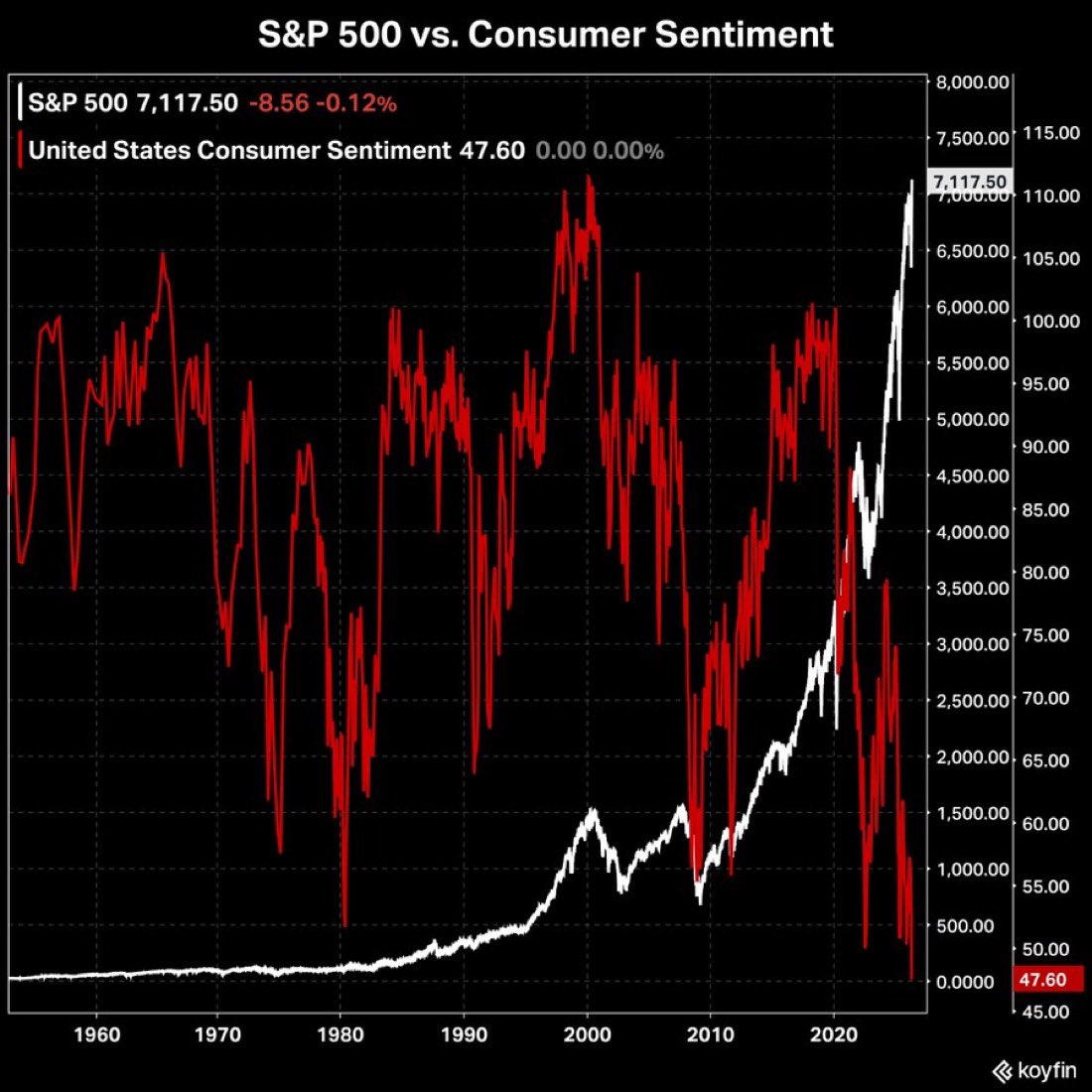
Low sentiment doesn’t crash markets anymore It actually helps them When people feel bad: - They spend less - Growth slows - Inflation eventually cools And that’s exactly what the Fed wants Bad consumer mood = higher chance of rate cuts later
English
2
0
3
262
NoLimit
NoLimit@NoLimitGains·
I can’t believe it. This is absolutely insane. We are currently in uncharted territory.
NoLimit tweet media
English
406
458
4.2K
755.5K