Chemical scientist, investor on basic materials. My positions: uranium, ree, platinum, palladium, gold, silver, copper. The bull run of commodities is started!
@quakes99 $113M cash pile growing. No uranium bought yet but that spring is coiling tight. When SPUT deploys into spot, utilities feel that bid immediately. Smart money stacking fiat to stack U3O8. Baseload nuclear wins. #Uranium 🪙🏧💰⚛️⛏️🐂
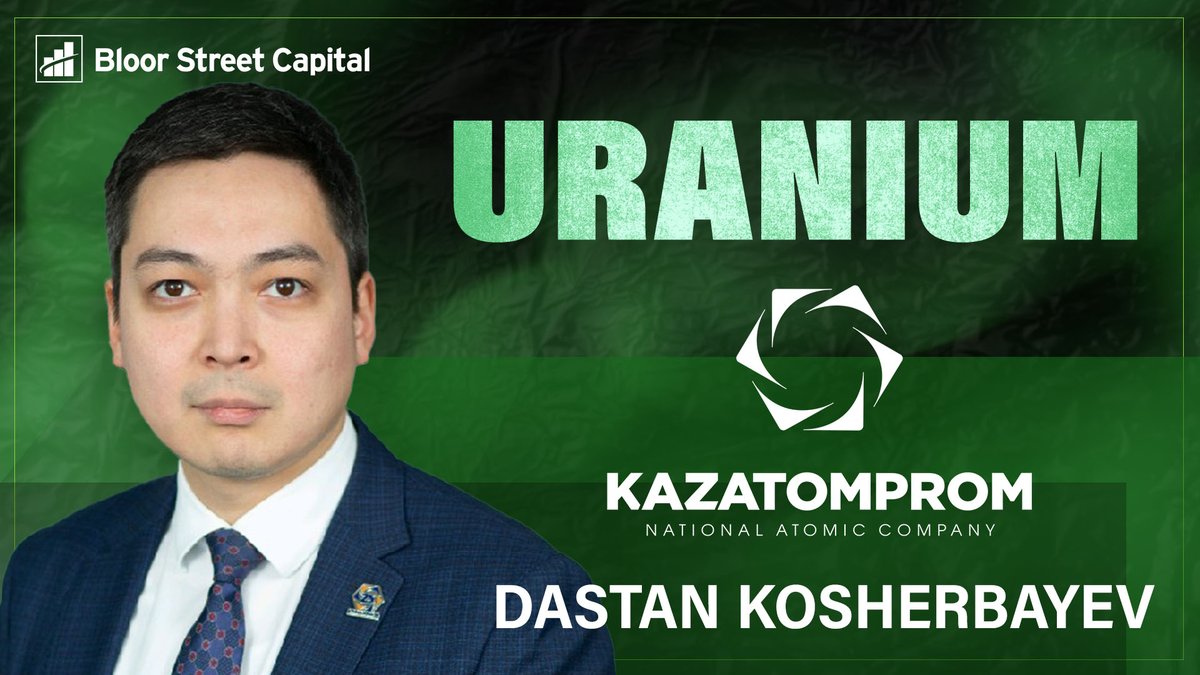
@NAC_Kazatomprom, the world's largest #uranium producer, released its 2026 production guidance and Dastan Kosherbayev provides an overview of the numbers along with how geopolitics is impacting fuel buyers. Replay bit.ly/4dr3R5B
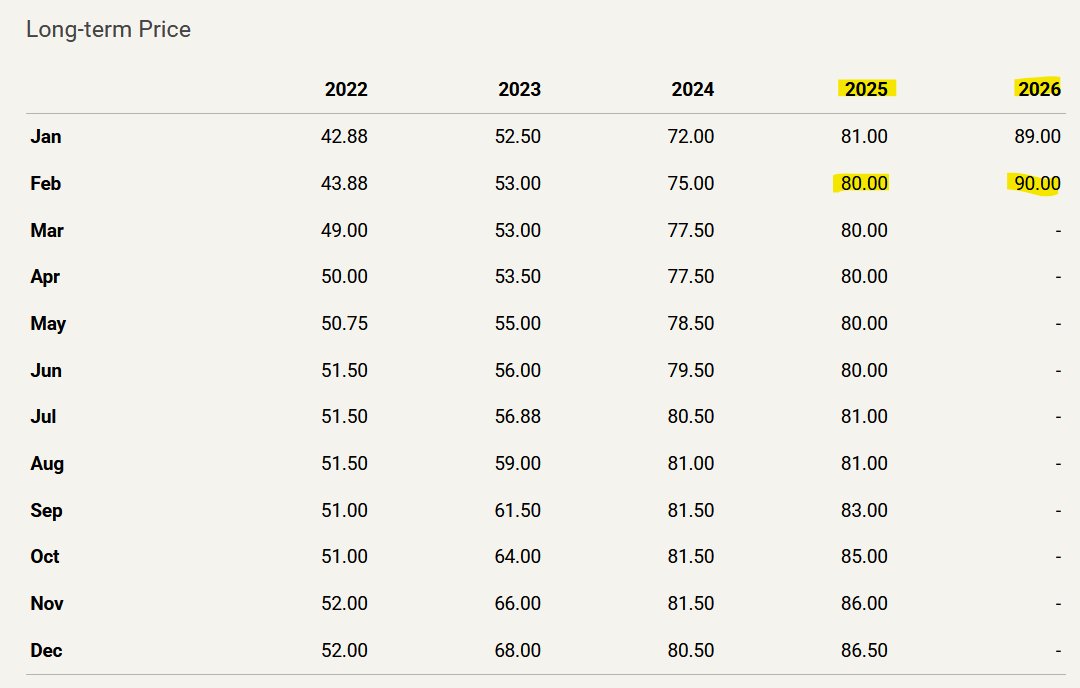
🌀Up, Up & Away!🪁 TradeTech's March Long-term #Uranium price soared +$3 to new 18-year high of $93/lb #U3O8⤴️💲🛢️☢️🥳 just $2 short of all-time $95 high in March 2008!🤏🌋🤠🐂
Prices across #Nuclear fuel cycle are at all-time highs:
🔷Conversion NA Long $55 Spot $64👊
🔷Enrichment SWU Long $177 Spot $230👊
🌊🏄
Short-term: volatile swings (possible dips toward $70 if recession dominates). Medium/long-term (months to years): strong upside, with analysts already eyeing $100–$150+ as baseline and higher in crisis scenarios as the gold-silver-like ratio dynamics play out in energy metals. This aligns with historical oil-crisis behavior and current fundamentals tying fossil-fuel shocks directly to nuclear outperformance.
Note that exact outcomes depend on conflict duration, Strait of Hormuz disruptions, central bank responses, reactor build timelines, and secondary supply (inventories). Uranium is more fundamentals-driven (supply/demand) than pure safe-haven like gold, so it amplifies both upside (nuclear boom) and downside (growth fears). This is not financial advice—markets can deviate sharply from fundamentals in the short run.
#URANUM
Uranium prices would likely rise substantially over the medium to long term (potentially toward $150–$300+/lb or higher from current levels around $85/lb as of mid-March 2026), though with significant short-term volatility and possible pullbacks. This scenario—prolonged Middle East conflict driving oil (Brent currently ~$100–$120+/bbl amid the escalation) and natural gas prices to double ($200–$240+) or triple ($300+)—would supercharge the ongoing nuclear renaissance, mirroring the 1970s oil shocks when uranium prices exploded (inflation-adjusted peaks equivalent to $150–$200+/lb today). The structural supply deficit would widen while nuclear power becomes dramatically more competitive against spiking fossil-fuel generation costs.
Key Bullish Drivers
• Energy security and nuclear competitiveness boost: Skyrocketing oil/gas prices make natural gas and coal-fired electricity prohibitively expensive (gas plants can see 70–90% of costs tied to fuel). Nuclear fuel (uranium) represents only a tiny fraction of total generation costs—doubling uranium from $50 to $100/lb raises nuclear LCOE by just ~10% or less, while gas/coal costs surge far more. This triggers policy acceleration: reactor restarts (e.g., Europe/Japan), new builds in Asia, and SMR deployments for AI data centers and baseload power. Governments prioritize domestic energy independence away from Middle East volatility, locking in long-term uranium contracts.
• Higher mining and fuel-cycle costs tighten supply: Uranium production (especially ISR and underground mining) is highly energy-intensive—diesel for operations, electricity for milling/conversion, and power-heavy enrichment (60–65% of delivered fuel costs). A 2–3x energy spike sharply lifts all-in sustaining costs across producers (Kazakhstan, Canada, Australia, Namibia), delaying or canceling marginal projects and worsening the existing structural deficit (already ~50M lbs near-term, projected to grow to 85–197M+ lbs by 2030–2040 without rapid new supply). New mines require even higher incentive prices due to long lead times (10+ years).
• Accelerated demand from utilities and tech: Global uranium requirements (~68–77k tonnes in 2025–26) are already rising 3%+ YoY; high fossil prices amplify this via nuclear fleet expansions and data-center deals (AI/power-hungry sectors needing reliable 24/7 baseload). Demand is largely price-inelastic for operating reactors, with uncovered requirements totaling billions of pounds through 2040. Geopolitical risk premium adds urgency to Western diversification from Russian/Kazakh supply.
Countervailing (Bearish) Pressures and Volatility
Higher oil/gas can initially support prices but trigger corrections via:
• Economic slowdown/recession fears — Reduced industrial activity and electricity demand growth could delay new reactor financing or force utilities to draw down inventories short-term.
• Higher interest rates/inflation — Central banks may keep rates elevated longer, raising capital costs for new nuclear projects (though existing plants benefit from stable fuel economics).
Recent real-world example (early 2026 Iran escalation): Uranium spiked above $100/lb on energy-security flows but consolidated to the mid-$80s amid profit-taking and dollar strength—yet the underlying deficit and nuclear tailwinds kept a higher floor intact.
Overall Outlook
In a sustained extreme energy shock, the bullish forces (nuclear competitiveness + policy-driven demand surge + cost-induced supply crunch) would dominate, especially as the market is already in its sixth+ year of deficits with minimal quick-response production capacity.
Strait of Hormuz sulphuric acid disruption → hidden #uranium supply risk 🧵
Strategic implications:
🔜Short-term
Uranium mine output constraints
Higher extraction costs
Temporary supply tightness
➡️Medium-term
Increased uranium prices
Strategic stockpiling by nuclear utilities
More investment in alternative acid sources or recycling
⬆️Long-term
Countries may try to localize sulphur / acid production near mines to avoid shipping chokepoints.
@richard_yellow@quakes99@djg08@numerco We must always distinguish between companies that are still making profits and those that aren't. Those that aren't making profits are "growth" companies and are therefore much more volatile. Their price will stabilize when they all become real money-making machines...
@quakes99@djg08@numerco Get all that, spots white noise.
If utilities were worried we’d see more movement in LT price. Utilities speak to suppliers and on ones concerned. Uranium is plentiful and supply can be turned up when demand calls.
Being devils advocate.
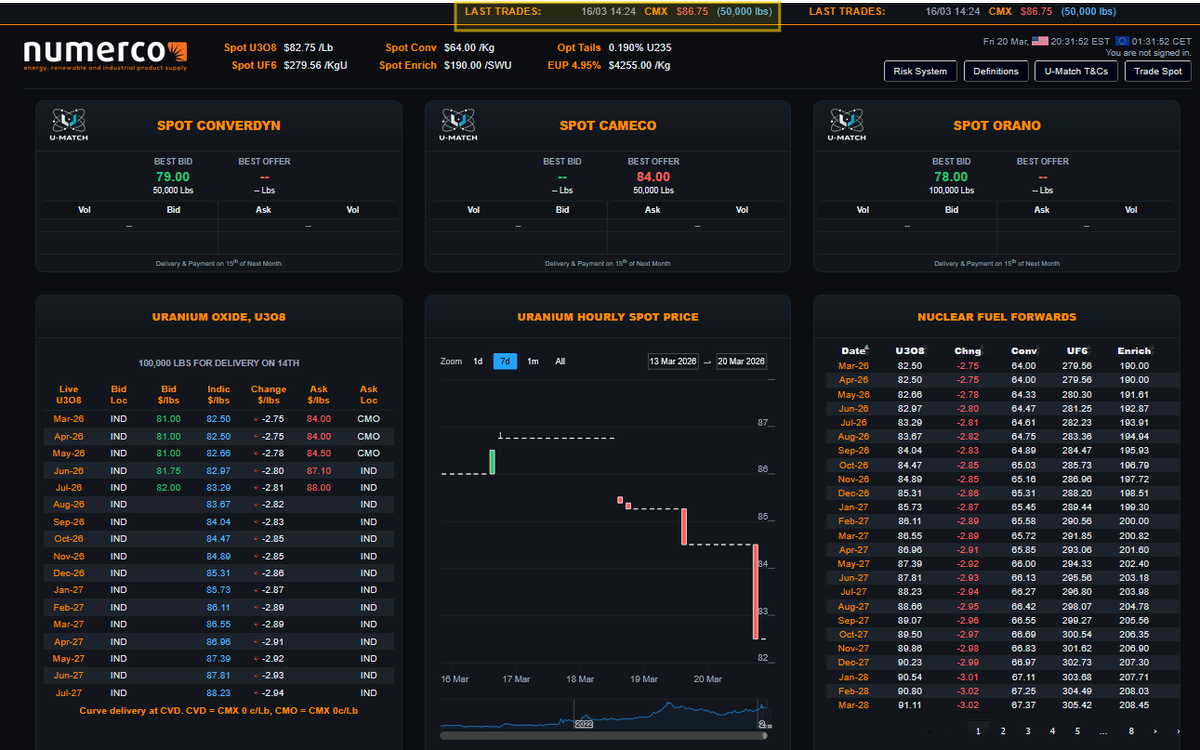
#Nuclear fuel brokers @Numerco reported another Spot #Uranium dip to $82.50/lb today💲🛢️🛝 from buyers pulling their orders & placing very low stink bids🦨 hoping hedge funds might be forced to sell lbs to raise cash on Triple Witching Day on US markets.🎣 No trades reported.🦗🤷♂️
Look. We've been over this dozens of times. If U are looking for price signals to support a #Uranium supply crunch, the Spot price is not where U will find that.🚫 The long-term contract price, currently at an 18-year high of $90, up +$10 in the past year, is where U find that price signal.
Nuclear utility fuel buyers haven't been buying lbs in the Spot market for a long time. They do all their purchasing these days in the long-term contracts market. That's where the action is for them. They need millions of lbs in future deliveries out as far as 2040, not 50,000 lbs next month.
The Spot market right now is only used by a small group of traders and SPUT. The traders are involved in swing trading. They buy lbs at one price and try to sell them to another trader at a higher price and score a few bucks on a trade. SPUT comes in and takes some of those lbs which stops them from being traded back and forth. Meanwhile, some small producers throw a few lbs into the Spot market each month that they want to sell for cash. Traders or SPUT buy those, so they either go to Uranium heaven or they get traded back and forth between traders for a while. They don't go to make reactor fuel. They're just like shares in the stock market that get traded back and forth to make a swing trade profit.
Look at the trades in the Spot market this week. Just one for 50,000 lbs on March 16th at $86.75/lb. The buyers and sellers in the Spot market are just playing a game of cat and mouse to try to shake cheap lbs out of a seller so they can resell them later at a higher price either to a mid-term carry trade contract or to SPUT or another trader when U sector sentiment turns positive and prices rise. There's no rocket science. It's not that hard to understand.
The reason Nuclear reactor fuel buyers aren't in the Spot market is because they don't want to be bidding up the Spot price. Many of their long-term supply contracts have a market price component which is tied to the Spot price at the time of delivery. They're just pushing up the cost of their existing supply contracts if they go into the Spot market and bid up the price. As well, the Spot price is referenced at the negotiating table when producers and utilities are trying to agree on a long-term contract price. If they push up the Spot price then they end up having to accept higher long-term prices on their new contracts, which is the last thing they want.
The fact that the long-term price has shot up $10 in the past year to just $5 short of the 2007/2008 all-time high of $95 is the sign that there is a supply/demand imbalance being created by a shortage of supply which drives the price higher. That's the price signal that tells you about the supply/demand balance. A few traders tossing lbs back and forth between themselves in the Spot market tells you nothing about the supply situation. It's just games they play to make a quick buck on price volatility.😼🧀🐭
Enjoy your weekend!
Kazatomprom’s 2026 Outlook: The "Saudi Arabia of Uranium" is officially nursing a sulfuric acid hangover. #uranium
$KAP just dropped their full-year 2025 numbers alongside their 2026 guidance. If you’re playing the nuclear renaissance, pour yourself a strong cup of coffee. The structural supply deficit just got a massive, heavily audited reality check.
Here’s why the global cost curve is violently shifting to the right:
🚰 1. The Tap is Jammed KAP slashed their 2026 production target by roughly 10%, guiding for 27,500 to 29,000 tU. The culprit? Our old nemesis, the sulfuric acid shortage. It turns out you can’t just spreadsheet in-situ recovery mining into existence. The world’s dominant producer is flat-out telling the market that ramping up operations is way harder than it looks on paper.
📈 2. The Floor is Rising This is the most critical takeaway for the entire sector. KAP’s All-In Sustaining Costs (AISC) are forecasted to spike 21% year-over-year in 2026, hitting $35.00–$36.50/lb. Between the new, differentiated Mineral Extraction Tax (MET) and sticky supply chain inflation, the era of cheap, sub-$20 uranium belongs in a museum.
The real implication: If the absolute lowest-cost producer on earth is watching their expenses balloon, what is the true incentive price needed for Western developers to actually break ground? (Hint: The spot price needs to go much, much higher).
☢️ 3. Utilities Are Finally Waking Up Management explicitly called out that major consumers are now "prioritizing physical availability over short-term price concerns," locking in contracts deep into the next decade. Utility buyers are finally figuring out that securing actual, physical pounds to keep the grid running beats haggling over a few dollars on the spot market.
🦉The macro thes is a structural supply bottleneck, a rising global cost floor, and utility buyers shifting from total complacency to action remains rock solid.
Western producers and near-term developers should be sending KAP's management an edible arrangement today. The premium on reliable, geopolitically secure pounds just got a lot higher.
Stay focused, manage your risk, and respect the math. ⚛️👇
#GOLD is down more than 10% over a 30-day period and it’s worth remembering that, in the Age of Geopolitical Dominance, volatility is a feature—not a bug
For context, btw 1971 and 1980, when gold delivered 38% annualized returns, 37% of monthly closes were negative
🚨🚨🚨 ISRAEL JUST MADE THE SINGLE MOST DANGEROUS MILITARY DECISION OF THE ENTIRE WAR. AND NOBODY UNDERSTANDS WHAT THEY JUST TRIGGERED. 🚨🚨🚨
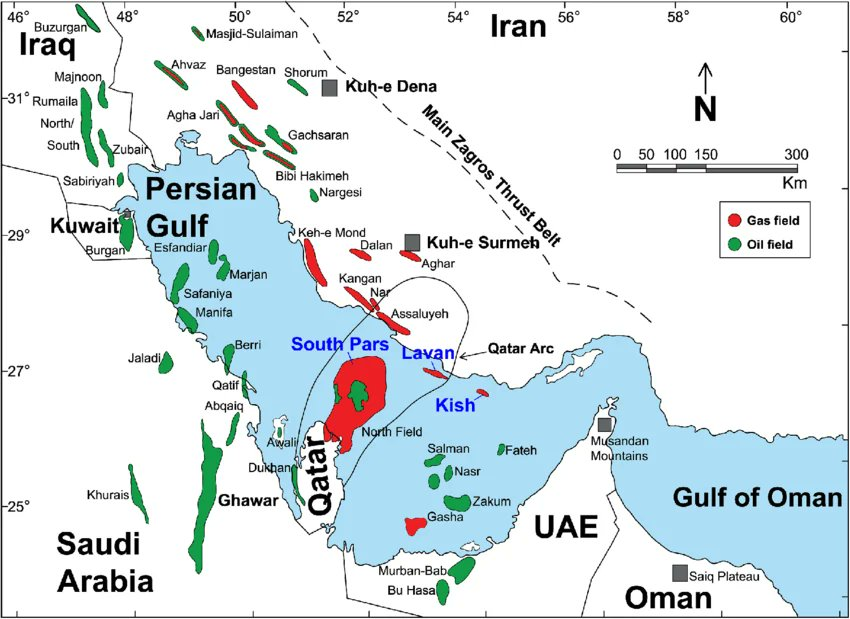
Israel and the U.S. struck South Pars — the LARGEST gas field on the planet. But here's what they either didn't know or didn't care about: South Pars is jointly managed by Iran AND Qatar. They didn't just attack Iran. They attacked the energy backbone of their OWN Gulf allies.
Let that sink in.
💀 The IRGC just declared ALL major energy facilities across the entire GCC as "direct and legitimate targets" — and warned strikes are coming in the "COMING HOURS."
💀 Listed targets: Qatar's LNG complex, Saudi Aramco facilities, UAE oil terminals — EVERYTHING.
💀 Saudi Aramco has already EVACUATED workers from the SAMREF refinery in Yanbu. They're not waiting. They KNOW what's coming.
💀 Iranian hackers have ALREADY hit Aramco's digital systems — posting images and issuing threats to PARALYZE their infrastructure.
💀 Multiple EXPLOSIONS just heard in Riyadh — confirmed by Reuters, AFP, and AP. Sirens sounding in the Saudi capital.
Do you understand the scale of what's happening?
⚠️ Qatar's LNG complex is the LARGEST on Earth. It supplies 30% of the world's liquefied natural gas. If Iran hits it — Europe's heating supply DISAPPEARS overnight. Not in months. OVERNIGHT.
⚠️ Saudi Aramco is the most valuable company on the PLANET — worth $1,800,000,000,000. Its refineries process 12 MILLION barrels per day. One successful strike takes 10% of the world's oil OFFLINE.
⚠️ In 2019, a SINGLE drone attack on Saudi Aramco's Abqaiq facility knocked out 5.7 million barrels per day and sent oil up 15% in ONE session. Iran now has 10x the motivation and NOTHING left to lose.
They're showing you "precision strikes on Iranian targets."
They're NOT showing you that those strikes just gave Iran the JUSTIFICATION to destroy every oil facility from Qatar to Saudi Arabia to the UAE.
Here's the logic — follow it carefully:
→ You bomb a gas field that's JOINTLY OWNED with Qatar
→ Qatar — your own Gulf ally — publicly condemns you
→ Iran uses the attack as justification to target ALL Gulf energy
→ IRGC formally declares Gulf facilities as "legitimate targets"
→ Aramco starts EVACUATING refineries
→ Explosions hit RIYADH
→ You didn't weaken Iran. You gave them the excuse to burn down the ENTIRE Gulf's economy.
If this was a "strategic victory," why is Aramco evacuating workers RIGHT NOW?
If Iran's military is "degraded," why are 6 Gulf nations scrambling to protect their oil fields from an attack they believe is IMMINENT?
Complete silence.
You don't evacuate the world's most valuable company unless you KNOW what's coming. The IRGC said "coming hours." Not days. Not weeks. HOURS. And every Gulf state just went from spectator to TARGET.
This is no longer a war between the U.S. and Iran. This is a war that's about to ERASE the Gulf's entire energy infrastructure — the infrastructure that powers HALF the planet.
Prepare accordingly. 🚨🚨🚨
They don't want you seeing this. Follow + RT to beat the algorithm. 🚨